EU no wanna CU

Customer: “How much does it cost to Bath on the train?”
Operator: “If you can get your feet in the sink, then it’s free.”
—————————–

How much is it to Rome?
While we are in the EU it’s free.
I don’t believe that.
Quite right.I am a liar.
You admit it?
I boast of it.
And to think you work for Transport for London
Sorry,I am only here to  check the i Phones
Why don’t they use landlines?
Well, when the Channel Tunnel shuts there won’y be any land under the sea.
When will it shut?
When we leave the EU.
That is odd.Why?
EU no wanna see U!

Ancient houses where the long lost dreamed

Hidden in the sprawl of suburbs green
Extended semis,kitchens full of tools
Ancient houses where the long lost dreamed

Visited by Tudor king and queen
Here to hunt,to gain release from rule
Hidden in the sprawl of suburbs green

Keats’s autumn mists  and mellow streams
Where children loved to fish in  dark  cool, pools
Edged by houses where the long gone dreamed

In new kitchens, butcher’s sharp knives  gleam
See tall fridges where the meat is cooled
Common in the sprawl of suburbs green

Busy parents don’t hear children scream.
Welcome to the demons of misrule
In the houses where no-one can dream

Now time  is racing,  pauses are for fools
Post and pre, our modern life is cruel
Hidden in the sprawl of suburbs green
Ancient houses, would that I could  dream,

Are we lonely because we are too picky or too nervous?

14581460_797498133723400_8010531446728957699_n
The government have appointed a minister for loneliness but from people I know I can see they don’t take up chances to do activities  or go to places where they might meet others
One lady is a brilliant knitter but will not go to a group of knitters weekly as ” they are all old people” and so is she
She liked going to church but stopped.She stopped attending an art class as they were all strangers… well, that is obvious.I think she is affected by class and status too and we are all guilty of forgetting other people have less money or less education than the middle class.
I asked a couple of people would they come to an art class and they immediately said they were no good.I was told I was no good at school but found I was better than I expected~
So fear of failure still affects us even after working and bringing up children the sharp  blows of childhood and  unkind teachers still stop us having a go at something.
I wonder what this minister will do.I have a number of Catholic neighbours who have hardly spoken to me since I was widowed but 2 Muslims have been wonderful as have some atheists
I suppose the message of compassion  in the Bible is not strong enough to overcome the fear of experiencing another person’s grief;or  you fear that they will  become dependent on you.
So if we live alone, let’s see if we can help ourselves a bit as well as hoping for new initiatives from the Government.
I have a very friendly spider in the bathroom.That’s a start,I guess!


Moral hurt

Moral hurt shames poor and homeless folk
They feel harassed, and hungry  for a share
While wasting money to the rich’s a joke

We look at those above us and their work
Seek to imitate, to get their wares
Moral hurt shames poor and homeless folk

And yet they gamble , some will dare to smoke
Criticise them, don’t they see it’s fair,
When wasting money to the rich’s a joke

See  designer jeans on butts that stalk
You have a connection to Nowhere
Moral hurt shames poor and homeless folk

Should we give more money to make hope?
Will we meet God’s eyes for will we dare?
When wasting money to the rich’s a joke

On the day of judgement, all are bare.
The emperors of earth lie low and swear
Moral hurt shames poor and homeless folk
While wasting money to the rich’s a joke

James Joyce and the Mathematics of Finnegan’s Wake

Perceptions and conceptions: Cooking Geometry


http://www.openculture.com/2016/03/scientists-discover-that-james-joyces-finnegans-wake-has-an-amazingly-mathematical-multifractal-structure.html


“And yet, reports The Guardian, scientists at the Institute of Nuclear Physics in Poland have found that James Joyce’s Finnegans Wakea novel we might think of as perhaps the most self-consciously referential examination of language written in any tongue—is “almost indistinguishable in its structure from a purely mathematical multifractal.” Trying to explain this finding in as plain English as possible, Julia Johanne Tolo at Electric Literature writes:

To determine whether the books had fractal structures, the academics looked at the variation of sentence lengths, finding that each sentence, or fragment, had a structure that resembled the whole of the book.

And it isn’t only Joyce. Through a statistical analysis of 113 works of literature, the researchers found that many texts written by the likes of Dickens, Shakespeare, Thomas Mann, Umberto Eco, and Samuel Beckett had multifractal structures. The most mathematically complex works were stream-of-consciousness narratives, hence the ultimate complexity of Finnegans Wake, which Professor Stanisław Drożdż, co-author of the paper published at Information Sciences, describes as “the absolute record in terms of multifractality.” (The graph at the top shows the results of the novel’s analysis, which produced a shape identical to pure mathematical multifractals.)”

A letter from Button

1,New Rd
Button
Suffolk
IPS0 0NO
UK
Dear Annette
I meant to write before but seeing you kept mentioning rubbish I had wondered if I should prune my blog and leave only the best poems here.However it is hard for me to decide,I don’t even remember many

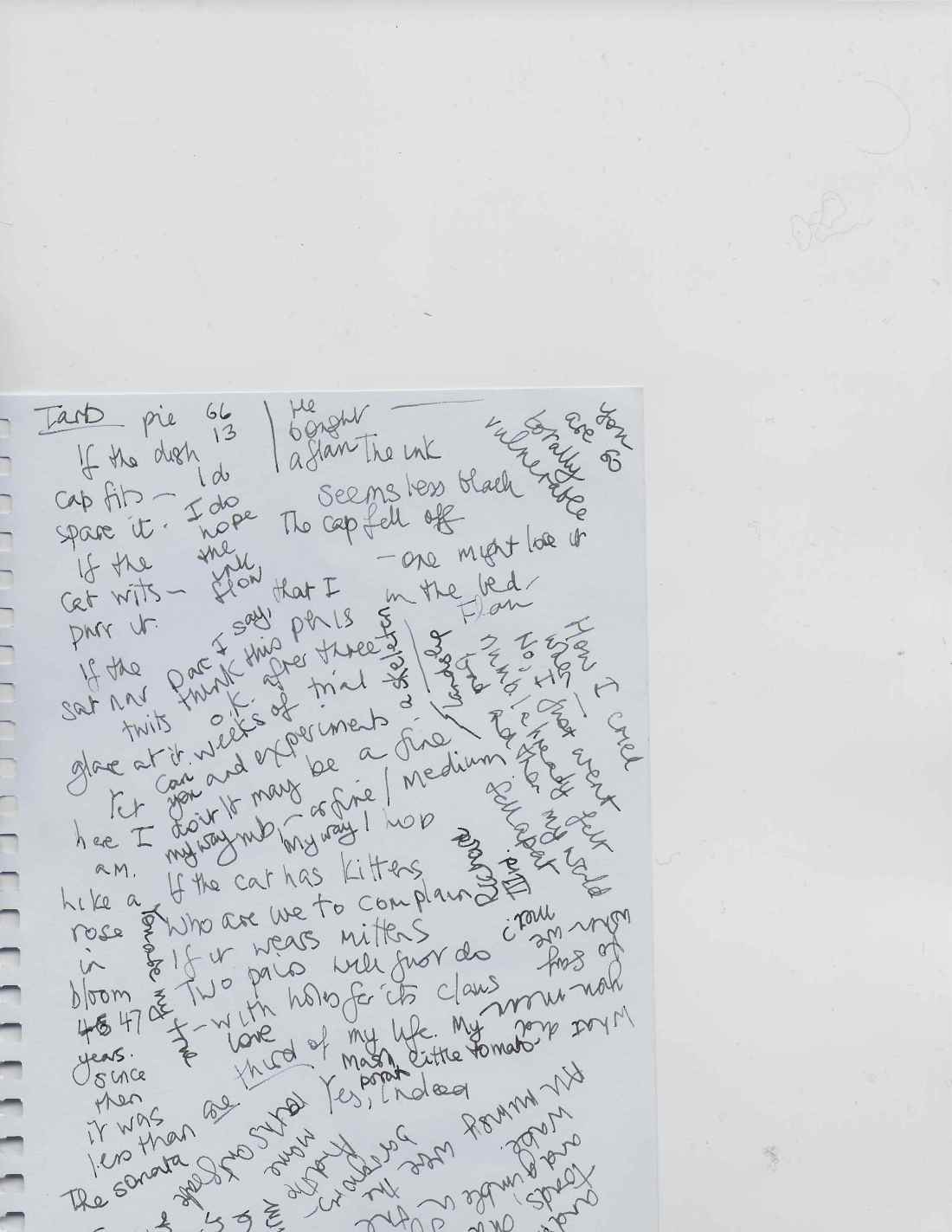
Photo0187

I find I have to write a lot of so-so stuff before my mind and heart get working.It’s like exercise.But your letter was so funny,  it cheered me up.What a pity we live so far apart.
Maybe we could hang out on Google Mail!I have no idea what it means,do you?
I miss getting letters with handwriting on them.Wondering whose it might be etc.Why don’t we do that? It would be  very pleasurable to see your unique writing on an envelops
I had problems with my homework too.I decided to do Double Maths at A level as it would not take so much time up and then I could read novels.I didn’t know why or how we should do Lit Crit yet the English teacher cried when I was not down for A level.I do regret my error as it is a great sociial handicap although my optician who is Jewish says it’s no problem to them to have an intellectual wife.Still I am a bit too old to try another culture as I might mortally offend a hundred people at a stroke, and vice versa
I can see now what a blessing it might have been to read all the great writers and get paid to do it but curiosity also led me into maths as well.To be honest it was somewhat boring for a long time until we reached the higher slopes.Ah, well
Life goes so quickly.I’m reading Plath’s Journals and I see how she worried away so much of her time.That is a big mistake.Use worry for energy
Too much for girls to decide too rapidly when they are so gifted yet also want a family.And her psychoanalyst was not fully qualified
It seems to me the therapist “sold” her a story
I feel deprived of her later work.What a wonder it might have been
I look forward to hearing from you
With love

Mary, Emile and Stan’s old robin

If you want to write spam comments

SouthLeigh_2012-3
Always keep beauty near you when checking for spam

1.Never get  your English grammar  correct.
2.Make sure your comment is not relevant to the post you put it on
3.Never ask me to pass it on to the Relevant person
4 Do get a few spelling errors in when you offer writing advice
5.Be sure that  money advice is very suitable for a poem about death
6 Always use American English if the blogger is in the UK and vice versa
7.Always over-compliment the writer.
8 Never use a dictionary unless for killing beetles or impressing others
9 Tell poets they should write for  an Angling Magazine.
10 Never read a post before you comment
11 Try commenting on an infinite number of posts daily.
12 Study maths instead of spamming

The homeless

The homeless  are mocked as failures as they starve
The churchyard has no benches anymore
We harden up our hearts  so we can strive

Is it then a curse to be alive?
People sleep on  pavements by shop doors
The homeless  are called failures as they starve

Yet, monarchs and  new presidents survive
When it’s clear they’re pigs ,or rather, boors
We’ve hardened up our hearts as on we strive

I feel most would be happy to revive
A culture which has got a cushioned floor
The homeless  are called failures as they starve

A shell may well protect us till it breaks
We see we are no safer than a whore
We’ve hardened up our hearts and risked our lives

What are our true values at the core?
Who would choose a baby to adore?
The homeless  are labelled failures as they starve
We harden up our hearts but do not thrive


The novelist of the month:Stanley Middleton

Nextfocus

https://www.theguardian.com/books/2014/sep/27/holiday-stanley-middleton-review-nicholas-lezard-paperback

Extract:

“The novel also gains resonance from echoes of other works, in particular Eliot’s The Waste Land. Fisher may be 100 miles north of Margate Sands, but, like Eliot, he is busy connecting nothing with nothing; his name is a reminder of Eliot’s Fisher King, that emblem of sterility; and the conversations he has with other holidaymakers are strongly reminiscent of the snatches of chatter in Eliot’s poem. (In another novel, the darkly titled Married Past Redemption (1993), a character unknowingly quotes Eliot, so he’s certainly in his mind, and Holiday has its sprinkling of other literary references; Fisher is, after all, cultured man. Middleton would also, as a musician, have been aware that Edwin Fischer was the name of a particularly good pianist, best known for his interpretations of Bach.)

Such resonances can be taken or left;  the novel’s power, which builds slowly but unmistakably, is its own. And Middleton is the most forensically acute of observers: if you want to know exactly what Britain was like in the early 1970s, then you won’t do better than to read this.”


The News now clings to us like superglue

What is it lowers our spirits,makes us blue
When it’s dark and wet and damp as moss
Even when we’re mobile,wealthy too

On the News they mention epic flu
People dying, what is it we’ve lost?
What is it lowers our spirits,makes us blue

The News now clings to us like superglue
There are no beds for  patients but the frost
Even when we’re mobile,wealthy too


Is it meaning that we don’t pursue
Boring work makes   hearts feel  lonely,lost
What is it lowers our spirits,makes us blue

Is there no compassion and no clue?
One day to the scrap heap we’ll be tossed
Even when we’re mobile,wealthy too

Fragile in the company of ghosts
We can’t cook the usual Sunday roast
What is it lowers our spirits,makes us blue
Even when we’re housed and wealthy too?


Can we be happy when the News is bad

https://www.theguardian.com/lifeandstyle/2016/jul/02/how-to-be-happy-when-the-news-is-bad-brexit-trump-oliver-burkeman/

Extract

” Stop telling yourself that you need to feel upbeat, and it begins to seem less pointless to make some tiny effort to address one or two of those problems: to take on a small weekly volunteering role here; to make a modest donation to charity there. The solution to feeling so despairing about the news, in short, is to let yourself feel despairing – and take action, too. “One of the great things about everything being so fucked up,” Jensen likes to say when speaking to audiences, “is that no matter where you look, there’s a lot of work to be done.”

Don’t kid yourself that you will single-handedly eradicate nationwide or global problems; instead, define and pursue small-scale goals, like joining a campaign with some connection to the issues that trouble you the most. Focus on activities you enjoy: these will be much easier to sustain. And there is certainly some relief in attending to your own wellbeing. Exercise, sleep, time spent in nature, meditation and socialising are all proven paths to increased happiness; they’re cliches, but only because they really work – and it isn’t self-indulgent to make time for them.

Paradoxically, it’s through taking action, despite not feeling happy about the situation, that a deeper kind of happiness can arise. (That’s certainly the implication of research on the emotional benefits of volunteering, charitable giving, community involvement and political protest.) Jensen has written that people sometimes ask him why he doesn’t just kill himself, if things are as bad as he says. “The answer is that life is really, really good. I am a complex enough being that I can hold in my heart the understanding that we are really, really fucked, and at the same time that life is really, really good. I am full of rage, sorrow, joy, love, hate, despair, happiness, dissatisfaction, and a thousand other feelings. ”

Poetry after Trump’s election

Vestibule and Chantry Chapel Eastbridge Hospital) (c) Jane Risdon 2015https://www.theatlantic.com/entertainment/archive/2016/11/still-poetry-will-rise/507266/


Extract
“Campaign in poetry; govern in prose,” the old adage goes. This moment, though, has in many ways flipped that idea: The 2016 presidential campaign was decidedly lacking in poetry. Yet in its aftermath, as Americans consider the contours of their new government, they are, often, turning to poems: to Cope and her gallows humor. To Maya Angelou and her songs of self-love. To Adam Zagajewski. To Adrienne Rich. To Riz MCVox, on Wednesday afternoon, published a post headlined, “Feeling terrible right now? Maybe some poetry will help.” The Guardian had one listing “poems to counter the election fallout—and beyond.” The Huffington Post, for its part, offered “18 Compassionate Poems To Help You Weather Uncertain Times.”

There are logistical reasons for all that, certainly. Poetry’s succinct form often means that it lends itself especially well to being screen-shot and retyped and then shared on Twitter and Facebook and Instagram. But there are deeper reasons, too, why poetry is having, as it were, A Moment. I spoke with Don Sharethe editor of Poetry magazine, about the role poems have been playing for people across the political spectrum as they’ve wrestled with the results of the 2016 election—and of the role poems might continue to play for us as we move forward. This interview has been edited for clarity and length.


Megan Garber: Why do you think it is that poetry seems to be resonating so deeply at this particular moment?

Don Share: Well, it’s always been speaking to people—and it’s always been speaking to people about the kinds of things they’re taking about now, because one of the things poetry is really good at is anticipating things that need discussion. Poets are kind of like—it’s a bad metaphor, but—canaries in a coal mine. They have a sense for things that are in the air. Partly because that’s what they do—they think about things that are going on—but partly because they take their own personal experience and see how that fits in with what they see in the world. A lot of people might think that poetry is very abstract, or that it has to do with having your head in the clouds, but poets, actually, walk on the earth. They’re grounded, feet-first, pointing forward. They’re moving around and paying attention at every moment.

And a poet wakes up and thinks, “You know, anything is possible.” They imagine things before they’re possible. The reach and power of the imagination means that poetry will always be with us, that it will always be important, that it will always be part of what goes along with our culture, our politics, our personal feelings and relationships.

And, at the same time, when people are under pressure of any kind, they turn to poetry. That’s why poetry is with us at the most important occasions in our lives: weddings, funerals, anniversaries. When Kobe Bryant retired, the first thing he seems to have done was write a poem. That didn’t surprise me one bit: Sooner or later, we’ll find that poetry has been waiting for us. You get this feeling that people can call on the poets when they need to, and that’s a great moment for poets—when they have an audience because we need to know how to go about reaching the next day of our lives. And that’s something the poets spend all their time thinking about.

Natural behaviour

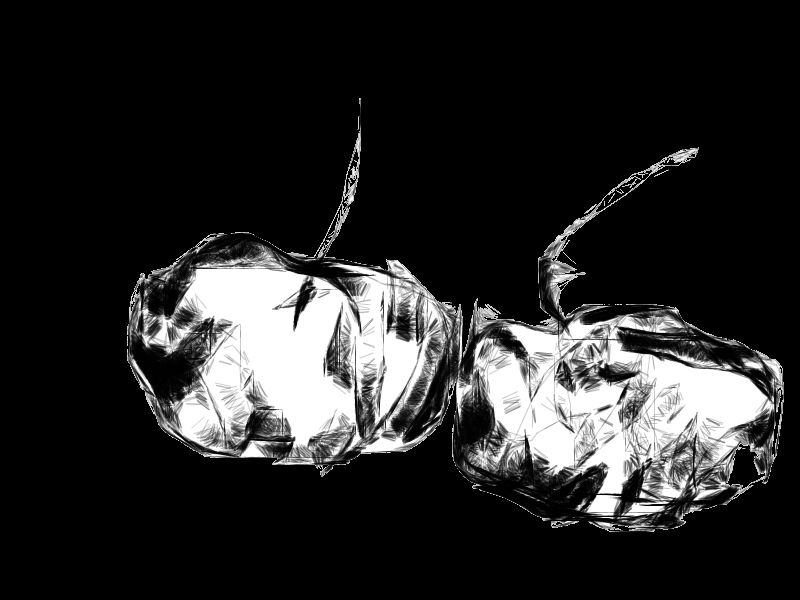
two-apples-charcoal-on-blackI do what comes naturally  now
Love my husband and neighbour  somehow
They may complain
With them I’ve not lain
It’s all in my head, that is true

For my mind has taken charge of my soul
My body  must obey to be whole
I  lay in their arms
But it’s all in my dreams
So they ‘re as  unhappy as a pack of known trolls

What a pity they don’t do gender fluid
As they do not have to be nude
Then they could bed each other
While I dreamed with no bother
Without being told I am rude

To me, love’s an ethical  demand
The Good must give me its commands
I will be receptive
But perhaps not deceptive
Or I may be put on remand.

I don’t know that  lovers need  kiss
To obtain eternally bliss
Just smiling  brightly
Is not so unsightly
But touching is  something I’d miss


T

What is natural law?

Northmoor_effigyhttps://en.wikipedia.org/wiki/Natural_law


“Although Plato did not have an explicit theory of natural law (he rarely used the phrase ‘natural law’ except in Gorgias 484 and Timaeus 83e), his concept of nature, according to John Wild, contains some of the elements found in many natural law theories.[8] According to Plato, we live in an orderly universe.[9] The basis of this orderly universe or nature are the forms, most fundamentally the Form of the Good, which Plato describes as “the brightest region of Being”.[10] The Form of the Good is the cause of all things, and when it is seen it leads a person to act wisely.[11] In the Symposium, the Good is closely identified with the Beautiful.[12] In the Symposium, Plato describes how the experience of the Beautiful by Socrates enabled him to resist the temptations of wealth and sex.[13] In the Republic, the ideal community is, “…a city which would be established in accordance with nature.”[14]

Aristotle[edit]

Plato (left) and Aristotle (right), a detail of The School of Athens, a fresco by Raphael.

Greek philosophy emphasized the distinction between “nature” (physisφúσις) on the one hand and “law”, “custom”, or “convention” (nomosνóμος) on the other. What the law commanded would be expected to vary from place to place, but what was “by nature” should be the same everywhere. A “law of nature” would therefore have the flavor more of a paradox than something that obviously existed.[1] Against the conventionalism that the distinction between nature and custom could engender, Socrates and his philosophic heirs, Plato and Aristotle, posited the existence of natural justice or natural right (dikaion physikonδικαιον φυσικονLatin ius naturale). Of these, Aristotle is often said to be the father of natural law.[3]

Aristotle’s association with natural law may be due to the interpretation given to his works by Thomas Aquinas.[15] But whether Aquinas correctly read Aristotle is in dispute. According to some, Aquinas conflates natural law and natural right, the latter of which Aristotle posits in Book V of the Nicomachean Ethics (Book IV of the Eudemian Ethics). According to this interpretation, Aquinas’s influence was such as to affect a number of early translations of these passages in an unfortunate manner, though more recent translations render those more literally.[16]Aristotle notes that natural justice is a species of political justice, specifically the scheme of distributive and corrective justice that would be established under the best political community; were this to take the form of law, this could be called a natural law, though Aristotle does not discuss this and suggests in the Politics that the best regime may not rule by law at all.[17]

The best evidence of Aristotle’s having thought there was a natural law comes from the Rhetoric, where Aristotle notes that, aside from the “particular” laws that each people has set up for itself, there is a “common” law that is according to nature.[18] Specifically, he quotes Sophocles and Empedocles:

Universal law is the law of Nature. For there really is, as every one to some extent divines, a natural justice and injustice that is binding on all men, even on those who have no association or covenant with each other. It is this that Sophocles’ Antigone clearly means when she says that the burial of Polyneices was a just act in spite of the prohibition: she means that it was just by nature:

“Not of to-day or yesterday it is,
But lives eternal: none can date its birth.”

And so Empedocles, when he bids us kill no living creature, he is saying that to do this is not just for some people, while unjust for others:

“Nay, but, an all-embracing law, through the realms of the sky
Unbroken it stretcheth, and over the earth’s immensity.”[19]”

The little hands touch me so deeply , so well

Nobody knocked and I opened the door
But that room’s not the one I was looking for.
The light didn’t work and I fell  on a book
Then I saw you and your smile and your look.

We don’t know what we want until it comes by
I’m too past it now so soon  I may die.
But while I am here, I’m enjoying the peace
Of being alone, smiling, and writing re geese.

I seem them fly by when the sun starts to sink.
How like a wild god; they ‘re gone when I blink.
Then they descend ;they all move as one.
No training in music could teach us that song.

Evoking the beauty of  stars far away,
I like to watch geese at the end of the day.
Patterns and poems disclose other worlds.
The  hand of a baby; the fingers uncurled

The trust and the smile ; mother is home
She creates entire worlds for the one she has borne.
For chaos and panic  are onot far away;
Even in adults who don’t care to say.

The little hands touch me so deeply, so well;
How come the world holy is rolling to hell?
How can we kill little wains  by the score?
Was it for this that I opened your door?

Was it for this that love electrified  us?
We were lost in each other, as moved the white dove.
Was it for war that we lent love our wombs
Making more soldiers and building more tombs?

The bombs, they are loading; they’re having parades.
It’s not North Korea, it’s Washington, dude.
Let the tanks roll  on Corrie and the Bedouin tribes.
Let the allies laugh blindly as the Lord Jesus dies.

O take me, dear mother.Please take me away
I can’t see no point in saying my prayers.
The leaders’ religions are making God frown.
The desert is empty, the tents all dragged down.

The centuries of living , so free,  so mobile
The Holy Land blessing; they pause for while.
The little black  tents,  the  wombs of the night,
Are all gone to shredders; they’re out of our sight.

The land we once called Holy

The land we once called Holy dies like Christ
The iron walls, the guns, the sacrifice.
Evil comes,religions onward fight

Angels and archangels put to flight
Bedouin tents are darker than black ice
The land we once called Holy bleeds like Christ

In the deserts of the soulless nights
Mothers clutch their  babies, tanks roll by.
Evil comes,religion God denies

After Holy death, will man survive?
The tortured ones  will torture others thrice
The land we once called Holy dies like Christ

Dazed by resurrection in dark night,
Where and when the beast that slouches twice?
Evil comes,religion God denied

Where can we lose our hatred and embrace
Those that killed our spirit and our eyes
The land we once called Holy dies like Christ
Evil comes, the grave is gaping wide,


With peaceful hearts

How good to savour fully with our sense
Whichever one we favour in our minds
All life is better when our love’s intense

Yet more important is to be content
With peaceful hearts we let our self unwind
How good to savour fully with our sense

With inner voices which too much dissent
The day gets darker and we fall behind
But life is better when love it invents

In the desert,will there be a tent
Where we may sleep and find life undefined
Can we savour fully without sins?

We find our hate which love will complement
Reparation guides us unresigned
So life is better, hate is not cement

As our faces alter with our lines
So the play is acted in its time
How good to see the truth of what we sense
Life is full when love is not lament

The wheel of the year by Janet Weight Reed

20-11-15-1-1372
This is from Janet’s post.It is  the moat  of Leeds Castle in Kent

A  beautiful post by Janet and suitable for the start of a New Year

https://jcrhumming.wordpress.com/2018/01/10/the-wheel-of-the-year-with-not-beginning-and-no-end/


What did that mean?

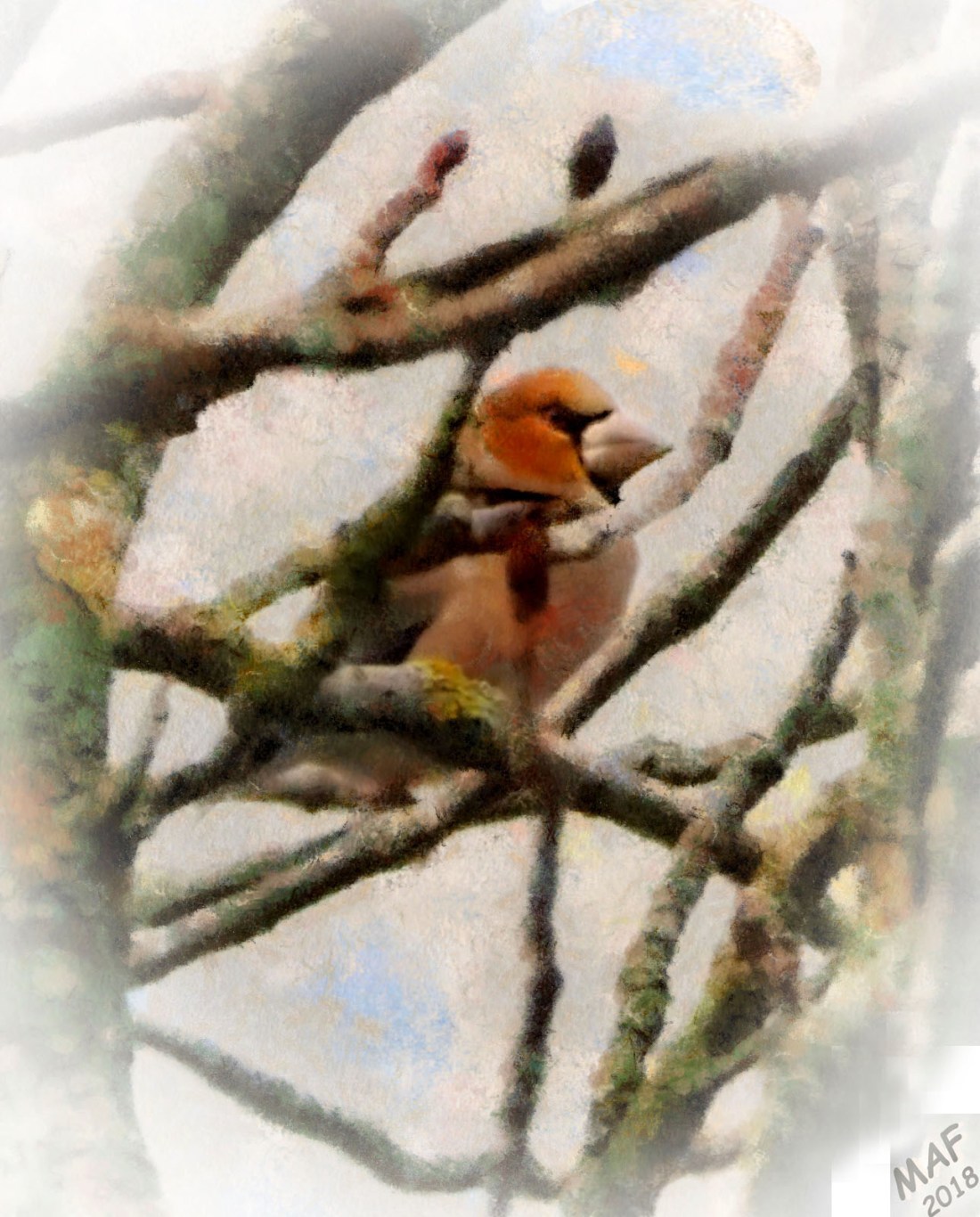
Hawfinch_DAP.jpgThings Ma said:

I’ve been parking up  the wrong tree again.
A watched cat never boils.I didn’t know cats could boil at all
Ma used to say, the King won’t get off his arse to look at you.I was stunned by her vulgarity
Least said,soonest ended.It has a certain something to say about Silent Love.If only she had kept quiet herself!
I’m in the Doll Drums, she moaned.I looked everywhere but she’s not here.
Was it War Drums?
Don’t  put all your heads into one casket.[ in the funeral parlour]
There’s many a  cruel world but this is the worst
Original sin was never very original.Eating apples!
God only knows.Does that mean: only God knows?

Fun for ya

7483299_f260
I think I’ve got Old Rhymer’s Disease
You have no old Timer to please.
He’s got Retentia: constipation in the brain
Why can’t I grow old fallaciously?
I might grow old impatiently
Men grow older audaciously
Love her/him if it contents ya.
He’s up his own  arse with Pretentia.
Life is a farce which Tormentia.
I flew over a tree and felt Momentia
Before you die, try to  leave something behind which has helped ya
What a  pity there’s no term like Cadenzia.Well there is now
The vicar  has got Godblamer’s  Unease.
Godtamer, who will blame you?


A black balloon at night

Floating on a black balloon at night
Clinging on for I’m afraid I’ll fall
High above the earth in a dark sky

If I  fall  no-one will see this  sight
Maybe just a tiger who might maul
Floating on a black balloon at night

My platform is  unsafe  so I will die
No-one else can save me if I call
High above the earth in a dark sky

Below me are grey clouds, they whisper sighs
The earth looks distant and so very small
Floating on a black balloon at night

Would that the  grey moon had her own light
Lone and vast the spaces that appal
Bereft of anchor on the earth, dark sky

I’ll fall forever, why was I stillborn?
Falling down like small leaves do forlorn
Clinging to a black balloon at night
Way above the earth in a dark sky

Captivating by their quantum grace

Captivated by a furious grace
Her glaring eyes, her lips so red undrawn
She  brought us donuts, jam and  sugar spiced

In our life there is a Bohring race
Those who win,  all  need  our wanton charm
Captivating by their trapped cat’s grace

If you’re caught, enjoy  watching their face
Will hugging other folk cause deadly harm?
We like alluring men to Hilbert space

I cooked a chicken  yet forgot the mace
The cats all danced like neutrons unalarmed
Captivating by their quantum grace

Nutmeg is a spice and  is  light faced
After eating,   let waves have their qualms
We like admitting  them to Banach space

If ,in some deadly place, you feel withdrawn
Take heed and slide down tangents when it’s morn
Calculate,   then intimate this thrice
The world   thinks  I am now   both good and wise