Evensong evokes another state
A world of beauty, peace and mental calm
Where all is still and thoughts do not gyrate
The breath slows down and evil does not mate
Indeed it flees before the holy psalms
Evensong evokes another state
In the quiet, we each can, happy, wait
Assured by songs of good, of healing balm
Where all is still and thoughts do not gyrate
Soothing rhythms will help the mind create;
To bear the emptiness unfilled and do no harm.
Evensong evokes this cultured state
Frantic notes of music irritate
And minimise all goodness and all warmth
Let all be still and let thought emigrate
Let us lowly creatures slowly learn
To love each other as we take our turn
Evensong evokes another state
There all is calm and thoughts are sweet as fate
Short-eared Durham owl
meditating over the dale's edge,
shadows the fields and folds
in elegant diurnal flight.

On windside,careful sight
may swoop to prey
and away.

Your yellow broad-eyed look,
at once both sharp and distant,
holds me.
Oh,silence,
Oh,wind on green,
Oh, earth,
Sky.

Immense your held  vision,
Hemisphere's height implicit
Pied geometer of flight,
Graph your swift drop and ascension

Trees bunched by dry stone wall
call heart home.
When I saw you  in that cafe
I knew you would be mine.
You were handsome, smiling,funny,you were specially designed.
You looked like men I’d only dreamed about in all those years before.
I’m so broke up,so broke up;you don’t love me anymore.

I saw you on the station as I came from out the train.
You wore an old green parka to protect you from the rain.
I wanted to be one with you,to make a Love entire;
But all we did was give  create pain too bad be endured

You walked away so quickly,I could not see you long.
I wish I had a big guitar to draw you back with song.
I looked at where you disappeared;what love has loss revealed?
I wish I could just lay down on this floor and keep my face concealed.

Railway stations sadden me, for I know we’ll never meet .
I won’t cry more,for tears are running almost to my feet.
I walk fast looking straight ahead past the entrance gate,
I pretend that you have missed your train,that work was running late/


I count from one and one to a thousand and much more–
But I know for sure it's far too late; you have closed that heavy door.
You are hiding in a dungeon
You are covered with white steel
But I know you had a heart and you must surely feel.

I lost all my illusions, and then I lost some more.
I wish I could lay down and die,right here on this floor
Like a piece of ground where bombs go off repeatedly,
my inner landscape is perpetually marked
by these explosions of sorrow,
made all the worse
by the lack of a listening ear,
a warm open heart
or an outstrerched hand.

I have constructed a map
but it's incomplete,by its nature;
so even now,I might stumble into an old hole
or a new one,created
by reverberations underground;
the noise like distant music,
a  constant drumbeat.

We do not dance
I might call it the Liturgy of Loss,
a dance to the music of rhyme;
Patterns abd shapes hold the feelings
and express them.The shape of these forms
is a container for the grief.

In this way,I indicate
that life will go on;I hear the healing music
and sing to its melodies
like a mermaid on the edge of the sea in winter
when the water is cold and green like his eyes,
and the rocks are hard like large fists.

Nature can be a symbol for such emotion
we cannot walk without a tear in ech eye
and a softening of our hearts
as tenderly we touch the world
and are touched in turn by each other.

Stretch out your hand to meet mine.
We can hold each other better
than each can hold theirself.
Like in sex, the meaning is not the climax
but the giving and being given;
receiving and being received.
The sacredness of the erotic needs no explanation
to a gardener or a fisherman
but may need it for the information saturated,postmodern
who dwell in the fascist virtual reality
we call life on earth today
The innocence of children’s Christmas joy
Eyes wide open with surprise and glee
The candles lit, the tree , the love, the toys
When we’re disillusioned we fall glum
And from the artificial we will flee
No longer wanting Xmas time to come
But later we find other ways of love
We see new virtues in the life’s own tree
Silently, as fold the wings of dove
Our spirits rise like bread by a warm fire
We love and work to shelter family
And then we are each filled with true desire
Desire does not grab hold of sparkling toys
Desire is maintained by its integrity
Not fooling those who look both weak and sore
The best illusions lead us into truth
That there is love and grace without a proof
The innocence of children gives us pause
The candles lit, the tree , the love, the law.
Did anyone believe that rage expressed
Could benefit the agent without harm
Did anyone read Freud and then digest?
Feelings need the heat of blacksmith’s fires
Held inside until they find their form
An image worthy of our true desire
As well as rage, we should mistrust love too
Be backward in expression till more’s known
Or risk an avalanche of cruelty.
Take care of others, they are not our fools
From sacred conjunction all humans are grown
We misuse folk to test our charm and tools
Holding in the inner fires our wish
The blackness of the heart can turn to gold
No contradiction hides in sacredness
Take your love and in your arms enfold.
The future of the world is growing cold
We liked to have the choice for rage and death
Until we found the charred remains of bliss.
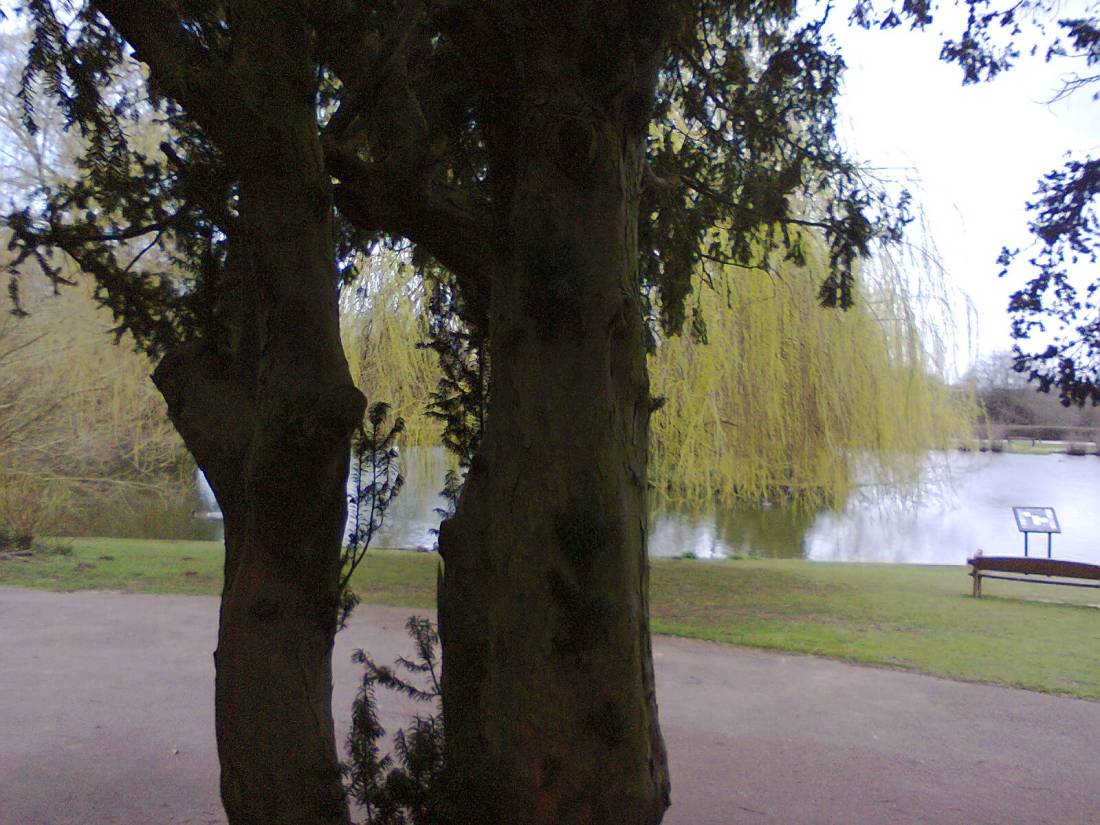
Here we sat in sunshine and in cloud
Yet he’s gone and I forget his words
Enigmatic as a lonely clown
Here were daffodils but rarely crowds
His absence makes my being seem absurd
Where we sat in sunshine and in cloud
With humour and with wit so well endowed
His Whitby accent, treasure to be heard
Enigmatic as a gifted clown
The cat sat on his shoulders looking proud
At the garden table on old chairs
Where we ate in rain and in dark cloud
A very private man whose mind allowed
Great kindness to his friends but never bared
Enigmatic as a gifted clown
His most attractive quality was care
Yet he could suffer more than most could bear
Here he sat in sunshine and in cloud
Enigmatic,curious and most kind
Happy to be purposeless and still
I breathe in my contentment and my soul
I let my heart rule rather than my will.
Of peace and calm we never have our fill
Our heart needs this to make us truly whole
Be happy to be purposeless and still
For if we cannot stop, we’ll pay the bill
Running till we’re weary after goals
So let the heart rule rather than the will.
In school we had imposed on us a drill
In the teacher’s image, in her mould.
Learn contentment,peace in keeping still
Gently let your mind its own thoughts mull
Let there be more emptiness, less pull.
Happy to be purposeless and still
I let my heart rule, hold back my quick will.
If you are an adult foolish enough to tell another adult that you are (still!) a poet,” he writes, “they will often describe for you their falling away from poetry: I wrote it in high school; I dabbled in college. Almost never do they write it now.” For Lerner, this is more than mere politeness, an attempt to find some common ground with the poet. Rather, it is an unconscious tribute to the sway that the idea of poetry continues to exert over our collective imagination. “Most of us carry at least a weak sense of a correlation between poetry and human possibility,” he asserts. Thus, “if I have no interest in poetry or if I feel repelled by actual poems, either I am failing the social or the social is failing me.” Poetry is a gauge of our mutual connection. If we can’t speak the language of poetry, it is a sign that human communication has been blocked in a fundamental way. This feeling of failure is what explains why people tend to hate poetry, rather than simply being indifferent to it. Poetry is the site and source of disappointed hope.
For Lerner, as his use of the term the social suggests, that hope is not just individual and spiritual, but collective and political. Poetry is linked, in his vision, to the possibility of a total redemption of human society, of the kind Marxism used to call “the revolution.” In particular, his fusion of aesthetic, political, and spiritual messianism brings to mind the work of Walter Benjamin, the 20th-century German Jewish theorist. Lerner’s previous book, the novel 10:04, was saturated in the Benjaminian concept of redemption: the idea that the world as we know it carries within itself the possibility for transformation. Key to this vision is the idea that salvation will come from within, from a rearrangement of the world, rather than through an external power or a god.
FSG Originals
In the novel, Lerner associates this idea with what he calls “the utopian glimmer of fiction.” Fiction, he suggests, anticipates redemption in its power to alter facts and timelines, to summon alternative possibilities, to transcend the given. In The Hatred of Poetry, Lerner makes some of the same claims for the art of poetry. “ ‘Poetry’ is a word for a kind of value no particular poem can realize: the value of persons, the value of a human activity beyond the labor/leisure divide, a value before or beyond price,” he writes. Poetry is a figure for the unalienated labor and uncommodified value that Marx thought would exist after the revolution. This is a 21st-century artist’s Marxism, one that no longer hopes for real revolution, but looks to the imagination for anticipations of what a perfected world would look and feel like.
As lerner works sinuously through a chain of texts, he draws attention to the inevitable gap between the actual poem, which can only be a series of particular words, and what he calls the “virtual poem” (borrowing a phrase from the poet and critic Allen Grossman), which we can imagine as being perfect because it remains pure potential. It is in taking the measure of that gap that we can “experience, if not a genuine poem—no such thing—a place for the genuine, whatever that might mean.” Yet this approach to reading any particular work by any particular poet also leads to a certain monotony. Because actual poems are always primarily valuable for what they are not, the many different kinds of poems Lerner invokes all supply evidence for the same argument: Look at what these lines fail to capture.
The gap between the ideal and the real is, of course, the subject of many great poems. Lerner quotes Emily Dickinson: “I dwell in Possibility— / A fairer House than Prose—,” noting that “instead of the expected opposition of poetry with prose, the former term is replaced with ‘Possibility’—an immaterial dwelling, all threshold and sky.” But the ridiculous serves his argument as well as the sublime does. Thus Lerner quotes the opening of William McGonagall’s infamously bad poem about a bridge collapse in Scotland:
Beautiful railway bridge of the silv’ry Tay
Alas! I am very sorry to say
That ninety lives have been taken away
On the last sabbath day of 1879
Which will be remember’d for a very long time.
This is ludicrous, of course, and Lerner shows exactly why. Yet he also suggests that the poem’s very badness is its virtue: “A less bad poet would not make the distance between the virtual and the actual so palpable, so immediate,” he writes. A bad poem can perhaps point to utopia even more effectively than a good poem can, since its very badness reminds us of the impossibility of achieving the total goodness that poetry promises.
This is the perverse logic of invoking utopia, which is a literal “no place.” Like a Romantic poet, Lerner yearns for a transformation that poetry can intimate and promise but never enact. What he largely ignores in his book is the idea that poetry can also be a means of reconciling us to our place, to “the very world, which is the world / Of all of us,—the place where, in the end, / We find our happiness, or not at all,” as Wordsworth wrote. The Hatred of Poetry is a subtle inquiry into poetry’s discontents, and a moving statement of poetry’s potential. It can also be read, though, as an example of the dead end into which modern poetic theory has been led by its grandiose aspirations. As long as we focus on what poetry isn’t and can’t be, how can we rediscover what it once was, and might be again



 Here we sat in sunshine and in cloud


 How my heart speaks