
|
|
 From Mike Flemming’s Blog.Copyright
I’d like to be a child and play in snow
Crack the ice on puddles in the road
The brittle bones of age can’r risk a blow
Green as little branches, children grow
Their minds are open to the world’s rare gold
I’d like to be a child and play in snow
In our nature, hardening is a flaw
Though bones are done, our minds can still be bold
The brittle bones of age can’t risk a blow
Bend like willow, bow with sacred awe.
For this life is the greatest story told
I’d like to be a child and roll in snow
We struggle on, we learn, we come to know
The love and friendship can’t be put on hold
The brittle bones of age can’t risk a blow
Hear the angels singing clothed in gold
The stars shine out like candles overblown
I’d like to be an icicle to show
How heat can melt the hardness at our core
Glenn Gould died young, in 1982 at the age of 50, but the Canadian classical pianist made great contributions to the world of music in his short life. He did it in part by starting young — so young, in fact, that he first felt the vibrations of music played for him while still in the womb by his mother. She’d decided even then to raise a successful musician, and her plan surely worked better than she could ever have expected. Young Glenn had perfect pitch, learned to read notes before he learned to read words, entered Toronto’s Royal Conservatory of Music at age ten, and grew into the very archetypal image of a musical genius: eccentric and often difficult, but possessed of almost otherworldly skill and distinctiveness.
Those qualities came out nowhere more clearly than in Gould’s relationship with the music of Johann Sebastian Bach, whom he described as “beyond a doubt the greatest architect of sound who ever lived.” Even listeners only casually acquainted with Gould’s work will know his recordings of Bach;s Goldberg Variations the first of which, recorded in 1955, shot him to stardom and became one of the best-selling classical albums of all time.
Four years after that, the National Film Board of Canada documentary Off the Record, just above, captured his playing on film in the clips at the top of the post. “When Gould is not on tour or recording,” he spends most of his time at his retreat, a cottage on the Shore of Lake Simcoe 90 miles north of Toronto. Here he works on the piano he favors above all others for practicing: a 70-year-old Chickering with a resonant, harpsichord quality recalling the instruments of the time of Bach.”
There, in that cottage in the small community of Uptergrove, we see the 27-year-old Gould play Bach’s Partita No. 2, vocalizing along with the distinctive mix of forcefulness and delicacy issuing from the instrument that he never chose, but mastered to a degree few had before or have since. “His ambition,” the narrator says, “is to make enough money by the time he is 35 to retire from the concert stage and devote himself to composing.” In fact Gould put live performance behind him just five years later in order to pursue with more focus his own kind of pianistic perfection, which he continued to do for the rest of his life.
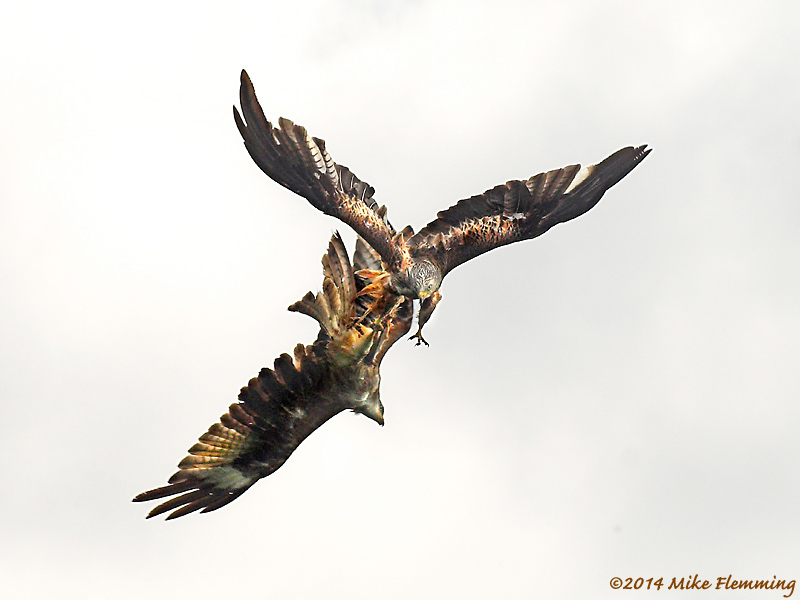
I’d like to thank all of you who have read my blog this year.And also I’d like to thank my collaborator Mike Flemming for allowing me to use his beautiful photographs.
http://home.btconnect.com/mike.flemming/
I like writing poetry so I would do it anyway but I am very happy if someone has read it and esoecially a comment or a criticism to give me the chance to improve what I have written
As most of you know,2017 has been a very hard one in Britain though nothing compared to many parts of our human world.
We had some serious terrorist attacks,two on London Bridges, one at Westminster near our Seat of Government.A policeman was also killed,Now if you read that you may think it’s not too bad.But everyone who dies early loses their life, their world, for everyone has a unique world and we lose their contribution to our society, the love they give their family and friends, their presence in our city and country, our security.
Many young people died in an attack in Manchester and later we saw Grenfell Tower on fire and learned many,many people died in their flats.It did not help that Boris Johnson had closed 14 fire stations in London.It was terrible for all of us here but especially for people living in Notting Hill to know people close by were dying and firemen even broke the rules to go inside but they could not get to the top.
We know now dangerous materials were used as cladding.Nearby the wealthy lived in the areas where ordinary people used to live
This shows us what it is like in war torn areas and I hope makes us more sympathetic to the poor and to refugees,Remember,it could be us or our family.
Thank you all again.I hope to continue writing and I hope making you interested in what I write about and perhaps inspiring you to write or paint or take photographs

 http://www.elizabethmoon.com/writing-block.html
 |
|
Early in your writing life, the commonest cause of stuckness is your own lack of technical skill in writing. You know what needs to be said, but you can’t figure out how to do it. Like a beginner trying to build a house with only a hammer and saw and a pile of lumber, you have to work harder to accomplish the same structure. Writers can’t go out and buy a new writing tool–there’s no store that sells a “viewpoint transition chisel” or a “flashback installation kit.” So, when you get stuck this way, you have to make your own tools–by writing through the problem. Identify what it is that you can’t do, then read books in which it is done well–and then go do it. The exercises often proposed for getting past writer’s block may also work because many of them actually sharpen your writer’s tools. It’s fine to figure out a way to work around a skill you haven’t developed yet (such as the ability to handle multiple major viewpoints) as long as you keep working. Sometimes you can jump past the stuck point, and leave it to be solved later–by the time you finish the rest of the book, you may have developed the skill you need to clean up that bit.
|
There’s nothing on this page until I write
A word and then another word and more:
Such sentences may bring me to delight
No sense is quite as needed as our sight.
Moral blindness is by most deplored.
There’s infinity on this page I write
I have pondered in the early winter nights,
Whether there are senses we ignore.
The expression of the sensed conveys delight.
Could there be, unseen, a different light
We might see by if we sought its door?
There’s blankness on this page until I write
The possible encounter, through a rite,
With God whom we and angels do adore.
My senses then might bring me grace and light
In the soul, oh, deep within that core,
Who shall, patient, find the unknown door?
There’s an opening upon this page l write.
Can other words, on other tongues, invite?

Where shells are fractured by the ocean’s blows
We soon learn what being alive demands
To bare feet on sunny days beckoned
The warm wet trickles in between the toes
Underneath the shallow pools lies sand
In whose sums is our living reckoned?
Calculation, not so bleak it shows
We learn by pain, true living makes demands
God allows the abacus unchained
To sum us up as if we are unknown
Underneath the pools, are these his hands?
Who will be allowed and who detained?
Like refugees, we come to love alone
We try to be alive, despite the pain
Our hearts are fragile shells, not heavy stones
We, soft flesh, enraptured by framed bones.
Darkly on the beach we humans stand
The fretting waves cry out with love’s demands
The heavy snow clouds menace from the East
No sun, no light,no golden joy,no thought
Where are our wise men, where is our feast?
On moorlands they bring down befuddled sheep
In deep snow drifts they are smothered , caught
The heavy snow clouds brood over the East
Is there wisdom in the human beast?
Does intuition tell? Where is it sought?
Where are our wise men, where is our feast?
In Siberian wastes, the child Christ speaks
Oh, be now our creative word, sweet Lord
The heavy snow clouds protect him in the East
The feast is here but shared with those the least
The currency is not what rich men bought
We do not see the women, nor the feast
For freedom and for dignity we fought
Yet empty we must be before our God
The heavy snow clouds gesture from the East
Here are our wise women, here our feast
I was thinking that the voice I now speak with is not my real voice.I have just read that I am using ” eye dialect” when I misspell words to make them sound like they do in my childhood dialect.

Outside owa house ‘t new umbrellas drip
~Wun is red and wun is pretty beige
They’re wa sunshades, t’weather’s hit a blip
If A wer a child A’d sail a ship
‘u stamp in pools u’ water in mi rage
Outside owa house,’t new umbrellas drip
Times there were Mam’s moods ‘d got a grip
Then it wu quite ‘ard t’ re-engage
Hide owa sunshades,mother’s ‘it a blip
Mam wer clever but she lost her top
The hint of h’ mad sayings had no gauge
Outside owa house ,’t new umbrellas drip
Nuns told me off for speaking in my voice
To get to Oxford, I must Me erase
Now I am a foreigner down here
No self, no mam, no sisters,just mi feah




 Another cause of stuckness hits writers with a trickle-feed imagination, those who can’t outline because they don’t know what happens until they write it. If you have this kind of imagination, and you are an energetic writer, then you can expect to overrun your inspiration repeatedly. When you do, you will feel “lost” or “empty”. Two strategies may help. First, be sure to stop writing before you run out of steam every day–save a little for the next day, so that you know what’s happening when you start the next session. Second, when you’ve overrun your primary vein, jump ahead in the story and see if you can find another vein to follow for awhile. You may end up having to circular-file a chapter or so, but you will enjoy writing something more than sitting there waiting for the bucket to fill.


 How my heart speaks