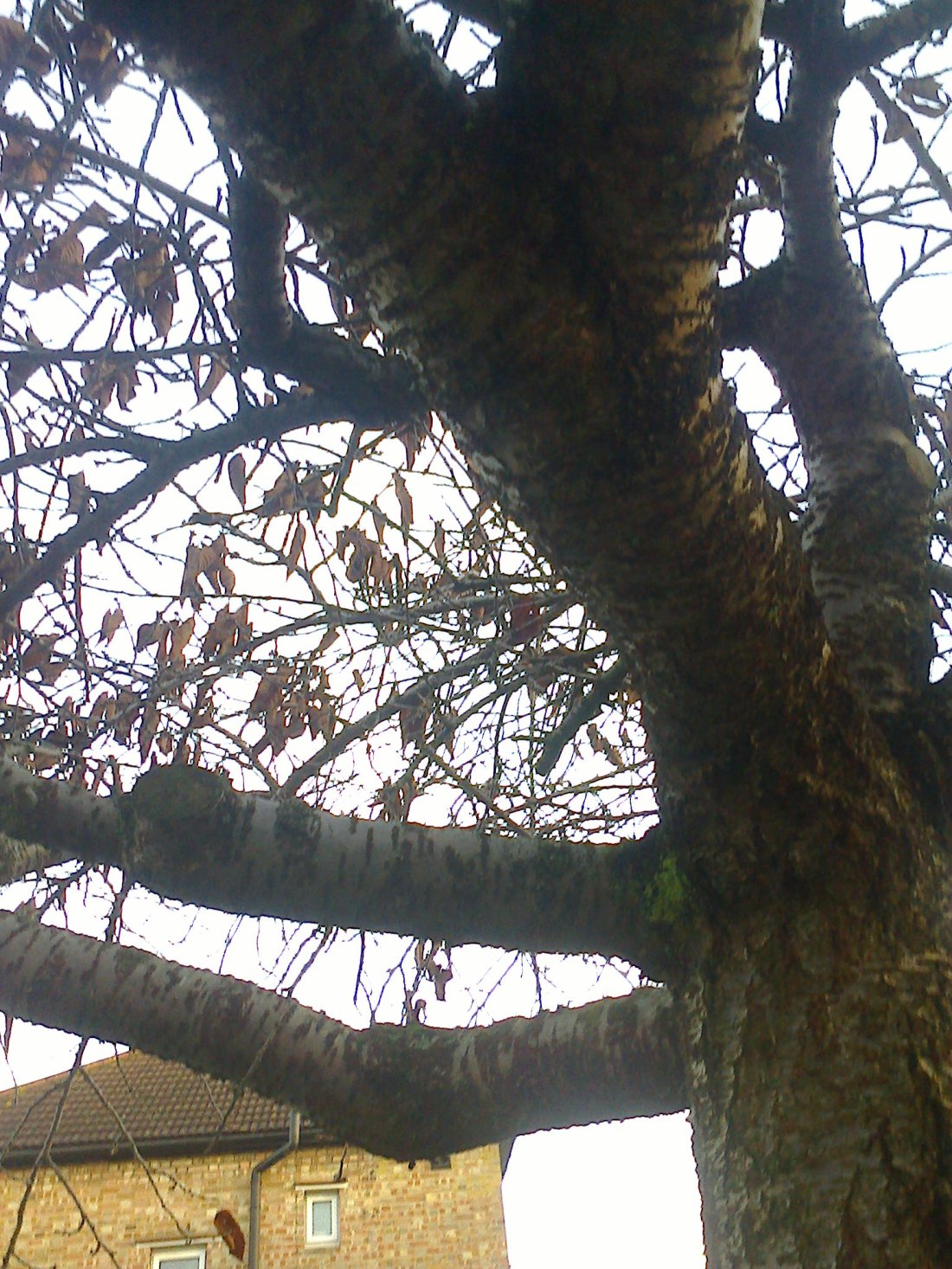
Singing in the sun, we seem to be

We are little leaves upon the tree
We never did control our tiny worlds
The tree of life; what power, what mystery

With metaphor, it’s easier to see
Life is tender, see each leaf unfurl
We are only leaves upon the tree

Singing in the sun we seem to be
Full of joy until the storm winds swirl
The tree of life; what power, what mystery

Extinguished candles smoke at Tenebrae
We are blown to death however bold
We are little leaves upon the tree

Thus we sacrifice to God uncertainly
Yet as the wars continue, we grow cold
The tree of life; what power, what mystery

Who has dropped us from the hands that hold?
Who has stolen certainty untold?
We are little leaves upon the tree
The tree of life; what power, what mystery

A history of silence

https://www.poetryfoundation.org/poetrymagazine/poems/144823/a-short-history-of-silence?utm_source=Poetry+Foundation&utm_campaign=4d5329c06e-PMAG_DEC_19_2017&utm_medium=email&utm_term=0_ff7136981c-4d5329c06e-185545637

A Short History of Silence

BY JANE YEH

In our house, all the clocks are turned off and the mirrors
Don’t work. We sit like bread in a stay-fresh wrapper,
Keep ourselves to our selves. Sometimes the speeches
Are so beautiful it hurts. On the porch where we can’t be

Seen to smile, the honeysuckle meshes with silent
Weeds. We rock back and forth, back and forth in our long
Black dresses. Mosquitoes taste our blood and find it good.

Inside, candles are lit every night and keep going
Until they burn themselves down. We kiss our fingers
To our lips like Italians, promise we’ll never look back.
Whip-poor-will. When the doorbell rings we don’t answer.

In winter, the fur grows long on the horses and the ice
Grows long on the eaves. We sleep in the same bed
Like good animals, braid our hair together, tailor
Our limbs to fit. Conspiracy of wood.

Source: Poetry (December 2017)

To His Coy Mistress 

BY ANDREW MARVELL


Had we but world enough and time,
This coyness, lady, were no crime.
We would sit down, and think which way
To walk, and pass our long love’s day.
Thou by the Indian Ganges’ side
Shouldst rubies find; I by the tide
Of Humber would complain. I would
Love you ten years before the flood,
And you should, if you please, refuse
Till the conversion of the Jews.
My vegetable love should grow
Vaster than empires and more slow;
An hundred years should go to praise
Thine eyes, and on thy forehead gaze;
Two hundred to adore each breast,
But thirty thousand to the rest;
An age at least to every part,
And the last age should show your heart.
For, lady, you deserve this state,
Nor would I love at lower rate.
       But at my back I always hear
Time’s wingèd chariot hurrying near;
And yonder all before us lie
Deserts of vast eternity.
Thy beauty shall no more be found;
Nor, in thy marble vault, shall sound
My echoing song; then worms shall try
That long-preserved virginity,
And your quaint honour turn to dust,
And into ashes all my lust;
The grave’s a fine and private place,
But none, I think, do there embrace.
       Now therefore, while the youthful hue
Sits on thy skin like morning dew,
And while thy willing soul transpires
At every pore with instant fires,
Now let us sport us while we may,
And now, like amorous birds of prey,
Rather at once our time devour
Than languish in his slow-chapped power.
Let us roll all our strength and all
Our sweetness up into one ball,
And tear our pleasures with rough strife
Through the iron gates of life:
Thus, though we cannot make our sun
Stand still, yet we will make him run.

A bad poem is better than a black hole

1.Use a cliche in every line
[You can find more cliches by googling£ cliche list”]
2 Try to write in form but fail.
3.Completely ignore the music of the poem
4 Write about something vague and general
5 Make out  you have  a very high opinion of your work
6.Use  out of date  words/phrases like ’twas
7.Use complicated words especially ones you don’t  understand

To his boy mistress:

You are the most  consecutive lover in the world
The sun  has never  gloamed as much as you do
When Cassius and his kin their daggers hurled
You were out of town meeting customers  I once knew

Oh,God, not another cliche attack on Advertising
That  line has more than five beats in it but never mind
Even a Samaritan  might be suicidal
If all their customers were so unkind

And when I dream of you, you are wearing all white clothing
Which  shall boil for you in my slow cooker
Then we shall go roaming in the gloaming.
Maybe we’ ll have a drink with a  few hookers


Iambic pentameter sucks as does the honey bee
This is the  possibly worst poem anyone could ever see

That is  supposed to be the end of verse
But I could invent one a  great deal worse.

Eggs never boil unseen

Photo0156.jpg
To write a bad poem you could write a good one and then make changes to the metre or put in the wrong word here and there.But it seems like work.Maybe some of us can write bad poetry without really trying

You were the centre of my universe
[What is a universe,by the way?]
You were the light in my life
[What about the sun?
You were perfect in every way
{ Name a few definite ones]
So why did you choose me?
[Why, what’s wrong with you?]
Now, you have thrown me away
Seems as  if I am trash
But some folk save the wrong things
Or put them in the wrong wash
[That might be a metaphor]
My washing machine  only works on the rapidest wash
[Good grief, that sounds positive]
Since it’s only 14 minutes,I do it twice
[Why would people want to know this?]
Sometimes I just do rinse and spin
‘But I didn’t realise that was an option at first
[Who cares?]
I am trying to save money so in future I shall just do one
{ why wash them at all, just steam them!]
I love elecricity
{ Is that a metaphor?]
I love gas
[Maybe it’s not]
I’ll cook my angel a roast
{ Do  angels eat?]
A roasted prayer of thanksgiving
{Sounds more  like a threat than a promise]
God will smell the odour
[Not if he doesn’t want to]
God will be happy
[Are you crackers?]
God is neither happy nor unhappy
[Make your mind up.This is  not logic class BTW}
God looks divine
[How can we compare the two?]
I have seen him
[Are you high?]
I don’t know what will happen next but I accept it all
[Very gracious!]
I wish Father Xmas would come tonight
{ Don’t we all?]
And to use a cliche,I love the entire universe.What ever that is!
Is that a bad poem?
Do cows eat grass
Do  sheep have woollen rugs  glued to their heads ?
I am finished
[At last!]

And play

erichfromm.jpg
Erich Fromm

I wander through the lonely streets to find
A shop where I can buy another mind
This mind I have I must have well abused
For I wrote mathematics with no clues.
Now I cannot understand my books
I want to see but I can only look
Why did I go wrong so  fast so soon
I ask the stars to watch me and resume
I wonder why there’s no door in our heads
So minds could be replaced while we’re abed.
But dreaming would be altered and undone
As soon as we sensed dawn had overrun
Soon it is he shortest day  of light
And winter  aggravates  with frost the longest night
Yet I have found wrist warmers are superb
Made of tin foil, boiled in dark green curds
My fingernails have grown again,how gay!
I’ll ask a man to dine with me and play

Poetry and language

Photo0157

Click to access poetry-language.pdf

Short extract

POETRY’S LANGUAGE
Poetry uses language in many different ways. By noticing the techniques poets use with
language, it becomes easier to understand and talk about a poem. If you are a writer, consider
using some of these language techniques to emphasize certain ideas, themes or images.
Imagery
Plain and simple, imagery is the word used to describe the types of images a poet uses
throughout the poem. Images are references to a single mental creation; they are the verbal
representation of a sense impression. However, there are many different types of imagery that
can be used.
Visual Images (sight)
 Example: “The look-out man will see some lakes of milk-color light on the sea’s
night-purple”
“The Purse-Seine”
Robinson Jeffers
Tactile Images (touch)
 Example: “The only things moving are swirls of snow.
As I lift the mailbox door, I feel its cold iron.”
“Driving to Town Late to Mail a Letter”
Robert Bly
Auditory Images (sounds)
 Example: “she quietly rolled
flour tortillasthe
‘papas’
cracking in the hot lard
would wake me”
“My Grandmother Would Rock Quietly and Hum”
Leonard Adamé
Gustatory Images (tastes)
 Example: “Take out a three-pound leg of lamb,

Simple recipes for one or two

Simple recipes for one or two
Cheese on toast accompanied by glue
What will this old cook book do for me?
Shall I make an omelette for my tea.

When I reached the age of 65
I blessed the Lord for I was still alive
But I put away the cordon bleu cook book
I am going simple.Write me books.

How to mash potatoes with your shoe
How to fill the freezer till you’re blue
How to boil an egg within a stew
An omelette in the kettle is a clue.

So do not be alarmed for all is well
They just have many cook books that won’t sell

Good and bad poetry and the in between

Photo0154

https://www.poetryfoundation.org/articles/69448/the-good-the-bad-and-the-good-bad


“Our ongoing fascination with terrible poetry.

Introduction

“Yet just as cheese sometimes gets too moldy—to plunge forward with my metaphor in the blithe manner of James McIntyre—so can bad poetry rot beyond possible appreciation. Charles Lee and D.B. Wyndham Lewis discussed this problem in their famed anthology The Stuffed Owl (1930), a collection of bad poetry that has served as a model for many such volumes to follow. They outlined distinctions between ‘good Bad Verse,’ which they sought for their book, and “bad Bad Verse,” which they avoided.”—Abigail Deutsch examines the good, the bad, and the good bad.

Read the entire article.

Follow us on TwitterFacebook.

Bad Poetry. Original Illustrations by Paul Killebrew.Original illustrations by Paul Killebrew.

What are we to do with lines like these?

We have seen thee, queen of cheese,
Lying quietly at your ease,
Gently fanned by evening breeze,
Thy fair form no flies dare seize.

All gaily dressed soon you’ll go
To the great Provincial show,
To be admired by many a beau
In the city of Toronto.

We might grow slightly nauseated. We might (who knows?) get hungry. We might gleefully illuminate the poetic palsies that weaken the frame of this work, James McIntyre’s “Ode on the Mammoth Cheese”: the clanging rhymes, the collapsing meter, the misguided coronation of a Canadian dairy queen.

Alternatively—as we reread in delight, as we probably just did—we might note the workings of a mysterious alchemy. Just as milk ferments into cheese, so can bad poetry, in this and other cases, transform into something rather enjoyable. Like a pungent Roquefort, bad poetry can stink in marvelously complex ways.

Yet just as cheese sometimes gets too moldy—to plunge forward with my metaphor in the blithe manner of James McIntyre—so can bad poetry rot beyond possible appreciation. Charles Lee and D.B. Wyndham Lewis discussed this problem in their famed anthology The Stuffed Owl (1930), a collection of bad poetry that has served as a model for many such volumes to follow. They outlined distinctions between “good Bad Verse,” which they sought for their book, and “bad Bad Verse,” which they avoided. “The field of bad Bad Verse is vast, and confusing in its tropical luxuriance,” they opined, before launching into a description of its authors (“the illiterate, the semi-literate, the Babu, the nature-loving contributor to the county newspaper, the retired station-master, the spinster lady coyly attuned to Life and Spring”). When it came to explaining their preference for the elusive “good Bad” variety, however, Lewis and Lee grew cagey:

It would, indeed, be a permissible exercise in dialectic to prove here conclusively and inclusively, if we had the time, that good Bad Verse has an eerie, supernal beauty comparable in its accidents with the beauty of Good Verse. . . . We will merely assert here that good Bad verse . . . is devilish pleasing.

To what do we owe the devilish pleasure—and how has it grown powerful enough to prompt the succession of bad-poetry anthologies that followed The Stuffed Owl? These works include, but are not limited to, The Worst English Poets (1958), Pegasus Descending: A Book of the Best Bad Verse (1971), The Joy of Bad Verse (1988), In Search of the World’s Worst Writers (2000), and Very Bad Poetry (1997), edited by a brother-and-sister team who also published The 776 Stupidest Things Ever Said (1993) and The 776 Even Stupider Things Ever Said(1994). In 2009, according to Nielsen BookScan, Very Bad Poetry has sold as many copies as Richard Ellmann’s Oxford Book of Verse, suggesting that the anthology-worshiping public values the good Bad as much as the good Good. But why?

Is it because lovers of bad verse are bad people?”


Dawn

The sun  delivers late   like  morning post
I’m waiting for the first sign of the dawn
See it hiding like a pink flushed ghost

In two short days  ,it will be at its  lowest
Before we note, it’s been and swift has run.
The sun  delivers late just  like the  post

I wish I were on Norfolk’s Northern coast
There the sun will rise  and on strands fawn
See it waving like a scarlet ghost.

Pale gold sands  edge   seas that Norsemen rode
How daring were these Danes,where have they gone?
The sun  delivers late just  like the  post

Here love lives and here will love abide
Seeds of  wild flowers , cliffs behind Weybourne
See the sun  waste till it is a ghost

These natural happenings fill my mind with awe
Symbols are created from light raw
The sun  delivers late  and does not boast
See it skitter like a winter ghost