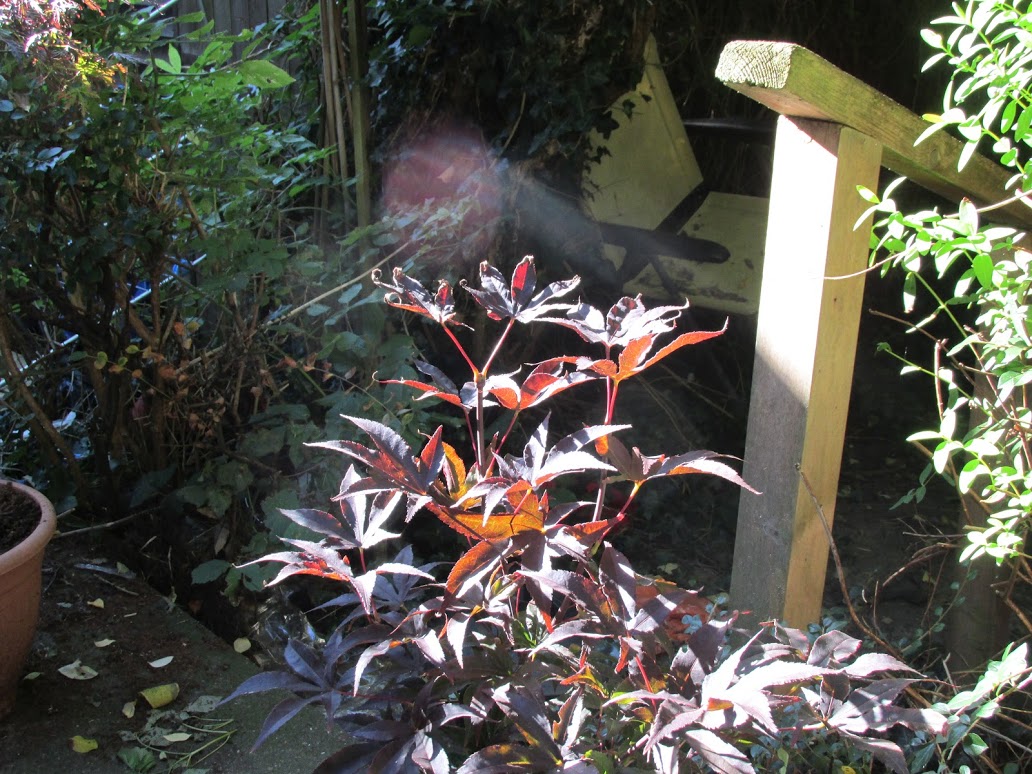
A group enraptured in a dance.

I  wonder why the geese fly high;

Creating patterns in the sky?

A group enraptured in a dance.

The stunning art of Providence.

I wonder why the trees are tall?

Standing close.I feel quite small.

The branches shiver in the breeze.

Ballet of winter, dancing trees

I wonder why the sun curves round

A path I see here from the ground?

The sun gives light which softly shines.

An Arche de Triomphe for the pines.

I wonder why two robins fed

On our crumbs of seeded bread?

Such sweet songs of courtship sound!

Life goes round and round and round.

She said she loved him. Never. No!

She said she loved him, long ago.
Dressed in white, she had her glow
Leaking spite from every pore.

He obeyed her, as we know
He tried to sleep as curses flowed
She said she loved him. Never. No!

Envy  showed in her decor
She   stole gold chairs and broke up choirs
Leaking lights, tried to destroy

Thomas Cromwell, her hero,
Angels  fled  as she got near
She said she loved them, aha ha.

And  her blood, sceptic it roared
Through her body like a fire.
Pushing spite out through her pores.

She passed a Church with leaning spire;
Got out and labelled it a liar.
She said she loved men, long ago
Cooked with spite, how can she know?


God speaks nothing, he’s the Word

You can’t catch God in that butterfly net
You can’t catch God and ask him   precisely what  he said

Be you any wiser than the tide is high?
God can laugh and God  can cry

You know words are metaphors
They unlock that secret door

Be you poor or be you rich
You can’t suppress that nervous twitch

Be you lightning in a storm or a daisy forlorn
You will never be a God who weeps for the torn.

God speaks English, God speaks Greek
He speaks Hebrew as the paralytic creak.

Don’t you go and try to catch
Frogs and toads and baby cats

When you’re in complete despair
You may find that God is there.

You must walk the way of love
Then you will be hand in glove

Yet we envy, we betray
We leave malice on the autoplay

God speaks nothing, he’s the word
From all humans, it is barred.

When he speaks we all will know
He does not speak it just for show.

It’s more a hint than a logical proof
You can’t leave Mythos off the hook

Logos is and Logos does
Because, because , because, because.


Keats and negative capability

Ennealophus-fimbriatus_2017-2

https://www.bl.uk/romantics-and-victorians/articles/john-keats-and-negative-capability


Stephen Hebron explores Keats’s understanding of negative capability, a concept which prizes intuition and uncertainty above reason and knowledge.

In December 1817 John Keats was returning from the Christmas pantomime with his friends Charles Wentworth Dilke and Charles Brown. On the walk home, he later told his brothers George and Tom, he got into a ‘disquisition’ with Dilke on a number of subjects:

several things dovetailed in my mind, & at once it struck me, what quality went to form a Man of Achievement especially in Literature & which Shakespeare possessed so enormously – I mean Negative Capability, that is when a man is capable of being in uncertainties, Mysteries, doubts, without any irritable reaching after fact & reason – Coleridge, for instance, would let go by a fine isolated verisimilitude caught from the Penetralium of mystery, from being incapable of remaining content with half knowledge.[1]

It is a famous passage; and it is entirely characteristic of Keats that he should come up with one of his most telling phrases (‘Negative Capability’) in such an impromptu fashion, without preamble or lengthy explanation. His language is not immediately clear, but richly suggestive and idiosyncratic.

What does Keats mean by ‘negative capability’? Clearly, he is using the word ‘negative’ not in a pejorative sense, but to convey the idea that a person’s potential can be defined by what he or she does not possess – in this case a need to be clever, a determination to work everything out. Essential to literary achievement, Keats argues, is a certain passivity, a willingness to let what is mysterious or doubtful remain just that. His fellow poet Samuel Taylor Coleridge, he suggests, would do well to break off from his relentless search for knowledge, and instead contemplate something beautiful and true (‘a fine verisimilitude’) caught, as if by accident, from the most secret part (‘Penetralium’) of mystery. The experience and intuitive appreciation of the beautiful is, indeed, central to poetic talent, and renders irrelevant anything that is arrived at through reason. Keats ends his brief discussion of negative capability by concluding that ‘with a great poet the sense of Beauty overcomes every other consideration, or rather obliterates all consideration’.

The poetical character

Keats never repeated the phrase ‘negative capability’ in his letters. Like similar nuggets found throughout his correspondence, it is of the moment, prompted by a desire to share his latest thoughts with his friends; it is not part of an overarching intellectual structure. But it is prefigured in a slightly earlier letter, written to Benjamin Bailey on 22 November 1817, in which Keats observed that he was unable to see ‘how any thing can be known for truth by consequitive [sic] reasoning … can it be that even the greatest Philosopher ever arrived at his goal without putting aside numerous objections – However it may be, O for a Life of Sensations rather than of Thoughts!’.[2]And Keats touched again on the idea of the passivity, humility even, of a great writer, in a letter he wrote to his friend Richard Woodhouse on 27 October following year. The ‘poetical Character’, he maintained,

is not itself – it has no self – it is everything and nothing – It has no character – it enjoys light and shade; it lives in gusto, be it foul or fair, high or low, rich or poor, mean or elevated – It has as much delight in an Iago [the villain of Shakespeare’s Othello] as an Imogen [Shakespeare’s heroine in Cymbeline]. What shocks the virtuous philosopher delights the camelion Poet.[3]

Why not trust the Word when all was said?

Can they not return,those much loved dead
Who leave such empty spaces in our hearts
Which like the hearts of mothers,fathers  bleed?

“Ash to ash” is what the Priests have said
But there is still a soul, a living part
Can they not return,those much loved dead?


Why will I not walk into the dread
Without a map or any kind of chart?
Why not trust the Word when all was said?

And so I linger late, without my  bed
Hoping  for a vision,for a start.
Can you not return,oh, needed dead?

Let us  bless the water and the bread
Bless us all before we too depart.
Why not trust the Word and what was said?

Now the holy banquet is prepared
The vital clue is  all our food is shared.
Can they not return,those much loved dead.
Ease the hearts of  humans as they bleed?

Go for a walk and get more intelligent…and turn off that TV

THE EXERCISE PART WORKS FOR DOING MATHS PROBLEMS…..

5 Simple Ways to Increase Your Intelligence

Written by John Wesley –

Your brain needs exercise just like a muscle. If you use it often and in the right ways, you will become a more skilled thinker and increase your ability to focus. But if you never use your brain, or abuse it with harmful
chemicals, your ability to think and learn will deteriorate.
Here are 5 simple ways anyone can squeeze a bit more productivity out of the old gray matter.

1. Minimize Television Watching – This is a hard sell. People love vegetating in front of the television,
myself included more often than I’d like. The problem is watching television doesn’t use your mental capacity OR allow it to recharge. It’s like having the energy sapped out of a muscle without the health benefits of exercise.
Don’t you feel drained after a couple hours of TV? Your eyes are sore and tired from being focused on the light box for so long. You don’t even have the energy to read a book.
When you feel like relaxing, try reading a book instead. If you’re too tired, listen to some music. When you’re with your friends or family, leave the tube off and have a conversation. All of these things use your mind more than television and allow you to relax.
2. Exercise – I used to think that I’d learn more by not exercising and using the time to read a book instead.
But I realized that time spent exercising always leads to greater learning because it improves productivity during the time afterwards. Using your body clears your head and creates a wave of energy. Afterwards, you feel invigorated and can concentrate more easily.

3. Read Challenging Books – Many people like to read popular suspense fiction, but generally these books aren’t mentally stimulating. If you want to improve your thinking and writing ability you should read books that make you focus. Reading a classic novel can change your view of the world and will make you think in
more precise, elegant English. Don’t be afraid to look up a word if you don’t know it, and don’t be afraid of dense passages. Take your time, re-read when necessary, and you’ll soon grow accustomed to the author’s style.
Once you get used to reading challenging books, I think you’ll find that you aren’t tempted to go back to page-turners. The challenge of learning new ideas is far more exciting than any tacky suspense-thriller.
4. Early to Bed, Early to Rise – Nothing makes it harder to concentrate than sleep deprivation. You’ll be most rejuvenated if you go to bed early and don’t sleep more than 8 hours. If you stay up late and compensate by sleeping late, you’ll wake up lethargic and have trouble focusing. In my experience, the early morning
hours are the most tranquil and productive. Waking up early gives you more productive hours and maximizes
your mental acuity all day.
If you have the opportunity, take 10-20 minute naps when you are hit with a wave of drowsiness. Anything longer will make you lethargic, but a short nap will refresh you.
5. Take Time to Reflect – Often our lives get so hectic that we become overwhelmed without even realizing
it. It becomes difficult to concentrate because nagging thoughts keep interrupting. Spending some time alone in reflection gives you a chance organize your thoughts and prioritize your responsibilities. Afterwards, you’ll have a better understanding of what’s important and what isn’t. The unimportant stuff won’t bother
you anymore and your mind will feel less encumbered.
I’m not saying you need to sit on the floor cross-legged and chant ‘ommm’. Anything that allows a bit of prolonged solitude will do. One of my personal favourites is taking a solitary walk. Someone famous said,
“All the best ideas occur while walking.” I think he was on to something. Experiment to find the activity that works best for you.
Conclusion :–I hope you aren’t disappointed that none of the techniques I’ve proposed are revolutionary. But  simple, unexciting answers are often the most valid. The challenge is having the will to adhere to them. If you
succeed in following these 5 tips, you’ll be rewarded with increased mental acuity and retention of knowledge.
Page 8 of 279

On the therapeutic value of ironing and other out of fashion notions


  • IMG_0003


I believe working with the hands is very good for us..gardening, sewing, building models..whatever you like.
Ironing is generally despised since women usually had such a burden with that on top of working outside the home.
And now, even if you have the time, it’s seen as a trivial task.I discovered ironing therapy when the bombs killed and injured hundreds of people in the Underground in July 2005.I saw the bus blow up on a TV in a shop window in the town centre and as my husband was in London I was very worried.
My husband was ok but even so, I was distracted and distressed in a way very familiar, I am sure,to people who live in certain parts of this world.
In the end, I took out all my numerous nightdresses and ironed each one very carefully.I have used this technique a number of times since.I find it’s best used on simple items= like hankies, underpants, nightwear so your mind can relax.Ironing men’s heavy cord trousers is definitely untherapeutic.
I think it can act like meditation in a way.And restoring a little order to chaos is usually helpful.
And it’s free too unlike counselling.Simple sewing can also be therapeutic as can cooking and gardening.
I recall in the 1970’s when I used to make bread a female friend of my husband told me off and said I was “letting feminists down”
So please, if you think I’m letting feminists down …don’t tell me.
I think we should have some freedom and also should value traditional female skills and talents as well as encouraging women to study or train for careers formerly closed to them.
Please excuse me now………I’m ironing 23 pairs of ladies’ undergarments this morning..yes,they are all mine.They say, there’s safety in numbers, though I’ve never known quite what that meant.I suppose wearing a lot of underpants would keep one warm and well covered in case you get into an accident or you have to climb a ladder in a public place..are you a lady window cleaner?
So I’ll put on my apron and begin to work.Ironing my hair today…..hot work.

Leonard Cohen sang it years ago

They say the flood is coming once again
Leonard Cohen sang it years ago
Who builds the ark, what was the pathogen?

Do we defer to women or to men?
Do we take it fast or fake it slow?
They say the flood is coming once again

We took away the  pillars built upon
Our ethics now destroyed by constant blows
Where is our ark, what was our pathogen?

We have PC for sins we can reckon;
And mini Stalins put on many shows.
They say the flood is coming  here again

Meanwhile, hidden Satans still beckon;
And goodness is  by bloodshed overthrown
Is there an ark, what was our pathogen?

Embarking soon I wonder where we’ll go
Is there dignity for those who cannot know?
They say the flood is coming once again
Who builds the ark, what was the pathogen?


Trust the unknown

Photo0915

Trust the unknown force that grew us,
From the joining of two cells;
An act of love and of self-giving;
Thus we can grow a newer self.

Trust the dark, the unseen aspects
Of the life we here do live.
Trust that there is Wisdom elsewhere;
Who to your empty self will give.

Wait in patience for the new  time
When inspiration  comes at last
Trust in darkness, silence,  lowness.
Opposition forms the cross.

Pain is bearable in lowness,
Like the worm in earth I dwell.
When I look I see the sunrise

And I trust all shall be well.