
The friendship secret: why socialising could help you live longer
She gave him a potential smile. Thar meant if he behaved himself he would get a real smile later in the day. Unfortunately he did not know how to behave himself after 30 years with her but surely one day the marriage will be consummated.
When the potential becomes actual
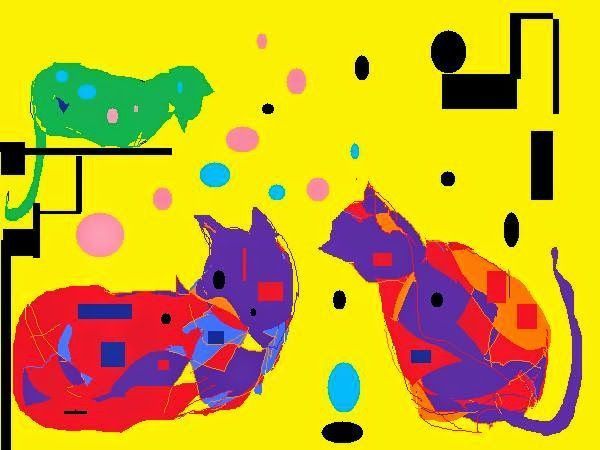
When Mary got home after her Autumn shopping trip. she went into the kitchen where her cat was waiting anxiously
What have you bought,Mother, Emile miaowed
I got some black patent Mary Janes in Clark’s Sale
You had some like that before.You said they were tight
Mary put the kettle on.It was copper coloured and cordless
Are we having our coffee now, the cat enquired?
Yes, but also I have read about a trick with tight shoes.Watch this.She laid the shoes on newspaper and poured boiling water into them
Oh,mother, that seems. cruel;5 he phoned 999
Hello, my mother has poured boiling water into her shoes
Why? Is it to wash her feet?
No, but I am worried the shoes might be hurt.
We’ll send the ambulance immediately
Meanwhile Mary had emptied out the boiling water.She took off her socks and put the new shoes on.
There , you see.They will fit now
The doorbell rang.Two policemen ran in.
We hear you are causing suffering to your shoes
Is that illegal ,Mary murmured?
Almost.When Boris lets Parliament begin we believe hurting leather shoes will become a crime
Is it because we are in the EU?
No, it’s only we British people who care about the pain of objects made from dead animals.So as soon as we Leave Boris will pass a new law
Is he a dictator,Emile miaowed?
We can’t answer that,Sir.You speak good English but where are you really from?
What is your first language?
Are you implying I am an illegal immigrant?
That I swam in up the Humber or swam with seals off North Norfolk before coming to Weybourne a well known way for Conquerers to enter England? I am not Julius Caesar and he landed near Deal.There is a big plaque there.Not put there by him!
Yes, are you from the Ukraine or anywhere in Eastern YouRup?
Are they like YouTube?
Don’t mess with us.We can arrest you.We are the Police and soon we’ll have our own State!
But you have no paw-cuffs. have you?
We can use string, the policeman said creatively
That sounds much more cruel then putting hot water into my shoes,Mary said politely but with a certain edge to her voice.
The policeman looked foolish.Yes,madam.
And cats can’t have passports, as yet.They go to a Cattery on the North Yorkshire Moors for their holidays.Some go to Cornwall.
Am I going, asked Emile? I don’t want to go all by myself.
No,I am renting a cottage in Hunstanton where pets are allowed.And the sands are white and the cliffs coloured in three layers
Thank you, replied Emile.I am happy to hear that.Can I have a bathing suit,Mother?Are there rock pools?
Ask LP Hartley
Suddenly Annie ran in.
Why is there a police car outside. she yelled anxiously?
Your shoes look very wet,Mary.Is it flooded in here?You should be more careful
That is no crime.
Not yet.You never know these days.
They both began to laugh and squawk and so frightened the police who ran out and drove away at 90mph
And so will all of us if this carries on
The world of physics is essentially the real world construed by mathematical abstractions, and the world of sense is the real world construed by the abstractions which the sense-organs immediately furnish. To suppose that the “material mode” is a primitive and groping attempt at physical conception is a fatal error in epistemology. Susanne K. Langer, Philosophy in a New Key: A Study in the Symbolism of Reason,
In the bitter depths of winter night
Boil the kettle, lose your human rights
If you feel depressed then eat our bread
It will remove the skull from off your head
Are you feeling lonesome in the crowd?
Buy our lipstick then men will be cowed
Did you think ceramic hobs were best?
Come to us and have your IQ blessed
I want a pan for halogen hot plates
I’d ask the cat but it’s out on a date
I need to boil my head and clean my feet
I guess that I ain’t smelling very sweet
Does Confession really help the damned?
God have mercy as the Devil can’t

Oh dear I’m feeling unwell Mary said to her friend Annie as they drank coffee after breakfast.
It’s January when everybody begins to feel unwell even before they catch flu
Annie I don’t know why you make wild generalisations like that.
You are taking it too seriously. When I look at my bank statement ot my credit card bill and look out of the window to see the heavy pouring rain I could say I feel slightly ill but in a metaphorical sense.
My goodness Annie whatever has happened to you? You sound very intelligent Have you been taking an open university course without telling me!?
Yes I’ve been taking great books of Russia and I really like Tolstoy very much.
You sound like a different person completely almost as if you were turning into me!
I hope not because I don’t like your dress sense nor your lack of makeup and perfume. And don’t think that you can turn into me just by wearing makeup because it took me a lifetime to become who I am.
Well I’ve been reading about projection the psychological type of projection and something that you don’t like in yourself you can project it into your friend and then you see it in her and she gets blamed for it all gets criticized for it and you feel totally innocent and wonderful
Blimey if we are both going to be very intelligent and literate it’s going to sound like something off that Melvyn Bragg programme In our time.
That’s an exaggeration.
Well Mary are you going to call the doctor?
Why would I want to call the doctor?
You said you were feeling ill.
I do feel ill with I’m not sure why I don’t have a cough or a cold I have no pain in my chest but i seem to be going to the toilet a lot . It might be the coffee.
No I don’t think that’s the coffee I think you’ve got one of your infections. You keep crying and you see a little bit confused about your appointments it’s in your brain rmmm. How can an infection in the bladder be in the brain?
Oh it’s all to do with inflammation . Mary was amazed at her friend’s observations
Honey are you sure that you are Annie?
Of course I am Annie why ask the cat he will tell you.
Emile looked at them with one eye open and one closed
Yes it is Annie alright
She is not any more intelligent it’s just that you are more stupid then you used to be..
Emile you are a very wicked cat why have you got no tact and courtesy?
Well you have often told me Mary that in an academic discussion it’s only truth that matters.
Well you sound like the Pope to me. But ut you’re not infallible
Now even the cat sounds more intelligent
What is the secret to this increase in the IQ and the general intelligence of everybody in the room?
Even when Mary is ill she is still very intelligent but not as much as she would be when she was well because without energy the brain cannot work abd the heart cannot work to feel the feelings that we need to combine with our thoughts before we can come to a conclusion about anything
Yes as someone once said
Energy is eternal delight
I think it was a poet William Blake who uttered this beautiful sentence many years ago but it is still true today.
And so say all of us

I am doing research into which place people watch TV, the young man at the door told Mary
I rarely watch TV, Mary informed him politely
First please tell me your name and ethnic group .he asked her.We must follow the rules ,if not the rulers. he muttered
My name is Danish so I am a Viking, she told him proudly
OK, that makes you English, he said deftly filling his form
You might as well say that the Romans’ descendents are English, she said in her mellifluous voice
After 2,000 years I think they qualify, he joked
Some were black
I don’t care if they are purple, he said courteously.At some point those born here are English.
What we mean is that there is no such thing as being English,Mary said academically
So true, the poor man John whispered.I am a Celt.Not a cult. You seem a very nice lady.Would you like to go to McDonald’s with me? We could carry on chatting
Do you mean come?
Come or go, give me an answer.do
I know it’s not where you usually go but I don’t earn much.
Yes,I’ll meet you at the bus stop at 5 pm, she answered.I don’t have a car
Neither do I, said John.
I like this bus.The people on it are really friendly
Mary shut the door and wondered what to wear
Annie appeared and tapped on her window with hermanicured hands
You are just who I need,Mary cried with joy.
She explained her problem and her date
I think jeans and a nice anorak with a scarf that makes you look grotesque
Will John like that?
It’s the fashion,Annie said pertly.I am amazed you are going out with that man.You don’t
know who he is.He might be a murderer.
I doubt if a psychopath would take me for a burger… more likely a posh restaurant
Good point, said Annie brightly
Let’s look at my scarves,Mary said.How about this zebra print?
I like this blue one with books printed on it,said Annie
I could wear both of them!~
You could start a trend, her dear neighbour told her
Meanwhile Emile was having a panic attack in the kitchen
Don’t panic,Emile said Mary.We can’t linger in McDonalds
The seats are small and close together
Tell me, which scarf do you prefer?
I like that one with cat’s eyes on it.Wear that and he will know you have a protector.
Honestly, it’s too much bother to decide.If only women had fur like cats,Mary said
What about shoes? called Annie
I’ll wear the green trainers and red socks
You will be a sight for sore eyes if you add some makeup
On hearing this, Mary screamed hysterically.
I think I’ll stay at home
And so will all of us
Your face is etched upon my heart.
I knew you in the morning light
Love is wise but never smart.
We have no need of others charts
In the mornings and the night
Your face is etched upon my heart.
As we waken sleep departs
To see your face is my delight
Love is wise and sometimes smart
Intuition, craft is art
Love is silent, hatred fights
Your face is etched upon my heart
Human Love can see in part
Face to face we’ll see aright
Love is wise love is not smart
Your face is etched upon my heart.
Love is wise but never smart
Is love blind? Who etched the lines?
Sacred, human, love is kind
Samuel Taylor Coleridge | The Poetry Foundation https://share.google/MHmBJ4Z7dnojraKAV
Samuel Taylor Coleridge is the premier poet-critic of modern English tradition, distinguished for the scope and influence of his thinking about literature as much as for his innovative verse. Active in the wake of the French Revolution as a dissenting pamphleteer and lay preacher, he inspired a brilliant generation of writers and attracted the patronage of progressive men of the rising middle class. As William Wordsworth’s collaborator and constant companion in the formative period of their careers as poets, Coleridge participated in the sea change in English verse associated with Lyrical Ballads (1798). His poems of this period, speculative, meditative, and strangely oracular, put off early readers but survived the doubts of Wordsworth and Robert Southey to become recognized classics of the romantic idiom.
Coleridge renounced poetic vocation in his thirtieth year and set out to define and defend the art as a practicing critic.

https://www.poetryfoundation.org/poets/john-milton
the volume were composed in Stuart England but published after the onset of the English Civil War. Furthermore, Milton may have begun to compose one or more of his mature works—Paradise Lost, Paradise Regained, and Samson Agonistes—in the 1640s, but they were completed and revised much later and not published until after the Restoration.
This literary genius whose fame and influence are second to none, and on whose life and works more commentary is written than on any author except Shakespeare, was born at 6:30 in the morning on 9 December 1608. His parents were John Milton , Sr., and Sara Jeffrey Milton , and the place of birth was the family home, marked with the sign of the spread eagle, on Bread Street, London. Three days later, at the parish church of All Hallows, also on Bread Street, he was baptized into the Protestant faith of the Church of England. Other children of John and Sara who survived infancy included Anne, their oldest child, and Christopher, seven years younger than John. At least three others died shortly after birth, in infancy or in early childhood. Edward Phillips, Anne’s son by her first husband, was tutored by Milton and later wrote a biography of his renowned uncle, which was published in Milton’s Letters of State (1694). Christopher, in contrast to his older brother on all counts, became a Roman Catholic, a Royalist, and a lawyer.
Milton’s father was born in 1562 in Oxfordshire; his father, Richard, was a Catholic who decried the Reformation. When John Milton, Sr., expressed sympathy for what his father viewed as Protestant heresy, their disagreements resulted in the son’s disinheritance. He left home and traveled to London, where he became a scrivener and a professional composer responsible for more than twenty musical pieces. As a scrivener he performed services comparable to a present-day attorney’s assistant, law stationer, and notary. Among the documents that a scrivener executed were wills, leases, deeds, and marriage agreements. Through such endeavors and by his practice of money lending, the elder Milton accumulated a handsome estate, which enabled him to provide a splendid formal education for his son John and to maintain him during several years of private study. In “Ad Patrem” (To His Father), a Latin poem composed probably in 1637-1638, Milton celebrated his “revered father.” He compares his father’s talent at musical composition, harmonizing sounds to numbers and modulating the voices of singers, to his own dedication to the muses and to his developing artistry as a poet. The father’s “generosities” and “kindnesses” enabled the young man to study Greek, Latin, Hebrew, French, and Italian.”
Little is known of Sara Jeffrey, but in Pro Propulo Anglicano Defensio Secunda (The Second Defense of the People of England, 1654) Milton refers to the “esteem” in which his mother was held and to her reputation for almsgiving in their neighborhood. John Aubrey, in biographical notes made in 1681
Happiness is compulsory at this time
Xmas parties,alcohol and drugs
Inebriated,I can never rhyme
I sit and watch the mating of the slugs
But surely nothing mates in winter cold
For slugs don’t own a coat like humans do
Perhaps ,despite appearance, they are bold
Need no injections to prevent the flu.
On balance would you rather be a slug
That lives a life of freedom in the grass
Or do you live because you write and blog
And in the evening play a double bass.?
A slug can’t sing a song nor speak kind words
This idea is foolish and absurd.

Mary went to the hospital to see the rheumatologist
The entire hospital had been re-built and half the site was full of so called “Executive Homes”
Mary and Annie took a cab as it was raining hard.Although Mary was wearing her new green raincoat, she did not like to get it wet. .
Where did you buy your mac,Annie enquired jauntily? Cotton Traders,.
Mary admitted nervously.
It looked lighter than it is and Stan liked me in green You already have two trenchoats and a nylon mac,Annie told her.
And Stan is no longer here What’s it to you?Do you want me to give all my money to the poor?
Well, some of it,Annie responded anxiously.
You need to pay your utilities. My utilities!That sounds like something sexual that cannot be openly named,Mary cried You are confusing it with urethra, Annie laughed What is my ethra? whispered Mary No, the urethra is a little tube for the bladder to empty itself through Isn’t the human body amazing? Mary acknowledged using a cliche for better effect Definitely, said Annie and I love wearing beautiful clothes like velvet Where do we draw the line though, between looking good and giving money to the poor, tortured or victimised,Mary pondered
It is hard now because we can see what the rich have and we want it.Annie shouted calmly
Or in your case you can see all those philosophy books on Amazon and buy them with one click she continued. Mary could see in her mind’s eye her living room piled high with books but if she were rich like Michael Frayn she could have a huge house full of shelves and desks. Adam Phillips,’ room looked more full than Mary’s and he must want it like that
In the waiting room Mary looked at Wittgenstein’s biography by Ray Monk on her kindle while Annie read The Sun. Soon Mary was called in
Hello, said Doctor Morse.
How are you?
In the pink , she cried shyly.
I don’t understand that, he said in his kindly way It’s an old English saying.It means I feel fine, but I don’t really that’s why I am here He looked at her left hand. and said there was no cartilege between the the thumb and wrist.
Where has it gone,Mary asked but he remained silent Then he said,I think steroid injections will help.Would you turn your chair round by 180 degrees so you can put your arm on my desk? Mary turned round and felt a bit dizzy It’s hard getting older isn’t it, the doctor said in a tone rather artificially kind like a bad actor on stage and afraid of forgetting his lines or forgetting whether he was in King Lear or a Comedy Mary burst out laughing to her surprise. .You are a weird person, the consultant told her thoughtfully with his glowing eyes shining like the sun over Lake Windermere in a heatwave by
Well, we can’t all be exactly the same ,she told him foolishly Then she had to turn her chair round again. despite her poor hands
Why don’t you have swivelling chairs ,she asked pointedly They won’t give me enough money, the doctor said even though I am a Consultant and I have published lots of papers Can’t you buy a second hand chair? Mary wondered politely No, it has to pass Health and Safety,Dr Morse whispered cautiously yet angrily.
I see.
Well don’t blame it all on the EU. I love the EU, he told her.I hope Brexit fails Me too she croaked sweetly They sat in companionable silence for a few minutes until his next patient arrived I will see you in September, he told her optimistically his smile making her giggle inside so her body shivered with suppressed laughter not fear Miaow, cried Emile from Mary’s designer handbag What in G-d’s name is that, the doctor asked nervously Don’t worry, doctor.I forgot to leave Emile in the Waiting Room Emile stuck out his head and smiled at Dr Morse Good morning, he said graciously.Is Dave the paramedic here? No, they are not here they have their own Ambulance Station down the road Emile began to sob as he liked to get his own way by any means possible.Why, he was almost human Mary apologised as she shook hands with the doctor. Thank you for helping me, she murmured.I feel better already And so say all of us

One of the most important is that it is better to cooperate on things on which you can agree than to focus on the things that divide you. Historically, this is a huge lesson. What might have happened in Germany if the 1930s communist movement had tried to work with the social democrats and liberals against the fascists? Instead they perished in the canps
From mary.tandem@gmail.con Hi Stan I have told you already all about what I’ve been up to at this Conference on Irregular Numbers,I thought you might like this article on Structuralism I attach to the email along with a photo of Wittgenstein in bed eating a meringue with a cake fork justlike ours Love,Mary [your wife] From stan.tandem@ymail.comb How delightful to know you are thinking of me today and thank you for taking the time to write when you are busy.I am also busy now with the baking but I shall put the doc somewhere safe and take a look later; however,as I have said before,Structuralism is not something that I have found interesting.. it may even be a very bad, destructive development of modern thinking.Since I value your judgement I shall at least read the beginning in case it is presented in a better form than I have seen before…. I care for you,love you.So despite my prejudice I shall not ignore your offering if only to keep you happy Oh,For God’s sake,let’s top this stupid game and be honest It’s just rubbish…and I wonder why you bother with it.Still we can’t all be geniuses so I suppose I ought to be more patient with you as you have such a sweet smile and singularly lovely eyes and will do anything I want, more or less, except sending me photos of yourself in silk lingerie lying on a bed holding a rose between your teeth I am sick of intellectual discussions and wish only to kiss your hands and your lips and then fall gently into a big bed with silk sheets Who did you say you were?Your tone sounds over familiar… don’t say you are my wife!I thought I’d got lucky for once irately yours ,Stan and Emile [he can swim now]

Hannah Arendt, an émigré from Nazi Germany.
“The result of a consistent and total substitution of lies for factual truth,” Arendt wrote in her classic volume The Origins of Totalitarianism, “is not that the lie will now be accepted as truth and truth be defamed as a lie, but that the sense by which we take our bearings in the real world—and the category of truth versus falsehood is among the mental means to this end—is being destroyed.”

The pathways to the heart are learned by love
And those who find this knowledge never lose.
Though virtue and her graces help above
All we see are hills and rocky views.
With willingness to cross the seas of mud,
To drag ourselves through tangled briar-filled woods.
Our soul shows us the truth and what is good,
For trees that looked quite dead are now in bud.
With wild flowers kissing feet and blessing toes
Encouragement is finally received
And as we smell the fragrance of the rose,
We know our gladdened hearts were not deceived.
Fortune favours those with steadfast feet.
The journey may be long, the end is sweet.
Note: The saying “Fortune favours the brave” is attributed to several people..Virgil, Pascal, Montaigne are ones I have found
When they shot Renee Good
I was eating an all-day breakfast sandwich from Marks and Spencers
I don’t think I will eat one again.
They’re killing the flower children now
A young woman with a child in her eyes
Smiling through the car window
Why would that make you think of death?
Someone’s hand presses the trigger.
Flared jeans are best worn with platforms or sharp stilettos.(The telegraph newspaper)
The children will put flowers into the road around where your corpse would have fallen if you had been walking.
But you were in a car.
They are meant to appear to be brutal
How better than to actually be brutal?
They’re not the brightest gamblers at the table
I can see your face and your hair I see you smiling out of the window.
Your mother wore flares but with bare feet.
Stilettos are a weapon and maybe that’s the point of them.
Your mother said you were very compassionate but you can’t be compassionate when you’re dead.
Is that that point?
What kind of people do they employ and how will they live with what they have done?
I understand Freud . We can hide things from ourselves very easily
Another bloody footprint on American history.
Time will say nothing but I told you so
Time is not the great healer because some wounds don’t heal.
Killing the symbol of Life itself. …
But that’s not surprising because death is in their tactics as they feel they must have the ultimate sanction seeing that there is no God anymore.

https://www.poetryfoundation.org/poets/ursula-k-le-guin
O
Years do odd things to identity.
What does it mean to say
I am that child in the photograph
at Kishamish in 1935?
Might as well say I am the shadow
of a leaf of the acacia tree
felled seventy years ago
moving on the page the child reads.
Might as well say I am the words she read
or the words I wrote in other years,
flicker of shade and sunlight
as the wind moves through the leaves.


There always were many places where you were not.
Now there are more.
But in the places where you were not
I knew that you were somewhere.
But now you are nowhere except in our minds.
And the world seems more empty to me
Without the familiar the beloved the long known
The whole world seems empty of you.
But maybe in the walled garden
I could catch you near the azaleas
Hear you singing in the distance
See your long slender body run to hide from me
But would I see your face?
Why have you abandoned me?
Why do you run from me and hi behind these old walls,?
Yes you are not here but I sense you from the corner of my eye I see you moving away running..
You’re a child again playing with me.
I almost hear you laugh now you are free of all your burdens and the pain.Ii may be happy for you leaving you in the world garden with the old bricks in the wall and the benches by the rosebed.
I see a shimmering light maybe it’s migraine
But I think it might be you teasing me.
Now the world is empty of you yet I’m still here.
You should be there or there or there but you are not.
You have gone

I nailed my i pad to the table as it kept moving; now it won’t work.
My wife has accidentally posted her inbox onto Blogger. Does it matter? We do all our banking online anyway.
I accidentally posted my Yahoo Sent Mail box onto a poetry website and it has won a prize for post-modern poetic discourse.
Can I catch a virus from the computer?Can it catch mine?
Shall I clean the keyboard with Jif ?
Can Sainsburys see me when I place an order on my Mac; I am wearing silk lingerie my boyfriend pinched from Harrod’s?Will they report me?
Can anybody start a blog?How do you stop it once it rolls away?
Why is it dangerous for me to use my photo as an avatar when it’s on the back of my novels and I’ve been interviewed on TV?
Is it the back-lighting from the computer or are computers intrinsically more sexual than real life?
How do I download a new letter A as mine broke when the dog scratched my keyboard and bit my foot.
Can God see what I write on my blog?
Do Catholics confess online now or is it better to throw a list of sins into the sea in a bottle instead?
Amazon told me I have saved £890 by using Prime for deliveries.How much have I actually spent? Roughly?.
Can the neighbours telI if I watch 67 shades of blue.[the love life of Picasso.]
Is Mossad watching me through my webcam and if so,can you tell them I am very shy? What is it? Mossad? Can it kill?
Why don’t Arabs use our alphabet?We use their al-gebra to make nuclear bombs
Low sun shines
Glistening holly leaves,ah
A wood pigeon passes
All the trees shiver
And the ends of shrubs waving
Makes me think,goodbye
Leaves like littls stars
Bare wood like burnt sienna
With its glowing orange tinge
Why are shadows long?
The sun blinds me in winter
Then it creates a moving image
Indifferent sun
Knows not of Middle East hell
But God remembers, suffers.
Criminal Jesu.
God descended to this world
He dies with victims
Why the torture
Fighting inevitable~But why such sadism?
Weep as the trees lean.
Sparrows shudder, remain.
Life is here again
Bewildered by our contradicting aims
Hurt by lawless, lasting grief and pani
The image of the refugee disdained
Shows again the face within his face;
And yet he too is human in embrace Bewildered by our contradicting aims; Obey our Christ or keep our wealth to arm
We too are nervous when we read
The lies of men whom we have picked to lead
Who has got the courage of true gaze
To see the truth and like the Christ be flayed?
Who will risk rejection by the mass?
Far better to avert our eyes and pass.
No one is an island, John Donne says
The bell that tolls informs and shows our way.
When he went away
He said,”Lehitraot,mama.”
Do vstrechi.
He died, but I’m still here
Yes,in my heart I feel his love.
But why did I live,
And he did not?
Auf wiedersehen
Lehitraot.
Yes,darling,I’ll see you later
,When the sky turns black and all the stars blaze bright
I’ll see you shining in the night.
I’ll see you in my dreams alas.
Do vstrechi.
But why you and not me too?
Araka
I can’t understand
.Lehitraot,beloved.
A plus tard
Some where in this world,you fell
But no-one,not even God, can tell.
God was absent then or in some other place
He’s gone again
.They said He’s died too
,But He didn’t have a mother like you.
Do vstrechi.
My breasts ache and my heart and soul,
My breasts were made to make you whole.
To feed, give love and to console.
A plus tard
And now they ache with grief as my tears fall
.A bientot
My body trembles in the night
As dreams may bring my lost ones to my sight.
A plus
I’d walk across the roughest bleak terrain
If l I could find my loves and hold your hands again.
Do vstrechi
.The bell rings on the ancient clock
As time goes on as normal, never stops.
Araka
I wish the hands of time could be reversed,
And I was not living with this curse.
People forget that I once had a son.
They think my grieving has been done.
Araka.But grief and loss and pain will never end
Until the curtain of my death descends
Auf wiedersehen.
Meantime I look at flowers and birds and trees
,But it’s really you my deepening insight sees.
Lehitraot.
The inscape of my heart is shown to few.
An artist of the lost would know this view.
I know I want to see just you.
Do vstrechi.
But for me there is noAuf wiedersehen
Never again will you say
What you said that day
Lehitraot,Mama.Papa
A plus tard
Tot ziens.
See you later
See you ,darling
See you soon

How can it be that he is never here?
How can it be I do not hear that voice
His presence haunts from his old ,battered chair
Though I have money and no need unbare
I feel the grief , the affect of his choice.
How can it be that he is never here?
What is the world when loss turns to despair.
When every sheet by weeping is made moist?
His presence haunts from his beloved chair
Now we learn the symbol of the hare
Unpeaceful, hunted, jugged or potted roast
How can it be that he was ever here?
Into the real we stand and long time stare
We’re begging, blaming,badgered and then gassed
His presence feints with ours in death’s own lairs
Now the world of man has long surpassed
The time we could blame God for what we‘ve missed
How can it be that He is never here?
His absence haunts , symbolic , suffered, real

There was a young lady in Ealing.
Who slept upside down on the ceiling
She said, if I fall out
I’ll get quite a clout
In the meantime the floor has been healing.
Does gravity not affect women?
And that is just the beginning
Their verses don’t rhyme
Their clocks have no chimes
And that is the least of their sinning.
For no mother is perfectly good
None ever do all they could
We’ve all known the pain
And given them the blame.
Then there’s war and the shedding of blood.
Why do we all want more stuff ?
I am speaking now quite off the cuff.
To Greenland we will go to live in the snow.
For sure, we’ve never had it so rough

https://www.nytimes.com/2026/01/05/learning/word-of-the-day-didactic.html




 How my heart speaks