Love gives the soul her appetite.

Love gives the soul her appetite.

Though the night is black and starless,

The inner guide is never careless.

The notes are struck,the tune is played,

Plain melodies are overlaid.

In this chant and benediction,

Healing comes for desolation.

Though the passage way is narrow,

This road is the one to follow.

Struggling through the mud and mire,

We see,in darkness, tongues of fire.

The sacred centre of our life

Is never found without some strife.

Just then, the dark and light combine.

To create a symbol for the mind

Wittgenstein’s biography by Ray Monk reviewed


7492032_f248

I find this book very beautiful and significant.
i did not like his life of  Russell..So it must be that wittgenstein is a more important figure in our culture.Russell  had wives and children but altogether I found his life depressing

Give Him Genius or Give Him Death [New York Times]

LUDWIG WITTGENSTEIN The Duty of Genius. By Ray Monk. Illustrated. 654 pp. New York: The Free Press. $29.95.

Ludwig Wittgenstein was the greatest philosopher of the 20th century. Many books have been written about his philosophy. Ray Monk’s “Ludwig Wittgenstein” is the first substantial biography of his whole life. It is not a book to which one would turn to learn about Wittgenstein’s thought, but enough is said about the philosophical writings to make intelligible the story of the philosopher’s life. And the story is well told; the narrative is vivid, clear, sympathetic and credible.

Wittgenstein’s great-grandfather was a land agent named Moses Maier, who in 1808 took the name of his princely employers, the Wittgensteins. His father, Karl, a friend of Johannes Brahms, was the most acute industrialist in the Austrian steel industry; he made the family the Austrian equivalent of the Carnegies or Rothschilds. He had five sons and three daughters by a Roman Catholic wife, and baptized all of them into the Catholic faith. He set out to educate the sons in a very severe regime which would turn them into captains of industry. He did not succeed. Three of the sons committed suicide; the fourth, Paul, became (despite the loss of an arm in World War I) a concert pianist; the fifth, the youngest child, born in Vienna in 1889, was the philosopher.

Ludwig Wittgenstein attended the Realschule in Linz, where he was a contemporary of Adolf Hitler. He was a poor scholar, teased by his peers. At school he also lost his faith. The major intellectual influences on him in his youth, apart from the philosophical works of Schopenhauer, were the physicist Ludwig Boltzmann (suicide 1906) and the psychologist Otto Weininger (suicide 1903).

Mr. Monk believes that Weininger’s bizarre book “Sex and Character” was of fundamental importance in shaping Wittgenstein’s career. According to Weininger — a homosexual — all human beings are bisexual, a mixture of male and female. Woman is nothing but sexuality: every woman is a mixture of prostitute and mother. Men must choose between the masculine and feminine elements within themselves; the ideal for a man is to free himself from sex. “The choice that Weininger’s theory offers is a bleak and terrible one indeed: genius or death,” says Mr. Monk. “If . . . one cannot free oneself from sensuality and earthly desires — then one has no right to live at all.”

For Wittgenstein, to acquire genius became a categorical imperative. He once described Beethoven greeting a friend on completion of a new fugue: he “came to the door, looking as if he had been fighting the devil, and having eaten nothing for 36 hours because his cook and parlour-maid had been away from his rage. That’s the sort of man to be.”

It was in Cambridge in 1911 that Wittgenstein first gave evidence of genius in philosophy, and it was Bertrand Russell who first recognized it. Wittgenstein was, Russell wrote, “perhaps the most perfect example I have ever known of genius as traditionally conceived, passionate, profound, intense, and dominating.” Russell was already well known as the author of powerful, original work in logic and mathematics; he soon realized that Wittgenstein’s gifts were greater than his own, and he devoted himself with great generosity to their development. In 1912 he told Wittgenstein’s sister, “We expect the next big step in philosophy to be taken by your brother.”

The expectation was fulfilled, but Wittgenstein’s philosophical message was not given to the world until after World War I. During that war he served in the Austrian Army on the Eastern and Italian fronts, and much of the material that later appeared in his masterpiece, “Tractatus Logico-Philosophicus,” was written while on active service. At the front Wittgenstein showed conspicuous courage and was commended and decorated; he was also converted, by the reading of Tolstoy, to an intense though idiosyncratic Christianity. “Perhaps the nearness of death,” he wrote in his diary, “will bring me the light of life. May God enlighten me. I am a worm, but through God I become a man. God be with me. Amen.”

After the war, having inherited a share of his father’s fortune, he found himself one of the wealthiest men in Europe. Within a month of returning from the army he gave all his money away. For some years he supported himself as a gardener or as a schoolmaster in rural Austrian schools. He believed, for a while, that he had already solved all the problems of philosophy in his “Tractatus,” which appeared (after great difficulty in finding a publisher) in German in 1921 and in English in 1922. The book quickly became famous; though it was itself metaphysical and almost mystical, as well as austerely logical, it was most admired by the anti-metaphysical positivists of the Vienna Circle.

It was at Vienna that Wittgenstein returned to the study of philosophy, when his career as a schoolmaster came to an unhappy end after allegations of cruelty to his pupils. Eventually he returned to Cambridge and during his years there in the 1930’s he became the most influential teacher of philosophy in Britain. The philosophy he taught in this period differed from that published in the “Tractatus”; it was not presented in print until “Philosophical Investigations” was published posthumously in 1953.

After the Anschluss, Hitler’s forced unification of Austria and Germany in 1938, Wittgenstein became a British citizen. During World War II he worked as a paramedic, and in 1947 he resigned his Cambridge chair. He continued to write philosophy and to communicate philosophical thoughts to close friends and disciples. After a period of solitary life in Ireland, he stayed in the houses of various friends in Oxford and Cambridge until his death in 1951 at the age of 62. He left a mass of philosophical papers, many of them still awaiting publication.

Wittgenstein’s genius is patent to any philosopher who will take the time and trouble to come to grips with his profound but difficult writings. His life, as described by Mr. Monk, seems to have been a lonely and tragic one. He was often tormented by temptations to suicide, and was sometimes on the verge of mental illness. He regarded his life as a professor as “a living death,” and held many of his colleagues, in the various callings he pursued, in loathing and contempt. His only philosophical peer was Russell, and the relationship between the two soured after Wittgenstein’s return to Cambridge. Many of his philosophical disciples loved him, but it was a love mixed strongly with fear.

Four times in his life, according to Mr. Monk, Wittgenstein fell deeply in love. Three of his loves were male and one female. (Sensational stories have been told of Wittgenstein’s passion for rough homosexuals picked up in Vienna parks; Mr. Monk examines the evidence patiently and convincingly and concludes that any such encounters took place only in Wittgenstein’s own fantasy.) David Pinsent, to whose memory the “Tractatus” was dedicated, accompanied Wittgenstein to Norway and Iceland in the prewar period; he was killed in 1918. Francis Skinner, who came up to Cambridge as a student in 1930, had an all-absorbing relationship with Wittgenstein in the 30’s; and in 1946 Wittgenstein fell in love with a Cambridge medical student, Ben Richards, 40 years his junior.

MANY readers will be surprised to learn from Mr. Monk’s book that there was a time when Wittgenstein had plans to marry. From 1926 to 1931 he had a friendship with a Swiss woman, Marguerite Respinger. For a period he wrote to her almost daily, and he sculpted a bust of her. An entry in his diary for 1930 reads: “Arrived back in Cambridge after the Easter vacation. In Vienna often with Marguerite. Easter Sunday with her in Neuwaldegg. For three hours we kissed each other a great deal and it was very nice.”

Once it became clear that Wittgenstein wanted to marry her, Marguerite drew back — especially as it transpired that what the philosopher had in mind was a Platonic, childless union.

Faith in God was important to Wittgenstein; but his faith seems to have been a somber one. God was perhaps no more than Fate. If He was to be thought of as a person, it was solely as a severe judge. Yet Wittgenstein’s last words were, “Tell [ my friends ] I’ve had a wonderful life.” Ray Monk’s book has succeeded remarkably in portraying some of its wonders.

HE WELCOMED THE BOMB

Wittgenstein’s hostility towards professional philosophy and his dislike of Cambridge remained constant throughout his academic career, but in the years . . . that followed the Second World War, they seemed to become fused with a kind of apocalyptic vision. . . .

What links this apocalyptic anxiety with his hostility to academic philosophy is his detestation of the power of science in our age, which on the one hand encouraged the philosopher’s “craving for generality,” and on the other produced the atomic bomb. . . . He even welcomed the bomb, if only the fear of it could do something to diminish the reverence with which society regarded scientific progress. . . . The most pessimistic view, for him, was one which foresaw the triumph of science and technology: “Science and industry, and their progress, might turn out to be the most enduring thing in the modern world. Perhaps any speculation about a coming collapse of science and industry is . . . nothing but a dream; perhaps science and industry, having caused infinite misery in the process, will unite the world — I mean condense it into a single unit, though one in which peace is the last thing that will find a home. Because science and industry do decide wars, or so it seems.”


Sins for the single?

1 trees2461812080232073202_n

1.Go to bed with married people of either sex. Mortal Sin and immoral probably.Recreational for the hardened sinner.
2.Envy people with partners until you are ill. Probably mortal and killing your spirit.Then die of grief and torment.
3 Tell everyone your late partner’s misdeeds.They will soon drop you.
4.Never pay for coffee when out as you are living on less money.The effect depends on how nice your friends are.If you still have any!
5.Complain about G-d.Say G-d is a woman.They don’t care.
6.Tell the phone company you are sick with grief.Not much of a lie.Who needs a phone?
7.Cancel all the charity donations that your late one paid by DD and spend it on Icecream.Get fat and get diabetes.. then go to Purgatory.
8.Lie in bed dreaming all day.This is not really a sin but it may be a mistake.Since I can’t do this I shall envy anyone who can.Because to be is to do.
9.Connect to your neighbour’s Wi-Fi instead of their wife.Status undecided.
10 Feed all the cats in your street and take them to bed.Is this a sin?
11 Check out if you may be gay.It’s not a sin to wonder.
12.Wonder what you would be doing if you were not alone.Not a great sin but not good for ruminators
13.Start disbelieving in Fate.Then keep going

Least dreaded outcome is love

He had a lead finger in my moat.Call my MP for a comparison.
I am dreading your writes after the weekend.

I am dreading you rites too.
Write me a letter or zoom in and speak
I shall reel with it,roll with it and be wry with it.
I felt a fatal blow from a light breeze.
Dreading a thousand cuts,I hung myself in the wardrobe.Not easy.
You look so dear in my downlighters I could just kiss you.But are you human?
Don’t get dressed today.Let me examine you with a fine tooth comb please.It’s just a game I invented,
I rhymed it a bit rough today.It’s this cough.
Please dig for the old today.We need potatoes and ants and will roast any worms with the batter.Worm in the Hole
Why dig yourself into a hole when God will do it free?
Do dip your toe into the water or you can’t come to bed.. how about nailing that brush too?
Dirt leaps up allover the floor.Can anyone ask for a broom
Do as I pray and sell me on E bay
Least said,easiest defended.
Why walk with hauteur on out water?It’s just filth
Do not look so awry.I hate it.
Awry in the bed,what more to be said?

To my brother

Ah,brother I don’t want you to lie still

No blood to circulate,no thoughts,no will

No help,no joyousjokes no sharp true eye.

From our old shared pram,to live, to die.

I used to do your homework late at night

Abstract thought to you was no delight.

You wondered over x and y and z Preferred the shapes of Nature in your head.

I shall retain the memories of the good

You who taught me speech and hate and love.

The future without you I did not see.

Imagination fails beneath the tree.

Civilization is a war

Writing poetry is it like a diary?

It’s not written by my conscious self yet when I read my writing I recognize myself.

Sometimes I amuse myself

It makes me happy or angry or sad

When I can’t do it I feel deprived but sometimes I can’t tune in

Maybe I don’t have the energy for it.

Sometimes I’m very surprised by what I’ve written it hardly believe that I wrote it.

The something about the present world that’s not good for writing

Where there a wars in other countries that I was here between fellow countrymen between friends

130,000 people were killed when in the bombing of Dresden but  how many people think about that now

That can be a joy in destruction if you feel you have an excuse for it but those were all people human beings children trying to find some shelter from the war

How many died in the Bosnian war in 1995? It’s not just the numbers it’s the way in which it was done.

It’s the Us and Them that’s so dangerous

Pray father give me your blessing

Through my fault through my fault through my most grievous fault.

The words we heard when we  learned how to swear

The pleated skirts that teachers  used to wear
The tight permed hair, the handbag and the pearls
The words we heard when we  learned how to swear

With words we threw out what we could not bear
Then simpered by the window lips uncoiled
The fleeing minds that we dare not declare

The worst came out and everybody stared
My head was turned, inside my mind  still whirled
The  muck we heard when we first  had to swear

Now we wear   our jeggings, pleats are rare
Yet there’s elegance in skirts that   swirl
Depleted teens  with beauty gone awry

We did some Hardy and into Shakespeare tore
Now we read  Ted Hughes and  Sylvia’s pearls
The  midden  reeks,hate makes the goldfish swear.

The gold rimmed glasses in the mist and murk
The  hairnets, the control, the constrained smirk
The worn out books, the  turning   of the years
The words of joy  and woe, we learn our  prayer


And make the duvet stand up like a throne

If I were a cat I’d  be quite sure
That every living creature walks on feet
The  goldfish I that I capture when allured
Are not alive although their eyes look sweet

If I were   a cat I’d  sleep all day
Not waste my time with humans  and their talk
I cannot see a god so I won’t pray
But every night I’ll go out on a stalk

If I were a cat I’d  sniff their beds
When my owners left me all alone
I’d bite and scratch if there were a loose thread
And make the duvet stand up like a throne

I would not ever ask for what I want
Nor give a hint of pleasure nor of joy
If they cannot guess,I shall them taunt
I’ll sulk until  they  get me a new toy

I do not care to  sit on  human laps
Nor  for  them call me sweetie pie
Sometimes I have let my  temper rip
Sometimes I mioaw, I tell a lie

I’m beautiful ,I’m handsome,I’m divine
And as I look I see the whole world’s  mine

Deep in the mind

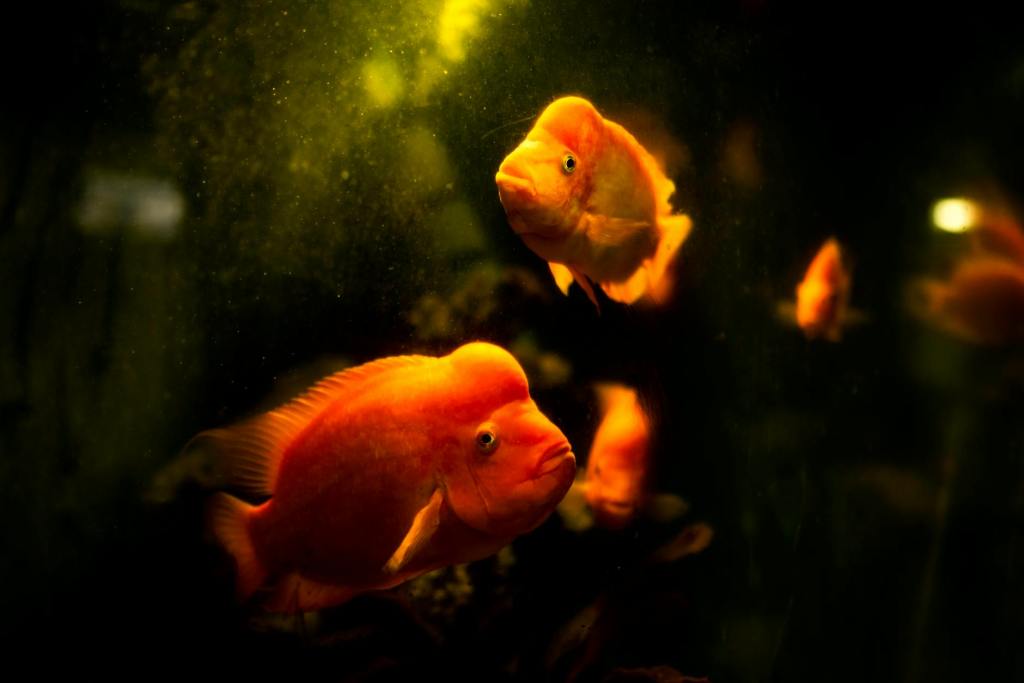
What is interesting about water, is not the rubbish floating on the surface

Is not the rose petals being washed away

What’s interesting about water is the fish that swim deep down

Lead lives, live and procreate

Sometimes surfaces are important, are all that we can see

But see the goldfish darting away

In the deep parts of the mind we have fish that swim

More interesting than the news about an MP deciding he is a woman

More interesting than what the Queen was wearing at the Chelsea flower show.

Deep down the fishes swim and they are youm

This is your mind deep down and creative

Full of vigorous life.

But when you go to the hospital to see the doctor

Do dress well because the surface is all that they can see unless they use a scanner

Scanners don’t show the depths of your mind and heart

What can show that?

Many little gestures words feelings expressions your friends can see your true nature

They said cultivate your garden but I wonder if they should say,cultivate your pond?

He has sold his brain to the company but I’m not sure about his mind

I must be out of my mind

I’ve lost my mind.

I’m in two minds about your invitation.

Have you made up your mind?

I was in the wrong frame of mind yesterday to write an article about statistics. I don’t know whether I will ever get into that frame of mind again.

Does your wife mind that you have three girlfriends

No but they all mind about it themselves.

You can sell your soul but can you sell your mind?

I don’t mind if he goes to the pictures tonight or not.

She’s got a very rapid mind ;it’s it’s the fastest one in the university but sometimes it runs away with her.

Well my husband was very broad-minded which is more than I can say for that narrow minded woman my mother.

His mind was like a rapier and he killed anybody he wanted to

You have to exercise your mind sometimes. You could try learning algebra or taking at watercolour painting.

She has got a very deep mind but is it worthwhile to develop it?

His mind is as shallow as a goldfish bowl alright but they get on fine.

He has got the best mind in Oxford.

Can you find out where he got it from?.

Keep your mind still and do not let it wander.

Do I have the right to imprison my mind?

The mind has mountains sheer cliffs of fall.

She made up her face while waiting for him to make up his mind.

If you are not in your right mind where can you find your wrong minds? Maybe the wrong one is the right one for this occasion

Don’t let it get on your mind let it float away on the current.

I will go for a walk to clear my mind.

My mind was stuffed with trigonometric formulas

You’re too greedy by half. I don’t care for your behaviour

I don’t really mind either way

I will keep you in mind while you are sitting examinations.

Are you going to pray for me?

You will do well in my mind forever.

She wants a designer mind.

Who is going to replace God?

Will Vidal Sassoon change the size of woman’s hair forever.

Did God mind?

Can a mind be wounded?

The king was very weak minded

I thought you were going to say very meek. winded

Shouldn’t It be wound?

I don’t see why I should always use the language everybody else uses.

Would you mind it or would it bother you if they used words they invented?

I don’t know my own mind on that matter.

Well it doesn’t matter to me if you don’t mind. I won’t know whether I mind or not till my heart feels something

I wonder how minds can feel when thry5 have no hands

Well if your heart is touched by someone’s kindness you will start to understand but I hope you don’t mind me telling you this

Odd road signs

1 Do not stop your car to read this sign.

  1. If you can’t read this sign get your eyes tested~unless you are illiterate
    3 This sign is not here till further notice
    4.This sign is here but don’t look at it
    5.This sign was paid for with your council tax
    6 This sign is not an omen.Evil is already here
    7 Criminals reading this sign, please call the police
    8 There are no signs till the other side if Hardnott Pass.Good luck
    9 Please do not touch this sign unless it is in braille
    10.If you can’t read this sign, phone 999.
    11 Don’t read this unless there is a traffic jam
    12 Signs washed daily by hand.Do not report as garbage
    13 Thank you for respecting our signs.
    14 Please do not fall off the pavement

Lust again

img_20190205_142010158

Beware of getting into hot water in your bikini
A few weeks after Annie moved into the  lovely house next door to Stan,he met her when he was seeing his wife off to work.
Why does Mary not have a car? Annie enquired suspiciously.
She is trying to keep slim,Stan told her.
Well,she’s not been very successful,Annie said scientifically.
She might be much fatter than she is now if she drove a car,he stated ponderously
That’s true,muttered Annie loudly.I am your new next door neighbor.
Yes,said Stan,I have seen you sunbathing in the garden in your bikinis.
How come? she asked merrily yet sternly
There’s a big hole in the fence.He said
Is it legal to look at women through a hole in the fence?asked Annie.I know it’s illegal to look into their bedroom windows.
Is it really,asked Stan nervously,I had no idea.How about women looking at men through a round hole in a fence or square one?
Oh,they are not  very keen to do that,she lied charmingly.
Well,said Stan,clearing his throat,I think I owe it to myself to tell you that I love you.
Wow,you’re quick off the mark,the lady said saucily.What do you mean,you owe it to yourself? she continued in a puzzled tone.
Nothing,said Stan,I could not think how to word it.I mean I wish to unselfishly love you and admire your ripe body and your cute sense of color.I love your teal trouser suit.And you sing so well in the bath.I can hear you.
You didn’t mean you owe it to yourself to take advantage of me?
Not unless you want me to take advantage of you,the gallant old man informed her kindly
And you can take advantage of me, he said I make cakes and biscuits,wholemeal bread and I am training my cat Emile to do statistics on an i pad.
How extraordinary,Annie whispered.I didn’t know cats had an “I.” let alone pads.
Well,they have pads on their paws,he informed her intelligently.
True,she said,but where are their I’s?
Where are our I’s ? he responded in a manner to rejoice the heart of Mary Midgley or Susanne Langer two of Stan’s favourite writers on philosophy,logic,symbols and ethics.
Not that he practised the Ethics but he liked to know what he was doing wrong.It’s more fun that way.If you sin,sin big!
A man who seduces women merrily one after the other may have no idea it might be wrong.Neither might the women.Why is it wrong? Surely it’s better than killing people,making war  or leaving the lid off the jam all night so the wasps get into the jar?
Still,not many men get the chances that Stan got.No-one suspected this kindly,handsome practising Catholic was a womaniser despite his blue beard,green eyes,white skin and red hair.And his slim yet strong figure clad in navy trousers and white shirts all the year round.Maybe his wife did but she preferred to read Aristotle in bed and dream about mercury… those little silver balls,so cute!
Well,as we know,Stan is about to make Annie his mistress but in such a cold wet summer,where can he take her to do the deed?The shed?The public library? Cafe Nero?
I owe it to you not to tell you yet.That will give you time to think of a solution for this sweet old man and his naughty but nice neighbor. Like,how about the confessional in the local Church?
Whatever next?

I owe it to myself to keep it secret as you may come along and spoil the fun.
Stan went indoors and washed up in the boiling hot water he kept by him constantly as he owed it to himself to be ready to make a hot drink at any moment he fancied and by gum,he did fancy like no man has ever fancied before.So his daemon tells me.

Sc


Against the junior doctor strikes

Digital art by Katherine

Why I am not in favour of the juní doctors strikes.

In 1994 British doctors were working to rule that is they were just working their contracts to the letter so they claimed.

Did the contracts entitled them to a 2 hour lunch break

I went to an emergency eye clinic in a hospital in North London I arrived at 12 noon and I was told that the doctors were taking a lunch break which they would normally have covered.

It was 2 hours and 20 minutes before a doctor came into the clinic and in that time I had gone blind in my right eye. I was sent to moorfields hospital and I did have surgery but it was very limited in its effects and subsequently th eye deteriorated and has been a very little use to me in fact it makes the other one worse.

I am grateful for the fact that my left eye was saved but it’s been a constant strain and source of fatigue to me.

If I have been sent to moorfields two hours earlier they could have operated on my eye that afternoon and consequently it would have been saved.

By the time I arrived they had started operating on someone else with a similar condition and they decided to leave me to the next day. Sadly this was too long to wait.

I’m sure that many of us support the strikes that have occurred in Britain for example the miner’s strikea etc

While my sister was suffering from lung cancer for 18 months before she died she was also called suffering by various strikes including ambulance drivers

The dangerous drug she was taking at one time made her fall and she dislocated her hit which is an emergency and very painful and she was left waiting 10 hours before an ambulance cam e

So you may be puzzled why I don’t support workers and their rights but I know now many many people of my age or younger are frightened. Even if you have a stroke it can take a long time now even when there’s no strikes happening

The argument the doctors are using is that they want their salaries restored to the 2008 level but there’s no law in economics politics in morality or nature to say at what level salaries should be.

Asking for a 29% rise is laughable when you see what ordinary people are earning I mean manual work Peter working in calls centers carers who get £10 an hour or so. There are lucky if they get 5% rise and if you understand percentages you know that the biggest salary is the more percentage vs pay risers will give you

I can still see with one eye but there are people who’ve had other things worse than I had or even died as a consequence of doctors taking action as I have described.

What use is an emergency eye clinic if it’s not staffed all day?

I know that doctors training now have to pay very high fees but even so compared to most workers they do get good pay.

One of the problems is that people who earn a lot of money like bankers lawyers doctors do not know how low the wages are for most people I think the median was now is about £33,000 per annum. If you want to send your child to a very good public school just outside north London it will cost you ,£31,000 a year. I think doctors can probably afford to pay that but most of us couldn’t however much we scrimped and saved

Maybe I’m just being egocentric but I lost my job partly because of this incident.

Will I change my mind? I don’t think so

I woke up the next day and I thought someone who put barbed wire under my eyelids but it was the stitches in my eyeball.

Don’t worry about cataract surgery because the lens of the eye is at the front and so it’s easier to do things there but the retina is at the back of the eye so it’s difficult to get access to it.

That’s why I had this stitches in my eyeball

Many people have had worse things happened to them but this was pretty bad and I still have a lot of struggles to see things and our devised some imaginative ways to cope but now I’m having problems using a computer

The BMA is giving ammunition to political parties like Reform and generally to most people on the right

In my opinion doctors are not workers in the way that coal miners, care workers, are.

Pre war and post war?

We’re in a pre-war now with Russia.

What are we meant to do?

Will someone declare, from some place somewhere

That China has got Asian flu.

Russia inspires our emnity

At least that’s how we see it now

When will they say

Today is the day

We’ll start an almighty row.

I wonder will it be sensible

To ask someone what we should do

I don’t like to tell you

For it might impel you

To blue what you don’t have to blue.

Disaster on the stairs and the history of bags

OLYMPUS DIGITAL CAMERA

Mary went upstairs to get her big green jug in which she kept water for the night time in hot weather.

She was carrying several things down the stairs so she threw the jug over the bannisters into the hall

Never throw a jug over the bannisters

Blindly  not aware of what was going to happen later Mary went on her merry way

Suddenly the back door opened and came Annie her next door neighbour and friend.

Where is Emile? she demanded nervously

He’s gone to the optician to have his eyes tested.

I didn’t know cats’ eyes needed to be tested I have never seen a cat wearing spectacles.

Well A thousand years ago you probably wouldn’t have seen a human being wearing them yet you are quite right I am telling lies. Emile is asleep upstairs on my bed as he seems to be feeling very tired at the moment. Can we have some coffee and then maybe he will come downstairs.

They sat down on the pink and grey sofa. Then Annie said

What is all that  green plastic in the hall?

Oh my God shouting Mary. My jug. Don’t tell me it has broken into fragments.

Yes it has and we were to get the vacuum cleaner out to gather it all up.

The last time I threw it down the stairs it bounced and then flew into the dining room about four feet from the door so that night when I was going to bed I couldn’t find it

There is an answer to this said Annie. Don’t throw things down the stairs.

It’s all very well for you Mary told her angrily. I need to hold on to the banisters I am in a lot of pain at the moment and I don’t want to have to go up and down all the time.

Is there an answer for this problem?

Well if you drank a lot of water before you went upstairs then you wouldn’t be thirsty in the night time. And if you had your medication in the cupboard downstairs you could take it before you went to bed

That is very logical but somehow I seem to need that big green jug of water near me.

Well if it has no lid Emile might be drinking out of it.

Flies might sip from it

I think I’ve got the answer Mary said cleverly

It’s a bag. If you have to carry something down the stairs in your hand it leaves you less able to hold the rail and more likely to fall but if you put it into a bag then that leaves your hands free.

How brilliant and Annie said you are quite right. And if you are carrying anything dirty a plastic bag is probably best.

On the sofa the two women relaxed and stared out of the window at the big red maple tree when in came Emile.

What have you two ladies done this morning,the cat enquired humorously.

We have just reinvented the bag Mary told him with a hint of laughter in her voice.

I wonder how long it is since the bag what actually invented?

That was one thing we did not learn at school. I’m sure it would be more interesting than quadratic equations were. And so say all of us

History of Bags

  • Early Examples:Egyptian burial sites (circa 2686–2160 BCE) have yielded early bags made of leather with straps or handles. 
  • Ancient Greece:The Greeks used leather, papyrus, and linen purses called “byrsa” for coins, which is the origin of the word “purse”. 

  • Ötzi the Iceman:A handbag was discovered with Ötzi, who lived between 3350 and 3105 BC. 

Elizabeth Anscombe | Higher education | The Guardian

https://www.theguardian.com/news/2001/jan/11/guardianobituaries.highereducation

She gives the famous illustration of the contents of a basket which a shopper fills according to a list, and which a detective compiles a list of. If the shopper finds any discrepancy between his list and what is actually in the basket, he rectifies this not by altering the list (practical thought) but by altering what’s in the basket (the action performed). If the detective wants to rectify discrepancies between his list (observational thought) and what’s in the basket (the other’s action observed), then he can indeed do so merely by altering the list. But our actions are intentional only under a description, said Anscombe, so that under one description (“I wanted to help”) an action may be intentional, under others (“I interfered”, “I stopped play”) unintentional.https://c2b229b81d012e82bb22a0e0ee2315fe.safeframe.googlesyndication.com/safeframe/1-0-39/html/container.html?n=0

Anscombe thought that modern philosophy had also misunderstood ethics. In her seminal paper Modern Moral Philosophy (1958), she argued that notions like “moral obligation”, “moral duty”, “morally right”, and “morally wrong”, are now vacuous hangovers from the Judaeo-Christian idea of a law-giving God. Anscombe, of course, firmly believed in God herself, but she was examining the way language was actually used, and ethics done. She argued that “ought” has become “a word of mere mesmeric force”, since it no longer has the corollary “because we are commanded by God”.

Philosophers, however, have tried to find content in the deracinated ethical concepts, and failing to, have been induced to supply “an alternative (very fishy) content”, such as that the right action is the one that produces the best possible consequences. However purportedly different, in fact, all contemporary moral philosophies lead to this sort of “consequentialism” (it was Anscombe who coined that now-indispensable term), which blithely countenances the execution of an innocent person as a potentially right action. Anscombe famously asserted of someone who thought in this way, “I do not want to argue with him: he shows a corrupt mind.” She urged the abandonment of “the law conception of ethics” and a return to the avowedly secular Aristotelian concepts of practical reasoning and virtue. And she insisted that it was no longer possible to do moral philosophy without doing philosophy of mind, thoroughly investigating concepts such as “action”, “intention”, and “pleasure” in their non-moral sense.

Two years earlier, in 1956, she had demonstrated in a very practical way her opposition to consequentialism. When it was proposed that Oxford should give President Truman an honorary degree, she and two others opposed this because of his responsibility for the bombing of Hiroshima and Nagasaki. Although overruled, they forced a vote, instead of the customary automatic rubber-stamping of the proposal. “For men to choose to kill the innocent as a means to their ends is always murder,” declared Anscombe’s pamphlet, Mr Truman’s Degree. It sarcastically condoled with the Censor of St Catherine’s for having to make a speech “which should pretend to show that a couple of massacres to a man’s credit are not exactly a reason for not showing him honour”.

Anscombe was never afraid to voice unpopular views, scandalising liberal colleagues such as Bernard Williams with her paper against contraception (later published in revised form by the Catholic Truth Society) and condemnation of homosexuality.

Outspoken, often rude, she was sometimes dubbed “Dragon Lady”. For a time she sported a monocle, and had a trick of raising her eyebrows and letting it fall on her ample bosom, which somehow made her yet more daunting. But, while giving short shrift to pretension and pomposity, she took endless pains with those students she considered serious. Her exhilarating tutorials went on for hours, leaving everyone exhausted; students could drop into her house at any time to discuss philosophy among the dirty nappies. Married to Peter Geach, a fellow-philosopher and Catholic, she was always called “Miss Anscombe”, which caused some consternation at the Radcliffe Infirmary whenever she turned up to give birth (she had seven children).

Perhaps Anscombe’s best work was done in the 50s, but her three-volume Collected Philosophical Papers (1981) contain trenchant papers on epistemology, metaphysics, history of philosophy, and philosophy of religion. Causality and Determination, her inaugural lecture on becoming professor of Cambridge in 1970, presented an extraordinarily original and controversial view of causation.

An affectionate tribute on her retirement in 1986 called her “a modern Daniel in the lions’ den”, but, although doggedly Catholic, Anscombe could also be radical and was never straitlaced. She was notorious for a forthright foulmouthedness which was only enhanced by the beauty of her voice. When presenting a paper on pleasure, she distinguished extrinsic pleasures – things we enjoy because of the description they fall under – and intrinsic pleasures – things we enjoy regardless of how they are described; and she cited, as an example of the latter, “shitting”, strongly pronouncing the double “t”, and with such sternness that her academic audience were too daunted to laugh. (Unfortunately this was probably one of the many papers she threw away as insufficiently good.)

Once, threatened by a mugger in Chicago, she told him that that was no way to treat a visitor. They soon fell into conversation and he accompanied her, admonishing her for being in such a dangerous neighbourhood. She chain-smoked for some years, but bargained with God, when her second son was seriously ill, that she would give up smoking cigarettes if he recovered. Feeling the strain of this the following year, she decided that her bargain had not mentioned cigars or pipes, and took to smoking these.

Except when pregnant, she wore trousers, often under a tunic, which, in the 50s and 60s, was often disapproved of. Once, entering a smart restaurant in Boston, she was told that ladies were not admitted in trousers. She simply took them off. When she threatened one of her children, “If you do that again, I’ll put you on the train to Bicester”, and he did, she felt obliged, given her views on fulfilling promises, actually to put him on the train. Bluff, courageous, determined, loyal, she argued that the word “I” does not refer to anything, but she certainly believed in the soul.

She is survived by her husband and their four daughters and three sons.https://c2b229b81d012e82bb22a0e0ee2315fe.safeframe.googlesyndication.com/safeframe/1-0-39/html/container.html?n=0

• Gertrude Elizabeth Mary Anscombe, philosopher, born March 18 1919; died January 5 2001

… we have a small favour to ask. Tens of millions have placed their trust in the Guardian’s fearless journalism since we started publishing 200 years ago, turning to us in moments of crisis, uncertainty, solidarity and hope. More than 1.5 million supporters, from 180 countries, now power us financially – keeping us open to all, and fiercely independent.

Unlike many others, the Guardian has no shareholders and no billionaire owner. Just the determination and passion to deliver high-impact global reporting, always free from commercial or political influence. Reporting like this is vital for democracy, for fairness and to demand better from the powerful.

And we provide all this for free, for everyone to read. We do this because we believe in i

I

A Limerick or two

Photo by author

A young lady went for a swim

She had nothing to close herself in.

a man saw her nude

And said something crude

She said, it’s your mind that makes this a sin.

If only we were born with real fur

It would save us from cruel despair.

We could swim without fear

Without baring our rear

And with no deep concern for our hair.

Do animals take baths or have showers

After hunting and eating for hours?

They can’t lick it all off

Without getting the cough.

On the whole I prefer a wild flower

Through the fields

More complex than our mind is nature green

The River Lea still murmurs as it flows

Waltham abbey, Eleanor her cross

In the sun, the kingfisher still glows.

Through the fields the river sings her song.

There are grassy banks where we once rolled.

Where is now our innocence of heart?

The shepherd guides the flock into the fold.

In the abbey crypt the sacred dwells

Near the yew trees and king Harold’s grave.

Once there would have been the sound of bells

And in-our hearts we felt that Jesus saved

Let the world receive the humble child.

Who can see the gods in,this world wild?

OLYMPUS DIGITAL CAMERA

Washing Day in Knittingham

blue body of water with orange thunder
Photo by Johannes Plenio on Pexels.com

After the unusual November sunshine, Mary was happy to discover her underwear was dry. She took it into the sitting room to fold up, ready to go into the drawer.
Although, by nature, she was very untidy, she did try to keep a bit of order in her drawers.
As she sat musing, with the pile of knickers and bras nearby, the door bell rang
.Quickly she pushed the heap of lingerie under a large cushion and opened the door optimistically with a brave laugh and a rude cough
There stood the Vicar with a beaming yet sultry smile, like a sun ray on Helvellyn in midwinter
Do come in. I’ll make some fresh Ceylon tea, she murmured politely
She carried in a tray of tea and cake and sat on the sofa, after placing the tray on a small table nearby.
Why are you here, Father? she said anxiously as she sucked her thumb and bit her nails
That was what God said to Elijah on the mountain, he anwered shyly.Or mayhe it was Jeremiah
Well,I am not God but we all wonder now and then why we are here and think we should be somewhere else , like in bed with Leonard Cohen.
That never worries me, said the Vicar.I can’t marry a Jew, Leonard Cohen or whoever.
So if Jesus was here you would not let him marry your daughter? Even though he was the Son of the Most High?
Definitely not.He wasn’t a Christian.
And imagine what it would be like when he was never at home helping with the chores, but was fishing in the Sea of Galilee all day.And feeding hungry people.Not to mention getting killed…..
But he must have been very loving, Mary muttered nervously
God loves those who love themselves, cried the Vicar evangelically.
Er, that’s a bit narcissistic,Mary told him .I’ve never heard anyone say it before.
Well we ought to love ourselves or why should anyone else love us?
For our love of them, our beauty, our minds, our kindness, our humour, our cooking or our money.
Yet some a people are sadists and some are masochists.
Well, that is unfortunate but, if they are willing, it seems acceptable to me.I won’t criticise them if they enjoy it
Suddenly Annie, Mary’s neighbour,ran into the room in her dark purple velvet trenchcoat and shiny green vinyl boots;they matched her eye shadow and contrasted well with her terracotta lipstick and matching earrings, like small saucers from which Emile might drink milk
Hi, she shouted.I’m here.
Where is that lipstick from, Mary quizzed her pensively
It’s by Lambscombe of Wigan and Ilkley. Annie revealed furtively
I didn’t know they made lipstick,Mary answered.It’s an unusual colour Is it made from old bricks?
I don’t know, Annie cried petulantly.She started to snivel and felt under the cushion in case Mary had left a hanky or tissue there.
Her hand reappeared clutching a pair of bright blue lace knickers
It was hard to decide who looked more embarrassed ,Mary or the Vicar
What’s going on in here, Annie demanded though why should she have the right to know?
I’ve never seen them before, the Vicar told her manfully
Surely your wife must wear them, Annie said knowingly
My wife wears underpants.
Well, it takes all sorts,Mary mused.Is your wife a man ?
I don’t know.We live a life of utter chastity.We have therefore had no children.We could have adopted I guess.
What a waste, Annie whispered.
You are a very charming and delightful person.~
I can’t believe you are innocent.You persuaded Mary to take off her knickers so you could play Mummies and Daddies but I came in at the wrong moment.
Mary fainted silently onto the rug
Emile mewed loudly and rang 999 on his Nokia1

In ran Dave, the fluid gendered, transsexual and well dressed paramedic.

What’s wrong ?
Why has Mary
fainted and why are there knickers on the floor? Is this an orgy? Why have you called me?

The Vicar went bright red with embarrassment and shock.

No, it seems Mary keeps a pair of knickers near her in case she runs out of tissuesDave made some Ceylon tea in the bijou violet and emerald green kitchen .He used Mary’s art deco mugs to serve it along with some chocolate biscuits he found under the sink.

Mary rose up from the carpet and asked where she was.

Still here,in the EU….until Scotland goes independent and Ireland gets more Troubles and how about Wales getting big idea?

Oh, for goodness sake, shut up.I am sick of Brexit cried Emile.

Where is my tea? Where are my sardines in olive oil?Where is my pudding?

Why did Jesus have no shoes

Why did Jesus have no shoes?
He had sent his soles to be heeled.

Why did Jesus not wear trousers?
Jewish tailoring had not got that far 2,000 years ago.

P1000194 4

Did Jesus drive a car?
Drive a car what?

Did Jesus write letters?
They had no Royal Mail then and soon we shan’t either.

Why did Jesus go to a comprehensive school?
He wanted to widen his appeal.

Did Jesus iron his clothes?
It was before the Iron Age.

Am I sure I’ll go to heaven?
Stop going to sex shops and wearing red bras and you should be ok
How about this atom bomb here in my pocket?
Please, let it drop,I beg you

Love is waiting

At the very edge of human sight
Places we don’t go till in despair
Love is waiting like a golden light

The world in panic, will the virus bite
Noone ever said this world is fair
At the very edge of human sight

Is there really danger of such might,
Where our hidden fears emerged dark ,bare
Love is fading where’s the sun, the light?

Panic like a virus can ignite
Responses that are worse than germs out there
At the very rim of human sight

Our defences that are usually adroit
Now lie like dead young soldiers unrepaired
Love is fading to a weaker light

The still,small voice is quieter than a bird
The storm is passing by, will it be heard?
At the very edge of human sight
Love is dying,looks like candlelight

Green by D. H. Lawrence – Poems | Academy of American Poets

https://poets.org/poem/green

The dawn was apple-green,	
The sky was green wine held up in the sun,	
The moon was a golden petal between.	
 
She opened her eyes, and green	
They shone, clear like flowers undone
For the first time, now for the first time seen.

This poem is in the public domain

O

Can we look behind us?

I lost my reason in the swamps of life.

I found a wisdom I had never known.

Superficial reason is no guide

Life is not a triangle nor cone

Wisdom creates goodness when applied

Reason helps us build a house or bomb.

Reason is what teachers help us learn 

Did Pythagoras build himself a home?

If you love your neighbour you feel good

They may not love you back that is their loss

Sin is its own punishment, I found

Wisdom has great value and a cost

Can we be sensible and wise?

Can we look behind us with our eyes?

Geese and God

I remember all the humorous things we did
Peering into windows lit by lamps
Climbing cliffs then chased by geese and dog

Walking down from Redcar, sea so still
After Saltburn Pier, the cliffs high jump
I remember all the funny things we did

Wandering Whitby in a sea grey smog
Eating a pork pie cut into lumps
Climbing cliffs then chased by geese and dog

Old Hunstanton , white sands where we’d sit
The wild spikes of the gorse spread out unclamped
I remember all the colours,scents, and that

I feel the joy inside my heart is lit
Woe is leavened by old nature’s stamp
Climbing high then chased through mud by dogs

We see in shadows shades are not so stark
In Studland Bay astonished by skylarks
I remember all the humour and the love
Climbing cliffs then caught by geese and God

We were chased by geese in Devon after climbing a cliff.No doubt chased by a man after we peered into his garden

Peace

4360429_f260

4360438_f260

When wanderings take my restless mind

To places peace can never find,

When imaginations linked to fear

Push tranquillity away.

To my green garden I must go

And let my mind and thoughts go slow.

I look up at maples in the breeze,

See sunlight dappled through red leaves.

I see the apples hanging down

And blackbirds peck them on the ground.

I see the hawthorn berries ripe

Upon the hedge in gold sunlight.

And then my soul is brought to earth

Peacefulness is given birth

I feel at one with nature green,

And all that is just now unseen

So back to everyday routines

Without “what for?” and “might have beens”

All is well and shall be so

Wherever we may chance to go.

Is religion a power for peace or does it cause conflict? – KS3 Religious Studies BBC

https://www.bbc.co.uk/bitesize/articles/zhpq47h

L

message of peace and love towards others is at the heart of all of the major world religions. This is called The Golden Rule. It is the principle that you should treat others as you would like to be treated yourself, and it is found in one form or another in every major religion. Most religions prize forgiveness as a strength, and discourage people from taking revenge on those who have wronged them.

What name?

OLYMPUS DIGITAL CAMERA

It is a truth totally unacknowledged by human beings that Professor of Linguistics and Word Mismanagement Rosa Benchez hates her own name.It is for this reason, she is keen to get married.Unfortunately ,her only suitor is Charlie Blogge. the well known TV biology expert Does Rosa Blogge sound any better, she asked her friend Amy Panicker. I find it hard to judge ,Amy answered. Ar least it’s not Bloggess. But there is another answer. Rosa and her cat Lucy looked up expectantly. Go on tell us! Change your first name.Have you got any other name besides Rosa? Don’t say Wooden or Iron,I beg you. Rosa looked surprised. In a way that is harder emotionally,she began, because that’s what all my friends and family call me They must have been dim to call you Rosa, Amy cried. Don’t say that.Who wants to be compared to a light bulb? Well ,who wants to be compared to rows of benches? Amy retorted. Well. grandad was called I.Ron Benchez. Rosa shouted.He was from the USA. Thank God ,he is not the President,Amy smiled I think that is stupid.The name of the person has no bearing on how they can lead a government. Well,how about Trump? Is it a real name or did they pick it from knowing the word trump from card games,Amy asked quietly I have no idea,said Rosa.I shall look it up now Wow, you have a new iPhone! Charlie gave it to me,Rosa confessed shyly, blushing dark pink You had better check whether he is tracking you, Amy told her anxiously.You never know what men will do nowadays. But can’t you track folk on Samsungs or Nokia Lumias? said Rosa in her mellow voice. I don’t think it is very romantic to give a lady a smartphone instead of some jewellery,Amy cried. You can sell jewellery but who wants a second-hand iPhone. As a matter of fact ,some old Nokias from the 90’s are now worth a few hundred pounds So if you have one keep it unless your home is already overflowing with collections of pens,watches old newspapers and cats like my friend Percival’s, Rosa retorted. Percival? what is his last name? Joyce.Rosa whispered.He is related to the writer James Joyce. Rosa Joyce…. how does that sound? Well as you know any word you keep repeating begins to sound odd and the same is true of names.Even the nicest name like Katherine With-Doubt begins to sound odd when delivery men ask you for it. Are you with doubt? one had asked her, she told me Who is without doubt? she had replied courteously. Who indeed said the clever Polish doctor working in the UK delivering stuff for Amazing,dot com.He lives round the corner: Thom Without-Doubt Thank God you are not called that. Amy asked Rosa if she could make a pot of tea.They sat in the old orange walled kitchen eating cream crackers and cheese and sipping hot tea. Lucy was eating some cat biscuits and suddenly had a good idea Why don’t you and I swap names, she mewed to Rosa with a loving smile. Do you know,said Rosa, I am so fed up with names I shall change mine to a number if we carry on like this Do you think 678 Benchez sounds any better,giggled Amy. I was thinking more of a name like Platonic form or pyramid How does Platonic Benchez sound. Or Platonic Blogge? And so ask all of us.