What a tangled web we weave
When first we practise to deceive

Hilaire Belloc
When Jesus Christ was four years old The angels brought in toys of gold
The pebbled beach on which we walked at dawn
The sun was dancing singing stone to stone
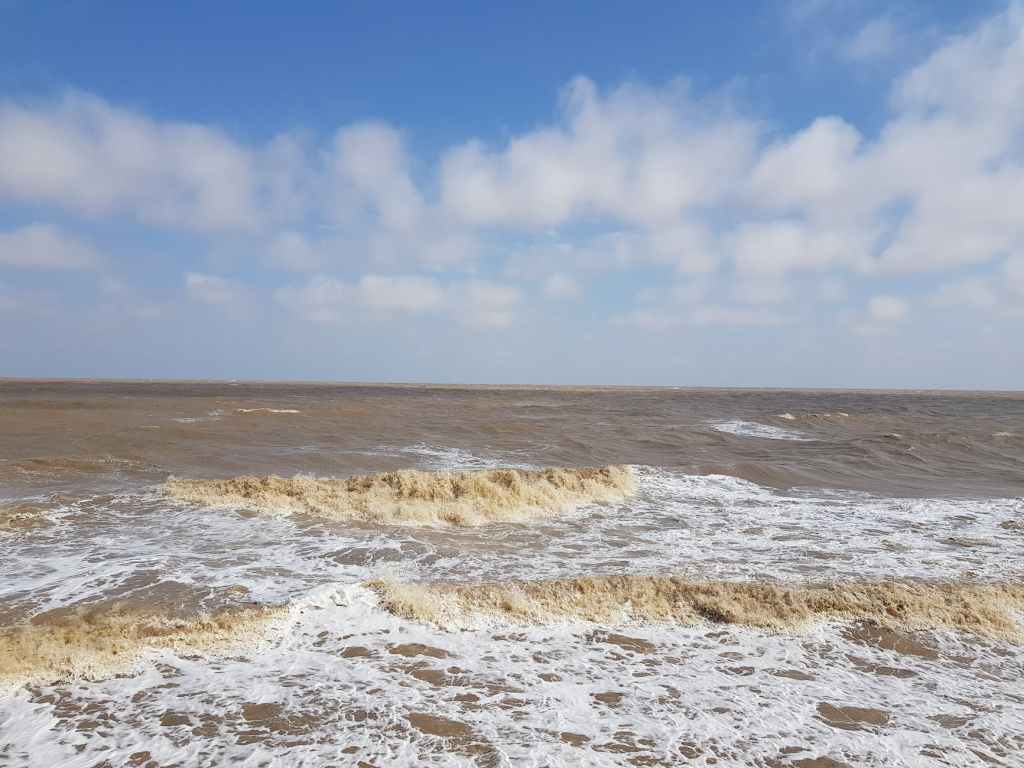
The sea was pale as silk and gently ran
The tide was coming in, the day began
Why is my memory so deficient here?
I remember little but you near
I remember Portland Bill at dusk
The sea was wilder then with many thrusts
Happiness was like a golden shawl
A world like Eden, man before the Fall
Today they say, illusion, I say, no
What matters is where this insight makes you go.
The fruits of meditation are its test
May we be generous, may our souls be blessed
Copyright © Katherine
Maps describe the geometry of space.
But not the feelings woven into place
when we love the beauty and the grace.
on the ancient map my fingers trace
the footpaths are like lines upon a face
Whose occupant has fallen overboard
No map can locate everything we see.
Only that which matters most to me.
London transport bus map delights those
Who do not have a car or have bad eyes.


A few weeks after Annie moved into the house next door to Stan,he met her when he was seeing his wife off to work.
Why does your wife not have a car? she enquired suspiciously.
She is trying to keep slim,Stan told her.
Well,she’s not been very successful,Annie said scientifically.
She might be much fatter than she is now if she drove a car,he stated ponderously
That’s true,muttered Annie meditatively
I am your new next door neighbor.she continued fluidly.
Yes my dear, said Stan,I have seen you sunbathing in the garden in your wide selection of bikinis.
How come? she asked scientifically.
There’s a big hole in the fence.
Is it legal to look at women through a hole in the fence?
asked Annie.
I know it’s illegal to look into their bedroom windows.
Is it really,asked Stan nervously,I had no idea.
How about women looking at men through a round hole?
Oh,they would not bother to do that,she told him charmingly.We prefer imagination to concrete reality.
Well,said Stan,clearing his throat,I think I owe it to myself to tell you that I love you.
Wow,you’re quick off the mark,the lady said saucily,her eyes shining like a brass monkey.
What do you mean,you owe it to yourself? she went on.
Nothing,said Stan,I could not think how to word it.I mean I wish to unselfishly love you and admire your ripe body and your cute sense of colour.I love your teal trouser suit.And you sing so well in the bath.
You didn’t mean you owe it to yourself to take advantage of me?
Not unless you want me to take advantage of you,the gallant old man informed her fluently despite that his head was beginning to whirl.
And you can take advantage of me if you want to.I make cakes and biscuits,wholemeal bread and I am training my cat Emile to do statistics on an i pad.
How extraordinary,Annie whispered.I didn’t know cats had an “I.” let alone pads.
Well,they have pads on their paws,he informed her intelligently.
True,she said,but where are their I’s?
Where are our I’s ?he responded in a manner to rejoice the heart of Mary Midgley or Susanne Langer two of Stan’s favourite writers on philosophy,logic,symbols and ethics.
Not that he practiced the Ethics but he liked to know what he was doing wrong.It’s more fun that way.Good may come from evil and children are a blessing.
A man who seduces women merrily one after the other may have no idea it might be wrong.Neither might the women.Why is it wrong?Surely it’s better than killing people or leaving the lid off the jam all night so the wasps get into the jar?
Still,not many men get the chances that Stan got.No-one suspected this kindly,handsome practicing Catholic was a womanizer despite his blue beard,green eyes,white skin and red hair.And his slim yet strong figure clad in navy trousers and pink shirts all the year round.Maybe his wife did but she preferred to read Aristotle in bed and dream about mercury… those little silver balls are so cute
Well,as we know,Stan is about to make Annie his mistress but in such a cold wet summer,where can he take her to do the deed?
The shed?The public library? Cafe Nero?
I owe it to you not to tell you yet.That will give you time to think of a solution for this sweet old man and his naughty but nice neighbour.
Like,how about the confessional in the local Church?
Whatever next?I owe it to myself to keep it secret as you may come along and spoil the fun.
Stan went indoors and washed up in the boiling hot water he kept by him constantly as he owed it to himself to be ready to make a hot drink at any moment he fancied and by gum,he did fancy like no man has ever fancied before.So his daemon tells me.
Next time:Why did God create Stan and why does it matter?

https://www.nytimes.com/2021/05/04/opinion/covid-brain-mental-health.html
While the pandemic has undeniably caused extraordinary stress and sadness, research on human resilience suggests that people will recover from the trauma of the pandemic faster than many believe. And while certain groups may need mental health care for the longer term, it’s also true that humans’ ability to overcome adversity is often underestimated and that an overwhelming majority of people who suffer trauma will not develop mental illness but eventually feel better.
Maps imply the geometry of space.
But not the feelings woven into place
when we love the beauty and the days
Here are feelings, mind how they embrace
On the ancient map my fingers trace
Little footpaths, lines upon a face.
Above below the earth is our right base
Singing with its gravity and grace

Religion has been privatised like gas
I know in church we still can hear the Mass
Yet no Chaplain comes to dying men
I did my best alone without a plan.
Inside the holy sanctuary bare
I became the priest and comforter
I sang the sacred songs and gathered crowds
Outside our little cubicle they bowed
I saw a canopy of golden cloth
Hanging down from heaven, as it does
It came nearer till it touched his soul
I was silent, love can’t take control
For a moment everything was still
A little bird sat on the windowsill
Then the cloth of gold was lifted high
I wept the precious tears for those who die.
That one eternal moment gave us grace
I see your deep blue eyes, your smiling face
https://www.nytimes.com/2022/04/24/opinion/easter-season-joy.html

1.Joy is not “toxic positivity.” It does not insist that we pretend things are better than they are. It does not refuse to face grief or sorrow. But it does say that they are not all there is and that they are not all that needs to be faced.
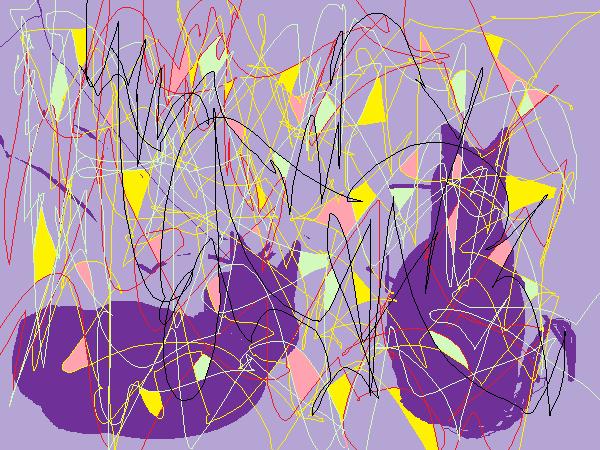
My super art
Mary knew too late the bus was due in five minutes.She applied some sunscreen and combed her hair gently with a cake fork while she wondered why she was going out.She looked into her phone camera to get her hair in order
Alas, the familiar footsteps of Annie were heard on the patio.In she flew dressed in red and brown like a robin in winter except she wore pure wool
How do you like my outfit, she cried girlishly
Mary stared at her, noting the pale beige face makeup from Max Tucker and brick coloured lipstick from Wigan’s Makeup Outlet Store where Annie loved to browse for days on end.
I think the brick coloured lipstick does not go with the scarlet jacket,Annie.
Oh, don’t worry.It’s the in thing now to clash
That might be true but men won’t know it’s a fashion unless they read Vogue.Most don’t.
Never mind all that. I’ve brought Emile a new blanket
He’s not a dog,you know.Do cats need blankets?
If you drove it would protect the seat.
I might go round the bend.If we drive we almost certainly would meet bends
Do fish get the bends,mewed Emile?
We don’t know that.It only proves that a question can be asked in a human language but within that system there is no way of answering it,Mary told him quietly, thinking of Wittgenstein her husband’s former tutor.
First of all, fish probably can’t speak English or understand it.
How amazing, the little cat replied.How stupid can you get?
Well a fish would think you were stupid for not being able to live in the sea.
So true,Emile sighed.Shall I try?
Don’t be so ridiculous,Annie whispered.The sea i not near Knittingham.Mary can’t drive and you may drown.Then St Peter will be reading out all your sins
Can cats commit sins, asked Emile with surprise
Yes, because you know you have a choice.You can bite my hand or resist the temptation
I don’t feel like biting it now so if I did it would not give me pleasure.
For God’s sake, stop arguing.Anyone would think you’d been to the Synagogue, today Mary shouted
But in a Synagogue men argue about the Torah not about cats swimming,Emile replied
But then it gets to be a habit,Mary finished.
Still many other people argue,Annie reminded her.
But God does not want it,Mary said
How do you know? He/She may love to hear it.It will provoke thought
And it may provoke a Flood or you being turned into a pillow of salt,Mary screamed
Pillar of Salt,Annie corrected her
Why do people not turn into pepper, the cat asked wisely.
There is no pepper in the Dead Sea, the women agreed.~And black pepper/white pepper could be PIC
They have red peppers in the Market.Annie mused.And yellow too
But where does that leave us?Where was Mary going to and why has she not left for the bus stop? Was it something wicked that she was trying to do in secret?
We’ll see tomorrow I expect

Remember: Worry is helpful only if it leads to change, not if it turns into obsessive thoughts.

Rosa awoke later than she liked to which indicates a control freak element in her personality.She had stayed at her desk till the sun was rising writing her intriguing diary. which she hoped would rival Sylvia Plath’s.
She got up gingerly and made herself a cup of tea in a china mug on a work surface in her lovely peach and teal kitchen
Passing water into a small bottle for the doctor to have analysed was a task even the most brilliant find hard.Rosa was not even the averagely brilliant amongst the brilliants of history like Plataho, Aristittle ,Simone de Boredwoy or Blazed Rascal not to mention St Coal,
.She grabbed her mobile as a dying man at his wife’s hand and rang the cab service. she used now she was unable to see properly or ride her bike.
Hello,it’s Rosa Benchez here.Can a driver pick up my urine sample and take it to the surgery for me.Thank you so much.
No problem, the manager told her and soon afterwards a young man with dangling earrings arrived.She showed him the sample hidden inside a Sainsbury’s shopping bag.He looked puzzled but agreed on payment of £259.89
She realised she had not eaten any breakfast so decided to have an early lunch instead
.As she ate her toasted cheese and snake oil she fell into a daydream.She was with her online man friend walking through a huge field of her favourite flowers,cyclamen.They were walking along companionably without holding hands but together whilst also being apart which was delightful.This was agreeable since she had never met this very charming man in the flesh.He was called XY Matrix although his parents had never studied algebra as far as historians can tell.Could it be a pseudonym?
Maybe he was being raised to be a mathematical prodigy but he became a writer and musician and managed to earn a good income and he had a beautiful detached house filled with antiques and ceramic lamps like Freud’ study.In fact ,he had copied that from historical photos and descriptions and one day he planned to become a therapist.
Rosie and Fox as she called him got on well and shared a liking for poetry and music.Sometimes he had sent her music as attachments on his emails.He seemed to love Wagner and Britten which is a curious combination to the British woman.He loved Britten’s Donne’s Sonnets sung by the stunning tenor Ian Bostridge.

After lunch, Rosa opened her laptop.She found an email from Fox.
You have been here and broken all my windows and my bath is ruined,he wrote.I am moving house to get away from you.And I am having plastic windows.
Rosa was alarmed as it defied common sense She did not know where his house was and it was in another country.So she emailed him back,
What is wrong ,dear?You only said 2 days ago that my poetry had helped your sick friend when you went to visit him in the hospital
Waiting anxiously for his answer, she sipped some coffee and looked at her friend Dolly walk by, dressed in a pink suede jacket and black linen culottes with matching red boots.
Where is Dolly going she wondered pensively,feeling like a cloud floating over Rydal Water in the winter not knowing which way the wind might blow it
After two hours of utter silence, she decided to wait until the evening when she had put away the groceries and written a triolet or two.She was keen to do it before she lost the impetus
The whole evening went by so she emailed him again.But again he did not reply.
The next morning she found a letter on the doormat.
1,Rancour Villas
Horror Lane
Dumbtown
Dear Rosa
I thought you would be kind and gentle like your poetry but you have wounded me.You asked me what date my dental appointment was which was an invasion of my privacy.You told me you would not mind if your son was gay whereas to me it is a sin to indulge those sick appetites and you should not encourage him
Signed XYM
A dental appointment? It’s not as if she had asked him if had a sexually transmitted disease or whether he believed in Jesus as his Saviour.Nor had she asked him if he liked to smoke cigars in bed nor if he let Lassie his sheepdog sleep on the bed and cuddle with him
.For all she knew, the dog might be his partner or even his wife
She emailed him as she felt anxious in case he was having a breakdown.He replied, saying she was not who he thought and he was finished with her.
I wonder who he thought I was, she asked herself as she sat with tears in her eyes feeling concerned about what was really going on in his dear mind.Her cat Lucy ran up and sat on the arm of the chair gazing frenziedly at her owner and mother
Don’t worry Lucy.I am sure I will soon be ok.This must be a mistake.I think he has got paranoia which gets worse and then better

Rosa looked on Amazon and found a book called
Charlie Blogge had gone away to visit his aged parents for a few days down in Cornwall so Rosa Benchez,his fiancee was alone except for her three cats and four houseplants which she had just brought indoors.Though she could have written a bit more in her new book
Linguistics and Peace on Earth.
Can plants feel emotion? she asked her oldest cat, Lucy who was a pretty tortoiseshell
Definitely ,said Lucy.I have known plants to get depressed when in a dark corner.
Oh,dear,said Rosa,it’s the weekend so the surgery is shut.I hope these plants don’t go into a downward spiral in their mood now that the days are shorter.I suppose I could ring 999 if they were desperate.
They won’t allow plants in the hospital,Lucy mewed.
Why not,asked Rosa angrily.That is sheer discrimination.We pay our contributions.
But the plants don’t pay ,do they.Lucy retorted cheerfully.Cats don’t get free healthcare either.
Socialism made a big mistake there, cried Rosa.Since the English prefer animals to people they would have won the Election if they proposed free pet care on the NHS
Imagine, it would have created more jobs as well, she continues academically.And plant care is needed as plants can feel ill at times.
Yes,we can, cried the Peace Lily.I feel ill knowing there is not much peace in the world.
Humans don’t realise they may win a war but the conflict makes their health suffer even if they are too old to fight.And within families ,it is just as bad.
You are so right,Peace,Rosa said thoughtfully.We always assume it is our inner conflicts that make us neurotic or physically ill,but it may be that at the back of our minds we are aware of all the wars, the refugees, the suffering.Outer conflict makes us all sick to some degree.And quarreling relatives and people who can’t apologise.
Do you have any rain water,Peace demanded.I feel thirsty.
Is that enough,Rosa cried.I can make you some weak tea if you like.
Oh,go on then, the plant told her.Give me a teacup full of tea with no sugar. nor milk How about you, she carried on turning to her sister Pax.
OK.Pax told her.Whither thou goest…
She’s Jewish,said Peace to Rosa.Her real name is Ruth.But nobody uses it as Pax is shorter.She won’t grow on the Sabbath,though.
Will you miss talking to the trees in the garden while you are indoors? Rosa asked, before any more Bible references were offered.
Yes,definitely.Can you buy a few tall,male looking plants like bamboo or even grape ivy?
We like a mixture.All living beings like a mixture of friends.
How about human friends or even cats,Rosa said tactlessly
Yes, as long as they talk in soft musical voices.And we don’t like to watch violent films on TV nor to see cats fighting on the sofa.,Peace informed her.Violence hurts our inner core
And so say all of us

Can philosophy help us with worldly troubles? Ancient philosophers thought the answer was obvious. Philosophy is a “medical art for the soul”, Cicero tells us. Its compassionate task is to lead us from suffering towards a life lived well. Contemporary philosophers are likely to be more circumspect. Wouldn’t it be presumptuous to think that my training in philosophy equips me to offer advice? The only CPR I know is the Critique of Pure Reason and the tools of my trade – a careful distinction here, some logic-chopping there – seem laughably inadequate to the fears and worries of modern living.
In his new book, Kieran Setiya disagrees. Through carefully crafted examples, he makes the case that philosophy can

https://www.nytimes.com/2021/05/04/well/plan-your-life-again-but-keep-it-simple.html
When the pandemic started, Ben Michaelis, a clinical psychologist and the author of “Your Next Big Thing: Ten Small Steps to Get Moving and Get Happy,” advised his clients to stop planning. To survive the tremendous changes happening, he told them not to think about any future beyond the next week or so. “Planning was working against them,” he said.
As the pandemic continued, the usual markers that define lives and help close one chapter and enter another — birthdays, graduations, weddings — took place over video,…………..
Some rise by sin and some by virtue fall.
https://www.nytimes.com/2009/01/02/arts/02iht-defiance.1.19000454.html

Ed 8
The triumph of the three Bielski brothers, Tuvia, Zus and Asael, who fought the Nazis in the deep forests of Belarus and saved 1,200 lives, was unlike anything I had ever read about that dark time. Rather than victims wearing yellow stars, here were fighters in fur chapkas brandishing submachine guns. Instead of helplessness and submission, here were rage and resistance.
I knew of the uprising in the Warsaw ghetto, yet it seemed to stand alone in the popular imagination as the only moment in which organized opposition took root. Yet I have learned that, contrary to the conventional wisdom, the impulse to fight back was everywhere: from the streets of Vilnius to the forests of Bialystok, even unto the concrete slabs of Sobibor and Treblinka, thousands of Jews doing whatever they could, whether seeking refuge in the sheltering woods or recklessly taking up arms against overwhelming odds.
Learning of these defiant acts awakened in me something utterly primitive and deeply personal, a wave of awe, humility and admiration.
And outrage, too. Why, I wondered, had I not known these stories while growing up? Could it be that the necessary commemoration of six million dead had so
https://www.nytimes.com/2015/04/07/opinion/patient-therapist-and-personal-boundaries.html
Please print this letter so that when my patients Google me they will see that their psychiatrist and psychoanalyst has been published in The New York Times.

Are fish happy dancing through the waves?
Darting through the pearls and crystal caves?
Singing as they wander with their mates
No anxious thoughts of money nor of fate.
Through the salty water on they glide
Happy with the temperature and tide.
I wish that I could swim beneath the sea
No painful joints nor mental agony.
I liked the teal green seas we saw at Hythe
Coming down the Saxon Cliffs we sighed.
The burning cornfields sent their red smoke high.
I wish we were together in the car
Driving down to Kent, it’s not so far
Saturday was shopping then a walk Epping,Ongar,Finchingfield by car
Reading book reviews and chewing stalks
Buttercups and meadows,Henry Moore
Driving back from Chelmsford, cornfields flamed
Smoke and fire and earth, the sun dismayed
Farmers working hard, a harvest, grain
The sky through mist a cobalt blue displayed
Standon with its fords and wandering cows
Little rivers,Essex, flowing down
The Stort joins with the Lea,a gurglimg sound
Water for the Thames and mossy ground
The earth feels like my body sacrificed
The artist’s canvas stretched ,a matricide
The fields in flames, the stubble set alight
The earth herself was burning in our sight
The ancient lands of Essex still grew grain
As hares ran into hedgerows fearing pain
The empty road, the smoke, the land on fire
The ashes left a newer crop would sire
The land to Epping vast and flat was bright
Yet covered in its smoke there was no light
Our little human world is but a skin
Destruction easy with a word or bomb
Dependent on the government, those liars
Weak as watered gruel, they must be fired
Caught inside the symbols of the Earth
From destruction comes a brave new birth
Autumn time in Essex where we drove
When farmers burned the stubble of the corn
The earth itself was fiery like young love
The smokey air rose like a cloud new born
The Kentish landlocked cliffs are wide and steep
The farmers grow their grain on land beneath
And there too we have seen the holy fire
The flames and smoke arrest me with desire
The earth and soil, the harvest we find there
Give me joy both full of wheat or bare
Why did burning stubble make me glow?
These images affect the heart’s deep core
Now fires are banned., they damage our pure air
And I did not like the murder of the hare
https://www.theatlantic.com/magazine/archive/2016/06/theres-no-such-thing-as-free-will/480750/

Note: the author says it’s better for us to believe in free will.
For centuries, philosophers and theologians have almost unanimously held that civilization as we know it depends on a widespread belief in free will—and that losing this belief could be calamitous. Our codes of ethics, for example, assume that we can freely choose between right and wrong. In the Christian tradition, this is known as “moral liberty”—the capacity to discern and pursue the good, instead of merely being compelled by appetites and desires.
This lady has lost her head
Did she also cut off her nose to spite her face?
No she can’t bare the site of blood.
Why ,is it private? .
She doesn’t know how to interpret mens eyes.
Oh those scandal eyes
What caused the scandal?
Why do you think there was a cause for it?
In any case I don’t understand how you can interpret someone’s eyes.
Well I’m speaking metaphorically
They can be dark looks, or they can seem to issue an invitation .
At times I have felt men’s eyes rolling all over my body.
Lucian Freud painting there
What about John the Baptist?
He had an air of je ne sais qua. Then he lost his head completely :unfortunate man.
I wonder how it was how people I could watch beheadings
Well they had no televisions and got bored frequently.
Have they never heard of sex?
What’s that?

Between you and me, we ought to be able to get this lady pregnant.
• She is numb from her toes down.
Qq1qq• By the time he was admitted, his rapid heart had stopped and he was feeling better.
• Patient has chest pain if she lies on her left side for over a year.
• On the second day the knee was better and on the third day it had completely disappeared.
• She has had no rigors or shaking chills, but her husband states she was very hot in bed last night.
• The patient has been depressed ever since she began seeing me in 1983.
• Patient was released to outpatient department without dressing.
• I have suggested that he loosen his pants before standing and then, when he stands with the help of his wife, they should fall to the floor.
• The patient is tearful and crying constantly. She also appears to be depressed.
• Discharge status: Alive but without permission.
• Healthy appearing decrepit 69 year-old male, mentally alert but forgetful.
• The patient refused an autopsy.
• The patient has no past history of suicides.
• Patient has left his white blood cells at another hospital.
• The patient’s past medical history has been remarkably insignificant with only a 40 pound weight gain in the past three days.
• She slipped on the ice and apparently her legs went in separate directions in early December.
• The patient experienced sudden onset of severe shortness of breath with a picture of acute pulmonary oedema at home while having sex, which gradually deteriorated in the emergency room.
• The patient had waffles for breakfast and anorexia for lunch.
• The patient was in his usual state of good health until his aeroplane ran out of gas and crashed.
• When she fainted, her eyes rolled around the room

https://www.nytimes.com/2022/10/04/books/review/life-is-hard-kieran-setiya.html
Another theory Setiya challenges is the idea that happiness should be life’s primary pursuit. Instead, he argues that we should try to live well within our limits, even if this sometimes means acknowledging difficult truths. Happiness is a matter of definition; Setiya cites Tal Ben-Shahar, the Harvard professor and psychologist who writes about not only happiness but also the importance of accepting reality.