We merely cease to be alive


We don’t die,  we merely  cease to be alive
Though the body looks the same to  strangers
From this truth, all other  thoughts must be  derived

Though the anguish in our  bosoms ever writhes
All the  sacraments of death  and law arranged
We don’t die,  we merely  cease to be alive

To hide these  blatant truths, society connives.
We weep and moan and we are called deranged
From this truth, all other  thoughts must be  derived

The loss is like a stabbing  with some fearsome knives
Though we sensed the presence of the  angels.
We don’t die,  we merely  cease to be alive

God has turn asunder  gentle man and wife
Some say, you start  another newer page
From this truth, all other  thoughts must be  derived


We don’t die,  we merely  cease to be alive.
From this truth, all other  thoughts must be  derived


Dark jewels

I have listened to the arguments of fools
I have heard them like a donkey bray
I have looked within and found dark jewels.

I have studied  algebra like Boole’s
I read the works of Euclid and  obeyed
I have listened to the arguments of fools.

I have  been to colleges and schools
I have seen the wolves therein who prey.
I have looked within and found dark jewels

I have earned my knowledge and my tools
I have kept them current day by day
I have listened to the arguments of  fools

I have loved strange men whom I thought cool
I have often felt the need to pray
I have looked within and found dark jewels


So we each must fumble  through the day
Knowledge and perception show the way
I have listened to the arguments of fools
I have looked within and found dark jewels.


The depth of heart

To grow is both a process and an art
Requiring food with richness  aptly packed
And growth’s success requires a depth of heart

Trust and truth we need to even start
As wondering muses contemplate our tricks
Growth is both a process and an art.

On the surface thoughts like fishes dart
Bigger fish are swarming through the wrecks
Growth’s process requires the depths,the heart

Five fathoms we must sink when we depart.
We leave behind our sacred scrolls and texts
To grow is both a process and an art.

The path is absent from all current charts.
From libraries and colleges run  next.
Growth’s success will need a sturdy heart.

To say,I am, tempts pain to hit us quick
The fire,the flames around us  duly lick.
To grow is both a process and an art
We  must endure the depths of  our own hearts


Yet fear surprise


The point of living is to feel alive
Not caged  by  too high walls or steely fence
We want to love,be taken by surprise.

Our  wounded mangled self we can’t deride,
Recalling  fights and  struggles lived  through once.
The point of living is to feel alive.

We dither to and fro in puzzled ways
We feel the anguish, still and quite intent.
We want to love,be taken by surprise.

The self’s spontaneous, not a thing contrived;
Formed with love and  hate,with all intense.
The rage of living is to be alive.

When washed away by feelings glad,immense
That cross our borders without our lament
The  hope,the need of living is  our life
We want to  give and take  yet fear surprise


Underneath the shadow in the dark

Underneath the shadow in the dark
Where viable  new thoughts dwell  all  alone
Invisible the moment when life starts

Overhead we hear a singing lark
But   beetles crawl   by all the dark grey  stones
Underneath the shadow in the dark.

We,the human,  travel with no chart.
Yet do not  pay attention to  a groan.
Invisible the moment when life starts

Like sailors crossing oceans in good heart
Enjoy the sensory  vastness all unknown
Underneath the shadow in the dark.

When    sound perceptions shelter us from harm
When a  flickering light to us is shown
Invisible the moment when life starts


When we build  from all the  shattered bits of stone
A home to dwell in till  we turn to bone
Underneath the shadow in the dark
Invisible the moment when life starts


I have heard grass singing in the wind.

I have  heard  grass singing in  the wind.
I   have walked through poppy fields in  sun
I have  suffered  when dark rain descends

I have watched  trees’ shadows in the ponds
I have  known the  arctic wastes of pain
I have  heard  grass singing in the wind.

Another soul is writing  with my hand
Yet I have  wept  while loaning him  my pen
I have  suffered  when dark rain descends

I have known  the edges  of the mind
I ‘ve   sensed  hollow silence un-contained.
I have  heard  grass singing in  the wind.

I have sorrowed for  humans confined
I have  watched  the antics  of bad  men
I have  suffered  when dark rain descends

I have seen the storm by camera lens.
I have felt the   solar system bend.
I have  heard  grass singing in  the wind.
I have  suffered  when dark rain descends


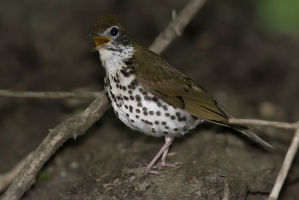
The Caged Thrush Freed And Home Again (Villanelle) – Poem by Thomas Hardy

wood_thrush_565221

You can hear poems read out on Poem hunter including this one

“Men know but little more than we,
Who count us least of things terrene,
How happy days are made to be!

“Of such strange tidings what think ye,
O birds in brown that peck and preen?
Men know but little more than we!

“When I was borne from yonder tree
In bonds to them, I hoped to glean
How happy days are made to be,

“And want and wailing turned to glee;
Alas, despite their mighty mien
Men know but little more than we!

“They cannot change the Frost’s decree,
They cannot keep the skies serene;
How happy days are made to be

“Eludes great Man’s sagacity
No less than ours, O tribes in treen!
Men know but little more than we
How happy days are made to be.”

Oh, what art

The gift for  imitation   is an art
Needs eyes and face and mind to work as one;
And who would dare to play the darkest parts?

To reproduce another being’s heart;
To manifest a self  till acting’s done.
The gift for imitation is an art

To  play another, may one’s soul contort;
Although a little demon may be fun.
But who would dare to play the darkest part?

I’d sooner play a demon than a tart
Especially if I had a  piper and a drum
The gift for imitation, oh,  what art.

When we play  adult games we have no charts
And we know too many use a gun
But who would  dare to play the darkest parts?

We  face a trump and devils may become
Our fellow citizens   till all’s undone.
The  gift for  imitation   is an art
Yet  will  he dare to play the darkest part?


Theodore Roethke:The Waking

https://youtu.be/IxY2g4mR8Xk


We think by feeling. What is there to know?
I hear my being dance from ear to ear.
I wake to sleep, and take my waking slow.

Of those so close beside me, which are you?
God bless the Ground! I shall walk softly there,
And learn by going where I have to go.

Light takes the Tree; but who can tell us how?
The lowly worm climbs up a winding stair;
I wake to sleep, and take my waking slow.

Great Nature has another thing to do
To you and me, so take the lively air,
And, lovely, learn by going where to go.

This shaking keeps me steady. I should know.
What falls away is always. And is near.
I wake to sleep, and take my waking slow.
I learn by going where I have to go.

So sorrow’s ale brings memories of joy


The art of musing isn’t hard to learn
Instead of tablets,screens,electric toys=…….
A spacious mind may entertain  the spurned

We sometimes  learn this when we need to mourn
As  companions leave, of sympathy  devoid
The art of musing isn’t hard to learn.

As milk ‘s transformed to  butter  as we churn
So sorrow’s ale  brings   memories  of joy
A spacious mind  may entertain  the spurned


The art of living is  one art  we earn
By patience and  with tempers un-annoyed
The art of musing isn’t hard to learn


As life goes by,how greatly we may yearn
For lovers lost in  wars akin to Troy
A spacious mind can entertain  the spurned.


Unlike  that  mistress tempted to be coy,
We open up our our minds to marvelled joy
The art of musing isn’t hard to learn
A spacious mind  may  entertain  the spurned


A Portrait of the Artist as a Young Man by James Joyce


http://jamesjoyce.ie/james-joyce/life/  [About his life]

http://literarydevices.net/villanelle/ [About poetry]

A villanelle marked to show the rhymes and repetions

Are you not weary of ardent ways, (A1)
Lure of the fallen seraphim? (b)
Tell no more of enchanted days. (A2)

Your eyes have set man’s heart ablaze (a)
And you have had your will of him. (b)
Are you not weary of ardent ways? (A1)

Above the flame the smoke of praise (a)
Goes up from ocean rim to rim. (b)
Tell no more of enchanted days. (A2)

Our broken cries and mournful lays (a)
Rise in one eucharistic hymn. (b)
Are you not weary of ardent ways? (A1)

While sacrificing hands upraise (a)
The chalice flowing to the brim, (b)
Tell no more of enchanted days. (A2)

And still you hold our longing gaze (a)
With languorous look and lavish limb! (b)
Are you not weary of ardent ways? (A1)
Tell no more of enchanted days. (A2)

Villanelle for an Anniversary By Seamus Heaney

350th Anniversary of Harvard

One Art by Elizabeth Bishop (1911-1979)

The art of losing isn’t hard to master;
so many things seem filled with the intent
to be lost that their loss is no disaster.

Lose something every day. Accept the fluster

of lost door keys, the hour badly spent.
The art of losing isn’t hard to master.

Then practice losing farther, losing faster:

places, and names, and where it was you meant
to travel. None of these will bring disaster.

I lost my mother’s watch. And look! my last, or

next-to-last, of three loved houses went.
The art of losing isn’t hard to master.

I lost two cities, lovely ones. And, vaster,

kesome realms I owned, two rivers, a continent.
I miss them, but it wasn’t a disaster.

–Even losing you (the joking voice, a gesture

I love) I shan’t have lied. It’s evident
the art of losing’s not too hard to master

though it may look like (Write it!) like disaster

The sin a child is born to is not hers

The sin a child is born  to is not hers;
For mother’s body’s sacred  with its grace.
The sin a child is born to,it is ours

Yet ,at a baptism will the priest declare:
Out ye demons,leave this infant’s space.
The sin a child is born  to is not hers

 
The infant  naturally speaks in tongues of fire.
The Spirit moves eternal in its trace
The sin a child is born to,it is ours

The path we learn to walk ‘s already there
The rules  and laws were written with no haste
The sin  a child is born to is not hers

A child born now  is marked by Iraq War
A child born now, in paranoia’s traced.
The sin a child is born to,it is ours

Oh,look upon the infant’s holy face
Beatific vision is there  traced
The sin a child is born  to is not hers
The sin a child is born to,it is ours


I have sifted earth

I have walked the silent paths of grief
Sunless,dreary,cold and all alone.
I have slept on beds of winter leaves.

I know that death’s an avaricious thief.
Although my heart weeps and my joy has gone.
I have never felt I was deceived.

I have learned that human life is brief.
I have learned by sorrow we’re undone.
I have sifted earth and what’s beneath.

I felt dark emotions in me seethe
While I have been mocked by glaring sun.
I have learned the geography of grief.

I wait in silence for this life to cease
Or will a fluttering wing make chaos come,
Change my heart and give me a fresh lease?

Unconsoled grief can make us dumb
Into our hearts, we drag the ice that numbs
I have walked the silent paths of grief
I have made my bed on winter leaves.

The Difference Between Lack and Absence by Annie Diamond

Both mean not having, but one means missing too.
Absence can be welcome, but lack implies desire—
the absence of some noise, a lack of you

might be a good example. And it’s true
that lack makes judgment, means that we require
the thing that’s gone (a constant aching, too)

while absence just reports; we can make do
with smaller things; it doesn’t sound so dire.
Who needs the noise? (But I need you.)

Absence lets us start anew,
while lacking keeps us laced to its dark pyre.
Both are not having, but one is missing too,

and wanting nothing more than to undo
whatever sins caused lacking to transpire.
The noise is done, and so, I guess, are you

with me. In verse I struggle to subdue
my restless heart. (The lacking makes me tired.)
Both mean not having; one means missing too—
the absence of some noise, a lack of you.

Annie Diamond is a student at Barnard College, a private women’s liberal arts college affiliated with Columbia University. She has also studied abroad at Mansfield College, one of the constituent colleges of Oxford University in England. She recently completed her sophomore year at Barnard College, where she studies English and creative writing. Her work has been published in Apt, Avatar Review, Clockwise Cat, The Columbia Review and The Lyric. She was awarded first prize in The Lyric‘s College Poetry Contest for her villanelle “The Difference Between Lack and Absence.” The same poem later won the Lyric Memorial Prize and was named the best poem to appear in The Lyric for the year 2013. Her favorite writing spot is the Hungarian Pastry Shop on New York City’s 111th Street, and her number one life ambition is to appear on Jeopardy.

“It was my honor and pleasure to judge The Lyric‘s yearly and quarterly awards. I was pleasantly surprised to learn that my favorite poem for the year 2013 was written by a college student, Annie Diamond. I believe she has a very bright future.”—Michael R. Burch

Acquainted With The Night by Robert Frost

I have been one acquainted with the night.
I have walked out in rain—and back in rain.
I have outwalked the furthest city light.

I have looked down the saddest city lane.
I have passed by the watchman on his beat
And dropped my eyes, unwilling to explain.

I have stood still and stopped the sound of feet
When far away an interrupted cry
Came over houses from another street,

But not to call me back or say good-by;
And further still at an unearthly height,
One luminary clock against the sky

Proclaimed the time was neither wrong nor right.
I have been one acquainted with the night.

Robert Frost’s “Acquainted With The Night” is more of a sonnet than a villanelle, but it is a marvellous poem with a killer opening line that doubles as a killer closing line.