Religion has been privatised like gas I know in church we still can hear the Mass Yet no Chaplain comes to dying men I did my best alone without a plan.
Inside the holy sanctuary bare I became the priest and comforter I sang the sacred songs and gathered crowds Outside our little cubicle they bowed
I saw a canopy of golden cloth Hanging down from heaven, as it does It came nearer till it touched his soul I was silent, love can’t take control
For a moment everything was still A little bird sat on the windowsill Then the cloth of gold was lifted high I wept the precious tears for those who die.
That one eternal moment gave us grace I see your shining eyes, your smiling face.
About the golden light what can I say? Love is near so we don’t nave to pray Enter into darkness without fear Another hand will guide us, help us steer
I had lost my faith I was bereft I could not speak, and sinking was my craft
Then a the soft bright cloud embraced my plight I felt a presence and I saw the light.
All my senses mingled into one
I saw I felt I touched all thought was gone.
Tears ran down my face in gratitude
Through despair I felt my life renewed.
Why should I be helped when many die? The mystery ,of God,the soul destroyed
On a personal level, Wittgenstein’s philosophical efforts reflect a struggle to disentangle his identity from the confusing, mystifying language of his original family. He had been brainwashed, so to speak, under the usurping pressure of his father’s self-centered universe. Hermann Wittgenstein was an epistemological tyrant, defining reality for all those who sought to be connected to him. This philosopher’s thinking, therefore, can be viewed as a self-deprogramming enterprise, ultimately directed toward the possibility of liberating himself from the paternal agenda and claiming his own place in this world.
Wittgenstein’s first book, the only one published during his lifetime, Tractatus Logico-Philosophicus (1921/2001), is an effort to clarify the relationship between the words of our language and what he called the “states of affairs” appearing in the world we perceive. Two specific assertion appear in this book, ones we believe are charged with personal significance:
“There is no such thing as the subject…”
“ The subject does not belong to the world…” (1922, p. 69)
On a philosophical level, this reminds us that we ought not to objectify the first person singular: the ‘I’ is not an item in the world. We are being told that the experiencing subject is not a content of the world we perceive; it is instead what he spoke of as a ‘limit’ of this world, a standpoint from which what we call “world” and all its contents appear.
If we lift the statements out of their ordinary philosophical context, and think about the personal, life-historical meaning they might contain, an epistemological rebellion on Wittgenstein’s part appears, one mounted against the powerful father who tried to be the all-defining director of his son’s existence. The son is saying:
“’I’ am not a thing belonging to your world, not anything anyone can define or control. My being lies outside the insanity of your self-absorption. Above all, know this: ‘I’ am not an item in the inventory of your possessions, to be made use of as you please!”
The pull of the father’s usurping authority, though, must have continued to be very strong, presenting an ever-present danger of falling back under his control and becoming once again the obedient extension of an irresistible will. This is not just a matter of a child fighting back against a parent who is strict and controlling. Wittgenstein’s separating himself from his father was a matter of rescuing his very being as someone independently real. A crisis occurred in his young life in which he saw that continuing to walk on the road laid out for him by his father would be to become permanently itemized on the list of his father’s many possessions. It would be to embrace annihilation.
A sign of the felt danger of returning to the obliterating conformity of his youth appears in a feature of Wittgenstein’s life that his biographers have noted but not fully understood. It was his incapacity to dissimulate, to lie, to conceal the truth because of the claim of whatever circumstance he was in. If he did move toward some concealment, which happened exceedingly rarely, he was thrown into a crisis of wanting to immediately kill himself. Our understanding of this inability to lie is that presenting anything other than what he felt and knew to be true posed the danger of a re-engulfment by the falseness of an identity based on the need to be accepted rather than on his own spontaneous intentionality and authenticity. If the only possibility was that of a false life, then his only option would have been death.
The philosopher enforced his emancipation from enslavement by cutting off relations with his father, and he refused even to accept his very substantial inheritance after the father finally died. Wittgenstein saw taking the money as sacrificing a very precarious sense of personal existence. The heart and soul of this man’s madness lies in the danger of annihilation that haunted him throughout his life. His philosophy we can thus view as a search for an answer to this ontological vulnerability.
His writings, for the most part, consist in aphoristic meditations focusing on language. He gives us trains of thought that attempt to expose various confusions into which we fall, arguing that many – perhaps all – of the classic problems of philosophy arise as secondary manifestations of these linguistic confusions. Wittgenstein engages himself, and his readers, in dialogues subjecting specific examples of how we speak and think to relentless reflection and analysis. In the process of these conversations, a profound critique of the whole Cartesian tradition emerges, a dismantling of metaphysical conceptions and distinctions that otherwise enwrap our thinking and imprison us within structures of unconscious confusion. Central in this transforming inquiry are understandings of human existence in terms of ‘mind,’ seen as a ‘thinking thing,’ an actual entity with an inside that looks out on a world from which it is essentially estranged. Such an idea, once posited, leads inexorably to a dualism: one begins to wonder how the entity ‘mind’ strangely, mysteriously connects to another entity, ‘body.’ He makes compelling arguments that specific linguistic confusions based on the human tendency to turn nouns into substantives lie at the root of such otherwise unfounded ideas. In Wittgenstein’s universe, there are no ‘minds’ that have interiors, no intrapsychic spaces in which ideas and feelings float about in some “queer medium,” no mysteries we need to be fascinated by regarding how the mental entity and its supposed contents relate to the physical object we call the body. Longstanding traditions in metaphysics are accordingly undercut and the terrain of philosophy is opened up to new and clarifying ways of exploring our existence. Well-known arguments against the coherence of solipsism as a philosophical position and also against the possibility of an individual ‘private language’ definitively refute the idea that it makes any sense to think of a human life in terms of an isolated ‘I,’ or ego. He was a post-Cartesian philosopher par excellence.
Wittgenstein sometimes viewed his scrutinizing of our linguistic expressions and associated patterns of thought as a form of ‘therapy,’ performed upon philosophy and society. It is our view that this therapy he offered to our civilization mirrored precisely the personal effort described earlier, in which his life goal was to free himself from the entangling confusions, invalidations, and annihilations pervading the family system of his youth. In this respect he succeeded in connecting uniquely personal issues to important currents and needs of the larger culture. His philosophical journey therefore allowed him to find a meaning for his life beyond the narrow orbit of his father’s deadly narcissism and helped him avoid the tragic fate of his brothers.
Let us turn now to one of Wittgenstein’s (1953) most important specific ideas: that of a so-called language game. It is an elusive term that he never formally defined in his various dialogues, so one has to note how he used it in various contexts and extract a meaning. Of course one of his most well-known formulations is that “the meaning is the use,” and exists nowhere else, which is a distinctively post-Cartesian view of semantics.
We think of a Wittgensteinian language game as a set of words and phrases, along with their customary usages, that form a quasi-organic system, such that when one uses one or two elements in the system one is catapulted into the whole, subject to its implicit rules, in some respects trapped within its horizons of possible discourse. The German word for this is Sprachspiel, and the word obviously derives from spielen: to play. A language game, in whatever sphere of our lives it becomes manifest, encloses us within a finite system of elements and possibilities, and subjects us to rules we knowingly or unknowingly tend to follow. Such a structure literally “plays” with our minds, shaping and directing our experiences according to preformed pathways and constraining them within pre-established boundaries. Wittgenstein wanted us to become aware of these systems in which we are all embedded, and this would be part of his therapy for our whole culture. The goal is one of ushering in a greater clarity about what we think and who and what we are, illuminating what he spoke of as our “complicated form of life.”
The primal language game of this man’s personal history was the communication system in his early family, which designated his existence – and those of his doomed brothers – as playthings, almost like chess pieces belonging to the father’s controlling agendas and properties. A clear perception of the mystifications and usurping invalidations of his early family world would obviously be of assistance in this man’s attempts to find his own way. He tried mightily in his philosophical reflections to release his discipline and the world at large from its “bewitchment” by language, even as he was able to free himself only very tenuously from the spell cast by his father.
Kierkegaard, S. (1834-1842) The Journals of Soren Kierkegaard. Excerpted in Bretall, R. (Ed.) A Kierkegaard Anthology, Princeton, N.J.: Princeton University Press, 1946.
Wittgenstein, L. (1922) Tractatus Logico-Philosophicus. London and New York: Routledge, 1974.
Wittgenstein, L. (1953) Philosophical Investigations. New York: Macmillan
I loved the stepping stones near Ambleside The river Rothay runs into the Mere Mingling with the Brathay day and night
In my childish state I wished to die To make the joy eternal, evermore I loved the stepping stones near Ambleside
But we went on to Grasmere,Wordsworth’s guide The river Rothay never suffered here Mingling with the Brathay day and night
As a child I often was denied The joy of nature,love but never fear I loved the stepping stones near Ambleside
The rivers make no effort, down they ride so should humans live and love sincere Mingling with our Natures day and night
Life may be a mountain or a mere The rivers flow, the stones are waiting clear I loved the stepping stones near Ambleside Crossing this dear water day and night
Aristotle was the fist who declared poetic truth to be superior to historical truth. He called poetry the most philosophic of all writings. Wordsworth agrees with Aristotle in this matter. Poetry is given an exalted position by Wordsworth in such a way that it treats the particular as well as the universal. Its aim is universal truth. Poetry is true to nature. Wordsworth declares poetry to be the “image” or “man and nature”. A poet has to keep in mind that his end (objective) is to impart pleasure. He declares poetry will adjust itself to the new discoveries and inventions of science. It will create a new idiom for the communication of new thoughts. But the poet’s truth is such that sees into heart of things and enables others to see the same. Poetic truth ties all mankind with love and a sense of oneness.
I must be poor I’m wearing a thick coat Sat here at the table where I write I know my grammar and I made a note Sat here is allowed but it ain’t right
My coat is dirty green and a bit black So I can sit on stairs when in a shop They don’t have chairs not even a stuffed sack When I can’t walk, they tell me I must hop.
If science was taught they’d know well that a hop Puts twice the weight onto a single foot Maybe I should give my legs the chop And get some steel ones when there is a glut
My coat is better now for I feel hot My hanky’s red for I have spilled my blood My nose was bleeding from a vein I cut I never took a drug but I pretend I could
LSD is too wild for my mind And even at my age I am with child I fear the risk of growing yet more kind The child’s my nephew and he ‘s very mild
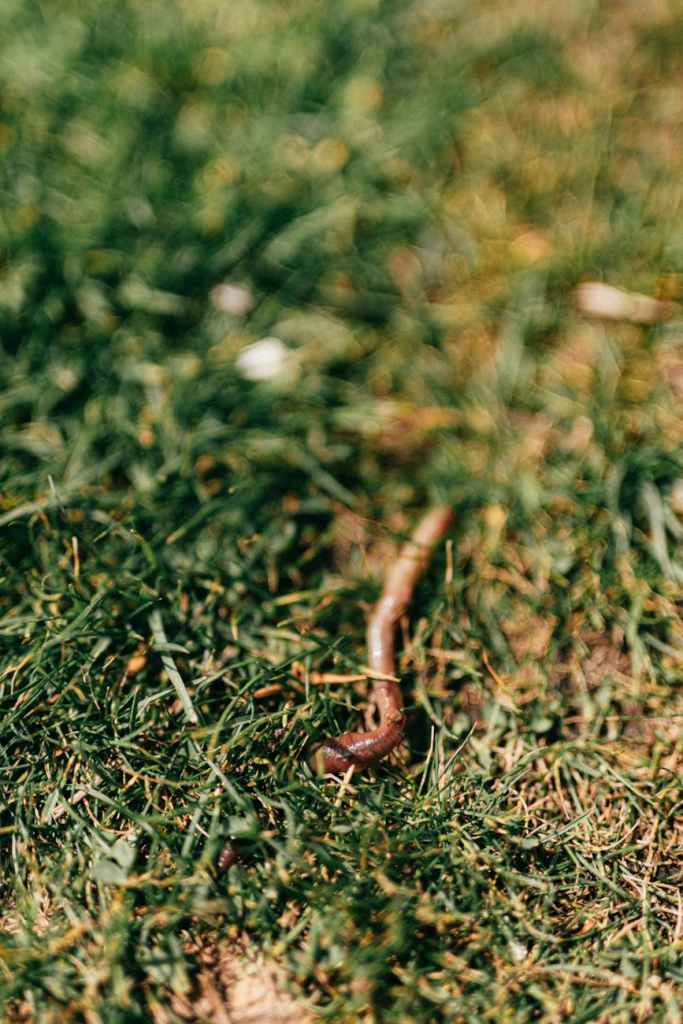
They tell me that trees are a wonderful sight They have leaves hanging on them all day and all night. They tell me the golden sun shines in the sky It’s said to be so much brighter so high. I’d like to hear birdsong and thunder and hail. At all these pursuits worms are likely to fail. We only make holes in the soil as we move And we know almost nothing about feelings and love. We don’t know why we’re here or what purpose we serve And our earthen workplace is also our grave.
“The research also found that reading poetry, in particular, increases activity in the right hemisphere of the brain, an area concerned with “autobiographical memory”, helping the reader to reflect on and reappraise their own experiences in light of what they have read. The academics said this meant the classics were more useful than self-help books.
Philip Davis, an English professor who has worked on the study with the university’s magnetic resonance centre, will tell a conference this week: “Serious literature acts like a rocket-booster to the brain.
“The research shows the power of literature to shift mental pathways, to create new thoughts, shapes and connections in the young and the staid alike.”
In the first part of the research, the brain activity of 30 volunteers was monitored as they read passages from Shakespeare plays, including King Lear, Othello, Coriolanus and Macbeth, and again as they read the text rewritten in simpler form.
While reading the plain text, normal levels of electrical activity were displayed in their brains. When they read Shakespeare, however, the levels of activity “jumped” because of his use of words which were unfamiliar to the readers.
Scans of brain activity during reading show heightened electrical activity when faced with ‘challenging’ texts by great writers
In one example, volunteers read a line from King Lear: “A father and a gracious aged man: him have you madded”. They then read a simpler version: “A father and a gracious aged man: him you have enraged.”
Shakespeare’s use of the adjective “mad” as a verb sparked a higher level of brain activity than the straightforward prose.
The study went on to test how long the effect lasted. It found that the “peak” triggered by the unfamiliar word was sustained onto the following phrases, suggesting the striking word had hooked the reader, with their mind “primed for more attention”.
Some thinner branches tremble with desire Reaching out beyond the shrub’s wide shape The sun has drawn them up with its great fire
Yet, without learning, there is no Messiah. No support exists, they sulk and drape The thinner branches trembling with desire
To greatness and to height they had aspired Now will they turn out sullen as they mope? The sun has drawn them up with its great fire
Like the politicians who conspire The European failure stole our hopes Though little Hitlers tremble with desire
Unelected Minister, Prime liar. Will he ever cross the final tape? The sun has drawn Men up with its great fire.
As the West evolved through crime and rape We were thought Enlightened in our scope We loved the Inquisition, loved the fires The gods have punished us and never tire.
When Mary woke up she could see the sun shining through the curtains. How lucky, it was going to be another bright day. She lay in bed trying to decide what to do. then she remembered that she could not go out because she was waiting for the pharmacy to deliver her medication. Owing to the cutbacks in the NHS the pharmacy was struggling to cope with all the prescriptions received especially from the older folk of Knittingham who have been put onto statins,calcium channel blockers, beta blockers, tranquilizers, antidepressants mini aspirin, warfarin and even anti-psychotic drugs because they did not believe Theresa May was a was a real living person so were diagnosed with schizophrenia. f Ronald Laing was here now he would be rolling in his grave because he said schizophrenia was caused by people being put into an intolerable situation within the family of origin or more likely within Society if we can still iue the word Is Boris Johnson real? Michael Gove… he’s hardly looks human;you see if you do not agree with what the majority of people think then you are defined as mad. This means that all the Jews in Germany and Austria and other countries in Eastern Europe were crazy in 1938 because they did not believe that Adolf Hitler was a good leader for Germany and indeed was a dangerous and evil human
And when they were taken to Concentration Camps and murdered or shot in their thousands by the advancing German army on its way to “defeat” the Soviet Union in 1941……….. were they out of their minds? Who do you think was crazy then? Who is crazy now?
Well, Mary thought this is not going to get me very far I better make myself a big mug full of hot tea so I can take my antibiotics.
I really wonder now if original sin is real or whether it is a society that is evil. Western societies have nuclear bombs, military forces and many such things. That must tell us something.
Mary was looking in her wardrobe trying to find something to wear. She picked out a skirt of many colours rather like Joseph’s coat would have been in the Bible. That didn’t do Joseph much good do it?. With that, she wore a blue acrylic jumper whose neck was too low so underneath she had to wear a purple camisole
My goodness, she thought it takes me half the morning just getting dressed; however did we manage to go to work years back?
Of course, when Mary was working she wore just jeans and a sweater.. She even wore underwear but nobody could see it except on one occasion when the zip on her trousers broke in the middle of a lecture.However, the students were very kind and none of them seemed to be looking at it. that was because her lectures were so fascinating that none of the students was looking at her as a woman despite the fact they could have seen her blue silk knickers poking out through the broken zip.
After that Mary realised that it was better to wear a very long sweater when out of the house. How kind her students had been
Downstairs she noticed that although she had vacuumed the carpet in the hall the day before it was still covered in little bits of paper and other tiny objects. I suppose you can’t have it clean all the time she murmured to her cat Emile It’s not natural to be clean. Are forests clean, are woods clean, is the sea clean? I’d better think about the latter one she thought. after reading the news about the environmentshe knew there were different kinds of cleanliness
There was a kind of a harmonious dirtiness which fostered the growth of plants and seeds and then there was the inharmonious dirtiness of grass verges being covered in crisp packets and empty bottles of Coke and the inharmonious depths of the sea where plastic bags were waiting to kill the whales or the dolphins Yes it is rather difficult to define she decided.
In the kitchen, her cordless vacuum cleaner was waiting to be charged. Had it committed a crime. Of course not, it was waiting to be charged with electricity.
Through the glass door, she saw her friend Annie approaching slowly as she was wearing very high heeled shoes
Good grief Mary cried. I thought all the top people were wearing white trainers this year with designer clothes
Well, I am not, said Annie. I bought these shoes because I have got an invitation to have dinner with that psychotherapist who lives across the road
You haven’t mentioned him for a long time, smiled Mary but in any case, it’s not the time for dinner yet
No it’s not till tomorrow actually but I thought I would try these shoes out and see what I can get used to wearing them so it won’t look as if I’m making an effort to look especially good for him.
The shoes were shiny red patent leather with 5-inch heels.
What makes you think that he will like them, asked Mary tentatively
All men like these sort of shoes and Annie told her.
You can’t prove that. I don’t suppose that the native peoples of North America would have liked women to wear shoes like that
They probably did not even wear shoes at all : they had moccasins with soles, made from buffalos hides…
Well it’s different nowadays
Modern life has made men’s sexual desire disappear so we need to do things to bring it back again
Why, even teenagers have given up sex now!
I don’t think that psychotherapist is a teenager whispered Mary with a smile on her face.
You may be right
When he was growing up women would have been wearing stiletto heels. I had some myself until they got stuck in a groove in the pavement and I had to leave them behind.
That’s why I did mathematics at University. I wanted something more.
That’s ridiculous,replied Annie. I wore stiletto heels and have been married five times and I never wanted to go to university to read anything at all. Especially not physics, mathematics or engineering or difficult subjects like that. I think it will be a big mistake for women to believe they can get married after they have read mathematics for 6 years at university. Well I got married said Mary bluntly
You must be the exception to the rule as you are so stunningly lovely and not dominating at all.
Some men like a dominating woman, Mary kindly informed her.
Well, I’ve never met a man like that so far. her friend responded
Maybe you will
I wonder what that psychotherapist likes. Do you not think he will be married already
I don’t mind. I can be his mistress.
But wearing red patent leather shoes makes it all too obvious to the neighbours ; they will think that you are a tart
What, at my age?
There’s no tart like an old tart
That doesn’t mean anything said Annie nervously.
Not logically but it means something even if it’s only humorous. What kind of dress are you going to wear with this?
I got a dress from Dash last year it’s what they call a wrap dress it’s blue and quite demure but I would like you to see me in it to make sure it is not too tight. I hate a dress that is too tight on a woman
But not on a man, I suppose, Mary replied whimsically
I don’t mind what men wear. If they want to wear a wrap dress let them wear it especially in the summertime as these cotton dresses are very comfy in hot weather
But that’s not why you’re wearing one is it? You are wearing it because you think it will make you look sexually attractive
Well, it might make a man look sexually attractive too.
I suppose we don’t really know exactly what makes people look sexually attractive. But why don’t you want to be friends with this psychotherapist first and get to know him and to understand where he is coming from before you decide to wear provocative clothing. if he’s a Freudian he might think you’ve got hysteria
Oh no no, psychotherapists can’t decide something like that from one meeting
We should not rush to judgment.A woman might be wearing a wrap dress that clings to her curvaceous body because all her other clothes are in the washing machine
It would have to be a very big washing machine to put your clothes into it all at once
Don’t be snide it doesn’t suit your nature, Mary!.
Perhaps my nature will change now that I am a widow. perhaps I will say nasty things to people and steal you fruit from their Orchards
Will you start doing armed robbery asked her friend because if you do I would like to come with you
Do you really mean that, Mary asked
Yes of course I do. although I have no guns and I have no knives except the ones in the kitchen
Well they can be deadly. Marital violence has occurred where a long-suffering wife has killed the cruel husband with the carving knife when she was trying to cook the Sunday dinner and he was asking her to cut his toe nails
That’s true but I am thinking of robbing banks and they will not be cooking a Sunday dinner in there will they?
No ,they’re probably going to McDonald’s for their dinner
That’s alright then
I was just thinking of pretending to have a gun and staring at them brazenly
Give me your money I want £50,000
it’s no use, Mary. you look too kind and gentle to be convincing
In that case, I will have to start practicing looking nasty and aggressive
Please don’t do it to me Annie asked. it might bring out the demon in me
I didn’t know you had got a demon inside you said, Mary. has it got a name?
Not so far but I will think of one soon because I am going to buy it its own mobile phone
Why would a demon want a mobile phone? asked Mary
Don’t be so logical. not everything has a reason. I expect they like to look modern like you and I do
Well don’t spend a lot of money on it You can get a Nokia 1 unlocked for £79.99 on Amazon and then you have to buy a SIM card
I would have thought a SIN card will be most suitable for demons,.I shall go and put my new dress on and return here in a few minutes so that you can tell me what you think
Why Annie thinks that Mary is a good judge of clothing is a mystery to all of us as her main interest is in mending gadgets and studying philosophy while listening to Leonard Cohen singing The Future
Come live with me and be my sweetheart now I’ll share my only bed with you and how! If you let me love you I’ll darn your old wool gloves 4 you If you come and meet me brow to brow.
Come live with me ‘n teach me all you know About poetic licence and Defoe. I’ll mend your vacuum cleaner, Learn expressions meaner.. How cheerfully the hours to come will go
Come live with me and be my lover true Without one, whatever shall we do? I’ll mend all England’s railways Wreck the works on weekdays Come live with me and I will sweep your flue.
Come live with me in Norway on a fjord I’ll play my Canon PowerShot if I ‘m bored I’ll watch the flowers growing And see the waters flowing How happy Wittgenstein’d be if he’d knowed
Handwriting is the result of a singular movement of the body, typing is not.”
Furthermore pens and keyboards use very different media. “Word-processing is a normative, standardised tool,” says Claire Bustarret, a specialist on codex manuscripts at the Maurice Halbwachs research centre in Paris. “Obviously you can change the page layout and switch fonts, but you cannot invent a form not foreseen by the software. Paper allows much greater graphic freedom: you can write on either side, keep to set margins or not, superimpose lines or distort them. There is nothing to make you follow a set pattern. It has three dimensions too, so it can be folded, cut out, stapled or glued.”
An electronic text does not leave the same mark as its handwritten counterpart either. “When you draft a text on the screen, you can change it as much as you like but there is no record of your editing,” Bustarret adds. “The software does keep track of the changes somewhere, but users cannot access them. With a pen and paper, it’s all there. Words crossed out or corrected, bits scribbled in the margin and later additions are there for good, leaving a visual and tactile record of your work and its creative stages.”
Handwritten copy is fast disappearing from the workplace. Photograph: Alamy
But does all this really change our relation to reading and writing? The advocates of digital documents are convinced it makes no difference. “What we want from writing – and what the Sumerians wanted – is cognitive automaticity, the ability to think as fast as possible, freed as much as can be from the strictures of whichever technology we must use to record our thoughts,” Anne Trubek, associate professor of rhetoric and composition at Oberlin College in Ohio, wrote some years ago. “This is what typing does for millions. It allows us to go faster, not because we want everything faster in our hyped-up age, but for the opposite reason: we want more time to think.”
Some neuroscientists are not so sure. They think that giving up handwriting will affect how future generations learn to read. “Drawing each letter by hand substantially improves subsequent recognition,” Gentaz explains.
Marieke Longchamp and Jean-Luc Velay, two researchers at the cognitive neuroscience laboratory at Aix-Marseille University, have carried out a study of 76 children, aged three to five. The group that learned to write letters by hand were better at recognising them than the group that learned to type them on a computer. They repeated the experiment on adults, teaching them Bengali or Tamil characters. The results were much the same as with the children.
Drawing each letter by hand improves our grasp of the alphabet because we really have a “body memory”, Gentaz adds. “Some people have difficulty reading again after a stroke. To help them remember the alphabet again, we ask them to trace the letters with their finger. Often it works, the gesture restoring the memory.”
Although learning to write by hand does seem to play an important part in reading, no one can say whether the tool alters the quality of the text itself. Do we express ourselves more freely and clearly with a pen than with a keyboard? Does it make any difference to the way the brain works? Some studies suggest this may indeed be the case. In a paper published in April in the journal Psychological Science, two US researchers, Pam Mueller and Daniel Oppenheimer, claim that note-taking with a pen, rather than a laptop, gives students a better grasp of the subject.
The study focused on more than 300 students at Princeton and the University of California, Los Angeles. It suggested that students who
On the basic issue of handwriting France has chosen to take the opposite course from the US. In the early 2000s the ministry of education instructed schools to start teaching cursive writing when pupils entered primary school [aged six]. “For a long time we attached little importance to handwriting, which was seen as a fairly routine exercise,” says school inspector Viviane Bouysse. “But in 2000, drawing on work in the neurosciences, we realised that this learning process was a key step in cognitive development.”
“With joined-up writing children learn words as blocks of letters, which helps with spelling,” Bouysse explains. “It’s important in a country where spelling is so complex! However, the ornamental capitals in the patterns published in the 2013 exercise books have been simplified, with fewer loops and scrolls […] They are important, though, because they distinguish proper names or the start of a sentence.”
Some handwriting advocates regret the disappearance of these ornamental effects. “It’s not just a question of writing a letter: it also involves drawing, acquiring a sense of harmony and balance, with rounded forms,” Jouvent asserts. “There is an element of dancing when we write, a melody in the message, which adds emotion to the text. After all that’s why emoticons were invented, to restore a little emotion to text messages.”
Writing has always been seen as expressing our personality. In his books the historian Philippe Artières explained how doctors and detectives, in the late 19th and early 20th century, found signs of deviance among lunatics and delinquents, simply by examining the way they formed their letters. “With handwriting we come closer to the intimacy of the author,” Jouvent explains. “That’s why we are more powerfully moved by the manuscript of a poem by Verlaine than by the same work simply printed in a book. Each person’s hand is different: the gesture is charged with emotion, lending it a special charm.”
Which no doubt explains the narcissistic relationship we often entertain with our own scrawl.
Despite omnipresent IT, Gentaz believes handwriting will persist. “Touchscreens and styluses are taking us back to handwriting. Our love affair with keyboards may not last,” he says.
“It still plays an important part in everyday life,” Bustarret adds. “We write by hand more often than we think, if only to fill
… we have a small favour to ask. Tens of millions have placed their trust in the Guardian’s fearless journalism since we started publishing 200 years ago, turning to us in moments of crisis, uncertainty, solidarity and hope. More than 1.5 million supporters, from 180 countries, now power us financially – keeping us open to all, and fiercely independent.
This article appeared in Guardian Weekly, which incorporates material from Le Monde
…
Perhaps, in their way, they compensate for our soulless keyboards.l
And we provide all this for free, for everyone to read. We do this because we believe in information equality. Greater numbers of people can keep track of the global events shaping our world, understand their impact on people and communities, and become inspired to take meaningful action. Millions can benefit from open access to quality, truthful news, regardless of their ability to pay for it.
Unlike many others, the Guardian has no shareholders and no billionaire owner. Just the determination and passion to deliver high-impact global reporting, always free from commercial or political influence. Reporting like this is vital for democracy, for fairness and to demand better from the powerful.
And we provide all this for free, for everyone to read. We do this because we believe in information equality. Greater numbers of people can keep track of the global events shaping our world, understand their impact on people and communities, and become inspired to take meaningful action. Millions can benefit from open access to quality, truthful news, regardless of their ability to pay for it.
… we have a small favour to ask. Tens of millions have placed their trust in the Guardian’s fearless journalism since we started publishing 200 years ago, turning to us in moments of crisis, uncertainty, solidarity and hope. More than 1.5 million supporters, from 180 countries, now power us financially – keeping us open to all, and fiercely independent.
If there were ever a time to join us, it is now. Every contribution, however big or small, powers our journalism and sustains our future. Support the Guardian from as little as £1 – it only takes a minute. SingleMonthlyAnnual£5 per month£10 per monthOther
Furthermore pens and keyboards use very different media. “Word-processing is a normative, standardised tool,” says Claire Bustarret, a specialist on codex manuscripts at the Maurice Halbwachs research centre in Paris. “Obviously you can change the page layout and switch fonts, but you cannot invent a form not foreseen by the software. Paper allows much greater graphic freedom: you can write on either side, keep to set margins or not, superimpose lines or distort them. There is nothing to make you follow a set pattern. It has three dimensions too, so it can be folded, cut out, stapled or glued.”
An electronic text does not leave the same mark as its handwritten counterpart either. “When you draft a text on the screen, you can change it as much as you like but there is no record of your editing,” Bustarret adds. “The software does keep track of the changes somewhere, but users cannot access them. With a pen and paper, it’s all there. Words crossed out or corrected, bits scribbled in the margin and later additions are there for good, leaving a visual and tactile record of your work and its creative stages.”
Handwritten copy is fast disappearing from the workplace. Photograph: Alamy
But does all this really change our relation to reading and writing? The advocates of digital documents are convinced it makes no difference. “What we want from writing – and what the Sumerians wanted – is cognitive automaticity, the ability to think as fast as possible, freed as much as can be from the strictures of whichever technology we must use to record our thoughts,” Anne Trubek, associate professor of rhetoric and composition at Oberlin College in Ohio, wrote some years ago. “This is what typing does for millions. It allows us to go faster, not because we want everything faster in our hyped-up age, but for the opposite reason: we want more time to think.”
Some neuroscientists are not so sure. They think that giving up handwriting will affect how future generations learn to read. “Drawing each letter by hand substantially improves subsequent recognition,” Gentaz explains.
Marieke Longchamp and Jean-Luc Velay, two researchers at the cognitive neuroscience laboratory at Aix-Marseille University, have carried out a study of 76 children, aged three to five. The group that learned to write letters by hand were better at recognising them than the group that learned to type them on a computer. They repeated the experiment on adults, teaching them Bengali or Tamil characters. The results were much the same as with the children.
Drawing each letter by hand improves our grasp of the alphabet because we really have a “body memory”, Gentaz adds. “Some people have difficulty reading again after a stroke. To help them remember the alphabet again, we ask them to trace the letters with their finger. Often it works, the gesture restoring the memory.”
Although learning to write by hand does seem to play an important part in reading, no one can say whether the tool alters the quality of the text itself. Do we express ourselves more freely and clearly with a pen than with a keyboard? Does it make any difference to the way the brain works? Some studies suggest this may indeed be the case. In a paper published in April in the journal Psychological Science, two US researchers, Pam Mueller and Daniel Oppenheimer, claim that note-taking with a pen, rather than a laptop, gives students a better grasp of the subject.
The study focused on more than 300 students at Princeton and the University of California, Los Angeles. It suggested that students who took longhand notes were better able to answer questions on the lecture than those using a laptop. For the scientists, the reason is clear: those working on paper rephrased information as they took notes, which required them to carry out a preliminary process of summarising and comprehension; in contrast, those working on a keyboard tended to take a lot of notes, sometimes even making a literal transcript, but avoided what is known as “desirable difficulty”.
On the basic issue of handwriting France has chosen to take the opposite course from the US. In the early 2000s the ministry of education instructed schools to start teaching cursive writing when pupils entered primary school [aged six]. “For a long time we attached little importance to handwriting, which was seen as a fairly routine exercise,” says school inspector Viviane Bouysse. “But in 2000, drawing on work in the neurosciences, we realised that this learning process was a key step in cognitive development.”
“With joined-up writing children learn words as blocks of letters, which helps with spelling,” Bouysse explains. “It’s important in a country where spelling is so complex! However, the ornamental capitals in the patterns published in the 2013 exercise books have been simplified, with fewer loops and scrolls […] They are important, though, because they distinguish proper names or the start of a sentence.”
Some handwriting advocates regret the disappearance of these ornamental effects. “It’s not just a question of writing a letter: it also involves drawing, acquiring a sense of harmony and balance, with rounded forms,” Jouvent asserts. “There is an element of dancing when we write, a melody in the message, which adds emotion to the text. After all that’s why emoticons were invented, to restore a little emotion to text messages.”
Writing has always been seen as expressing our personality. In his books the historian Philippe Artières explained how doctors and detectives, in the late 19th and early 20th century, found signs of deviance among lunatics and delinquents, simply by examining the way they formed their letters. “With handwriting we come closer to the intimacy of the author,” Jouvent explains. “That’s why we are more powerfully moved by the manuscript of a poem by Verlaine than by the same work simply printed in a book. Each person’s hand is different: the gesture is charged with emotion, lending it a special charm.”
Which no doubt explains the narcissistic relationship we often entertain with our own scrawl.
Despite omnipresent IT, Gentaz believes handwriting will persist. “Touchscreens and styluses are taking us back to handwriting. Our love affair with keyboards may not last,” he says.
“It still plays an important part in everyday life,” Bustarret adds. “We write by hand more often than we think, if only to fill in forms or make a label for a jam jar. Writing is still very much alive in our surroundings – in advertising, signing, graffiti and street demonstrations.” Certainly the graphic arts and calligraphy are thriving.
Perhaps, in their way, they compensate for our soulless keyboards.
This article appeared in Guardian Weekly, which incorporates material from Le Monde
If there were ever a time to join us, it is now. Every contribution, however big or small, powers our journalism and sustains our future. Support the Guardian from as little as £1 – it only takes a minute. SingleMonthlyAnnual£5 per month£10 per monthOther
Handwriting is the result of a singular movement of the body, typing is not.”
Furthermore pens and keyboards use very different media. “Word-processing is a normative, standardised tool,” says Claire Bustarret, a specialist on codex manuscripts at the Maurice Halbwachs research centre in Paris. “Obviously you can change the page layout and switch fonts, but you cannot invent a form not foreseen by the software. Paper allows much greater graphic freedom: you can write on either side, keep to set margins or not, superimpose lines or distort them. There is nothing to make you follow a set pattern. It has three dimensions too, so it can be folded, cut out, stapled or glued.”
An electronic text does not leave the same mark as its handwritten counterpart either. “When you draft a text on the screen, you can change it as much as you like but there is no record of your editing,” Bustarret adds. “The software does keep track of the changes somewhere, but users cannot access them. With a pen and paper, it’s all there. Words crossed out or corrected, bits scribbled in the margin and later additions are there for good, leaving a visual and tactile record of your work and its creative stages.”
Handwritten copy is fast disappearing from the workplace. Photograph: Alamy
But does all this really change our relation to reading and writing? The advocates of digital documents are convinced it makes no difference. “What we want from writing – and what the Sumerians wanted – is cognitive automaticity, the ability to think as fast as possible, freed as much as can be from the strictures of whichever technology we must use to record our thoughts,” Anne Trubek, associate professor of rhetoric and composition at Oberlin College in Ohio, wrote some years ago. “This is what typing does for millions. It allows us to go faster, not because we want everything faster in our hyped-up age, but for the opposite reason: we want more time to think.”
Some neuroscientists are not so sure. They think that giving up handwriting will affect how future generations learn to read. “Drawing each letter by hand substantially improves subsequent recognition,” Gentaz explains.
Marieke Longchamp and Jean-Luc Velay, two researchers at the cognitive neuroscience laboratory at Aix-Marseille University, have carried out a study of 76 children, aged three to five. The group that learned to write letters by hand were better at recognising them than the group that learned to type them on a computer. They repeated the experiment on adults, teaching them Bengali or Tamil characters. The results were much the same as with the children.
Drawing each letter by hand improves our grasp of the alphabet because we really have a “body memory”, Gentaz adds. “Some people have difficulty reading again after a stroke. To help them remember the alphabet again, we ask them to trace the letters with their finger. Often it works, the gesture restoring the memory.”
Although learning to write by hand does seem to play an important part in reading, no one can say whether the tool alters the quality of the text itself. Do we express ourselves more freely and clearly with a pen than with a keyboard? Does it make any difference to the way the brain works? Some studies suggest this may indeed be the case. In a paper published in April in the journal Psychological Science, two US researchers, Pam Mueller and Daniel Oppenheimer, claim that note-taking with a pen, rather than a laptop, gives students a better grasp of the subject.
The study focused on more than 300 students at Princeton and the University of California, Los Angeles. It suggested that students who took longhand notes were better able to answer questions on the lecture than those using a laptop. For the scientists, the reason is clear: those working on paper rephrased information as they took notes, which required them to carry out a preliminary process of summarising and comprehension; in contrast, those working on a keyboard tended to take a lot of notes, sometimes even making a literal transcript, but avoided what is known as “desirable difficulty”.
On the basic issue of handwriting France has chosen to take the opposite course from the US. In the early 2000s the ministry of education instructed schools to start teaching cursive writing when pupils entered primary school [aged six]. “For a long time we attached little importance to handwriting, which was seen as a fairly routine exercise,” says school inspector Viviane Bouysse. “But in 2000, drawing on work in the neurosciences, we realised that this learning process was a key step in cognitive development.”
“With joined-up writing children learn words as blocks of letters, which helps with spelling,” Bouysse explains. “It’s important in a country where spelling is so complex! However, the ornamental capitals in the patterns published in the 2013 exercise books have been simplified, with fewer loops and scrolls […] They are important, though, because they distinguish proper names or the start of a sentence.”
Some handwriting advocates regret the disappearance of these ornamental effects. “It’s not just a question of writing a letter: it also involves drawing, acquiring a sense of harmony and balance, with rounded forms,” Jouvent asserts. “There is an element of dancing when we write, a melody in the message, which adds emotion to the text. After all that’s why emoticons were invented, to restore a little emotion to text messages.”
Writing has always been seen as expressing our personality. In his books the historian Philippe Artières explained how doctors and detectives, in the late 19th and early 20th century, found signs of deviance among lunatics and delinquents, simply by examining the way they formed their letters. “With handwriting we come closer to the intimacy of the author,” Jouvent explains. “That’s why we are more powerfully moved by the manuscript of a poem by Verlaine than by the same work simply printed in a book. Each person’s hand is different: the gesture is charged with emotion, lending it a special charm.”
Which no doubt explains the narcissistic relationship we often entertain with our own scrawl.
Despite omnipresent IT, Gentaz believes handwriting will persist. “Touchscreens and styluses are taking us back to handwriting. Our love affair with keyboards may not last,” he says.
“It still plays an important part in everyday life,” Bustarret adds. “We write by hand more often than we think, if only to fill in forms or make a label for a jam jar. Writing is still very much alive in our surroundings – in advertising, signing, graffiti and street demonstrations.” Certainly the graphic arts and calligraphy are thriving.
Perhaps, in their way, they compensate for our soulless keyboards.
it was Annie, Stan’s mistress when he was alive. Quite what her status was now is hard to imagine. However she remained on friendly terms with Mary and indeed had helped Mary a good deal while she was grieving,mainly by being present in an understanding manner not to mention making frequent cups of tea
I’m going to see the Pope in Rome Mary cried out
Are you being sarcastic, ironic, or have you gone mad? Annie replied quietly.
Well I was trying to be sarcastic but I am not very good at it yet but I hope to improve as time goes by because research shows being sarcastic improveyour creativity
But can you be sure which part of your life will become more creative Annie ask her thoughtfully
For example you might become more creative in the way you are trying to attract men
Well that would not be difficult said Mary as I do nothing to try to attract them at the moment and on the other hand it could be rather time-consuming
Would it improve my ability to write in a creative manner or to be more creative in what I cook
I have no idea Annie told her. the only problem is is that if you practice on me it might affect our friendship
You are far too childish Mary told her. Is that sarcastic?
Tell me, the ex mistress of your ancient husband
What do you mean ancient he was only 23”
23 what? said Annie? Are we being sarcastic?
Well if we can’t know the answer then we are not being sarcastic because I am sure we would realise if we were
I am glad you can express yourself in such a brief manner
What have briefs got to do with it?
I just found a bag full of dry ones and I have been Folding them and putting them into the draw.er
Do you mean knickers?
Yes I do but I couldn’t remember the name
You’re pulling my leg
No I’m not I’m nowhere near your leg
Don’t tell me that you are not familiar with the expression meaning that you are joking
Why do you assume I am not familiar with anything?
I am giving you the benefit of the doubt
Doubt is a very dangerous State of Mind
Shall I wear the pink knickers or the blue ones I spend all morning trying to decide so it is best not to doubt anything but to believe that what you do must be correct and everybody else is wrong
That’s alright as long as you’re not stealing people’s husbands
If they can be stolen so easily what does that tell us about the state of the marriage? N?othing nothing at all, men are so easily beguiled that is in the best of marriages they’re not be enough to keep them faithful for ever
Don’t be so horrible I was trying to be sarcastic Should it not come naturally like loving?
What kind of loving do you mean?If you mean physical loving it doesn’t always come naturally to human beings.Many couples go for help in having a baby and the doctor discovers but they didn’t realise what sex was
They thought by sleeping in the same bed the wife will get pregnant
It seems very hard to believe but compared to thinking about Donald Trumand his lies it is nothing Shall I put the kettle on said Mary
That is sarcastic Annie said because you know that I always put it on when I am here it is more like dropping hints Mary cried All these things are very hard for scientists. you don’t solve mathematical problems by dropping a hint nor does anyone drop hints to you whereas in interpersonal relationships it is very important to be able to drop hintd and to be able to take hints when they’re dropped in front of you Mathematics and physics much easier than everyday life because they contain no sarcasm no irony and no hints whatsoever I wonder if Wittgenstein would agree with you>
as he is dead we cannot know
I was just being sarcastic that’s all!
It seems like that Mary and Annie are going to have to spend much longer practicing sarcasm before they were able to go outside and be sarcastic to neighbours or Friends
well Emile’s view is that he will not accept sarcasm from anybody
he will bite the hand that feeds and in necessary
because he knows that Mary will forgive him when he apologizes
On the other hand it will be easier if he didn’t bite anyone As God might be angry with Emile for being trying animal to live with
Hello Mary what are you doing today?
it was Annie, Stan’s mistress when he was alive. Quite what her status was now is hard to imagine. However she remained on friendly terms with Mary and indeed had helped Mary a good deal while she was grieving,mainly by being present in an understanding manner not to mention making frequent cup see if resumes of tea and putting out the washin
I’m going to see the Pope in Rome Mary cried out
Are you being sarcastic, ironic, or have you gone ma? Annie replied
Well I was trying to be sarcastic but I am not very good at it yet but I hope to improve as time goes by because research shows being sarcastic improveyour creativity
But can you be sure which part of your live will become more creative Annie ask her thoughtfully
For example you might become more creative in the way you trying to sttact
Well that would not be difficult said Mary as I do nothing to try to attract them at the moment and on the other hand it could be rather time-consuming
Would it improve my ability to write in a creative manner or to be more creative in what I cook
I have no idea Annie told her. the only problem is is that if you practice on me it might affect our friendship
You are far too childish Mary told her. Is that sarcastic?
Tell me, the ex mistress of your ancient husband
What do you mean ancient he was only 23”
23 what? said Annie? Are we being sarcastic?
Well if we can’t know the answer then we are not being sarcastic because I am sure we would realise if we were
I am glad you can express yourself in such a brief manner
What are briefs got to do with it?
I just found a bag full of dry ones and I have been Folding them and putting them into the draw.er
Do you mean knickers?
Yes I do but I couldn’t remember the name
You’re pulling my leg
No I’m not I’m nowhere near your leg
Don’t tell me that you are not familiar with the expression meaning that you are joking
Why do you assume I am not familiar with anything?
I am giving you the benefit of the doubt
Doubt is a very dangerous State of Mind
Shall I wear the pink knickers or the blue ones I spend all morning trying to decide so it is best not to doubt anything but to believe that what you do must be correct and everybody else is wrong
That’s alright as long as you’re not stealing people’s husbands
If they can be stolen so easily what does that tell us about the size of the marriage? nothing nothing at all, men are so easily beguiled that is in the best of marriages they’re not be enough to keep them faithful for ever
Don’t be so horrible I was trying to be sarcastic Should it not come naturally like loving
What kind of loving do you mean?If you mean physical loving it doesn’t always come naturally to human beings’many couples go for help in having a baby and the doctor discovers but they didn’t realise what sex was
They thought by sleeping in the same bed the wife will get pregnant
It seems very hard to believe but compared to thinking about Donald Trump
and his lies it is nothing Shall I put the kettle on said Mary
That is sarcastic Annie said because you know that I always put it on when I am here it is more like dropping hints Mary cried All these things are very hard for scientists. you don’t solve mathematical problems by dropping a hint nor does anyone drop hints to you whereas in interpersonal relationships it is very important to be able to drop hintd and to be able to take hints when they’re dropped in front of you Mathematics and physics much easier than everyday life because they contain no sarcasm no irony and no hints whatsoever I wonder if Wittgenstein would agree with you>
as he is dead we cannot know
I was just being sarcastic that’s all!
It seems like that Mary and Annie are going to have to spend much longer practicing sarcasm before they were able to go outside and be sarcastic to neighbours or Friends
well Emile’s view is that he will not accept sarcasm from anybody
he will bite the hand that feeds and in necessary
because he knows that Mary will forgive him when he apologizes
O
On the other hand it will be easier if he didn’t bite anyone As God might be angry with Emile for being trying animal to live with
























 How my heart speaks