

Western Scotland ‘s covered in sea mists
While Southern England dreams in fragrant heat
Today some Scottish sweethearts kissed and kissed
In Western Scotland enjoying deep mist
While lovers touch their lips to inner wrists
Promoting in their hearts enlivening zest
Making love both holy and complete
Western Scotland bears the sea’s unrest
While Southern England’s racked by Brexit’s heat
Category: reflections

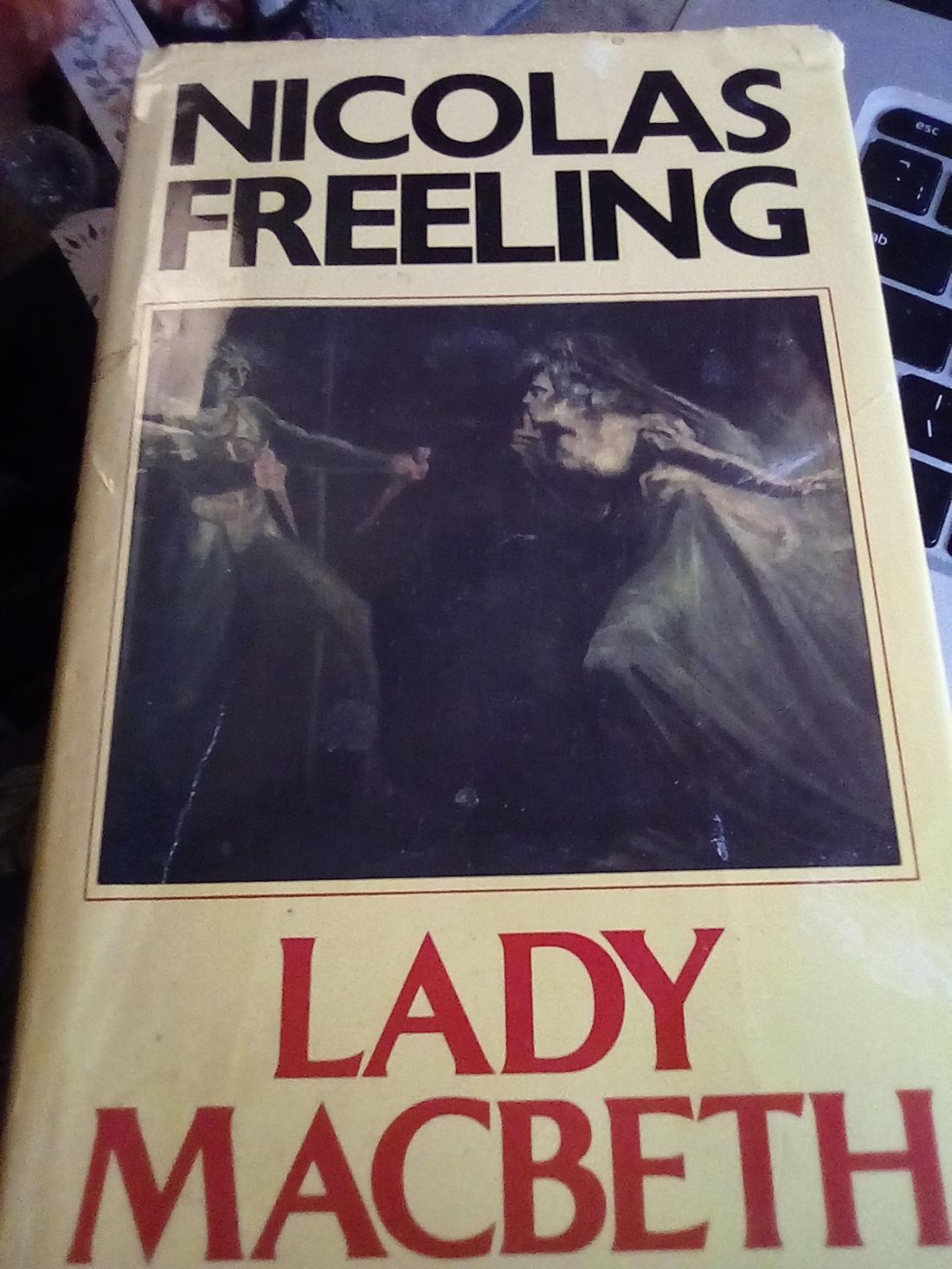
What is hatred?
 https://www.definitions.net/definition/hatred
Extract
-
Hatred
Hatred is a deep and emotional extreme dislike that can be directed against individuals, entities, objects, or ideas. Hatred is often associated with feelings of anger and a disposition towards hostility. Commonly held moral rules, such as the Golden Rule, oppose universal hatred towards another.
Share this:

Be still my heart
On the day. forlorn, we had to part
I helped you go as birds rise from the nest
Oh, hidden anniversary of the heart
I do not need to keep a special chart
I remember every glance and kiss
Before the day on which we had to part
People order me to make a start
Create a life of pleasure, should I wish
Oh pain, oh anniversary ,oh my heart
This bleeding of my heart, my joy thwarts
Yet still I live in spirit and in flesh
Since the sad day we were made to part
I fear those dreams that criticise and harm
The words of others pierce my tenderness
Oh, recurring anniversary in my heart
Comfort me, surround me with your arms
Protect me from the Visions and the storms
This the day we knew we had to part
Oh, love, oh memory, oh, be still my heart
Share this:
Broken windows

Passing water into a small bottle for the doctor to have analysed is a task even the most brilliant find hard.Rosa was not even averagely brilliant amongst the brilliants of history like Plato,Aristotle ,Simone de Boredwoy or Blaze Rascal not to mention St Coal,.
She grabbed her mobile as a dying man at his wife’s hand and rang the cab service. she used now she was unable to see properly or ride her bike.
Hello,it’s Rosa Benchez here.Can a driver pick up my urine sample and take it to the surgery for me.Thank you so much.
No problem, the manager told her and soon afterwards a young man with dangling earrings arrived.She showed him the sample hidden inside a Sainsbury’s shopping bag.He looked puzzled but agreed on payment of £259.89
She realised she had not eaten any breakfast so decided to have an early lunch instead.As she ate her toasted cheese and snake oil she fell into a daydream.She was with her online man friend walking through a huge field of her favourite flowers,cyclamen.They were walking along companionably without holding hands but together whilst also being apart which was delightful.
This was agreeable since she had never met this very handsome man in the flesh.He was called XY Matrix although his parents had never studied algebra as far as historians can tell.Could it be a pseudonym?
Maybe he was being raised to be a mathematical prodigy but he became a writer and musician and managed to earn a good income.He had a beautiful detached house filled with antiques and ceramic lamps like Freud’ study.In fact he had copied that from historical photos and descriptions ; one day he hoped to become a therapist
Rosa and Fox as she called him got on well and shared a liking for poetry and music.Sometimes he had sent her music as attachments on his emails.He seemed to love Wagner and Britten which seemed a curious combination to the British woman.He loved Britten’s Donne’s Sonnets sung by the stunning tenor Ian Bostridge.
After lunch, Rosa opened her laptop.She found an email from Fox.
You have been here and broken all my windows and my bath is ruined, he wrote.I am moving house to get away from you.And I am having plastic windows.
Rosa was alarmed as it defied common sense.She did not know where his house was ; it was in another country.So she emailed him back,
What is wrong , dear? You only said 2 days ago that my poetry had helped your sick friend when you went to visit him in the hospital
Waiting anxiously for his answer, she sipped some coffee and looked at her friend Dolly walk by, dressed in a pink suede jacket and black linen culottes with unmatching red boots.
Where is Dolly going she wondered pensively ,feeling like a cloud floating over Rydal Water in the winter not knowing which way the wind might blow it
After two hours of utter silence, she decided to wait until the evening when she had put away the groceries and written a triolet or two.She was keen to do it before she lost the impetus
The whole evening went by so she emailed him again.But again he did not reply.
The next morning she found a letter on the doormat.
1,Rancour Villas
Horror Lane
Dumbtown
Dear Rosa
I thought you would be kind and gentle like your poetry but you have wounded me.
You asked me what date my dental appointment was which was an invasion of my privacy.
You also told me you would not mind if your son was gay whereas to me it is a sin to indulge those sick appetites and you should not encourage him
Signed XY M
A dental appointment? It’s not as if she had asked him if he had a sexually transmitted disease or whether he really believed in Jesus as his Saviour.Nor had she asked him if he liked to smoke cigars in bed nor if he let Lassie his sheepdog sleep on the bed and cuddle with him.For all she knew, the dog might be his partner or even his wife
She emailed him as she felt anxious in case he was having a breakdown.He replied, saying she was not who he thought and he was finished with her.
I wonder who he thought I was, she asked herself as she sat with tears in her eyes feeling concerned about what was really going on in his dear mind.
Her cat Lucy ran up and sat on the arm of the chair gazing frenziedly at her owner and mother
Don’t worry Lucy.I am sure I will soon be ok. This must be a mistake.I think he has got paranoia which gets worse and then better
Rosa looked on Amazon and found a book called
Kantor MD, Martin
Having read a little of the book online she decided it had some useful tips which could also apply to people who were not paranoid , like always being polite, never telling lies and never arguing.As it was only £1899 she placed an order.If her friend was really ill she did not want to make him worse.
On the other hand ,who knows what his real motives might be?He could be a sadist or have got many women friends and not enough time to keep them all happy.
He might be gay and be using her to see if he could love a woman at a distance better than one in the flesh.
We have to admit that often none of us know why we do certain things.As a friend used to say
On the other hand ,who knows what his real motives might be?He could be a sadist or have got many women friends and not enough time to keep them all happy.
He might be gay and be using her to see if he could love a woman at a distance better than one in the flesh.
We have to admit that often none of us know why we do certain things.As a friend used to say
It seemed a good idea at the time.
And so cry all of us.
.
And so cry all of us.
.
Share this:

Being Women
Share this:
Sadness in its force has an allure
The memory of my loss still gives me pain
I do not wish to feel it anymore
The butterfly is battered once again
The waiting with its vigilance is strained
As if a monster shuffles to my door
The memory of my loss, oh heart of pain
Who for love will risk this sadness named?
Who is criticised for spirits poor?
The butterfly, the storm will come again
Life is hard and wildness can’t be tamed
Sadness in its force has an allure
The memory of my loss still gives me pain
Leaving Sodom, salt dissolves in rain
I must look forward with a vision pure
The butterfly find pleasure once again
The loss of movement we may each endure
The ills of age won’t have a final cure
The memory of my loss will fade with time
The fluttering flower gives joy yet has no fame
Share this:
The philosophy of poetry

https://philosophynow.org/issues/114/The_Philosophy_of_Poetry
Extract:
Share this:

I’d be afraid of a nuclear accident in my chest
She thought she’d like to be a poet
Calculating her vocabulary was ironic
She wrote free verse in stanzas three lines long
With a short intermission
She learned innocent and good people
Attract the Evil and that even people who have suffered
Are not less susceptible to wanting power or worship
She learned idolatry is rampant in men of power
“Men” is naturally inclusive
As you will know if you went to Eton
Or even to Mass in 1956
Why would I want Jesus’s soul even if he is God?
I’d be afraid of a nuclear accident in my chest
There’s danger around the sacred,we need to know
Satan did have the best lines
Jesus did not answer the questions
We had no right to ask.
I find it’s useful to work with abstract concepts
Otherwise I might suffer too much
Whatever “too much” is
It could be epsilon or delta, you know what I mean?
Isaac Newton.Mercury.The dentist.
Leibniz’ dots.Whatever
Share this:
Inhuman cries
On the theatre, I saw two big signs
One said Entrance, one Brexit did show.
Can we never leave if we go in?
We have chosen, what we cannot know
Is it a bleak satire or device
To gain attention from the passersby?
Brexit is no Play, in law it’s real
.Am I now a foreigner or a spy?
The biscuit box said Torture Freedom From
Do Peek Frean want to saintliness aspire?
It was my inner mind that made ” Torture”
Whether waterboarding or pure fire
Etched into my mind the shock, the lies
People locked up, chained, inhuman crimes.
Share this:
Oh,treason of Enlightenment, logic!
Between the orchards and the hunting Chace
The cedar trees and Tudor walls of brick
Stood this ancient town and Market Place
A Norman church stands here within my gaze
Though ugly buildings nearby cause me shock.
Among the orchards and the green filled Chace
Amid the shadows, I can see your face
My mind dreams while awake and tricks
This little town and me in others’ Place
A Cedar tree stood near the Palace Gate
Now chopped down for ugly flats en bloc
Felled now are the orchards by the Chace
No longer ruling, squashed by Banks, new, base
The Church has shrunk, an isle, a lick
Oh little town, is this creative space?
As the clocks run on, bombs tick
Oh treason of Enlightenment, Logic!
Between the orchards and the hunting Chace
Stood this little town with gracious space.
Share this:
Even when it’s suicide to smile
Taunt no longer idiots on these isles
For like the Lord they are not English pure
They voted for the stupid and the wild
In appearance, May looks fairly mild
For the old, she has a faint allure
Being the chief sweeper of church aisles
Boris Johnson Turkey has defiled
He cooked his goose in rapeseed oil uncured
As befits the madmen and the wild
Michael Gove’s own head his heart defiled
Yet save him from the deserts of the sewer
Taunt no longer morons on these isles
The NHS is poorer mile by mile
It’s good if you are dying on the wires
Even when it’s suicide to smile
Mrs Thatcher, never paid the toll
She wrote a cheque and signed the counterfoil
Taunt no longer MPs on these isles
We chose among the cunning, the most vile.
Share this:
Even very gifted artists and writers suffer from fear of reviews

I very much like the psychologist/writer Kenneth Gergen and especially his book
,” The saturated society” which helped me to understand what post modernism is
http://www.qualitative-research.net/index.php/fqs/article/view/553/1198e”
I think it’s beautifully written and explains the bad side of post modernism but also how differently it could be used.He got a very good review on the Washington Post but later got a terrible one in the New York Times
In an interview he told how this affected him badly until the man who wrote the review died ten years later,
I’ll put a link in here .http://books.google.co.uk/books?id=SweMLEe6TpgC&pg=PA294&lpg=PA294&dq=kenneth+gergen+the+saturated+self++washington+post+review&source=bl&ots=_lKF4I_lVi&sig=VEbgQl1ZpIwcLgfw3S5M5sI9__U&hl=en&sa=X&ei=JJ_VUtfLEeaP7AaviYHwCA&ved=0CGwQ6AEwCA#v=onepage&q=kenneth%20gergen%20the%20saturated%20self%20%20washington%20post%20review&f=false.
!He used to wake up at night with thoughts of what cruel things he’s like to do to this person.This shows how even a writer of very high quality can be wounded easily
Most people who read English novels have heard of Virginia Woolf. She was highly acclaimed yet had breakdowns whilst awaiting reviews .Eventually she committed suicide during WW2.Her husband was Jewish and she was afraid of what would happen if the Germans invaded Britain.
But her mental health was fragile after losing her mother and favourite older sister in her teens and also possibly being sexually assaulted by her half brother.Despite all this she had much happiness and is one of the most highly acclaimed women writers of the 20th century…not much good to her of course
Sylvia Plath a great poet a generation after Woolf also committed suicide and later became known as one of the best poets of our time
http://www.neatorama.com/2008/03/18/writers-who-suffered-from-the-sylvia-plath-effect/#!scilW
Would you like to be a tormented genius and enter the literary canon or just be an ordinary,moderately happy person? Most of us are not so gifted in any case.
Some of us believe that others with more gifts,more money, more winning personalities are much happier,but it’s not true.Many geniuses are troubled.
On the other hand being troubled by itself will not make you a genius,alas.Everybody is troubled at times.Sometimes a poet may use it to visit places where most of us prefer not to go,
Share this:

Living fire
Alone in my small room ,end-state despair
I wondered what to do ,go here or where?
I tried the doctor and the priest and then
Knew there was no answer from a man
I saw in my mind’s eye a tunnel black
To which I was dead heading on my track
Abject and broken by a lover’s death
By his own hand, he tested out God’s wrath
Then I was held by golden clouds of fire
I felt the kindest love , the Lord’s desire
The tears ran down my cheeks in one great gush,
Acknowledging acceptance without wrath
And so I turned to life and to my work
Pain and torment shall not make me shirk
Share this:
Donald Trump is real and also fake
So Donald Trump is real and not a fake
Like the News,the Russians and the guns
Well, wonders never cease nor chasms gape
Will the Queen give him a piece of cake?
If it’s rich,it might give him the runs
As Donald Trump is real and not a fake
I think and ponder as I wander late.
If I had met him , would I be a nun?
Well, wonders never cease nor chasms gape
Scarcely noted facts will change our fate
Till by paradox we’ re overcome
Like Donald Trump being real and also fake
He’s been accused of everything but rape
And dirty deeds have his good fortune won
Well, wonders die while wider chasms gape
Paradox is hard to ascertain
We like things to be clearcut and sane
Yet Donald Trump is real and also fake
Well, wonders never ease and people gawp
Share this:
Argument is pointless, love is key
Compare the BBQ on the hill to Nero fiddling while Rome burned

The burning road with buses overfull
Old and poor folk crammed ,Calcutta like-
The burning road objects ,its tarmac boils
Swallows a man’s leg,this is no fake.
With hammer and a chisel he’s released
While others picnic on the fire struck hill
They say they do not see the clouds of smoke
If the wind turns East, those fires will kill
As they ignore the fire above their heads
So we ignore what we don’t want to know
That we may envy,hate or wish to kill
That hidden rages make our mood fall low
So as we each choose what we want to see
Argument is pointless, love is key
Share this:

Against Cartesianism

https://www.bu.edu/wcp/Papers/Onto/OntoDerk.htm
“Conway’s Criticisms of Cartesian Dualism.
Conway presents a total of six arguments for what she calls the convertibility of matter and spirit. By this she means that matter and spirit are not totally different substances but are able to change into each other. Material entities can become spiritual entities and vice versa. In the course of these arguments, she presents arguments against dualism since dualism denies the possibility of convertibility. Since her arguments are very extensive, I will only discuss a few of the points she makes against dualism in her third and fourth arguments.
The first point I would like to discuss is found in Conway’s third argument against dualism. (8) Conway here argues that dualists are inconsistent. On the one hand, they seem to be making absolute distinctions between body and soul and on the other hand they seem to admit that body and soul must have certain characteristics in common.
Dualists are inconsistent because they distinguish sharply between body and spirit, that is, the penetrable and the impenetrable, the extended and non-extended, the locatable and non-locatable, the divisible and the non-divisible, the figurable and the non-figurable, but they smuggle in concepts to describe the spritual substance which in fact are not as dualistic as they claim. Spirit, according to dualists, can in fact be attributed “extension, mobility and figurability”, (to quote Conway) all attributes of penetrable bodies. For example, even dualists speak of spirit as locatable somewhere, perhaps in the sense that a person’s spirit is seen as residing in the same location as his body because such a location allows a spirit to experience that which is happening inside and in the area around the body). Spirit is also seen as something which can move, for example, one can imagine oneself being in another place, an example which Descartes himself uses. It is also seen as having figurability, in other words, it is characterised in certain ways or even perhaps seen to have a physical form such as the form of an aura or ghost. Spirit is thus seen by dualists as having extension and divisibility, as locatable and moveable. But, if this is the case, Conway says, then surely spirit must also be penetrable, that is, it must be seen as sharing in the essential characteristics of matter. Conway wonders why “…the Extension of Body and Spirit, as they [dualists] understand it, do wonderfully differ…”
In Conway’s fourth argument, she argues that Descartes, in separating matter and spirit, has a view of the bodies as dead or lifeless, as not containing spirit. Conway objects to this that since all things can in principle change into all other things and that hence the animate comes forth from the inanimate, one cannot separate reality into spiritless, lifeless matter on the one hand and non-material spirit on the other.
As to the body of an animate creature, in Descartes’ view, it is a machine which moves itself. But such a body, because it is solely made up of matter is lifeless, Conway argues. This is because, for Descartes, even though the body is moved by animal spirits, the material from out of which it is made does not contain anything spiritual.
Conway’s critique of Descartes’ view of the body as “dead matter” must be seen in the context of the 17th century discussion of Aristotelian vitalism versus Cartesian mechanism. The vitalists regarded the soul as the form of the body, making it that particular body and as the source of the vital functions of the body, that is, the vegetative, sensitive and rational functions. The mechanists thought that all the vital functions of the body could ultimately be explained through the laws of physics, the ultimate science of the material world. Descartes believed that the body of animals was a machine whose functions could be fully explained in a mechanical way and that of humans as a similar type of machine, except that it is also the bearer of an eternal soul.”
Share this:

Philadelphus “Belle Étoile”
Deep down in the clay and soil
Where the worms and brethren toil
Roots of all my garden shrubs
Twine in their long lust and love.
Invisible yet holy life,
Sacramental, without price.
Love is hidden in the dark
Waiting for the spirit’s spark
Uncountable the ants and bees
The insects on old hawthorn trees
Our own souls are destitute
We are turned to market fruit.
Until when we die, at last
We provide the worms repast
Love is gentle,love is kind
Where is love when we are bound?
People prisoners in their strip
Prefer death to soldiers’ whip
People, all beloved of God,
Who will hold the judging rod?
What was chosen may be spurned
When the love to grey death turns
No past choice is ever bound,
As the deer falls to the hounds.
Share this:
I shall not hate
Share this:
The word laundry
The “word laundry” is very busy now:
The “non involved,” the children “used as shields”
Creating euphemisms and bloody how!
Certain words we cannot yet allow
Tampax,blood and women who, paid, yield
The word laundry is very busy now
With a tiger’s cruelty we’re endowed
You should have seen the rows of” disappeared”
We’re using euphemisms,it’s bloody you.
Relationships are more than winning rows
We saw the soldiers lying in the fields
The word laundry is sadly busy now
The sheep and goats will give you bible’s clues
The politicians lied, contempt revealed
We’re using euphemisms and Oh,God, how
In our minds we keep some facts concealed
Yet self deception greys our days unreal
Your “word laundry” is hyper-busy now:
Creating euphemisms like ” blood is dew.”
Share this:
There is a space or void where love was sent
Between the world and how we represent
The nameless by a name and  even  place
There is a space or void in our intent.

What mother saw, what father really meant
How love and hate might intertwine in space.
In our own world, what can we represent?

In writing, there is lack and letters bent
For  ancient writing often  scholars traced
There is a space or void in our intent.

Today the sun is golden,gods descend.
With love,for moments, we are all embraced
Of the felt, what can we represent?

Our willingness unblinds the heart so rent
And then we see the face within his face
The space or void is  dark  till we repent

I cross my eyes with fingers interlaced:
The crucifix, the love, the death of Christ
Between the world and what we may attempt
There is a space or void where he was sent.
Share this:
Surrender to the otherness of all
Tact and subtle actions create life
Assertive force destroys another’s soul
To the High and Holy One, we’re wife.
The way we go seems but a throw of dice
Yet destiny will beckon, though we crawl
Tact and subtle actions make a life
Into every heart, there comes the knife.
Surrender to the otherness of all
To the High and Holy One be wife.
In his shadow, we look down, we cry.
We listen to that voice, so still, so small
Tact and subtle actions shape good lives.
As a mother births her child, she sighs
All lives and coming suffering must appal.
To the High and Holy One, we’re wife.
Here we seem like prisoners on bail
May we live with love in this, our world
Tact and subtle actions create life
Surrender humble to God and his wiles.
Share this:
Math lover
My love was so elliptical it passed
Before the first one realised and grasped
But now I prefer the straight lines to connect
Or perhaps an obtuse angle I’ll bisect
In truth, I married mental furniture
His mind was parabolic in its shape
And filled it was by study and nature
Yet spacious in its arts to let me hope
He did not know of numbers past belief
I enlightened him, yet he was filled with grief.
For as the caterpillar eats the very leaf
Learners are depraved like common thieves
I made an error beating him at chess
And when he died, he left me no address.
Share this:
Or is it to manipulate she’s here?
The widow makes complaints, as if I’m God
Again she says she loved her husband dear
I would love to help her if I could
There are a few alternatives to plot
Accept, endure, there is no answer clear
The widow makes complaints as if I’m God
She thinks committing suicide is good;
Or is it to manipulate she’s here?
I would like to help her if I could.
I feel my mouth go dry as if I’m wood.
I have my own new little boat to steer
The widow makes comp ints, as if I’m God
I can understand the thickening of the blood
My mind is filled with sadness when she’s near
I would have surely helped her if I could.
It’s true that grief feels like a panic fear
Without the one who loved you ,your heart’s seared
The widow makes complaints, as if I’m God
I can never help her, no one could
Share this:
Releasing secrets is a kind of rape
Now the high ups fight about some tapes
Princess Di spoke of her rage and grief
Releasing secrets is akin to rape
If we had no Brexit and some hope
The government would not be such a thief
Wasting time to fight about some tapes
What if there were tapes made by a Pope
Would it shatter all Christian belief?
Releasing secrets is a kind of rape
Why can’t we do work that brings us hope
Brings some peace and gives our hearts relief?
Instead, the high ups fight about some tapes
As individuals, we can seek for help
Or do creative acts that we believe
Releasing secrets is a kind of rape
The government’s the habitat of thieves
Into the the river Thames let them be heaved!
Now the Lords and Ladies hear Di’s tapes
Releasing secrets, does it seem like rape?
Share this:
A deep ambivalence about being in touch



There is a strange confusion about the desirability and the danger of human communication.We have a landline and 1 or 2 mobile phone yet we often set them so that only certain people can phone us.I did that until a gas engineer tried to phone me on his mobile and could not get through.A friend does not answer if I phone her on my mobile.
Yet people also complain nobody phones them.And we have email and texting too along with instant messaging.An FB messaging
For some people, this means checking phones every few minutes.Others give out a sound like an aeroplane taking off when a message comes in.Naturally, that takes precedence over any real living human you are with.
There’s a deep ambivalence here about wanting to be wanted and fearing scams and trickery.I have recently had an upsurge in people telling me I’ve been in an accident.I tell them I was killed!That ends it,
We know more people live alone.In a way that is bad but also it means you eat when you want.Watch your favourite programmes or in my case never use the TV set at all.
But there is nobody who knows where you are and maybe nobody who really knows you deeply.As friends and spouses die, it gets harder to find new people to relate to.And do you want to nurse another person through to death? Maybe if you really love them.
Share this:

Contemplated simply with the eye
The mundane is the main part of our life
We do not note the wonder of each day
And waste it when we cause unneeded strife
For then we in the dens of envy writhe
We could have peaceful hearts and live our prayer
The mundane is the greater part of life
Contemplated simply with the eye
The mundane changes when attention’s paid
We waste our life when we enjoy fierce strife
To do our work relaxed we might then try
Leaving violent effort to the crazed
The mundane is the greater part of life
Is it so hard to love that hearts reply
We shall not open up for we feel grey?
We waste our life when we provoke fierce strife
With the mundane, we look deep and cry
There is great richness in each little life
The mundane is the main part of our life
We waste it when we roam about unblithe.
Share this:
God’s position nobody’s divined.
God reached a position we can’t find
He moved astute and humorous through the air
Being human we are almost blind
A game beyond the games of Wittgenstein
The willing player has found a wondering flair
God’s position, nobody’s divined.
Impossibly the paths of nuclei wind
Cast a glance and upset the whole air
Being human we are violence blind
We cannot cast a light on his designs
Infinitesimal eyings push the photons where?
God’s position nobody will find
From unknown spaces, love and hate combine
The light divides ecstatic,pure,two,bare
Human , we survive by being blind
Love God if you will, it is a dare
Powerful, vivid as leaps a March Hare
God reached that position we can’t find
In the Arctic wastes of our own minds
Share this:
At the edge of reverie and dream
At the edge of reverie and dream
In the dusk or dawn, the edge of life
We catch sight of images sublime
The fantasies, the daydreams, how they seem
Elusive yet eternal in their strife
At the edge of reverie and dream
Are they wishes, we’re too scared to deem
Part of our self, defensive how we shy!
We catch sight of images designed.
Prophecies of futures not yet seen
They tell a truth as they flow swiftly by
At the edge of reverie and dream
Life at these dusk times is slow and green
Aversive to the tempo of new times
We catch sight of images that stream
Can a writer catch this theme in rhymes;
Write it down in short and telling lines?
At the edge of reverie and dream
We fish our pictures from this image stream
Share this:
“Inside the mind of poetry”

“The greatest lines in poetry are infinitely quotable while having no definite meaning. What is a mind of winter, and why must one have one? It doesn’t matter. Wallace Stevens’ greatness lay in his ability to produce these kinds of anti-aphorisms, seemingly wise but ultimately ungraspable: Thought is false happiness. She sang beyond the genius of the sea. The only emperor is the emperor of ice cream. And, most pointedly: The poem must resist the intelligence / almost successfully. (Or, nay, successfully!)
I believe that to read poetry, one must have a mind of poetry. You must enter a state where you come to understand meaning-resistant arrangements of language as having their own kind of meaning. It’s quite similar to those Magic Eye posters from the ‘90s: If you haven’t figured out how to look at them, you can’t believe that anyone really sees the dolphin. (This metaphor has its limits, making learned skill seem like an on/off conversion; too, with poetry, even when you’ve mastered “the trick,” not everyone sees the same thing.)
Is this “negative capability”? I’m not sure.
Negative capability, as described by Keats, is rather delightfully poetic in itself, a form of imitative fallacy in criticism, a mental onomatopoeia. It seems clear enough by his own definition: “when a man is capable of being in uncertainties, mysteries, doubts, without any irritable reaching after fact and reason.” But it’s so often badly paraphrased, in conversation and in print; Wikipedia defines it as “the capacity of human beings to transcend and revise their contexts” (to their credit this merits a “citation needed”). A concept so frequently muddled must be inherently mysterious and as such, perhaps, a shibboleth; if you don’t understand negative capability you won’t understand poetry.
There are probably people who go through life with a permanent mind of poetry. I am not one of those people. I fall in and out of it, and not at will. As I write this, I am not in it, and have not been for three or four months, which is to say, I have not been able to focus on or become absorbed in any book of poetry. Oddly, I have continued to write poetry. I continue to think about poetry, almost daily. As my Twitter feed reveals, one doesn’t need a mind of poetry to talk about poetry.”
Share this:

A song is sung, sprung with the babbling I
The mind is like a river as it flows
From small beginnings to unending sea.
Endless and elusive what it shows
As in the mud, the stark blue iris grows
So with life itself, from dark we see
The mind is like a river as it flows
The boat rides on the surface as it goes,
From what once was to what is still to be.
Endless and elusive, what it shows
Before we learn to speak, the music holds
The baby and the mother company
The mind is like a melody that flows
A duet comes to life and life it moulds
A song begins sprung with the babbling I
Endless and elusive, life to show
In lucid realms awakening, we enfold
The many parts of self that outward cry
The mind is like a melody that flows
Come now sleep, where dreams of mothers stray
Engaged with all the fathers of desire
In the mud, the still blue iris grows
The mind is like a river in full flood
Share this:
Smaller than the pebbles drowned sea moist
An agnostic yet I need my God
For many parts of life cannot be voiced
Without the sacred language, I learned of.
More a place and less a cruel Rod
Willing us to have the rights of choice
An agnostic yet I need my God
Lesser than both lower and above
Neither is he man, nor girl nor boy
In the sacred language I learned of.
Greater than the mountain tops of love
Smaller than the pebbles drowned sea moist
Me, agnostic, yet I need such God!
Wilder than a stallion newly shod
Quieter than that little, still, small voice
In the sacred language I learned, read.
As by our own science, we are hoist
There’s humour in that secret, still embrace
I agnostic, need to walk with God
And use the sacred language I learned of.

