Spring by Gerard Manley Hopkins

Nothing is so beautiful as Spring –

   When weeds, in wheels, shoot long and lovely and lush;
   Thrush’s eggs look little low heavens, and thrush
Through the echoing timber does so rinse and wring
The ear, it strikes like lightnings to hear him sing;
   The glassy peartree leaves and blooms, they brush
   The descending blue; that blue is all in a rush
With richness; the racing lambs too have fair their fling.
What is all this juice and all this joy?
   A strain of the earth’s sweet being in the beginning
In Eden garden. – Have, get, before it cloy,
   Before it cloud, Christ, lord, and sour with sinning,
Innocent mind and Mayday in girl and boy,
   Most, O maid’s child, thy choice and worthy the winning.

Dark jewels

I have listened to the arguments of fools
I have heard them like a donkey bray
I have looked within and found dark jewels.

I have studied  algebra like Boole’s
I read the works of Euclid and  obeyed
I have listened to the arguments of fools.

I have  been to colleges and schools
I have seen the wolves therein who prey.
I have looked within and found dark jewels

I have earned my knowledge and my tools
I have kept them current day by day
I have listened to the arguments of  fools

I have loved strange men whom I thought cool
I have often felt the need to pray
I have looked within and found dark jewels


So we each must fumble  through the day
Knowledge and perception show the way
I have listened to the arguments of fools
I have looked within and found dark jewels.


Honeysuckle

The pink flowers of the honeysuckle rise
Like crocuses in springtime from the green
Like eager maidens wanting to   be seen
As sunshine glitters on their shapely thighs.

Too much sun has made them over-bold
They’re at risk of suffering from their  desperate joy.
For all the rain and clouds made them annoyed;
They must be fertilised or  die  before they’re old.


This   fierce  sun makes me a melting splodge
A lick of  oil paint mixed and uncomposed.
Who was this artist; what did she propose?
And will this portrait in  her  memory lodge?

As flowers will inevitably die
They do not lose by hurling up their joys.
But should we  women imitate their ploys?
For we might live in shame, though we defy


Each child of nature   feels the touch of sun.
Some stretch out in joy while others run.
If you   vacillate  and never choose,
She who  chooses has the least to lose .


The flow

My old blue fountain pen allows
The ink across the page to flow
Like wet paint from an artist’s brush,
And words come in a rush.
Enchanting through the hand which writes,
Bewitched with art, beauty alights.
The script is like a music score
Through which we pass as through a door.
Imagination’s home.
As ,mysteriously.to you, to me,
The spirits of our hearts are tamed,
By rhythms of pen,of brush,of mind.
They enter vision quite unplanned,
Like moths to flutter softly round
Fire joined heart and hand.
The pen slows down,the hand goes still
And just as dreams at daybreak will,
They shrink,they disappear,they’re gone.
I almost caught that one!

Like new mown grass

13335795_717967215009826_3551374442510483070_nNerve endings shriek
Like new mown blades  of grass
Arms are tender,feel raw inside
As if  the hands can’t deal  with loss
I satisfy them with scented lotion
They want to retract into my body
I have no shell to protect me.
Tension makes me  steely.
But the hands can’t lie
Thin and bony,no fat to  cover
The nerves give out a message
Lost,loveless,lonely
Touch me with your invisible glance.
Embrace me with your  eternal mind.

The Death of Silence

  • IMG_0187
  • RELATED CONTENT [poetry foundation]
    Discover this poem’s context and related poetry.
A car’s backfire
rifles the ear
with skeleton clatter,
the crowd’s walla walla
draws near, caterwaul
evaporating in thin air.
Silence is dead.
(Long live silence.)
Let’s observe a moment
of it, call it what it’s not:
splatter of rain
that can’t soothe
the window’s pane,
dog barking
up the wrong tree.
Which tree, which air
apparent is there to hear
a word at its worth?
Hammer that drums
its water-logged warning
against the side
of the submarine:
I’m buried to the hilt
like the knife,
after it’s thrown,
continues to bow
to the apple
it’s split.

The depth of heart

To grow is both a process and an art
Requiring food with richness  aptly packed
And growth’s success requires a depth of heart

Trust and truth we need to even start
As wondering muses contemplate our tricks
Growth is both a process and an art.

On the surface thoughts like fishes dart
Bigger fish are swarming through the wrecks
Growth’s process requires the depths,the heart

Five fathoms we must sink when we depart.
We leave behind our sacred scrolls and texts
To grow is both a process and an art.

The path is absent from all current charts.
From libraries and colleges run  next.
Growth’s success will need a sturdy heart.

To say,I am, tempts pain to hit us quick
The fire,the flames around us  duly lick.
To grow is both a process and an art
We  must endure the depths of  our own hearts


Yet fear surprise


The point of living is to feel alive
Not caged  by  too high walls or steely fence
We want to love,be taken by surprise.

Our  wounded mangled self we can’t deride,
Recalling  fights and  struggles lived  through once.
The point of living is to feel alive.

We dither to and fro in puzzled ways
We feel the anguish, still and quite intent.
We want to love,be taken by surprise.

The self’s spontaneous, not a thing contrived;
Formed with love and  hate,with all intense.
The rage of living is to be alive.

When washed away by feelings glad,immense
That cross our borders without our lament
The  hope,the need of living is  our life
We want to  give and take  yet fear surprise


Ariel BY SYLVIA PLATH

Stasis in darkness.

Then the substanceless blue
Pour of tor and distances.
God’s lioness,
How one we grow,
Pivot of heels and knees!—The furrow
Splits and passes, sister to
The brown arc
Of the neck I cannot catch,
Nigger-eye
Berries cast dark
Hooks—
Black sweet blood mouthfuls,
Shadows.
Something else
Hauls me through air—
Thighs, hair;
Flakes from my heels.
White
Godiva, I unpeel—
Dead hands, dead stringencies.
And now I
Foam to wheat, a glitter of seas.
The child’s cry
Melts in the wall.
And I
Am the arrow,
The dew that flies
Suicidal, at one with the drive
Into the red
Eye, the cauldron of morning

Stanley Plumly

“Ariel” is, of course, Plath’s singular and famous example of the form completely at one with its substance, the language exactly the speedy act of its text. The point for the poet is obvious: “How one we grow,/Pivot of heels and knees.” The speaker thus becomes as much Ariel as the horse, and together they become the one thing, the poem itself, “the arrow,/ /The dew that flies/Suicidal, at one with the drive.” The run from stasis in darkness into the red eye of morning is a miraculous inhabiting, in which the natural and referential world dissembles, blurs into absence, to the point that the transformation of the horse and rider can become absolute. “Something else / / Hauls me through air . . . ” In seconds, she is a white Godiva, unpeeling dead hands and stringencies, then, almost simultaneously, she is foam to wheat, and at that freeing instant, in terror or in esctasy, the child’s cry melts in the wall. “Ariel” is as close to a poetry of pure, self-generating, associative action as we could hope for, as if the spirit, at last, had found its correlative, had transcended, in the moment, memory.

From “What Ceremony of Words” in Ariel Ascending: Writings about Sylvia Plath. Ed. Paul Alexander. Copyright © 1985 by Paul Alexander.

I’d be sent to buy mint

Do you remember squirming under the table
Banging your head on the corner
Or falling down    the stairs.
I broke my leg once.
Knees scabbed and bruised; we don’t see that now
I suppose they don’t do the dangerous things we used to do.
Mr Turner had an allotment where he grew flowers and herbs
I’d be sent to buy mint sometimes and a bunch of flowers
Then the council made the land into garages for rent.
And hardly anyone had a car.Until Beeching.
The Great Train Robber.

I am in a study brown

Oh,doctor I am in a flap
I cannot turn this childproof cap
I cannot take my medicine
So I shall toss it in the bin

The beta blockers make me down
I am in a study brown.
The mini aspirins make me bruise
And my mind is quite confused.

The ibuprofen hurt my heart
Yet without one I cannot start.
The thyroxine has no effect
So now I feel my life is dreck.

The codeine fails to make me high
I'm not addicted, though I try.
I'll have to take a shot of gin
And alcohol will make me sin.

I'll go to parties in a dress
That makes men's hormones more or less.
I'll take a big one home with me,
And give him poison in his tea.

And when I am in jail at last
I'll feel remorse for all my past.
For as I suffer dreadful pain
God has hit me yet again.

It's not enough that I am blind
And suffer terrors in my mind
Not enough that lovers cruel
Give me stick instead of jewels.

Or maybe life does not make sense
Especially when I feel so tense.
Maybe random are my days
and my life has gone astray.

I think that I shall buy a cat
And love it tenderly and chat.
But if my cat gives me a scratch...
I'll light its tail up with a match.

All the world must me obey
Else I'll be enraged all day.
I want my own way all the time.
Other people must conform.

I am here and full of ills
What do you think of these blue pills?
If they take away my heart
That at least will be a start.

Then they can remove my brain
To help me with this damned pain.
Why not kill me right away
Then I'll be from pain astray?

I have heard grass singing in the wind.

I have  heard  grass singing in  the wind.
I   have walked through poppy fields in  sun
I have  suffered  when dark rain descends

I have watched  trees’ shadows in the ponds
I have  known the  arctic wastes of pain
I have  heard  grass singing in the wind.

Another soul is writing  with my hand
Yet I have  wept  while loaning him  my pen
I have  suffered  when dark rain descends

I have known  the edges  of the mind
I ‘ve   sensed  hollow silence un-contained.
I have  heard  grass singing in  the wind.

I have sorrowed for  humans confined
I have  watched  the antics  of bad  men
I have  suffered  when dark rain descends

I have seen the storm by camera lens.
I have felt the   solar system bend.
I have  heard  grass singing in  the wind.
I have  suffered  when dark rain descends


Precision in poetry

OLYMPUS DIGITAL CAMERA


http://www.poetryfoundation.org/resources/learning/articles/detail/68419

“Poetry charts the changes in language, but it never merely reproduces or recapitulates what it finds. The lyric poem defamiliarizes words, it wrenches them from familiar or habitual contexts, it puts a spell on them. The lyric is cognate with those childish forms, the riddle and the nursery rhyme, with whatever form of verbal art turns language inside out and draws attention to its categories. As the eighteenth-century English poet Christopher Smart put it, freely translating from Horace’s Art of Poetry:”

It is exceedingly well
To give a common word the spell
To greet you as intirely new

In Smart’s belief, as Marcus Walsh observes in Christopher Smart: Selected Poems(1979), “every creature worships God simply by being itself, through its peculiar actions and properties….

Garden

Soft rain is falling
Pink honeysuckle rises
Looks like crocuses

Growing on shed roof
It was “suitable for shade”
But it climbed over

Until it found  sun.
The wisteria has moved
To a tree next door.

I can see upstairs
How it drapes and dangles from
A young rowan tree.

The apple blossom
I’ve not noticed it again
But I saw the wren.

The wren  is near now
Hides in weigelia
With its wren babies.

My friend saw a thrush
We’ve not seen one here lately.
Only the blackbirds.

Oh, what art

The gift for  imitation   is an art
Needs eyes and face and mind to work as one;
And who would dare to play the darkest parts?

To reproduce another being’s heart;
To manifest a self  till acting’s done.
The gift for imitation is an art

To  play another, may one’s soul contort;
Although a little demon may be fun.
But who would dare to play the darkest part?

I’d sooner play a demon than a tart
Especially if I had a  piper and a drum
The gift for imitation, oh,  what art.

When we play  adult games we have no charts
And we know too many use a gun
But who would  dare to play the darkest parts?

We  face a trump and devils may become
Our fellow citizens   till all’s undone.
The  gift for  imitation   is an art
Yet  will  he dare to play the darkest part?


Theodore Roethke:The Waking

https://youtu.be/IxY2g4mR8Xk


We think by feeling. What is there to know?
I hear my being dance from ear to ear.
I wake to sleep, and take my waking slow.

Of those so close beside me, which are you?
God bless the Ground! I shall walk softly there,
And learn by going where I have to go.

Light takes the Tree; but who can tell us how?
The lowly worm climbs up a winding stair;
I wake to sleep, and take my waking slow.

Great Nature has another thing to do
To you and me, so take the lively air,
And, lovely, learn by going where to go.

This shaking keeps me steady. I should know.
What falls away is always. And is near.
I wake to sleep, and take my waking slow.
I learn by going where I have to go.

Villanelles:what I think so far

Let’s start with one of the most well known poems by Dylan Thomas

Do not go gentle into that good night,
Old age should burn and rave at close of day;
Rage, rage against the dying of the light.

Though wise men at their end know dark is right,
Because their words had forked no lightning they
Do not go gentle into that good night.

Good men, the last wave by, crying how bright
Their frail deeds might have danced in a green bay,
Rage, rage against the dying of the light.

Wild men who caught and sang the sun in flight,
And learn, too late, they grieved it on its way,
Do not go gentle into that good night.

Grave men, near death, who see with blinding sight
Blind eyes could blaze like meteors and be gay,
Rage, rage against the dying of the light.

And you, my father, there on that sad height,
Curse, bless, me now with your fierce tears, I pray.
Do not go gentle into that good night.
Rage, rage against the dying of the light.

Form: Villanelle

I enjoyed writing some villanelles;I found it hard too.One reason is clear.
Look at the first three lines in the above poem.Lines 1 and 3 are going to be repeated several times.They also come together to end the poem.
This means they have to be good.These lines  in Thomas’;s poem are often quoted.As it happens I disagree with them as advice but I think they are marvellous as poetry.And who takes advice from poets?
So thinking of  two good lines before you start… or even one good line to begin with is something I have found more difficult than I do with sonnets.Of course I only began last week so I can’t be surprised by my lack.
However I found the repetition and the sounds were very enjoyable and memorable.More so after I had tried to write my own.And that is one good reason for writing poetry.You  will enjoy other people’s poetry much more, if it is good.As we don’t see what Dylan Thomas threw away we don’t know how much effort  and work was involved in writing his beautiful poem.Sometimes I have done nearly 30 revisions to a poem.Sometimes I put one on Facebook,not for my family to read,but just moving it and re-reading it often suggests an improvement.Sometimes  someone reads it but not always.But it’s good for me.
If I can think up another first line,I shall continue  my study.


So sorrow’s ale brings memories of joy


The art of musing isn’t hard to learn
Instead of tablets,screens,electric toys=…….
A spacious mind may entertain  the spurned

We sometimes  learn this when we need to mourn
As  companions leave, of sympathy  devoid
The art of musing isn’t hard to learn.

As milk ‘s transformed to  butter  as we churn
So sorrow’s ale  brings   memories  of joy
A spacious mind  may entertain  the spurned


The art of living is  one art  we earn
By patience and  with tempers un-annoyed
The art of musing isn’t hard to learn


As life goes by,how greatly we may yearn
For lovers lost in  wars akin to Troy
A spacious mind can entertain  the spurned.


Unlike  that  mistress tempted to be coy,
We open up our our minds to marvelled joy
The art of musing isn’t hard to learn
A spacious mind  may  entertain  the spurned


Days

Some days are days for losing

Diaries,letters,lovers.
Some days are days for losing
Fathers,money,mothers.Some days are days for finding
Mobile phones and patience.
Some days are days for finding
New friends and old relations.

Some days I feel at sea for hours,
Some days I feel so lost.
Some days I know that life’s worthwhile
Whatever the emotional cost.

Days are special units
In the journey we call life.
Days are short so don’t waste time
In needless haste or strife.

Villanelle for an Anniversary By Seamus Heaney

350th Anniversary of Harvard

The sin a child is born to is not hers

The sin a child is born  to is not hers;
For mother’s body’s sacred  with its grace.
The sin a child is born to,it is ours

Yet ,at a baptism will the priest declare:
Out ye demons,leave this infant’s space.
The sin a child is born  to is not hers

 
The infant  naturally speaks in tongues of fire.
The Spirit moves eternal in its trace
The sin a child is born to,it is ours

The path we learn to walk ‘s already there
The rules  and laws were written with no haste
The sin  a child is born to is not hers

A child born now  is marked by Iraq War
A child born now, in paranoia’s traced.
The sin a child is born to,it is ours

Oh,look upon the infant’s holy face
Beatific vision is there  traced
The sin a child is born  to is not hers
The sin a child is born to,it is ours


I have sifted earth

I have walked the silent paths of grief
Sunless,dreary,cold and all alone.
I have slept on beds of winter leaves.

I know that death’s an avaricious thief.
Although my heart weeps and my joy has gone.
I have never felt I was deceived.

I have learned that human life is brief.
I have learned by sorrow we’re undone.
I have sifted earth and what’s beneath.

I felt dark emotions in me seethe
While I have been mocked by glaring sun.
I have learned the geography of grief.

I wait in silence for this life to cease
Or will a fluttering wing make chaos come,
Change my heart and give me a fresh lease?

Unconsoled grief can make us dumb
Into our hearts, we drag the ice that numbs
I have walked the silent paths of grief
I have made my bed on winter leaves.

The Difference Between Lack and Absence by Annie Diamond

Both mean not having, but one means missing too.
Absence can be welcome, but lack implies desire—
the absence of some noise, a lack of you

might be a good example. And it’s true
that lack makes judgment, means that we require
the thing that’s gone (a constant aching, too)

while absence just reports; we can make do
with smaller things; it doesn’t sound so dire.
Who needs the noise? (But I need you.)

Absence lets us start anew,
while lacking keeps us laced to its dark pyre.
Both are not having, but one is missing too,

and wanting nothing more than to undo
whatever sins caused lacking to transpire.
The noise is done, and so, I guess, are you

with me. In verse I struggle to subdue
my restless heart. (The lacking makes me tired.)
Both mean not having; one means missing too—
the absence of some noise, a lack of you.

Annie Diamond is a student at Barnard College, a private women’s liberal arts college affiliated with Columbia University. She has also studied abroad at Mansfield College, one of the constituent colleges of Oxford University in England. She recently completed her sophomore year at Barnard College, where she studies English and creative writing. Her work has been published in Apt, Avatar Review, Clockwise Cat, The Columbia Review and The Lyric. She was awarded first prize in The Lyric‘s College Poetry Contest for her villanelle “The Difference Between Lack and Absence.” The same poem later won the Lyric Memorial Prize and was named the best poem to appear in The Lyric for the year 2013. Her favorite writing spot is the Hungarian Pastry Shop on New York City’s 111th Street, and her number one life ambition is to appear on Jeopardy.

“It was my honor and pleasure to judge The Lyric‘s yearly and quarterly awards. I was pleasantly surprised to learn that my favorite poem for the year 2013 was written by a college student, Annie Diamond. I believe she has a very bright future.”—Michael R. Burch

Acquainted With The Night by Robert Frost

I have been one acquainted with the night.
I have walked out in rain—and back in rain.
I have outwalked the furthest city light.

I have looked down the saddest city lane.
I have passed by the watchman on his beat
And dropped my eyes, unwilling to explain.

I have stood still and stopped the sound of feet
When far away an interrupted cry
Came over houses from another street,

But not to call me back or say good-by;
And further still at an unearthly height,
One luminary clock against the sky

Proclaimed the time was neither wrong nor right.
I have been one acquainted with the night.

Robert Frost’s “Acquainted With The Night” is more of a sonnet than a villanelle, but it is a marvellous poem with a killer opening line that doubles as a killer closing line.

Bother me no more


 No sight is like the rising of sun
When promises of dreams seem  clear and still
My heart  though sore ,can fancy  love has come
Without hard times and exercise of will.

No morning is without new dawn of hope
When all our conflicts shall be put aside.
Imagination is  far flung in scope,
Never  noting dreams may fraughtly lie.

No love is like my long lost love for you
Once known,once felt,it settles in the heart.
Yet I do believe love can be found anew
But only when the lost  true love  departs.

So bother me no more with reveried bliss.
Go leave me with my  life,though all’s amiss

Joy will return one day

6419415_506e1f1602_m

 Some days are sad and blue

And then we feel lonely too;
Or we cause rifts.

Some days are doldrum days.
Some days are like bad plays.
Not such a gift.

Most days have joyful parts.
Most days we lift our hearts.
They pass all too swift.

Some days love speaks to me.
Some days I feel so free.
I love my craft.

Life is a patterned weave.
Love helps us when we grieve.
Love is a raft.

See how the sun comes back.
See how light fills the gaps..
Some days we laugh.

Weep now and I’ll weep with you.
I have known sorrow too.
Yet sorrow will pass.

Joy is not far away.
Joy will return one day….
With life’s arts and crafts

I confess

I love you more than marmalade
I love you more than jam
I love you more than earl grey tea
I love you as you am.

I love you in the living room
I love you in the bed
I love you  in the bus shelter
I love you just instead.

I love you in your underwear
I love you when you’re  dressed
I love you in  that old grey coat
I love  you ,I confess.

Yet with your eyes you made a final call

The pattern of your speech is in my ear
Although I do not hear  you speak  out loud
Shall I say ear or is it heart that bears
The form   that  made  your speech have its right sound?

Wherever in myself I find your trace
I long to keep it even when I grieve.
As though, because I do not see your face,
I never wish by sound to be deceived.

And at the end you did not speak at all
Like the baby  while inside its  nest.
Yet with your eyes you made a final call
As contented as a baby   joined to breast.

And so you went, but left your patterns here.
So with  fine prosody, I feel you near


Prosody

From google
Prosody
ˈprɒsədi/
noun
noun: prosody; plural noun: prosodies
  1. 1.
    the patterns of rhythm and sound used in poetry.
    “the translator is not obliged to reproduce the prosody of the original”
    • the theory or study of prosody.
      “a general theory of prosody”
  2. 2.
    the patterns of stress and intonation in a language.
    “the salience of prosody in child language acquisition”
Origin
late 15th century: from Latin prosodia ‘accent of a syllable’, from Greek prosōidia ‘song sung to music, tone of a syllable’, from pros ‘towards’ + ōidē ‘song’.

I haunt my familiar spaces

The shops  look all the same to me.
plastic  human models with no heads
are placed in the windows
showing us how we might look
if we bought the latest fashions.

People walk, by dropping paper and cans
some look at me,most don’t
I’m invisible now ,I’m  a ghost.
I haunt my familiar spaces
the library green and the path by the pond

The phone shops tempt us with larg notices:
Only £39 per month for the best
the latest,the new maps and locations
faster access to email and photos.
Look here I am,another selfie.

The only beauty is a pigeon in the sun
and a black man with gentle,luminous eyes
smiling at me as he sweeps away the paper
tossed down by the blinded people
who jabber beside the coffee shop.


Appearances, both natural and contrived  

How gently,sweetly softly flowers pose,
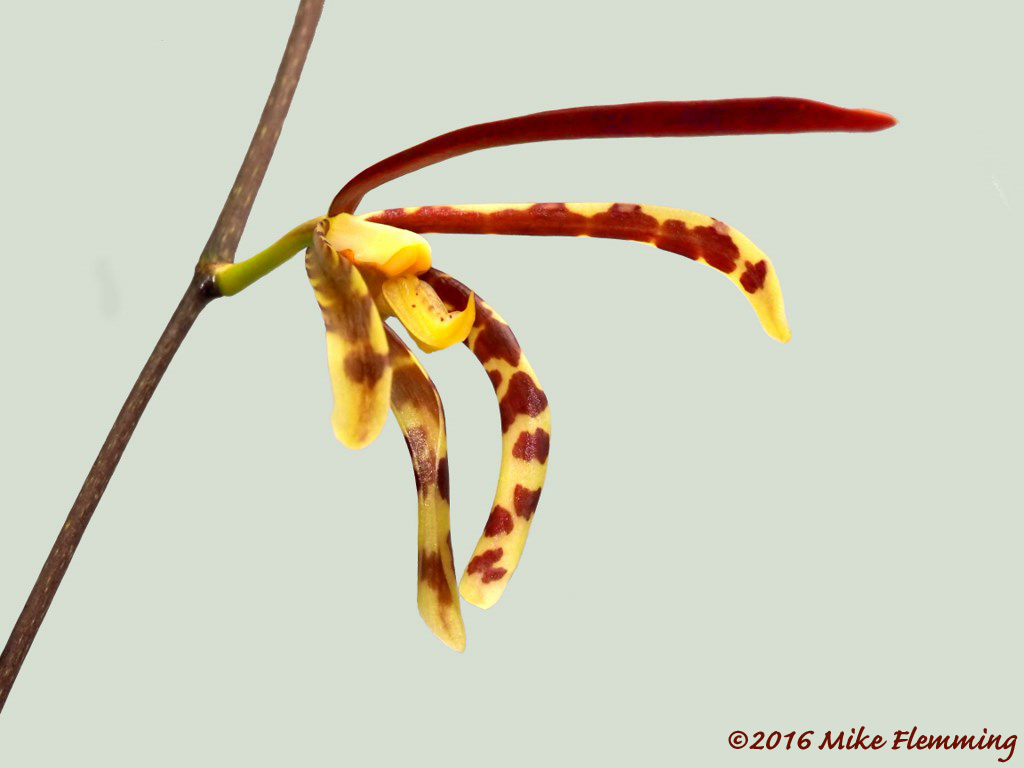
Carnation,orchid ,daffodil and rose.
For their intricate petals form a shield
Yet bees with striped force shall make them yield.
Appearances,both natural and contrived,
Mixed with the wiles of human nature thrive.
As knowing not, we pluck the apple rare
And bite its flesh,with teeth we have to bare.
We too deceive the innocent who pass
Not seeing watchers hid behind the glass.
The windows break,the deep earth quakes;
Seized is the maiden ,he  her virtue takes.
Beneath the surface,force and fierceness thrive.
What fearsome, burning God enjoys our lives?