Those little words invented as we loved
Now have no other speaker but myself.
Lost, unique, the man so well beloved,
Those little words sprang from our deep, sweet love-
In my own speech, these words no longer live
I cannot use our words, that loving wealth.
The chosen words invented as we loved
Now have no other listener but myself.
Category: poetry
The script is like a music score
My old blue fountain pen allows
The ink across the page to flow
Like wet paint from an artist’s brush,
And words come in a rush.
Enchanting through the hand which writes,
Bewitched with art, beauty alights.
The script is like a music score
Through which we pass as through a door.
Imagination’s home.
As , mysteriously.to you, to me,
The spirits of our hearts are tamed,
By rhythms of pen, of brush, of mind.
They enter vision quite unplanned,
Like moths to flutter softly round
Fire joined heart and hand.
The pen slows down, the hand goes still
And just as dreams at daybreak will,
They shrink, they disappear, they’re gone.
I almost caught that one.
In deep now, turn off that bright light
I’m in deep now,never been this deep before The world’s hollow like a shell and I’m out its door. In so deep,the ocean has its own startled floor. I’m down,down.down,never been so dark,so more I can’t rightly tell how I got where I am I think I had an accident,fell over,then I swam. Sometimes it’s a loss, betimes it’s a man. I guess I only do it 'cos I want to know if I can. I don’t know if the joy is worth the pain. Would I choose to relive it,if I was born again? The deep joy is the amazing gain. But the sorrow is damn sad,let’s admit it plain. I’m in deep and it’s over my head. What was I thinking of,when I fell out of that bed? I look up and the sea’s so turquoise like that mist is red When we get good and mad and wish some loon was dead. At first, it was all just black,black pain But from the bottom of the well,I looked up with awed love again. That’s when I recalled,feelings are wise and sane. Joy is much greater when we’re in the deep,deep zone. I dunno if I’m ever comin’ out. We can’t control it,ain’t that what life’s all about? I’ll never love with innocence again,nor not feel doubt. But I’m no teapot and the devil ain’t got my spout. I’m swimming and the ocean’s so mysteriously bright Down here we don’t have no day nor no night Fish nudge me with big grins and teeth white; Sea flowers fondle me and whisper,turn off that light!
What does poetry do for us?
The novelist Richard Ford differed from the poets in his take: “The question ‘Why poetry?’ isn’t asking what makes poetry unique among art forms; poetry may indeed share its origins with other forms of privileged utterance. A somewhat more interesting question would be: “What is the nature of experience, and especially the experience of using language, that calls poetic utterance into existence? What is there about experience that’s unutterable?” You can’t generalize very usefully about poetry; you can’t reduce its nature down to a kernel that underlies all its various incarnations. I guess my internal conversation suggests that if you can’t successfully answer the question of “Why poetry?,” can’t reduce it in the way I think you can’t, then maybe that’s the strongest evidence that poetry’s doing its job; it’s creating an essential need and then satisfying it.”
The sensuous world contains both word and fire.
Spoken words are part of a complex,
Of gesture, touch, expression, and desire.
They are not cut off separate, nor perplexed.
The sensuous world contains both word and fire.
To concentrate communion to mere tongue,
To ignore all expression but our words
Seems to be a folly and a wrong
For all happens cannot but be heard
Our hands, our eyes, our movement create shapes
With speech, we learn to give shape proper form;
And as a love in his bed may grope,
His heart seeks for the words which work as charms
There is no split between our worlds and minds
Their conjunction gifts appropriate signs
The expression of the sensed conveys delight.
There’s nothing on this page until I write
A word and then another word and more:
The sentences that bring me my delight
No sense is quite as needed as our sight
Moral blindness is by most deplored.
There’s infinity upon this page I write
I have pondered in the early winter nights,
Whether there are senses we ignore.
The expression of the sensed conveys delight.
Could there be, unseen, a different light
We might see by if we sought its door?
There’s blankness on this page until I write
The possible encounter, through a rite,
With God whom we and angels must adore.
My senses then might bring me grace and light
In the soul, oh, deep within that core,
Who shall, patient, find the unknown door?
There’s an opening upon this page l write.
Can other words, on other tongues, invite?
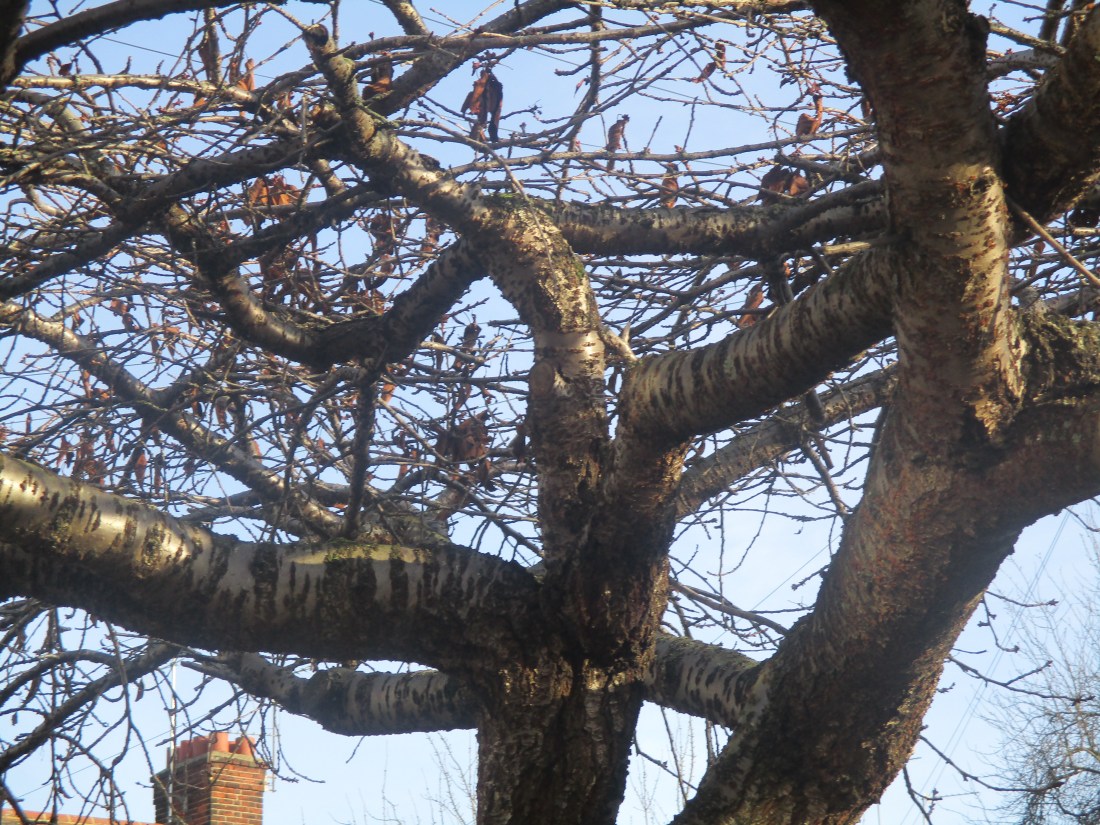
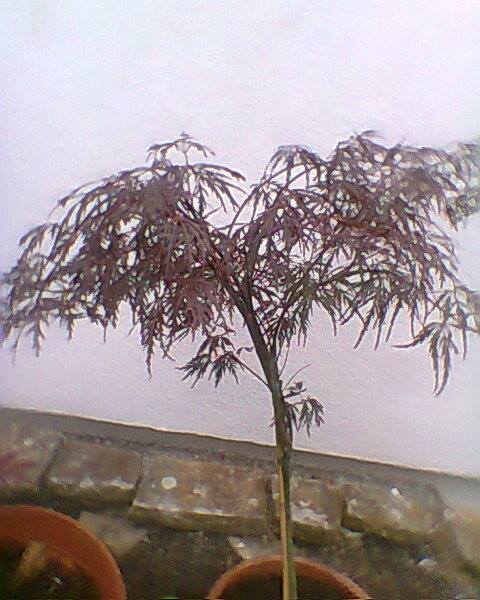
What art has twisted branches to this form?
The beauty makes my eye feel satisfied.
This power affects us all like a wild storm.
The beauty speaks like hidden poems
Important to see nature dignified
What art has wrestled branches to this form?
I take my camera out as I sit warm
By this stone wall my eye is gratified
The power is like a god in his fierce storm
What would I do if gods bent these, my arms?
So human lovers could not in them lie.
What mystery twisted branches to this form?
What is the power by which the trees are calmed?
Where is that being in whom I can abide?
The power affects my heart like a sweet balm.
With my infant hunger gratified,
I see the world with no fierce greed allied.
Whose the heart that twisted all to form?
This art affects green nature like named storms.
I shall be renewed
When seven years come round again My self is liquified. My skin becomes a holding shell For my old self has died. As I dissolve I feel great fear And yet I trust my soul. So in the sea I lose my form, And with the waves I roll. I am at one with all the world, And yet I am nothing. My inner waters rise and fall What will the high tide bring? After my drowning I shall rise And I shall be renewed. I must submit to that strange Life With which I am imbued. I am not mistress of myself, I am this moment’s flower. In the deep waters I must trust To take me to the shore. Oh hang my arms with grasses green And dissolve me in your sea. Thus when the time comes for rebirth Regenerated I shall be.
Symbols in literature

http://www.thehypertexts.com/Best%20Symbols%20in%20Poetry%20and%20Literature.htm
Excerpts from “More Poems”
by A. E. Housman
XXIII
Crossing alone the nighted ferry
With the one coin for fee,
Whom, on the wharf of Lethe waiting,
Count you to find? Not me.
The brisk fond lackey to fetch and carry,
The true, sick-hearted slave,
Expect him not in the just city
And free land of the grave.
Charon’s ferry symbolizes the transition from life to death, or dying. The “one coin” is the obulus, which symbolizes death: the ultimate cost of mortal life. The river Lethe symbolizes forgetfulness, oblivion and concealment, as the dead are concealed from the living, and vice versa. The grave is also symbolic of death. In this poem the river Styx symbolizes death; although it is not explicitly named, we can infer it. In Greek mythology, Charon’s ferry carried the newly dead from the land of the living across the River Styx to Hades, the realm of the dead. It may interest Christians to know that Hades was not “hell,” as Hades incorporated heavenly regions such as the Elysian Fields and the Blessed Isles. Y
Sonnet 147
by William Shakespeare
My love is as a fever, longing still [1]
For that which longer nurseth the disease,
Feeding on that which doth preserve the ill,
The uncertain sickly appetite to please.
My reason, the physician to my love,
Angry that his prescriptions are not kept,
Hath left me, and I desperate now approve
Desire is death, which physic did except.
Past cure I am, now reason is past care,
And frantic-mad with evermore unrest.
My thoughts and my discourse as madmen’s are, [11]
At random from the truth vainly expressed,
For I have sworn thee fair, and thought thee bright,
Who art as black as Hell, as dark as night. [14]
This is one of Shakespeare’s famous “Dark Lady” sonnets. It employs simile, a type of metaphor in which comparisons are introduced by “like” or “as” (please refer to lines one, eleven and fourteen).
When thinking hurts
My title has two meanings.One is that sometimes we have to think about a painful event or a person who has hurt us.Or even some past events…I recall pain when I was told about Hitler and Stalin
On the other hand some of us use thinking in words as a way of blocking painful emotions.whilst this may work for a time,it may give a lot of trouble when we need to deal with pain.Essentially we do not wish to “know” the truth in the full sense… we deceive ourselves and maybe others too
William Blake wrote this poem
Joy and woe are woven fine,
A clothing for the soul divine,
Under every grief and pine
Runs a joy with silken twine.
It is right it should be so;
Man was made for joy and woe;
And when this we rightly know,
Through the world we safely go.
I’ve been reading Sylvia Plath recently.I see that after her husband left her she went into a frenzy of activity.She had two very young children.was often ill with flu but she wrote all her most famous poems at this time;then she moved to London antd socialised a lot to prove she was not just a deserted wife.After this she became more, ill,there was a severe winter….then she crashed into the depths…I feel that her frenzied writing was a way of not admitting her grief… and she got worn out and decided death was better.
Some of us who are quite cerebral are not in touch with our bodies.We don’t feel that knife in the heart,the tears unshed,the anger that threatens… and eventually this cam lead to problems.,sometimes flu sometimes a breakdown,sometimes a broken marriage.and also the thinking can take on a life of its own so it keeps us awake at night… and the feelings can come out in nightmares.So thinking can be a curse.We all need defences at times but too much cuts us of from our own lives.And brooding and ruminating are very damaging to the mind and soul.Thinking is not wisdom
A lovely poem that i am fond of
O sweet spontaneous
by: e.e. cummings (1894-1962)
sweet spontaneous
earth how often have
the
doting
fingers of
prurient philosophers pinched
and
poked
thee
, has the naughty thumb
of science prodded
thy
beauty, how
often have religions taken
thee upon their scraggy knees
squeezing and
buffeting thee that thou mightest conceive
gods
(but
true
to the incomparable
couch of death thy
rhythmic
lover
thou answerest
them only with
spring)
Yet tigers spring and care not when we scream
Was this Earth designed for life or death,
When wired up cheetahs surf the desert sands
Seeking prey to stave off hunger’s wrath?
This hunt’s repeated over all our lands.
And in deep seas of green we find the curse
Of being pursuer or of becoming prey.
Blood in water looks to me much worse
Yet God requires that we should kneel and pray
Rare flowers can snatch and eat the striped bee
Programmed by genes to fertilize and feed.
I grieve a violent God exacts a fee.
Loves to see his creatures as they bleed.
Nature soothes our souls when life’s all green.
Yet tigers spring and care not when we scream
This variegated colour
In between the blackest and the bright, Graded shades of grey and lilac lie. These variegated colours give delight. And from my soul, I hear a gentle sigh. As we live, we dwell in mysteries; Must take decisions based on various views. And unknown memories from our history Bring out the old , so misperceive the new. For true perception, we must humble be. Not for moral reasons but for sight. The emptiness lets flood creative seas. And allows in rays of guiding golden light. We need to know we do not know at all. And, trembling, hold the doors of vision wide. So gentle should be judgements when we fail. Then errors we’ll appreciate, not hide. We will deal with life unknown, unclear; Perception is a better guide than fear
Reality’s too little or too much
We seldom will be satisfied for long.
Neither is controlled by human will.
As into stormy life, we all are flung
We choose to pre-select what we will see.
Pretend to know what our life’s all about
In our little boats on stormy seas.
And with daring climb the mountain with no ropes
We resist the offer of advice
Till ,with broken bones, we sadly mope.
So ,on our path, our hearts will surely lurch
Across our mother’s universal face
The worst of wars occur within the home
The earth’s a mother whom we treat with scorn.
Although on foreign trips we gormless roam
We care not how our holy mother’s torn.
The planes’ emissions do not disappear
Our waste is thrown to devastate all space.
The universe is bounded like a sphere
The noxious decorates with thoughtless trace.
The condoms and the women’s bloody cloths
The petrol fumes, the plastic bags, the base
Are scattered like a demon’s tortured wrath
Across our mother’s universal face
Can we avert the death of earth, this fate?
Will we dawdle till it is too late?
Religion and extended metaphors

Quote:
Reading poetry has since restored my faith in metaphor and how it can extend deeply and cleanly over individual poems, sequences and collections. While writing ‘The Recurrency of Peter Body’, I was interested in exploring the connection between the fallibility yet constancy of the human body and representations of Peter the Apostle. Fortunately for the poem, this connection struck me as obvious. And as I researched – returning to the King James Bible, reading the frescos of Masaccio and paintings of Caravaggio – the resonances revealed themselves, as if inevitably.
However metaphor is not an end in itself. I’m with Derrida in the belief that metaphor is “a basic way of knowing”. It’s active in pressing towards definition – through comparison – and hence towards understanding. So in the poem, for example, I’m also interested in where, in a secular society, we locate our ‘church’. If, as the poem suggests, we locate it with the individual – in the body – then what are the implications of this? It might suggest individualism, egotism maybe, hubris… which is kind-of
My dreams and love, like dying sparks.
I wished to dwell in your embrace.
I wished as well to clothe you in
The sacred images within.
To fold my dreams all round about;
Your loving body and your face
Were covered in such joy and grace.
The world of meaning denied life.
What seemed most precious now is fled
As I lie sleepless in my bed.
With all that in my heart I’ve formed?
There is no meaning I can trace.
As in a mother’s empty face.
From paradise, my self is barred.
To struggle or to grief succumb,
When this dark day of mourning’s done?
My dreams and love like dying sparks.
Into His Mystery so fair.
I’ll cast both hope and my despair.
To show themselves in other forms.
What feels a loss may foretell growth.
On my hope,I’ll take an oath:
That I have not for phantasms chased.
And you are human,as am I.
Let’s live again until we die”
What is poetry?

We have the Open University here and I find they have a lot of free courses.I think I will do one as we get into winter.There is a big range of topics/
With each image ,still your dreaming heart
To write a poem will take our entire heart
Our mind and soul, our body and our dreams.
With trepidation,take a pen and start
Let preconceptions , though well meant, depart
Creative work evades such plans and schemes
To write a poem will shake the entire heart
We travel lands unknown without a chart
With our courage, trust the dark unseen
For inspiration,take our pens and write
We bite the apple,bitter, hard and tart
Knowledge enters in its dream -like streams
To write a poem will move each living heart
No logic,reasoning, signs, however wrought
Will bring to life the holy pattern’s themes
With each image ,still your dreaming heart
The earth ,the oceans, seas, the sacred scenes
Where humans live out daily what life means
To write a poem , we need a mystic’s heart
In emptiness, we fill our pens,we start
It’s poetry.Gooooood heavens.

Poems are shorter
Shorter than a novel is.
Still – no one reads them.
Except for the ones
Written inside Birthday cards.
Sentiment’s valued.
And we remember
That poor lady of Shallot
Peeling onions.
And also repeat
Nursery rhymes and stories
For little children.
You see thy don’t know
It’s poetry,.Goood heavens.
That is not for me.
We Manage Most When We Manage Small
What things are steadfast? Not the birds. Not the bride and groom who hurry in their brevity to reach one another. The stars do not blow away as we do. The heavenly things ignite and freeze. But not as my hair falls before you. Fragile and momentary, we continue. Fearing madness in all things huge and their requiring. Managing as thin light on water. Managing only greetings and farewells. We love a little, as the mice huddle, as the goat leans against my hand. As the lovers quickening, riding time. Making safety in the moment. This touching home goes far. This fishing in the air.
What I thought concealed
We may reveal more than we know when we talk about the weather and other safe topics

When I cannot tell you how I feel
When I want to see you ,not to speak,
I talk about the weather like a fool
Sometimes when I’m tired I feel unreal
Or life seems lost and meaning seems to leak
Then I can not tell you how I feel.
Some months have their winds to make misrule
Others throttle throats and freeze the cheeks
I talk about the weather ,as its cool.
We must keep moving or our blood congeals
So sheep must on moorland frosty, bleak
I don’t want to lie for life is real
When winter mocks our age I find it cruel
Yet you are old and for amusement look
I talk about the sunshine like a fool
Oh,happy snowfalls keeping us from school
As on the ice we tumbled with loud shrieks
When I cannor tell you how I feel
The weather stands for what I have concealed
Almost good
The last time that he fell he broke our lamp;
The lamp which we had bought on honeymoon
I often sketched it, to my brain it clamped
Enduring sleepless nights in cardiac room.
The canula had torn my vein unseen.
I never knew my sheets filled up with blood;
Saturated by the god,morphine;
Had I died, such end felt almost good
Though why go to such lengths to get a high?
A paralysing pain ran down my neck.
I can rise just staring at the sky.
Without enduring such a savage wreck
The lamp is broken,shade propped up by wall
A painful memory of his fatal fall.
The lamp reminds me of his humorous love
Now my bony hands wear his dear gloves
The dream poet

Someone said that in our dreams we write plays like Shakespeare which we can’t do in real life.I think dreams are like poetry.They use images,metaphors, and puns.
I dreamed my husband has bought me a house in Ealing [Healing?].And even if we don’t remember them they go on in their hidden life sorting out our daily impressions and excitements.Making play with them.
And sometimes those who write poems will have an experience where there is more in their poem than they knew when they wrote it.Because the act of writing makes images come up from the dark fertile earth of our minds.I didn’t consciously think about the meaning of sleeping on winter leaves before I wrote the poem below.

I have sifted earth
|
The cello has a tender singing voice
Allows the feelings which we cannot say.
Among composers, Bach would be my choice
The cello sings rich lyrics with her voice.
Rostropovich , Prague,he wept of course.
Soviet armies marched, the Czechs were flayed.
The cello has a sorrowing truthful voice;
Speaks our feelings when we cannot pray.
That in this world there is an empty space,

|
Underneath the weight of knowledge learned For a moment, we may often ask That in this world there is an empty space, I feel inert like marble on a beach |
I miss the self
I miss the self that I became with you
I miss your gaze as broad as any hawk’s
I miss your words that were with love imbued
I miss your heart and all our loving new
I miss your humor and your potent thought
I miss the self that I became with you
I miss the words we fashioned from our view
The new ideas by which truths were taught
I miss your words that were with love imbued
I miss the imitations you could do.
Politicians were with laughter caught
I miss the self that I became with you
So much more, the more our knowing grew
As the depths new understanding brought
I miss your words that were with love imbued
Context,frame,perspective all made new
From the flesh a tenderness was lit.
I miss the self that I became with you
I miss your words that made our love anew
Life is a film and love’s the bond.
I saw you look,I saw you stare
You liked the colour of my hair.
I heard you speak,I felt less bleak
Now I sit near where you were.
I held your hand, on Southwold sands
Your hand was warm,who understands?
Your time was up,you won the lot.
I gave your grace to those forgot.
I rode my bike,St Giles was dark
A car hit me and I saw sparks.
You knew my name, we were the same
I saw real stars, when shot by car.
I saw a hand turn in the sand
Life is a film and love’s the bond.
Your trust complete,I was your sweet
The end is here; it’s no defeat.
For life’s a tale we won’t bewail
You write along the hidden trail.
Your narrative can no more live
You were yourself.,no more to give.
We knit the fabric for the young
And with this gift our song is sung
The melody, sonorous be
For life is good and love is free
And yet I weep whilst I’m asleep
I wish to be with you so deep
Come back again,we’ll live the pain
We’ll weep till we become the rain.
For fire burns and stomachs churn
We may not get what we have earned
Who is the judge,who keeps the ledge
Who will be when love’s alleged?
In time to the music of the words

http://www.poetryarchive.org/glossary/metre
“Like the rhythm in a piece of music, the metre is an underlying structure. Poets often slip in extra feet, or remove them, or change stress patterns around to prevent monotony, like playing rubato. (Sometimes a poem seems to be exploring how far a line can be pushed without losing all connection with the underlying metre.) This means that the discovery of a foot other than an iamb in the middle of what is otherwise iambic, say, does not stop the poem from being iambic; rather the attention ends up lingering at that point, so the word on the different foot ends up more powerful as it has the attention longer. An example of this can be found in Peter Dale’s ‘Half-Light’; he writes “I’m trying not to give another glance. / Lit window thirty years back up that path.” The first line is a perfectly regular iambic pentameter, but the second introduces an extra stress on “Lit”, so that what the speaker’s trying not to be drawn to seems more powerful, perhaps helping us empathise with him when he does look back and “catch her eye an instant””
Note on the word:iamb
No woman
No woman ever can be what he dreams Nor can they give comfort,not a goad Yet every night he plots and thinks and schemes. And rarely does he ever go abroad. No food he eats will satisfy his tongue. The best wine is as naught to mother’s milk. He grumbles and will not admit to wrong. I‘ve known more men than him of this same ilk. No bed can be the right one for his sleep. No sheets and pillows suit his wary skin. He often has made gentle maidens weep Crying out they’re too fat or boney thin.’ Beware the man who never can adapt For in own lone wishes he is trapped
The best villanelles of all time

http://www.thehypertexts.com/Best%20Villanelles.htm
One Art
by Elizabeth Bishop
The art of losing isn’t hard to master;
so many things seem filled with the intent
to be lost that their loss is no disaster.
Lose something every day. Accept the fluster
of lost door keys, the hour badly spent.
The art of losing isn’t hard to master.
Then practice losing farther, losing faster:
places, and names, and where it was you meant
to travel. None of these will bring disaster.
I lost my mother’s watch. And look! my last, or
next-to-last, of three loved houses went.
The art of losing isn’t hard to master.
I lost two cities, lovely ones. And, vaster,
some realms I owned, two rivers, a continent.
I miss them, but it wasn’t a disaster.
—Even losing you (the joking voice, a gesture
I love) I shan’t have lied. It’s evident
the art of losing’s not too hard to master
though it may look like (Write it!) like disaster.
Elizabeth Bishop wrote a small handful of truly great poems such as “One Art,” “The Fish” and “The Armadillo,” and can probably be considered a major poet for those poems alone. “One Art” bends a few rules here and there, with good results, and manages to be both clever and moving at the same time: a considerable accomplishment.
Parting
You then revealed the face within your face
Tender,gentle, vulnerable and kind
Yet rarely do you feel secure or safe
Outside the sacred space of your own mind.
The look eludes the words that might describe
So rare to let another see our soul.
And when we ask, the vulnerable defy
Sacred is the place and high the toll
With pathos in your eyes, you went away
I was standing on the platform by the train.
Unmoving,still, I stood in silent prayer
As if you were near death and all was vain.
We hide ourselves in fear of wounds too deep,
Yet, all alone, the price may be too steep