Best writing tips from well known writers

https://www.theguardian.com/books/2016/sep/10/my-best-writing-tip-william-boyd-jeanette-winterson

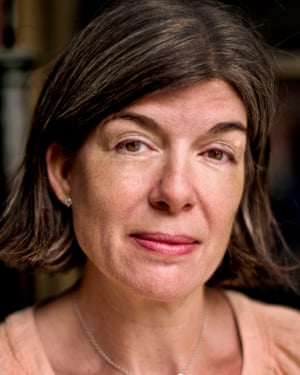
Claire Messud
Sarah Lee
Sarah Lee

In fiction, character is (almost) everything. We discuss “the elements of craft” – characterisation, plot, point of view, dialogue, detail, setting, style, and so forth – as if they were separable, as if you could disentangle them one from another. You can’t, of course; but when you filter almost all things through the specificities of character, many questions resolve themselves, almost miraculously.

Each of us is, in any given moment, the sum total of our temperament and experiences up to that point. Our baggage and idiosyncrasies may be suggested in our appearance; but much is invisible to the world. We all know that if there are three people in a room, each will tell a different story about what happened there – so ccharacter determines the story itself. But it also determines what will unfold – the plot.

As a writer, when you create a character, you don’t simply create his exterior (the wispy goatee, the receding hairline, the Liberty print shirt and expensive loafers); you must also come to know who he is (bullied in school, uneasy in friendships, veering between eager to please and cruel; vain but pretending not to be), and what has formed him (a Catholic school in the Sydney suburbs? A comprehensive in Exeter? Born with a silver spoon; or things started off comfortably, but his father’s business failed when he was 11? Raised in the shadow of three older siblings? Or alone with a single mum?). You must know his passions (loves pugs? Bicycle racing? First world war history? Talmudic study?) and his fears.

Once you know this person as well as you know yourself (or better), and once you put him, or her, in a particular place in a particular time, your character can only really act (or react) in a limited number of ways. He will notice only certain things, and those things only from a particular perspective; he will interact with others as only he can. If you’re using the first person, or the third person privileging this character, your diction and syntax – your very writing style – will be shaped by this person.

So much about a character is invisible, in fiction as in real life; but what lies beneath the surface will affect every aspect of your story. If you really take the time to figure out who you’re dealing with, much will become clear.
Claire Messud is a senior lecturer in creative writing at Harvard

Where do you sleep?

Doctor,doctor,I;m worried

about my coughin’.

What about your coffin?

Well,it’s keeping me awake at night.

Why,are you sleeping in it

I have only one place to sleep.

If you are tired you can sleep anywhere

is that legal?

Of course, it is. Well, can I sleep in the Queen’s bed? In theory,yes… but you might frighten the horses.

Why, do they sleep with her?She must have a big bed.

Don’t be so ridiculous…

Well, she has loads of money; she, could have a bed made for her. She has a bed maid for her

Do you mean someone makes her bed every day?

well,don’t you make yours every day?

No,I bought one in a bed store and it’s well built.

But do you change the sheets daily?

No,i never use paper I write letters on my chromebook.

Which letters? Any letters at all,except French ones. but they use our alphabet. it’s not ours. Whose is it? Possibly the Romans.Tantrum ergo! They are all long gone into their coffins.

Uno,duo tres,quattore…,decem,duodecem,duagessin’.. I knew coughin’ was very dangerous

I think your grammar is bed. What a posh excent you have It’s all I have left of the old palace. Well, never mind you can share my coffin if you like. But is there a bed in it? Just a bed bug as yet… I blame the CIA.. who do you blame?

I blame God and he blames us so it’s pretty much a stalemate. We need the Messiah….. Not again,we’ve not got over the last one yet…

You make him sound like a hurdle… Well,it’s one way of looking at it all.. a big hurdle. It’s all this talkin’ keeps me awake at night… At least it stops you coughin’ Doctor,doctor,the coughin’s keeping me up all night again For goodness sake put the lid on it.

My heart is like a rowing boat adrift

My heart is like a rowing boat adrift
Whose occupant has fallen overboard
The empty vessel drifts through deep sea mist.
And in those pearl filled ears the deep sea roars.
Just as the boat drifts mapless,so do I.
My maps were drawn for quite another sea
My captain’s taken leave and now I cry
As if that drowned soul might just be me.
Yet on the sea bed mysteries abound;
Such wonders and such magic there displayed.
I wonder if it is my lot drown
And to a memory then quickly fade.
Maps are no more certainties than hints.
Between the lines hides gold from other mints.

Putting in the Seed by Robert Frost

OLYMPUS DIGITAL CAMERA

OLYMPUS DIGITAL CAMERA

The Frost couple moved to England in 1912, after they tried and failed at farming in New Hampshire. It was abroad that Frost met and was influenced by such contemporary British poets as Edward Thomas, Rupert Brooke, and Robert Graves. While in England, Frost also established a friendship with the poet Ezra Pound, who helped to promote and publish his work.

Putting in the Seed

Robert Frost, 18741963

You come to fetch me from my work to-night
When supper’s on the table, and we’ll see
If I can leave off burying the white
Soft petals fallen from the apple tree.
(Soft petals, yes, but not so barren quite,
Mingled with these, smooth bean and wrinkled pea;)
And go along with you ere you lose sight
Of what you came for and become like me,
Slave to a springtime passion for the earth.
How Love burns through the Putting in the Seed
On through the watching for that early birth
When, just as the soil tarnishes with weed,
The sturdy seedling with arched body comes
Shouldering its way and shedding the earth crumbs.

read poems by this poet

Robert Frost was born on March 26, 1874, in San Francisco, where his father, William Prescott Frost Jr., and his mother, Isabelle Moodie, had moved from Pennsylvania shortly after marrying. After the death of his father from tuberculosis when Frost was eleven years old, he moved with his mother and sister, Jeanie, who was two years younger, to Lawrence, Massachusetts. He became interested in reading and writing poetry during his high school years in Lawrence, enrolled at Dartmouth College in Hanover, New Hampshire, in 1892, and later at Harvard University in Boston, though he never earned a formal college degree.

Frost drifted through a string of occupations after leaving school, working as a teacher, cobbler, and editor of the Lawrence Sentinel. His first published poem, “My Butterfly,” appeared on November 8, 1894, in the New York newspaper The Independent.

In 1895, Frost married Elinor Miriam White, whom he’d shared valedictorian honors with in high school and who was a major inspiration for his poetry until her death in 1938. The couple moved to England in 1912, after they tried and failed at farming in New Hampshire. It was abroad that Frost met and was influenced by such contemporary British poets as Edward Thomas, Rupert Brooke, and Robert Graves. While in England, Frost also established a friendship with the poet Ezra Pound, who helped to promote and publish his work.

By the time Frost returned to the United States in 1915, he had published two full-length collections, A Boy’s Will (Henry Holt and Company, 1913) and North of Boston(Henry Holt and Company, 1914), and his reputation was established. By the 1920s, he was the most celebrated poet in America, and with each new book—including New Hampshire (Henry Holt and Company, 1923), A Further Range (Henry Holt and Company, 1936), Steeple Bush(Henry Holt and Company, 1947), and In the Clearing (Holt Rinehart & Winston, 1962)—his fame and honors (including four Pulitzer Prizes) increased. Frost served as U.S. Poet Laureate from 1958 to 1959.

Though his work is principally associated with the life and landscape of New England—and though he was a poet of traditional verse forms and metrics who remained steadfastly aloof from the poetic movements and fashions of his time—Frost is anything but merely a regional poet. The author of searching and often dark meditations on universal themes, he is a quintessentially modern poet in his adherence to language as it is actually spoken, in the psychological complexity of his portraits, and in the degree to which his work is infused with layers of ambiguity and irony.

In a 1970 review of The Poetry of Robert Frost, the poet Daniel Hoffman describes Frost’s early work as “the Puritan ethic turned astonishingly lyrical and enabled to say out loud the sources of its own delight in the world,” and comments on Frost’s career as the “American Bard”: “He became a national celebrity, our nearly official poet laureate, and a great performer in the tradition of that earlier master of the literary vernacular, Mark Twain.”

About Frost, President John F. Kennedy, at whose inauguration the poet delivered a poem, said, “He has bequeathed his nation a body of imperishable verse from which Americans will forever gain joy and understanding.”

Robert Frost lived and taught for many years in Massachusetts and Vermont, and died in Boston on January 29, 1963.


Selected Bibliography

Poetry

In the Clearing (Holt Rinehart & Winston, 1962) Hard Not to Be King (House of Books, 1951)
Steeple Bush (Henry Holt and Company, 1947)
Masque of Reason (Henry Holt and Company, 1945)
Come In, and Other Poems (Henry Holt and Company, 1943)
A Witness Tree (Henry Holt and Company, 1942)
A Further Range (Henry Holt and Company, 1936)
From Snow to Snow (Henry Holt and Company, 1936)
The Lone Striker (Knopf, 1933)
The Lovely Shall Be Choosers (Random House, 1929)
West-Running Brook (Henry Holt and Company, 1928)
New Hampshire (Henry Holt and Company, 1923)
Mountain Interval (Henry Holt and Company, 1916)
North of Boston (Henry Holt and Company, 1914)
A Boy’s Will (Henry Holt and Company, 1913)

Rondeau- a reminder

https://www.poets.org/poetsorg/text/rondeau-poetic-form


“An example of a solemn rondeau is the Canadian army physician John McCrae’s 1915 wartime poem, “In Flanders Fields“:

     In Flanders fields the poppies grow
Between the crosses, row on row,
That mark our place, and in the sky,
The larks, still bravely singing, fly,
Scarce heard amid the guns below.

We are the dead; short days ago
We lived, felt dawn, saw sunset glow,
Loved and were loved, and now we lie
In Flanders fields.

Take up our quarrel with the foe!
To you from failing hands we throw
The torch; be yours to hold it high!
If ye break faith with us who die
We shall not sleep, though poppies grow
In Flanders fields.

The challenge of writing a rondeau is finding an opening line worth repeating and choosing two rhyme sounds that offer enough word choices. Modern rondeaus are often playful; for example, “Rondel” by Frank O’Hara begins with this mysterious directive: “Door of America, mention my fear to the cigars,” which becomes the poem’s refrain.”

Meeting someone’s eyes is like a touch

Meeting someone’s eyes is like a touch
As if our self extends  outside our skin
With no intention to take hold or clutch

Those who do this , how love must be rich
Rarely will they mortify or sin
Meeting someone’s eyes is a kind  touch

If we are afraid, may we find trust
Let us  try again,  why not begin
With no intention to take hold or clutch?

We are human, do we mind who’s first?
Let our minding weigh  less than  a pin
Meeting someone’s eyes is like a touch

In the end we mingle with the dust
Have we made good use of any gift
With no intention to take hold or clutch?

With love around, we  need not be too  swift
Take your own time  wandering through the mist
Meeting someone’s eyes is like a touch
Gentle, do caress, don’t  grasp nor clutch


Short offerings

Wittgenstein
Drank wine.
Like cats
To pat

Alfred North Whitehead
Was very shortsighted
He worked out with Russell
Their minds used to jostle.
Principia Mathematica?
I’d rather wear a catheter

Iris Murdoch
Drank dandelion and burdock
She wrote of the Good
Right where she stood!
In Oxford she dwelled
And all her thoughts jelled

It runs in the family

Oh,yes,I do lovely handwriting

Just like my dad.

It runs in the family

And I like chip sandwiches with butter

It runs in the family.

No, I can’t do cryptic crosswords.

Or enigmatic looks.

It runs not in the family.

I read too many clever books

Instead of earning money.

It just runs in the family.

Yes, we are all music freaks.

We listen to Schubert and Schoenberg all night.

It runs in the family.

We are all impolite.

But we can’t help it cos

It runs in the family.

Yes, we all use four letter words,

It’s a free country, besides,

It runs in the family!

And no we can’t write poetry, you see

Writing doesn’t run in my family.

But, we all practice monogamy,

So far, though, unsuccessfully,because

Adultery runs in the family.

Which puts a slightly different complexion on the phrase

“It runs in the family”

But, alas, all of my ancestors are dead.

It runs in the family!

Mary cakes and fuzzy logic

Mary had made a Christmas cake with marzipan but no white sugar icing.Stan was diabetic so she had opted for a middle way.Like some Zen Buddhists.You don’t either cut it completely nor have a 6-inch layer of icing.No, you find a middle way.Like 5 inches of icing!
Mary like almonds so she went for marzipan with her home ground almonds and some sugar.The raw egg part was worrying but so far nobody had died after eating her cake.

Still if you are dying, enjoy the cake while you can!
Annie arrived for a cup of coffee.
Wow, that cake is large.You will get fat if you eat it
I am not planning to eat it all myself, Mary said merrily.
In fact, if I could find a way of cutting an infinitesimally small piece I could have one every day forever.
Would the cake not shrink ?asked Annie with a puzzled smile
No, because a real number times an infinitesimal is itself infinitesimal Mary answered.
So it must be zero, Annie decided.
No, said Mary.All of the calculus is based on the idea that they are not zero.Then, at the end, we pretend they are zero and cross them out.It’s like magic or sleight of hand
I thought maths was logic, Annie said in an angry voice, tossing her purple hair over her shoulder.Alas, it was a wig so it fell off and Emile the little cat, bit it!
Gosh, Annie why are you wearing a wig? Mary asked.
I am involved with a Jewish man so he won’t make love unless I wear a wig.
Surely if he is Orthodox he should not sleep with you unless you get married.
We can’t get married, Annie said boldly.
Why not?
He is already married….Annie muttered
Well, that seems wrong.
What, being married?
No having an affair.I know Stan is old.Can’t you find a single man?
Women can’t go running after men.Men enjoy the chase.They despise women who run after them.
Well, can’t you ask them if they are married?
No, it seems too cheeky, Annie smiled.Anyway, in fuzzy logic you are not either married or single.You are married to the extent of some decimal number in between 0 and 1
Some folk are 0.999 married and some are 0.34 married.Others 0.1
But who measures it? God ? It’s not much use.
You have to guess, said Annie.

I like Jewish men
How many do you know, Mary asked.
Three, said Annie triumphantly.
You can’t generalise from three, Mary said.
If I test a larger sample I shall never get to find one till I am 99, Annie wept.
Think of the fun, though, Mary said teasingly.And you’d have to travel a lot as many live in the USA, France and other places including Israel.How do you fancy Bibi Netanyahu?He is married actually!
Annie was silent, then burst out: life is not science nor technology.It’s an art like watercolour painting.Why do you call him Bibi? Do you know him?
Not biblically, Mary said humorously.I’ve never even met him.He’s just been in the News more because of Trumpelstiltschein
Does Bibi know Donald is half German?
No, but the Queen is too.
Where does that take us logically?
Off to Boots to buy some expensive makeup and then to have a manicure and tea in a cafe
If only politicians did this life would be much easier and kinder.
And so say all of us!

Let’s lose our minds

The garden’s now a Wood ,where dwell three wolves The maple red is now the president And all the laws and rules have been devolved. For the sake of other residents This green country gives heart like mine no grief

For hidden are the houses standing near

And as the wolves dance, I watch with r were leg

Though ants and beetles stand around and stare For wolves are never seen in suburbs tame

And maples are at home in foreign lands .

It may be that the satyrs play new games

And smuggle in some creatures contraband..

Let explanations die their long due death

Let’s lose our minds and dance in happiness.

There was an old lady in York

Three cats by author

There was an old lady in York

Whose appearance made  little dogs bark she dressed in  wild silk

Covered up with a quilt

Underneath that she was usually stark

Jokes of all sizes like bones

Dogs do not love being alone

She took hers to work

Reluctant to  shirk

So who has a bone for this crone?