
https://www.nytimes.com/2020/12/19/at-home/knitting-mood-booster.html
X
But the craft can also trigger mental health benefits. Many studies have been published that show knitting helps to manage chronic pain, improve cognitive function and even increase happiness. Perhaps most relevant to these uncertain times, a survey of knitters taken last year by the Abo Akademi University in Finland indicated that they felt knitting “can be a counterbalance to a stressful job, hectic lifestyle or other demanding situations in life.”
Soothing stitching
Amy Reddinger, a dean at Bay de Noc Community College in Escanaba, Mich., came back to knitting after a long hiatus in March, when the campus closed and she needed a way to get away from screens. Her first project was an ambitious one — a complicated shawl using some fairly advanced techniques.
ADVERTISEMENThttps://4d484827728e7aeac0abbd75435d9723.safeframe.googlesyndication.com/safeframe/1-0-38/html/container.html?n=0
“I almost quit a lot of times,” Ms. Reddinger, 45, said. “But I kept at it, and I was both miserable and joyful at times — it was a good emotional process for me.”
She valued the level of challenge as a “great distraction from the chaos and stress of the unknown.”
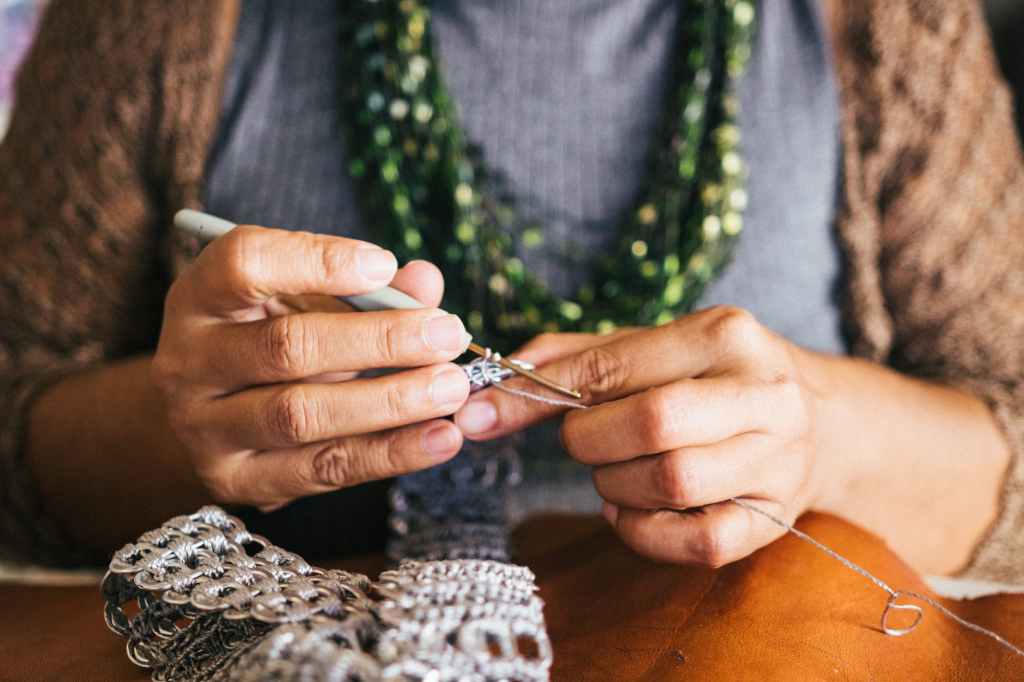
It’s well known in knitting circles that there are two types of knitters: those who focus on the results — a comfortable sweater, mittens to match a new winter coat, a gift for an upcoming baby shower — and those who focus on the process. Process knitters knit for knitting’s sake. They value the soothing repetitive motions and the feel of the yarn running through their fingers, relish the colors, the act of creation. They enjoy the good things that come with it, without having to fuss about their work being perfect, or their scarf being stylish.
If you are considering picking up knitting, think of it as meditation with a little bit of equipment. Approach it for the joy of the process and to take some pressure off. (Also, it’s a good way to keep your hands out of the candy bowl if you want to change your eating habits.)
ADVERTISEMENT
Warm outputs
And if the result is something that can keep you (or a friend or family member) warm, it’s a fantastic bonus. Just think: scarves! Hats! Mittens! Sweaters! Stylish statements, gifts for loved ones, blankets to welcome new babies. Once you become more accomplished, you’ll be a mitten machine.
Ruhee Dewji, a Canadian software developer who lives on her own, took up knitting in early spring at the encouragement of some friends. Before the pandemic, Ms. Dewji, 31, filled her spare time playing music in bands; she found playing on her own during lockdown just emphasized her loneliness.
She finds knitting an uncomplicated joy with many benefits, but one stands out.
“I’ve mostly made things for other people, and I realized that when you are making something for someone you love, you are thinking about them with every single stitch, and somehow that feels less lonely even though I am doing it all alone,” she said.
Supportive communities
Although knitting is a single-person activity, many knitters enjoy gathering, both online and in person, to share the successes, laugh about the mistakes and learn from one another. The portability of knitting is crucial, and as knitting doesn’t require one’s full focus or attention, you are able to engage with the people around you. In the Before Times, yarn shops would hold knit-nights and libraries had crafting groups. There are also formal knitting guilds, and most major cities seem to have at least one group of self-identified “drunken knitters” who meet in bars.
ADVERTISEMENT
Most knit-nights and classes went virtual early this year, making them accessible to faraway members and those nearby with physical or other limitations that may not let them appear in person.
Before the pandemic, Seattle Yarn hosted three regular in-person gatherings every week. Destiny Itano, a co-owner, said that when travel and gathering restrictions were put in place, both staff members and customers were “devastated” at the thought that these groups might not continue. Within a couple of weeks of the city’s lockdown, they set up online sessions and have been hosting two events a week ever since. Ms. Itano said that she was “surprised how well they work — not only as social gatherings, but as a way for knitters to offer and get help with their stitching.”
And the local knitting community has expanded: Ms. Itano’s mother joins from her home in Alaska, and a regular attendee to their Saturday morning group lives in Germany. They plan to keep these groups going even after the shop is fully operational again.
How to get started
Before you begin, know that focusing on the end result means that many beginners are often too impatient with the inevitably imperfect results of their first projects. The first of anything you make will not be great. (Admit it, there was some disastrously inedible sourdough this past spring.) And it doesn’t matter one bit. You still get all the benefits (virtuous or not) whether or not you come away with a wearable scarf. You’re still going to be relaxed and mindful whether or not the beanie fits.
ADVERTISEMENT
But to make that hat, you’ll need balls of yarn and knitting needles. Look to specialized local yarn shops (L.Y.S.’s), big-box craft stores and online retailers like knitpicks.com and yarn.com, the website of the knitting retailer WEBS. Yarn and craft stores also offer instruction and specific learn-to-knit kits for beginners.
Know that yarn comes in different thicknesses, and needles are sized to suit. Always choose your yarn first — beginners might want something on the thicker side, and in a lighter color so you can see what you’re doing and make fast progress. The yarn label indicates the size of needle to use.
If you prefer learning with books, introductory manuals are easy to find in thrift and used-book stores, and the instructions themselves don’t change. But it might be worth investing in a newer one: The projects are more modern, and they use the readily available materials. “Vogue Knitting: The Learn To Knit Book” or “Knit How” are two good choices.
There are plenty of free online and video resources, too. The video lessons at knittinghelp.com are well presented, accurate and clear, while ModernDailyKnitting.com has articles, lessons, patterns and other goodies for knitters of all levels.
ADVERTISEMENT
To meet other knitters, check out the online classes, virtual knit-nights and other social gatherings hosted by a yarn shop in your area. Even if you can’t visit in person, their websites and social media will give you a sense of who they are and what they do.
In New York City, Knitty City and String Thing Studio are two shops that are striving to maintain and bolster knitting communities, even under this year’s necessary restrictions.
Felicia Eve, owner of String Thing Studio in Brooklyn, sells a standard kit for novices, and offers one-on-one appointments, both in-person and online, to teach the basics. She urges beginners to be soothed by knitting’s colors and textures, and to value its meditative nature, but also to embrace mistakes as part of the learning process.
“Cherish the wonkiness,” she said.
Want to pick up those needles and yarn?
More stories about knitting during lockdown
Knitting for the ApocalypseMay 8, 2020
In a Stressful Time, Knitting for Calm and ConnectionNov. 2, 2020
Managing Anxiety and Stress
Stay balanced in the face of stress and anxiety with our collection of tools and advice.
- First, bring calm and clarity into your life with these 10 tips.
- Next, identify what you are dealing with: Is it worry, anxiety or stress?
- Consider a mental health day. Here is how to make the most of them.
- Embrace these three Scandinavian secrets to resilience.
- Stress is unavoidable in modern life, but it doesn’t have to get you down. This guide can help you keep in check.
- As fall approaches, you might be feeling down and anxious. Here is how you can manage those end-of-summer feelings with grace.
- Can supplements help with depression or anxiety? Here’s what the evidence says about what works — and what doesn’t.
Newsletters you might like
DAILY
The Morning
Make sense of the day’s news and ideas. David Leonhardt and Times journalists guide you through what’s happening — and why it matters.Get this newsletter
AS NEEDED
Breaking News
Get informed as important news breaks around the world.Get this newsletter
WEEKDAYS
Coronavirus Briefing
An informed guide to the global outbreak, with the latest developments and expert advice about prevention and treatment.Get this newsletter
More in Science
ImageCredit…Watcharapong HongjamrassilpWhen Sarcastic Fringeheads Open Their Mouths, Watch Out
Why Some Penguins Give Up on Half of Their Unhatched Eggs
Secrets Preserved in the Skin of Dakota the ‘Dino Mummy’
ADVERTISEMENT
Site Information Navigation
- NYTCo
- Contact Us
- Accessibility
- Work with us
- Advertise
- T Brand Studio
- Your Ad Choices
- Privacy Policy
- California Notices
- Terms of Service
- Terms of Sale
- Site Map
- Help
- Subscriptions
Something went wrong. Please
But the craft can also trigger mental health benefits. Many studies have been published that show knitting helps to manage chronic pain, improve cognitive function and even increase happiness. Perhaps most relevant to these uncertain times, a survey of knitters taken last year by the Abo Akademi University in Finland indicated that they felt knitting “can be a counterbalance to a stressful job, hectic lifestyle or other demanding situations in life.”
Soothing stitching
Amy Reddinger, a dean at Bay de Noc Community College in Escanaba, Mich., came back to knitting after a long hiatus in March, when the campus closed and she needed a way to get away from screens. Her first project was an ambitious one — a complicated shawl using some fairly advanced techniques.
ADVERTISEMENThttps://4d484827728e7aeac0abbd75435d9723.safeframe.googlesyndication.com/safeframe/1-0-38/html/container.html?n=0
“I almost quit a lot of times,” Ms. Reddinger, 45, said. “But I kept at it, and I was both miserable and joyful at times — it was a good emotional process for me.”
She valued the level of challenge as a “great distraction from the chaos and stress of the unknown.”
It’s well known in knitting circles that there are two types of knitters: those who focus on the results — a comfortable sweater, mittens to match a new winter coat, a gift for an upcoming baby shower — and those who focus on the process. Process knitters knit for knitting’s sake. They value the soothing repetitive motions and the feel of the yarn running through their fingers, relish the colors, the act of creation. They enjoy the good things that come with it, without having to fuss about their work being perfect, or their scarf being stylish.
If you are considering picking up knitting, think of it as meditation with a little bit of equipment. Approach it for the joy of the process and to take some pressure off. (Also, it’s a good way to keep your hands out of the candy bowl if you want to change your eating habits.)
ADVERTISEMENT
Warm outputs
And if the result is something that can keep you (or a friend or family member) warm, it’s a fantastic bonus. Just think: scarves! Hats! Mittens! Sweaters! Stylish statements, gifts for loved ones, blankets to welcome new babies. Once you become more accomplished, you’ll be a mitten machine.
Ruhee Dewji, a Canadian software developer who lives on her own, took up knitting in early spring at the encouragement of some friends. Before the pandemic, Ms. Dewji, 31, filled her spare time playing music in bands; she found playing on her own during lockdown just emphasized her loneliness.
She finds knitting an uncomplicated joy with many benefits, but one stands out.
“I’ve mostly made things for other people, and I realized that when you are making something for someone you love, you are thinking about them with every single stitch, and somehow that feels less lonely even though I am doing it all alone,” she said.
Supportive communities
Although knitting is a single-person activity, many knitters enjoy gathering, both online and in person, to share the successes, laugh about the mistakes and learn from one another. The portability of knitting is crucial, and as knitting doesn’t require one’s full focus or attention, you are able to engage with the people around you. In the Before Times, yarn shops would hold knit-nights and libraries had crafting groups. There are also formal knitting guilds, and most major cities seem to have at least one group of self-identified “drunken knitters” who meet in bars.
ADVERTISEMENT
Most knit-nights and classes went virtual early this year, making them accessible to faraway members and those nearby with physical or other limitations that may not let them appear in person.
Before the pandemic, Seattle Yarn hosted three regular in-person gatherings every week. Destiny Itano, a co-owner, said that when travel and gathering restrictions were put in place, both staff members and customers were “devastated” at the thought that these groups might not continue. Within a couple of weeks of the city’s lockdown, they set up online sessions and have been hosting two events a week ever since. Ms. Itano said that she was “surprised how well they work — not only as social gatherings, but as a way for knitters to offer and get help with their stitching.”
And the local knitting community has expanded: Ms. Itano’s mother joins from her home in Alaska, and a regular attendee to their Saturday morning group lives in Germany. They plan to keep these groups going even after the shop is fully operational again.
How to get started
Before you begin, know that focusing on the end result means that many beginners are often too impatient with the inevitably imperfect results of their first projects. The first of anything you make will not be great. (Admit it, there was some disastrously inedible sourdough this past spring.) And it doesn’t matter one bit. You still get all the benefits (virtuous or not) whether or not you come away with a wearable scarf. You’re still going to be relaxed and mindful whether or not the beanie fits.
ADVERTISEMENT
But to make that hat, you’ll need balls of yarn and knitting needles. Look to specialized local yarn shops (L.Y.S.’s), big-box craft stores and online retailers like knitpicks.com and yarn.com, the website of the knitting retailer WEBS. Yarn and craft stores also offer instruction and specific learn-to-knit kits for beginners.
Know that yarn comes in different thicknesses, and needles are sized to suit. Always choose your yarn first — beginners might want something on the thicker side, and in a lighter color so you can see what you’re doing and make fast progress. The yarn label indicates the size of needle to use.
If you prefer learning with books, introductory manuals are easy to find in thrift and used-book stores, and the instructions themselves don’t change. But it might be worth investing in a newer one: The projects are more modern, and they use the readily available materials. “Vogue Knitting: The Learn To Knit Book” or “Knit How” are two good choices.
There are plenty of free online and video resources, too. The video lessons at knittinghelp.com are well presented, accurate and clear, while ModernDailyKnitting.com has articles, lessons, patterns and other goodies for knitters of all levels.
ADVERTISEMENT
To meet other knitters, check out the online classes, virtual knit-nights and other social gatherings hosted by a yarn shop in your area. Even if you can’t visit in person, their websites and social media will give you a sense of who they are and what they do.
In New York City, Knitty City and String Thing Studio are two shops that are striving to maintain and bolster knitting communities, even under this year’s necessary restrictions.
Felicia Eve, owner of String Thing Studio in Brooklyn, sells a standard kit for novices, and offers one-on-one appointments, both in-person and online, to teach the basics. She urges beginners to be soothed by knitting’s colors and textures, and to value its meditative nature, but also to embrace mistakes as part of the learning process.
“Cherish the wonkiness,” she said.
Want to pick up those needles and yarn?
More stories about knitting during lockdown
Knitting for the ApocalypseMay 8, 2020
In a Stressful Time, Knitting for Calm and ConnectionNov. 2, 2020
Managing Anxiety and Stress
Stay balanced in the face of stress and anxiety with our collection of tools and advice.
- First, bring calm and clarity into your life with these 10 tips.
- Next, identify what you are dealing with: Is it worry, anxiety or stress?
- Consider a mental health day. Here is how to make the most of them.
- Embrace these three Scandinavian secrets to resilience.
- Stress is unavoidable in modern life, but it doesn’t have to get you down. This guide can help you keep in check.
- As fall approaches, you might be feeling down and anxious. Here is how you can manage those end-of-summer feelings with grace.
- Can supplements help with depression or anxiety? Here’s what the evidence says about what works — and what doesn’t.
Newsletters you might like
DAILY
The Morning
Make sense of the day’s news and ideas. David Leonhardt and Times journalists guide you through what’s happening — and why it matters.Get this newsletter
AS NEEDED
Breaking News
Get informed as important news breaks around the world.Get this newsletter
WEEKDAYS
Coronavirus Briefing
An informed guide to the global outbreak, with the latest developments and expert advice about prevention and treatment.Get this newsletter
More in Science
ImageCredit…Watcharapong HongjamrassilpWhen Sarcastic Fringeheads Open Their Mouths, Watch Out
Why Some Penguins Give Up on Half of Their Unhatched Eggs
Secrets Preserved in the Skin of Dakota the ‘Dino Mummy’
ADVERTISEMENT
Site Information Navigation
- NYTCo
- Contact Us
- Accessibility
- Work with us
- Advertise
- T Brand Studio
- Your Ad Choices
- Privacy Policy
- California Notices
- Terms of Service
- Terms of Sale
- Site Map
- Help
- Subscriptions
Something went wrong. Please
But the craft can also trigger mental health benefits. Many studies have been published that show knitting helps to manage chronic pain, improve cognitive function and even increase happiness. Perhaps most relevant to these uncertain times, a survey of knitters taken last year by the Abo Akademi University in Finland indicated that they felt knitting “can be a counterbalance to a stressful job, hectic lifestyle or other demanding situations in life.”
Soothing stitching
Amy Reddinger, a dean at Bay de Noc Community College in Escanaba, Mich., came back to knitting after a long hiatus in March, when the campus closed and she needed a way to get away from screens. Her first project was an ambitious one — a complicated shawl using some fairly advanced techniques.
ADVERTISEMENThttps://4d484827728e7aeac0abbd75435d9723.safeframe.googlesyndication.com/safeframe/1-0-38/html/container.html?n=0
“I almost quit a lot of times,” Ms. Reddinger, 45, said. “But I kept at it, and I was both miserable and joyful at times — it was a good emotional process for me.”
She valued the level of challenge as a “great distraction from the chaos and stress of the unknown.”
It’s well known in knitting circles that there are two types of knitters: those who focus on the results — a comfortable sweater, mittens to match a new winter coat, a gift for an upcoming baby shower — and those who focus on the process. Process knitters knit for knitting’s sake. They value the soothing repetitive motions and the feel of the yarn running through their fingers, relish the colors, the act of creation. They enjoy the good things that come with it, without having to fuss about their work being perfect, or their scarf being stylish.
If you are considering picking up knitting, think of it as meditation with a little bit of equipment. Approach it for the joy of the process and to take some pressure off. (Also, it’s a good way to keep your hands out of the candy bowl if you want to change your eating habits.)
ADVERTISEMENT
Warm outputs
And if the result is something that can keep you (or a friend or family member) warm, it’s a fantastic bonus. Just think: scarves! Hats! Mittens! Sweaters! Stylish statements, gifts for loved ones, blankets to welcome new babies. Once you become more accomplished, you’ll be a mitten machine.
Ruhee Dewji, a Canadian software developer who lives on her own, took up knitting in early spring at the encouragement of some friends. Before the pandemic, Ms. Dewji, 31, filled her spare time playing music in bands; she found playing on her own during lockdown just emphasized her loneliness.
She finds knitting an uncomplicated joy with many benefits, but one stands out.
“I’ve mostly made things for other people, and I realized that when you are making something for someone you love, you are thinking about them with every single stitch, and somehow that feels less lonely even though I am doing it all alone,” she said.
Supportive communities
Although knitting is a single-person activity, many knitters enjoy gathering, both online and in person, to share the successes, laugh about the mistakes and learn from one another. The portability of knitting is crucial, and as knitting doesn’t require one’s full focus or attention, you are able to engage with the people around you. In the Before Times, yarn shops would hold knit-nights and libraries had crafting groups. There are also formal knitting guilds, and most major cities seem to have at least one group of self-identified “drunken knitters” who meet in bars.
ADVERTISEMENT
Most knit-nights and classes went virtual early this year, making them accessible to faraway members and those nearby with physical or other limitations that may not let them appear in person.
Before the pandemic, Seattle Yarn hosted three regular in-person gatherings every week. Destiny Itano, a co-owner, said that when travel and gathering restrictions were put in place, both staff members and customers were “devastated” at the thought that these groups might not continue. Within a couple of weeks of the city’s lockdown, they set up online sessions and have been hosting two events a week ever since. Ms. Itano said that she was “surprised how well they work — not only as social gatherings, but as a way for knitters to offer and get help with their stitching.”
And the local knitting community has expanded: Ms. Itano’s mother joins from her home in Alaska, and a regular attendee to their Saturday morning group lives in Germany. They plan to keep these groups going even after the shop is fully operational again.
How to get started
Before you begin, know that focusing on the end result means that many beginners are often too impatient with the inevitably imperfect results of their first projects. The first of anything you make will not be great. (Admit it, there was some disastrously inedible sourdough this past spring.) And it doesn’t matter one bit. You still get all the benefits (virtuous or not) whether or not you come away with a wearable scarf. You’re still going to be relaxed and mindful whether or not the beanie fits.
ADVERTISEMENT
But to make that hat, you’ll need balls of yarn and knitting needles. Look to specialized local yarn shops (L.Y.S.’s), big-box craft stores and online retailers like knitpicks.com and yarn.com, the website of the knitting retailer WEBS. Yarn and craft stores also offer instruction and specific learn-to-knit kits for beginners.
Know that yarn comes in different thicknesses, and needles are sized to suit. Always choose your yarn first — beginners might want something on the thicker side, and in a lighter color so you can see what you’re doing and make fast progress. The yarn label indicates the size of needle to use.
If you prefer learning with books, introductory manuals are easy to find in thrift and used-book stores, and the instructions themselves don’t change. But it might be worth investing in a newer one: The projects are more modern, and they use the readily available materials. “Vogue Knitting: The Learn To Knit Book” or “Knit How” are two good choices.
There are plenty of free online and video resources, too. The video lessons at knittinghelp.com are well presented, accurate and clear, while ModernDailyKnitting.com has articles, lessons, patterns and other goodies for knitters of all levels.
ADVERTISEMENT
To meet other knitters, check out the online classes, virtual knit-nights and other social gatherings hosted by a yarn shop in your area. Even if you can’t visit in person, their websites and social media will give you a sense of who they are and what they do.
In New York City, Knitty City and String Thing Studio are two shops that are striving to maintain and bolster knitting communities, even under this year’s necessary restrictions.
Felicia Eve, owner of String Thing Studio in Brooklyn, sells a standard kit for novices, and offers one-on-one appointments, both in-person and online, to teach the basics. She urges beginners to be soothed by knitting’s colors and textures, and to value its meditative nature, but also to embrace mistakes as part of the learning process.
“Cherish the wonkiness,” she said.
Want to pick up those needles and yarn?
More stories about knitting during lockdown
Knitting for the ApocalypseMay 8, 2020
In a Stressful Time, Knitting for Calm and ConnectionNov. 2, 2020
Managing Anxiety and Stress
Stay balanced in the face of stress and anxiety with our collection of tools and advice.
- First, bring calm and clarity into your life with these 10 tips.
- Next, identify what you are dealing with: Is it worry, anxiety or stress?
- Consider a mental health day. Here is how to make the most of them.
- Embrace these three Scandinavian secrets to resilience.
- Stress is unavoidable in modern life, but it doesn’t have to get you down. This guide can help you keep in check.
- As fall approaches, you might be feeling down and anxious. Here is how you can manage those end-of-summer feelings with grace.
- Can supplements help with depression or anxiety? Here’s what the evidence says about what works — and what doesn’t.
Newsletters you might like
DAILY
The Morning
Make sense of the day’s news and ideas. David Leonhardt and Times journalists guide you through what’s happening — and why it matters.Get this newsletter
AS NEEDED
Breaking News
Get informed as important news breaks around the world.Get this newsletter
WEEKDAYS
Coronavirus Briefing
An informed guide to the global outbreak, with the latest developments and expert advice about prevention and treatment.Get this newsletter
More in Science
ImageCredit…Watcharapong HongjamrassilpWhen Sarcastic Fringeheads Open Their Mouths, Watch Out
Why Some Penguins Give Up on Half of Their Unhatched Eggs
Secrets Preserved in the Skin of Dakota the ‘Dino Mummy’
ADVERTISEMENT
Site Information Navigation
- NYTCo
- Contact Us
- Accessibility
- Work with us
- Advertise
- T Brand Studio
- Your Ad Choices
- Privacy Policy
- California Notices
- Terms of Service
- Terms of Sale
- Site Map
- Help
- Subscriptions
Something went wrong. Please
But the craft can also trigger mental health benefits. Many studies have been published that show knitting helps to manage chronic pain, improve cognitive function and even increase happiness. Perhaps most relevant to these uncertain times, a survey of knitters taken last year by the Abo Akademi University in Finland indicated that they felt knitting “can be a counterbalance to a stressful job, hectic lifestyle or other demanding situations in life.”
Soothing stitching
Amy Reddinger, a dean at Bay de Noc Community College in Escanaba, Mich., came back to knitting after a long hiatus in March, when the campus closed and she needed a way to get away from screens. Her first project was an ambitious one — a complicated shawl using some fairly advanced techniques.
ADVERTISEMENThttps://4d484827728e7aeac0abbd75435d9723.safeframe.googlesyndication.com/safeframe/1-0-38/html/container.html?n=0
“I almost quit a lot of times,” Ms. Reddinger, 45, said. “But I kept at it, and I was both miserable and joyful at times — it was a good emotional process for me.”
She valued the level of challenge as a “great distraction from the chaos and stress of the unknown.”
It’s well known in knitting circles that there are two types of knitters: those who focus on the results — a comfortable sweater, mittens to match a new winter coat, a gift for an upcoming baby shower — and those who focus on the process. Process knitters knit for knitting’s sake. They value the soothing repetitive motions and the feel of the yarn running through their fingers, relish the colors, the act of creation. They enjoy the good things that come with it, without having to fuss about their work being perfect, or their scarf being stylish.
If you are considering picking up knitting, think of it as meditation with a little bit of equipment. Approach it for the joy of the process and to take some pressure off. (Also, it’s a good way to keep your hands out of the candy bowl if you want to change your eating habits.)
ADVERTISEMENT
Warm outputs
And if the result is something that can keep you (or a friend or family member) warm, it’s a fantastic bonus. Just think: scarves! Hats! Mittens! Sweaters! Stylish statements, gifts for loved ones, blankets to welcome new babies. Once you become more accomplished, you’ll be a mitten machine.
Ruhee Dewji, a Canadian software developer who lives on her own, took up knitting in early spring at the encouragement of some friends. Before the pandemic, Ms. Dewji, 31, filled her spare time playing music in bands; she found playing on her own during lockdown just emphasized her loneliness.
She finds knitting an uncomplicated joy with many benefits, but one stands out.
“I’ve mostly made things for other people, and I realized that when you are making something for someone you love, you are thinking about them with every single stitch, and somehow that feels less lonely even though I am doing it all alone,” she said.
Supportive communities
Although knitting is a single-person activity, many knitters enjoy gathering, both online and in person, to share the successes, laugh about the mistakes and learn from one another. The portability of knitting is crucial, and as knitting doesn’t require one’s full focus or attention, you are able to engage with the people around you. In the Before Times, yarn shops would hold knit-nights and libraries had crafting groups. There are also formal knitting guilds, and most major cities seem to have at least one group of self-identified “drunken knitters” who meet in bars.
ADVERTISEMENT
Most knit-nights and classes went virtual early this year, making them accessible to faraway members and those nearby with physical or other limitations that may not let them appear in person.
Before the pandemic, Seattle Yarn hosted three regular in-person gatherings every week. Destiny Itano, a co-owner, said that when travel and gathering restrictions were put in place, both staff members and customers were “devastated” at the thought that these groups might not continue. Within a couple of weeks of the city’s lockdown, they set up online sessions and have been hosting two events a week ever since. Ms. Itano said that she was “surprised how well they work — not only as social gatherings, but as a way for knitters to offer and get help with their stitching.”
And the local knitting community has expanded: Ms. Itano’s mother joins from her home in Alaska, and a regular attendee to their Saturday morning group lives in Germany. They plan to keep these groups going even after the shop is fully operational again.
How to get started
Before you begin, know that focusing on the end result means that many beginners are often too impatient with the inevitably imperfect results of their first projects. The first of anything you make will not be great. (Admit it, there was some disastrously inedible sourdough this past spring.) And it doesn’t matter one bit. You still get all the benefits (virtuous or not) whether or not you come away with a wearable scarf. You’re still going to be relaxed and mindful whether or not the beanie fits.
ADVERTISEMENT
But to make that hat, you’ll need balls of yarn and knitting needles. Look to specialized local yarn shops (L.Y.S.’s), big-box craft stores and online retailers like knitpicks.com and yarn.com, the website of the knitting retailer WEBS. Yarn and craft stores also offer instruction and specific learn-to-knit kits for beginners.
Know that yarn comes in different thicknesses, and needles are sized to suit. Always choose your yarn first — beginners might want something on the thicker side, and in a lighter color so you can see what you’re doing and make fast progress. The yarn label indicates the size of needle to use.
If you prefer learning with books, introductory manuals are easy to find in thrift and used-book stores, and the instructions themselves don’t change. But it might be worth investing in a newer one: The projects are more modern, and they use the readily available materials. “Vogue Knitting: The Learn To Knit Book” or “Knit How” are two good choices.
There are plenty of free online and video resources, too. The video lessons at knittinghelp.com are well presented, accurate and clear, while ModernDailyKnitting.com has articles, lessons, patterns and other goodies for knitters of all levels.
ADVERTISEMENT
To meet other knitters, check out the online classes, virtual knit-nights and other social gatherings hosted by a yarn shop in your area. Even if you can’t visit in person, their websites and social media will give you a sense of who they are and what they do.
In New York City, Knitty City and String Thing Studio are two shops that are striving to maintain and bolster knitting communities, even under this year’s necessary restrictions.
Felicia Eve, owner of String Thing Studio in Brooklyn, sells a standard kit for novices, and offers one-on-one appointments, both in-person and online, to teach the basics. She urges beginners to be soothed by knitting’s colors and textures, and to value its meditative nature, but also to embrace mistakes as part of the learning process.
“Cherish the wonkiness,” she said.
Want to pick up those needles and yarn?
More stories about knitting during lockdown
Knitting for the ApocalypseMay 8, 2020
In a Stressful Time, Knitting for Calm and ConnectionNov. 2, 2020
Managing Anxiety and Stress
Stay balanced in the face of stress and anxiety with our collection of tools and advice.
- First, bring calm and clarity into your life with these 10 tips.
- Next, identify what you are dealing with: Is it worry, anxiety or stress?
- Consider a mental health day. Here is how to make the most of them.
- Embrace these three Scandinavian secrets to resilience.
- Stress is unavoidable in modern life, but it doesn’t have to get you down. This guide can help you keep in check.
- As fall approaches, you might be feeling down and anxious. Here is how you can manage those end-of-summer feelings with grace.
- Can supplements help with depression or anxiety? Here’s what the evidence says about what works — and what doesn’t.
Newsletters you might like
DAILY
The Morning
Make sense of the day’s news and ideas. David Leonhardt and Times journalists guide you through what’s happening — and why it matters.Get this newsletter
AS NEEDED
Breaking News
Get informed as important news breaks around the world.Get this newsletter
WEEKDAYS
Coronavirus Briefing
An informed guide to the global outbreak, with the latest developments and expert advice about prevention and treatment.Get this newsletter
More in Science
ImageCredit…Watcharapong HongjamrassilpWhen Sarcastic Fringeheads Open Their Mouths, Watch Out
Why Some Penguins Give Up on Half of Their Unhatched Eggs
Secrets Preserved in the Skin of Dakota the ‘Dino Mummy’
ADVERTISEMENT
Site Information Navigation
- NYTCo
- Contact Us
- Accessibility
- Work with us
- Advertise
- T Brand Studio
- Your Ad Choices
- Privacy Policy
- California Notices
- Terms of Service
- Terms of Sale
- Site Map
- Help
- Subscriptions
Something went wrong. Please


 How my heart speaks