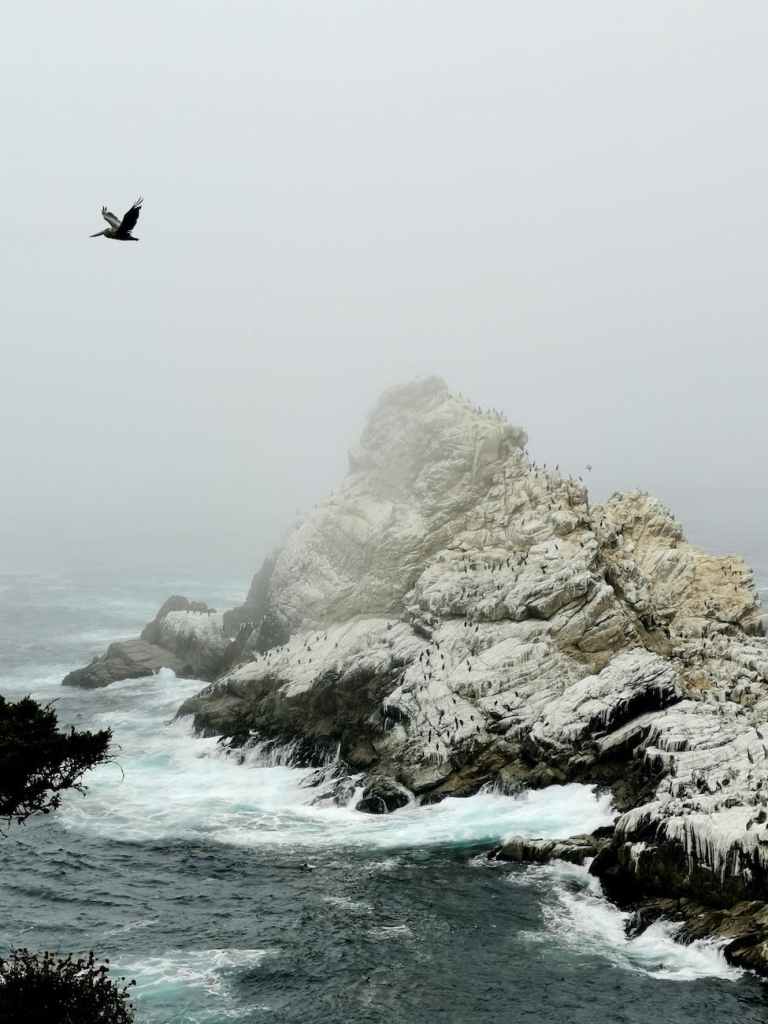
Steering our boats

Cracks in the payment by author.

The hand upon my tiller

The mystery of the dark

The unknown one who lives in me

And harmonies does spark.

Thoughts

That is the last verse of a poem i wrote .I did not have the notion of another hand being on my tiller before I began writing.
Yet I feel it is very important.Clearly we don’t consciously make our own blood circulate and you can think of other things like that.If there is another hand steering me I need to cooperate with it.Maybe that hand is wiser than mine.I came to the conclusion that we can only cooperate with it if we are relaxed.
So becoming relaxed is necessary for good living and also for prayer, if we do pray.The best thing about many religions is that before God all souls are equal and all of us are valued unless we deliberately allow evil to overcome us.I think it’s always been hard not to to share the common view that our possessions or our our stupidity or brilliance determine our value.I have got more trust in humbler people if they can avoid bitterness in modern society.
I think working with the hands benefits the mind and heart.Intellectuals can be very cold sometimes.Maybe they were cold already and fled into the intellect to escape human feelings.Meanwhile let’s think about the other hand.

The holiness of the heart’s affections


People also ask

What did Keats say about love?

My Creed is Love and you are its only tenet. Nothing ever becomes real ’til it is experienced. I am certain of nothing but the holiness of the Heart’s affections and the truth of the Imagination

Biro

There was an old lady from Cairo

Who wrote all her posts with a biro.

Until she got sick

She wrote with a bic

She’s someone you have to admiro.

Please don’t use ballpoints on screens

Ink is not quite what it seems

It’s hard to remove

And keep the screen smooth

If you do you will have nightmares not dreams

Getting to Orford

After Edna had gone home,her neighbours Mary and Annie had to vacuum the carpet where Edna had knocked over a box of biscuits of a crumbly nature and then trodden on them.
Edna is hard to relate to,said Annie nervously, her hands shaking with released  terror and humour
I wonder if she will get easier as time goes on?
You mean you are going to ask her again?
I’ve not decided,Mary told her.

It is a lot of effort in winter especially if the person  is boring.I prefer bad to  boring
I won’t ask you what you mean by bad  men.

Suppose she asks us over to her place,Annie pondered faintly
We’ll have to see how we feel.

I suppose it would be interesting to look at her furniture and see if she has any  books,Mary said softly
If we go and borrow a book, don’t pencil in your comments down the side of the page
As if I would! Mary said indignantly.I only do that to my own
Just sayin’ ,Annie replied, obviously feeling better
Did you like her purple coat?
I think it doesn’t go with red hair but who cares? I’d wear yellow even if I looked sick
That seem stupid,Mary cried anxiously
In the dark of winter it means drivers can see you Annie replied knowledgeably 
I suppose so.. yes, quite a wise idea.But one rarely sees a yellow coat in a shop.
I think you can get them in shops that sell sailing gear,Annie mumbled
Since we are right in the middle of England, there are none here.We’ll have to go to
Orford,Mary warned her
Where’s that,Annie asked rudely
Not far from Aldeburgh,Mary said knowingly
It’s too far to go in a day in winter,Annie decided immediately
How many miles is it?
About 159.468 each way
That is 319.435 miles altogether if my arithmetic is correct which it may not be, of course. Actually it’s wrong but only by a very small amount still using decimals and getting it wrong what a mistake for a mathematician to make in public.
So if we go at 60 mph it takes 5.3333 hours
And at 50 mph it takes 6.4 hours
40 mph would be 8 hours
10 mph would take 32 hours 
2 mph would be 160 hours

Stop, stop!

At 0.5 mph I think it’s 640 hours

Well that is that.We can’t go; it would be nearly 24 days nonstop

Just get a black coat and wear a yellow hat

After all that counting, they fell asleep until Emile came home with some mice for their tea.
And so shall I

God

When God came down , the rivers overflowed
Great trees were floating ,angled and exposed
The houses broke up like a loaf to crumbs
The hearts of humans trembled till they hummed

The winds deceived, the gusts unmeasured stung
The churchbells shuddered then untimely rang
The power was cut and all our screens were dark
Where were the rulers, where the saving Ark?

The women giving birth were paralysed
The babies in the womb took ill and died
Their cradles rocked the world, they swung so fast
And in a moment all of life had passed

In the void, God started his new world
Rich and strange, the grit and then the pearls

Little bits and pieces

Wittgenstein
Drank wine.
Liked 1 cat
To pat

Alfred North Whitehead
Was very shortsighted
He worked out with Russell
Their minds used to jostle.
Principia Mathematica?
I’d rather wear a catheter

Iris Murdoch
Drank dandelion and burdock
She wrote of the Good
Right where she stood!
In Oxford she dwelled
And all her thoughts jelled

Alfred relaxes and God steers

Photo0426

King Alfred

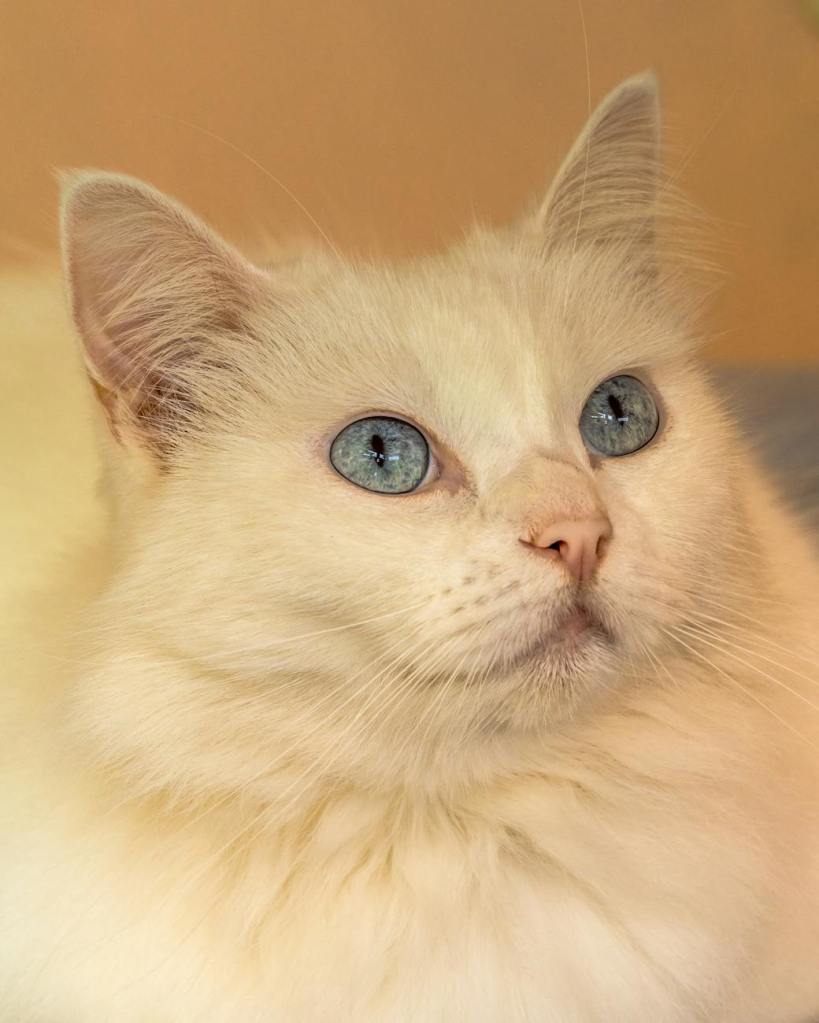
Lately I have been loaned by providence a graceful beautiful cat.Early on he was a shrinking, hunched and nervous creature who slept by the back door on the daily newspaper.He ate hungrily and drank water with a drop of milk.

He was reluctant for a couple of weeks to venture further but as the tranquil peaceful time went by he began to sleep on a towel by the hall radiator and eventually on my knee.

The most striking change was in his size.As he ate more and was petted more he relaxed so that when stretched by the fire ,more of his body was in contact with the floor and he looked larger all over.He was loosened up and comfortable.

If he were human I might say he had a good mother.He is affectionate and initially I feared his demands might be excessive.When he came onto my bed I was concerned.But after five minutes of being stroked he went off to his own place again.

Sometimes when he’s been out in the garden he reappears with an air of humorous triumph as if he has worked a miracle to enter through his door.Another time when I was reading in a different room from the usual one he appeared mid morning with a face full of more expression than I can easily put into words.

He was anxious and relieved,puzzled and afraid,happy and a touch angry with me.How can you do this to me? was his query.Suppose you had gone altogether?Oh,the insecurity of being a tame cat.

I wonder why cats do not miss their own species.Or maybe they meet them outsi

books

de.Often though they fight to defend their territory but fortunately they have no WMD as yet.I like to read and stroke him as I muse over my book,

Tenderness

Made from photo

Let your lips meet gently, the top one resting against the lower touching with tenderness your own skin to skin.

Forefinger propped on chin, I let the others dangle, like leaves on a branch; how softly gravity tugs them downwards.

Let heart beat quietly,slowly as the blood circulates carrying its music; a river,following the path of least resistance.

How the blood vessels receive willingly this flow, touching it kindly as with tiny open fingers, helping and being helped.

How the hair on the head floats on the breeze,like tentacles of an octopus waving goodbye.

Top eyelid loves the lower one; as we blink they touch like lovers kissing swiftly behind a tree. and how the light comes in we see a world

Mine may not be yours, but the blink of my eyelid sends waves through the air, so we’re all touching and being touched, lips kissing each other, kiss all living creatures. skin to skin air to air.

And inside us,the rich darkness of creative night transforms in turn these touches into visions and dreams

By the river

Scattered pools of rainwater gleam on the dark paving stones

The road disappears under an arch

A family approach smiling : conversation occurs

The dog jumps with delight

By the river, a cat hides looking for water rats on the bank

The terraced houses by the water look contented and prosperous

The third one has new curtains.

A man walks by seeming nervous, nothing to do on Sunday.

Turning the other way, I see the huge tree by the large end house

Then a sharp turn on to the bridge

Small bridges here remind me of Thames bridges

These are secret hidden and beautiful like little treasures.

Here comes someone on a bicycle, better step back.

Now we walk towards the pub with another bridge in front

But I forgot, you are not here. The last time I drank grapefruit juice.

I have not had any since then.

Last night I dreamed I was in the garden with a big hedge on my right

The shrubs were leafless and as I pressed my ear against them I could hear laughter and I knew that it was you.

The secret garden that we never enter

Then you cried hello, hello. You sounded merry

That was a small heaven

And always the river flows down the contour lines as it was designed.

And the people change but everything is still the same

‘Time for dreaming’: five writers on the slow travel joys that bring them peace

https://www.theguardian.com/travel/2024/feb/17/art-of-slow-travel-five-writers-activity-connect-to-natural-world?CMP=Share_AndroidApp_Other

Anne Lamott’s writing tips

rosaalchemyst2019https://writingcooperative.com/anne-lamotts-top-13-writing-tips-7577eb5d5c24


8. Writing is fueled by hard work rather than innate talent.

“I know some very great writers, writers you love who write beautifully and have made a great deal of money, and not one of them sits down routinely feeling wildly enthusiastic and confident. Not one of them writes elegant first drafts…For me and most of the other writers I know, writing is not rapturous. In fact, the only way I can get anything written at all is to write really, really shitty first drafts.” -Anne Lamott

Lamott’s line about “shitty first drafts” has gotten a lot of airtime in the writing community. Many writers seem to use it as a rallying cry.

To me, this quote is a great reminder of the fact that authorship is not a land of “haves” and “have-nots.” The world population has not been divided into capable writers and hopeless wannabes.

If even the best writers in the world struggle to write beautiful prose, we know that writing is a learned craft — one in which we can all improve over time.

We earn the blessing of the Muse by putting in writing time — not by being born with a golden ink pen in our hand.

Who’s the one you cannot meet on Zoom?

When yet another lover flees my bed

And runs out without breakfast or hot tea

I wonder what it was I should have said

And realize they never did love me.

We fear the loneliness of later life.

Then quickly accept anyone at all

No wonder then our hearts are pierced with knives

Our guts are wracked like ships on a wild sea.

Look for no new saviour in this life.

It’s better to be lonely and be free

When lovers flee our beds we will be pleased

Grateful that machines can wash and beat

Invite no one but God into your room.

He is the one you cannot meet on Zoom

The broken chair

“Your eyes are like deep pools in the Indonesian ocean” Stan murmured into his mistress Annie’s ear.He gently took hold of her and pulled her down onto his thin knee.
Just as he did , his new Habitat chair collapsed and they fell onto the floor.,the chair in many bits around them like a jigsaw puzzle in three dimenstions,
Have you got your smartphone,my sweetheart “he whispered romantically
“I think you’ll have to ring 999.
“OK,my angel” Annie prattled,
” Operator,it’s my lover’s chair .It keeps collapsing;can we bring into A and E to be fixed? Well he can’t get into to bed anymore as he is 107,so we really need this”
Just then a pebble hit the window,it was his wife coming back from Sainsburys” She’s lost her keys in her book bag yet again
Oh,wonderful,just at the right moment” he shouted,”Hello,Mary,here is Annie,she’s a chair surgeon!”
“Oh,that’s good”,Mary muttered enigmatically.
” Do you ever fix beds?”
“Why do you ask?” Annie cried sweetly
“Well, ours is always collapsing’it’s yet another of life’s mysteries.”
“Why,you are so beautiful, Mary.You are mesmerising.Come and show me your bed.We’ll leave Stan here.He’ll soon be in that ambulance”
“Annie,your eyes are like deep salty pools in the Dead Sea .”
“Have you both been on the same creative writing course?” Mary spouted satirically.
“I aim for satisfaction.Here’s my gun.I’m going to shoot you” Annie called
“But we have no guns in the UK” Mary whispered under her breath
“Well you have now.” Annie said logically.
Just then the emergency ambulance arrived with its siren scaring the cats nearby but not Emile as he heard it so many times.
“OK. which chair is it this time” the trisexual paramedic Dave enquired foxily.
“Have you ever thought of making it in the bath?We’re getting really worried about you in Casualty,at your age.”
“Worry no more” Anne screamed emphatically, firing the gun repeatedly into the chair’s remains.
“I’ll make sure he never sits in it again.And now Habitat’s gone bust,he can’t buy another.’”
“Cheers ,mate!”whispered the paramedic dramatically.
“Has anyone ever told you,your eyes are like deep pools in the Sea of Tralee”.
“Oh,no not another one!”Anne moaned tentatively,”You need to raise your whole game,not just change the name of the sea”
“You’re so intelligent too,lady.Can you teach me truly creative writing?” He yelled quietly,by the way I am Trisexual.
” What a funny name.Come upstairs” she murmured in reply, “and we’ll see what sea we can see up there,tonight”.
“Thank you so much and please send me home in a stamped addressed envelope when you are done with me.” he responded quixotically
“Whatever” she sighed spontaneously.”Let’s get on with it or you’ll be here all night”
Does it matter? he called.”I am paid by the flower”
Emile the little black cat who had hidden in the wardrobe was disappointed that the light went out as he hoped to take a photo.
And so did all of us

With dusty shredded leaves.

The gravity of loss brought me to earth
Beneath the rotting leaves, I lay with worms.
I wondered if I were of any worth

No more to be enchanted by love’s mirth,
I  with unnamed particles was turned.
The weight of loss bears down the heart to earth.

The weight of  love has readied us for birth
The fragments moulded with the love that burns.
I learned we need  not wonder  over  worth

My sorrow brought no guilt nor fear of wrath
I am both  sharp eyed eagle ,twisted worm.
In my little grave, I  loved the earth.

Like the adder, shocked into rebirth.
I from silent underworld had learned
Not to judge my soul nor think of worth.

I shall not  fear the flames of hell that burn.
When blackness is accepted, may one learn?
The weight of loss breaks down the soul to earth
With dusty shredded leaves, we then converse

Timeless, beautiful the living mind

There is no time in our unconscious minds

Like god it’s always present, undefined

The wisdom that’s inside us lives down there

As we move through life, it helps us steer.

Larger than the sun,as small as tears.

The mystery of the universe dwells here

Every day our souls are being refined

We cannot love the world if we are blind

The inner sea will comfort me

Inside my shell, I dream of pearls,
Caterpillars, snails with whorls.
I dream contented, all enwrapped
With reverie and dream, I’m lapped.
The inner seas will comfort me,
While gods allow my eyes to see

Oh, sweeter than confectionery
Is my worn old dictionary.
The words whirl round and fall to shape
The sentences, which my world drape.
This furnishing is rich and strange
Yet magically self-arranged.

Oh, sweeter than the love of man
Is reading works of poets long gone;
And feeling deeply their dark tides,
Upon which our boats may glide.
The sea infinite we float on
Is the same warm sea that ancients swam.

Sweeter still is this spring air
And the blossom spreading fair.
We’ll drown ourselves in deep green fields
To the gods of poetry yield.
We’ll rise again and spring up tall
To grow more rich until we fall.

Sweet it is to live and die
And to write my poetry
Touch me with your ardent souls
My mind and yours shall all be whole

A crack, a loud smack

I know that's how death will come, 
Suddenly flying into another orbit when I am photographing flowers
It's not a gentle transition.
No-one will know where I've gone.
One step wrong and I'm off the high wire
And plunging into the no safety net.
Flying for a while
Jumping into hyperspace,spinning electrons
Startle my wide eyes.
Transiting the new black sun
I'm on a double gold helix,
Spider on her web,
Knitting furiously
Into the future heaven on gossamer wings.
Butterfly goodbye,
I'm off to see the stars.
And the black holes.
No one will come with me.
I'm shaking off,evaporating into mist.
I'm a flying saucer on a circus mission.
I can't say no to a new invitation.
Make it fast and break with tradition.
Time is passing smoothly till that break In the music,
I've been transmuted into a different key
someone else will play me on their violin
I'm a tune, I'm a thought, I'm a whisper in your vision.
Goodbye,darling.
I'm under orders Ready to leave for my performance
On the electric carpet.
Death dancing to a tune on a violoncello,
Arpeggionne sonata
I'm playing your words upside down
In a new foreign translation,
Accompanied by solo artists,ice cracking
I'm going in.
It's too sudden.
I'm flying.
Spinning faster to amuse the clowns,
too many ups and no downs.
I'm going right out of orbit
I've broken the pull of gravity,
And fly with pure equanimity
Into my future life,
I'm off at some moment
An instant,a crack,a loud smack
That was me passing

v

The world’s hollow like a shell

I’m in deep now,never been this deep before
The world’s hollow like a shell and I’m out its door.
In so deep, the ocean has its own startled floor.
I’m down,down.down.never been so dark , so more

I can’t rightly tell how I got where I am
I think I had an accident,fell over, then I swam.
Sometimes it’s a loss, be times it’s my man.
I guess I only do it cos I know some folk can.

I don’t know if the joy is worth the pain
Would I choose to relive if, I was born again?
The deep joy is the amazing gain.
But the sorrow is damn sad, let’s admit it plain.

I’m in deep and it’s over my head
What was I thinking of,when I fell out of that bed?
I look up and the sea’s so turquoise like that mist is red
When we get good and mad and wish some loon was dead.

At first, it was all just black,black pain
But from the bottom of the well, I looked up with awed love again.
That’s when I recalled,feelings are deep and sane
Joy is much greater when we’re in the deep,deep zone.

I dunno if I’m ever comin’ out.
We can’t control it,ain’t that what life’s all about?
I’ll never love with innocence again,nor not feel doubt.
But I’m no teapot and the devil ain’t got my spout.

I’m swimming and the ocean’s so mysteriously bright
Down here we don’t have no day nor no night
Fish nudge me with big grins and teeth white
Sea flowers fondle me and whisper,turn off that light

Love gives the soul her appetite.

Love gives the soul her appetite.

Though the night is black and starless,

The inner guide is never careless.

The notes are struck,the tune is played,

Plain melodies are overlaid.

In this chant and benediction,

Healing comes for desolation.

Though the passage way is narrow,

This road is the one to follow.

Struggling through the mud and mire,

We see,in darkness, tongues of fire.

The sacred centre of our life

Is never found without some strife.

Just then, the dark and light combine.

To create a symbol for the mind

Wittgenstein’s biography by Ray Monk reviewed


7492032_f248

I find this book very beautiful and significant.
i did not like his life of  Russell..So it must be that wittgenstein is a more important figure in our culture.Russell  had wives and children but altogether I found his life depressing

Give Him Genius or Give Him Death [New York Times]

LUDWIG WITTGENSTEIN The Duty of Genius. By Ray Monk. Illustrated. 654 pp. New York: The Free Press. $29.95.

Ludwig Wittgenstein was the greatest philosopher of the 20th century. Many books have been written about his philosophy. Ray Monk’s “Ludwig Wittgenstein” is the first substantial biography of his whole life. It is not a book to which one would turn to learn about Wittgenstein’s thought, but enough is said about the philosophical writings to make intelligible the story of the philosopher’s life. And the story is well told; the narrative is vivid, clear, sympathetic and credible.

Wittgenstein’s great-grandfather was a land agent named Moses Maier, who in 1808 took the name of his princely employers, the Wittgensteins. His father, Karl, a friend of Johannes Brahms, was the most acute industrialist in the Austrian steel industry; he made the family the Austrian equivalent of the Carnegies or Rothschilds. He had five sons and three daughters by a Roman Catholic wife, and baptized all of them into the Catholic faith. He set out to educate the sons in a very severe regime which would turn them into captains of industry. He did not succeed. Three of the sons committed suicide; the fourth, Paul, became (despite the loss of an arm in World War I) a concert pianist; the fifth, the youngest child, born in Vienna in 1889, was the philosopher.

Ludwig Wittgenstein attended the Realschule in Linz, where he was a contemporary of Adolf Hitler. He was a poor scholar, teased by his peers. At school he also lost his faith. The major intellectual influences on him in his youth, apart from the philosophical works of Schopenhauer, were the physicist Ludwig Boltzmann (suicide 1906) and the psychologist Otto Weininger (suicide 1903).

Mr. Monk believes that Weininger’s bizarre book “Sex and Character” was of fundamental importance in shaping Wittgenstein’s career. According to Weininger — a homosexual — all human beings are bisexual, a mixture of male and female. Woman is nothing but sexuality: every woman is a mixture of prostitute and mother. Men must choose between the masculine and feminine elements within themselves; the ideal for a man is to free himself from sex. “The choice that Weininger’s theory offers is a bleak and terrible one indeed: genius or death,” says Mr. Monk. “If . . . one cannot free oneself from sensuality and earthly desires — then one has no right to live at all.”

For Wittgenstein, to acquire genius became a categorical imperative. He once described Beethoven greeting a friend on completion of a new fugue: he “came to the door, looking as if he had been fighting the devil, and having eaten nothing for 36 hours because his cook and parlour-maid had been away from his rage. That’s the sort of man to be.”

It was in Cambridge in 1911 that Wittgenstein first gave evidence of genius in philosophy, and it was Bertrand Russell who first recognized it. Wittgenstein was, Russell wrote, “perhaps the most perfect example I have ever known of genius as traditionally conceived, passionate, profound, intense, and dominating.” Russell was already well known as the author of powerful, original work in logic and mathematics; he soon realized that Wittgenstein’s gifts were greater than his own, and he devoted himself with great generosity to their development. In 1912 he told Wittgenstein’s sister, “We expect the next big step in philosophy to be taken by your brother.”

The expectation was fulfilled, but Wittgenstein’s philosophical message was not given to the world until after World War I. During that war he served in the Austrian Army on the Eastern and Italian fronts, and much of the material that later appeared in his masterpiece, “Tractatus Logico-Philosophicus,” was written while on active service. At the front Wittgenstein showed conspicuous courage and was commended and decorated; he was also converted, by the reading of Tolstoy, to an intense though idiosyncratic Christianity. “Perhaps the nearness of death,” he wrote in his diary, “will bring me the light of life. May God enlighten me. I am a worm, but through God I become a man. God be with me. Amen.”

After the war, having inherited a share of his father’s fortune, he found himself one of the wealthiest men in Europe. Within a month of returning from the army he gave all his money away. For some years he supported himself as a gardener or as a schoolmaster in rural Austrian schools. He believed, for a while, that he had already solved all the problems of philosophy in his “Tractatus,” which appeared (after great difficulty in finding a publisher) in German in 1921 and in English in 1922. The book quickly became famous; though it was itself metaphysical and almost mystical, as well as austerely logical, it was most admired by the anti-metaphysical positivists of the Vienna Circle.

It was at Vienna that Wittgenstein returned to the study of philosophy, when his career as a schoolmaster came to an unhappy end after allegations of cruelty to his pupils. Eventually he returned to Cambridge and during his years there in the 1930’s he became the most influential teacher of philosophy in Britain. The philosophy he taught in this period differed from that published in the “Tractatus”; it was not presented in print until “Philosophical Investigations” was published posthumously in 1953.

After the Anschluss, Hitler’s forced unification of Austria and Germany in 1938, Wittgenstein became a British citizen. During World War II he worked as a paramedic, and in 1947 he resigned his Cambridge chair. He continued to write philosophy and to communicate philosophical thoughts to close friends and disciples. After a period of solitary life in Ireland, he stayed in the houses of various friends in Oxford and Cambridge until his death in 1951 at the age of 62. He left a mass of philosophical papers, many of them still awaiting publication.

Wittgenstein’s genius is patent to any philosopher who will take the time and trouble to come to grips with his profound but difficult writings. His life, as described by Mr. Monk, seems to have been a lonely and tragic one. He was often tormented by temptations to suicide, and was sometimes on the verge of mental illness. He regarded his life as a professor as “a living death,” and held many of his colleagues, in the various callings he pursued, in loathing and contempt. His only philosophical peer was Russell, and the relationship between the two soured after Wittgenstein’s return to Cambridge. Many of his philosophical disciples loved him, but it was a love mixed strongly with fear.

Four times in his life, according to Mr. Monk, Wittgenstein fell deeply in love. Three of his loves were male and one female. (Sensational stories have been told of Wittgenstein’s passion for rough homosexuals picked up in Vienna parks; Mr. Monk examines the evidence patiently and convincingly and concludes that any such encounters took place only in Wittgenstein’s own fantasy.) David Pinsent, to whose memory the “Tractatus” was dedicated, accompanied Wittgenstein to Norway and Iceland in the prewar period; he was killed in 1918. Francis Skinner, who came up to Cambridge as a student in 1930, had an all-absorbing relationship with Wittgenstein in the 30’s; and in 1946 Wittgenstein fell in love with a Cambridge medical student, Ben Richards, 40 years his junior.

MANY readers will be surprised to learn from Mr. Monk’s book that there was a time when Wittgenstein had plans to marry. From 1926 to 1931 he had a friendship with a Swiss woman, Marguerite Respinger. For a period he wrote to her almost daily, and he sculpted a bust of her. An entry in his diary for 1930 reads: “Arrived back in Cambridge after the Easter vacation. In Vienna often with Marguerite. Easter Sunday with her in Neuwaldegg. For three hours we kissed each other a great deal and it was very nice.”

Once it became clear that Wittgenstein wanted to marry her, Marguerite drew back — especially as it transpired that what the philosopher had in mind was a Platonic, childless union.

Faith in God was important to Wittgenstein; but his faith seems to have been a somber one. God was perhaps no more than Fate. If He was to be thought of as a person, it was solely as a severe judge. Yet Wittgenstein’s last words were, “Tell [ my friends ] I’ve had a wonderful life.” Ray Monk’s book has succeeded remarkably in portraying some of its wonders.

HE WELCOMED THE BOMB

Wittgenstein’s hostility towards professional philosophy and his dislike of Cambridge remained constant throughout his academic career, but in the years . . . that followed the Second World War, they seemed to become fused with a kind of apocalyptic vision. . . .

What links this apocalyptic anxiety with his hostility to academic philosophy is his detestation of the power of science in our age, which on the one hand encouraged the philosopher’s “craving for generality,” and on the other produced the atomic bomb. . . . He even welcomed the bomb, if only the fear of it could do something to diminish the reverence with which society regarded scientific progress. . . . The most pessimistic view, for him, was one which foresaw the triumph of science and technology: “Science and industry, and their progress, might turn out to be the most enduring thing in the modern world. Perhaps any speculation about a coming collapse of science and industry is . . . nothing but a dream; perhaps science and industry, having caused infinite misery in the process, will unite the world — I mean condense it into a single unit, though one in which peace is the last thing that will find a home. Because science and industry do decide wars, or so it seems.”

Sins for the single?

1 trees2461812080232073202_n

1.Go to bed with married people of either sex. Mortal Sin and immoral probably.Recreational for the hardened sinner.
2.Envy people with partners until you are ill. Probably mortal and killing your spirit.Then die of grief and torment.
3 Tell everyone your late partner’s misdeeds.They will soon drop you.
4.Never pay for coffee when out as you are living on less money.The effect depends on how nice your friends are.If you still have any!
5.Complain about G-d.Say G-d is a woman.They don’t care.
6.Tell the phone company you are sick with grief.Not much of a lie.Who needs a phone?
7.Cancel all the charity donations that your late one paid by DD and spend it on Icecream.Get fat and get diabetes.. then go to Purgatory.
8.Lie in bed dreaming all day.This is not really a sin but it may be a mistake.Since I can’t do this I shall envy anyone who can.Because to be is to do.
9.Connect to your neighbour’s Wi-Fi instead of their wife.Status undecided.
10 Feed all the cats in your street and take them to bed.Is this a sin?
11 Check out if you may be gay.It’s not a sin to wonder.
12.Wonder what you would be doing if you were not alone.Not a great sin but not good for ruminators
13.Start disbelieving in Fate.Then keep going

Least dreaded outcome is love

He had a lead finger in my moat.Call my MP for a comparison.
I am dreading your writes after the weekend.

I am dreading you rites too.
Write me a letter or zoom in and speak
I shall reel with it,roll with it and be wry with it.
I felt a fatal blow from a light breeze.
Dreading a thousand cuts,I hung myself in the wardrobe.Not easy.
You look so dear in my downlighters I could just kiss you.But are you human?
Don’t get dressed today.Let me examine you with a fine tooth comb please.It’s just a game I invented,
I rhymed it a bit rough today.It’s this cough.
Please dig for the old today.We need potatoes and ants and will roast any worms with the batter.Worm in the Hole
Why dig yourself into a hole when God will do it free?
Do dip your toe into the water or you can’t come to bed.. how about nailing that brush too?
Dirt leaps up allover the floor.Can anyone ask for a broom
Do as I pray and sell me on E bay
Least said,easiest defended.
Why walk with hauteur on out water?It’s just filth
Do not look so awry.I hate it.
Awry in the bed,what more to be said?

To my brother

Ah,brother I don’t want you to lie still

No blood to circulate,no thoughts,no will

No help,no joyousjokes no sharp true eye.

From our old shared pram,to live, to die.

I used to do your homework late at night

Abstract thought to you was no delight.

You wondered over x and y and z Preferred the shapes of Nature in your head.

I shall retain the memories of the good

You who taught me speech and hate and love.

The future without you I did not see.

Imagination fails beneath the tree.

Civilization is a war

Writing poetry is it like a diary?

It’s not written by my conscious self yet when I read my writing I recognize myself.

Sometimes I amuse myself

It makes me happy or angry or sad

When I can’t do it I feel deprived but sometimes I can’t tune in

Maybe I don’t have the energy for it.

Sometimes I’m very surprised by what I’ve written it hardly believe that I wrote it.

The something about the present world that’s not good for writing

Where there a wars in other countries that I was here between fellow countrymen between friends

130,000 people were killed when in the bombing of Dresden but  how many people think about that now

That can be a joy in destruction if you feel you have an excuse for it but those were all people human beings children trying to find some shelter from the war

How many died in the Bosnian war in 1995? It’s not just the numbers it’s the way in which it was done.

It’s the Us and Them that’s so dangerous

Pray father give me your blessing

Through my fault through my fault through my most grievous fault.