We drove across the Pennines East to West Hoping to extend our holiday Snow fell down till once black crags were dressed
Imagination should foresee such tests Fierce as polar storms ,as mad as prayer w drove across the Pennines East to West
We passed through Bakewell did not stop to rest Buxton was far worse with snow like may Snow fell strongly ,oh wild crags were dressed
See these visions, travel if you must See the sea freeze .see ice in Lyme Bay We drove across Great Britain East to West
Now it’s North to South as Brexit asked Hear the people swear and curse and bray Snow fell till the people lost all zest
Now my love has gone, the car’s not here Crushed to a flat metal I can’t steer We drove across the Pennines and we laughed The sheep stared out, the crows cawed at half mast
Pray Father give me your blessing
Good grief, a real Catholic at last
Why, are there artificial ones?
No they just have terrible memories
Of trauma?
No, they don’t know what a sacrament is.
But surely how we act is more vital
I don’t know, it’s so long since I was in the cemetery
Do you mean the cement factory?
Why would I mean that?
Don’t ask me,I’m just a human being
I mean the seminary, of course.I remember now.
Do you know the seven deadly sins?
Not biblically
They are in the Bible… murder.envy, hatred
Yes, I was joking.I am celibate officially.
But what are you really?
I am asexual.
Do you have no desire?
I love people but I have no need to go to bed with them
No, we do it on the floor at home
Are you married?
Yes,definitely.She is a red head.
I thought you might say Red Indian
We have very few living in Stoke on Trent.
Where is that?
On the river Trent.
But that goes through Nottingham
So?
I thought Stoke was West of the Pennines
Yes, the Trent flows up one side and down the other.
That is a lie
Thank you.
Since my last Confession I have lied twice
What was the other lie?
I am not a Catholic
So why come here?
I am lonely and it’s bad for me so I thought Saturday night Catholics go to Confession
It’s not exactly fun.Why not go to the pub and pick up a woman?
Are you really a priest?
No,I was feeling lonely too
What a pity we are not bisexual
Well, we could learn
I thought it was genetic?
Do you mean generic
I don’t know.You mean like,buy paracetomol not panadol?
Genetic is totally different.
Am I a generic human or a dressed up, artificial and stunning person?
Why artificial?
I can’t act natural.
Try!
But if I try it’s not natural.
Was that my penance listening to you?
It could have been.Say a little prayer for me as well
So you do believe?
Why not? It’s better than dying of meaninglessness
You so seem very clever
How kind.
I’ll see you next week.
Hennetwistle has a railway stop The name is Viking now it’s usually spelled Entwistle, where reservoirs fill up Manchester wants water, here it’s held
Too Thirlmere is an artificial lake For tea in Manchester, those thirsty folk How much more d’ye think that they will take? Hamlets drowned, dull cypress trees that cloak
I once passed through Darwen on a train On the way to Ilkley with my aunt No memory of bliss with me remains Except the flowers so wild, their ghosts still haunt
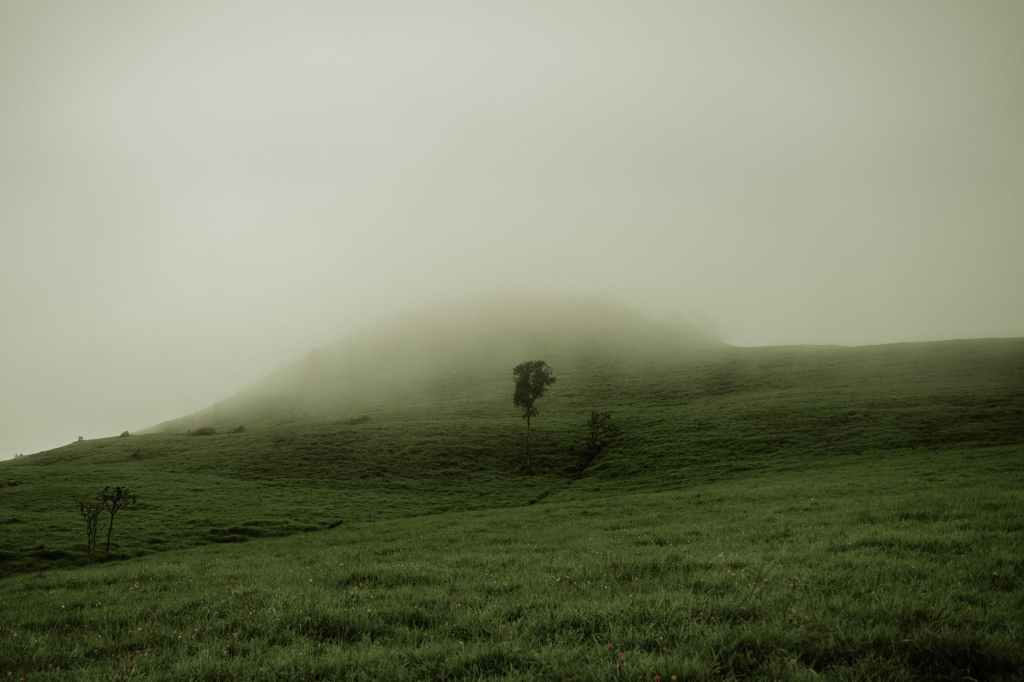
Yet nowhere else gives me the feel of home This landscape is my body and my soul
The north is a closely knit, indigenous, industrial society,” he said. “A homogeneous cultural group with a good record for music, theatre, literature and newspapers, not found elsewhere in this island, except perhaps in Scotland.” He added, with a wry smile, “And, of course, if you look at a map of the concentration of population in the north and a rainfall map, you will see that the north is an ideal place for television.”
Rivington Pike Tower. Photograph: Alamy
The mast is only a little higher than three older landmarks. Most walkers catch their breath at the Grade II-listed Rivington Pike Tower, built as a hunting lodge in 1733 on the site of an older beacon. Another focal point, a little further down, is the Pigeon Tower – built by William Hesketh Lever (aka Lord Leverhulme) as a birthday present to his wife, Ellen. The tower and the terraced gardens it overlooks were part of Lever’s private estate, landscaped by Thomas Mawson between 1905 and 1925.
The third landmark, the Two Lads Cairn, is a pile of stones on Crooked Edge Hill, large enough to resemble a tower from certain angles. Conflicting legends say the lads were two Saxon princes, two sons of a bishop, or two children employed at a mill.
If the summits of our more celebrated peaks have a generally middle-class atmosphere – the technical gear, the smart gizmos, the “hydration” drinks – the top of Winter Hill felt everyday, multi-generational, multi-ethnic and communal. This was especially fitting, given the hill’s role in our nation’s rambling history.Pigeon Tower, which was built by William Hesketh Lever (aka Lord Leverhulme). Photograph: Ruaux/Alamy
In August 1896, Colonel Richard Henry Ainsworth, scion of a wealthy family that had made its fortune in the bleaching trade and resident of Smithills Hall, decided to close a well-used track that crossed his land on the south-east slope of Winter Hill. His business’s reliance on the hill’s watercourses had perhaps given him a proprietorial outlook. Moreover, he regarded walkers – whether tramping to work or heading up there for a breath of clean air after a week’s slog in factory, mine or mill – as unwanted intruders on land he used for grouse-shooting. He had his gamekeepers turn people back and build a gate on Coalpit Road to show the way was closed. A melee ensued, but the colonel’s private army was no match for the great mass of demonstrators
Local people took umbrage at Ainsworth’s decision. Cobbler Joe Shufflebotham, secretary of Bolton Social Democratic Foundation, advertised a march up the disputed road, which won support from journalist and Liberal party radical Solomon Partington. On Sunday 6 September 1896, about 10,000 people joined in the march as it progressed along Halliwell Road through a densely populated working-class district, and up the hill track. A handful of police and gamekeepers were waiting for them at the new gate. A melee ensued, but the colonel’s private army was no match for the great mass of demonstrators; the gate was smashed and the procession continued. When the victorious party arrived at their destination, Belmont, on the north side of Winter Hill, they drank the hostelries dry.
The Bolton Journal reported that “the multitude far exceeded what had been anticipated … the road was literally a sea of faces and the multitude comprised thousands of persons of all ages and descriptions”. During that fervid September, there were three weekend marches and one on a Wednesday, the only day shopworkers were free to join. There was a further march on Christmas Day.
Despite the numerical success of the popular uprising, Ainsworth had writs issued against Shufflebotham, Partington and others. The marches were stopped while the case was heard in court. The colonel won, leaving the marchers to bear the costs. The tail of the trial was long: though locals were able to use the path from the 1930s, it wasn’t until 1996 that public access was formally secured.
The massed march (the walkers wouldn’t have thought of it as a “trespass”) of 1896 has never been accorded anything like the attention given to the 1932 march up Kinder Scout, led by Manchester communist Benny Rothman, which is usually credited with leading to the creation of the UK’s national parks.
“Although the march was a massive event, it was very local, only involving people who lived within two or three miles,” says Bolton-based historian and author Paul Salveson, an expert on the Winter Hill events. “That, and the fact they lost the case, might explain why it’s not better known, though it did lead to greater awareness about rights of way in the Bolton area. The first world war led to the slaughter of many of the participants and brought the curtain down on so many working-class activities. When I met Benny [Rothman] for the Kinder Scout 50th anniversary in 1982 he had never heard of Winter Hill.”
View of landscape around Rivington Pike. Photograph: Alamy
Paul has written a book about the march and was involved in commissioning a play for the first commemoration, back in 1982. His most recent publication, Moorlands, Memories and Reflections, celebrates the countryside writing of dialect writer and radical thinker Allen Clarke, who wrote about the march and penned the stirring song about the Winter Hill protest, Will Yo’ Come O’ Sunday Mornin’?
A memorial stone to the marchers stands on Coalpit Lane. But, unless you go looking for it, you could walk for miles around without seeing any record of the historic clash. Just as most drivers ignore Winter Hill, so many walkers miss the glorious story of their recreational space.
This year – the 125th anniversary of the march – things might at last be about to change. Bolton Socialist Club, the Ramblers, the Woodland Trust, housing association charity Bolton at Home and other community organisations and unions have joined forces for a commemorative march along the original route for the weekend of 6 September. Folk singer Johnny Campbell is releasing a single for the occasion. There’s even talk of a new memorial, to be built by a local quarrying company.
“The events of 1896 showed how important the countryside was to working-class people in the north,” says Salveson. “It still is. This year’s celebration of those momentous events 125 years ago isn’t just a reminder of Britain’s biggest-ever rights of way demonstration. It’s intended to be a rallying call that the countryside is still under threat, with rights of way being eroded and inappropriate development threatening the landscape.”
• Join in the 125th anniversary events via Facebook





 How my heart speaks