
https://www.britainexpress.com/counties/glouces/castles/sudeley-church.htm
in fields of lushest buttercups we ‘d lie
We’d watch the clouds as gently they blew by.
Love was born we thought would never die.
But you are gone, and so I sadly sigh
That love itself remains without your form
Yet tears of loss enfold me like a storm.
I knew you’d never hurt or do me harm.
I felt your smile’s embrace, so wide, so warm.
How is the world,now emptied of your being?
No sound, no touch, no smell, no sight, no seeing.
How is the world when you have gone ahead
Yet I must linger in this empty bed?
Yet those who’ve loved are grateful for this gift
Our sorrow is that life itself’s t,oo swift

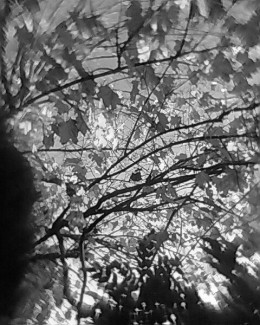
The leaves have not yet fallen from this tree
It makes my room so dark I cannot see.
Winter clocks will change and lengthen nights.
The sun will scarcely rise nor give much light.
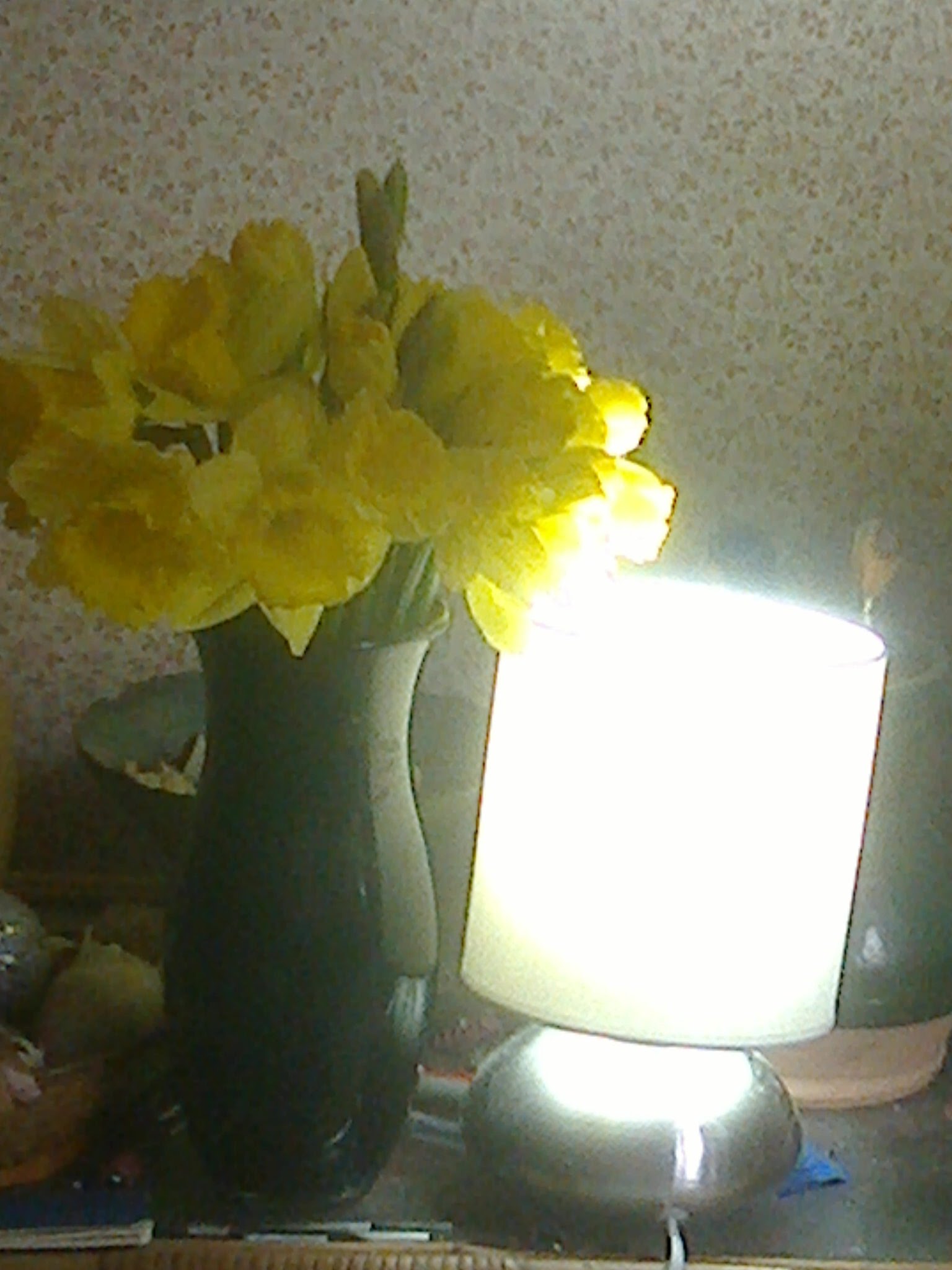
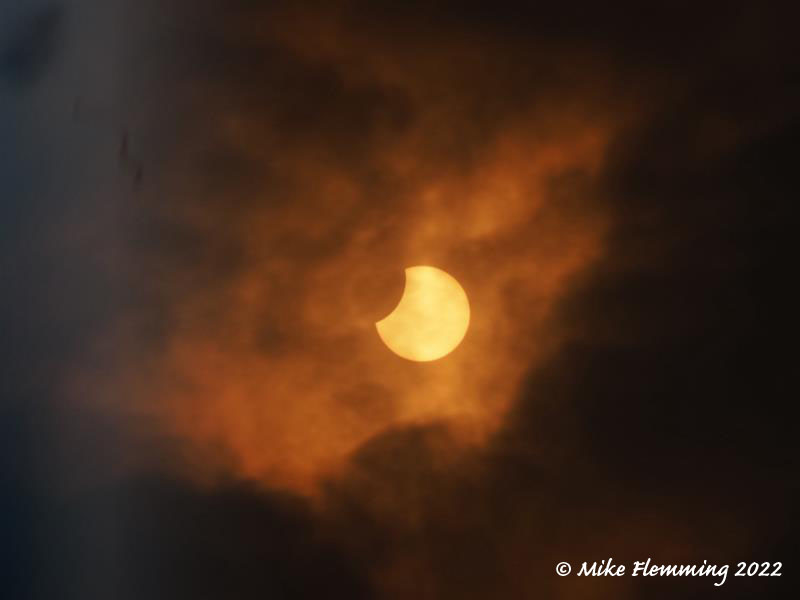
The angle of the sun brings danger near
It blinds the eyes and fills us with great fear.
in Sudeley Castle chapel the stained glass
Concentrates the light and let’s it pass
The world is different every day and hour
it is the same for little winter flowers
Look a[ modern life we are too rushed
The artist in us all is daily crushed.
When we struggle fearing we are lost
The spirit we all share will pay the cost.
It doesn’t save that you have great wealth
As long as there are poor you have no health.
t
https://www.fantasticfiction.com/c/elin-cullhed/euphoria.htm

This is a novel based on the last 6 months of the life of Sylvia Plath the great poet.
I have only read a bit of it but it’s beautiful written although it is very sad.
Do people sometimes take risks which are too great?
Marrying someone you met 3 months ago in a country a long way from your own country then moving to a remote
village but who are we to judge?
Her death what a great loss to literature and also a personal lost to her friends and family

That there’s an upside to pushing ourselves to the limit in our professional life is a fallacy, says Cary Cooper, professor of organisational psychology and health at the Alliance Manchester Business School, University of Manchester. “Pressure is good for you. Pressure is stimulating and motivating, but when it exceeds your ability to cope, we’re in the stress arena.”
He says that 20 years ago the leading cause of absence at work was backache — now it’s stress, anxiety and depression, according to the Health and Safety Executive’s report the year before the pandemic. “It was 57 per cent of all long-term sickness absence. During the pandemic it rose to 63 per cent, but it’s not just the pandemic — we have a problem.”
That problem, says Dr Mithu Storoni, a neuroscience researcher and the author of Stress Proof, the Scientific Solution to Protect Your Brain and Body — and Be More Resilient Every Day, is that the way we work creates “an environment almost curated to trigger stress, but most importantly to not recover once that acute stress happens”.

63 per cent of long-term sickness absences during the pandemic were the result of stress, anxiety and depression
GETTY IMAGES

https://www.nytimes.com/2003/02/16/magazine/unspeakable-conversations.html
Harriet mcbryde Johnson I was born with muscular dystrophy but she lived much longer than was expected. This is about a conversation with the philosopher Peter Singer he believes that parents should have the right to euthanize a baby born with such conditions
I strongly recommend you to read this article which is beautifully written and very enlightening about what it is like to be disabled. And that a disabled person is just as likely to be happy as someone without disabilities. You have to admire someone who will take on Peter Singer although he is a very good person but he has his own particular reasons for believing that parents of disabled babies should be able to end the life of their child. In a society which allows abortion till quite a late date if it’s hard to know where to draw the line but birth is one place where you could draw it

But what I gained with this house was an enormous desk. It is an artist’s working bench, with slots on one side where canvases can be stored. In Vellacott’s day it was thick with oil paint and the grime of charcoal. Without my asking, the builders, while renovating the house, one day sanded the surface of the desk, to great effect. As a biographer and art historian, I often work with images and text. Recently, while coping with the last stages of my new book – John Piper, Myfanwy Piper: Lives in Art – the entire desk was covered with page proofs, making it possible to check illustrations against lists, sources and textual references.
With light coming in on all sides, the room absorbs the mood outside. Grey days here remind me of Stevie Smith and her “loamish landscapes”. Despite having written her life, only now do I understand why an empty park, in the winter rain, had, for her, a “staunch and inviolate melancholy that is refreshing”. Then, too, on sunny days, this room fills with light that quivers and slowly slides round the walls, sometimes forming diamond shapes.
You sat outside despite the chilly rain
why do I often criticise your actions?
The clocks have changed we can’t do that again
I can if I put on my duvet coat
I took my plate inside, but you remained
Maybe you didn’t want me to be with you
Now the. memory brings me love and pain
That seems rather pointless now
My salty tears will not leave any stain.
I wouldn’t be too sure about that
Yet they make a valley in my brain
I don’t think your family will fish inside your head
What a stupid and mysterious claim
I want to buy a candle with a flame.
Is life important.No it is a game.
Very often I feel deep,deep shame
Look at yourself: you are just a garden gnome
I think I’ll get baptised again in Rome.
Forgot to say why don’t you just get home?
I will stay out if you will stop your moans
 https://www.poetryarchive.org/interview/wendy-cope-interview
I don’t set out to write humorous poems it’s just sometimes my sense of humour gets into them – well quite often. As a reader I suppose I laugh when I recognise something – I think laughter often is when you recognise something is true but you’d never actually allowed yourself to think that or you’d never heard it put quite so well. I think it’s possible for a poem to be funny and serious at the same time and I get very annoyed with the assumption that if a poem is funny then it can’t be saying anything important and deeply felt. Some of my poems are just playful and could accurately be described as ‘light verse’ but I think in a lot of my poems, although there’s humour in them, they are saying something that matters and something that’s deeply felt and I don’t think…I think those things can co-exist in the same poem.”

https://www.nytimes.com/2021/09/20/opinion/generation-cancel-culture.html
A few weeks ago Anne Applebaum published a piece in The Atlantic titled “The New Puritans,” about people who have “lost everything” after breaking, or being accused of breaking “social codes having to do with race, sex, personal behavior or even acceptable humor, which may not have existed five years ago or maybe five months ago.” Around the same time, The Economist published a cover package about the illiberal left, warning that as graduates of elite American universities have moved into the workplace, they have “brought along tactics
https://healthblog.uofmhealth.org/lifestyle/5-ways-to-manage-politically-induced-stress

Imagine you’re at a gathering with relatives and someone brings up politics. What may initially cause dread can be reframed as an educational opportunity.
There are reasons why people feel the way they do about certain issues, or people, and someone may not ever know why unless they ask and are ready to listen. That interaction may also bring up a topic or person the other wants to learn more about.

https://www.thesource.org/post/10-hobbies-that-fight-depression-anxiety
Being in nature is known to improve general well being, from reducing stress, anxiety, and sadness, to reducing muscle tension, stress hormones, blood pressure, and heart rate. Think about the aspect of nature that makes you feel the most relaxed and at ease; find that environment for yourself and make it a part of your rhythm.
This might look like:
1. Walking each morning to enjoy the sunrise
2. Swimming in your local river or lake every weekend
3. Hiking twice a week to enjoy the trees and birds on the trail near your house
4. Taking a road trip to another part of your state each month
5. Driving out to the country and stargazing twice a month
6. Biking through your neighborhood to pick up your coffee before work
7. Planning a coast trip twice a year
However often you can make a trip out to nature, do it. Whether you’re walking to gaze at mountains for 10 minutes each morning or jumping into ocean water once a month, try your best to move around in a natural setting.
There’s nothing like watching and nurturing plants to encourage optimism and mental health. Since you’ll have something to look forward to in each season, gardening can create joy and break cycles of anxiety. It can also help you clear your mind, especially after difficult days.
You don’t have to start a whole garden; not everyone has enough space to do so

https://iai.tv/articles/does-mental-illness-exist-auid-1280
further problem is that the so-called ‘symptoms’ are not examples of bodily dysfunction, such as pain, rashes and so on, but consist of a ragbag of social judgements about people’s thoughts, feelings and behaviour. For example, someone – usually a woman – diagnosed with ‘borderline personality disorder’ has been assessed as displaying ‘inappropriate, intense anger’ and ‘a pattern of unstable personal relationships.’ But we know that women who are so labelled very often have a history of abuse, which may make their so-called ‘symptoms’ entirely understandable.
Similarly, there is growing evidence that the hostile voices said to be a symptom of ‘schizophrenia’ may reflect earlier unprocessed traumas, such as bullying or domestic violence. And at the less severe end of the spectrum, the desperation and hopelessness that might be diagnosed as ‘depression’ is known to occur more often in personal and social contexts that give people very good reasons to be miserable. These histories are routinely obscured and unaddressed within a system that re-interprets them as evidence of medical illness or disorder.
In essence, then, a diagnosis turns ‘people with problems’ into ‘patients with illnesses’. Reactions to receiving a diagnosis vary, and some people say that it offered welcome relief from guilt and isolation. For others, though, it constitutes the first step in a lifelong career as psychiatric patient, with everything that is implied – long-term use of psychiatric drugs, stigma, and social exclusion. Some have vividly described the profound disjunction in their sense of identity as this new version of reality is imposed on them: ‘I walked into (the psychiatrist’s office) as Don and walked out a schizophrenic … I remember feeling afraid, demoralised, evil.’
Psychiatric diagnosis turns ‘people with problems’ into ‘patients with illnesses’.
How, then, do we proceed, if we want to accept the reality of people’s distress and yet dispute the validity of the medical explanations that are offered? This model has taken hold so strongly that it can seem bizarre to question it. And yet we have a mountain of research to confirm that all kinds of social and relationship adversities massively increase the likelihood of experiencing all varieties of mental distress. This includes poverty, unemployment, emotional neglect, physical and sexual abuse, domestic violence, bullying, and so on, as well as more subtle difficulties such as feeling criticised, undermined, invalidated and excluded.
At a wider level it has been demonstrated beyond dispute that we all suffer from living in societies that are unjust and economically unequal – ‘If Britain became as equal as the four most equal societies […] mental illness might be more than halved’ (Wilkinson & Pickett). Similarly, psychologists have described how whole societies may be affected by so-called ‘austerity ailments’ of humiliation and shame; fear and distrust; instability and insecurity; isolation and loneliness; and feeling trapped and powerless.
This perspective does not give us the neat explanations or the hope of simple cures that are offered by a diagnosis and a corresponding pill. It implies that we need very different solutions, at every level from individual to societal. One possible starting point is the core skill of all clinical psychologists, known as ‘formulation’ (Johnstone & Dallos). This is the process of making sense of a person’s difficulties in




























 How my heart speaks