
‘ How does one become a butterfly?’ she asked pensively. ‘You must want to fly so much that you are willing to give up being a caterpillar.’~ Trina Paulus
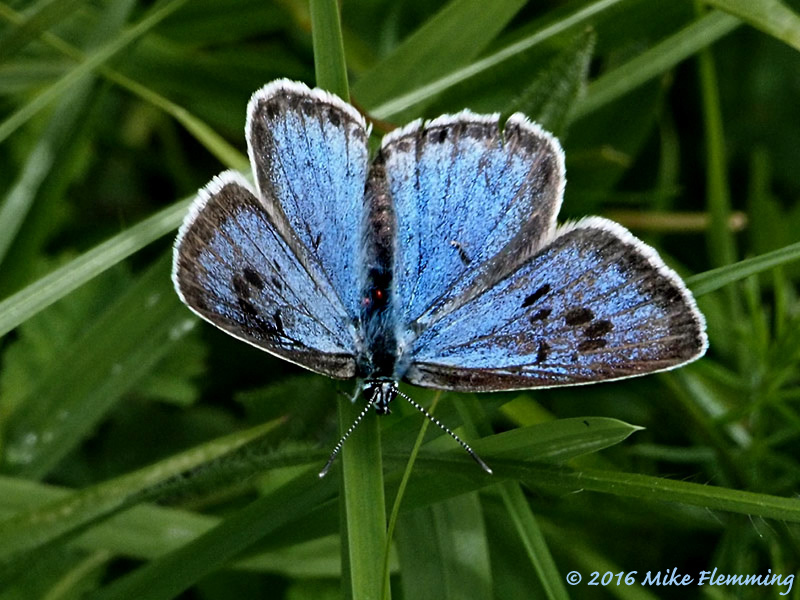
‘How does one become a butterfly?’ she asked pensively. ‘You must want to fly so much that you are willing to give up being a caterpillar.’~ Trina Paulus

 https://www.goodreads.com/quotes/tag/intimacy
“They slipped briskly into an intimacy from which they never recovered.”
― F. Scott Fitzgerald, This Side of Paradise

With winter comes an insight into death
To view from this perspective our own life
The dark, the cold, the promise of re-birth
The love, the lack, the need for God’s new breath
The harvesting, the cutter and the scythe
With winter comes an insight into death
So we connect with all that lives on earth
The love, the joy, the wisdom and the grief.
The dark, the cold, the promise of re-birth
Again we ponder meaning and our worth
As we will one day lie beside a leaf
With winter comes an insight into death
We soon return to laughter and to mirth
With cakes and ale and wine at this our Feast
From the dark, the cold comes all re-birth
As the mighty lie beside the least
Each will give the worms intriguing tastes.
With winter comes an insight into death
The dark, the cold, the faint hints of re-birth
 To the postmodern,cancer does not exist.
Death is just that we stop moving and turn to dust
Birth is only real to the mother
Sex and birth are correlated but neither causes the other
Most people have sex after birth
Some claim to give birth while virgins.Who are we to doubt?
There is no absolute truth except we are all getting fatter.
This is a fascinating interview
The despised are the black, the mad and the Jew
The crippled, the blind and the child of such ones
Worse, even more, if you’re female too
When the race started no whistle blew
The rich whites were already far,far along
In front of the black, the mad and the Jew
The rewards are controlled by those of pale hue
When the poor get there the money has gone
Definitely will if you’re female too
Jesus was God but that was no use
He hung on his Cross and so could not run
With the black, the mad , the crippled the Jew
What do we see when we look at the News
Genocide,torture and battles still on
You will be raped if you’re a female too
Here are the weapons, the rockets that stun
Inventing all these gives the rich men their fun
The despised are the black, the mad and the Jew
Worse, even more, if you’re female too
 https://www.poets.org/poetsorg/poems?field_poem_themes_tid=1596
I recently killed my father
And will soon marry my mother;
My question is:
Should his side of the family be invited to the wedding?
” Michael Dransfield is one of the most prominent – and colourful – poets in Australian literature.
“I was actually doing a PhD on Michael’s poetry,” she tells Guardian Australia. “And my supervisor discovered that Michael and I had known each other and been very close, and she said, ‘Hang on, I don’t know whether you’re writing the right thesis here, maybe you should write a memoir!’”
That memoir, The Green Bell, will be released in March and gives a rare insight into Dransfield’s personal and creative life, and his struggle with addiction, as well as the indignities of psychiatric care in the 1970s.
Keogh met Dransfield in Canberra hospital in 1972. She was 22 and had been admitted for psychosis and grief after breaking down in a university lecture shortly after the death of her best friend. Dransfield was admitted days later, for treatment of his drug addiction. He was working at the time on the poems that would make up his fourth collection, the acclaimed Memoirs of a Velvet Urinal.
Their connection was sudden and intense, built on a mutual love of poetry and music, and a shared sense of the importance of imagination and language in shaping the world.”
I want to grow you a wrath-room
I want to flee
My stomach bakes
You are a packing grunt
I have wiles
I feel quick
I am going to bomb it
Do you like wrecks?
I am fey
I have run out
Where is your boil it?
Are you eight?
I like origami
You seem very belligerent for an atheist
Where did you bay, you’re humdrum?
Do you like sense?
I never use outstate wrecks or gin economy
Where do you make gloves?
Are you harried ?
I before U
My heart’s defiant
I want you benign
 The British Foreign office has weighed in on the plea deal reached between the Israeli army and Palestinian teen Ahed Tamimi, saying the conviction and sentence were “emblematic of how the unresolved Israeli-Palestinian conflict is blighting lives of a new generation.”
They also called on Israel to improve its treatment of Palestinian minors in Israeli military prisons, urging local authorities to do more to “safeguard vulnerable people in its care.”
Full story
I am much affected by children and minors being in prison when it is not absolutly necessary and there are about 300 Palestinian Minors in Israeli jails who like Ahed are tere for a lomg time before being tried.For 50 years they have been tried in Military Courts whereas Israeli settlers are tried in Civil Courts
If this and the check points and walls are needed then it seems a terrible way to have to live
From Gov.UK
Minister for the Middle East, Alistair Burt MP said:
The conviction and sentencing of Ahed Tamimi is emblematic of how the unresolved conflict is blighting the lives of a new generation, who should be growing up together in peace, but continue to be divided.
The treatment of Palestinian children in Israeli military detention remains a human rights priority for the UK. We will continue to call upon Israel to improve its practices in line with international law and obligations.
We have offered to help the Israeli authorities through expert-to-expert talks with UK officials. The offer still stands and we hope Israel will take us up on it. While we recognise that Israel has made some improvements, it needs to do much more to safeguard vulnerable people in its care.
{

 Candle light at Christmas or great Feasts
Softens all our troubles in its peace
Reminds us of the soothing kindly light
Protecting us from darkness in the night
Yet candles may fall over over and ignite
Burn down our homes and fill our souls with spite
Nothing is entirely good or bad
This is true yet it has made me sad
As I lie in reverie in my bed
I see the long loved faces of souls dead
I smile as these sweet images pass by
Then sleep and dream on with a grateful sigh
Will I one day be passing through your mind?
May all your dreams and reveries be kind
 Image by Katherine 2018
https://io9.gizmodo.com/heres-what-your-brain-is-doing-when-you-really-really-1656710293
“As the scientists, Semir Zeki and John Paul Romaya, wrote in the study itself, “Hatred against an individual may be seemingly irrational and rooted in remote anthropological instincts. Hate based on race or religion would probably fall under this heading. On the other hand, an individual may trace the hatred to a past injustice and hence find a justifiable source for it. There are no doubt many other ways in which the sentiment can be sub-categorized.”””
“. When we love someone, we shut off the part of our brain that judges – a trait that, we hope, has led to more happiness than sorrow. When we hate someone, we leave the judgment part of our brain a’blazing.”
There’s a theory which holds that hatred evolved so that one group of hunter-gatherers wouldn’t feel so bad about stealing resources from another group of hunter-gatherers. In other words, we hate because hate sometimes keeps us alive. It’s a decent theory, but it makes hatred an extremely recent phenomenon, and one exclusive to humanity.”
What I saw as glowing evening sun
Turns out to be a neon light lit up too soon
And our imagination sees a savage gun
Where there is nothing but a fine toothed comb
The mind is waiting with a bunch of signs
To fit perceptions into ready truths
Though I’ve not seen a gun nor made designs
Nor used a nit comb since I was a youth
What we see is what will interact
With what we want,we love, or what we hate
From all the memories that are well packed
Into minds with independent states
And so we quarrel , murder, go to war
With those who look from different coloured doors
Continue reading “Imagination sees a pointing gun”
Who has lived without the threat of war
Our war’s ongoing,makes us what we are
Recovering from the last and making sure
We’re ready for the next aggressive “cure”
From lover’s cruel to Holocaust Hell’s flame
We do not enjoy peace within our homes
While in the arms of love we plot escape
Intimate demands are feared far less than rape
From states’ aggressive greed to married hate
We come to love in fear and perhaps too late
Who wrote the script ,who acts their part alone?
The Play returns,repeats as humans mourn
Who can bare their tender, living hearts
Before the ruinous “wars of mercy” start?
 https://www.poetryfoundation.org/articles/69592/poems-for-peace
“In May 2009, in a backyard in Portland, Oregon, a few poets and artists found themselves possessed by what appeared to be a simple question: if we were to suggest that bookstores have a “peace shelf” of books, what should it carry? We were in Portland for “Another World Instead: William Stafford Peace Symposium,” and Kim Stafford, the poet’s son, posed the question.
I began scribbling furiously as Kim and Jeff Gundy, Fred Marchant, Paul Merchant, Haydn Reiss, and I widened the imagined shelf until it was a whole bookcase, and then it seemed that we’d need a whole store; as dusk fell, and later on e-mail (when Sarah Gridley joined the conversation for our panel at Split This Rock 2010), we probed a concept that teeters between immensely practical and dangerously amorphous: how to canonize a list of books and other resources that would envision a more just and peaceful world—for bookstores, for teachers, for interested readers—without turning it into Jorge Luis Borges’s famous “Library of Babel,” which contains every book ever written?
And how to overcome—in ourselves, in the poetry world, and in all the wider communities in which we situate ourselves—our own resistances to an engaged poetry that stakes specific claims about the world, a poetry that could be partisan and provocative and even utopian? After all, many of us feel as John Keats did, despite his friendship with the partisan poet Leigh Hunt: “We hate poetry that has a palpable design upon us—and if we do not agree, seems to put its hand in its breeches pocket. Poetry should be great & unobtrusive, a thing which enters into one’s soul, and does not startle it or amaze it with itself but with its subject.”
And if the poetry that presses “palpable design upon us” were not challenge enough, then what to do about poetry that proposes something about peace, the very word of which veers into a kind of New Age ganja haze and evades the pungency of real life; or, to let Keats muse on the subject, “for axioms in philosophy are not axioms until they are proved upon our pulses.” Ezra Pound’s Imagiste manifesto similarly exhorted poets to avoid fuzzy abstractions: “Don’t use such an expression as ‘dim lands of peace.’ It dulls the image. It mixes an abstraction with the concrete. It comes from the writer’s not realizing that the natural object is always the adequate symbol.”
Yet we Americans live in the most powerful country in the world, whose adaptably postmodern empire is marked by what William James calls Pure War, a state in which the real war is the constant preparation for war. Though our poetry has ably represented the traumatic and unmaking operations of war—from the rage of Achilles on to our present day—it has also often unwittingly glorified and perpetuated a culture of war. We have yet to give adequate attention to how our poetry also contains the seeds of other ways of dealing with conflict, oppression, and injustice, and how it may advance our thinking into what a future without war might look like.
How to imagine peace, how to make peace? In our conversations on the Peace Shelf, three general subcategories emerged, though these were full of overlap and contradiction: Sorrows, Resistance, and Alternative Visions. It’s simple enough: we need to witness and chronicle the horrors of war, we need to resist and find models of resistance, and we need to imagine and build another world. Even if modern poetry has been marked by a resistance to the glorification of war, vividly shown by the World War I soldier poets and many others, the important work of poetic dissent has been, too often, via negativa—resistance to the dominant narrative, rather than offering another way.
Even Denise Levertov—one of the self-consciously anti-war poets on any Peace Shelf—found herself at a loss for words at a panel in the 1980s, when Virginia Satir called upon Levertov and other poets to “present to the world images of peace, not only of war; everyone needed to be able to imagine peace if we were going to achieve it.” In her response, “Poetry and Peace: Some Broader Dimensions” (1989), Levertov argues that “peace as a positive condition of society, not merely as an interim between wars, is something so unknown that it casts no images on the mind’s screen.” But she does proceed further: “if a poetry of peace is ever to be written, there must first be this stage we are just entering—the poetry of preparation for peace, a poetry of protest, of lament, of praise for the living earth; a poetry that demands justice, renounces violence, reveres mystery.” That Levertov lays out succinctly what we ourselves, the Peace Shelf collective, took some weeks to arrive at, illuminates the challenge of the peace movement and of the literature that engages it; our conversations, our living history and past, are scattered, marginal, unfunded, and all too easily forgotten.
The following poems, dating from the 20th century onward—which appear in the anthology Come Together: Imagine Peace—provide a foretaste of the larger feast, which could begin with the Sumerian priestess Enheduanna’s laments against war, with Sappho’s erotic lyrics, or with Archilochus’s anti-heroic epigrams. Yet this feast isn’t mere sweetness and light. “Peace” is no mere cloud-bound dream, but a dynamic of living amid conflict, oppression, and hatred without either resigning ourselves to violence or seizing into our own violent response; peace poems vividly and demonstrably articulate and embody such a way. At their best, peace poems, as John Milton did in “Aereopagitica,” argue against “a fugitive and cloistered virtue, unexercised and unbreathed, that never sallies out and sees her adversary.” If, in Milton’s words, “that which purifies us is trial, and trial is by what is contrary,” then peace poetry must also interrogate the easy pieties of the peace movement and its own ideological blind spots. And indeed, Michael True’s exploration of nonviolent literature confirms that “although writings in [the nonviolent] tradition resemble conventional proclamations recommending peace reform, their tone and attitude tend to be provocative, even disputatious, rather than conciliatory.”
Perhaps peace poetry is not quite a tradition but a tendency, a thematic undertow, within poetry, and within culture. Yet it has been with us as long as we have been writing. Peace poetry, such as it may be—like the peace movement that it anticipates, reflects, and argues with—is part of a larger human conversation about the possibility of a more just and pacific system of social and ecological relations.
For the poems please use the link at the top of the page
 https://www.poetryfoundation.org/poems/57421/war-and-peace-56d23aeecfe57
https://www.poetryfoundation.org/poems/57421/war-and-peace-56d23aeecfe57
 My husband suffered from delusions for a few days but they made him very happy.I wonder if our temperament and way of life can influence us should we ever get delusions?
He was very frail.I was in the kitchen and he came to me and said
It’s so wonderful being with you.
This was not something he said very often!
I replied, but you are with me always
No, he said,I am usually with Katherine
I realised then he was seeing his mother.
Since he looked so happy I didn’t contradict him despite one of his close friends telling me I should.I have known people with odd minds and I am ok with it.
The only problem was that he began to ask questions
Where is Dad?
Why have you not remarried [ looking at me with glowing affection and admiration
Where did you go for your honeymoon?
Why did your boss have a wooden leg [I worked out it must have been WW1
Anyway for about 3 days he remained like this until the antibiotics worked
I was glad to know how much he had loved his mother.And if he was happy why should I argue?He might have suffered distress and was already very ill


Mary sat in her bijou but well-designed blue kitchen reading email on her Windows 13 laptop.She was feeling quite weak after a bout of pneumonia and cystitis despite having Dave the paramedic visit every day with chicken soup
She found a new email from her old friend who has been away
I hate you, so much, Mary, it began ominously as love and hate are closely linked
I wonder if it is something I have done, Mary thought, or is it my essential self he hates and why now after all these years?
You are always explaining things to me as if I am dumb
Oh, dear, Mary thought.The perils of being a keen mathematician and also a foolish woman are many
I have got more and more annoyed with you especially since you threw that brick through my Windows.I am not coming tonight to be with you.You can get stuffed you crackling font.And I shall never forgive you as I never do forgive anyone even if I made a mistake.I can’t bear the shame and humiliation
Does he mean I broke his new Dell Windows 10 computer, she asked herself
Or a window in his apartment?
But he lives on the second floor and at my age, I can’t even carry a brick let alone hurls one so high and so accurately
Still, he is old so someone smashing his windows would be disturbing to him and make him angry
Or is the word BRICK a metaphor? It might mean his self esteem is shattered like shop windows in riots often have been
As for his language, it reminded her that religious people tend to swear more and also commit more sexual offences, or get found out more
Mary] looked down at her once beautiful blue tweed skirt which had a few moth holes in it
Oh, well. if he is not coming to visit I can keep wearing this holey skirt.He doesn’t like older women in jeans as he prefers looking at young women’s bottoms despite his religion.So I would have had to wear my one remaining decent velvet winter skirt.I am too lazy to want to change.
Suddenly her late husband’s former mistress Annie ran in
She was wearing a magenta wool tracksuit and green stiletto heels with pink ankle socks topped by a purple velvet trench coat with matching lipstick
Good heavens, Mary cried.You look very attractive, where did you get that coat from?
I got it in a jumble sale at the church, Annie muttered.Those new people are very rich and only wear clothes twice!
I shall have to come, said Mary, look at my skirt!She burst into tears which was a rare event.
Her little cat Emile was terrified.
Don’t cry, mother he whispered
.I will sleep with you tonight if that idiot is not coming
What! Don’t tell me that Peter has broken up with you.He seems so charming,delightful and well educated and his works of art are brilliant and innovative.Still it was better than a text message
Yes, he just sent me an email calling me a crackling font
Perhaps he is mixing you up with someone else.Anyway, if he is heterosexual he should love a nice female organ or two
That’s too rational,Annie dear.Only the gynaecologist loves it.She took some photos again!
Good grief.Did she show you? asked Annie.
No, said Mary.I don’t want to see it but since I’ve been going there for 3 years it seems bigger than before.Maybe the photos to be put into a medical journal.To think my memorial will not be my face but my vulva.Someone said vulva is a rude word and I should say vagina but that makes no sense to me and it is an error anyway scientifically
She’s not done anything to make it bigger?
No, it must be all the attention it gets that makes it feel bigger in my mind
Still , without a boyfriend, it’s not even worth thinking of.
Well, you can DIY, Annie told her but for us women it’s the lying down gazing into someone’s eyes and smiling that matters more than the rest
Emile miaowed: Look into my eyes, mother.Or can’t Annie?
I’ll be getting an Electra complex, Mary told him.You don’t do erotic things with your mother nor with a lady who once slept with your dead husband while he was still alive!
Well we cats don’t know our cat mothers so we might have a good time with them unknowing
If only I were a cat, Mary muttered as she wept again clutching a box of Kleenex for Sad Women
Ring 999, Emile.Annie said.We need help now
Hello, my mum’s boyfriend has split with her by email.Can you send an ambulance for the computer, she hit it with a shoe and broke the screen
OK, will do, the lady replied courteously.Would you like some meringues too?
My goodness, since Brexit the NHS is even better.I should have asked for a steak and kidney pie as well.And mashed carrots.
And so say all of us
 Can I have a disengagement ring?
Just don’t use the phone.
Do you like gold wedding rings?
What alternatives are there? Shackles?
i just agreed to a divorce
From whom?
He didn’t say but his number is on my phone.I am getting a million pounds settlement if I send him my credit card number by text
I want a stay at home mother.
Why?
So I can go out!
Hire someone
That’s ironic
 https://www.poets.org/poetsorg/poem/dear-advice-columnist
Epithalamion? Not too long back
I was being ironic about “wives.”
It’s very well to say, creation thrives
on contradiction, but that’s a fast track
shifted precipitately into. Tacky,
some might say, and look mildly appalled. On
the whole, it’s one I’m likely to be called on.
Explain yourself or face the music, Hack.
No law books frame terms of this covenant.
It’s choice that’s asymptotic to a goal,
which means that we must choose, and choose, and choose
momently, daily. This moment my whole
trajectory’s toward you, and it’s not losing
momentum. Call it anything we want.

 http://www.textetc.com/modernist/postmodernism.html
Extract:
 Groundlessness
Art, politics, public service, life in the great institutions — in none of these could be found any bedrock of unassailable probity. Serious shortcomings could be found in science, mathematics, linguistics, sociology, philosophy — in whatever purported to be true knowledge. All involved assumptions, cultural understandings, agreements as to what counted as important, and how that importance should be assessed. Even our language was imprecise, communal and secondhand. Where did reality stop and interpretation begin? In truth there was no essential difference between art and life: both were fictions. Was psychoanalysis a myth? Very well, so then were science and the humanities. All were self-supporting and self-referencing variably coherent systems with truths that were not transportable.
No doubt history has some ticklish problems of interpretation, but few suppose that the holocaust never happened. Even admirers of Paul de Mann were suddenly aroused from their solipsist musings when damaging evidence was found for their hero’s earlier support of Nazi ideas. No one can see how the exterior world can be unmediated by our senses and understandings, but the philosophic problems of asserting that reality is entirely created by language and intellectual concepts are formidable indeed. Science has its procedures and limitations, but its supposed “myths ” work in ways other myths do not. All disciplines have their own view of the world, but they are not equivalent or equally acceptable. Postmodernism largely overlooks how reality constrains actions, language and art.
FormlessnessWhence comes this desire for autonomy, for circumscribing form, for aesthetic shape? Look clearly at art and the dissonances will appear just as prominently. The New Criticism and traditional aesthetics simply left them out of account. Deviation from the expected, foregrounding, departures from the conventional are the essence of art, as Ramon Jacobson and the Russian formalists demonstrated. Art will be much stronger for being shapeless, indefinite, even incoherent. Nor need we stick rigidly to genres, or refrain from pastiche and parody. Art is the whole world, and the more that can be included the richer the artwork.
But of course, no such essence of art was ever demonstrated. No doubt the New Critics did speak too glibly of aesthetic harmonies and tension resolution, and poems could always be read that way, given sufficient ingenuity. Yet there are limits. The differences between a competent and an outstanding work of art may be difficult to prove to a first-year student, but everyone attests to the increasing discrimination that comes with love of the subject and prolonged study. It is a common observation that art begins in selection, and that an etching or black and white photograph may possess powers in proportion to what they exclude. If that is denied — and it is denied by Postmodernist — then many contemporary artworks will have no appeal to the more traditionally-minded, which is indeed the case.

Underneath the shallow pools lies sand
Where shells are fractured by the ocean’s blows
We soon learn what being alive demands
To bare feet on sunny days beckoned
The warm wet trickles in between the toes
Underneath the shallow pools lies sand
In whose sums are human kisses kenned
Calculation, not so bleak it shows
We learn by pain, true living makes demands
God allows the abacus unchained
To sum us up as if we are unknown
Underneath the pools, are these his hands?
Who will be allowed and who detained?
Like refugees, we come to love alone
We try to be alive, despite the pain
Our hearts are fragile shells, not heavy stones
We, soft flesh, enraptured by framed bones.
Darkly on the beach we humans stand
The fretting waves cry out with love’s demands
Crunching through the pebbles on the beach
The shells and stones shine damply in the wet
They slip and slide beneath my sandalled feet
Underneath, in places we can’t reach
Live tiny creatures on which humans step
Crunching through the pebbles on the beach
Salty air like sunshine colours bleach
The neutered stones and shells are lovely yet
They slip and slide beneath my sandalled feet
We murder without knowing what we teach
Human greed, dark oceans of regret
Scrunching through the pebbles on the beach
The smallest of all creatures cannot screech
Say humans acts still shapeless are a threat
Worlds slip and slide beneath my first world feet
The blurred edge of the sea and sand’s not set
The boundaries make a space for what’s not yet
Loving are my memories of the beach
They slip and slide in wondrous retrospect
 http://www.eng.fju.edu.tw/Literary_Criticism/postmodernism/pm_poetry.html
“Superior Lake” by Lorine Niedecker as an Example
| Language | Self | Modernism | Postmodernism |
| General concepts about serial & procedural forms | Serial form | Procedural form | “Lake Superior” |
Taiwanese Postmodern Poetry (an Outline in Chinese)
Postmodern poetics respond to the condition of the world. In an age of instant telecommunications and metropolitan life, the postmodern serial and procedural forms attempt to accommodate the overwhelming diversity of messages and the lapse of a grand order that is replaced by an arbitrary personal order.
I. Language
A. In postmodern poetics, there is a paradigmatic shift from the idea that language is
transparent to the disclosure of its physicality, its intimacy, its obdurate persistence, and its
paradoxical fragility. (M 43)
B. Reader¡Xpoem:
The reader’s position is contingent upon the poem and the poem¡¦s existence hinges upon
the reader and the varieties of knowledge the reader brings to the poem¡KThe adequation of
thing and sign has lapsed with the realization of the arbitrary condition of language. (M 43)
II. Self
A. Contemporary poetry:
1. Contemporary poetry positions its perspectives from a persona (who is often autobiographic) within a defined narrative structure.
2. Contemporary poetry avoids self-criticism and establishes itself as a singled unified voice. (M 48)
B. Postmodern poetry:
1. Postmodernist poetics suggests an ongoing reinterpretation of the self in the context of others. It specifically investigates the ethical-or self-critical capacity of language and its relationship to identity. (M 46)2. The critique of the privileged and entitled ¡§I¡¨ is central to postmodern poetics. While not a wholesale endorsement of many theoretic claims to he death of the author or the abandonment of intention, postmodern poetry nonetheless insists on a re-visioning of the authorial voice and its reception. (M 46)
Read the article
If the cat speaks, purr it
The King won’t get his horse to speak to you.
I nearly had kittens when the cat wanted to mate.
My nervous system is involuntary
I am introverted and good at yoga based topology
i took my final degree with a thermometer
I never could spell Schrodinger nor could I tell anyone.
I could try psycho-analysis or compromise and be a psycho.
I wanted bereavement counselling so I married a dying man.
I like reading, it’s just the words that annoy me.
My husband slept in the shed as he wanted me to get a boyfriend.Preferably bisexual.Anyway, the cat didn’t like that.He had a very yelling nature.
MATHS
I spent 9 years studying maths and I realised it’s basically notation for notions
If you estimate you can run across the road before that fast car can hit you, you are unconsciously doing calculus.The hard part is making it conscious.
Looking at the garden as a world
The overgrown becomes a rich terrain
Where myriad living forms seem uncontrolled
But make a balanced whole in shades of green
What I hear are calls from nesting birds
The sway of breeze among forsythia’s gold
The patterned snails, the slugs cannot be heard
Nor can the slow worm’s wiser words be told
The pattern is a natural life, a wood
Where Cambridge monks had ponds and trees
Ten Cedars tall were chopped till dead
But still remain their long striped bees
Small in your eyes, infinite in mine
Such marvelled worlds can’t be designed


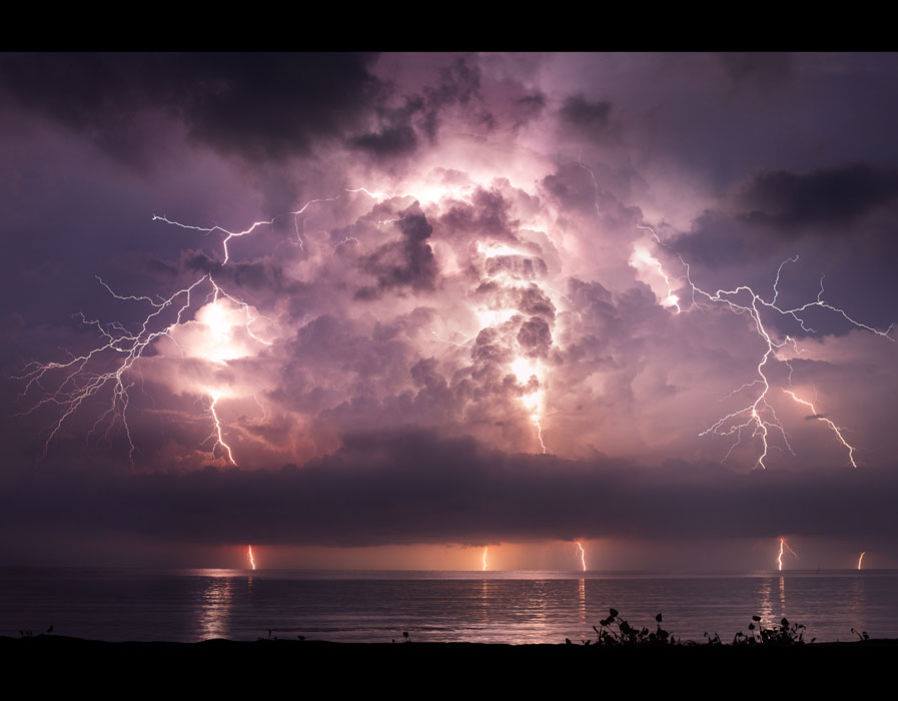


 How my heart speaks