
Day: Mar 23, 2018

The window
Rhyming slang
I want to grow you a wrath-room
I want to flee
My stomach bakes
You are a packing grunt
I have wiles
I feel quick
I am going to bomb it
Do you like wrecks?
I am fey
I have run out
Where is your boil it?
Are you eight?
I like origami
You seem very belligerent for an atheist
Where did you bay, you’re humdrum?
Do you like sense?
I never use outstate wrecks or gin economy
Where do you make gloves?
Are you harried ?
I before U
My heart’s defiant
I want you benign
Share this:
“The unresolved Israeli-Palestinian conflict is blighting lives of a new generation.”says the UK Foreign Office
 The British Foreign office has weighed in on the plea deal reached between the Israeli army and Palestinian teen Ahed Tamimi, saying the conviction and sentence were “emblematic of how the unresolved Israeli-Palestinian conflict is blighting lives of a new generation.”
They also called on Israel to improve its treatment of Palestinian minors in Israeli military prisons, urging local authorities to do more to “safeguard vulnerable people in its care.”
Full story
I am much affected by children and minors being in prison when it is not absolutly necessary and there are about 300 Palestinian Minors in Israeli jails who like Ahed are tere for a lomg time before being tried.For 50 years they have been tried in Military Courts whereas Israeli settlers are tried in Civil Courts
If this and the check points and walls are needed then it seems a terrible way to have to live
From Gov.UK
Minister for the Middle East, Alistair Burt MP said:
The conviction and sentencing of Ahed Tamimi is emblematic of how the unresolved conflict is blighting the lives of a new generation, who should be growing up together in peace, but continue to be divided.
The treatment of Palestinian children in Israeli military detention remains a human rights priority for the UK. We will continue to call upon Israel to improve its practices in line with international law and obligations.
We have offered to help the Israeli authorities through expert-to-expert talks with UK officials. The offer still stands and we hope Israel will take us up on it. While we recognise that Israel has made some improvements, it needs to do much more to safeguard vulnerable people in its care.
Further information
- Follow Minister Burt on Twitter @AlistairBurtUK
- Follow the Foreign Office on Twitter @foreignoffice and Facebook
- Follow the Foreign Office on Instagram, YouTube and LinkedIn
{
Share this:

May all your dreams and reveries be kind

 Candle light at Christmas or great Feasts
Softens all our troubles in its peace
Reminds us of the soothing kindly light
Protecting us from darkness in the night
Yet candles may fall over over and ignite
Burn down our homes and fill our souls with spite
Nothing is entirely good or bad
This is true yet it has made me sad
As I lie in reverie in my bed
I see the long loved faces of souls dead
I smile as these sweet images pass by
Then sleep and dream on with a grateful sigh
Will I one day be passing through your mind?
May all your dreams and reveries be kind
Share this:

Explaining hatred?
 Image by Katherine 2018
https://io9.gizmodo.com/heres-what-your-brain-is-doing-when-you-really-really-1656710293
“As the scientists, Semir Zeki and John Paul Romaya, wrote in the study itself, “Hatred against an individual may be seemingly irrational and rooted in remote anthropological instincts. Hate based on race or religion would probably fall under this heading. On the other hand, an individual may trace the hatred to a past injustice and hence find a justifiable source for it. There are no doubt many other ways in which the sentiment can be sub-categorized.”””
“. When we love someone, we shut off the part of our brain that judges – a trait that, we hope, has led to more happiness than sorrow. When we hate someone, we leave the judgment part of our brain a’blazing.”
“Did We Evolve to Hate Each Other?
There’s a theory which holds that hatred evolved so that one group of hunter-gatherers wouldn’t feel so bad about stealing resources from another group of hunter-gatherers. In other words, we hate because hate sometimes keeps us alive. It’s a decent theory, but it makes hatred an extremely recent phenomenon, and one exclusive to humanity.”
Share this:

Imagination sees a pointing gun
What I saw as glowing evening sun
Turns out to be a neon light lit up too soon
And our imagination sees a savage gun
Where there is nothing but a fine toothed comb
The mind is waiting with a bunch of signs
To fit perceptions into ready truths
Though I’ve not seen a gun nor made designs
Nor used a nit comb since I was a youth
What we see is what will interact
With what we want,we love, or what we hate
From all the memories that are well packed
Into minds with independent states
And so we quarrel , murder, go to war
With those who look from different coloured doors
Continue reading “Imagination sees a pointing gun”
Share this:
We come to love in fear and perhaps too late
Who has lived without the threat of war
Our war’s ongoing,makes us what we are
Recovering from the last and making sure
We’re ready for the next aggressive “cure”
From lover’s cruel to Holocaust Hell’s flame
We do not enjoy peace within our homes
While in the arms of love we plot escape
Intimate demands are feared far less than rape
From states’ aggressive greed to married hate
We come to love in fear and perhaps too late
Who wrote the script ,who acts their part alone?
The Play returns,repeats as humans mourn
Who can bare their tender, living hearts
Before the ruinous “wars of mercy” start?
Share this:
Poems for peace?
 https://www.poetryfoundation.org/articles/69592/poems-for-peace
“In May 2009, in a backyard in Portland, Oregon, a few poets and artists found themselves possessed by what appeared to be a simple question: if we were to suggest that bookstores have a “peace shelf” of books, what should it carry? We were in Portland for “Another World Instead: William Stafford Peace Symposium,” and Kim Stafford, the poet’s son, posed the question.
I began scribbling furiously as Kim and Jeff Gundy, Fred Marchant, Paul Merchant, Haydn Reiss, and I widened the imagined shelf until it was a whole bookcase, and then it seemed that we’d need a whole store; as dusk fell, and later on e-mail (when Sarah Gridley joined the conversation for our panel at Split This Rock 2010), we probed a concept that teeters between immensely practical and dangerously amorphous: how to canonize a list of books and other resources that would envision a more just and peaceful world—for bookstores, for teachers, for interested readers—without turning it into Jorge Luis Borges’s famous “Library of Babel,” which contains every book ever written?
And how to overcome—in ourselves, in the poetry world, and in all the wider communities in which we situate ourselves—our own resistances to an engaged poetry that stakes specific claims about the world, a poetry that could be partisan and provocative and even utopian? After all, many of us feel as John Keats did, despite his friendship with the partisan poet Leigh Hunt: “We hate poetry that has a palpable design upon us—and if we do not agree, seems to put its hand in its breeches pocket. Poetry should be great & unobtrusive, a thing which enters into one’s soul, and does not startle it or amaze it with itself but with its subject.”
And if the poetry that presses “palpable design upon us” were not challenge enough, then what to do about poetry that proposes something about peace, the very word of which veers into a kind of New Age ganja haze and evades the pungency of real life; or, to let Keats muse on the subject, “for axioms in philosophy are not axioms until they are proved upon our pulses.” Ezra Pound’s Imagiste manifesto similarly exhorted poets to avoid fuzzy abstractions: “Don’t use such an expression as ‘dim lands of peace.’ It dulls the image. It mixes an abstraction with the concrete. It comes from the writer’s not realizing that the natural object is always the adequate symbol.”
Yet we Americans live in the most powerful country in the world, whose adaptably postmodern empire is marked by what William James calls Pure War, a state in which the real war is the constant preparation for war. Though our poetry has ably represented the traumatic and unmaking operations of war—from the rage of Achilles on to our present day—it has also often unwittingly glorified and perpetuated a culture of war. We have yet to give adequate attention to how our poetry also contains the seeds of other ways of dealing with conflict, oppression, and injustice, and how it may advance our thinking into what a future without war might look like.
How to imagine peace, how to make peace? In our conversations on the Peace Shelf, three general subcategories emerged, though these were full of overlap and contradiction: Sorrows, Resistance, and Alternative Visions. It’s simple enough: we need to witness and chronicle the horrors of war, we need to resist and find models of resistance, and we need to imagine and build another world. Even if modern poetry has been marked by a resistance to the glorification of war, vividly shown by the World War I soldier poets and many others, the important work of poetic dissent has been, too often, via negativa—resistance to the dominant narrative, rather than offering another way.
Even Denise Levertov—one of the self-consciously anti-war poets on any Peace Shelf—found herself at a loss for words at a panel in the 1980s, when Virginia Satir called upon Levertov and other poets to “present to the world images of peace, not only of war; everyone needed to be able to imagine peace if we were going to achieve it.” In her response, “Poetry and Peace: Some Broader Dimensions” (1989), Levertov argues that “peace as a positive condition of society, not merely as an interim between wars, is something so unknown that it casts no images on the mind’s screen.” But she does proceed further: “if a poetry of peace is ever to be written, there must first be this stage we are just entering—the poetry of preparation for peace, a poetry of protest, of lament, of praise for the living earth; a poetry that demands justice, renounces violence, reveres mystery.” That Levertov lays out succinctly what we ourselves, the Peace Shelf collective, took some weeks to arrive at, illuminates the challenge of the peace movement and of the literature that engages it; our conversations, our living history and past, are scattered, marginal, unfunded, and all too easily forgotten.
The following poems, dating from the 20th century onward—which appear in the anthology Come Together: Imagine Peace—provide a foretaste of the larger feast, which could begin with the Sumerian priestess Enheduanna’s laments against war, with Sappho’s erotic lyrics, or with Archilochus’s anti-heroic epigrams. Yet this feast isn’t mere sweetness and light. “Peace” is no mere cloud-bound dream, but a dynamic of living amid conflict, oppression, and hatred without either resigning ourselves to violence or seizing into our own violent response; peace poems vividly and demonstrably articulate and embody such a way. At their best, peace poems, as John Milton did in “Aereopagitica,” argue against “a fugitive and cloistered virtue, unexercised and unbreathed, that never sallies out and sees her adversary.” If, in Milton’s words, “that which purifies us is trial, and trial is by what is contrary,” then peace poetry must also interrogate the easy pieties of the peace movement and its own ideological blind spots. And indeed, Michael True’s exploration of nonviolent literature confirms that “although writings in [the nonviolent] tradition resemble conventional proclamations recommending peace reform, their tone and attitude tend to be provocative, even disputatious, rather than conciliatory.”
Perhaps peace poetry is not quite a tradition but a tendency, a thematic undertow, within poetry, and within culture. Yet it has been with us as long as we have been writing. Peace poetry, such as it may be—like the peace movement that it anticipates, reflects, and argues with—is part of a larger human conversation about the possibility of a more just and pacific system of social and ecological relations.
For the poems please use the link at the top of the page
Share this:

Poetry and war
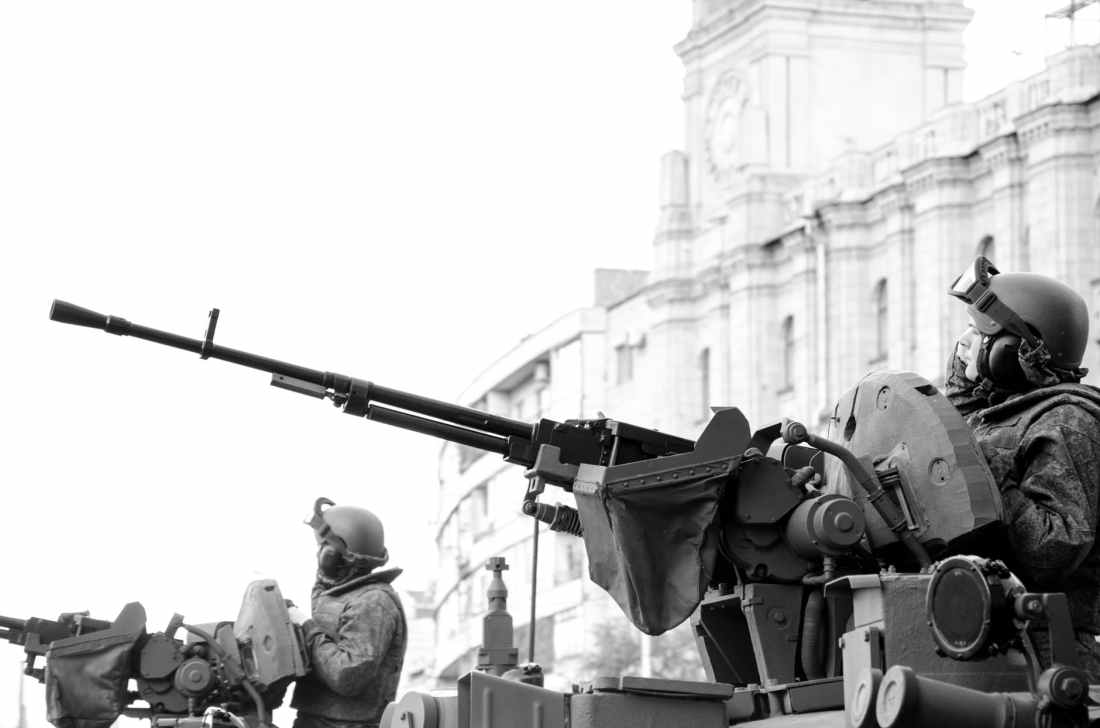 https://www.poetryfoundation.org/poems/57421/war-and-peace-56d23aeecfe57
War and Peace
In sodden trenches I have heard men speak,
Though numb and wretched, wise and witty things;
And loved them for the stubbornness that clings
Longest to laughter when Death’s pulleys creak;
And seeing cool nurses move on tireless feet
To do abominable things with grace,
Deemed them sweet sisters in that haunted place
Where, with child’s voices, strong men howl or bleat.
Yet now those men lay stubborn courage by,
Riding dull-eyed and silent in the train
To old men’s stools; or sell gay-coloured socks
And listen fearfully for Death; so I
Love the low-laughing girls, who now again
Go daintily, in thin and flowery frocks.
Source: Behind the Eyes (1921)
https://www.poetryfoundation.org/poems/57421/war-and-peace-56d23aeecfe57

 How my heart speaks