The clash of narratives

5760

https://en.oxforddictionaries.com/definition/mythos


mythos

Pronunciation /ˈmʌɪθɒs//ˈmɪθɒs/

NOUN

technical

  • 1A myth or mythology.

    ‘the Arthurian mythos’
    More example sentences
    Synonyms
    1. 1.1 (in literature) a traditional or recurrent narrative theme or plot structure.
      Example sentences
      Synonyms
    2. 1.2 A set of beliefs or assumptions about something.
      ‘the rhetoric and mythos of science create the comforting image of linear progression toward truth’
      More example sentences

We see in darkness tongues of fire.

Signs and symbols guide the route.
Love gives the soul her appetite.
Though the night is black and starless,
The inner guide is never careless.
The notes are struck, the tune is played,
Plain melodies are overlaid.
In this chant and benediction
Healing comes for desolation.
Though the passage way is narrow,
This road is the one to follow.
Struggling through the mud and mire,
We see in darkness tongues of fire.
The sacred centre of our life
Is never found without some strife.
Just then, the dark and light combine.
To create a symbol for the mind

Words cluster in beautiful groups

1.
Words are like beads on a chain
Alone they can’t take any strain.
But joined up in gold
A sentence we mould
A prayer is repeated again.

2

Words cluster in beautiful groups
Waiting for writers to stoop.
Then instead of one word
A sentence is heard,
Some call this poetry soup.

3.

Professors do not create any words,
Which from the unconscious are lured
They only critique
What you and I speak.
After conversing and writing, they’re third.

Politics and domesticity: Susan Griffin


SEO_Otmoor2017https://www.poetryfoundation.org/poems-and-poets/poets/detail/susan-griffin


https://www.poetryfoundation.org/poems-and-poets/poets/detail/susan-griffin


S Griffin

Poet Details

b. 1943
Poet, essayist, and playwright Susan Griffin was born in 1943 in Los Angeles, California. An early awareness of the horrors of World War II and her childhood in the High Sierras have had an enduring influence on her work, which includes poetry, prose, and mixed genre collections. A playwright and radical feminist philosopher, Griffin has also published two books in a proposed trilogy of “social autobiography.” Her work considers ecology, politics, and feminism, and is known for its innovative, hybrid form. Her collections in this vein include Woman and Nature: The Roaring Inside Her (1978); A Chorus of Stones: The Private Life of War (1982), which was a finalist for both the Pulitzer Prize and the National Book Critics Award, won a BABRA Award, and was a New York Times Notable Book; The Eros of Everyday Life: Essays on Ecology, Gender, and Society (1995); What Her Body Thought: A Journey into the Shadows (1999); The Book of Courtesans: A Catalog of their Virtues (2001); and Wrestling with the Angel of Democracy: On Being an American Citizen (2008). Her play, Voices (1975), won an Emmy and has been performed throughout the world. She also co-edited, with Karen Loftus Carrington, the anthology Transforming Terror: Remembering the Soul of Terror (2011). In addition to her numerous books on society and ideas, Griffin has written several volumes of poetry, including Dear Sky (1971); Like the Iris of an Eye (1976); Unremembered Country (1987), which won the Commonwealth Club’s Silver Medal for Poetry; and Bending Home: Selected and New Poems 1967-1998 (1988).
 
Griffin’s poetry is known for its minimalist style and interest in politics and the domestic. Unremembered Country has been described as a poetic mosaic of female self-discovery. “All of the poems are written in a tightly controlled, minimal style,” commented Bill Tremblay in American Book Review, “that witnesses to the most serious crises in our lives, even to the ‘unspeakable’ cruelties, while at the same time not becoming ‘another facet of the original assault.’“ Griffin’s prose collections also consider ideas of crises and feminism, and are frequently as combative as they are elegant. The magazine Ms. described Griffin’s Woman and Nature as “cultural anthropology, visionary prediction, literary indictment, and personal claim. Griffin’s testimony about the lives of women throughout Western civilization reveals extensive research from Plato to Galileo to Freud to Emily Carr to Jane Goodall to Adrienne Rich… Griffin moves us from pain to anger to communion with and celebration of the survival of woman and nature,” the reviewer concluded.

Bad mothers?

wte

https://www.poetryfoundation.org/poems-and-poets/poems/detail/51404


The Bad Mother

The bad mother wakes from dreams
of imperfection trying to be perfection.
All night she’s engineered a train
too heavy with supplies
to the interior. She fails.
The child she loves
has taken on bad habits, cigarettes
maybe even drugs. She
recognizes lies. You don’t
fool me, she wants to say,
the bad mother, ready to play
and win.
This lamb who’s gone –
this infant she is
pinioned to – does not listen,
she drives with all her magic down a
different route to darkness where
all life begins.
“The Bad Mother” from Bending Home: Selected Poems 1967-1998 by Susan Griffin. Published in 1998 by Copper Canyon Press. http://www.coppercanyonpress.org
Source: Bending Home: Selected Poems 1967-1998 (Copper Canyon Press, 1998)
Discover this poem’s context and related poetry, articles, and media.

Then why it asked my number, I forgot

I tried to put my card in the right slot
Then  why it asked my number, I forgot
The people waiting all began to moan
So I took their picture with my mobile phone.

I’m posting it on Twitter  just for fame
It’s about time I  found  some other folks to blame
I never sign a cheque nor write with pens
As my spectacles have lost their plastic lens.

I sat down on an armchair in the Bank
And  as I did I felt my spirits sink
How will I get money or pay bills?
By the way, I just made 9 new wills.

After I had  used a credit card
I went outside; I felt my morning marred
Then  suddenly  my PIN came to my mind
My face smoothed out and lost those extra lines.

I might have it tattooed onto my arm
An action like the  Nazis might   acclaim
They numbered  Jews of Europe, stamped on them
That was when the countdown was begun.

How they tried to take their dignity.
The Jews recited Kaddish quietly
They praised Lord G-d and thanked him,  giving praise
For G-d is most mysterious in his ways.

The Nazis were the first to number man.
And decorate our arms with numbers, what elan.
But now the government seems very kind.
Or else I’m stupid, mad and  blind

Numbers have their place but we need names
We’re human and live in a larger  frame
Once we were baptised   and  named to G-d
Now we’re numbers so computers hold the Rod.

For numbers need no spelling  like words do
My name is Thornthwaite, morning, how d’ye do?
It’s so difficult to spell it makes men shout.
You’re number 870 nine trillion noughts.

One day they’ll have us microchipped
They’ll herd us into lines with their strong whips.
And as we  read the Fifty Shades we see know
The forest glades are better than Soho.

Fear of cashpoints

IMG_0009IMG_0008 (1)IMG_0002IMG_0022IMG_0024IMG_0022IMG_0002IMG_0008 (1)


https://uk.finance.yahoo.com/news/third-over-80s-avoid-cash-000100929.htmlhttps://uk.finance.yahoo.com/news/third-over-80s-avoid-cash-000100929.html

I forgot the PIN for my debit card owing to trying to hurry and because I’d not used it for 3 months,.I used my credit card.They charge interest from the day you make the withdrawal and it is about 4%.They tried to charge me £25 for cancelling a cheque I had lost within the house until I gave them a choice

1 Take your  £25 and I close my account
2.Cancel the charge

They chose 2

Geoffrey Hill, a fine poet

SouthportBeach-1965[640x480

From Southport to Sarajevo

https://www.poetryfoundation.org/poems-and-poets/poets/detail/geoffrey-hill

“Known as one of the greatest poets of his generation writing in English, and one of the most important poets of the 20th century, Geoffrey Hill lived a life dedicated to poetry and scholarship, morality and faith. He was born in 1932 in Worcestershire, England to a working-class family. He attended Oxford University, where his work was first published by the U.S. poet Donald Hall. These poems later collected in For the Unfallen: Poems 1952-1958 marked an astonishing debut. In dense poems of gnarled syntax and astonishing rhetorical power, Hill planted the seeds of style and concern that he has continued to cultivate over his long career. Hill’s work is noted for its seriousness, its high moral tone, extreme allusiveness and dedication to history, theology, and philosophy. In early collections such as King Log (1968) and Mercian Hymns (1971), Hill sought “to convey extreme emotions by opposing the restraint of established form to the violence of his insight or judgment,” according to New York Review of Books critic Irvin Ehrenpreis. “He deals with violent public events. … Appalled by the moral discontinuities of human behavior, he is also shaken by his own response to them, which mingles revulsion with fascination.””

8047687_orig.jpg

Sometimes that hot waiter never boils

There’s a black  mark in the kitchen on the floor
It’s cracking with the weight of  fatal thought
I tried to get if off  with vinegar

On my kitchen, I  have got no door
But Penguin  books   about  what peasants ate
There’s a black  stain in the kitchen on the floor

I’ve got Palestinian olive oil
Oranges from Haifa, lemons bought
I  made a dressing with  wine vinegar

I  have eggs from morganatic whores
And fish enjoy their roes, which they don’t ought
There’s a black  cat in the kitchen on the floor

Sometimes that hot waiter never boils
If he’s  tipped I’ll write with him,  I hope.
I  insulate my   food with bugged cigars

Do you ask a  woman if she’s coiled?
Do you invade others in turmoil?
There’s a  sweet man in the kitchen by the door
If he’s Jesus, tell him all  and more.

The triumph of love?

C7ntS59WsAAKAut


http://www.nytimes.com/books/99/01/17/reviews/990117.17hammert.html


By LANGDON HAMMER


THE TRIUMPH OF LOVE
By Geoffrey Hill.
82 pp. Boston:
Houghton Mifflin Company. $22.


Geoffrey Hill’s ”Triumph of Love” is a book-length meditation on ”the fire-targeted century” now ending, an elegy for everyone who has burned. I say elegy, but in fact the poem is a carnival of literary kinds: it incorporates schoolboy gags, theological excursuses, radiant landscape pictures, mock litanies, epigrams, London music-hall routines and seething political satire. Hill rapidly shifts from one mode to the next as he proceeds through the poem’s 150 separate sections, some of which are as short as one line, some as long as a page and a half. The poem’s aim is to honor faith and innocence as embodied in victims of historical violence, above all the European war dead and the Jews of the Holocaust. It is an aim Hill has kept before him almost continuously since ”For the Unfallen” was published in 1959, the first of his eight books of poems. Always an exquisitely, even excruciatingly self-conscious poet, he now turns on himself with fresh intensity, interrogating his aims and means even as he defends them. One of the poem’s parodic voices (a stand-in for a public that would prefer to forget about its debts to the dead) wonders, ”What is he saying; / why is he still so angry?” The uncomprehending question is its own reply.

Hill’s work has always been difficult, a resistantly private art weighted with literary allusion. ”The Triumph of Love” is no exception, but there are ways into it, and Hill’s engagement with past literature is always a means of reflecting on public life. The title refers to the first of the Italian Renaissance poet Petrarch’s ”Trionfi,” a series of allegorical processions that describe the preparation of the poet’s soul to meet God. Hill’s poem is penitential too, but it lacks Petrarch’s allegorical machinery and the consolations of Christian doctrine that come with it. There is no climax to its agonized mental action, no definite promise of relief. Late in the poem, an impatient reader, schooled in Renaissance literature, breaks in: ”So what about the dark wood, eh? / When do we come to the dark wood?” Listing the names of World War I battle sites, Hill retorts:

We have already been sent to the dark
wood, by misdirection: Trones, Montauban,
High Wood, Delville, Mametz. We have been there,
and are there still, in a manner of speaking.

The forests of World War I are more real than the dark woods of literary tradition. We are still lost in them because we have not yet, as a culture, come to terms with the killing that was done there, and we allow it to go on elsewhere. It is a powerful claim. Hill no sooner makes it, however, than he qualifies it, reminding himself and us that the point is rhetorical, something true ”in a manner of speaking.” The next section begins: ”But only in a manner of speaking. / I was not there, nor were you.


Arduity… about difficult poetry

  • ShowImage

    All Souls CollegeWikimedia Commons

    http://www.arduity.com/toolkit/risk.html

    This is a website called Arduity which is about difficult poetry; how to understand it and has many good discussions about risk and so on.I recommend it just may make reading poetry less scary.


  • Poetic risk in difficult/innovative verse.

    Introduction.

    It can be argued that any act of creative endeavour creates a degree of risk but I feel that the making of poetry entails an intensity of risk rarely found in other forms. This is because poetry has a reputation for authenticity and honesty and also because the history of verse carries with it a strong idea of what is good and what is doggerel. Indeed it is difficult to think of another art form which has a specific genre for everything that is technically poor. Poetry’s reputation for honesty also carries the risk of poets going too far with self-exposure or with the exposure of others. There’s also those poets who defy expectations by producing something apparently at variance with what has gone before and thus run the risk of critical rejection. Finally there are poets who become more and more experimental and thus run the real risk of losing an increasing numbers of readers along the way. The following aims to look at various examples of poetic risk over the last 50 years and to consider what may behind such behaviour.

    Poems that risk themselves.

    Some poems seems to hover on the edge of collapse whilst others play with the wavering boundaries of sense and nonsense. Simon Jarvis’ ‘The Unconditional’ threatens imminent collapse by its reliance on lengthy digression to such an extent that the reader often forgets what is being digressed from and readerly exasperation is only staved off by the brilliance of the language used. Paul Celan’s later work explores the idea of a poem on the edge of itself as it explores and celebrates the limits of language.

    The Confessional Risk.

    Geoffrey Hill is not thought of as a confessional poet yet there are at least two occasions where he discloses more than the reader may be comfortable with. The first is from poem 109 in the “Triumph of Love” sequence:

    Since when has ouir ultimate reprobation
    turned (occulos tuos ad nos con-
    verte
    )on the conversion or
    reconversion of brain chemicals-
    the taking up of serotonin? I
    must confess to receiving the latest
    elements, Vergine bella, as a signal,
    mystery, mercy of these latter days.

I see another fragrant hearse.

Oh, mother, father take me back
I’ve lived the pain, I ‘ve felt the lack
I wanna see Jesus.
Take me to that  wall they  built
Let me see where blood’s been spilt
I wanna see Jesus.
Oh, take me back to where I was
The enemy may well be us,
Not Jesus.
What did all those sermons do?
Did they say he was a Jew?
Oh,Jesus.
Did he want the First Crusade
It is his blood  the priest creates
Lord Jesus.
I don’t like the way things are
I am getting tired of war
Kill Jesus.
What has human wisdom done?
From Wittgenstein to Abraham
Cripes,Jesus!
Does research improve our lives
As for grants the scholars strive?
Ask Jesus.
We may have  chemotherapy
Radiation, history.
Where’s Jesus?
You’d think that after all the years
We’d have used  up all our tears
Sweet Jesus.
Love your neighbour as yourself
Give 1% of all your wealth
Aye, Jesus.
Do what’s better, not what’s worse
I see another fragrant hearse.
It’s Jesus.
See the plastic Crucifix
See  him  dying with dry lips
Bend your knees, confess your sins
Otherwise,  the Devil wins
Not Jesus.
We destroy the good we hate
Envy writhes  and with pride mates.
The progeny will wreck the earth
Eden’s burning as drones pass.
No, Jesus.No Jesus.
Know Jesus.

By hooking onto other people’s eyes

My new doctor  can meditate for hours
So she sends the patients out to pick her flowers
When they come back their ailments have been cured
I guess it’s something in that horse manure.

Now she’s learning how to hypnotise
By hooking onto  other people’s eyes
We all pretend that we’re not really here.
But damn it all, she is so very dear.

We formed  a patient group to give advice
To doctors, which is never ever wise.
They must at least appear omnipotent
And also  be  both nasty and  pleasant

This paradox makes me hallucinate
The hand I see before me holds a plate

I still miss those voices I once heard

My doctor was a lady of great skill
She  cut my head off with a type of pill
I still miss   those  kind voices I once heard
Till she convinced me they were only birds.

My doctor had got malice in her eye.
As she demanded one patient must die.
I said to her that Jesus was enough
And it was a  mortal sin to call God’s bluff.

I told her  how a voice had said clearly
That love but not great wealth would come to me
She said “you’re bordering on offence .”
So I told her that  real numbers are quite dense

My doctor was so good at curing ills
When she died, they made her into pills.


Lonely, we must choose our final deal

After nine months comes the crisis feared;
The knowledgw of a  total,  final loss.
With woeful pain, the soul and heart are seared,
As we feel inside  the frightful cost.


The threshold of  this world   and of the new
A place to linger, liminal and long.
We cannot see new landscapes in one view.
With misperception, we risk going wrong.


We wonder as we reach the point of choice
Who will guide us when we must decide?
Shall we hear an inner, wiser voice
Or walk with indecision as our guide?


Loss brings grief; evasion does not heal.
We may gamble on a final deal

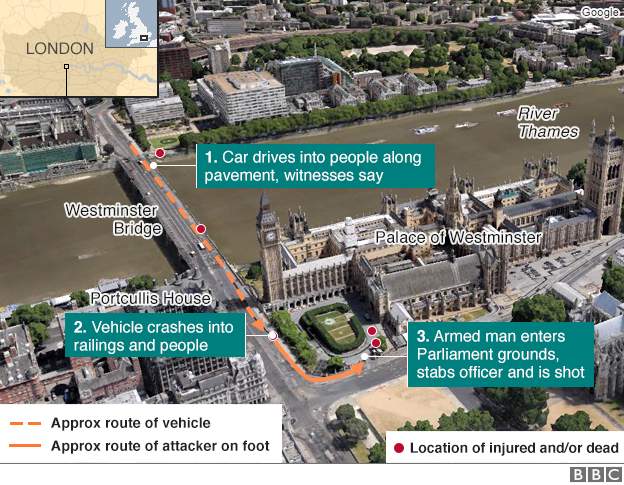
The need to look again till it makes sense.

The confusing swirl of violence broke down walls
And panic rushed  like lightening through the  gaps
I saw folk taking photos, checking maps,
Their phones gripped like a weapon that appals

We visualise what makes up our defence.
The connection to  our absent, kindly friends
The need to make a record of the end.
The need to look again till it makes sense.

A well-known numbness tries to swallow me.
My heart needs its own time to feel the pain
The world I live in is not safe, that’s plain
Say Al Jazeera and the BBC.

Our mask of vapid innocence deceives.
Hatred of this kind is misconceived.


Catastrophic visions are poor guides

In childhood, we rely on  love serene
The security of place and people makes our world.
With luck, we will not feel like babies hurled.
Into a change that shatters  what we’ve been

To see familiar places newly strange
With bloodied bodies injured or now dead.
This is not the  tale that we were read
Our inner maps  whirl, minds  flung, rearranged

Bridge, beauty iconic, loved by me.
Met old friends, we sauntered by its side.
Catastrophic  visions are poor guides
Thoughtful and attentive we will be.

Europe’s hit by  enraged fear  from men
Who feel we are the ones who injured them.


And death shall have no dominium by Dylan Thomas

poet Dylan Thomas

And death shall have no dominion.
Dead man naked they shall be one
With the man in the wind and the west moon;
When their bones are picked clean and the clean bones gone,
They shall have stars at elbow and foot;
Though they go mad they shall be sane,
Though they sink through the sea they shall rise again;
Though lovers be lost love shall not;
And death shall have no dominion.

And death shall have no dominion.
Under the windings of the sea
They lying long shall not die windily;
Twisting on racks when sinews give way,
Strapped to a wheel, yet they shall not break;
Faith in their hands shall snap in two,
And the unicorn evils run them through;
Split all ends up they shan’t crack;
And death shall have no dominion.

And death shall have no dominion.
No more may gulls cry at their ears
Or waves break loud on the seashores;
Where blew a flower may a flower no more
Lift its head to the blows of the rain;
Though they be mad and dead as nails,
Heads of the characters hammer through daisies;
Break in the sun till the sun breaks down,
And death shall have no dominion.

Composed upon Westminster Bridge, September 3, 1802

  • 194f92ee-4ecb-4c68-b528-cdf70fe828d3
Earth has not anything to show more fair:
Dull would he be of soul who could pass by
A sight so touching in its majesty:
This City now doth, like a garment, wear
The beauty of the morning; silent, bare,
Ships, towers, domes, theatres, and temples lie
Open unto the fields, and to the sky;
All bright and glittering in the smokeless air.
Never did sun more beautifully steep
In his first splendour, valley, rock, or hill;
Ne’er saw I, never felt, a calm so deep!
The river glideth at his own sweet will:
Dear God! the very houses seem asleep;
And all that mighty heart is lying still!

I backed up my computer,read a book

I did the wheelie bins, I wrote a poem
I made the beds and turned on several lights
I heard the News; my head feels like it is foam
What will happen next?Who has foresight?

The Bridge of Westminster is very fine;
But not when men fire guns at passers-by
Wordsworth wrote a poem; read it online
We thought  we  were well read; it  is a lie

By   killing two and wounding many more
The agents  wrecked their lives in evil’s thrall
They have closed again the  darkening door
Politicians  rise and evil calls.

Like Icarus fell  and no-one stopped to look
I  backed up my computer, read a book.


Emile and the claw varnish

New cats today
  • Stan realised it was time for Emile to have his annual flu jab.He stopped polishing the windows and picked up the phone.
    Hello,it’s Stan here.Can I make an appointment for Emile?
    Yes, come today if Emile has had a bath!
    Are you joking?
    Yes, the receptionist responded cheerfully.
    Actually, he did have a bath and now can swim breaststroke!
    How amazing, she said sweetly.
    Stan got out Emile’s travelling basket.He put some copies of The Independent inside in case Emile was bored.
    Here, Emile, I’m taking you for a ride in the car.kindly step into your basket,
    Can’t I sit by you and wear a seat belt?
    I fear it’s illegal.
    OK, granddad, Emile answered jauntily.He climbed into the basket and sat up staring out boldly with his great amber eyes.
    The doorbell rang.
    Hello, Annie, Would you like to come to the vet with us?
    She looked down at her violet velvet track suit and purple trainers with real gold laces.
    Yes, I’ll sit in the back with Emile.
    After ten minutes they arrived and parked the car under an elm tree.Stan carried the basket steadily not wanting the poor cat to fall in an undignified manner. Annie looked at her green nails.
    Do you like my nail varnish, Stan?
    To be honest, I prefer shell pink.
    Why is that, darling?
    It is more feminine!
    Feminine!But you can see I’m feminine!
    I like you to be even more feminine.
    Oh,yes , agreed     Emile, So do I.
    You men, she cried sweetly, never satisfied.
    I wouldn’t say that, my America, my Newfoundland!
    What’s up?Swallowed the dictionary.
    It’s a poem, actually.
    You’ve been reading again.It’s bad for you.
    Don’t you like to be my new found land?
    A bit late to ask now, she murmured seductively.
    Next moment they were in the empty waiting room.Then a man came in with a big black dog.Emile stared fiercely and the dog whimpered and lay down on the floor.
    The vet came out and asked Stan to bring Emile in.Emile gave a yell at the dog before Stan shut the door.So, said the beautiful young vet, how is pussy today.
    Emile remained silent.He’s fine,j ust needs his flu jab.muttered Stan.
    Come now, Emile come out of there.But Emile was clinging to his basket with ll his sharp claws.
    Are you afraid Emile?He asked kindly
    No, I’m not afraid, I’m just acting how vets expect cats to act.
    So Emile speaks English?
    He knows French too.
    Je t’aime Emile.
    Bedankt, madame.
    Stop showing off and get out of there, she doesn’t speak Dutch.
    Mein mutter wast immer krank,cried Emile.
    Get out now!
    Emile came out slowly and stood by this good lady.She looks a bit like Annie, he whispered.
    The vet took out a small needle and swiftly injected Emile.
    What a good boy, she sang, would you like a jelly baby?
    A jelly baby!Cats don’t eat jelly babies!
    Well, have a go!
    Emile stalked back to his basket, put on some glasses and began to read the editorial in The Independent.
    Stan was hoping to make a suggestive remark to the vet, but Annie came in.
    Hurry up, there’s a thunderstorm coming.Her nails were now pink.
    Did you change your nail varnish?
    No, the green was artificial nails!I took them off.
    Can I have some claw varnish.demanded Emile
    colour?
    I fancy teal, Emile miaowed.
    Teal!How ludicrous!
    What about red?
    Too pretentious.
    I don’t think I’ll bother then, the cat said languidly
    We men don’t have to bother about such things.
    Well, you are lucky, said Annie.
    I hate makeup and nail varnish, blow dries and manicures but I don’t feel feminine without it.
    You feel very feminine to me said Stan, running his hand softly along her forearm
    and patting her behind!
    Stan!Not here in the road!
    Why not? enquired Emile.It looks ideal to me if you go behind those bushes.
    Annie jumped into the car and drove away leaving Stan to carry Emile to the bus stop for a tedious journey home.Then she reappeared, opened the door and said,
    come on now let’s all go home.I’m sorry I drove away.I’m feeling a bit blue today.
    They got in and arrived safely home where Stan brewed a big pot of tea and let Annie sit on the sofa with her feet on  a cushion.He rubbed her head gently.Lovely, she purred.
    I like having my head stroked.So do I, said Emile loudly but alas they were too busy to hear or care.So Emile fell asleep and dreamed he was only a character in a story.

    And so so all of us.

Mamma didn’t raise no fools

Rebecca Wolff

He died before we could honor
him correctly. Candied

impulse through the brain.
Your will subverted

that’s a tree, a treatment,
a genealogy. Oddly enough if I need something

someone is sure to give it to me.
To supply me with it. Oddly enough,

it’s not about cutting slack
but about positive reinforcement

Detergent in the sense that it is

emergent

deterrent
where the nascent

meets the latent
I put my tongue in the path

dug up some chestnuts.
“We’ll keep looking

for a place for you
inside of nature”

I can’t remember how I died.
Writing something down at the time

the grave had been disturbed.
Next thing you know, I’m making

an entry in my diary: No use
letting it get cold.

You are perfect for me by Rebecca Wolff

because you’re psychic
no one else could understand me
the way you

do and

I say
Drink Me

I say it to you silently
but it calls forth in me

the water for you
the water you asked for

Real poetry which is also funny


short_hair_gallery_rush_hair_5

 From hair fashion displays 2017


https://www.poets.org/poetsorg/text/serious-art-thats-funny-humor-poetry

Quote:

Carolyn Forché, someone who has never been accused of being a funny poet, has said “irony, paradox, surrealism . . . might well be both the answer and a restatement of [Theodor] Adorno’s often quoted and difficult contention that to write poetry after Auschwitz is barbaric.” But what did the philosopher and critic Adorno mean by this fatuous statement? No poetry? Or just a very, very serious and earnest poetry? Because, let’s face it–earnestness is almost always bad art. Good art makes us think; it has more questions than answers. Often, but not always, satire does this too. But earnestness almost never does this–that’s not its job. Earnestness is comforting. It wants to hug us. And we want to be hugged sometimes. But sometimes we want to laugh while poking holes in self-righteousness and oppression, whether it be literal political oppression or oppression of a quieter sort – cultural and aesthetic oppression. Irony and satire are such a good antidote to oppression because oppression needs to be earnest (or at least look earnest) in order to be feared by those it seeks to cow. Oppression cannot work alongside irony because it believes in its own righteousness and a monolithic concept of truth that must be asserted to the oppressed with a straight face. Irony and satire are the tools by which the oppressed get to make fun of the oppressors without the oppressors getting it.

The English are rebuilding Hadrian’s Wall.

4yzxwaqvuwvoi_lPhoto by a friend.Copyright


t

The space dividing  rage and fear is small.

Vision is attenuated there.

Emotions tangle, stutter, are appalled


Homo sapiens, how wise a call?

Vision is restricted, eyes are bare

The space between the mind and fear is small.


The English are rebuilding Hadrian’s Wall.

Scottish Muslims  enter England here

Emotions jangle, stutter, are appalled


Historic acts return as do old brawls

Roman villas, altars, were they here?

Vision is restricted, eyes are shields


Why not put a  barbed wire fence around Whitehall?

Let’s divide off Wales, they asked for more!

Emotions rise and  angry are our  calls


The Scots must raise their taxes, we’re the whores.

How about a war to fund all wars?

The English are rebuilding Hadrian’s Wall.

Emotions rise as anger takes us all.