If this be love,then let me dwell alone.

If this be love,then let me feel your hate.
If you be true then let me hear your lies.
To save my heart,your message came too late.
And now my need is for the   kind and wise.
If this be marriage,let me have divorce.
If this be holy,hasten I to hell.
For love comes in its time without such force.
And of its message who are we to tell?
If this be love,then let me dwell alone.
If this be love, I’ll be forever chaste.
Your love was like a blow that broke my bones
A love that leaves in mouths a bitter taste
.
You do not love yourself and so not me.
Far away from you. I wish to be.

Intellectual perspective and humor

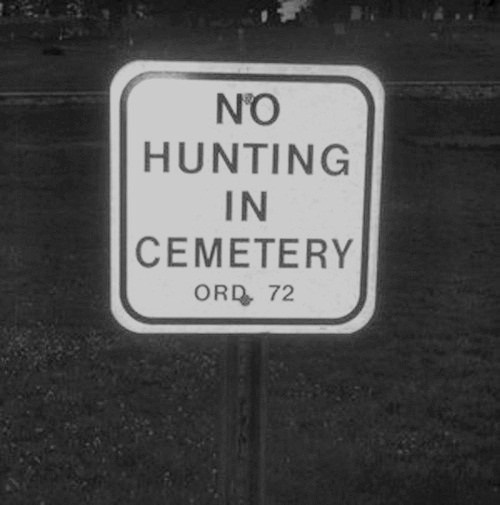
Cemetary

What is humor except crossing a boundary?
I wish I were an ivy growing on your wall
I wish I were a berry
Just about to fall
 wish I were a hazelnut
And you would break a tooth
 For my name is Sally Anne
and not, and not,not just  Ruth
Image

Stan is feeling very odd

Chiffchaff_1

Photo by Mike Flemming.Copyright

Stan is feeling very odd

He ate a piece of rancid cod.

He hates to throw out bits of food,

but now his inside’s stewed.

He feels sick and tired of life.

He hates the housework and his wife.

He’s tired of cooking cakes for her.

And he dislikes her hair.

He does like talking to his cat.

They always have a friendly chat.

And he likes teaching tricks and jokes

And see….his ears do smoke!

He went to see a Doctor Brown

Who wore a bright red dressing gown.

He asked him why he had no suit.

And only wore one boot.

Dr Brown said, Look here,you!

I’m the doctor,how do you do?

So Stan said “I am feeling sick.

The world whirls far too quick”

“Travel sickness is not nice,

The world spins once,then you spin twice.

I’ll give you some pink medicine,

See how you get on.”

“I want to get off, not get on.

My time on earth is surely done.

I want to hear angelic choirs

Instead of Mary’s tyres.”

“I think you’re very melancholy.

I prefer my patients to be jolly.

Please take Prozac ere you come”

“I’ve already taken twenty one,

But I still feel so black and grey.

I can’t tell if it’s night or day.”

Oh,help me doctor,it’s that time,

When poets run out of rhymes.”

“Now look her, Stan”the doctor said,

“I think that you should go to bed.

A little rest will do you good

And renovate your blood.”

“But who will bake the cakes and bread.

And make sure that the cat’s not dead?

And who will clean the purple bath

And sweep the garden path?”

So Doctor Brown began to cry.

He’s not much good but he does try.

So Stan went home and had a rest,

And ate some buttered toast.

Some days the world is too much there,

But other days it seems more square.

So Stan feels he can cope with life

And even with his wife!


About difficult poems


http://www.arduity.com/

Extract from Arduity website post

Paul Celan’s Todtnauberg.

Many, many people think of this as the most important poem of the 20th century, it records the meeting between Paul Celan and Martin Heidegger in 1966. Heidegger is becoming an increasingly villified figure as the depths of his anti-Semitism become more apparent but he was certainly the most influential European philosopher of his time. Celan, the finest poet anywhere in 1966, was an admirer of Heidegger’s work but remained angry and disappointed about the philosopher’s silence about his membership of the Nazi party prior to and during WWII. Celan visited Heidegger at his cabin in Todtnauberg and they spent the day together. The critical debate that has simmered away ever since centres on whether the poem records a reconciliation or further estrangement between the two. Of course this isn’t helped by Celan’s use of ambiguity:

    Arnica, eyebright, the
    draft from the well with the
    star-die on top,

    in the 
    Hütte

    written in the book
    -whose name did it record
    before mine?-
    in this book
    the line about
    a hope, today,
    for a thinker's 
    word

    to come
    in the heart

    forest sward, unleveled
    orchis and orchis, singly

    crudeness, later, while driving,
    clearly,

    he who drives us, the man
    he who also hears it,

    the half-
    trod log-
    trails on the highmoor.

    humidity,
    much.

Given the complexity of the above, the best response is to acknowledge that we will never (ever) know with confidence what happened when these two met and walk away. This is the default arduity position but in this instance I feel forced to side with Pierre Joris (whose translation this is) and others in ‘reading’ this meeting as a complete failure. Being unable to read German, I can’t comment on the accuracy of the translation but I am aware of the work and views of both men and cannot imagine how any kind of reconciliation could take place primarily because Heidegger was incapable of acknowledging his personal guilt.

Joris has written a fascinating description of the work that this translation entailed. He draws attention to Celan’s use of the word ‘waldwasen’ which he translates as ‘forest sward’ but ‘wasen’ also means the land where the knacker guts and buries livestock. These two men would therefore be walking over the bodies of the dead victims of the Holocaust. The rest of the Joris thesis is too complex to describe in detail but has persudaded me. In all fairness, I don’t want the meeting to have been successful primarily because Celan had dedicated his life to bearing witness to/for the victims of the Holocaust but also because I don’t trust anything that James K Lyons, the main proponent of reconciliation, puts forward.

In summary, it is important that we should know more about this meeting but also acknowledge that we never will. This shouldn’t however stop us from paying attention to the poem.


Love, tiny like a grain of sand

Already it’s the last day of the month.

That is  when I  think of you
Walking by the river,the path green
With moss and small grass blades.
Is that your shadow across the window?
I still expect you though you’re long gone.
Damply trudging through the meadow,
Hand in hand we never noticed the cold,
Though my fingers were painful with chilblains.
I don’t see you any more,nor the chilblains.
Would I walk on knives for you
Like the girl in the fairytale,No.
But almost anything else.
Sand runs through my fingers,
I’m a human timer,though not for eggs,
But for love,my time is running out.
Though even in a moment one can receive love
In the smile of a stranger.
Why should love not be short
Like a grass blade?
Or tiny like a grain of sand?
Dante only saw Beatrice once,
But it sustained his life for ever.
That’s worth dwelling on.

Leave a little space for grace

When you speak,leave a little space.
And I’ll leave a little space before I respond.
A space where my mind can gather in her nets
to see what your sentences draw up.

The inner seas call out.
They ebb and flow
Tossing treasures onto the shore,like
Sea shells where once your ancestors dwelt.

Sometimes it’s good to walk that shore line
with an empty mind.
The vast space of the sky and ocean
can be freeing.

Space for dreamers’ boats to sail.
to unknown and alluring places.
Is the wind fair?
It seems partly chance
and partly readiness.

When you speak to me,
I’ll wait a moment;
Then, in that space, my words will rise
to engage and mingle with yours.
Something new is born.-
Our creation.

Leave a little space,
A little space between us.
Space is the place for grace,
for the spirit to enter us.

Leave a little space for the unknown, the unborn,the waiting.
We must spare a little space for creation
In between our minds.
The in-between is where life start

Askance:of unknown origin

P1000006

Blown away

 ???????????????If I go I won’t tell you.

I’ll just disappear one day.

Like when a cigarette ,which seemed so long,

suddenly has become smaller

and you never noticed it

because you were talking

about the meaning of life

while life was somewhere else

blown away with your smoke

into the sky

and then dispersed

never quite visible again

but still floating on the breeze

hoping to be caught

in a butterfly net

but unable to communicate

except by flying.

If I go it will not be today

but it will be an ordinary day

no one will realise

that it’s that day

that the bird flies

from her nest

to go to a new place

only seeing the deserted nest

he realises,

my bird has flown

The history of free verse

http://www.webexhibits.org/poetry/explore_famous_free_background.html

Extract

Ancient roots.

While free verse seems modernistic, its roots go back to medieval alliterative verse and even to the Bible. The Bible’s “Song of Songs” is written in what we would now call free verse. Many of the earliest Ancient Greek poets wrote in lines unmeasured by syllables and beat while they were developing what would become lyric poetry. In later Ancient Greece and Rome, however, fixed forms such as the ode, epic, and a variety of measured lyric poetry ruled the literary land.


Easter 1916 W.B.Yeats

A famous poem[:A terrible beauty is born]
I have met them at close of day
Coming with vivid faces
From counter or desk among grey
Eighteenth-century houses.
I have passed with a nod of the head
Or polite meaningless words,
Or have lingered awhile and said
Polite meaningless words,
And thought before I had done
Of a mocking tale or a gibe
To please a companion
Around the fire at the club,
Being certain that they and I
But lived where motley is worn:
All changed, changed utterly:
A terrible beauty is born.
That woman’s days were spent
In ignorant good-will,
Her nights in argument
Until her voice grew shrill.
What voice more sweet than hers
When, young and beautiful,
She rode to harriers?
This man had kept a school
And rode our wingèd horse;
This other his helper and friend
Was coming into his force;
He might have won fame in the end,
So sensitive his nature seemed,
So daring and sweet his thought.
This other man I had dreamed
A drunken, vainglorious lout.
He had done most bitter wrong
To some who are near my heart,
Yet I number him in the song;
He, too, has resigned his part
In the casual comedy;
He, too, has been changed in his turn,
Transformed utterly:
A terrible beauty is born.
Hearts with one purpose alone
Through summer and winter seem
Enchanted to a stone
To trouble the living stream.
The horse that comes from the road,
The rider, the birds that range
From cloud to tumbling cloud,
Minute by minute they change;
A shadow of cloud on the stream
Changes minute by minute;
A horse-hoof slides on the brim,
And a horse plashes within it;
The long-legged moor-hens dive,
And hens to moor-cocks call;
Minute by minute they live:
The stone’s in the midst of all.
Too long a sacrifice
Can make a stone of the heart.
O when may it suffice?
That is Heaven’s part, our part
To murmur name upon name,
As a mother names her child
When sleep at last has come
On limbs that had run wild.
What is it but nightfall?
No, no, not night but death;
Was it needless death after all?
For England may keep faith
For all that is done and said.
We know their dream; enough
To know they dreamed and are dead;
And what if excess of love
Bewildered them till they died?
I write it out in a verse—
MacDonagh and MacBride
And Connolly and Pearse
Now and in time to be,
Wherever green is worn,
Are changed, changed utterly:
A terrible beauty is born.

Plastic heart

My plastic heart has cracked across the base
And now for rubber I beseech my love.
For plastic organs  do not fit this case
And  live ones are too sensitive to shove.


But rubber intermediate appears
It will not crack or  splinter when I grieve
Not will it shiver when you’re near.
Nor shudder when you once again deceive.

Since it was you that  broke this little one
So sudden and so quickly did you act
My feelings and emotions are  quite gone
I recognise that you have  little tact

Oh,make us out of common stuff,dear Lord.
And , from your kingdom, pray I’m not debarred


Slant rhyme

PTDC0516


http://literarydevices.net/half-rhymes

That is no country for old men.The young
In one another’s arms, birds in the trees –
Those dying generations – at their song,
The salmon-falls, the mackerel-crowded seas,
Fish, flesh, or fowl, commend all summer long
Whatever is begotten, born, and dies.
Caught in that sensual music all neglect
Monuments of unageing intellect.

(W. B. Yeats, “Sailing to Byzantium”)

Real Presence

When we absent ourselves from presence in this life
When we dwell more on pictures in our minds
It neither matters if  we wish for strife
Or whether they fill needs of better kind.

We know that wish fulfilment comes in dreams
And also in our fantasies by day
When anxious worry fills our mind with schemes
Guilt and shame impede us from our play.
Creative thought requires the loss of self,
And needs our empty soil to plant its gifts
So throw out selfish fancies for this wealth
We’ll et ourselves  go slow so mind can shift
To waste our days in suffering or false pleasure
Will lose for us this vital, priceless treasure

Common

Common [ from Google]

ˈkɒmən/
adjective
adjective: common; comparative adjective: commoner; superlative adjective: commonest
  1. 1.
    occurring, found, or done often; prevalent.
    “salt and pepper are the two most common seasonings”
    antonyms: unusual, rare
    • (of an animal or plant) found or living in relatively large numbers; not rare.
      “you might spot less common birds such as the great spotted woodpecker”
    • denoting the most widespread or typical species of an animal or plant.
      “the common gull”
    • ordinary; of ordinary qualities; without special rank or position.
      “the dwellings of common people”
      synonyms: ordinary, normal, typical, average, unexceptional, run-of-the-mill, plain, simple

      “he gained a massive following among the common folk”
    • (of a quality) of a sort or level to be generally expected.
      “common decency”
    • of the most familiar type.
      “the common or vernacular name”
  2. 2.
    shared by, coming from, or done by two or more people, groups, or things.
    “the two republics’ common border”
  3. 3.
    BRITISH
    showing a lack of taste and refinement supposedly typical of the lower classes; vulgar.
    “she’s so common”
    antonyms: refined, noble
  4. 4.
    GRAMMAR
    (in Latin, Dutch, and certain other languages) of or denoting a gender of nouns that are conventionally regarded as masculine or feminine, contrasting with neuter.
    • (in English) denoting a noun that refers to individuals of either sex (e.g. teacher ).
  5. 5.
    PROSODY
    (of a syllable) able to be either short or long.
  6. 6.
    LAW
    (of a crime) of lesser severity.
    “common assault”
noun
noun: common; plural noun: commons; noun: right of common; plural noun: rights of common
  1. 1.
    a piece of open land for public use.
    “we spent the morning tramping over the common looking for flowers”
  2. 2.
    BRITISHinformal
    common sense.
  3. 3.
    (in the Christian Church) a form of service used for each of a group of occasions.
  4. 4.
    ENGLISH LAW
    a person’s right over another’s land, e.g. for pasturage or mineral extraction.
Origin
Middle English: from Old French comun (adjective), from Latin communis .

Common sense [Cambridge Dictionary]

IMG_0105

“Common sense” in British English

See all translations

common sensenoun [U]

UK   /ˌkɒm.ən ˈsens/ US   /ˌkɑː.mən ˈsens/

B1 the basic level of practical knowledge and judgmentthat we all need to help us live in a reasonable and safeway:Windsurfing is perfectly safe as long as you have/use somecommon sense.a matter of common sense

expend iconexpend iconMore examples

expend iconexpend iconThesaurus

commonsensical

adjective UK   /ˌkɒm.ənˈsen.sɪ.kəl/ US   /ˌkɑː.mən-/
He described the report as “rigorous and commonsensical”.
(Definition of common sense from the Cambridge Advanced Learner’s Dictionary & Thesaurus © Cambridge University Press)

What God endowed the owl with such excess

The owl can see with wide and narrow view
Focuses  both poets and artists knew.
The broad sweep on the canvas makes a place
Where details and designs can have their space.

What God endowed the owl with such excess;
When all her progeny enjoy such   bliss?
 I think,  where is the snake with frightening hiss?
What startling accident  created this?

Eagles,hawks and owls must kill to eat.
No blandishments nor kindness make them sweet.
What God could make an Eden this deceit;
Where lambs are snatched up while their mothers bleat

So God himself destroys to fill his leisure;
Such fearsome revelations show his measure

Break it,brexit,yah!

From the bus today,
To the Urgent Care Centre,
Clouds rushed like scared mice.

Humid, I sweated
They said it’s  the ligaments
What  strange word  is that?

Waiting for an X ray
Requiescat in pace
The clouds darkened.

The  coffee machine
Stole my money,gave no change
People  numb  yet smiled

We could go there days;
Nights in the churchyard by yew
Eat in McDonalds

Dropping out  of life
Will  make new our perspectives.
See from the  worm’s view.

In my selfie now
My eyes gleam like a lighthouse.
Whom have I  rescued?

Pass the news along.
Love shared is  a better way
If we can bear  its risks.

The bus-driver spoke
Be careful, he said to me.
Break it,brexit,yah!

Be  very afraid
Sphinxes may  begin to speak
And someone will pay.

Out of Europe?


4288When we think of the riots in 2011 it was clear that people were angry about the political scene here.Many were given longer than usual jail sentences.Of course some were criminals and deserved that.But did the government  not realise  people were getting more and more angry.I believe it was a vote against  the elite not really a vote against Europe.And it is self destructive but  sometimes people don’t care.
Dover Beach by Matthew Arnold

P1000310


A famous and appropriate poem from  the Poetry Foundation website

Dover Beach
The sea is calm tonight.
The tide is full, the moon lies fair
Upon the straits; on the French coast the light
Gleams and is gone; the cliffs of England stand,
Glimmering and vast, out in the tranquil bay.
Come to the window, sweet is the night-air!
Only, from the long line of spray
Where the sea meets the moon-blanched land,
Listen! you hear the grating roar
Of pebbles which the waves draw back, and fling,
At their return, up the high strand,
Begin, and cease, and then again begin,
With tremulous cadence slow, and bring
The eternal note of sadness in.
Sophocles long ago
Heard it on the Ægean, and it brought
Into his mind the turbid ebb and flow
Of human misery; we
Find also in the sound a thought,
Hearing it by this distant northern sea.
The Sea of Faith
Was once, too, at the full, and round earth’s shore
Lay like the folds of a bright girdle furled.
But now I only hear
Its melancholy, long, withdrawing roar,
Retreating, to the breath
Of the night-wind, down the vast edges drear
And naked shingles of the world.
Ah, love, let us be true
To one another! for the world, which seems
To lie before us like a land of dreams,
So various, so beautiful, so new,
Hath really neither joy, nor love, nor light,
Nor certitude, nor peace, nor help for pain;
And we are here as on a darkling plain
Swept with confused alarms of struggle and flight,
Where ignorant armies clash by night.
Discover this poem’s context and related poetry, articles, and media.

Fuzzy logic is good

Fuzzy logic as defined at the site above

  •  

Fuzzy logic is an approach to computing based on “degrees of truth” rather than the usual “true or false” (1 or 0) Boolean logic on which the modern computer is based.

The idea of fuzzy logic was first advanced by Dr. Lotfi Zadeh of the University of California at Berkeley in the 1960s. Dr. Zadeh was working on the problem of computer understanding of natural language. Natural language (like most other activities in life and indeed the universe) is not easily translated into the absolute terms of 0 and 1. (Whether everything is ultimately describable in binary terms is a philosophical question worth pursuing, but in practice much data we might want to feed a computer is in some state in between and so, frequently, are the results of computing.)

Fuzzy logic includes 0 and 1 as extreme cases of truth (or “the state of matters” or “fact”) but also includes the various states of truth in between so that, for example, the result of a comparison between two things could be not “tall” or “short” but “.38 of tallness.”

Fuzzy logic seems closer to the way our brains work. We aggregate data and form a number of partial truths which we aggregate further into higher truths which in turn, when certain thresholds are exceeded, cause certain further results such as motor reaction. A similar kind of process is used in artificial computer neural network and expert systems.

It may help to see fuzzy logic as the way reasoning really works and binary or Boolean logic is simply a special case of it.

An error

DSCF0228 2

A garden

I once read that writers throw away  90% of what they  produce.I can understand that now as some days I have to write a lot of not very good stuff until by the evening I suddenly find my voice.Unfortunately I left all the earlier attempts here!

A state which cuts off love and grace.

A hermit fell in love with my face
Can a problem  like this be embraced?
He looked at  my eyes
Till he was advised
Staring too much causes rage.

The real problem is hermits need space
They prefer distance to an embrace.
So they live in a dream
A  fantasised   scene.
A state which cuts off  love and grace.

Like an animal  once subject to abuse
They wander on the edge as they muse
We must look at them slantwise
Not argue when they fantasise
Run away when they blow their own fuse.


Finally, negative numbers and imaginary numbers

http://betterexplained.com/articles/a-visual-intuitive-guide-to-imaginary-numbers/

Quote from the  above link:Negatives were considered absurd, something that “darkened the very whole doctrines of the equations” (Francis Maseres, 1759). Yet today, it’d be absurd to think negatives aren’t logical or useful. Try asking your teacher whether negatives corrupt the very foundations of math.

What happened? We invented a theoretical number that had useful properties. Negatives aren’t something we can touch or hold, but they describe certain relationships well (like debt). It was a useful fiction.

Rather than saying “I owe you 30” and reading words to see if I’m up or down, I can write “-30” and know it means I’m in the hole. If I earn money and pay my debts (-30 + 100 = 70), I can record the transaction easily. I have +70 afterwards, which means I’m in the clear.

The positive and negative signs automatically keep track of the direction — you don’t need a sentence to describe the impact of each transaction. Math became easier, more elegant. It didn’t matter if negatives were “tangible” — they had useful properties, and we used them until they became everyday items. Today you’d call someone obscene names if they didn’t “get” negatives.


Transcendental: the meaning

transcendental
ˌtransɛnˈdɛnt(ə)l,ˌtrɑːn-/
adjective
adjective: transcendental
  1. 1.
    relating to a spiritual realm.
    “the transcendental importance of each person’s soul”
    • relating to or denoting Transcendentalism.
  2. 2.
    (in Kantian philosophy) presupposed in and necessary to experience; a priori.
  3. 3.
    MATHEMATICS
    (of a number, e.g. e or π) real but not a root of an algebraic equation with rational coefficients.
    • (of a function) not capable of being produced by the algebraical operations of addition, multiplication, and involution, or the inverse operations.
Origin
early 17th century: from medieval Latin transcendentalis (see transcendent).

Another look at the transcendental number e

1yqum52oyl9ai_l.jpg

https://betterexplained.com/articles/an-intuitive-guide-to-exponential-functions-e/

Here is an extract from the above site which I recommend if you’d like to learn a bit more about why people enjoy mathematics which can be boring if it is just long v= calculations

“Describing e as “a constant approximately 2.71828…” is like calling pi “an irrational number, approximately equal to 3.1415…”. Sure, it’s true, but you completely missed the point.:

Pi is the ratio between circumference and diameter shared by all circles. It is a fundamental ratio inherent in all circles and therefore impacts any calculation of circumference, area, volume, and surface area for circles, spheres, cylinders, and so on. Pi is important and shows all circles are related, not to mention the trigonometric functions derived from circles (sin, cos, tan).

e is the base rate of growth shared by all continually growing processes. e lets you take a simple growth rate (where all change happens at the end of the year) and find the impact of compound, continuous growth, where every nanosecond (or faster) you are growing just a little bit.

e shows up whenever systems grow exponentially and continuously: population, radioactive decay, interest calculations, and more. Even jagged systems that don’t grow smoothly can be approximated by e.

Just like every number can be considered a scaled version of 1 (the base unit), every circle can be considered a scaled version of the unit circle (radius 1), and every rate of growth can be considered a scaled version of e (unit growth, perfectly compounded).”


Aphorisms

Rhyme doesn’t exist. It’s just a  wordy twist

Time won’t desist.I feel I see, I missed.

My mind’s made up, don’t confuse me  with a painted woman.

Talk is deep. Until you  try to toy her.

Forsake my advice — I  do

Advice is free but action is all

Never imitate virgins.

Never use  laptops as trays.

I got lost in oughts. It was unfamiliar territory.They call it Ethics apparently

Sure, I’d love to help you shout … now, which  day did you make an enemy?

I would like to slip into something more comfortable – like a coma.Did you bring a brick?

I started with nothing, and I still have most of it.One day I’ll invent zero.That will make my name.

Ever stop to think, and forget you can walk at the same time?

There is no dance without the dancers.And an audience