Mihalyi Cskizentmihalyi

Mihalyi was a saint of sorts;

he improved, with his search for understanding,

the lives of so many yearning writers;

the lame in spirit heard his Zen-like words.

He could not have imagined the journey

From Hungary to Zürich.

From Zürich to Chicago

A glimpsed mandala led to the heart of the impossible image

How did he learn to trust the flow?

The Rhine flowing down to the North Sea

May start as some minute spring

At the confluence of the gravity of water and earth.

And those then who have cast their nets into that sea

May bring in treasures not found in the business of cities.

At the first sighting, the image seemed hazy

Then the words began to flow like current through a wire.

Like a river cutting slowly through rocks of marble,

like an unknown sage from the Himalayan Alps

who had kissed the lips of his muse more than once

As she floated like a ghost; no, more like music

Tracing concentric spheres into the air

Till the universe was singing.

What was most human was his appetite, his love.

Touch the hem of his garment, follow your flow

Cut your path through the hard darkness until you find

The sunlit sea you were made to swim in

like a fish in its own sphere.

Symbols of our darker selves

I’d love to ride on a tiger

Or just admire its stripes from afar.
I’d love to see the pride of the lions
Or the eyes of a handsome cougar.
But who wants to admire houseflies
And other insects or pests?
A worm may not be an insect
But I’ll throw them in with the rest.

Lions and tigers can kill us
Yet we admire their strength
But who admires mosquitoes
As they sweat in their tropical tents?
And when we look for a simile
Or a symbol or metaphor,
If you want a symbol for cruelty and harm-
That’s what insects are for.

The smallness and the cunning
As they slip in right under your clothes,
And bite you on your most private parts.
Where, nowadays, no-one else goes!
That makes us fear and hate them
But they are just doing their job
That is what they are made for
By their creator, Lord God.

God wants them to remind you
You aren’t so invulnerable
So he may send a tiger to eat you.
Gnats  so  innumerable.
St.Francis made friends with the birds
And with the wild animals too.
But which Saint made friends with the insects
Which live in this great earthly Zoo?

Will you be the volunteer holy one
Who befriends the hornets and fleas?
Will you tolerate their sharp sniping
As you try to tempt down the bees?
Will you preach such honey filled sermons
That spiders and beetles will flock,
And none of these insects will sting us again,
When they are tamed by you eloquent talk?

You’ll be the Patron  of Envy,
The knife sticking into the heart.
You’ll be the Patron of Rage and of Malice.
I’ll be relieved when your new Mission starts

My hand on your face,

As we come nearer,
I feel your warmth.
Warmth draws me in
I see you here.
I touch you tenderly.
My hand
on your face,
on your skin,
acknowledges your being.
At this boundary of the world and you,
we touch.
I feel that peaceful breath,
the spirit, the wholeness of the flesh.
Touching gently,
we acknowledge the Otherness
the holiness of life itself,
in the form of the Beloved.

A new disease? Halitophobia

ffbd3-duck2bdrawing2b001
halitophobia
A pervasive fear of having bad breath or an exaggerated fear of having halitosis. Some halitophobics avoid social activities and live in a state of self-enforced solitude.When dealing with the problem of halitosis or with the halitosis patient, it is important to distinguish between genuine halitosis and pseudo-halitosis.

Genuine halitosis can be verified when the breath malodor is an actual problem that can be easily diagnosed either by organoleptic or by physic-chemical processes. Pseudo-halitosis exists when the oral malodor does not exist; however, the patient is convinced that he or she has it.

If after successful treatment for either genuine halitosis or pseudo-halitosis, the patient still believes that he or she has halitosis, then the diagnosis is termed halitophobia.

This simple classification system includes corresponding treatment requirements and allows the clinician to differentiate between a pathological and a psychological condition.

Inhalation

From online dictionary
inhalation
ɪnhəˈleɪʃ(ə)n/
noun
noun: inhalation; plural noun: inhalations
  1. the action of inhaling or breathing in.
    “the inhalation of airborne particles”
    • MEDICINE
      the inhaling of medicines or anaesthetics in the form of a gas or vapour.
    • MEDICINE
      a preparation to be inhaled in the form of a vapour or spray.
Origin
early 17th century: from medieval Latin inhalatio(n- ), from inhalare ‘inhale’.

Starting the next line

and I am starting the next line

even though my mind is blank

walking into a bog or a meadow

trusting myself to find

the rest of the sentence

and the next one

and so I am never blocked

or always blocked,if you like

it seems odd but it works

like solving a problem unprepared

in a lecture room in front of

100 students, my reason being

it’s boring to reproduce

and to do it right the first time

what do you think?


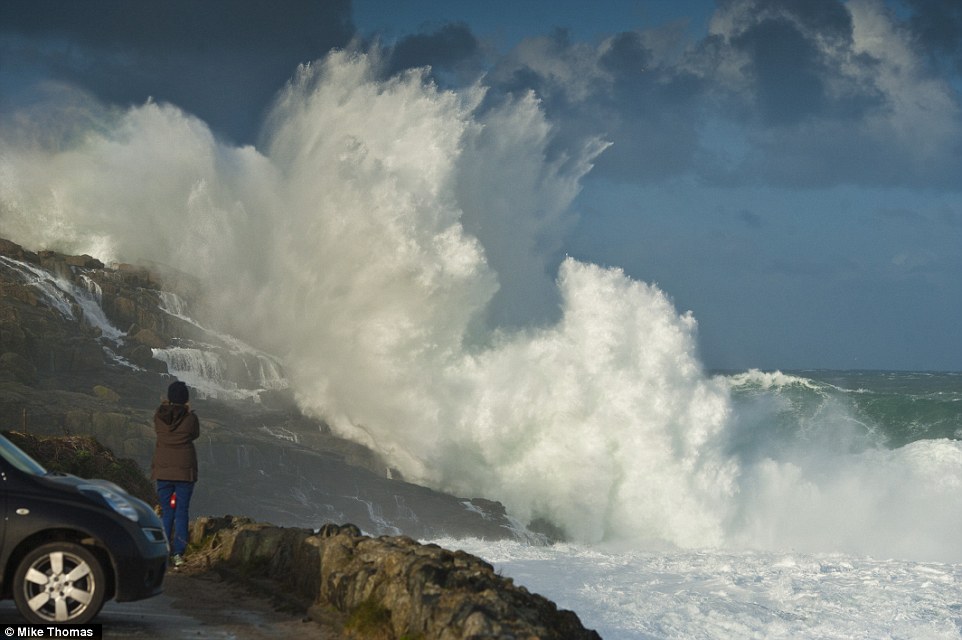
The force that generates the waves

The force that generates the waves

The foe who stimulates our rage.

The  fierceness of the hurricane.

The flash  floods  and  the  lashing rains


These dangerous forces  we each know,

Dwell within as passions flow.

Rage and hate and jealous minds,

Make tempests   cruel and unkind.


Is there a  brief moment of  choice,

To stop us heeding instincts’ voice?

Are we  helpless in red mist

As  we clench our naked fist?


To  kill our foes  is  tempting but

Do we need what they have brought?

Do we need to add their view

When we determine what to do?


Bite your lip and count to ten

Listen hard especially when

The   stormy rage grips hard and tight

And tempts us into yet more fights


Since the first cities were made

Men have fought for land and trade.

Is it possible to live

With a life alternative?


With the eye of predator

Wily brain and weapons more,

Men can kill without much thought

And  say their gods tell them they ought.


We need to build  a channel clear

Through which can flow our rage and fear.

Let not the anger claim your arm

But seek instead for spirit’s balm.


Poem by Rimbaud

from Rimbaud: Complete Works, Selected Letters, a Bilingual Edition

Translated by Wallace Fowlie and revised by Seth Whidden

Mémoire
I

L’eau claire; comme le sel des larmes d’enfance,
l’assaut au soleil des blancheurs des corps de femmes;
la soie, en foule et de lys pur, des oriflammes
sous les murs dont quelque pucelle eut la défense;

l’ébat des anges;—non…le courant d’or en marche,
meut ses bras, noirs, et lourds, et frais surtout, d’herbe. Elle
sombre, avant le Ciel bleu pour ciel-de-lit, appelle
pour rideaux l’ombre de la colline et de l’arche.

II

Eh! l’humide carreau tend ses bouillons limpides!
L’eau meuble d’or pâle et sans fond les couches prêtes.
Les robes vertes et déteintes des fillettes
font les saules, d’où sautent les oiseaux sans brides.

Plus pure qu’un louis, jaune et chaude paupière
le souci d’eau—ta foi conjugale, o l’Epouse!—
au midi prompt, de son terne miroir, jalouse
au ciel gris de chaleur la Sphère rose et chère.

III

Madame se tient trop debout dans la prairie
prochaine où neigent les fils du travail; l’ombrelle
aux doigts; foulant l’ombelle; trop fière pour elle
des enfants lisant dans la verdure fleurie

leur livre de maroquin rouge! Hélas, Lui, comme
mille anges blancs qui se séparent sur la route,
s’éloigne par delà la montagne! Elle, toute
froide, et noire, court! après le départ de l’homme!

IV

Regret des bras épais et jeunes d’herbe pure!
Or des lunes d’avril au cœur du saint lit! Joie
des chantiers riverains à l’abandon, en proie
aux soirs d’août qui faisaient germer ces pourritures.

Qu’elle pleure à présent sous les remparts! l’haleine
des peupliers d’en haut est pour la seule brise.
Puis, c’est la nappe, sans reflets, sans source, grise:
un vieux, dragueur, dans sa barque immobile, peine.

V

Jouet de cet œil d’eau morne, Je n’y puis prendre,
oh! canot immobile! oh! bras trop courts! ni l’une
ni l’autre fleur: ni la jaune qui m’importune,
là; ni la bleue, amie à l’eau couleur de cendre.

Ah! la poudre des saules qu’une aile secoue!
Les roses des roseaux dès longtemps dévorées!
Mon canot, toujours fixe; et sa chaîne tirée
au fond de cet œil d’eau sans bords,—à quelle boue?

Memory
I

Clear water; like the salt of childhood tears,
the assault on the sun by the whiteness of women’s bodies;
the silk of banners, in masses and of pure lilies,
under the walls a maid once defended;

the play of angels;—no…the golden current on its way,
moves its arms, black, and heavy, and above all cool, with grass. She
dark, before the blue Sky as a canopy, calls up
for curtains the shadow of the hill and the arch.

II

Ah! the wet surface extends its clear broth!
The water fills the prepared beds with pale bottomless gold.
The green faded dresses of girls
make willows, out of which hop unbridled birds.

Purer than a louis, a yellow and warm eyelid
the marsh marigold—your conjugal faith, o Spouse!—
at prompt noon, from its dim mirror, vies
with the dear rose Sphere in the sky grey with heat.

III

Madame stands too straight in the field
nearby where the filaments from the work snow down; the parasol
in her fingers; stepping on the white flower; too proud for her
children reading in the flowering grass

their book of red morocco! Alas, He, like
a thousand white angels separating on the road,
goes off beyond the mountain! She, all
cold and dark, runs! after the departing man!

IV

Longings for the thick young arms of pure grass!
Gold of April moons in the heart of the holy bed! Joy
of abandoned boatyards, a prey
to August nights which made rotting things germinate.

Let her weep now under the ramparts! the breath
of the poplars above is the only breeze.
After, there is the surface, without reflection, without springs, gray:
an old man, dredger, in his motionless boat, labors.

V

Toy of this sad eye of water, I cannot pluck,
o! motionless boat! o! arms too short! neither this
nor the other flower: neither the yellow one which bothers me,
there; nor the friendly blue one in the ash-colored water.

Ah! dust of the willows shaken by a wing!
The roses of the reeds devoured long ago!
My boat still stationary; and its chain caught
in the bottom of this rimless eye of water,—in what mud?

Rimbaud wrote all his work before he was 21

4d331670-f57c-0132-f116-0ed54733f8f5

“A poet makes himself a visionary through a long, boundless, and systematized disorganization of all the senses. All forms of love, of suffering, of madness; he searches himself, he exhausts within himself all poisons, and preserves their quintessences. Unspeakable torment, where he will need the greatest faith, a superhuman strength, where he becomes all men the great invalid, the great criminal, the great accursed–and the Supreme Scientist! For he attains the unknown! Because he has cultivated his soul, already rich, more than anyone! He attains the unknown, and if, demented, he finally loses the understanding of his visions, he will at least have seen them! So what if he is destroyed in his ecstatic flight through things unheard of, unnameable: other horrible workers will come; they will begin at the horizons where the first one has fallen!”
Arthur Rimbaud

8425762_7d25612079_a

“In the morning I had a look so lost, a face so dead, that perhaps those whom I met did not see me.”

Une Saison En Enfer

Rimbaud was a 19th century poetic prodigy whose tempestuous relationship with the poet Paul Verlaine inspired Verlaine to try and shoot him. Rimbaud wrote only in his youth — he stopped entirely when he was 21.

In between two rain drops

Some evenings, the sky turned  pink

We were happy, lying in the grass

watching the sun set,

arms around each other.

Seemed like eternal life had come

Earlier than forecast
.
Those weathermen are too often wrong!

They need new training.

But, forever,

I’ll remember you ,sweetheart,

in that timeless moment

in between two raindrops,

in between two tears.