We need to trust the world before we can see

tWeeds or flowers I have become interested in virtue and perception.It began when I read  a little Aristotle about virtue being a habit.That was quite recent.Before that for many years I believed virtuous acts would follow from being able to perceive well.But when we are fraught our minds and eyes tighten up and so we perceive only what may be a danger to us.To perceive others well we need to be in a position to trust others and we need to feel secure.How is this possible?From my studies I read that our ability to trust begins with a trusted caregiver in infancy,[See” atttachment and loss “by John Bowlby reference to come] We may be able to become more secure later by good fortune,friendship and love.If not,I seem to get the idea that if we are insecure and nervous we cannot truly perceive others and they may be in the same position.If we are very afraid then virtuous acts may be hard to accomplish. The reason is obvious… when. we are concerned with  mere survival as a person , in that state what we do to others  may be impossible for us to consider.We cannot truly see them and so we cannot act well towards them except by good luck.Or if we are able to tolerate great anxiety,we may see better…. if not we are incapable…. Those whom we cannot see properly we cannot truly consider with feeling  and act on this feeling.We see them partly or mainly in terms of the fearful fantasies in our minds and cannot see them as  other and interesting.When we make a friend online we may feel safer but in fact we are more likely to misperceive them. When we are from a sad a or difficut background it may help greatly if we have some friends who might point out our errors if we trust enough to tell them.Or we may pretend to be hard and tough.Neither leads to virtue.If we trust God it may help but I believe we see God through the lens of our parents.. which is not good…depending on the parents. When we live in fear,we cannot see what is there before us.We cannot let go.We cannot accept grace and love nor give it.We will try to live by will power.Ironically people who are fearful inside can develop a shell of toughness and pride and so are not seen as vulnerable  and/or lovable.Tbey may seem frightening to others. This account may help to explain why politics is the way it is and also  we see that arguing is not persuasive when the other is not able to open up and see things more broadly.Arguing makes us tighten up and see less well.And it can be frightening too though some cultures find it more acceptable than others.

Here are some relevant blogs and articles

This author had a lot to say about perception… http://www.independent.co.uk/arts-entertainment/obituary-marion-milner-1163951.html   http://susannanelson.wordpress.com/2014/03/02/happy-go-lucky/

http://glimpsejournal.wordpress.com/2014/05/11/the-real-bees-knees-stunning-micro-view-of-the-workers-behind-your-mothers-day-flowers/

Levinas

BionSexual healingvivian-gornick_0hannaarendtsudomenica16ye8TillichMargaretDrabbleBW75wittgensteinMunch-studio-Getty95002154I have got another book by Levinas.I am planning to spend a few days reading and meditating…so i should have much to write about next week.I am very affected by the notion of the meaning of how encounter another and how ethics is the primary essence of philosphy

Meeting a person’s eyes:Levinas in ordinary life

Jean-Baptist_Camille_Corot_Breton_Woman_With_Her_Little_Girl

corot woman

Corot

http://en.wikipedia.org/wiki/Face-to-face

The face to face encounter and its ethical meaning/implications is at the heart of Levinas‘ thought.Just today I was thinking over some personal events relating to this.

A few months ago I went into a cafe and found myself just behind an ex-colleague whom  I regard [note the word] as friend.I could see her husband sitting at the back of the cafe.She did mutter,Hello,but  instead of  meeting me eye to eye and  saying,”my husband wants to be alone”,she went through an elaborate pantomime of mime indicating rejection or keep a distance…which was unpleasant.I would been much happier with a straightforward look and a few words.

Today I had a similar event.I met a woman who used to be my physiotherapist ,again in a queue.She looked at me full on and greeted me  with pleasure.As she picked up  her tray she asked me to join her and her husband plus a grandchild.We had a pleasant time,But if she had said,we are with our family,or whatever,that woulded have been fine too.because she looked at me

I am not saying the first woman ought to have done that.But what interests me is the lack of a willingness to “meet” me with her gaze.I  am entirely happy if people wish to be alone whilst the have coffee but I prefer them to say so.

Some individuals with autism are almost unable to make eye contact…. and this is because others are not real to  them,If we are near someone who will not meet our eyes,it can convey the same feeling.On the other hand,every one has off days and so I feel no anger,just a discomfort as this woman is very articulate and highly educated.I think her husband is quite controlling.

So this made me think about Levinas and about Martin Buber‘s I and Thou

There is also an expression,”he looked right through me”which is also a negative way of facing someone.And also,Cutting someone dead.

Essentially not looking at someone is a form of killing them as you imply they are not part  of society.Like not responding  to someone verbally or in writing.You are saying,You do not exist.

Seriously wonderful poem

?????????????Seriously wonderful poem

This poem’s a bit cerebral but well  worth reading…philosophy,art,war

More on Emmanuel Levinas

PIC00649.JPGSince I came upon the work of Levinas I  have found his writing interesting even though tough for me to understand,,

I just found this useful list of references to him and in case you are interested you can take a look

Is it Righteous to Be?: Interviews with Emmanuel Lévinas

I am very  pleased to say I have just ordered this after reading some of it on Google Scholar.If you are interested in Philosophy of the last century and in history then I urge you to read it.Because unless you are educated in philosophy it’s easier to get a grasp of his ideas through interviews where he  is answering questions from other people.I like this type of book even when it’s a novelist or a poet or artist.Something attracts me to the idea of interaction between two people

The crucial importance of the face:More about Levinas

http://www.pietisten.org/summer02/facetoface.html

About the face in Levinas‘s philosphy.

This is a website in the USA.It  has  some good articles mainly relating to religon,spirituality,humanity and thought

A review of a book about Levinas’s philosophy

http://owenbynhei.livejournal.com/31259.html

I am still reading about Levinas,You can download an e boook here

What is ethics?

From Paul Gordon


“In particular, Levinas argued that ethics is responsibility for the other, that this responsibility precedes knowledge and, moreover, has nothing whatsoever to do with reciprocity, that is I do not do something in order to get something in return. Furthermore, Levinas argued, it is this ethical responsibility which constitutes me as a subject, it is the meaning of my subjectivity. Ethics, in the very particular sense that Levinas gives it, is at the heart of psychotherapy,”

Gordon, Paul (2012-12-15). Face to Face (Kindle Locations 585-589). Paul Gordon. Kindle Edition.

Thinking… the last post?

http://www.psychologytoday.com/blog/the-child-in-time/201008/what-do-we-mean-thinking

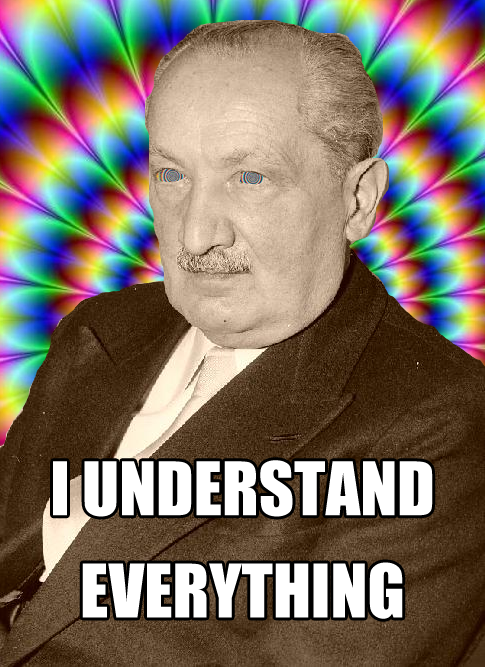
This article is  filed under child psychology.I think it is very good and also gives many references.I got into this thinking lark because I was reading  Heidegger‘s book,”What is called thinking.”but as I said initially my blog is about books…and all this thinking is tiring me .even though it is fascinating.Heidegger is hard and now I have got a book about Levinas to read too

And though I am very concerned about Heidegger’s being in the Nazi part yet I value his words a few of which I have copied below

Reading-Heidegger-philosophy-at-a-6

So he understood his own actions then?

“If it is Being that most calls for thought, what most calls to be thought about in our age is the forgetting or withdrawal of Being. And it is due to the withdrawal of Being that we are still not thinking. In contrast to Hegel’s notion of history, Heidegger’s is a history wherein we find ourselves increasingly fallen from and more distant from Being. Being withdraws in our technological age as the experience of thinking is reduced to calculative rationality. “Thinking” has become the experience of using rationality as a device to operate on a world of things already reified into a network of ends. In our age, Heidegger (1968) will go on to argue, ratio has trumped legein. The thoughtfulness of calculative rationality threatens to obliterate the possibility for being-thoughtful.


And yet

“Heidegger’s Nazism and the failure to confront it are philosophically significant for Heidegger’s philosophy, for its reception, and for philosophy itself. At a time when some are still concerned to deny the existence of the Holocaust, in effect to deny that Nazism was Nazism, and many still deny that Nazism had a more than tangential appeal to one of the most significant theories of this century, merely to assert the philosophical significance of an abject philosophical failure to seize the historical moment for the German Volk and Being is not likely to win the day. Yet there is something absurd, even grotesque about the conjunction of the statement that Heidegger is an important, even a great philosopher, perhaps one of the few seminal thinkers in the history of the tradition, with the realization that he, like many of his followers, entirely failed, in fact failed in the most dismal manner, to grasp or even to confront Nazism. If philosophy is its time captured in thought, and if Heidegger and his epigones have basically failed to grasp their epoch, can we avoid the conclusion that they have also failed this test, failed as philosophers?

  • Tom Rockmore (1992) On Heidegger’s Nazism and Philosophy. Berkeley: University of California Press, p. 289″

Related articles

A thorough exposition of Levinas’ thought from Stanford Philosophy Dept

A thorough exposition of Levinas thought from Stanford Philosophy Dept

This seems the most comprehensive  account I can find of Levinas work and also a brief biography.I ammm waiting for my book which may be simpler.If not I’ll study this

I looked up Levinas’s life

I found quite a good  short  account of the main outlines of Levinas’ life and work here.How very ironic he studied with Heidegger.His ideas seem very different from the philosophy I have studied before.I am well read but have only just heard of him when reading about Peter Lomas.I feel he may be very important in this world we now dwell in.I am unsure if I can understand his writing but have ordered a book by colin Davis