Gambit:the rhymes

How can I find rhymes for gambit?

How can pentameters be iambic?

I am sure to discover

One way or another

But alas the Government has  banned it.

Iambic is as Greek to me,

As to the English is drinking hot tea.

We boil the kettle on the fire.

As we empathise with a liar.

Iambic  is schizophrenic you see

In my case I’m  not Bic  I am Shaeffer

I believe  pens drink ink on a wafer.

For ink is their Saviour

And improves their behaviour

If no plates passed,what the hell is that tray for?

Abstract:The limericks

Her manner is rather abstract

It  does not help her to show tact.

She’s in love with ideas

Yet her rents  in arrears.

Let’s hope that her ship is not wrecked.

young_lady_old_woman_illusion

i saw the abstract for your book.

I’d love a  much closer look.

I’ll invite you  to tea

Then I can see

Just  how discerning you look.

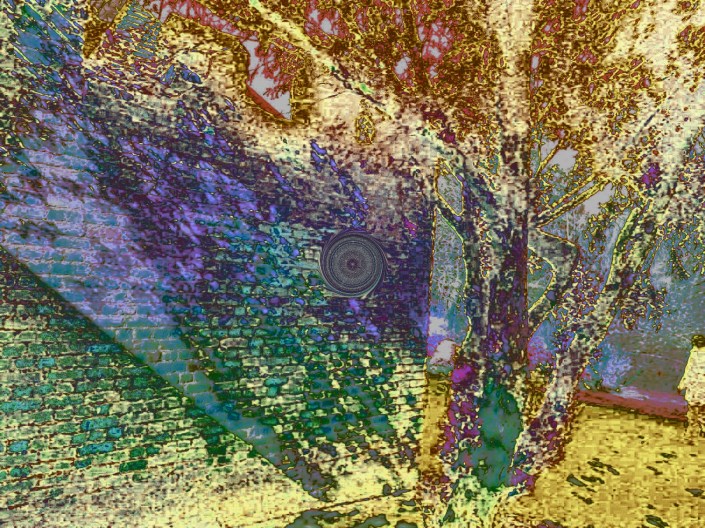
colored tree in sun

I suppose even Monet is abstract,

For his images with bright  dots are packed.

I love them so well

As they both show and tell

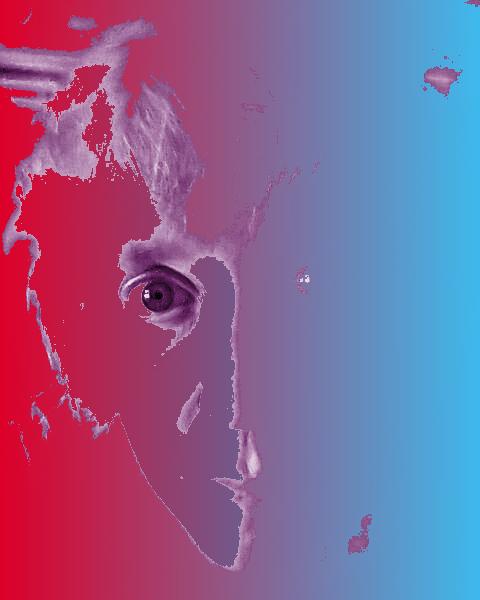
Precisely what realism   lackedFace with color 3

Meaning of “frenemy” in the English Dictionary

8282959_f520

“frenemy” in British English

See all translations

frenemynoun [C]

UK   US   /ˈfren.ə.mi/ informal

a ​person who ​pretends to be ​yourfriend but is in ​fact an ​enemy:Her only ​friends are a ​trio of ​catty frenemies she hasn’t ​seen in ​months.
(Definition of frenemy from the Cambridge Advanced Learner’s Dictionary & Thesaurus © Cambridge University Press)

What is the pronunciation of frenemy?

Love,the word

Now love is not an easy word to use,
for excess talk has torn away its soul;
In cards and letters,we must stand accused
so where love dwelt,there’s now a widening hole.

And if our language changes, what’s the cost,
when life departs from words that meant so much
or is there something permanently lost
when hands and pens have lost the way to touch?

We soon forget what loving used to mean
We change to fit our fractured complex realms
Till we are now as fractured in our schemes
and what once was,seems never to have been.

Yet there’s a remnant found in art and song
Which we can capture while our spirits long.

Semiotics:a sign has two parts

http://users.aber.ac.uk/dgc/Documents/S4B/sem02.html

A sign consists of the  signified and the signifier

If what is signified is love,the signifier may vary … it can be a  “x “.a bunch of flowers,a poem.

Of course it may be misunderstood if two people come from different cultures/countries  or even different parts of the same country with maybe a different form of Christianity,with an atheisitic family etc

Some people tend to see a meaning in an act or word that was not intended…if carried too far it can lead to paranoia…I can imagine writing a funny play based on such confusion

More from Wikipedia

Signifier

From Wikipedia, the free encyclopedia


Ferdinand de Saussure theorizes that a “sign[clarification needed] has two parts: signifier and signified. The signifier is the form that the sign will take, whether it be a sound or image and the signified is the meaning that is conveyed.

Example

Signifier: the word ‘tree’ = Signified: the mental image of a tree.

Charles Sanders Pierce analyzed sign systems and came up with the following: An Icon signifies by resemblance. An Indexical sign signifies by causal connection and finally, a Symbol signifies by learned convention.

See also

Misreading beween the lines

??????????There is  no doubt we  all do this reading between the lines…sometimes consciously,sometimes unwittingly.We attempt to fill in gaps in our knowledge.There are a few problems.One is in cultural differences which may affect us here on the web.We come from very different societies and the meanings of certain words and attitudes does vary considerably;

And another factor is our own desires which we are  not always aware of.We may then interpret someone’s words in a way which fits with our desire or interpret someone using bad language to signify that they do not respect us.If the Soaps are an indication it seems in much of Britain every other word has just four letters. which to me shows poverty of feelings and language… but it means many people are not offended by them…But many still are.

So wishful thinking,ignorance,wanting to believe something,,,,,..cultural ignorance.. all these may make communication difficult.Perhaps we should not read too much between the lines at the beginning of a friendship…and be wary of imputing desires to another when they seem to offer what we are hoping for.

It’s a bit like the way here nearly everyone puts “love” or “xxxxx” at the end of a letter or email… so that in reality it means  almost nothing at all;Words become meaningless through overuse and we  will have to judge in other ways what a person feels for us..

Some people are more prone to seeing patterns or meanings in things which can be creative but it can also lead to paranoia in the insecure or lonely individual who has become the center of a huge important plot.When I was ill as a child I remember seeing faces leering at me from the wallpaper and the oil heater hissed menacingly,,, it was the fever but I was afraid…We need friends to tell us if our interpretations seem sensible and to comfort us when we are low.. and we need to be wary of assuming too much especially when we come from different cultures

What matters

Getting to know someone,I find it is good to first know what is very important to ourselves.. which sometimes we do not know consciously.Second to discover  what is most important to the other.I think that may be very hard if we come from different cultures.We may never have come across some of the things most important to the other.We.even in the same culture,live i n self created worlds of meaning.

  What matters to me is possibly not all conscious. but it matters that I can say what pleases me  or what hurts me without attack.If this is not possible then that is the end of the friendship.

Similarly I should be able to listen to the other

Anthropomorphic ideas and further thoughts about living

From here
An·thro·po·morph·ic /ˌænθrəpəˈmoɚfɪk/ adjective
1 : described or thought of as being like human beings in appearance, behavior, etc.
▪ a story in which the characters are anthropomorphic animals

2 : considering animals, objects, etc., as having human qualities
▪ anthropomorphic beliefs about nature

The reason I have posted this is that I know as a child I saw chairs and tables and houses a living beings.And the windows were eyes,the door a mouth.When I was looking up where the word “door” originated it came  a thousand years ago from the word for mouth.So human beings did see the way I used to see….and no doubt further back that’s why they saw trees inhabited by living spirits for example.Everything was alive and had a personal quality.That could be frightening if you saw storms and gales that way.Maybe at some level we do still think that way and ascribe motives to the beings in the storm who want to harm us

Some people still believe in demons but I don’t.Epileptics were regarded ad possessed by demons until quite recently.

I prefer different language…. it’s a way  of attacking other people saying they are possessed by demons, which I object to.

And it creates problems .by saying that you push afflicted people away.Some folk say that because demons are mentioned in the Bible they must exist.Well,remember much of what was written was explained in ways accepted then as they knew nothing of the medical science we know now.Even great prophets can only use the concepts which exist  in the era in which they live.And also translations alter the meaning inadvertently.The Bible was not written originally in English.

The problem of evil and whether there is an evil principle as an opponent of God is very complex  and wondering about does not to my mind help me to live better .I trust in God whatever that means.

A door is what a dog is perpetually on the wrong side of. [Ogden Nash]

You can see the dictionary here
Public domain image, royalty free stock photo from www.public-domain-image.com
Door (n.)
Middle English merger of Old English dor (neuter; plural doru) “large door, gate,” and Old English duru (fem., plural dura) “door, gate, wicket;” both from Proto-Germanic *dur- (cf. Old Saxon duru, Old Norse dyrr, Danish dør, Old Frisian dure, Old High German turi, German Tür).The Germanic words are from PIE *dhwer- “a doorway, a door, a gate” (cf. Greek thura, Latin foris, Gaulish doro “mouth,” Gothic dauro “gate,” Sanskrit dvárah “door, gate,” Old Persian duvara- “door,” Old Prussian dwaris “gate,” Russian dver’ “a door”).The base form is frequently in dual or plural, leading to speculation that houses of the original Indo-Europeans had doors with two swinging halves. Middle English had both dure and dor; form dore predominated by 16c., but was supplanted by door.