Seriously wonderful poem

?????????????Seriously wonderful poem

This poem’s a bit cerebral but well  worth reading…philosophy,art,war

I am really surprised /pleased about the number of people reading here

Drabble

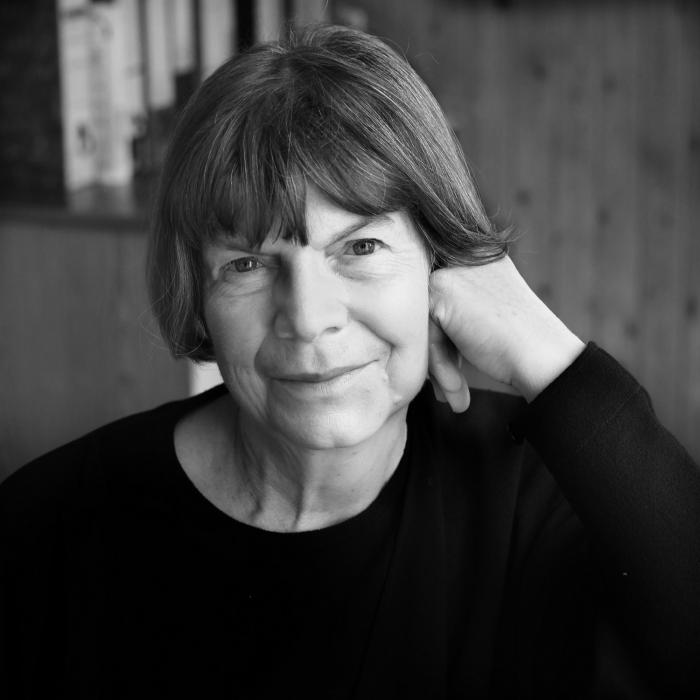
Margaret Drabble when young

When I moved from books to Philosophy I was not expecting a lot of readers but I have had far more than I thought and so I have continued again after I thought I’d stop.So as I have thought before,people do like serious reading  and thinking about thinking.

I shall try to put on more about books too.I am reading the latest Margaret Drabble this week,The pure gold baby.It seems very light reading after Heidegger and co.Which is nice..

I would like to discover an introduction to modern literary crticism as i find it hard to get into.I am unsure if it needs to be so difficult….

.

Heidegger and other scholars

http://www.egs.edu/faculty/slavoj-zizek/articles/why-heidegger-made-the-right-step/

This is very interesting and not too difficult…he gives a longer account than I have seen elsewhere.

I can’t understand fully but am drawn to it  wondering about our  problems now

The Claude Lanzmann movie:the interviews

http://www.newyorker.com/online/blogs/movies/2012/05/claude-lanzmannnew-movie.html

Whilst I was doing this I might as well post this link as well.Lanzmann made a very good film and knew much more than Arendt

“The evil of banality”

http://www.slate.com/articles/life/the_spectator/2009/10/the_evil_of_banality.html

A very interesting and disturbing discussion of books about Heidegger and Arendt.Heidegger’s silence after the war about the

And looking at the quote below it seems they lacked wisdom

Image

Heidegger did one service: He showed us that thinking is not enough

When we say someone is a great thinker,what do we mean?And can someone be a great thinker about some aspects of life,the world,society,philosophy and a very poor thinker in other aspects?Naturally I am thinking about Heidegger.Greatly admired,influential and a tutor to the likes of Hanna Arendt.

We could say he  did us a service in reminding us that not even a great philosopher is always a good judge of society,politics and new  ideas.Moreover,he must have shut his eyes to the attacks on Jewish people across Germany….How can this be?I hear someone saying,thinking is not enough if it is restricted to what is safe to think about.Character,ethical status,love of humanity seem to be absent from some of our academics and scholars.And  how much more is that likely when our Universities  are run as profit making  businesses where the number of citations you receive is the measure of your work’s worth…. so noone may ever read it yet if you ask all your colleagues,friends and contacts to cite you then success and acclaim await.Meanwhile society crumbles,the poor are punished  and  old made anxious.

Re Hannah Arendt  [ Wikipedia’

Film

In 2012 a German film titled Hannah Arendt was released, directed by Margarethe von Trotta, and with Barbara Sukowa in the role of Arendt. The film concentrates on the Eichmann trial, and the controversy caused by Arendt’s book, which at the time was  WIDELY  MISUNDERSTOOD as defending Eichmann and blaming Jewish leaders for the Shoa/Holocaust


Thinking about what is called thinking [Heidegger]

I have now got the book “What is called thinking” by Martin Heidegger despite my qualms about his political history.I know he wrote it in German  and hence a translation may  give a different meaning so maybe my thoughts are not sensible….and my first thoughts are………….. it is fascinating title.He is looking at an activity that we humans do.He is asking what it is we do when we say we think.So before I read it  I am putting a few reflections.Thinking means standing back,waiting and reflecting.Often we do things  because our parents did or our friends.Then sometimes we wonder about our life,we pause and try to examine how we are living.Or we could be solving an intellectual problem.Some things like quadratic equations can be solved by a formula.And many people are happy just to perform this rote activity But even though its math,you are not thinking when you do that.And I have an intuition  that we avoid thinking much of the time because we step outside our automatic patterns.I once read an article that says depression comes on us when we face a problem at the unconscious level.The tiredness,slowness and painful feelings make us withdraw and that gives our minds time to reflect.So there must also be unconscious thinking.Maybe  that  other mind  uses images as  in dreams.And we all know that “sleeping” on a problem often produces a solution.Thinking may not be verbal all of the time.And we must have something to think about.We  must be participating in the world of Others.Language comes via others.We are part of a society…at first just a few family members.But our tongue is shared with many people.And when we think in words,those words came before us and go on after us.

Levinas and Heidegger

I seem to be led between these two philosophers.Levinas was an admirer  and student of Heidegger until the Nazi era.Though Levinas’ wi fe and daughter survived WW2 hidden in a  Monastery,the rest of his family  who were Jews in  Lithuania perished. in the Nazi Camps.This made him rethink his philosophy and led him into putting Ethics in primary place.And the primacy of our awareness of /responsibility the other as our first concern.Indeed that is what makes us human subjects

Perhaps only a Jewish person has the right to talk about Ethics  after the Holocaust.

I put two links below.

and

http://naudengels.blogspot.co.uk/2008/11/it-is-very-understandable-that.html?gclid=CKjUyJGRkboCFTMctAod53QATQ

How Levinas Overcame Heidegger

“What is called thinking” by Heidegger

What is called thinking”         by Heidegger

This seems a good introduction to the book and to discussing thinking  in our era

Short Extract from the article

Heidegger refers to Nietzsche’s diagnosis of our age as a time of nihilism: “The wasteland grows.” If it is Being that most calls for thought, what most calls to be thought about in our age is the forgetting or withdrawal of Being. And it is due to the withdrawal of Being that we are still not thinking. In contrast to Hegel’s notion of history, Heidegger’s is a history wherein we find ourselves increasingly fallen from and more distant from Being. Being withdraws in our technological age as the experience of thinking is reduced to calculative rationality. “Thinking” has become the experience of using rationality as a device to operate on a world of things already reified into a network of ends. In our age, Heidegger (1968) will go on to argue, ratio has trumped legein. The thoughtfulness of calculative rationality threatens to obliterate the possibility for being-thoughtful.