When I went out this morning I was wrapped in a red and blue coat with a blue scarf covered in red hearts wrapped twice round my neck.A man came along by me and looked back.He was speaking
“You’ve got something on your leg”
I looked down and there was a red and blue silk tie round my ankle, the property of my late husband So I said, can’t you just leave me a note? I see you approve of my colour scheme…..
Sometimes I find a tie in the bathroom.I find a newly ironed hankey on my chair.If only he would iron my trousers or my pink blouse with rows of shirred pleats that’s been waiting for 4 months.
More often I find a coin and ,if lucky, enough for a cup of coffee.I wonder what will happen if I go out with a man…. will he be happy? I shall never know as I refuse to date anybody.I still believe my husband will get permission to return like Jesus did.But will I know?
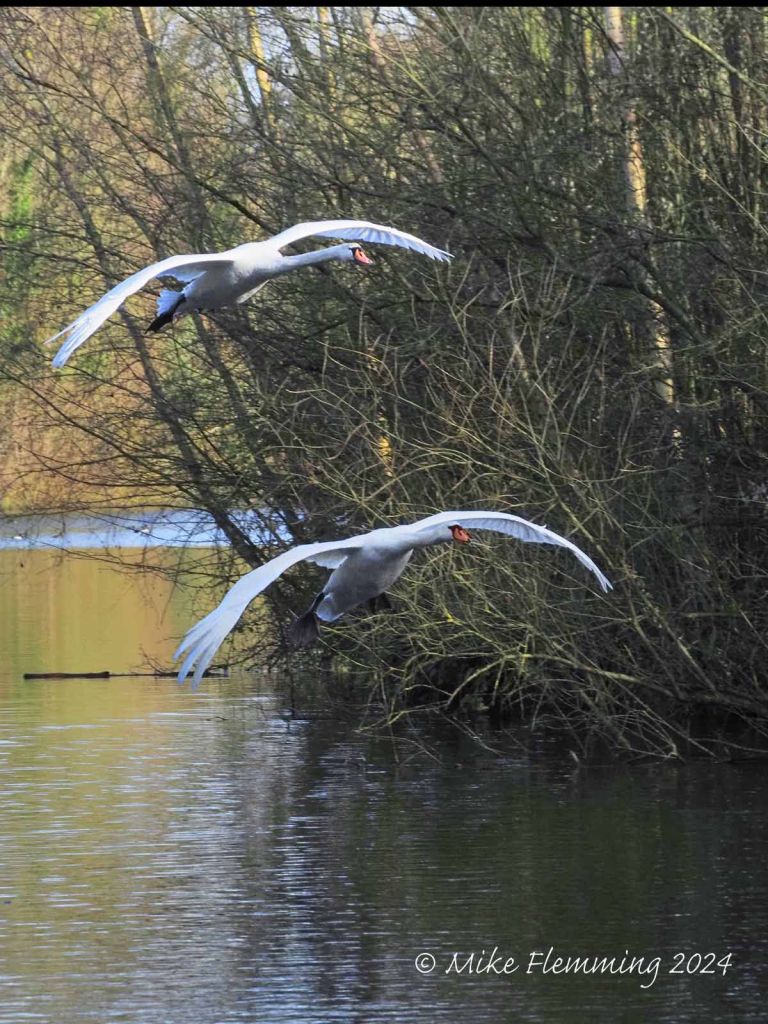
The geese have changed their flight path to the lake For further to the East a river runs Once used for milling flour for bread and cake For making bulbs for lights and wartime guns
The lightbulbs were a fiction in the War Radar was the secret they researched An old man in my Art Class once worked there A physicist who worshipped still in Church
God and radar,guns and shells and tanks Angels,demons,Jesus Christ we’re damned Money lenders,presidents and Banks Evil now seems normal in our land
We saved the world from Hitler but we died No souls survive nuclear matricide
Musicality is also important; things such as the rhythmic pattern of stressed and unstressed syllables – often referred to as meter – as well as the rhyme scheme, the pattern of rhyming words at the end of each line of a poem. Unlike our everyday writing, poetry is artistic, expressive, and figurative.
Katherine
The first thing you should do when given a poem is read its title carefully. The title should give you some ideas of the poem’s subject, tone, or genre. Write down your initial expectations and impressions based on the title, then make changes as you come back to the title during and after your analysis.
Ask yourself these questions as you go through a poem:
What is the main theme of the poem?
Who is the narrator, and to whom is the poem addressed?
Are there any time indicators suggesting a time frame, or does it move back and forth between times?
Is it set in a specific place? If not, is there a sense of place?
What images, emotions and/or messages is the narrator trying to convey? Do they correspond to or contradict with one another? What are the possible reasons for any juxtapositions?
Word choice can tell you a lot about a poem as well. The main theme of a poem is often presented by referring to the same subject in a number of different ways. Figurative language, such as similes, metaphors, personification, and symbols, are commonly used to draw analogies between two unrelated objects with shared characteristics for aesthetic purposes, as well as to highlight the specific features of, or provide readers with new insights on, a subject.
Consider the reasons for the poet’s choice of analogies by asking yourself what other possible alternatives could have been – but weren’t – used.
It’s also important to be sensitive to the choice of word forms, the subtle differences between words, and every possible meaning of a word. As well as word meanings, don’t that forget sound plays a crucial role in evoking or strengthening an emotion or a mood, too.
Looking at the form of a poem
Sounds Read the poem aloud and pay attention to the sound and rhythm of the words. Look out for meter patterns and rhyme schemes, as well as literary devices related to sounds, such as alliteration, assonance, consonance, and onomatopoeia. Think about the effects they create, and whether they add to the poem’s meaning.
Recurring rhythms, rhymes or pronunciations often transform a poem into music. Moreover, they can be seen as a form of repetition – similar to the simple repeating of a word or phrases – used to amplify or emphasise an idea or emotion, or develop a sense of urgency.
Formal indicators suggesting shift(s) in perspective or voice within a poem Changes in emotion, point of view, voice, or plot development are often marked by, or occur along with, changes to the form of the poem. For instance, shifts of subject and perspective can be illustrated through the division of stanzas, or abrupt changes in rhyme patterns. Take note of how the poem’s content and form reflect one another.
As you read more traditional poems, you’ll also notice many classic poetry forms present shifts in almost exactly the same place in every poem of its type. The breaking of classic poetry forms, or any formal patterns, are commonly used to signify breakthroughs, transformations, or a refusal to conform.
Think about the context of the poem
It is not uncommon to find literary or historical references in poems. Pay attention to allusions to famous figures and important world events, and think about their roles, and how they are used: Do they support the narrator’s argument, or strengthen the poem’s emotions?
Another factor to consider is the historical and geographical context, such as the year and circumstances in which the poem was written. Think about the things you know about the poet, and the age and historical period when he/she wrote the poem.
Sign up for the YP Teachers Newsletter
Get updates for teachers sent directly to your inboxSubmit
Nicola Chan is a former Young Post reporter. A firm believer in education and self-care, she has a strong interest in writing about teenage psychology and mental health. She’s also constantly on the hunt for stories about inspiring students and campus events. She has a master’s degree in Comparative Literature.
EXPAND
Sign up for YP Weekly
Get updates sent directly to your inboxSubmit
By registering, you agree to our T&C and Privacy Policynullhttps://news.google.com/swg/ui/v1/serviceiframe?_=1706613491257&sut=Ab9pFDaDd%2BmQ9ItKr3rYHz%2BObiwFnT8TyisLHMDA4DAtP4fJWhVhPeTZAljHpj92Gl2VqlN1MpXCpOrZ3RRDNxWlb4urBhn%2BNXI%2FqeZ9eOiPND8r&publicationId=www.scmp.com
The first thing you should do when given a poem is read its title carefully. The title should give you some ideas of the poem’s subject, tone, or genre. Write down your initial expectations and impressions based on the title, then make changes as you come back to the title during and after your analysis.
Ask yourself these questions as you go through a poem:
What is the main theme of the poem?
Who is the narrator, and to whom is the poem addressed?
Are there any time indicators suggesting a time frame, or does it move back and forth between times?
Is it set in a specific place? If not, is there a sense of place?
What images, emotions and/or messages is the narrator trying to convey? Do they correspond to or contradict with one another? What are the possible reasons for any juxtapositions?
Word choice can tell you a lot about a poem as well. The main theme of a poem is often presented by referring to the same subject in a number of different ways. Figurative language, such as similes, metaphors, personification, and symbols, are commonly used to draw analogies between two unrelated objects with shared characteristics for aesthetic purposes, as well as to highlight the specific features of, or provide readers with new insights on, a subject.
Consider the reasons for the poet’s choice of analogies by asking yourself what other possible alternatives could have been – but weren’t – used.
It’s also important to be sensitive to the choice of word forms, the subtle differences between words, and every possible meaning of a word. As well as word meanings, don’t that forget sound plays a crucial role in evoking or strengthening an emotion or a mood, too.
Looking at the form of a poem
Sounds Read the poem aloud and pay attention to the sound and rhythm of the words. Look out for meter patterns and rhyme schemes, as well as literary devices related to sounds, such as alliteration, assonance, consonance, and onomatopoeia. Think about the effects they create, and whether they add to the poem’s meaning.
Recurring rhythms, rhymes or pronunciations often transform a poem into music. Moreover, they can be seen as a form of repetition – similar to the simple repeating of a word or phrases – used to amplify or emphasise an idea or emotion, or develop a sense of urgency.
Formal indicators suggesting shift(s) in perspective or voice within a poem Changes in emotion, point of view, voice, or plot development are often marked by, or occur along with, changes to the form of the poem. For instance, shifts of subject and perspective can be illustrated through the division of stanzas, or abrupt changes in rhyme patterns. Take note of how the poem’s content and form reflect one another.
As you read more traditional poems, you’ll also notice many classic poetry forms present shifts in almost exactly the same place in every poem of its type. The breaking of classic poetry forms, or any formal patterns, are commonly used to signify breakthroughs, transformations, or a refusal to conform.
Think about the context of the poem
It is not uncommon to find literary or historical references in poems. Pay attention to allusions to famous figures and important world events, and think about their roles, and how they are used: Do they support the narrator’s argument, or strengthen the poem’s emotions?
Another factor to consider is the historical and geographical context, such as the year and circumstances in which the poem was written. Think about the things you know about the poet, and the age and historical period when he/she wrote the poem.
Sign up for the YP Teachers Newsletter
Get updates for teachers sent directly to your inboxSubmit
Nicola Chan is a former Young Post reporter. A firm believer in education and self-care, she has a strong interest in writing about teenage psychology and mental health. She’s also constantly on the hunt for stories about inspiring students and campus events. She has a master’s degree in Comparative Literature.
EXPAND
Sign up for YP Weekly
Get updates sent directly to your inboxSubmit
By registering, you agree to our T&C and Privacy Policynullhttps://news.google.com/swg/ui/v1/serviceiframe?_=1706613491257&sut=Ab9pFDaDd%2BmQ9ItKr3rYHz%2BObiwFnT8TyisLHMDA4DAtP4fJWhVhPeTZAljHpj92Gl2VqlN1MpXCpOrZ3RRDNxWlb4urBhn%2BNXI%2FqeZ9eOiPND8r&publicationId=www.scmp.com
The sparrows sing as if to draw me to The present moment’s gravity and grace Our contemplation of life’s nature new
What other attitude is worthwhile now That I no longer see your loving face? The sparrows sing as if to greet me too
Eden is still here, we miss the clues We miss the ardent touch, the lost embrace Our contemplation of the world renews
On my face, the tears are jeweled dew In my body, I feel held, enclosed The sparrows sing as if to greet me too
Now the blackbird sings as if on cue Inside my swollen heart, I feel its grace Contemplation of life’s nature new
I saw your soul in your transparent face. And crisscrossed lines from struggle left their trace The sparrows sing as if to draw us to The contemplation of the wildness true,
Die, et ideo breviter allocking Killin quod suus ‘vicis ut nunc dicimus Ah, ah non shud et chodchod proposuerunt; sed oh Opus, quod cuius effrenae libidini, invenient te ard
s ill i mammy tibi cito et moriar A causa enim conteret: et ligabis Allocking me sentire ill meks Nonne mater iure testamentum facere? Ego autem totum tuom est allooan Pyk Impensis est weear vulgares AMBULO Allooan sum, mi humiliavit uxorem Allocking suus scelus ah scitote intelligentes
Ubi mi daddy quod suus ” ‘sit pipe Ubi est Pater iaccam plena fumigant putas? Illi volo, mi mam s alloooan Vos, ed responsis horrent divum er gemitus
Ubi mi cat, et ubi canis mi Ubi iscatur, rhoncus ea pallio, si frigus? Factum ‘putas veteres pannos et antiqua aduncum per’ T vestimento Eeh, Deus non potest repleti sunt ira?
Deus enim non omnes allooan Numquam allocks, qui est lapis Ut ‘quare omnes nos homines ut irata
Sed videtur ah’ve inferos et certus sum Nil, yooman manebunt.
In 1993, I took a left turn one day out of my MFA program and found myself at the National Poetry Slam in San Francisco. There I discovered several poets who were funny for the sake of being funny. Particularly Hal Sirowitz from New York (“don’t stick your arm out the window, mother said” and Matt Cook from Milwaukee (“it was easy to write the Great American Novel, back when there were only five American novels”) Both poets initially delighted me and confounded me: There are no similes, a voice in my head said. What would Tom Lux (my first teacher) say? the voice continued. Despite my resistance, I believe those poets gave me a kind of permission to explore humor a little more vigorously in my second book, The Forgiveness Parade (1998), for “I thought the word loin and the word lion were the same thing. I thought celibate was a kind of fish”. Perhaps in that book there were places where I was too vigorous in my pursuit: looking back there are a few poems that are just a little too jokey somehow, a little one-dimensional.
I am becoming aware of how some humor can set a roadblock for the poetic speaker, making it impossible for the speaker to get back to a serious place. And how some other (less frequent) uses of humor can leave that door open. I want to leave that door open
OIn the middle of the journey of our life I came to myself within a dark wood where the straight way was lost. Ah, how hard a thing it is to tell what a wild, and rough, and stubborn wood this was, which in my thought renews the fear! Dante Alighieri, The Divine Comedy
My heart was in my mouth [so I had to eat suck it all day which gave my thumb a rest] My heart sank [ to the bottom of the pond in Barrow Bridge] I fell head over heels in love with a cat.[That’s why I had no children as inter-species marriage is not yet allowed but soon it will be here] I could not swallow his excuse as my mouth was full of chocolate buttons I had torn off my uniform..well they looked like chocolate] That is hard to digest.[So may I please spit it out?] I spat him out [but he came back as he was on an elastic rope]
I was wondering if new phrases come into existence now and I don’t recall any.Is it because we are no longer so involved in creating our language or because there are experts in academia who study it.At one time ordinary people made buildings etc and m ust have developed skills in geometry etc from a practical point of view.And it was they who invented writing and numbers etc not people in Universities who do not create but analayse and criticise and study signs and connections. So has the rise of experts made us stupider than people were in the past?Is it poets who invent new idioms?
My eyes nearly leaped out of my head when he passed by… Luckily I had put superglue down the sides of them at breakfast time. My hands grasped the nettle and I almost threw the flowers at his head.Then he said: You are the hoover of my soul. Walls have fears,you know. A rolling brick gathers no floss. I patted him on the wreck and we parted with no acrimony and no real money either.What is acrimony? I’m a pharisee and ‘i’m ok.Jewish by right and a whirling prayer. I can’t live without hue or colour Tint me this day.oh Lord. Does God sell salt on the internet.He has a Lot.Sorry Lot’s wife.Does it clatter?
Inside my shell, I dream of pearls, Caterpillars, snails with whorls. I dream contented, all enwrapped With reverie and dream, I’m lapped. The inner seas will comfort me, While gods allow my eyes to see
Oh, sweeter than confectionery Is my worn old dictionary. The words whirl round and fall to shape The sentences, which my world drape. This furnishing is rich and strange Yet magically self-arranged.
Oh, sweeter than the love of man Is reading works of poets long gone; And feeling deeply their dark tides, Upon which our boats may glide. The sea infinite we float on Is the same warm sea that ancients swam.
Sweeter still is this spring air And the blossom spreading fair. We’ll drown ourselves in deep green fields To the gods of poetry yield. We’ll rise again and spring up tall To grow more rich until we fall.
Sweet it is to live and die And to write my poetry Touch me with your ardent souls My mind and yours shall all be whole
Evensong evokes another state A world of beauty, peace and mental calm Where all is still and thoughts do not gyrate
The breath slows down and evil does not mate Indeed it flees before the holy psalms Evensong evokes another state
In the quiet, we each can, happy, wait Assured by songs of good, of healing balm Where all is still and thoughts do not gyrate
Soothing rhythms will help the mind create; To bear the emptiness unfilled and do no harm. Evensong evokes this cultured state
Frantic notes of music irritate And minimise all goodness and all warmth Let all be still and let thought emigrate
Let us lowly creatures slowly learn To love each other as we take our turn Evensong evokes another state There all is calm and thoughts are sweet as fate