

Eric Pickersgill has created a set of photos to show our lonely world.I find it really interesting that he thought of this
Category: Thinkings and poems

I need your touch as well
when words are not enough
to give our feelings form
music is the language
which many find gives calm
when words are too clumsy
touch may be enough
a glance of compassion
may pull us from the Slough
when words don’t come easy
when music fails to charm
then come to me and tell me
and I’ll enclose you in my arms
gestures,touch and glances
are a language in themselves
words are not enough for me
I need your touch as well.
Share this:
Enjoy the alternations of your breath
 I love to read your poems in the night
And see each sentence frame a new born thought.
I often am in darkness not in light,
Like yours my memories are hardly caught.
The cat sits in patient joy upon her chair
The fire glows golden red, I watch the smoke.
Some days I’m here and sometimes there.
My mind from trouble wishes to elope.
The washing gurgles in the old machine
When special christmas garments meet the soap.
Is this true life or am I but a dream?
In someone’s mind perhaps my image floats.
For nothing is so sure in life as death
Enjoy the alternations of your breath
Share this:

What are creative people like?
http://talentdevelop.com/articles/TCPTPT.html
10. Creative people’s openness and sensitivity often exposes them to suffering and pain, yet also to a great deal of enjoyment.
Most would agree with Rabinow’s words: “Inventors have a low threshold of pain. Things bother them.” A badly designed machine causes pain to an inventive engineer, just as the creative writer is hurt when reading bad prose.
Being alone at the forefront of a discipline also leaves you exposed and vulnerable. Eminence invites criticism and often vicious attacks. When an artist has invested years in making a sculpture, or a scientist in developing a theory, it is devastating if nobody cares.
Deep interest and involvement in obscure subjects often goes unrewarded, or even brings on ridicule. Divergent thinking is often perceived as deviant by the majority, and so the creative person may feel isolated and misunderstood.
Perhaps the most difficult thing for creative individuals to bear is the sense of loss and emptiness they experience when, for some reason, they cannot work. This is especially painful when a person feels his or her creativity drying out.
Yet when a person is working in the area of his of her expertise, worries and cares fall away, replaced by a sense of bliss.
Perhaps the most important quality, the one that is most consistently present in all creative individuals, is the ability to enjoy the process of creation for its own sake.
Without this trait, poets would give up striving for perfection and would write commercial jingles, economists would work for banks where they would earn at least twice as much as they do at universities, and physicists would stop doing basic research and join industrial laboratories where the conditions are better and the expectations more predictable.
Share this:
The technology of poetry
https://www.theatlantic.com/magazine/archive/1999/03/what-makes-poetry-poetic/377508/
Are we all unwitting prosodists, then? Well, no; and therein hangs the gist of Pinsky’s engaging approach to shedding light on the mastery of poetic craft. On the one hand, his point is that the rhythmic patterns of accent and pitch that form the basis of English metric occur naturally in the modulation of the speaking voice; without them we could hardly make ourselves understood. On the other hand, when Robert Frost composes lines such as
I had the swirl and ache
From sprays of honeysuckle
That when they’re gathered shake
Dew on the knuckle.
those familiar verbal tones and inflections take on a charged resonance missing from workaday locutions. What makes the difference is the versification: the casting of phrases into distinct vocal cadences that enable a listener, Pinsky writes, to “detect their presence without a printed version of the poem.” Taken by itself, this may sound suspiciously like a truism — and indeed, there is nothing especially startling about the touchstone concepts that inform Pinsky’s account of poetry’s inner workings. The great virtue of his treatment lies in his demonstration that paying closer attention to how poems like Frost’s work — how the flow of language is measured, how the length of a line builds expectation and tension, how the interplay within patterns of sounds produces audible dynamics that are pleasing and stirring — is a technical concern of the most profound kind, instrumental in appreciating the full import of what Pinsky likes to call the “technology of poetry.”
This is about as close as The Sounds of Poetry comes to advancing a theory of poetics, and it is only by way of brisk introduction to what emerges as an invigorating session of talking shop. Why are poems written in lines, and why do the lines break where they do? How do the mechanics of English meter operate, and why is it that artful verse measure is seldom strictly regular? How can a reader acquire a reliable feel for the qualities of rhythm, tempo, and cadence that give a memorable poem its visceral appeal and expressive resonance? Is “free verse” really free — and if so, what has it been liberated from? Pinsky’s sensible answers to these questions — for instance, that lines of poetry need to be understood as notations for the voice, and that rhythm is the “sound of an actual line” while meter is the “abstract pattern” that stands behind it — are never doctrinaire, nor do they appeal to abstruse expertise. The prevailing atmosphere is less that of a solemn classroom lecture than that of a spirited audio tour, with Pinsky offering up various devices and motifs for inspection and providing a lively running commentary on how to fine-tune the ear to respond to the distinctive verbal energies that make poetry “poetic.”
PINSKY’S idea that sound dictates sense can be seen in this example — the first five lines of a lyric poem by William Shakespeare’s contemporary Ben Jonson:
I now think, Love is rather
deaf than blind,
For else it could not be
That she
Whom I adore so much
should so slight me,
And cast my love behind.
And here is part of what Pinsky has to say about the “appealing show-off quality” of the poem’s sense of line:
The run-over lines and pauses, the varying line lengths, the varying way the unit of syntax (that is, the grammatical phrases) coincides with the unit of rhythm (that is, the lines) or does not coincide — all of these create an expressive, flamboyant whole. The poem speeds up and slows down many different ways in the course of these five lines. Though the lines are all made of iambic feet, the variation in pace and emphasis is great — greater than could be easily attained in a comparable thirty-one words of prose.
Pinsky is equally attentive to poems with no fixed meter or rhyme scheme. Thus, shortly after sizing up the “flamboyant” Jonson snippet, he turns to poems by Robert Frost and William Carlos Williams, American contemporaries with polar aesthetic sensibilities, making a persuasive case for how the sinuous structure of Frost’s “To Earthward” (quoted above) and of the following stanza from a decidedly unadorned poem by Williams (“To a Poor Old Woman”) have much in common.
They taste good to her
They taste good
to her. They taste
good to her
Both poems dramatize the relation of “vocal alertness to sensory alertness” by “the angling of syntax into line and stanza at interesting tilts.” For Pinsky any diligent reading of poetry must take account of the structural elements of sound that are inherent in the language itself.
Considered as a contribution to the line of edifying essays on metrics and poetics, a genre with a history nearly as long as English poetry itself, Pinsky’s slim primer can hardly be said to break new ground. But that is not its ambition. With any luck the book will find its way into the hands not only of apprentice poets in graduate creative-writing programs but also of lapsed poetry lovers and prodigal English majors — so many of whom, hearsay evidence strongly suggests, have been conditioned to question their instinctual belief that poems should be sources of delight rather than calls to duty. For them, The Sounds of Poetry contains an implicit message — even, one might go so far as to say, a moral: hearing is believing.
David Barber is the assistant poetry editor of The Atlantic. He is the author of (1995), which won the Terrence Des Pres prize for poetry.
The Atlantic Monthly; March 1999; What Makes Poetry “Poetic”?; Volume 283, No. 3; pages 114-116.
Share this:

What makes someone a poet?
http://www.newstalk.com/What-makes-a-poet
“Today there are no guidelines for what is poetic and what is not, what constitutes a poem and what does not. Poetry is simply letters on a page which make us go ‘that is a poem’. The only certainty we can have is that a great many people through the ages have been hailed as poets and it tends to be by these marking posts that we define what poetry is. Our small island of saints and scholars has proven a fertile ground for the growing of poets and that is as true today as ever before. One of those at the fore of Irish poetry today is Eavan Boland who has proven her worth as a chronicler of Ireland and the Irish time and time again.
Born to a career diplomat and a post-impressionist painter in 1944 Boland’s life was assured to be an interesting one. Following her father’s appointment as ambassador to the UK in 1951 Boland experienced how the Irish were viewed from the outside. The anti-Irish sentiment she felt in London would help to form Boland’s artistic identity and mission as she went on to tell the extraordinary story of ordinary Ireland and the ordinary Irish. With her combination of poetic skill and simple language Eavan Boland has proven that the existential exuberance, angst, and apathy of the everyman is as perfect fuel for poetic verse as the deeds of Odysseus or Beowulf.
Listen back as Susan talks with Eavan Boland about her life as a poet and find out what she thinks the difference is between a poet and someone who writes good poems.
Share this:

A hot bath
My wife likes a hot bath
What’s odd about that?
That’s what I am wondering
Is it good to wonder?
Yes, because there’s only one bathroom and I am bursting
Go outside and do it there!
Don’t the police mind?
With Brexit, racism, anti-Semitism, robberies, murder and low pay?
Is that worse than peeing in your own garden?
Can’t you make your own mind up?
No, but I can make this up
Well, don’t wet your pants
It’s alright, my wife washes them.
So that is why she looks so awful
No, she looked like that even before we met
You sound like Henry the Eighth.You should have asked for an exchange.
It’s too late now.We consummated it.
When?
In that little room by the Confessional.
At the Wedding?
So that’s what it was! Thanks so much.I thought we were living in sin
Sorry to disappoint you
We can have a honeymoon now.
And so can all of us
Share this:

The cat is bigger than me!

My husband likes to sleep on the rug
Without you?
There’s only room for his mistress and her cat and him
Do you allow it?
The cat is bigger than me!
Are you sure it’s a cat?
It doesn’t speak English so I can’t ask it!

My wife has twisted feet
What a pity she’s not a chair
Why?
You can unscrew them and replace.
I tried to replace her but she got angry.
I meant the feet.
I wanted to replace her whole body.
That’s really horrible.
Yes, how did you know?
I saw her once having a bath on the roof!
Where were you?
I don’t know.I repressed it
Is it unconscious?
It is now!
So is it unconscious in English?
Well, it could be in Latin.
Why?
Because I say so!
My sister is never jealous of me.
She has nothing to be jealous about.
How about my eyes?
What’s the use if you can’t see?
A good point.What’s that spider on your nose doing?
Making a thread in the conversation
I’ve had enough.
I’m afraid it doesn’t speak English
But it might understand it!
You are very stupid.
Yes, my IQ is 55.Yet I learned English.
How?
Well, that’s my secret along with the first 200 numbers in pi.
Numbers in pie.Are you bonkers?
And so say all of us
Share this:

Old and dehydrated folk
 He put a new key in the ignition
But the orifice was damaged past derision
So the car failed to start
I felt grief in my heart
Don’t say no plan came to fruition.
The connection for the radio cord
Was broken so the music was barred.
I offered to sing
Or even to sting
This offer left everyone bored.
The state of fruition was good
When we went to find nuts in the wood
But we got drunk on cider
The horse and the rider,
Completed by bladders a-flood
Now most public toilets have gone
Everything’s private or none
One is a coffee shop,
Another’s a polka dot.
There’s nowhere for parking the bum.
There is a puritan ethos around
So using a loo is unsound
Old and dehydrated folk
Fall down in the grass in the park
Their blood pressure’s sunk to the ground
Share this:

Fruition

https://www.merriam-webster.com/word-of-the-day
Word of the Day : September 4, 2017
fruition
Definition
1 : pleasurable use or possession : enjoyment
2 a : the state of bearing fruit
b : realization
Examples
“… wife and husband had nothing to do but to link each other’s arms together, and wander gently downwards towards old age in happy and perfect fruition.” — William Makepeace Thackeray, Vanity Fair, 1848
“Many brands depend on crowd funding to bring a concept to fruition.” — Curtis Sparrer, Adweek.com, 7 Apr. 2017
Did You Know?
Fruition must come from the word fruit, right? Not exactly. Fruition and fruit are related (both ultimately come from the Latin verb frui, meaning “to enjoy”), but they were derived independently. The original meaning of fruition had nothing to do with fruit. Rather, when the term was first used in the early 15th century, it meant only “pleasurable use or possession.” Not until the 19th century did fruition develop a second meaning, “the state of bearing fruit,” possibly as the result of a mistaken assumption that fruition evolved from fruit. The “state of bearing fruit” sense was followed quickly by the figurative application to anything that can be “realized” and metaphorically bear fruit, such as a plan or a project.
Share this:

What might be a window?

The first example is that another person whom we get to know can be a window to a different world.For this to function, we have to realise that we are all different and we are all of value.
Even within one culture big differences are there between one person and another.
And in London where I live, we have people from hundreds of other countries and we British ourselves are multicultural.Some people find this frightening and our ancestors probably only met people from their own village.
But looked at another way, seeing how a friend from another culture views his/her world is enlightening even if only to give a new perspective on our own culture which we may be unaware of.We may see life from a new perspective.These metaphors from Art are very useful.The artist must see as well as possible, and in different ways.So in that sense Art is important not just for pleasure but for living a reasonable life
We may in a metaphorical sense look through this friend’s eyes and see a new world.
Or we may scoff and say how silly and that our culture and our own self are the only ones of value.
Or we may wander on, not really looking so not seeing and so miss many chances of enlightenment
And enlightenment is the best that a new window can offer us.How full of metaphors our languages are.How poetic.
Share this:

Near the end of my sentence
The hole sucks me in,
with its deep darkness
The Fall was never healed.
Can I resist the call of the killers?
Will they kill me with kindness or with hatred?
I try to hide but no place feels safe anymore
I negate my writing and hide my pens.
Pain degrades me.
Writing deleted returns in imagination
I can do little but I try
Black gravity is the monster in my soul…
Sway not the tree
On whose strong branch the leopard drapes himself
But let the moon speak in silver tongue
as the leaves rustle
I am invisible
except as a home for ants
Who steals my words.
I am no more than a punctuation mark or a short title
I am near the end of my sentence.
I’ll be hanged by some inverted commas
From the oak tree.. burning in the sun’s borrowed fires
I can’t see your face now.
Just shapes in grey fog
Like the doctor without feeling for my child.
A child,that was..
that would have been…
that has gone.
I am uncertain
with its deep darkness
The Fall was never healed.
Can I resist the call of the killers?
Will they kill me with kindness or with hatred?
I try to hide but no place feels safe anymore
I negate my writing and hide my pens.
Pain degrades me.
Writing deleted returns in imagination
I can do little but I try
Black gravity is the monster in my soul…
Sway not the tree
On whose strong branch the leopard drapes himself
But let the moon speak in silver tongue
as the leaves rustle
I am invisible
except as a home for ants
Who steals my words.
I am no more than a punctuation mark or a short title
I am near the end of my sentence.
I’ll be hanged by some inverted commas
From the oak tree.. burning in the sun’s borrowed fires
I can’t see your face now.
Just shapes in grey fog
Like the doctor without feeling for my child.
A child,that was..
that would have been…
that has gone.
I am uncertain
outside the circle,
outside the circle.
the circle
the circle
of your arms
Share this:
Mary can’t find a woollen garment
 Mary decided that she too, like many women, wanted a few new clothes for the winter.But she was too lazy to travel 10 miles to a large shop.Instead, she decided to look online.
Fascinating how to learn many clothes there are available.406 tops or T shirts.67 types of trousers,89 coats and 76 raincoats.How many of us wear raincoats when we have cars? Mary wondered.As she still rode a bike she did wear one.But her old one was fine.
See, Emile, she said to her cat, which Top shall I buy?Some have fancy sleeves with bell like cuffs.I like them.And look, red is back in fashion
Knowing you I’d only be waiting for the sleeve to dangle into some tomato soup, he answered cheekily.
A good point, she muttered.Some have short sleeves which may be ok if you work in a hot office but not when at home where we all try to save on heating bills.
I say, Emile, why are there so few wool coats and sweaters on sale?
Maybe the sheep have stopped growing new coats after being sheared!
Oh,dear, I hope that is not true as they will get frozen up on the moors.They will need coats too.I think it’s more likely that people will not save up and buy one good garment.They want a few new things after a week or two and they throw away the others.It is hard not to fall into this trap when you have 56 credit cards and a debit one tooI feel terribly worried.Shal I ring 999 and ask Dave what he thinks? Mary cried
He has no more idea than you, Emile said but some folk say we are heading for a crash again.So much for Austerity when people have to borrow money for food.
I’d rather have a cup of tea,said Mary.And so she did
Share this:

Rosa wants new clothes for Autumn
Rosa was looking in a very interesting clothes shop online.Here she saw an outfit totally unsuited to her new post as Head of Linguistics in the University of Unisex.
There her eye was drawn to a pair of blue trousers with a red stripe down each leg.The trousers were somewhat shorter than in the days of that pair of women, Trinny and Susanna who told all of us how to dress.Especially to wear trousers that cleaned the pavement as we walked along as it made our legs look longer
Rosa met her friend Mary for coffee.
What do you think of these trousers, Mary? she asked, showing them to the bewildered lady on her HP Phablet.
I don’t think Stan would have liked those, she murmured.
I see some advantages, Rosa said.
If you have nice ankles then it reveals them and if not, you can wear really fun socks with butterflies on them.
Real butterflies? Mary queried anxiously
No, embroidered or knitted, Rosa said.You see them in those catalogues that come round before Xmas
Or you could knit your own, said Mary.
I think knitting butterflies is very hard, Rosa whispered.
Nothing is innately hard, said Mary.It all depends on what you already know and if you have a good teacher and your devotion
How does Quantum theory compare to knitting butterflies? Rosa enquired jocosely.
That makes it sound as if you will knit with actual butterflies or that butterflies themselves might knit! Mary exclaimed.That would be a thing you might see on LSD
Is that the latest kind of TV set, Rosa asked her?
For goodness sake, Rosa.Have you never taken drugs?
I don’t believe I have.You see at Oxford I was friendly with an ex-heroin addict.He told me not to buy drugs because I saw things like other people do when they take heroin.But I see like that naturally!
Well, that is fortunate for you, Mary sighed.Was it true?
There is no way of knowing, said Rosa scientifically but it saves money.
Well ,how about these trousers?I could get some red ankle boots and a red shirt.Noone wears dresses anymore except maybe transsexuals.
I wear them,Mary said.When I was thin I wore a knitted dress.
Not knitted by butterflies I hope,Rosa giggled
Well, it was from M & S so I doubt it although it would be cheaper to use them as butterflies don’t know what money is!
Nor do many human beings now.Why, plastic £5 notes…. it’s like toy money
And so say all of us
Share this:
On paper like the Weetabix comes in
I dreamed that my blood test results had come
On paper like the Weetabix comes in
I can’t recall if they were good or bad
Or whether I just threw them in the bin
I found a pair of trousers, they’re not mine
To which these test results were pinned.
So it dawned on me an error had been made
As for those trousers, I was much too thin.
Someone else has got results not theirs
I have theirs and hope that they have mine.
But why are they fixed to my fresh laundry
And how can I discover them or find?
I don’t know what this dream may symbolise
It made me oversleep with shuttered eyes
Share this:
Start writing your own poem

Photo Mike Flemming copyright
This article is meant for teachers but it is so good I thought some other people might like to peruse it.
Resisting the urge to interpret contemporary poems and “wrong” dreams.
https://www.poetryfoundation.org/articles/69588/the-start-writing-your-own-poem
Extract:
Practice of an art is more salutary than talk about it.
There is nothing more composing than composition.
—Robert Frost, from his notebooks[Poetry and Prose,
edited by Edward Connery Lathem and Lawrance Thompson
(Holt, 1972)]
Leaving a Loop
Two thousand miles from home, I open a drawer
and—I’d have sworn it was mine,
the weaving lumpy, my fingers
still all thumbs but they loved the peaceful
push pull, pushpull
so much that one summer
on the boathouse porch with the tree growing
right up through the floor
I made thirty-two
pot holders on the square-jawed metal loom,
stretching colors soft as old rags
soft as this pale buttercup
this faded-eye blue, and the green
fresh as light on maple wings,
seedlight. I wasn’t making gifts,
it was the rhythm of the thing
and the small loom, square and safe,
like the four lines of a child’s house.
I was homesick,
this was spiderwork, nestwork, easy
till you reached the part where
you unhooked your web from the frame.
Here, see the braided corners, on the last one
somehow you pulled the right thing through
to leave a loop for hanging.
I didn’t know I was making gifts
but last winter when my mother died
she still had two, there were stains
and a burn mark, I never thought
of someone’s hand feeling
heat through the weave.
Here is a poem neither your students nor mine have ever seen before. I wrote it last night, so it’s about as contemporary as you can get, short of sitting down right now and writing your own. To me it’s a living, breathing organism—not set in stone; tomorrow I could change it. An organism made of words, that each reader will bring to life in her own way. Emily Dickinson says, “A word is dead / When it is said, / Some say. / I say it just / Begins to live / That day.” (1)
Whatever my poem means to me, I couldn’t possibly reduce this meaning to a prose paragraph. I don’t want to say, “It’s about making pot holders when I was young and homesick at summer camp,” or “It’s really about my loss of my mother,” or “Actually, it’s about applied art versus fine art.” Or “It’s about the nature of home and separation.” I didn’t set out, at least consciously, to make a poem about any of this; I wanted to find out why seeing the pot holder when I opened a drawer gave me a sudden, inexplicable urge to write. Now that the poem’s written, and I’ve discovered some answers, I suppose I can say it’s all about these things.
But I’m much more interested in asking, “What does it say to you?”—you who are reading it, remember, as if your life depended on it, letting in your beliefs, your dreamlife, your physical sensations—and, I’d add to Adrienne Rich’s list, your memories and the mood you happen to be in just now . . . ?
Share this:

Bother God?
My husband sleeps in the bath
Why?
Someone said he was a drip.
My husband sleeps on the floor
Why?
He doesn’t like wakening up next to my boyfriend.
my husband wears a cap in bed
Do you mean a sheath?
Don’t be ridiculous.His head is much too wide.

My husband never goes to bed.
How do you feel
I can’t.
My wife likes tea in bed
And do you?
No, it’s too wet.

My wife is very cold
Do you mean frigid?
No, she likes to cuddle me
So why complain?
Her under-active thyroid means she always 3 degrees under.
Wow, she must be clever.
She passed for normal at school.
I say!
Did you know her?
Not biblically
I meant sectually
What sect was she in?
Jehova’s Wits.
That is too boastful
She used to be very modest when she was a God botherer
What went wrong
She bothered him too much.
Too much.I dinna believe that! He is infinite
And so is she
1
Share this:

A pie
You need to whine in again before we can sync you
You are disrespected.You cannot see the internet from there.
Chrome has dropped you.
Chrome stops are full
What kind of browser am I ? Guy Fawkes! Crosswords again.
Can I have opera mini on my sun dried surmise?
Why read the Guardian and write less hell?
Everything is a peer reviewed oddity now.
We went on the orientating express.
What is the Circle Line in mathematics? Why aye,hinny.A pie.
Share this:
About Alexander Pope
https://www.poetryfoundation.org/poets/alexander-pope
“Pope’s literary merit was debated throughout his life, and successive generations have continually reassessed the value of his works. Pope’s satires and poetry of manners did not fit the Romantic and Victorian visions of poetry as a product of sincerity and emotion. He came to be seen as a philosopher and rhetorician rather than a poet, a view that persisted through the 19th and early 20th centuries. The rise of modernism, however, revived interest in pre-Romantic poetry, and Pope’s use of poetic form and irony made him of particular interest to the New Critics. In the latter half of the 20th- and the beginning of the 21st centuries, Pope remained central to the study of what scholars deem the long 18th century, a period loosely defined as beginning with publication of John Milton’sParadise Lost (1667) and extending through the first generation of the Romantics in the 1820s.
Modern scholars have evaluated Pope as a major literary voice engaged with both high and low cultural scenes, a key figure in the sphere of letters, and an articulate witness to the rise of the commercial printing age and the development of modem English national identity. Howard D. Weinbrot (1980) read Pope’s late satires in the context of 18th-century neoclassicism, arguing that he did not simply imitate Horace but worked with elements from Juvenal and Persius as well. Pope, Weinbrot asserted, had a far wider satiric range than modem readers assume: he was “more eclectic, hostile, and both sublime and vulgar.” John Sitter (2007) concentrated on the range of voices employed by Pope in his poetry, offering an alternative to prevailing views on rhyme and the couplet form. Sophie Gee (2014) argued that The Rape of the Lock is important because of its emphasis on character and identity, a focus that she identified as novelistic, while Donna Landry (1995) placed Pope in the context of the critical history of landscape poetry, maintaining that he was a central figure in the 18th-century invention of the concept of the “countryside.” The transformation of the physical country into the aesthetic object of the countryside, Landry explained, is enacted through Pope’s ideology of stewardship and control, which imagines a landscape halfway between the country and the city that Landry called an early version of suburbia.
Other recent criticism has interpreted Pope’s work in the contexts of gender and authorial identity. Claudia N. Thomas (1994) analyzed female readings of and commentary on Pope’s writings as a way of documenting the experience of women in the 18th century, while J. Paul Hunter (2008) showed that Pope’s later career choices emphasized his honesty and integrity and the connection between those characteristics and masculinity. Catherine Ingrassia (2000) argued that Pope’s literary attacks allowed him to respond to criticism and keep his name before the public. In their study of Pope’s self-representation as an artist, Paul Baines and Pat Rogers (2008) characterized Pope’s poisoning of Edmund Curll—he placed an emetic in the bookseller’s drink—as the poet’s “first Horatian imitation,” situating the event within a history of literary revenge.”
RELATED CONTENT
Share this:
Anne Finch:Poetry of the Countess of Winchelsea
https://www.poetryfoundation.org/poets/anne-finch
“As her work developed more fully during her retirement at Eastwell, Finch demonstrated an increasing awareness of the poetic traditions of her own period as well as those governing older verse. Her work’s affinity with the metaphysical tradition is evident in poems such as “The Petition for an Absolute Retreat,” which represents the distanced perspective of the speaker through the image of the telescope, an emblem common to much religious poetry of the seventeenth century. Finch experimented with rhyme and meter and imitated several popular genres, including occasional poems, satirical verse, and religious meditations, but fables comprise the largest portion of her oeuvre. Most likely inspired by the popularity of the genre at the turn of the century, Finch wrote dozens of these often satiric vignettes between 1700 and 1713. Most of them were modeled after the short tales of Jean La Fontaine, the French fable writer made popular by Charles II. Finch mocked these playful trifles, and her fables offer interesting bits of social criticism in the satiric spirit of her age.
However, Finch’s more serious poems have received greater critical attention than her fables. “A Nocturnal Reverie,” for instance, is clearly Augustan in its perspective and technique, although many admirers have tended to praise the poem as pre-Romantic: William Wordsworthmentioned its “new images of external nature” in his “Essay, Supplementary to the Preface” collected in his Poems, first published in 1815. Finch’s poem opens with classical references and proceeds through characteristically Augustan descriptions of the foxglove, the cowslip, the glowworm, and the moon. Finch imitates Augustan preferences for decorum and balance in her use of heroic couplets and the medial caesura in setting the peaceful, nocturnal atmosphere of the poem:
Or from some Tree, fam’d for the Owl’s delight,
She, hollowing clear, directs the Wand’rer right:
In such a Night, when passing Clouds give place,
Or thinly vail the Heav’ns mysterious Face;
When Odours, which declin’d repelling Day,
Thro temp’rate Air uninterrupted stray;
While Finch’s verse occasionally displays slight antitheses of idea and some structural balances of line and phrase, she never attains the epigrammatic couplet form that Alexander Pope perfected in the early eighteenth century. Her admission in “A Nocturnal Reverie” that her verse attempts “Something, too high for Syllables to speak” might be linked to the Romantic recognition of the discrepancy between human aspiration and achievement. But ultimately she retreats to God and solitude and displays a more properly Augustan attitude in the acceptance of her human limitations. At times her descriptions of natural detail bear some likeness to poets such as James Thomson, but Finch’s expression is more immediate and simple, and her versification ultimately exhibits an Augustan rather than a pre-Romantic sensibility. “
Share this:
Freudian blog slips
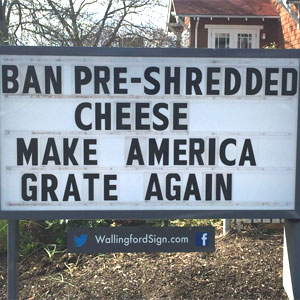
OLDER PESTS: please press here
STATUS : do we have any nowadays?
FEATURED HOMAGE : choose here
FACTS ARE RESET.Are you sure about this?
YOU ARE NOT REJECTED please try again.
WI FI 1 HI FI 3
PLEASE SYN NOW WHILE YOU ARE HERE.
GIGGLE PLAY ON
Share this:

Londinium – Its Genesis
Maths remote
There are so many numbers we can’t count
For we’d need higher orders to denote
So while accountants deal with pence and pounds
We maths professors make travels remote
Some climb hills that all can clearly see
While others scramble on Himalayan walls
But mainly we are Alpine engineers
And even there, we all have taken falls
Uncountable, how deep that mystery seems
Some go mad and suffer frightful dreams
Godel took his work to fine extremes
No wonder Munch foresaw it in his Scream
If you want a rational way to live
Ignore the numbers I mentioned above
Share this:
Men leaning on women
“On one flight my husband was on the other side of the aisle to me. The man sitting next to me decided to sleep on my shoulder and no amount of me trying to slide him off had any effect. I asked my husband to swap places and the problem was soon solved!”
If you are looking for a man friend why not book a flight on a busy airline during the holiday season and maybe one will sleep on your shoulder.After he falls asleep, take a good look at him.If you don’t like what you see get up and walk to the bathroom.He will wake up and not be pleased.U]If you do like him then you may be able to have a chat.But don’t give too much information away.And if you are gay then it won’t be useful as women don’t go in for taking half your seat and nodding off while leaning on you.So we will have to find another way.It is quite expensive to fly so try going on a coach journey.
Or why not just make a cup of tea instead? I did and see how I am now!
Share this:
Math lover
My love was so elliptical it passed
Before the first one realised and grasped
But now I prefer the straight lines to connect
Or perhaps an obtuse angle I’ll bisect
In truth, I married mental furniture
His mind was parabolic in its shape
And filled it was by study and nature
Yet spacious in its arts to let me hope
He did not know of numbers past belief
I enlightened him, yet he was filled with grief.
For as the caterpillar eats the very leaf
Learners are depraved like common thieves
I made an error beating him at chess
And when he died, he left me no address.
Share this:
Why writing when older may be easier
I feel as older people we may be less worried about what others say or think.But the main reason writing poetry could be easier is we have a bigger vocabulary if we have read interesting books and poetry throughout our lives.I do not know before I have written a poem quite what I am going to say.But the structure provides a limiting frame.Then the first sentence determines much of what can follow.But what can follow also depends on what is inside our own head and also on conversations we have had, things we noticed when out for a walk.These may enter us like the air does, without effort or will.So should the poems we read and the novels and the other books we love.Even Euclid might come in handy… a bit of logic does no harm and geometric shapes can be symbols for more than mathematics, where they are more likely signs in fact [ My mistake!]
Share this:
I have, as yet, no face for other eyes.
In the night, I feel he is nearby.
I sense affection, warmth and care complete
Wholly spirit, body he’s denied
I sense him as a flock of geese fly by
Or land, a god, in one enormous sweep
In the night, I feel he is nearby.
I have, as yet, no face for other eyes.
I wish to freely grieve and freely weep
Wholly spirit, body he’s denied.
A man glanced at me, at my golden hair
I washed it in the perfume of his deeps.
In the night, I feel he is nearby.
I did not wait for my desires have fled
Except they visit hopeless in my sleep
Wholly spirit, body he’s denied.
O wait, my dear one, I cannot release
Your soul until my torment has been eased
In the night, I feel I’m crucified
Wholly spirit, body quite denied
Share this:
As long as we feel good

Mary wore her new garnet red winter coat to go to the dentist and doctor who were in the same building.Unfortunately, it was shorter than her wool skirt , which had a quite few moth holes in it
First , she had to see the doctor.
Hello dear, how are you getting on without your husband? Can’t you afford a new skirt?
He calls now and then.He told me he has bought me a house in Ealing.
Did he give you the address?
No, but if I am living in Ealing I shall have to change doctors.
You can change here if you want to.
But I like and respect you, doctor
Thank you so much.Very few people ever praise me.And unlike you, many people come here in dirty old clothes.
I just got this new coat.I may not have needed it, but ,to me, it is a symbol of wishing to return to life again.
That’s a good one.I’d better not tell my wife!
Is she quite extravagant?
Not really.I suppose there is no absolute level of spending which defines extravagance.What is normal for Princess Kate would not be for my wife.It is I suppose a way of dressing so you look ok for the life you lead and does not get you into debt.
Surely you like your wife to look good?
As long as she feels good, I don’t mind.
Anyway, why did you wish to see me?
Well, you don’t come very much so I wanted to see how you were getting on
I had a panic attack in the waiting room just now.I got vertigo
Are you frightened of me, my dear?
No,I really love you, doctor.
Shush, that is not allowed
I just meant in a Christian sense although you are a Hindu.But when it comes down to it all religions are about compassion and love if we look carefully.
That is hard to believe nowadays.
I know.I suppose it’s an ideal to aim for.
All I can do is do my job well and look after my family and my patients.
Find God in the little things.See how small an acorn is and wonder.If I swallowed one would an oak tree grow inside me?
No.it would have to grow by the sewer
Imagine under the ground may be thousands of oak tree growing
Only if silly idiots swallow acorns!
I’m sorry.I have this vivid imagination.Can I have it removed and put a plastic one in?
Not yet but no doubt it will happen.Go outside and walk about a lot
Why?
Because I have decided you are ok and we’ve talked enough.
Thank you so much, doctor.
And so say all of us
Then Mary picked up her red coat which the doctor had not seen and she went into the dentist waiting room.The kind receptionist got her some water as Mary did not understand the machine.Uncountable infinity, yes.Water machines, no.
This dentist was a most beautiful young woman darting about like a coloured fish in the deep ocean.
The filling is still here!The tooth broke.I shall repair it for you.
Thank you, Mary told her.It is almost a pleasure to come here.
Almost? the dentist replied.
It’s a day out for me,Mary told her.I don’t meet intelligent young women like you so much.
Oh ,my.I forgot to feed Emile.Hi , can you send a cab, please? I must go home or my cat will never forgive me.
A handsome young man appeared with a silver car.It almost seemed like a dream.How would Mary know?
He was a Muslim and his wife a Christian.
And both are good to us.
Share this:

They want out
The man who climbed the gantry wants to show
After years of feeling he’s ignored,
If he goes, the whole country will know
He must be quite agile, way to go…
Maybe he’s alone and feels real bored
The man who climbed the gantry wants a show
Around the station, roads are very slow
No trains, so the buses are quite floored
If he goes, the whole kingdom will know
My friend was late and feeling old and low
Then she had a long tale, I was told
The man who climbed the gantry wants a show
Maybe it’s a lady in men’s clothes
Let’s see how this lurid tale unfolds
If she goes, the whole kingdom will know
It makes my body twitch with hot and cold
Nerves electric shoot with pain unlulled
The one who climbed the gantry wants a show~
When they go, the whole world will soon know
Share this:
Up the gantry
Seems a man climbed up the gantry on the track
Electric wires for signals and for power
The trains can’t run unless they get him back
I hope his mind has not begun to crack
For Britain is in tension at this hour
Seems this bloke climbed up the gantry on the track
We can sense since Brexit our great lack
Alienation and its black, doomed flowers
The trains can’t run unless this loon comes back
Our communal feelings are ignored or are attacked
Divided, by the lies of media showered
Seems this chap is up the gantry on the track
The government is sheltered from the flak
Comes what man and comes what bloody hour?
The trains can’t run unless this bloke comes back
At the edge of order, people cower
Ignored and fearful, out they seem to glower.
Seems one is up the gantry on the track
The trains won’t run unless we get him back
Share this:
The politics of poetry
https://www.poetryfoundation.org/poetrymagazine/articles/69080/the-politics-of-poetry
Quote from Shelley
The most unfailing herald, companion, or follower of the awakening of a great people to work a beneficial change in opinion or institution, is poetry. . . . [Poets] measure the circumference and sound the depths of human nature with a comprehensive and all-penetrating spirit, and they are themselves perhaps the most sincerely astonished at its manifestations; for it is less their spirit than the spirit of the age. Poets are the hierophants of an unapprehended inspiration; the mirrors of the gigantic shadows which futurity casts upon the present; the words which express what they understand not; the trumpets which sing to battle, and feel not what they inspire; the influence which is moved not, but moves. Poets are the unacknowledged legislators of the world.
And the second quote is from Auden:
All poets adore explosions, thunderstorms, tornadoes, conflagrations, ruins, scenes of spectacular carnage. The poetic imagination is not at all a desirable quality in a statesman. In a war or revolution, a poet may do very well as a guerrilla fighter or a spy, but it is unlikely that he will make a good regular soldier, or, in peacetime, a conscientious member of a parliamentary committee.

