

To be a pilgrim

 I lost EU
←
A man devout in fasting, prayer and pleas
Made much of what his holiness could do
But pride became a flaw when he asked me
Who are you that I should pray for you?
I am you, I told him, like the bell
That rings when someone dies or sin to quell
God made you and God made me as well.
Such a man makes heaven seem like hell
For though we do good deeds and even pray
We cannot judge ourselves to be the saved
We struggle on the dangerous, frightening way
We cannot judge our sin or other’s grace
If I’m so low then God shall me perceive
I trust him with my heart and I believe
The warm hand that I held has turned to dust
Yet I sense its presence here in mine today
I wish I could restore the loves I’ve lost
And carry willingly the total cost
I loved your repartee, oh voice of trust
I feel an emptiness where mystics pray
The warm hand I experienced turned to dust
The total loss accepted is my prayer,
The face that was familiar is no more
Yet in my dreams ,he is alive again
If ,by a chance, his life could be restored
It would affect me like the hidden chord
Which played, my   own life  force would   go.
That one must live and one must die is plain
The face that was familiar is no more.
Yet in my dreams ,he is alive again
In between the  blackness and the bright,

Graded shades of grey and lilac lie.

These variegated  colours give delight.

And from my soul, I hear a happy sigh.


As we live, we dwell in mysteries;

Must take decisions based on  various views.

And unknown memories from our history

Bring out  the old then misperceive the new.


For  true perception, we must humble be.

Not for moral reasons but for sight.

The emptiness   lets flood creative seas.

And allows  bright  rays of  guiding golden  light.


We need to know we do not know at all.

And, trembling, hold  the doors of vision wide.

So gentle  should be judgements when we fail.

Then errors  we’ll appreciate, not hide.


We will  deal with life unknown, unclear;

Perception is  a better   guide than  fear
It’s nice to know that people in the government are able to refresh themselves with a bit of porn during their work when Brexit is too much for them let alone Boris Johnson and his pals
But must they not be stupid if they don’t have a personal tablet or netbook for private views paid for by them on a mobile network and not by us on our government’s computers
It’s the old attraction of the risk
One minute they are reading the DUP’s demands and the next looking at women’s bare breasts.How does that grab you, the voter?
How much more likely they are to mock women… and they’ve got one ready to burn?
Of course, they may be gay and so look at some man’s .woman’s private parts while phoning the Whips! Not to mention borrowing some whips
It makes me sick
When rotten government ruins these Islands
With economics cruel; with evil choice
When time has seeped like butter in hot sand
Then shall not British choirs sing with one voice…….
It’s time to exit Brexit
With mental ill health, poverty and pain,
Tormenting fears of old and young unite
Should we not stand with courage, with demands?
With common sense and wisdom, let us state
It’s time to exit Brexit
When governing politicians harass and make poor
As bankers meditate in handmade suits
Shall we not hear what the good ask for
And tell the wavering government ,as we shout?
It’s time to exit Brexit
How softly sweetly, gently flowers pose
Carnation,orchid ,daffodil and rose.
For their intricate petals form a shield
Yet bees with striped force shall make them yield.
Appearances, both natural and contrived,
Mixed with the wiles of human nature thrive.
As knowing not, we pluck the apple rare,
And bite its flesh, with teeth we love to bare.
We too deceive the innocent who pass
Not seeing watchers hid behind the glass.
The windows break, the deep earth quakes;
Seized is the maiden, man her virtue takes.
Beneath the surface, force and fierceness thrive.
What fearsome, burning God enjoys our lives?
I spent my adult life in foolish toil
At least it paid the rent and gave me space
Teaching calculus until heads boiled
As for understanding, lose your cool
Infinitely smaller, numbers placed
I spent my adult life in foolish toil
Disappearing just as they beguile
Numbers irritate the mental space.
Games like calculus force heads to boil
Yet if we must learn algebra let’s smile
As neo-liberals lose the human place
I spend my life in Pascal’s counterfoils
One by one the tiny x’s file
Through my dreams to weave the demons lace
The holes of calculus were over-tiled.
When do we know we have found our place
Will it be in black holes of disgrace?
I spent my adult life in pain encoiled
Neither calculus nor boiling oil.
The inner coil and tangle of the wild,
Where rose run mad and holly are as one
Ensure that nature’s heart is undefiled
To these depths, the winter bird’s beguiled
Until the red dawn’s fetched by lowly sun
Through the coil and tangle of the wild.
On the path’s side, brown-green leaves are piled
A thousand beetles search for food within
A hidden space where nature’s undefiled
The cat is waiting, acting like the mild
Then dancing, hunting, acting like his kin
At ease in coil and tangle of worlds wild.
The sun is setting, and the night clouds pile
As lovers kiss, so smiles the holy one,
Living all his natures undefiled.
Now, at last, the darkness has begun
The trees unmoving shield the riots within
The inner coil and tangle make the wild,.
Is the space for soul still undefiled?
 http://tvtropes.org/pmwiki/pmwiki.php/Characters/ClassicalMythology
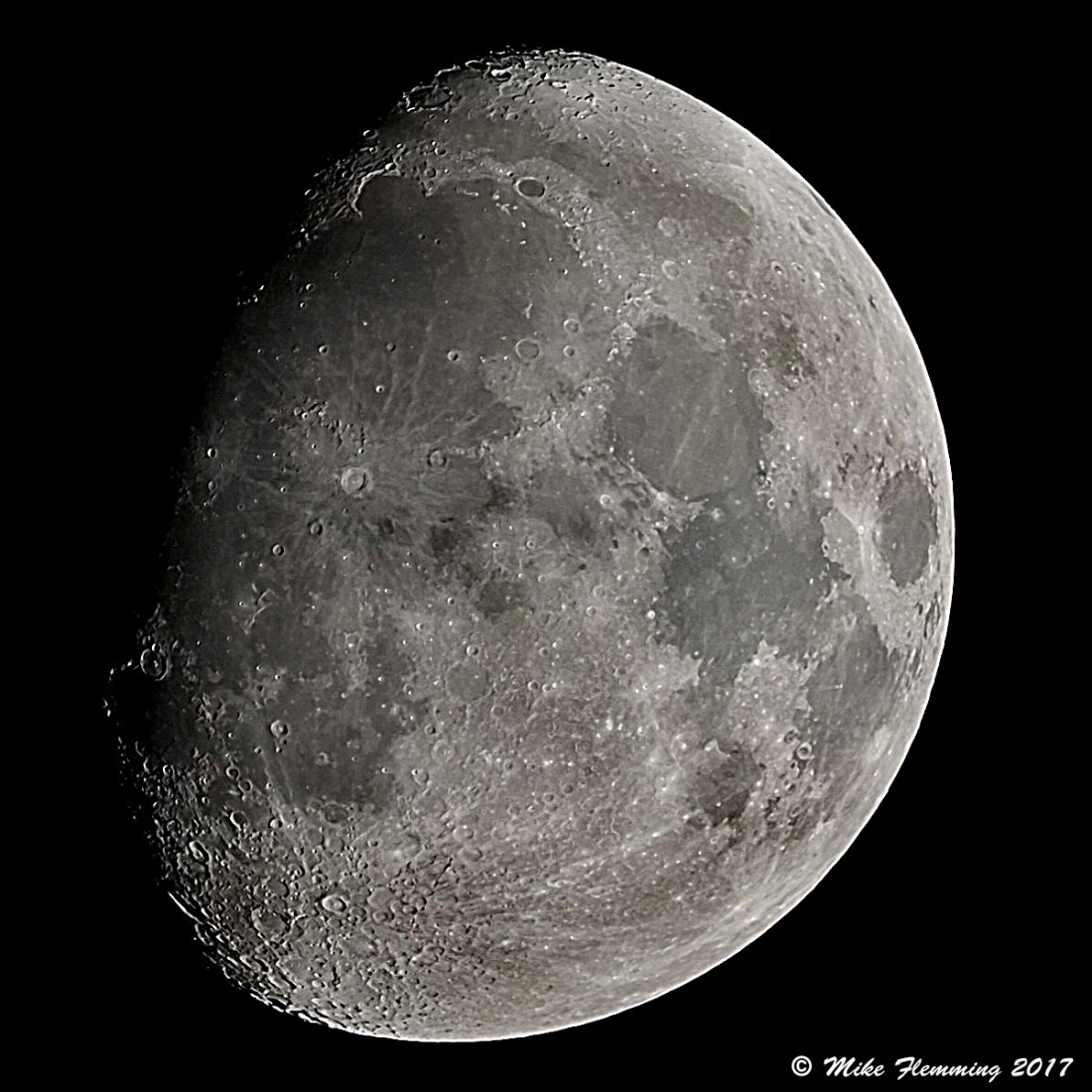
Goddess of young women, of virginity, childbirth (yes, both at the same time), Women’s Mysteries, forests and hills, hunting, and, later, the moon (along with Selene). Essentially a liminal goddess who protected women throughout their lives. The Romans equated her with their goddess Diana.
 , while humanoid, makes her pretty much Lovecraftian. To the point that some Cthulhu Mythos writers identify such statues as an image of Shub-Niggurath.
Oh,take me hold me,love me like you do

With kisses sweet commend me  to your heart

Love me like  a tea of finest brew.

Love me like a coxes pippin tart.

oh,dance  me,swing  me, let me feel alive.

And let me feel your melody anew.

We get what we desire yet don’t deserve.

When one  is made from  love between the two.

Oh. lend me your Greek myths  and Latin wiles

I love the pyramids  that deck the Nile

And transcendental love does me beguile

i  feel tonight  my thoughts keep dancing wild.

So ambiguous is  my attitude to Zen

I wave and then I particle again

Does Classical Mythology Have A Place In Contemporary Poetry?
I went to a talk recently co-hosted by former poet laureate Andrew Motion. During the Q&A he was asked whether Ancient Greek and Roman mythology had a place in contemporary writing. He cited the production at the National Theatre of Ted Hughes’ version of Racine’s Phedre as proof that it was still relevant. But he then went on to say that in his own teaching of poetry he found his students often lacked knowledge of the stories and characters of mythology which he said was a shame, not least because he had to explain background so often.
I pick up this point because if Motion has to explain mythological references to his students, understandably some will ask why poets continue to use them.
I suggest that for modern writers classical mythology offers a shorthand that can be called upon when personal or direct language presents difficulties, freeing the poet to explore ideas. The characters and events of mythology are about the eternally important issues of what it is to be human: love and anger, war and the reasons for war or lack of them, identity and loss, complexities of family relationships, justice versus the rule of law, what heroism means, hope, despair – these are some examples from a long list. The ancient stories are deceptively simple, giving today’s writers the option to interpret events, characters and themes every which way: symbolism and metaphor being two of the more obvious routes that spring to mind. Or a mythological reference can add a layer of meaning bringing interest or a cause for thought.”

Love too great can drown the one adored.
As if Jove sent  tsunami as a gift
Overwhelming all her personal choice.

Little offerings gentle and deserved
Will  not frighten neither be too swift
Love too great can drown the one adored.

Speaking kindly as we find our  voice
Not shouting love, when we ought to desist
Overwhelming of other’s personal choice.

At other  times a lover’s been devoured
By that selfishness, we’re not impressed
Love too great can drown the one adored.

God alone can speak in such a voice
By his truth, all other is expressed
Overwhelming, merciful and right

Eros, selfish, sacred, who resists?
Keep your love in bounds, may it be blessed
Love too great can drown the one adored.
Overwhelming all their personal, unique worth

Mary was sitting looking at the execution of Mary Queen of Scots on TV while also mending some moth holes in her skirt.The only thread she got into the eye of the easy thread needle was blue but nobody was going to examine her with a microscope, she told herself gently
She also was thinking of her winter coat.Was raspberry really a good choice? Would dark grey not be more useful?After all she often sat down on garden walls while taking photos or even on old wooden benches.What she needed was a folding cushion or a small thick towel.No wonder woman have such big handbags.
Annie her neighbour came in the back door with a bag of broken biscuits.
Look at these!We used to get them in the market years ago.So for old times sake, I have hit these with a hammer!
What sort of hammer, Mary asked.
Why, are there different kinds?
Yes,but I expect yours is just the usual medium size.
Actually, it was Ben’s.When he ran away he left it behind.
I suppose it was too heavy to fit into his suitcase.Where did he run to?
I don’t know, said Annie but as his sister in law went with him they might have gone to Australia.
Do men in Australia often love their sisters in law? Mary pondered
Who knows? The point is nobody would recognise them.Although if I went on Saga holiday I might!More people travel now.My friend Jim went to Borneo last year,said Annie in a tone of wonder
So if we became lesbian lovers we could not hide in Borneo!Where could one hide now with all this travel?
Disguise might be best, Annie whispered.You could dress like a man!
You must be joking, at my size.
Well, there are plenty of fat men!
But would they have a shape like mine?
So the two friends while away Saturday afternoon, both now darning Mary’s other clothes.
Why don’t you just buy new clothes, Annie murmured kindly.
I can’t afford this quality.I shall have to keep combing Emile until I get enough fur to make into a thread.Then I can knit a scarf!
How ridiculous, You’d need a herd of cats to get enough, Annie informed her with pity.
What a lovely idea, Mary cried.But Emile might be jealous.Or he might enjoy meeting a lady cat… or two.
I don’t think you could have more than six cats here and with food and bills it would be cheaper to buy wool
Still, a ball of wool is not so good to sleep by as a cat,Mary pondered slowly.And it has no loving eyes to look at when one comes in from the shops.
I suppose just holding wool in the hand might be very soothing,Annie retorted logically.
Otherwise,we could join Soulmates she continued fluently.
Would men be attracted to a lady with darned moth holes in her clothing? Mary enquired humorously
Well, it would show you were economical and thrifty, Annie cried sensitively
Surely that is not the main reason men choose a woman partner, said Mary wonderingly.
I suppose they like a woman with a gentle sensitive nature.Annie screamed
Well.Denis Thatcher didn’t, Mary informed her delightedly
So true, but was she different once?
No, he wanted to be dominated.Mary decided.
I wonder if he liked being whipped, Annie thought having read 5o shades of whey
She could have used the Government Whips, Mary chortled.
Both the women burst out laughing so much that the sofa fell over and flung them onto the thick red and purple striped acrylic carpet
That sofa is unstable, Annie shouted.We could have died
Perhaps it’s us.Mary shrieked
Emile ran out into the kitchen and bit a piece out of the Xmas cake.
I can’t help it, he mewed.They are both getting madder by the day
And so say all of us
Emile’s a jolly good yeller
So pray for all of us.
 https://openjournals.library.sydney.edu.au/index.php/SSE/article/view/326/299
” One of the things those poets had
in common I think was the post-war mood of having had enough
… enough rhetoric, enough overweening push of any kind, enough
of the dark gods, enough of the id, enough of the angelic powers
and the heroic efforts to make new worlds. They’d seen it all turn
into death camps and atomic bombs. All they wanted was to get
back into civvies and get home to the wife and kids and for the
rest of their lives not a thing was going to interfere with a nice
cigarette and a nice view of the park. The second war after all
was a colossal negative revelation. In a sense it meant they re’-
coiled to some essential English strengths. But it set them dead
against negotiation with anything outside the cosiest arrangement
of society. They wanted it cosy. It was an heroic position. They
were like Eskimos in their igloo, with a difference. They’d had
enough sleeping out. Now I came a bit later. I hadn’t had enough.
I was all for opening negotiations with whatever happened to be
out there. It’s just as with the hawk. Where I conjured up a Jaguar,
they smelt a stormtrooper. Where I saw elementals and forces of
Nature they saw motorcyclists with machine guns on the handlebars.
At least that was a tendency…..”
The fire was burning, hot and red and good
The Christmas tree placed on the shelf above
We saw strange, little faces in the wood
In the Crib, the figures gently stood
A light of blue made this a place of love
The fire was burning, hot and red and good
All the ornaments were made by Dad
A gifted man who died before Dads should
We all watched faces in the burning wood
Later Christmas was desired but dread
He would have come to earth if he but could
The fire still burning, hot and red and good
My heart was filled with treasure from the dead
So I survived the loss from those above
I saw his face like Joan of Arc’s in wood
We yearned for our Messiah like good Jews did
But after many years we still were sad
The fire was burning, hot and red and good
The Holy changeless in the fiery wood
In my yellow puffa on the bus
A man at once stood up to let me sit
I stood out like a shark would in a tub
I may look like the monster from Loch Ness
And make Sts Paul and Peter both have fits
In my yellow puffa which bees love
Do not fear I”ll sting you like wasps would
When I wear the rest of my new kit
I stand out like a shark would in a tub
I promised Jesus I’d be very good
So lighted is the candle of my wit
Like my yellow puffa on the bus
But goodness needs the grace of Him above
And cannot be achieved alone by will
I stand out like an eagle would with doves.
Maybe such bright clothing’s overkill
In the darkness, hold me and be still
In my yellow outfit from the bus
I ran out like a torrent in full flood
 https://magmapoetry.com/archive/magma-51/articles/13-ways-of-making-poetry-a-spiritual-practice/
“4. Engage with Primary Experience. Engage with direct experience through the physical senses – sight, sound, touch, and taste. Secure yourself in that. Keep coming back to that. In Buddhism this means the systematic cultivation of mindfulness. So, feel the sensations of your body as you walk to the tube, taste your tea, listen to music or birdsong. Consciously drop beneath the racket of thought – the repetitive mental chatter, the worry and flurry – into direct, unmediated sensation. Then the richness of life, rather than the hubbub of thought, will find it’s way into your poems.
5. Develop Imagination. Imagination is the synthesis and transcendence of reason and emotion. It develops out of our engagement with primary experience and is leached away by the alienations of distracted thought. So often we think one thing and feel another; or we don’t know what we feel; or our thoughts are really nothing but the half-baked views of the marketplace and the media. Imagination brings the whole person together – thought, feeling, volition, perception – into a single act of creation. You have to discover imagination, uncover it, find the place where the poem takes off and leaves you behind. Imagination always goes beyond you.
6. Beware ‘Fancy’. Coleridge contrasts imagination or the ‘imaginal faculty’ with ‘fancy’. Fancy is the same old thing – the same old you – arranged in bizarre, arbitrary combinations. Nothing genuinely new comes into being with fancy; no deeper perception has been unearthed; there has been no discovery, no realization of the thought the poem is trying to think. Fancy is characterised by ‘empty images’ and/or ‘empty thought’ – either the poet’s images have no internal necessity or purpose, or the poet’s thought has no emotional commitment or foundation in experience. Fancy can be brilliant, even virtuosic, but it is incapable of moving us. Imagination unifies reason and emotion: thought finds its place in immediately loved images, while images are underpinned by genuine thought. This unification of thought and feeling is experienced as having value – we feel that that something both meaningful and pleasurable is being communicated, and this is inherently satisfying. Fancy, on the other hand, is a kind of showing off.”

Psychoanalysis is a dialectic, what Montaigne, in book III, chapter VIII, calls an art of conversation. The art of conversation of Socrates in the Meno is to teach the slave to give his own speech its true meaning. And it is the same in Hegel. In other words, the position of the analyst must be that of an ignorantia docta [learned ignorance, scientific ignorance], which does not mean knowing [savante], but… what is capable of being formative for the subject…. If the psychoanalyst thinks he knows something, in psychology for example, then that is already the beginning of his loss, for the simple reason that in psychology nobody knows much, except that psychology is itself an error of perspective on the human being” (Seminar I, p.278).
I was sitting at the bus stop feeling bold
My body hot in down plus thermal vest
Eating an egg sandwich with green mould
My head was reconstructed in the jail
A hat can be a demon, scarves are best
I was waiting in the graveyard in the cold
I really would have liked a bacon roll
The shop was Jewish so I said, Shalom with zest
Eying that egg sandwich with green smiles
My grandad spent his whole life digging coal
And now he suffers from eternal rest
I was sitting at the bus stop, my, it’s cold
I read that we are human, not emails
I write two and send them unaddressed
How that friedried sandwich with green mould?
Would you ever get a bit depressed
When you got cancer from the love you lost?
I was sitting at the bus stop with my soul.
Eating nutty sandwiches cats mauled
“People become the poem” – Interview with Syrian-American Poet Amal Kassir
“A lot of women will not respect what I am saying because I am covered, and that must mean I am a subjugated woman (a girl wrote a counter-poem in response to “For the Ladies”, and that is what she said).
Would you allow the label “feminist” apply to you?
Some Muslim women did not respect my poem because they felt like my performance was not modest.
Sounds like you’re caught in the middle.
Caught in the middle? I wouldn’t say so. My poem is a response to how many of the women in my society treat Muslim women as an inferior specimen of woman because they cover their bodies. I am not making a religious statement so much as I’m making a social statement. I am advocate of women’s rights. I do not support the patriarchal dictatorship of many Middle Eastern, Islamic countries that impose restrictions on women because of their gender, such as education and going out (important to recognize the difference between culture and religion), but I also don’t respect a patriarchal society that tells women being naked is being liberated while the male dominance in political offices goes on. Women’s rights don’t depend on what a woman is wearing — I do believe modestly is important, especially in such a sexualized society, but I am not going to discredit a woman who doesn’t wear hijab. The key is education. If women can learn their rights and how patriarchy is playing a role around them, they can mobilize as one unit and crack the foundation of the male-dominated society we live in.
In Saudi, though, the laws are not in favour of women. There are more women in the Saudi government than there are in the American government. The largest percentage of University students is women.
Now imagine if the curriculum was crafted to culturally accommodate Islam as well as feminist theories into one single productive system that could potentially teach women all over how to empower themselves through their minds.
I do not perform my “For The Ladies” poem very often anymore because it attacked women they way women attack the hijab, and it’s not entirely productive to communicate through that means.
Could you channel the same passion that you had in “This Is For The Ladies” into a poem on a similar theme, and which doesn’t attack women?
Of course. That doesn’t mean I will step away from my beliefs that the hijab is a tool of female empowerment, and I will continue to argue against any feminist theory that attacks a Muslim women and those who chose to cover. I will publically point out patriarchy’s role in a lot of feminist approaches, but I also won’t slut shame a woman.
I will keep an open mind, because if women work together, we can fight oppression. Unfortunately right now, we are fighting one another’s version of feminism and we aren’t getting to the source that is

When true love’s gone and doom hangs over head
When life runs like a river to the sea
Then shall I take new lovers to my bed?
And with their carnal touch consoled be?

When my lover raves so breaks my tender heart.
When life seems grey and rocks bestrew my path.
Then, shall I my life of evil start,
And on the world shall I bestow my wrath?

When such love lies and wrecks all loyalty.
When puzzlement makes all my world seem mad,
Then I shall upend causality
And let myself do deeds which make me glad.

For I have love’s sweet child inside my soul
And I shall tend her till at last she’s whole
 http://www.thecrimson.com/article/1955/5/20/poetry-of-moral-issues-pharvards-edwin/
“Harvard’s Edwin Honig is one of many contemporary poets who are also full-time teachers at universities and colleges. As such he is in danger of being labeled and passed off as just another member of a group in whose work readers of poetry have come to expect generally good craftsmanship, an unusual precision of language, and disappointingly little in the way of content. In the most important respect, however, Honig breaks this pattern; his poems are indeed characterized by the precision of the scholar, but they try to be serious comments on matters of unusually basic importance. The title of his recently published volume, The Moral Circus, is indicative of this intention.
In these poems, Honig most often adopts a position of removal from the subject he is treating, so that even his description of a very personal incident in “Do You Love Me?” combines dispassion with its emotional impact: “. . . Her dying sigh denies/The quiet settling idly on/His polished shoe. One blunt toe/Gleams back a flawless eye at him/As he dangles from the sigh.” The poet reports single acts or aspects of the circus: the morality or the moral are implicit in the way he sees them and transmits them to the reader. And it is at this point that Honig the poet becomes important.
Poetic Flexibility
It is fortunate, therefore, this his linguistic precision does not result in the sort of dryness or lifelessness which is often associated with the work of contemporary academic poets. This is no doubt partly because his facility with language and prosody allow him to fit the words and form of the individual poem to its subject in the light in which he sees it, where less gifted or skilled poets would find their expression cramped by a self-imposed strictness in form and diction. A comparison of two passages, one from “First Morning,” and the other from “Corrida,” shows this flexibility:
Nude and tall the morning sang
The clammy beach, the rustling foam;
Striped green and tan
The morning swam
The rustling air, the ravelling sand.
The silence of lover to lover, the world to be lost.
Government, race, and universe caught
On the lash of an eye, a flick of the wrist,
Before the tiny new opening rose of death.
There is an essential, stripped-down–quality to Honig’s poetry; it is clean of superfluities, nothing is overstated. Thus, without feeling any emotionalism in the author, the reader is aroused and given the mood in a few, terse lines. The poet does not often stop even to arrange a setting, but cuts immediately to the important question at hand, the particular act in the moral circus.
Unobtrusive Skill
The most important thing about Honig’s skill as a poet is that it is unobtrustive. He cannot afford to let flights of technical proficiency distract his readers from the spectacles of the moral circus that he is showing them, and so he keeps himself the lens through which they observe. When he distorts it is to clarify or magnify the hidden part in which he feels the meaning lies, never to call direct attention to his own feelings or flaunt stylistic achievement. In this record of the greatest show on earth the poet breaks his reserve only to let a little wryness creep into certain turns of phrase, sudden words that seem to betray a tiny, noncommital wrinkle at the corner of the mouth. But this is an individuality which does not mar the observational clarity of the poems.
Honig’s willingness to treat the carnival of humanity on a moral level and his remarkable wit and facility in doing so give his poems a strange quality that is at once disturbing, provocative, and entertaining. They are not more exercises with words and meanings, nor are they pedogogical recitals of moral truth. They are experience, and like all things true their connotations are deep, direct, and mysterious.
The gravity of loss brought me to earth
Beneath the rotting leaves, I lay with worms.
I wondered if I were of any worth

No more to be enchanted by love’s mirth,
I  with unnamed particles was turned.
The weight of loss bears down the heart to earth.

I could not rise alone but saw a path
While I slept a unity had formed
I learned I need not think of what I’m worth

My sorrow brought no guilt nor fear of wrath
I am both  eagle and  a twisted worm
In my little grave, I  loved the earth.

Like the adder, shocked into rebirth.
I from silent underworld had learned
Not to judge my soul or what I'm worth.

I shall not  fear the flames of hell that burn
When blackness is accepted, may one learn?
The weight of loss breaks down the soul to earth
With dusty shredded leaves, we then converse



 Dr
Dr


