Thinking about what is called thinking [Heidegger]

I have now got the book “What is called thinking” by Martin Heidegger despite my qualms about his political history.I know he wrote it in German  and hence a translation may  give a different meaning so maybe my thoughts are not sensible….and my first thoughts are………….. it is fascinating title.He is looking at an activity that we humans do.He is asking what it is we do when we say we think.So before I read it  I am putting a few reflections.Thinking means standing back,waiting and reflecting.Often we do things  because our parents did or our friends.Then sometimes we wonder about our life,we pause and try to examine how we are living.Or we could be solving an intellectual problem.Some things like quadratic equations can be solved by a formula.And many people are happy just to perform this rote activity But even though its math,you are not thinking when you do that.And I have an intuition  that we avoid thinking much of the time because we step outside our automatic patterns.I once read an article that says depression comes on us when we face a problem at the unconscious level.The tiredness,slowness and painful feelings make us withdraw and that gives our minds time to reflect.So there must also be unconscious thinking.Maybe  that  other mind  uses images as  in dreams.And we all know that “sleeping” on a problem often produces a solution.Thinking may not be verbal all of the time.And we must have something to think about.We  must be participating in the world of Others.Language comes via others.We are part of a society…at first just a few family members.But our tongue is shared with many people.And when we think in words,those words came before us and go on after us.

Maurice Saatchi talks about his wife Josephine Hart

Maurice Saatchi talks about his wife Josephine Hart

This is a very beautiful story.I only just found out the Saatchis are Jewish and were  born in Iraq.Like nearly all the Jews there they had to flee…and they’d been there 2,000 years .I knew one myself who was an economist.Josephine Hart did a lot to encourage enjoyment of poetry and she also wrote novels.The Saatchis are famous for their advertising agency….

Speech

I am unable to find what I wanted to about Bion and thinking but I found something else

from which I copied a quote


Image

 It is too often forgotten that the gift of speech, so centrally employed, has been elaborated as much
for the purpose of concealing thought by dissimulation and lying as for the purpose of elucidating
and communicating thought. – Wilfred Bion


94. You can cure me, right?

Very short and funny

dieterrogiers's avatar300 stories

 “You can cure me, right?”

The psychiatrist pretended to polish her glasses.

“It’ll take time. Patience. Perseverance. But yes, I think I can cure you. You haven’t lapsed a single time since you sat down on that sofa for example. That tells me there is hope.”

The patient expressed his gratitude through a subtle tear rolling from his eye and – later – by writing a big fat check for twelve more sessions at doctor Monroe’s.

“So what was his problem?” her secretary asked.

“You remember that leaflet about protecting the bees the government stuffed into every mailbox in town not that long ago?”

“Bee a friend.”

“You recall the title, hey?”

“It’s a nice pun.”

“Well, apparently he’s the guy that wrote it. Big shot copywriter. Great at witty puns. Trouble is, he can’t stop punning anymore. Every time he hears the word bee or honey or even pollen…

View original post 134 more words

The Degradation of Ethics

See this

larvalsubjects's avatarLarval Subjects .

alienAs I teach Aristotle’s Nichomachean Ethics (along with the thought of Epicurus and Epictetus), I’m struck by just how much our ethical discourse has changed.  This is attested to by what is absent in these discourses as much as by what is present.  What’s so striking in Aristotle, is that the question of ethics is one of eudaimonia, happiness, or human flourishing.  How ought we live our lives in order to attain human flourishing or happiness, he asks?  Similarly, in the case of the Epicureans and stoics, the question is one of ataraxia, peace of mind, or tranquility.   For these thinkers there is a clear telos to ethical thought and action:  happiness and tranquility.

Such questions seem thoroughly absent from the ethical thought of the last couple hundred years.  Ethics instead seems to become a question of how to determine the rules that should govern behavior and…

View original post 872 more words

“What is called thinking” by Heidegger

What is called thinking”         by Heidegger

This seems a good introduction to the book and to discussing thinking  in our era

Short Extract from the article

Heidegger refers to Nietzsche’s diagnosis of our age as a time of nihilism: “The wasteland grows.” If it is Being that most calls for thought, what most calls to be thought about in our age is the forgetting or withdrawal of Being. And it is due to the withdrawal of Being that we are still not thinking. In contrast to Hegel’s notion of history, Heidegger’s is a history wherein we find ourselves increasingly fallen from and more distant from Being. Being withdraws in our technological age as the experience of thinking is reduced to calculative rationality. “Thinking” has become the experience of using rationality as a device to operate on a world of things already reified into a network of ends. In our age, Heidegger (1968) will go on to argue, ratio has trumped legein. The thoughtfulness of calculative rationality threatens to obliterate the possibility for being-thoughtful.

What is thinking?


A propos of the quote from Doris Lessing,I turn over this question in; my mind.Thinking is not having  sentences or words passing through our conscious mind like,I envy that person who has just been on a cruise/bought a large house;did I lock the door; is my new neighbour gay;why am I here?

I assume people meditate to stop that mental chatter.If you stop it you may  find a painful feeling hiding.

So what is thinking?My mind goes blank.Is it a conversation with onesself or another?

When we have to make a decision,talking it over enables a seeing of different aspects/by one’s self,thinking may be a kind of confrontation .facing some idea,,,,dwelling on it.

It seems so simple but I don’t know what it is.


A thorough exposition of Levinas’ thought from Stanford Philosophy Dept

A thorough exposition of Levinas thought from Stanford Philosophy Dept

This seems the most comprehensive  account I can find of Levinas work and also a brief biography.I ammm waiting for my book which may be simpler.If not I’ll study this

Honesty from Doris Lessing

Doris Lessing

“Sometimes I dislike women, I dislike us all, because of our capacity for not-thinking when it suits us; we choose not to think when we are reaching our for happiness.”
Doris Lessing, The Golden Note

I looked up Levinas’s life

I found quite a good  short  account of the main outlines of Levinas’ life and work here.How very ironic he studied with Heidegger.His ideas seem very different from the philosophy I have studied before.I am well read but have only just heard of him when reading about Peter Lomas.I feel he may be very important in this world we now dwell in.I am unsure if I can understand his writing but have ordered a book by colin Davis

Reading like a writer

“I’ve always found that the better the book I’m reading, the smarter I feel, or, at least, the more able I am to imagine that I might, someday, become smarter.”
Francine Prose, Reading Like a : A Guide for People Who Love Books and for Those Who Want to Write Them

This book is fascinating whether or not you are writer

The most amazing thing……………Doris Lessing in wikiquotes

I never even heard of wikiquotes!Then I find a whole page on Lessing.Oddly.though I  read most of her books years ago I didn’t register most of these sentences.She is more than just a novelist,or should I say she is what novelists may aspire to be.,she thinks truthfully and with imagination

    • Political correctness is the natural continuum from the party line. What we are seeing once again is a self-appointed group of vigilantes imposing their views on others. It is a heritage of communism, but they don’t seem to see this.
      • The Sunday Times, London (10 May 1992)
  • It is terrible to destroy a person’s picture of himself in the interests of truth or some other abstraction.
  • If a fish is the movement of water embodied, given shape, then cat is a diagram and pattern of subtle air.
    • Particularly Cats, ch. 2 (1967)

Discover Francine Prose and what she reads

Francine prose

Francine prose3francine-prose 2

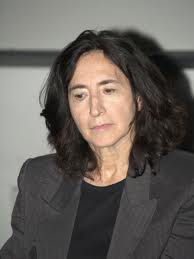
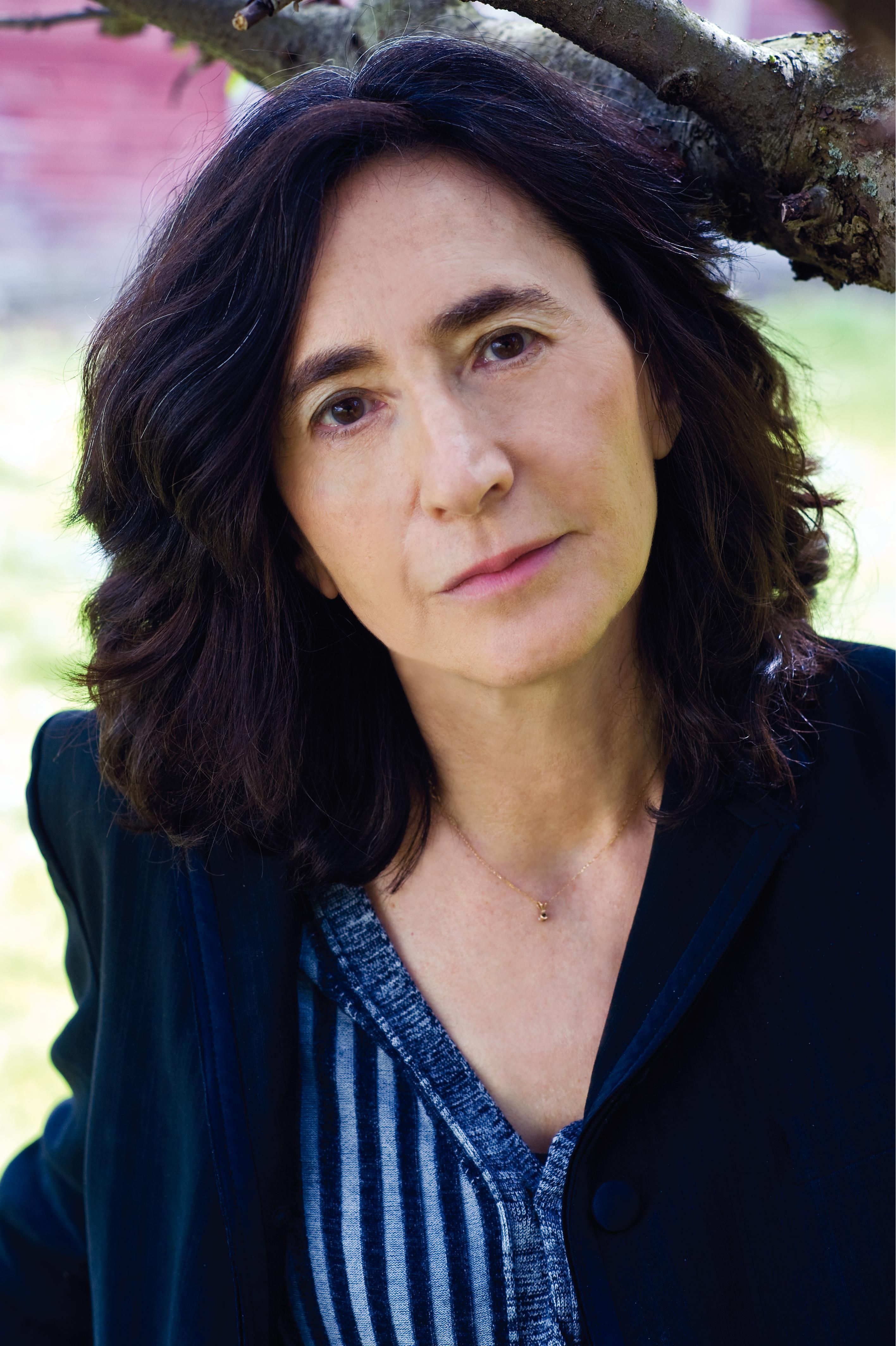
I greatly like the writer  Francine Prose and just read an interview witth her.And secondly I found a piece where she talks about her favorite books.I looked at her images on Google Image because I like faces.There are lots of photos of her at different ages and in different moods.I think she has a fascinating face.And mind

Paul Gordon,author of the article about Peter Lomas: A quote

I use the word sceptical deliberately for this book owes a great deal to the sceptical tradition within philosophy. This position has nothing to do with an extreme posturing found in some self­ styled postmodernist circles that questions whether we can really know anything, whether there is any such thing as truth. (According to some extreme variants there is no objective truth – except, apparently, the statement that there is none.)

Gordon, Paul (2012-12-15). Face to Face (Kindle Locations 85-88). Paul Gordon. Kindle Edition.

About Peter Lomas

About Peter Lomas

Although Peter Lomas was a psychoanalyst he was a rare rebel,a wonderful writer and a master of the language

I read his books regularly for their wisdom and courage.And his stories.Most of all I love his truthfulness


“In this regard, the centrality of ethics in human relations, I think Peter has much in common with Emmanuel Levinas, the French Jewish thinker who put ethics at the very heart of our being, as what makes us human beings, ethics in the sense of the priority of the other and our responsibility to that other.  Of course Levinas’s language was not Peter’s, but for myself I still find him inspiring, despite the predictably obscurantist and cliched ways in which his thought has been taken up and the horribly religious-like tone of too many conversations about his work.  Not for the first time is a return to the source called for.”

From the cited article

Simone de Beauvoir

If you want to be well supplied with reading for the winter,here is someone who wrote both novels and the famous book,The Second Sex.You probably already know de Beauvoir was the partner of Jean Paul Sartre though it was an open relationship.Despite her saying she wanted freedom I suspect she was not totally happy with  that situation and also had many abortions….such a choice is not one most women would make.Here is an interview with her in the  Paris Review

But I just want to introduce her novels here.And thisis for a gneral reader,not an academic.

The most ambitious is “The Mandarins“.It is very much based on her own life and caused much pain to her ex lover Nelson Algren,the writer.You will get a very good idea of post war intellectual life in Paris amongst the founders of

Existentialism .And there are many  portraits of those people and their relationships.My probelns with this novel is

It looks like a novel

It feels like a novel

It’s written  like a novel

But does it come alive?

For me  it is too cerebral and there is  little /contribution from  or  openness to the Imagination.I feel it was written by will power and not by the head and heart.Everything is a little detached,a little cold

On the other hand where is all that commitment  now in our political/cultural  life?