The light that is enough

Attracted by the light that is enough

We need not look for wisdom somewhere else

Wandering through the world so dark and rough

We may find the secret in ourselves

The sacred is as spare as leaves are fine

No wasted bud no colour in excess

So loving senses decorate the mind

We need not hide from chaos or distress.

The secret Life is here, the everyday

This is where we know the mystic light

Our tongues alone will tell us what to say

Our normal eyes will show us holy signs

for with our shadowed selves we rightly play

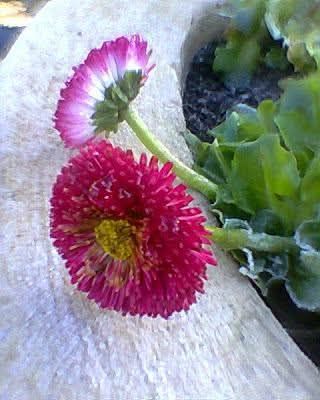
Enlightened by the flowers so wild and free

The sacred is on earth for you and me

Love gives the soul her appetite.

Love gives the soul her appetite.

Though the night is black and starless,

The inner guide is never careless.

The notes are struck,the tune is played,

Plain melodies are overlaid.

In this chant and benediction,

Healing comes for desolation.

Though the passage way is narrow,

This road is the one to follow.

Struggling through the mud and mire,

We see,in darkness, tongues of fire.

The sacred centre of our life

Is never found without some strife.

Just then, the dark and light combine.

To create a symbol for the mind

From (finally) being given the Booker prize to the day her partner died: an exclusive extract from Margaret Atwood’s new memoir | Margaret Atwood | The Guardian

https://www.theguardian.com/books/2025/nov/01/margaret-atwood-memoir-extract-booker-prize-death-of-partner

God in search of man

AutumnLeaves2017.jpgIt is customary to blame secular science and anti-religious philosophy for the eclipse of religion in modern society. It would be more honest to blame religion for its own defeats. Religion declined not because it was refuted, but because it became irrelevant, dull, oppressive, insipid. When faith is completely replaced by creed, worship by discipline, love by habit; when the crisis of today is ignored because of the splendor of the past; when faith becomes an heirloom rather than a living fountain; when religion speaks only in the name of authority rather than with the voice of compassion – its message becomes meaningless.

Abraham Joshua Heschel in God in Search of Man: A Philosophy of Judaism

About our minds and emotions

unpicasso2.jpg

https://www.newscientist.com/article/mg13818697-200-mind-body-modes-of-mind-what-have-small-children-playing-with-dolls-in-as-edinburgh-nursery-got-to-do-with-buddhism-one-psychologist-says-she-has-found-a-link/

. “It is
in the second half of the book, however, that Donaldson asks herself that
‘very important question’: do the emotions develop in parallel with the
intellect?

She takes as her starting point the fact that many people report intense
emotional responses to works of art or to nature and, further, that many
also report having powerful ‘spiritual’ experiences. These kinds of experiences
interest her because, like the thinking of the advanced intellectual modes,
they seem relatively free of entanglement in ‘narrow personal goals’.

But such experiences are rarely the subject of scientific scrutiny.
So to study them, she is forced to look at how they have been perceived
in the past and how the world’s great religions, especially Buddhism, evaluate
and attempt to cultivate them.

She concludes that there are indeed advanced modes of development for
the emotions. Since these emotions are deeply significant for the people
who experience them, she calls them ‘value-sensing’. She identifies a ‘value-sensing
construct mode’, which is the realm of the arts and of religious myth and
ritual, and mirrors the intellectual construct mode with its scientific
thought. And then there is a ‘value-sensing transcendent mode’ which is
the realm of spiritual experience, and mirrors the intellectual transcendent
mode with its mathematics.

She describes these modes as ‘advanced in the developmental sense, in
that you can’t get them in the early stages of living. They are also perhaps
advanced in another sense, in that they have to be cultivated more than
the early ones. There may be flashes of either emotional or intellectual
insight, but to cultivate them you have to be systematic and disciplined
and you rely more heavily on teaching.’

Her ideal is to be able to move from one mode to another at will. We
may choose to think logically about a problem, for example, when that is
useful to us. In the same way, it can be useful to have transcendent emotional
experiences. ‘They put our personal goals into some sort of perspective.
By being more aware of our emotions and valuing them more, we might live
more happily and society might work better.’

She concludes by speculating on the possibility of a ‘dual enlightenment’
in which intellect and emotion are equally valued. If that happens, ‘we
may come to feel less embarrassed about and suspicious of transcendent emotion,
seeing it as no more ‘weird’ than the capacity for mathematical thought’.
Each of these, she says, is ‘a normal, though generally ill-developed, power
of the human mind’.”

Moving equilibrium

The fatal equilibrium of death

The lonely people pondering on their wrath

The dancers on the ice maintain their flow

Discipline and time love to bestow

A Negative Freedom: Thirteen Poets on Formal Verse

https://lareviewofbooks.org/article/a-negative-freedom-thirteen-poets-on-formal-verse/

Among the many reasons poets choose to write formal poetry in the 21st century is an intuitive distaste for the imitative fallacy. To write about chaos, one need not write chaotically. It’s only a minor paradox to say that discipline and constraint unlock freedom. Steele goes on to say that form-minded poets are assumed to believe that “the universe is a nice, neat, orderly place.” On the contrary, he says:

I suspect that most people who write in forms feel that the obvious disorder and chaos of the world afflict us intensely, coming 

Not Yet There: Publication: On Not Knowing: How Artists Think

http://not-yet-there.blogspot.com/2013/09/0-0-1-192-1097-nottingham-trent.html?m=1

How far does our openness to aesthetic experience, and new forms of knowledge, depend on our capacity to enter and indulge states of wonder and awe, doubt and failure, ignorance and play? How critical are these conditions to the creative process? How do artists invite the unknown into their creative practice? On Not Knowing brings together contemporary artists and thinkers from a range of disciplines to explore the role of ‘not knowing’ within the creative process. The state of ‘not knowing’ or engaging with the unknown is an important aspect of all research. For artists it is crucial, as the making process often balances a strong sense of direction with a more playful or meditative state of exploration and experimentatio

Being labelled a Highly Sensitive Person was validating and empowering – until it wasn’t | Health & wellbeing | The Guardian

https://www.theguardian.com/lifeandstyle/2025/nov/23/highly-sensitive-person-discovery-label-validating

Tears well up and wet my eyes.

In the land that dreams dwell in
where love and hate and joy begin;
where swiftly the deep rivers flow
from those lost lands of long ago.

I wander through wild poppy fields
Underfoot the dark earth yields…
I see the flowering fruit trees start
Their blossoms gather round my heart…

I hear the sparrows sing with joy
And bees their busy wings employ.
In those lost lands I saw your face
And now I long for your embrace.

Are you real,am I deceived
From this earth we all must leave.
Earth to earth and ash to ash
Glory,pride and boasting pass.

You have left me, dearest one
Soon I too will be called on.
Nothing lasts but truth is real
Keep your heart and your ideals..

Earth to earth, we rest in clay
We must give all self away
Softly on this earth I roam
Seeking for my love’s new home

For until the very end
Love and newness

may descend.
Even one glance of an eye
Can love convey when all’s awry.

Soft as wings of butterflies
Tears well up and wet my eyes.
My heart has melted into yours
All shall grow and die like flowers