Month: July 2024
Ripped in half

Loneliness, the word’s not strong enough
For widows and their masculine counterparts.
Ripped in half, that’s more the phrase; like tough.
No arms left now, that never will rebuff.
No eager lips which whispering love impart
Loneliness, the word’s not strong enough
People say, of course, the going’s rough
The coming’s gone and nothing shall gestate
Ripped in half, that’s more the phrase; like, tough.
Never more to share cartoons and laughs.
Never more to be a chosen mate
Loneliness, the word’s not wrong enough.
Did we know the heart of what we had?
Did we learn the art of love. of fate?
Ripped in half, that’s more the phrase; like, tough.
You have gone and closed now is the gate
In a mad ball, I dance with love and hate
Loneliness, the word’s not strong enough!
Ripped in half, that’s more the phrase; like, tough.
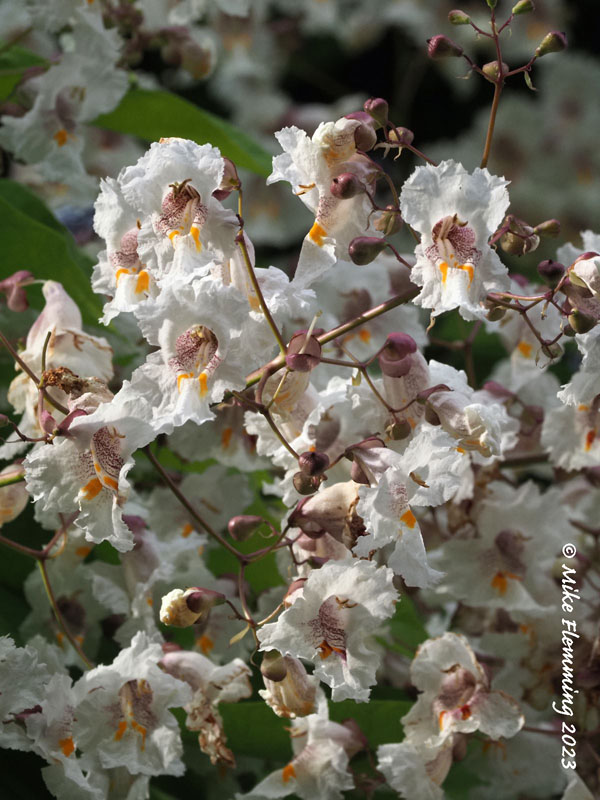
Flowers
Flowers by virtue of design
Appeal to both the heart and mind
First, perceive and then dwell on
Beauty, truth and thus reason
The baby turns
Inside the mother’s womb the baby turns,
Unaware of Earth and how it burns
The mother weeps, shells fall the baby cries
How many flowers and doves are soon to die?
What a waste of people,jewesl Wars
Human sacrifice.. what is it for?
We think that we’re more civilized but ,no.
We idle life away with TV Shows
Livelyz foolish wiilling ignorance lives
Glowing bodies, minds and hearts like sieves
Yet women have such courage in hard times
Knotting children’s worlds with nursery rhymes.
Sheltering little bodies with their own.
Singing ancient songs,oh blood oh bones
Financial advisers on 18 foolproof ways to spend less and save more
Original sin is in society not in human beings especially babies.

Why am I thinking about original sin? No one talks about sin nowadays though nor about evil and yet in the last 120 years we had two terrible world wars we had the Holocaust we had Stalin not to mention the other more recent tragedies; you all know what I am referring to I think
That human beings can be involved in evil matters. What original sin was meant to be something that babies were born with something to do with sex being evil according to Santa Augustin of Hippo.
. So what is the problem?
Well I have a different explanation. Someone born into the economic system presently in Britain will be better off the many babies are in other parts of the world.
Yet the staff in care homes are not able to do their job with 100% satisfaction because the prime purpose of this care home is to make money for the owners and in order to make money you’ve got to charge a certain fee but not so high that no one will those who afford it with high enough to make a profit.
Well you can do this by having the minimum number of staff and paying them the minimum wage which currently in London is about £10 an hour.
There are never quite enough carers to answer the people’s bells as quickly as critical would like them to. So sometimes the people who can’t walk and therefore are in the gracious need will start to scream and shout or cry and sog and this can be very distressing for all of us to hear. Then they criticize the carers but it’s not the carers fault is it if you have say 18 people needing care with only two carers on duty then someone loses out. It’s like Darwin’s theory of evolution that the strongest will beat the weakest and the strongest of the old people even when they have dementia can dominate the atmosphere
They do get more attention simply because you can hear them so much. It can be tragic sometimes but it’s even more tragic to me to see the ones who have not got dementia but maybe have got cognitive decline and they’re just sit there half dead in the silence.
They are the forgotten people unless they have families close by and some families think that once their relative has got dementia they don’t need to visit them anymore but dementia is only part of what they are most of their personality is still intact. The name of the person may be forgotten but the familiar eyes on face and voice will be a great comfort
Where I see the sin is even with someone who feels that she’s got a vocation to be a carer to the elderly cannot be a carer in the full sense because she cannot look after anybody except the ones who are fairly fit she cannot look after anybody to the extent that they need. And there’s nothing in economic theory about a job being there to satisfy and genuine need for human caring for the old or disabled
.
The sin is not in the Carers but it is in the economic system of maximizing profits and minimizing labour costs.
If you look at a textbook for mathematical economics you will see the letters
L is labour, formerly known as people
C is capital. Representing money
To me it is dehumanising to call people labour and them in numbers which happens if you continue reading this economics book. Once you don’t see them as people then you can move them about do what you like to them make them part of an algebraic equation … So labor must be mobile and people cannot expect to live in the same city all their lives. Don’t worry about the elderly parents or their relatives etc they have to move elsewhere and while this is quite acceptable to some better off people if she’s not so good for people in lower paid jobs who are getting older. How many devices now we have so we can stay in touch with people far away because we can’t expect to stay near our friends or relatives for any length of time and that might be why our children use their phones so much as well.
What it means in a care home is that is it will be very unusual for all the residents to feel satisfied with their care but they will criticise the carers or the nurse or the manager for those people do not have any control over the number of staff.
It’s possible that some homes are more flexible than others but you can’t be sure of that but you cannot be. sure of anything
The original sin is the economic system together w together with the flaws and weaknesses of human beings which are there in the rich and the poor. Sometimes there are saints as well
.
As I walked out one evening by W H Auden
Mary and the pink coat

Emile woke Mary up at 7am.It was a Sunday in late October, grey and damp though the sun was still not too low in the sky
Go away, she told him.The clock has changed.It’s not 8 am yet.I have to wash my hair as well.Get the Observer out of the basket for me,please.
I can’t read. the dear animal replied.And why don’t you rebel and stick to Summer Time?
I know Stan wanted to send you to Eton but we couldn’t afford it.Yet you understand days and calenders, Mary joked sorrowfully
She got up and found her fleece dressing gown; it was conker brown covered in coloured spots.She went downstairs and gave Emile a Whitby kipper.Then she made some tea and took it upstairs so she could drink it while she came round from her dreams
Suddenly Annie ran into her bedroom wearing a long black vinyl coat and red knee-high boots
You never locked the back door, she howled like a lost leopard which has had no food for weeks
I don’t suppose anyone wants my old TV as it is only 19 inches.And my Chromebook is not something worth re-selling.I do have a new coat.
How about Ray Monk’s life of Wittgenstein, Annie asked her defiantly, her apricot lips pouting childishly as the Riemann of Paris lipstick glittered uncannily like an imaginary number in a dream of Godel.
The people who might enjoy reading it are by virtue of that , not the sort to steal or buy it on the black market.
That is very racist, Annie told her.You should say:the beige market!
Then nobody would know what I meant, Mary said lovingly
Anyway, do you want to come to Marks with me? They have some beautiful coats in
I’d like a pink wool coat, said Mary thoughtfully
Quite right ,said Annie.Bring back feminine colours
Actually, gay men might like pink coats, she continued.But if they go on the bus they might get dirty.Come to think of it, so will women’s coats
They will have to buy pink puffa jackets and we can wash them at 30 deg.Mary whispered
Using a special detergent, Annie asked?
I have never seen a detergent for washing gay men.I don’t think they will fit into the washing machine.On the other hand, you are small so you will fit in
Shall I get undressed first, Annie asked furtively.
Yes, I’ll try to put you on a short wash for 15 minutes but it is your choice.Maybe a bath would be safer?
No problem, said Annie intellectually.Are you having one with me?
You’d better be careful, Mary ad-libbed.It might be sexual harassment.
Well, I am not gay , said Annie.
You never know till you try, Mary giggled ,like a child behind the school canteen
Why, we might become gender fluid and then who knows?
And so say all of us
Miaow
The ancient virtues,patience and restraint
You stabbed my heart when I was left alone
Telling me my writing was like porn
Now you give me nightmares, be my pest
We all need one or two,and you confessed
My writing is so bad, you envy not
Did I hit you on a painful spot?
If others have a gift, that is their call
You have yours , get out a net and trawl
Ambivalent in love which turns to hate
We wound ourselves in making this our fate
Talking overmuch lets such thoughts out
As tea will pour down from a tilted spout
The ancient virtues,patience and restraint
Shall be our wise protectors when distraught
Not everything is a problem waiting to be solved
The answer is the misfortune of the question
I am not sure where this originates but it is very true.
Although if you ask the time of the train you do want to answer
But if you wonder about the meaning of life that stimulates discussion or thought or reverie.
What you need to know about swearing.

https://theconversation.com/think-swearing-isnt-big-or-clever-think-again-71043
Our Culture of Contempt
https://www.nytimes.com/2019/03/02/opinion/sunday/political-polarization.html
What we need is not to disagree less, but to disagree better. And that starts when you turn away the rhetorical dope peddlers — the powerful people on your own side who are profiting from the culture of contempt. As satisfying as it can feel to hear that your foes are irredeemable, stupid and deviant, remember: When you find yourself hating something, someone is making money or winning elections or getting more famous and powerful. Unless a leader is actually teaching you something you didn’t know or expanding your worldview and moral outlook, you are being used.
Next, each of us can make a commitment never to treat others with contempt, even if we believe they deserve it. This might sound like a call for magnanimity, but it is just as much an appeal to self-interest. Contempt makes persuasion impossible — no one has ever been hated into agreement, after all — so its expression is either petty self-indulgence or cheap virtue signaling, neither of which wins converts.
What if you have been guilty of saying contemptuous things about or to others? Perhaps you have hurt someone with your harsh words, mockery or dismissiveness. I have, and I’m not proud of it. Start the road to recovery from this harmful addiction, and make amends wherever possible. It will set you free.
ADVERTISEMENT
Finally, we should see the contempt around us as what it truly is: an opportunity, not a threat. If you are on social media, on a college campus or in any place other than a cave by yourself, you will be treated with contempt very soon. This is a chance to change at least one heart — yours. Respond with warmheartedness and good humor. You are guaranteed to be happier. If that also affects the contemptuous person (or bystanders), it will be to the good.
X3 f3vfwv

Ll
We learn by love

The pathways to the heart are learned by love
And those who find this knowledge never lose.
Though virtue and her graces help above
All we see are hills and rocky views.
With willingness to cross the seas of mud,
To drag ourselves through tangled briar-filled woods.
Our soul shows us the truth and what is good,
For trees that looked quite dead are now in bud.
With wild flowers kissing feet and blessing toes
Encouragement is finally received
And as we smell the fragrance of the rose,
We know our gladdened hearts were not deceived.
Fortune favours those with steadfast feet.
The journey may be long, the end is sweet.
Note: The saying “Fortune favours the brave” is attributed to several people..Virgil, Pascal, Montaigne are ones I have found
Red leaves in sun
The red leaves in the sunshine seem to smile
A pale blue sky, a silver aeroplane
I’m happy,I am warm, in your arms coiled
I have no heater but the kettle boiled
I made us coffee then my parcel came
My face in the small mirror had a smile
My love is deep, you never were on trial
If we quarrel, we both share the blame
I’m happy,I am warm, in your arms coiled
Our sorrow is, we have not made a child
Jesus cursed the fig tree in its shame
Yet red leaves in the sunshine seem to smile
Sorrow need not madden nor make bold
We do not know the purpose nor the game
I’m happy,I am warm now as I toil
We need old fashioned virtues like restraint
We don’t see the whole as life we paint
The red leaves in the sunshine seem to smile
I’m happy,I am warm, the sea sings wild
Getting it wrong

Samsung and Delilah
If only Eve had not bought an apple iPhone
Yahoo punished Adam severely
Was Asus the son of God too?
God said, why are you here, you liar?
Elijah invented Intel,computers and chips. but not pizza
I’ll be judge and I’ll be jury,said cunning old Fury
I have seen the Light on Google Drive
The Cloud of Unknowing is not a good place to save your poetry
He filed me under “wonder” on One Drive
One Drive,One G-d, One World
Where is Ogle Drive?
Yeshua did many lyricals.He was Leonard Cohen,we have found to our surprise
The still small choice
God did not dictate the Bible directly onto stone tablets.
What language would he have used?
The danger of self-control
East London view
Looking out across the River Lee
I could not see a place where you might be.
Tower blocks high and low stung both my eyes.
What use are sisters when they seem to die?
I could not see the road to take me home
I closed my lips so none might hear me moan
From another window I looked out
I saw a busy road and heard men shout.
The world was empty to my starving eye.
I saw the ice cream clouds as they went by.
The world I once could see was gone,was bare
I could not see your face,not anywhere.
How could you leave me in this desert harsh ?
The river Lea polluted stinks the marsh
There was no place where little birds could rest.
These feelings were a stone inside my chest.
I feel the grief without that blight despair.
And yet to others everything is fair
A little bird sat on the window sill
Religion has been privatised like gas
I know in church we still can hear the Mass
Yet no Chaplain comes to dying men
I did my best alone without a plan.
Inside the holy sanctuary bare
I became the priest and comforter
I sang the sacred songs and gathered crowds
Outside our little cubicle they bowed
I saw a canopy of golden cloth
Hanging down from heaven, as it does
It came nearer till it touched his soul
I was silent, love can’t take control
For a moment everything was still
A little bird sat on the windowsill
Then the cloth of gold was lifted high
I wept the precious tears for those who die.
That one eternal moment gave us grace
I see your shining eyes, your smiling face.
Another hand will guide us

About the golden light what can I say?
Love is near so we don’t nave to pray
Enter into darkness without fear
Another hand will guide us, help us steer
I had lost my faith I was bereft
I could not speak, and sinking was my craft
Then a the soft bright cloud embraced my plight
I felt a presence and I saw the light.
All my senses mingled into one
I saw I felt I touched all thought was gone.
Tears ran down my face in gratitude
Through despair I felt my life renewed.
Why should I be helped when many die?
The mystery ,of God,the soul destroyed
Descartes split the mind and body


On a personal level, Wittgenstein’s philosophical efforts reflect a struggle to disentangle his identity from the confusing, mystifying language of his original family. He had been brainwashed, so to speak, under the usurping pressure of his father’s self-centered universe. Hermann Wittgenstein was an epistemological tyrant, defining reality for all those who sought to be connected to him. This philosopher’s thinking, therefore, can be viewed as a self-deprogramming enterprise, ultimately directed toward the possibility of liberating himself from the paternal agenda and claiming his own place in this world.
Wittgenstein’s first book, the only one published during his lifetime, Tractatus Logico-Philosophicus (1921/2001), is an effort to clarify the relationship between the words of our language and what he called the “states of affairs” appearing in the world we perceive. Two specific assertion appear in this book, ones we believe are charged with personal significance:
“There is no such thing as the subject…”
“ The subject does not belong to the world…” (1922, p. 69)
On a philosophical level, this reminds us that we ought not to objectify the first person singular: the ‘I’ is not an item in the world. We are being told that the experiencing subject is not a content of the world we perceive; it is instead what he spoke of as a ‘limit’ of this world, a standpoint from which what we call “world” and all its contents appear.
If we lift the statements out of their ordinary philosophical context, and think about the personal, life-historical meaning they might contain, an epistemological rebellion on Wittgenstein’s part appears, one mounted against the powerful father who tried to be the all-defining director of his son’s existence. The son is saying:
“’I’ am not a thing belonging to your world, not anything anyone can define or control. My being lies outside the insanity of your self-absorption. Above all, know this: ‘I’ am not an item in the inventory of your possessions, to be made use of as you please!”
The pull of the father’s usurping authority, though, must have continued to be very strong, presenting an ever-present danger of falling back under his control and becoming once again the obedient extension of an irresistible will. This is not just a matter of a child fighting back against a parent who is strict and controlling. Wittgenstein’s separating himself from his father was a matter of rescuing his very being as someone independently real. A crisis occurred in his young life in which he saw that continuing to walk on the road laid out for him by his father would be to become permanently itemized on the list of his father’s many possessions. It would be to embrace annihilation.
A sign of the felt danger of returning to the obliterating conformity of his youth appears in a feature of Wittgenstein’s life that his biographers have noted but not fully understood. It was his incapacity to dissimulate, to lie, to conceal the truth because of the claim of whatever circumstance he was in. If he did move toward some concealment, which happened exceedingly rarely, he was thrown into a crisis of wanting to immediately kill himself. Our understanding of this inability to lie is that presenting anything other than what he felt and knew to be true posed the danger of a re-engulfment by the falseness of an identity based on the need to be accepted rather than on his own spontaneous intentionality and authenticity. If the only possibility was that of a false life, then his only option would have been death.
The philosopher enforced his emancipation from enslavement by cutting off relations with his father, and he refused even to accept his very substantial inheritance after the father finally died. Wittgenstein saw taking the money as sacrificing a very precarious sense of personal existence. The heart and soul of this man’s madness lies in the danger of annihilation that haunted him throughout his life. His philosophy we can thus view as a search for an answer to this ontological vulnerability.
His writings, for the most part, consist in aphoristic meditations focusing on language. He gives us trains of thought that attempt to expose various confusions into which we fall, arguing that many – perhaps all – of the classic problems of philosophy arise as secondary manifestations of these linguistic confusions. Wittgenstein engages himself, and his readers, in dialogues subjecting specific examples of how we speak and think to relentless reflection and analysis. In the process of these conversations, a profound critique of the whole Cartesian tradition emerges, a dismantling of metaphysical conceptions and distinctions that otherwise enwrap our thinking and imprison us within structures of unconscious confusion. Central in this transforming inquiry are understandings of human existence in terms of ‘mind,’ seen as a ‘thinking thing,’ an actual entity with an inside that looks out on a world from which it is essentially estranged. Such an idea, once posited, leads inexorably to a dualism: one begins to wonder how the entity ‘mind’ strangely, mysteriously connects to another entity, ‘body.’ He makes compelling arguments that specific linguistic confusions based on the human tendency to turn nouns into substantives lie at the root of such otherwise unfounded ideas. In Wittgenstein’s universe, there are no ‘minds’ that have interiors, no intrapsychic spaces in which ideas and feelings float about in some “queer medium,” no mysteries we need to be fascinated by regarding how the mental entity and its supposed contents relate to the physical object we call the body. Longstanding traditions in metaphysics are accordingly undercut and the terrain of philosophy is opened up to new and clarifying ways of exploring our existence. Well-known arguments against the coherence of solipsism as a philosophical position and also against the possibility of an individual ‘private language’ definitively refute the idea that it makes any sense to think of a human life in terms of an isolated ‘I,’ or ego. He was a post-Cartesian philosopher par excellence.
Wittgenstein sometimes viewed his scrutinizing of our linguistic expressions and associated patterns of thought as a form of ‘therapy,’ performed upon philosophy and society. It is our view that this therapy he offered to our civilization mirrored precisely the personal effort described earlier, in which his life goal was to free himself from the entangling confusions, invalidations, and annihilations pervading the family system of his youth. In this respect he succeeded in connecting uniquely personal issues to important currents and needs of the larger culture. His philosophical journey therefore allowed him to find a meaning for his life beyond the narrow orbit of his father’s deadly narcissism and helped him avoid the tragic fate of his brothers.
Let us turn now to one of Wittgenstein’s (1953) most important specific ideas: that of a so-called language game. It is an elusive term that he never formally defined in his various dialogues, so one has to note how he used it in various contexts and extract a meaning. Of course one of his most well-known formulations is that “the meaning is the use,” and exists nowhere else, which is a distinctively post-Cartesian view of semantics.
We think of a Wittgensteinian language game as a set of words and phrases, along with their customary usages, that form a quasi-organic system, such that when one uses one or two elements in the system one is catapulted into the whole, subject to its implicit rules, in some respects trapped within its horizons of possible discourse. The German word for this is Sprachspiel, and the word obviously derives from spielen: to play. A language game, in whatever sphere of our lives it becomes manifest, encloses us within a finite system of elements and possibilities, and subjects us to rules we knowingly or unknowingly tend to follow. Such a structure literally “plays” with our minds, shaping and directing our experiences according to preformed pathways and constraining them within pre-established boundaries. Wittgenstein wanted us to become aware of these systems in which we are all embedded, and this would be part of his therapy for our whole culture. The goal is one of ushering in a greater clarity about what we think and who and what we are, illuminating what he spoke of as our “complicated form of life.”
The primal language game of this man’s personal history was the communication system in his early family, which designated his existence – and those of his doomed brothers – as playthings, almost like chess pieces belonging to the father’s controlling agendas and properties. A clear perception of the mystifications and usurping invalidations of his early family world would obviously be of assistance in this man’s attempts to find his own way. He tried mightily in his philosophical reflections to release his discipline and the world at large from its “bewitchment” by language, even as he was able to free himself only very tenuously from the spell cast by his father.
Kierkegaard, S. (1834-1842) The Journals of Soren Kierkegaard. Excerpted in Bretall, R. (Ed.) A Kierkegaard Anthology, Princeton, N.J.: Princeton University Press, 1946.
Wittgenstein, L. (1922) Tractatus Logico-Philosophicus. London and New York: Routledge, 1974.
Wittgenstein, L. (1953) Philosophical Investigations. New York: Macmillan
Writing with a pen or on the phone
The fountain pen glidez softly on the page
The ink connects the words like a blue stream
Thus mind and body both are well engaged
Writing poetry, recreating dreams.
But now I dictate words into a phone.
The words are beads that hang upon a chain
But writing with a pen was going home.
Wsndering my leafy little lane
.
The hand and eye and brain work as a team
But now my voice distracts me that is plain.
I lose my way and disconnect from dream.
Should I buy a stylus for my screen?
The thought of writing that way makes me scream
Love gives the soul her appetite.
Though the night is black and starless,
The inner guide is never careless.
The notes are struck,the tune is played,
Plain melodies are overlaid.
In this chant and benediction,
Healing comes for desolation.
Though the passage way is narrow,
This road is the one to follow.
Struggling through the mud and mire,
We see,in darkness, tongues of fire.
The sacred centre of our life
Is never found without some strife.
Just then, the dark and light combine.
To create a symbol for the mind
Love without

Love
When first I saw your soulful face,
Then wished I most to you embrace.
I wished as well to clothe you in
The sacred images within.
To find a home for love without;
To fold my dreams all round about
Your loving body and your face
Were covered in such joy and grace.
But now my dreams are cast aside
The world of meaning denied life.
What seemed most precious now is fled…
And I lie sleepless in my bed.
What is the world when unadorned
With all that in my heart I’ve formed?
There is no meaning I can trace.
As in a mother’s empty face.
On these grey rocks my path is hard.
From paradise, my self is barred.
To struggle or to grief succumb
When this dark day of mourning’s done?
Into His dazzling darkness dart
My dreams and love like dying sparks.
Into His Mystery now so fair
I’ll cast both hope and my despair.
Thus my dreams will be transformed
To show themselves in other forms.
What feels a loss may foretell growth.
On my hope,I’ll take an oath
That nothing in my life is waste,
That I have not for phantasms chased.
And you are human,as am I.
Let’s live again until we die
Through my tears
When I roamed among the Lakeland hills
When I sailed on Windermere or swam
My mother and my sisters roamed with me
But now I am alone my loves are gone
No one left to reminisce or share
The shocks of joy the love of tumbling ghylls
Coming from a dirty ugly tow
Mother struggling with the rent and bills.
I had not dreamt of anything so fair
My skin my eyes my body filled with joy

The scent of wet old pine trees filled my head
There was nothing there at all that would annoy.
Now I grieve the women folk so dear
But now I see them smiling through my tears
The stepping stones at Ambleside
Stepping Stones
I loved the stepping stones near Ambleside
The river Rothay runs into the Mere
Mingling with the Brathay day and night
In my childish state I wished to die
To make the joy eternal, evermore
I loved the stepping stones near Ambleside
But we went on to Grasmere,Wordsworth’s guide
The river Rothay never suffered here
Mingling with the Brathay day and night
As a child I often was denied
The joy of nature,love but never fear
I loved the stepping stones near Ambleside
The rivers make no effort, down they ride
so should humans live and love sincere
Mingling with our Natures day and night
Life may be a mountain or a mere
The rivers flow, the stones are waiting clear
I loved the stepping stones near Ambleside
Crossing this dear water day and night
What is poetic truth?
http://www.literary-articles.com/2010/02/wordsworths-views-on-poetic-truth.html?m=1

0
Aristotle was the fist who declared poetic truth to be superior to historical truth. He called poetry the most philosophic of all writings. Wordsworth agrees with Aristotle in this matter. Poetry is given an exalted position by Wordsworth in such a way that it treats the particular as well as the universal. Its aim is universal truth. Poetry is true to nature. Wordsworth declares poetry to be the “image” or “man and nature”. A poet has to keep in mind that his end (objective) is to impart pleasure. He declares poetry will adjust itself to the new discoveries and inventions of science. It will create a new idiom for the communication of new thoughts. But the poet’s truth is such that sees into heart of things and enables others to see the same. Poetic truth ties all mankind with love and a sense of oneness.
https://googleads.g.doubleclick.net/pagead/ads?npa=1&gdpr=1&gdpr_consent=CQCGxsAQCGxsAEsACBENA9EoAP_gAEPgAAIYINJB7C7FbSFCwH5zaLsAMAhHRsAAQoQAAASBAmABQAKQIAQCgkAQFASgBAACAAAAICZBIQIECAAACUAAQAAAAAAEAAAAAAAIIAAAgAEAAAAIAAACAAAAEAAIAAAAEAAAmAgAAIIACAAAhAAAAAAAAAAAAAAAAgCAAAAAAAAAAAAAAAAAAQOhSD2F2K2kKFkPCmwXYAYBCujYAAhQgAAAkCBMACgAUgQAgFJIAgCIFAAAAAAAAAQEiCQAAQABAAAIACgAAAAAAIAAAAAAAQQAABAAIAAAAAAAAEAAAAIAAQAAAAIAABEhCAAQQAEAAAAAAAQAAAAAAAAAAABAAA&addtl_consent=2~70.89.93.108.122.149.196.236.259.311.313.323.358.415.449.486.494.495.540.574.609.827.864.981.1029.1048.1051.1095.1097.1126.1205.1276.1301.1365.1415.1423.1449.1514.1570.1577.1598.1651.1716.1735.1753.1765.1870.1878.1889.1958.2072.2253.2299.2357.2373.2415.2506.2526.2568.2571.2575.2624.2677~dv.&client=ca-pub-3572750319083694&output=html&h=849&adk=846380710&adf=4077370812&pi=t.aa~a.1557449866~rp.4&w=388&abgtt=3&lmt=1720070834&ecr=1&rafmt=9&to=qs&pwprc=1002264111&format=388×849&url=https%3A%2F%2Fwww.literary-articles.com%2F2010%2F02%2Fwordsworths-views-on-poetic-truth.html%3Fm%3D1&host=ca-host-pub-1556223355139109&crui=pedestal&fwr=1&fwrattr=1&pra=3&rw=368&wgl=1&fa=30&uach=WyJBbmRyb2lkIiwiMTQuMC4wIiwiIiwibW90byBnNzMgNUciLCIxMjYuMC42NDc4LjEyMyIsbnVsbCwxLG51bGwsIiIsW1siTm90L0EpQnJhbmQiLCI4LjAuMC4wIl0sWyJDaHJvbWl1bSIsIjEyNi4wLjY0NzguMTIzIl0sWyJHb29nbGUgQ2hyb21lIiwiMTI2LjAuNjQ3OC4xMjMiXV0sMF0.&dt=1721555940599&bpp=4&bdt=4206&idt=4&shv=r20240717&mjsv=m202407150101&ptt=9&saldr=aa&abxe=1&cookie=ID%3Df09ae5ff20ed2797%3AT%3D1721555940%3ART%3D1721555940%3AS%3DALNI_MbS8Cvohi_Z9U55l79xyYSuuWOhNg&gpic=UID%3D00000e9b23d244c5%3AT%3D1721555940%3ART%3D1721555940%3AS%3DALNI_MagCX96o-jj3vsS0At4MJxZInVAVQ&eo_id_str=ID%3Dc42c8c9e519f76e3%3AT%3D1721555940%3ART%3D1721555940%3AS%3DAA-AfjZjDzIRKbXI0wEbYAtfx8tK&prev_fmts=388×323%2C388x323%2C0x0%2C388x323&nras=3&correlator=2008952149170&frm=20&pv=1&ga_vid=1333163568.1721555939&ga_sid=1721555939&ga_hid=561743858&ga_fc=0&u_tz=60&u_his=1&u_h=861&u_w=388&u_ah=861&u_aw=388&u_cd=24&u_sd=2.788&dmc=8&adx=0&ady=1912&biw=388&bih=715&scr_x=0&scr_y=0&eid=44759875%2C44759926%2C44759842%2C44795922%2C95331687%2C95334527%2C95334829%2C95337869%2C95338256%2C31078663%2C31078665%2C31078668%2C31078670&oid=2&psts=AOrYGsliasLrcMyMjgun1zMKMzSBx_bXAnLlhyxVtIfAkRiLvUXER3L00TnNUnxZUGP5r32QEiY1dMOMhc6FmMqifujK4pc&pvsid=3695229132756401&tmod=841754135&uas=3&nvt=1&fc=896&brdim=0%2C0%2C0%2C0%2C388%2C0%2C388%2C715%2C388%2C715&vis=1&rsz=%7C%7Cs%7C&abl=NS&fu=128&bc=31&bz=1&td=1&tdf=2&psd=W251bGwsbnVsbCxudWxsLDNd&nt=1&ifi=5&uci=a!5&btvi=3&fsb=1&dtd=17
More about new words in English.
How many words are there in the English language? Trying to answer this question may take longer than actually getting a dictionary and counting them one by one. It depends on how you define “words” and whether you only count those still in use. The one indisputable fact is that English is growing.
The Oxford English Dictionary, widely considered the most authoritative record of the English language, adds anywhere between 500 and 1,500 new words or phrases — and sometimes even more — every March, June, September and December. This is a huge addition to an already rich language that has been estimatedto include about 1 million words.
The OED keeps a recordof over 1,000 years of English. It is a guide to the meaning, history, and pronunciation of 600,000 words — obsolete and current — from all countries that speak the language. Not all of these words will be familiar to Americans. Here are British words and phrases Americans just don’t get.
24/7 Tempo identified the most popular words that officially entered the English language over the last decade. We reviewed more than 8,000 new words in the Oxford English Dictionary, and approximated their popularity using Google AdWords keyword planner.
Click here to see the 50 most popular words that entered the dictionary in the last decade
Click here to see our full methodology
null
The average 20-year-old native speaker of American English knows 42,000 words, according to a study published in Frontiers in Psychology. He or she learns another 6,000 words between the ages of 20 and 60. This is about one word every two days. This is not a lot considering that about 4,000 words and phrases are added every year.
OED, however, is not the only Oxford dictionary. The Oxford dictionaries, which also include the Concise Oxford Dictionary, are created to describe how languages are changing, as opposed to dictate how they should be used. They look at data that tracks language use and context. A team of lexicographers, which includes a range of language experts, uses the data to determine words that should be prioritized for inclusion in the dictionary. As a result, some words are added again as they have come to mean something completely different. Here are words people misuse all the time.

Source: Louno_M / Getty Images
50. Matcha
> Introduced: June 2016
Oxford dictionary definition: Powdered green tea leaves, dissolved in hot water to make tea or used as a flavouring.
Origin: Japanese, from matsu ‘to rub’ + cha ‘tea’, from Chinese ( Mandarin dialect) chá (see tea).

Source: Artur / Getty Images
49. TGIF
> Introduced: 12/1/2018
Oxford dictionary definition: ‘Thank God it’s Friday!’; expressing relief, celebration, excitement, etc., that the working week is over and the weekend has begun.
Origin: Formed from the initials for the phrase ‘Thank God it’s Friday!’

24/7 Wall St.
50 Words People Get Wrong All the Time

Source: Alexander Koerner / Getty Images for Ethical Fashion Show Berlin
48. Jeggings
> Introduced: June 2015
Oxford dictionary definition: Tight-fitting stretch trousers for women, styled to resemble a pair of denim jeans.
Origin: Early 21st century: blend of jeans and leggings.
[in-text-ad-2]

Source: SomeMeans / Getty Images
47. Bralette
> Introduced: December 2016
Oxford dictionary definition: A tight-fitting crop top with thin straps.
In U.S.: An unlined bra without underwires or a clasp.
Origin: 1950s (with reference to a corset-like bra): from bra + -let.

Source: Sofia Zhuravets / Getty Images
46. Shapewear
> Introduced: December 2008
Oxford dictionary definition: Women’s tight-fitting underwear intended to control and shape the figure.
[in-text-ad]

Source: jacoblund / Getty Images
45. YouTuber
> Introduced: December 2016
Oxford dictionary definition: A person who uploads, produces, or appears in videos on the video-sharing website YouTube.
Origin: Early 21st century: from YouTube, the proprietary name of the video-sharing website.

24/7 Wall St.
33 Words People Misuse All the Time

Source: elnavegante / iStock
44. Intel
> Introduced: December 2010
Oxford dictionary definition: Information of military or political value.
Origin: 1960s: abbreviation of intelligence.

Source: pixelfit / Getty Images
43. LOL
> Introduced: March 2011
Oxford dictionary definition: Used to draw attention to a joke or amusing statement, or to express amusement.
Origin: 1980s: abbreviation of laughing out loud or laugh out loud.
[in-text-ad-2]

Source: Zephyr18 / Getty Images
42. Ransomware
> Introduced: January 2018
Oxford dictionary definition: A type of malicious software designed to block access to a computer system until a sum of money is paid.

Source: Jacob Wackerhausen / Getty Images
41. Ripple
> Introduced: June 2010
Oxford dictionary definition 1: A small wave or series of waves on the surface of water, especially as caused by a slight breeze or an object dropping into it.
Oxford dictionary definition 2: A type of ice cream with wavy lines of coloured flavoured syrup running through it.
As verb: (of water) form or flow with a series of small waves on the surface.
Origin: Late 17th century (as a verb): of unknown origin.
[in-text-ad]

Source: PeopleImages / Getty Images
40. Au pair
> Introduced: September 2013
Oxford dictionary definition: A young foreign person, typically a woman, who helps with housework or childcare in exchange for food, a room, and some pocket money.
Origin: Late 19th century: from French, literally ‘on equal terms’. The phrase was originally adjectival, describing an arrangement between two parties paid for by the exchange of mutual services; the noun usage dates from the 1960s.

24/7 Wall St.
Australian Words and Phrases Americans Just Don’t Get

Source: Szepy / Getty Images
39. Skype
> Introduced: June 2014
Oxford dictionary definition: Have a spoken conversation with (someone) over the Internet using the software application Skype, typically also viewing by webcam.
Origin: Early 21st century: from Skype, the proprietary name of a software application and VoIP service.

Source: jacoblund / Getty Images
38. CrossFit
> Introduced: September 2018
Oxford dictionary definition: A high-intensity fitness programme incorporating elements from several sports and types of exercise.
Origin: Early 21st century: blend of cross training and fit.
[in-text-ad-2]

Source: fizkes / iStock
37. Smeg
> Introduced: June 2013
Oxford dictionary definition: Used as a mild expletive.
Origin: 1980s: origin uncertain, but often interpreted as a shortening of smegma; first used on the British television series Red Dwarf.

Source: vgajic / Getty Images
36. Webinar
> Introduced: December 2008
Oxford dictionary definition: A seminar conducted over the Internet.
Origin: 1990s: blend of web and seminar.
[in-text-ad]

Source: avdyachenko / Getty Images
35. Podcast
> Introduced: December 2008
Oxford dictionary origin: A digital audio file made available on the Internet for downloading to a computer or mobile device, typically available as a series, new instalments of which can be received by subscribers automatically.
As verb: Make (a digital audio file) available as a podcast.
Origin: Early 21st century: from iPod + broadcast.

24/7 Wall St.
50 British Words and Phrases Americans Just Don’t Get

Source: egal / Getty Images
34. Spirulina
> Introduced: June 2012
Oxford dictionary definition: Filamentous cyanobacteria which form tangled masses in warm alkaline lakes in Africa and Central and South America.
Origin: Modern Latin, from spirula ‘small spiral (shell)’.

Source: b-d-s / iStock
33. Totes
> Introduced: June 2015
Oxford dictionary definition: Totally.
Origin: Early 21st century: alteration of totally.
[in-text-ad-2]

Source: AntonioGuillem / iStock
32. Bumble
> Introduced: September 2018
Oxford definition dictionary: Move or act in an awkward or confused manner.
Or to speak in a confused or indistinct way.
Or with adverbial (of an insect): buzz or hum.
Origin: Late Middle English (in the sense ‘hum, drone’): from boom + -le.

Source: nito100 / Getty Images
31. Sexting
> Introduced: June 2015
Oxford definition dictionary: A service forming part of the Divine Office of the Western Christian Church, traditionally said (or chanted) at the sixth hour of the day (i.e. noon).
Origin: Late Middle English: from Latin sexta (hora) ‘sixth (hour)’, from sextus ‘sixth’.
[in-text-ad]

Source: AndreyPopov / Getty Images
30. Crowdfunding
> Introduced: June 2015
Oxford definition dictionary: The practice of funding a project or venture by raising money from a large number of people who each contribute a relatively small amount, typically via the Internet.

24/7 Wall St.
Every Spelling Bee Winning Word over the Last 20 Years

Source: gorodenkoff / Getty Images
29. Firewall
> Introduced: December 2015
Oxford definition dictionary: A wall or partition designed to inhibit or prevent the spread of fire.
In computing: A part of a computer system or network which is designed to block unauthorized access while permitting outward communication.
Another term for Chinese wall.
As verb: Protect (a network or system) from unauthorized access with a firewall.

Source: stuartmiles99 / Getty Images
28. Cyber-
> Introduced: December 2010
Oxford dictionary definition: Relating to or characteristic of the culture of computers, information technology, and virtual reality.
Origin: 1980s: abbreviation of cybernetics.
[in-text-ad-2]

Source: RJHeurung / Getty Images
27. Firebase
> Introduced: December 2015
Oxford dictionary definition: An area in a war zone in which artillery can be massed to provide heavy firepower to support other military units.

Source: egal / Getty Images
26. Brexit
> Introduced: December 2016
Oxford dictionary definition: The withdrawal of the United Kingdom from the European Union.
Origin: 2012: blend of British (or Britain) and exit, probably on the pattern of Grexit (coined earlier in the same year).
[in-text-ad]

Source: diego_cervo / Getty Images
25. SMS
> Introduced: December 2009
Oxford dictionary definition: Short Message (or Messaging) Service, a system that enables mobile phone users to send and receive text messages.
As noun: A text message that is sent or received using SMS.
As verb: Send someone a text message using SMS.

24/7 Wall St.
50 Commonly Misspelled Words in English

Source: PJPhoto69 / Getty Images
24. Cosplay
> Introduced: December 2008
Oxford dictionary definition: The practice of dressing up as a character from a film, book, or video game, especially one from the Japanese genres of manga or anime.
As verb: Engage in cosplay.
Origin: 1990s: blend of costume and play after Japanese kosupure, ultimately from English costume play.

Source: EkaterinaZakharova / Getty Images
23. CD
> Introduced: March 2012
Oxford dictionary definitions:
A compact disc.
Civil defence
Corps diplomatique (diplomatic corps)
[in-text-ad-2]

Source: ClaudioVentrella / Getty Images
22. Astro
> Introduced: March 2012
Oxford dictionary definition: Relating to the stars or celestial objects.
Origin: From Greek astron ‘star’.

Source: Spic / Getty Images
21. E-bike
> Introduced: June 2019
Oxford dictionary definition: An electric bicycle.
Origin: Formed from within English by combining e- with the noun bike.

Source: DMEPhotography / iStock
20. Stan
> Introduced: June 2018
Oxford dictionary definition: An overzealous or obsessive fan of a particular celebrity.
As verb: Be an overzealous or obsessive fan of a particular celebrity.
Origin: Early 21st century: probably with allusion to the 2000 song ‘Stan’ by the American rapper Eminem, about an obsessed fan.
[in-text-ad]

Source: AndreyPopov / iStock
19. ISA
> Introduced: September 2015
Oxford dictionary definition: (in the UK) an individual savings account, a scheme allowing individuals to hold cash, shares, and unit trusts free of tax on dividends, interest, and capital gains. In 1999 it replaced both personal equity plans (PEPs) and tax-exempt special savings accounts (TESSAs).
In computing: Industry standard architecture, a standard for connecting computers and their peripherals.
ALSO READ: Canadian Slang and Phrases Americans Just Don’t Get

Source: Jeff Dahl / Wikimedia Commons
18. Ba
> Introduced: December 2013
Oxford dictionary definition: In ancient Egypt, the supposed soul of a person or god, which survived after death but had to be sustained with offerings of food. It was typically represented as a human-headed bird.
Or: The chemical element barium.

Source: Public Domain / Wikimedia Commons
17. Ge
> Introduced: March 2012
Oxford dictionary definition: The chemical element germanium.
In Greek Mythology: another name for Gaia
[in-text-ad-2]

Source: Oleksii Spesyvtsev / iStock
16. Ringtone
> Introduced: January 2018
Oxford dictionary definition: A sound made by a mobile phone when an incoming call is received.

Source: sveta_zarzamora / Getty Images
15. Kombucha
> Introduced: June 2013
Oxford dictionary definition: A beverage produced by fermenting sweet tea with a culture of yeast and bacteria.
Origin: Japanese konbucha, literally ‘kelp tea’; the origin of the English meaning, which is not found in Japanese, is unclear and may reflect a development in another language.
[in-text-ad]

Source: JohnnyGreig / Getty Images
14. Eurostar
> Introduced: March 2008
Oxford dictionary definition: The high-speed passenger rail service that links London with various European cities via the Channel Tunnel.
ALSO READ: 50 Words People Get Wrong All the Time

Source: PhotoBylove / Getty Images
13. SSD
> Introduced: March 2013
Oxford dictionary definition: A storage device containing non-volatile flash memory, used in place of a hard disk because of its much greater speed.
Origin: 1980s: abbreviation of solid state drive or solid state disk.

Source: kapulya / Getty Images
12. Asana
> Introduced: September 2018
Oxford dictionary definition: A posture adopted in performing hatha yoga.
Origin: From Sanskrit āsana ‘seat, manner of sitting’.
[in-text-ad-2]

Source: Grassetto / Getty Images
11. Router
> Introduced: March 2011
Oxford dictionary definition: A power tool with a shaped cutter, used in carpentry for making grooves for joints, decorative mouldings, etc.
Or: A device which forwards data packets to the appropriate parts of a computer network.

Source: FrozenShutter / Getty Images
10. Disney
> Introduced: January 2018
Reminiscent of a film or theme park created by the Walt Disney Company, especially in being simplified, sanitized, or romanticized.
In North American Denoting: A non-custodial parent who, when spending time with their child or children, indulges them with gifts, special outings, and other treats, leaving disciplinary responsibilities to the custodial parent.
Origin: 1930s: from the name of Walter Elias Disney (see Disney, Walt).
[in-text-ad]

Source: kazatin / Getty Images
9. Hoverboard
> Introduced: September 2015
Oxford dictionary definition: (Chiefly in science fiction) a means of transport resembling a skateboard that travels above the surface of the ground, ridden in a standing position.
As trademark: A motorized personal vehicle consisting of a platform for the feet mounted on two wheels and controlled by the way the rider distributes their weight.
As a motorized personal vehicle consisting of a single central wheel with platforms for the feet on either side and controlled by the way the rider distributes their weight.
Origin: 1980s: from hover + -board (as in skateboard), popularized by the 1989 film Back to the Future Part II.
ALSO READ: 33 Words People Misuse All the Time

Source: Sergiodelgado / Wikimedia Commons
8. Ai
> Introduced: September 2012
Oxford dictionary definition: The three-toed sloth.
Origin: Early 17th century: from Tupi, imitative of its cry.

Source: SIphotography / iStock
7. Ee
> Introduced: June 2018
Oxford dictionary definition: Used to express a range of emotions including surprise, anger, disappointment, or joy, or when reacting to a remark’
Origin: Northern English form of oh.
[in-text-ad-2]

Source: papparaffie / iStock
6. XXX
> Introduced: September 2018
Oxford dictionary definition: The number equivalent to the product of three and ten; ten less than forty; 30.
Origin: Old English thrītig (see three, -ty). The spelling with initial thi- is recorded in literature in the 15th century, and has been the prevalent form since the 16th century.

Source: metamorworks / Getty Images
5. Broadband
> Introduced: September 2012
Oxford dictionary definition: A high-capacity transmission technique using a wide range of frequencies, which enables a large number of messages to be communicated simultaneously.
[in-text-ad]

Source: UberImages / iStock
4. Audible
> Introduced: June 2011
Oxford dictionary definition: Able to be heard.
In American Football: A change of playing tactics called by the quarterback at the line of scrimmage.
Origin: Late 15th century: from late Latin audibilis, from audire ‘hear’.

24/7 Wall St.
Australian Words and Phrases Americans Just Don’t Get

Source: fizkes / iStock
3. Oppo
> Introduced: June 2012
Oxford dictionary definition: A colleague or friend.
As a noun in the U.S.: short for opposition research
Origin: 1930s: abbreviation of opposite number.

Source: coffeekai / iStock
2. Facebook
> Introduced: June 2018
Oxford dictionary definition: Spend time using the social networking website Facebook.
Origin: Early 21st century: from Facebook, the proprietary name of the social networking website.
[in-text-ad-2]

Source: LightFieldStudios / iStock
1. Uber
> Introduced: June 2015
Oxford dictionary definition: As a combining form – Denoting an outstanding or supreme example of a particular kind of person or thing.
Origin: German über ‘over’, after Übermensch.
Methodology
To determine the most popular additions to the dictionary since 2008, 24/7 Tempo looked at over 8,000 new words. New subordinate entries and phases, as well as added new meanings to words already in the dictionary, were excluded. To approximate the popularity of each word, we used estimates of search frequency from Google’s Adwords keyword planner.
Homographs, such as “truck” and “shopping,” have also been excluded. They are spelled the same, but have different origin and meaning. Words that are being used as prefixes such as “digi-” have also been removed.
The list is based on the Oxford English Dictionary, but the definition of the words is taken from Oxford Dictionaries.
The following list is ranked in order from the word with the least Google impressions to the most. Due to the fact that some of the new words have several very different meanings, a few words ended up ranking high on the list, even though they were probably searched in terms of an informal definition that was not included in the Oxford dictionary.
Take This Retirement Quiz To Get Matched With An Advisor Now (Sponsored)
Are you ready for retirement? Planning for retirement can be overwhelming, that’s why it could be a good idea to speak to a fiduciary financial advisor about your goals today.
Start by taking this retirement quiz right here from SmartAsset that will match you with up to 3 financial advisors that serve your area and beyond in 5 minutes. Smart Asset is now matching over 50,000 people a month.
Click here now to get started.
Read more: Special Report, Things
Thank you for reading! Have some feedback for us?
Contact the 24/7 Wall St. editorial team.
null
© 2024 24/7 Wall St.
null
null
A RAPTIVE PARTNER
How many words are there in the English language? Trying to answer this question may take longer than actually getting a dictionary and counting them one by one. It depends on how you define “words” and whether you only count those still in use. The one indisputable fact is that English is growing.
The Oxford English Dictionary, widely considered the most authoritative record of the English language, adds anywhere between 500 and 1,500 new words or phrases — and sometimes even more — every March, June, September and December. This is a huge addition to an already rich language that has been estimatedto include about 1 million words.
The OED keeps a recordof over 1,000 years of English. It is a guide to the meaning, history, and pronunciation of 600,000 words — obsolete and current — from all countries that speak the language. Not all of these words will be familiar to Americans. Here are British words and phrases Americans just don’t get.
24/7 Tempo identified the most popular words that officially entered the English language over the last decade. We reviewed more than 8,000 new words in the Oxford English Dictionary, and approximated their popularity using Google AdWords keyword planner.
Click here to see the 50 most popular words that entered the dictionary in the last decade
Click here to see our full methodology
null
The average 20-year-old native speaker of American English knows 42,000 words, according to a study published in Frontiers in Psychology. He or she learns another 6,000 words between the ages of 20 and 60. This is about one word every two days. This is not a lot considering that about 4,000 words and phrases are added every year.
OED, however, is not the only Oxford dictionary. The Oxford dictionaries, which also include the Concise Oxford Dictionary, are created to describe how languages are changing, as opposed to dictate how they should be used. They look at data that tracks language use and context. A team of lexicographers, which includes a range of language experts, uses the data to determine words that should be prioritized for inclusion in the dictionary. As a result, some words are added again as they have come to mean something completely different. Here are words people misuse all the time.

Source: Louno_M / Getty Images
50. Matcha
> Introduced: June 2016
Oxford dictionary definition: Powdered green tea leaves, dissolved in hot water to make tea or used as a flavouring.
Origin: Japanese, from matsu ‘to rub’ + cha ‘tea’, from Chinese ( Mandarin dialect) chá (see tea).

Source: Artur / Getty Images
49. TGIF
> Introduced: 12/1/2018
Oxford dictionary definition: ‘Thank God it’s Friday!’; expressing relief, celebration, excitement, etc., that the working week is over and the weekend has begun.
Origin: Formed from the initials for the phrase ‘Thank God it’s Friday!’

24/7 Wall St.
50 Words People Get Wrong All the Time

Source: Alexander Koerner / Getty Images for Ethical Fashion Show Berlin
48. Jeggings
> Introduced: June 2015
Oxford dictionary definition: Tight-fitting stretch trousers for women, styled to resemble a pair of denim jeans.
Origin: Early 21st century: blend of jeans and leggings.
[in-text-ad-2]

Source: SomeMeans / Getty Images
47. Bralette
> Introduced: December 2016
Oxford dictionary definition: A tight-fitting crop top with thin straps.
In U.S.: An unlined bra without underwires or a clasp.
Origin: 1950s (with reference to a corset-like bra): from bra + -let.

Source: Sofia Zhuravets / Getty Images
46. Shapewear
> Introduced: December 2008
Oxford dictionary definition: Women’s tight-fitting underwear intended to control and shape the figure.
[in-text-ad]

Source: jacoblund / Getty Images
45. YouTuber
> Introduced: December 2016
Oxford dictionary definition: A person who uploads, produces, or appears in videos on the video-sharing website YouTube.
Origin: Early 21st century: from YouTube, the proprietary name of the video-sharing website.

24/7 Wall St.
33 Words People Misuse All the Time

Source: elnavegante / iStock
44. Intel
> Introduced: December 2010
Oxford dictionary definition: Information of military or political value.
Origin: 1960s: abbreviation of intelligence.

Source: pixelfit / Getty Images
43. LOL
> Introduced: March 2011
Oxford dictionary definition: Used to draw attention to a joke or amusing statement, or to express amusement.
Origin: 1980s: abbreviation of laughing out loud or laugh out loud.
[in-text-ad-2]

Source: Zephyr18 / Getty Images
42. Ransomware
> Introduced: January 2018
Oxford dictionary definition: A type of malicious software designed to block access to a computer system until a sum of money is paid.

Source: Jacob Wackerhausen / Getty Images
41. Ripple
> Introduced: June 2010
Oxford dictionary definition 1: A small wave or series of waves on the surface of water, especially as caused by a slight breeze or an object dropping into it.
Oxford dictionary definition 2: A type of ice cream with wavy lines of coloured flavoured syrup running through it.
As verb: (of water) form or flow with a series of small waves on the surface.
Origin: Late 17th century (as a verb): of unknown origin.
[in-text-ad]

Source: PeopleImages / Getty Images
40. Au pair
> Introduced: September 2013
Oxford dictionary definition: A young foreign person, typically a woman, who helps with housework or childcare in exchange for food, a room, and some pocket money.
Origin: Late 19th century: from French, literally ‘on equal terms’. The phrase was originally adjectival, describing an arrangement between two parties paid for by the exchange of mutual services; the noun usage dates from the 1960s.

24/7 Wall St.
Australian Words and Phrases Americans Just Don’t Get

Source: Szepy / Getty Images
39. Skype
> Introduced: June 2014
Oxford dictionary definition: Have a spoken conversation with (someone) over the Internet using the software application Skype, typically also viewing by webcam.
Origin: Early 21st century: from Skype, the proprietary name of a software application and VoIP service.

Source: jacoblund / Getty Images
38. CrossFit
> Introduced: September 2018
Oxford dictionary definition: A high-intensity fitness programme incorporating elements from several sports and types of exercise.
Origin: Early 21st century: blend of cross training and fit.
[in-text-ad-2]

Source: fizkes / iStock
37. Smeg
> Introduced: June 2013
Oxford dictionary definition: Used as a mild expletive.
Origin: 1980s: origin uncertain, but often interpreted as a shortening of smegma; first used on the British television series Red Dwarf.

Source: vgajic / Getty Images
36. Webinar
> Introduced: December 2008
Oxford dictionary definition: A seminar conducted over the Internet.
Origin: 1990s: blend of web and seminar.
[in-text-ad]

Source: avdyachenko / Getty Images
35. Podcast
> Introduced: December 2008
Oxford dictionary origin: A digital audio file made available on the Internet for downloading to a computer or mobile device, typically available as a series, new instalments of which can be received by subscribers automatically.
As verb: Make (a digital audio file) available as a podcast.
Origin: Early 21st century: from iPod + broadcast.

24/7 Wall St.
50 British Words and Phrases Americans Just Don’t Get

Source: egal / Getty Images
34. Spirulina
> Introduced: June 2012
Oxford dictionary definition: Filamentous cyanobacteria which form tangled masses in warm alkaline lakes in Africa and Central and South America.
Origin: Modern Latin, from spirula ‘small spiral (shell)’.

Source: b-d-s / iStock
33. Totes
> Introduced: June 2015
Oxford dictionary definition: Totally.
Origin: Early 21st century: alteration of totally.
[in-text-ad-2]

Source: AntonioGuillem / iStock
32. Bumble
> Introduced: September 2018
Oxford definition dictionary: Move or act in an awkward or confused manner.
Or to speak in a confused or indistinct way.
Or with adverbial (of an insect): buzz or hum.
Origin: Late Middle English (in the sense ‘hum, drone’): from boom + -le.

Source: nito100 / Getty Images
31. Sexting
> Introduced: June 2015
Oxford definition dictionary: A service forming part of the Divine Office of the Western Christian Church, traditionally said (or chanted) at the sixth hour of the day (i.e. noon).
Origin: Late Middle English: from Latin sexta (hora) ‘sixth (hour)’, from sextus ‘sixth’.
[in-text-ad]

Source: AndreyPopov / Getty Images
30. Crowdfunding
> Introduced: June 2015
Oxford definition dictionary: The practice of funding a project or venture by raising money from a large number of people who each contribute a relatively small amount, typically via the Internet.

24/7 Wall St.
Every Spelling Bee Winning Word over the Last 20 Years

Source: gorodenkoff / Getty Images
29. Firewall
> Introduced: December 2015
Oxford definition dictionary: A wall or partition designed to inhibit or prevent the spread of fire.
In computing: A part of a computer system or network which is designed to block unauthorized access while permitting outward communication.
Another term for Chinese wall.
As verb: Protect (a network or system) from unauthorized access with a firewall.

Source: stuartmiles99 / Getty Images
28. Cyber-
> Introduced: December 2010
Oxford dictionary definition: Relating to or characteristic of the culture of computers, information technology, and virtual reality.
Origin: 1980s: abbreviation of cybernetics.
[in-text-ad-2]

Source: RJHeurung / Getty Images
27. Firebase
> Introduced: December 2015
Oxford dictionary definition: An area in a war zone in which artillery can be massed to provide heavy firepower to support other military units.

Source: egal / Getty Images
26. Brexit
> Introduced: December 2016
Oxford dictionary definition: The withdrawal of the United Kingdom from the European Union.
Origin: 2012: blend of British (or Britain) and exit, probably on the pattern of Grexit (coined earlier in the same year).
[in-text-ad]

Source: diego_cervo / Getty Images
25. SMS
> Introduced: December 2009
Oxford dictionary definition: Short Message (or Messaging) Service, a system that enables mobile phone users to send and receive text messages.
As noun: A text message that is sent or received using SMS.
As verb: Send someone a text message using SMS.

24/7 Wall St.
50 Commonly Misspelled Words in English

Source: PJPhoto69 / Getty Images
24. Cosplay
> Introduced: December 2008
Oxford dictionary definition: The practice of dressing up as a character from a film, book, or video game, especially one from the Japanese genres of manga or anime.
As verb: Engage in cosplay.
Origin: 1990s: blend of costume and play after Japanese kosupure, ultimately from English costume play.

Source: EkaterinaZakharova / Getty Images
23. CD
> Introduced: March 2012
Oxford dictionary definitions:
A compact disc.
Civil defence
Corps diplomatique (diplomatic corps)
[in-text-ad-2]

Source: ClaudioVentrella / Getty Images
22. Astro
> Introduced: March 2012
Oxford dictionary definition: Relating to the stars or celestial objects.
Origin: From Greek astron ‘star’.

Source: Spic / Getty Images
21. E-bike
> Introduced: June 2019
Oxford dictionary definition: An electric bicycle.
Origin: Formed from within English by combining e- with the noun bike.

Source: DMEPhotography / iStock
20. Stan
> Introduced: June 2018
Oxford dictionary definition: An overzealous or obsessive fan of a particular celebrity.
As verb: Be an overzealous or obsessive fan of a particular celebrity.
Origin: Early 21st century: probably with allusion to the 2000 song ‘Stan’ by the American rapper Eminem, about an obsessed fan.
[in-text-ad]

Source: AndreyPopov / iStock
19. ISA
> Introduced: September 2015
Oxford dictionary definition: (in the UK) an individual savings account, a scheme allowing individuals to hold cash, shares, and unit trusts free of tax on dividends, interest, and capital gains. In 1999 it replaced both personal equity plans (PEPs) and tax-exempt special savings accounts (TESSAs).
In computing: Industry standard architecture, a standard for connecting computers and their peripherals.
ALSO READ: Canadian Slang and Phrases Americans Just Don’t Get

Source: Jeff Dahl / Wikimedia Commons
18. Ba
> Introduced: December 2013
Oxford dictionary definition: In ancient Egypt, the supposed soul of a person or god, which survived after death but had to be sustained with offerings of food. It was typically represented as a human-headed bird.
Or: The chemical element barium.

Source: Public Domain / Wikimedia Commons
17. Ge
> Introduced: March 2012
Oxford dictionary definition: The chemical element germanium.
In Greek Mythology: another name for Gaia
[in-text-ad-2]

Source: Oleksii Spesyvtsev / iStock
16. Ringtone
> Introduced: January 2018
Oxford dictionary definition: A sound made by a mobile phone when an incoming call is received.

Source: sveta_zarzamora / Getty Images
15. Kombucha
> Introduced: June 2013
Oxford dictionary definition: A beverage produced by fermenting sweet tea with a culture of yeast and bacteria.
Origin: Japanese konbucha, literally ‘kelp tea’; the origin of the English meaning, which is not found in Japanese, is unclear and may reflect a development in another language.
[in-text-ad]

Source: JohnnyGreig / Getty Images
14. Eurostar
> Introduced: March 2008
Oxford dictionary definition: The high-speed passenger rail service that links London with various European cities via the Channel Tunnel.
ALSO READ: 50 Words People Get Wrong All the Time

Source: PhotoBylove / Getty Images
13. SSD
> Introduced: March 2013
Oxford dictionary definition: A storage device containing non-volatile flash memory, used in place of a hard disk because of its much greater speed.
Origin: 1980s: abbreviation of solid state drive or solid state disk.

Source: kapulya / Getty Images
12. Asana
> Introduced: September 2018
Oxford dictionary definition: A posture adopted in performing hatha yoga.
Origin: From Sanskrit āsana ‘seat, manner of sitting’.
[in-text-ad-2]

Source: Grassetto / Getty Images
11. Router
> Introduced: March 2011
Oxford dictionary definition: A power tool with a shaped cutter, used in carpentry for making grooves for joints, decorative mouldings, etc.
Or: A device which forwards data packets to the appropriate parts of a computer network.

Source: FrozenShutter / Getty Images
10. Disney
> Introduced: January 2018
Reminiscent of a film or theme park created by the Walt Disney Company, especially in being simplified, sanitized, or romanticized.
In North American Denoting: A non-custodial parent who, when spending time with their child or children, indulges them with gifts, special outings, and other treats, leaving disciplinary responsibilities to the custodial parent.
Origin: 1930s: from the name of Walter Elias Disney (see Disney, Walt).
[in-text-ad]

Source: kazatin / Getty Images
9. Hoverboard
> Introduced: September 2015
Oxford dictionary definition: (Chiefly in science fiction) a means of transport resembling a skateboard that travels above the surface of the ground, ridden in a standing position.
As trademark: A motorized personal vehicle consisting of a platform for the feet mounted on two wheels and controlled by the way the rider distributes their weight.
As a motorized personal vehicle consisting of a single central wheel with platforms for the feet on either side and controlled by the way the rider distributes their weight.
Origin: 1980s: from hover + -board (as in skateboard), popularized by the 1989 film Back to the Future Part II.
ALSO READ: 33 Words People Misuse All the Time

Source: Sergiodelgado / Wikimedia Commons
8. Ai
> Introduced: September 2012
Oxford dictionary definition: The three-toed sloth.
Origin: Early 17th century: from Tupi, imitative of its cry.

Source: SIphotography / iStock
7. Ee
> Introduced: June 2018
Oxford dictionary definition: Used to express a range of emotions including surprise, anger, disappointment, or joy, or when reacting to a remark’
Origin: Northern English form of oh.
[in-text-ad-2]

Source: papparaffie / iStock
6. XXX
> Introduced: September 2018
Oxford dictionary definition: The number equivalent to the product of three and ten; ten less than forty; 30.
Origin: Old English thrītig (see three, -ty). The spelling with initial thi- is recorded in literature in the 15th century, and has been the prevalent form since the 16th century.

Source: metamorworks / Getty Images
5. Broadband
> Introduced: September 2012
Oxford dictionary definition: A high-capacity transmission technique using a wide range of frequencies, which enables a large number of messages to be communicated simultaneously.
[in-text-ad]

Source: UberImages / iStock
4. Audible
> Introduced: June 2011
Oxford dictionary definition: Able to be heard.
In American Football: A change of playing tactics called by the quarterback at the line of scrimmage.
Origin: Late 15th century: from late Latin audibilis, from audire ‘hear’.

24/7 Wall St.
Australian Words and Phrases Americans Just Don’t Get

Source: fizkes / iStock
3. Oppo
> Introduced: June 2012
Oxford dictionary definition: A colleague or friend.
As a noun in the U.S.: short for opposition research
Origin: 1930s: abbreviation of opposite number.

Source: coffeekai / iStock
2. Facebook
> Introduced: June 2018
Oxford dictionary definition: Spend time using the social networking website Facebook.
Origin: Early 21st century: from Facebook, the proprietary name of the social networking website.
[in-text-ad-2]

Source: LightFieldStudios / iStock
1. Uber
> Introduced: June 2015
Oxford dictionary definition: As a combining form – Denoting an outstanding or supreme example of a particular kind of person or thing.
Origin: German über ‘over’, after Übermensch.
Methodology
To determine the most popular additions to the dictionary since 2008, 24/7 Tempo looked at over 8,000 new words. New subordinate entries and phases, as well as added new meanings to words already in the dictionary, were excluded. To approximate the popularity of each word, we used estimates of search frequency from Google’s Adwords keyword planner.
Homographs, such as “truck” and “shopping,” have also been excluded. They are spelled the same, but have different origin and meaning. Words that are being used as prefixes such as “digi-” have also been removed.
The list is based on the Oxford English Dictionary, but the definition of the words is taken from Oxford Dictionaries.
The following list is ranked in order from the word with the least Google impressions to the most. Due to the fact that some of the new words have several very different meanings, a few words ended up ranking high on the list, even though they were probably searched in terms of an informal definition that was not included in the Oxford dictionary.
Take This Retirement Quiz To Get Matched With An Advisor Now (Sponsored)
Are you ready for retirement? Planning for retirement can be overwhelming, that’s why it could be a good idea to speak to a fiduciary financial advisor about your goals today.
Start by taking this retirement quiz right here from SmartAsset that will match you with up to 3 financial advisors that serve your area and beyond in 5 minutes. Smart Asset is now matching over 50,000 people a month.
Click here now to get started.
Read more: Special Report, Things
Thank you for reading! Have some feedback for us?
Contact the 24/7 Wall St. editorial team.
null
© 2024 24/7 Wall St.
null
null
A RAPTIVE PARTNER
How many words are there in the English language? Trying to answer this question may take longer than actually getting a dictionary and counting them one by one. It depends on how you define “words” and whether you only count those still in use. The one indisputable fact is that English is growing.
The Oxford English Dictionary, widely considered the most authoritative record of the English language, adds anywhere between 500 and 1,500 new words or phrases — and sometimes even more — every March, June, September and December. This is a huge addition to an already rich language that has been estimatedto include about 1 million words.
The OED keeps a recordof over 1,000 years of English. It is a guide to the meaning, history, and pronunciation of 600,000 words — obsolete and current — from all countries that speak the language. Not all of these words will be familiar to Americans. Here are British words and phrases Americans just don’t get.
24/7 Tempo identified the most popular words that officially entered the English language over the last decade. We reviewed more than 8,000 new words in the Oxford English Dictionary, and approximated their popularity using Google AdWords keyword planner.
Click here to see the 50 most popular words that entered the dictionary in the last decade
Click here to see our full methodology
null
The average 20-year-old native speaker of American English knows 42,000 words, according to a study published in Frontiers in Psychology. He or she learns another 6,000 words between the ages of 20 and 60. This is about one word every two days. This is not a lot considering that about 4,000 words and phrases are added every year.
OED, however, is not the only Oxford dictionary. The Oxford dictionaries, which also include the Concise Oxford Dictionary, are created to describe how languages are changing, as opposed to dictate how they should be used. They look at data that tracks language use and context. A team of lexicographers, which includes a range of language experts, uses the data to determine words that should be prioritized for inclusion in the dictionary. As a result, some words are added again as they have come to mean something completely different. Here are words people misuse all the time.

Source: Louno_M / Getty Images
50. Matcha
> Introduced: June 2016
Oxford dictionary definition: Powdered green tea leaves, dissolved in hot water to make tea or used as a flavouring.
Origin: Japanese, from matsu ‘to rub’ + cha ‘tea’, from Chinese ( Mandarin dialect) chá (see tea).

Source: Artur / Getty Images
49. TGIF
> Introduced: 12/1/2018
Oxford dictionary definition: ‘Thank God it’s Friday!’; expressing relief, celebration, excitement, etc., that the working week is over and the weekend has begun.
Origin: Formed from the initials for the phrase ‘Thank God it’s Friday!’

24/7 Wall St.
50 Words People Get Wrong All the Time

Source: Alexander Koerner / Getty Images for Ethical Fashion Show Berlin
48. Jeggings
> Introduced: June 2015
Oxford dictionary definition: Tight-fitting stretch trousers for women, styled to resemble a pair of denim jeans.
Origin: Early 21st century: blend of jeans and leggings.
[in-text-ad-2]

Source: SomeMeans / Getty Images
47. Bralette
> Introduced: December 2016
Oxford dictionary definition: A tight-fitting crop top with thin straps.
In U.S.: An unlined bra without underwires or a clasp.
Origin: 1950s (with reference to a corset-like bra): from bra + -let.

Source: Sofia Zhuravets / Getty Images
46. Shapewear
> Introduced: December 2008
Oxford dictionary definition: Women’s tight-fitting underwear intended to control and shape the figure.
[in-text-ad]

Source: jacoblund / Getty Images
45. YouTuber
> Introduced: December 2016
Oxford dictionary definition: A person who uploads, produces, or appears in videos on the video-sharing website YouTube.
Origin: Early 21st century: from YouTube, the proprietary name of the video-sharing website.

24/7 Wall St.
33 Words People Misuse All the Time

Source: elnavegante / iStock
44. Intel
> Introduced: December 2010
Oxford dictionary definition: Information of military or political value.
Origin: 1960s: abbreviation of intelligence.

Source: pixelfit / Getty Images
43. LOL
> Introduced: March 2011
Oxford dictionary definition: Used to draw attention to a joke or amusing statement, or to express amusement.
Origin: 1980s: abbreviation of laughing out loud or laugh out loud.
[in-text-ad-2]

Source: Zephyr18 / Getty Images
42. Ransomware
> Introduced: January 2018
Oxford dictionary definition: A type of malicious software designed to block access to a computer system until a sum of money is paid.

Source: Jacob Wackerhausen / Getty Images
41. Ripple
> Introduced: June 2010
Oxford dictionary definition 1: A small wave or series of waves on the surface of water, especially as caused by a slight breeze or an object dropping into it.
Oxford dictionary definition 2: A type of ice cream with wavy lines of coloured flavoured syrup running through it.
As verb: (of water) form or flow with a series of small waves on the surface.
Origin: Late 17th century (as a verb): of unknown origin.
[in-text-ad]

Source: PeopleImages / Getty Images
40. Au pair
> Introduced: September 2013
Oxford dictionary definition: A young foreign person, typically a woman, who helps with housework or childcare in exchange for food, a room, and some pocket money.
Origin: Late 19th century: from French, literally ‘on equal terms’. The phrase was originally adjectival, describing an arrangement between two parties paid for by the exchange of mutual services; the noun usage dates from the 1960s.

24/7 Wall St.
Australian Words and Phrases Americans Just Don’t Get

Source: Szepy / Getty Images
39. Skype
> Introduced: June 2014
Oxford dictionary definition: Have a spoken conversation with (someone) over the Internet using the software application Skype, typically also viewing by webcam.
Origin: Early 21st century: from Skype, the proprietary name of a software application and VoIP service.

Source: jacoblund / Getty Images
38. CrossFit
> Introduced: September 2018
Oxford dictionary definition: A high-intensity fitness programme incorporating elements from several sports and types of exercise.
Origin: Early 21st century: blend of cross training and fit.
[in-text-ad-2]

Source: fizkes / iStock
37. Smeg
> Introduced: June 2013
Oxford dictionary definition: Used as a mild expletive.
Origin: 1980s: origin uncertain, but often interpreted as a shortening of smegma; first used on the British television series Red Dwarf.

Source: vgajic / Getty Images
36. Webinar
> Introduced: December 2008
Oxford dictionary definition: A seminar conducted over the Internet.
Origin: 1990s: blend of web and seminar.
[in-text-ad]

Source: avdyachenko / Getty Images
35. Podcast
> Introduced: December 2008
Oxford dictionary origin: A digital audio file made available on the Internet for downloading to a computer or mobile device, typically available as a series, new instalments of which can be received by subscribers automatically.
As verb: Make (a digital audio file) available as a podcast.
Origin: Early 21st century: from iPod + broadcast.

24/7 Wall St.
50 British Words and Phrases Americans Just Don’t Get

Source: egal / Getty Images
34. Spirulina
> Introduced: June 2012
Oxford dictionary definition: Filamentous cyanobacteria which form tangled masses in warm alkaline lakes in Africa and Central and South America.
Origin: Modern Latin, from spirula ‘small spiral (shell)’.

Source: b-d-s / iStock
33. Totes
> Introduced: June 2015
Oxford dictionary definition: Totally.
Origin: Early 21st century: alteration of totally.
[in-text-ad-2]

Source: AntonioGuillem / iStock
32. Bumble
> Introduced: September 2018
Oxford definition dictionary: Move or act in an awkward or confused manner.
Or to speak in a confused or indistinct way.
Or with adverbial (of an insect): buzz or hum.
Origin: Late Middle English (in the sense ‘hum, drone’): from boom + -le.

Source: nito100 / Getty Images
31. Sexting
> Introduced: June 2015
Oxford definition dictionary: A service forming part of the Divine Office of the Western Christian Church, traditionally said (or chanted) at the sixth hour of the day (i.e. noon).
Origin: Late Middle English: from Latin sexta (hora) ‘sixth (hour)’, from sextus ‘sixth’.
[in-text-ad]

Source: AndreyPopov / Getty Images
30. Crowdfunding
> Introduced: June 2015
Oxford definition dictionary: The practice of funding a project or venture by raising money from a large number of people who each contribute a relatively small amount, typically via the Internet.

24/7 Wall St.
Every Spelling Bee Winning Word over the Last 20 Years

Source: gorodenkoff / Getty Images
29. Firewall
> Introduced: December 2015
Oxford definition dictionary: A wall or partition designed to inhibit or prevent the spread of fire.
In computing: A part of a computer system or network which is designed to block unauthorized access while permitting outward communication.
Another term for Chinese wall.
As verb: Protect (a network or system) from unauthorized access with a firewall.

Source: stuartmiles99 / Getty Images
28. Cyber-
> Introduced: December 2010
Oxford dictionary definition: Relating to or characteristic of the culture of computers, information technology, and virtual reality.
Origin: 1980s: abbreviation of cybernetics.
[in-text-ad-2]

Source: RJHeurung / Getty Images
27. Firebase
> Introduced: December 2015
Oxford dictionary definition: An area in a war zone in which artillery can be massed to provide heavy firepower to support other military units.

Source: egal / Getty Images
26. Brexit
> Introduced: December 2016
Oxford dictionary definition: The withdrawal of the United Kingdom from the European Union.
Origin: 2012: blend of British (or Britain) and exit, probably on the pattern of Grexit (coined earlier in the same year).
[in-text-ad]

Source: diego_cervo / Getty Images
25. SMS
> Introduced: December 2009
Oxford dictionary definition: Short Message (or Messaging) Service, a system that enables mobile phone users to send and receive text messages.
As noun: A text message that is sent or received using SMS.
As verb: Send someone a text message using SMS.

24/7 Wall St.
50 Commonly Misspelled Words in English

Source: PJPhoto69 / Getty Images
24. Cosplay
> Introduced: December 2008
Oxford dictionary definition: The practice of dressing up as a character from a film, book, or video game, especially one from the Japanese genres of manga or anime.
As verb: Engage in cosplay.
Origin: 1990s: blend of costume and play after Japanese kosupure, ultimately from English costume play.

Source: EkaterinaZakharova / Getty Images
23. CD
> Introduced: March 2012
Oxford dictionary definitions:
A compact disc.
Civil defence
Corps diplomatique (diplomatic corps)
[in-text-ad-2]

Source: ClaudioVentrella / Getty Images
22. Astro
> Introduced: March 2012
Oxford dictionary definition: Relating to the stars or celestial objects.
Origin: From Greek astron ‘star’.

Source: Spic / Getty Images
21. E-bike
> Introduced: June 2019
Oxford dictionary definition: An electric bicycle.
Origin: Formed from within English by combining e- with the noun bike.

Source: DMEPhotography / iStock
20. Stan
> Introduced: June 2018
Oxford dictionary definition: An overzealous or obsessive fan of a particular celebrity.
As verb: Be an overzealous or obsessive fan of a particular celebrity.
Origin: Early 21st century: probably with allusion to the 2000 song ‘Stan’ by the American rapper Eminem, about an obsessed fan.
[in-text-ad]

Source: AndreyPopov / iStock
19. ISA
> Introduced: September 2015
Oxford dictionary definition: (in the UK) an individual savings account, a scheme allowing individuals to hold cash, shares, and unit trusts free of tax on dividends, interest, and capital gains. In 1999 it replaced both personal equity plans (PEPs) and tax-exempt special savings accounts (TESSAs).
In computing: Industry standard architecture, a standard for connecting computers and their peripherals.
ALSO READ: Canadian Slang and Phrases Americans Just Don’t Get

Source: Jeff Dahl / Wikimedia Commons
18. Ba
> Introduced: December 2013
Oxford dictionary definition: In ancient Egypt, the supposed soul of a person or god, which survived after death but had to be sustained with offerings of food. It was typically represented as a human-headed bird.
Or: The chemical element barium.

Source: Public Domain / Wikimedia Commons
17. Ge
> Introduced: March 2012
Oxford dictionary definition: The chemical element germanium.
In Greek Mythology: another name for Gaia
[in-text-ad-2]

Source: Oleksii Spesyvtsev / iStock
16. Ringtone
> Introduced: January 2018
Oxford dictionary definition: A sound made by a mobile phone when an incoming call is received.

Source: sveta_zarzamora / Getty Images
15. Kombucha
> Introduced: June 2013
Oxford dictionary definition: A beverage produced by fermenting sweet tea with a culture of yeast and bacteria.
Origin: Japanese konbucha, literally ‘kelp tea’; the origin of the English meaning, which is not found in Japanese, is unclear and may reflect a development in another language.
[in-text-ad]

Source: JohnnyGreig / Getty Images
14. Eurostar
> Introduced: March 2008
Oxford dictionary definition: The high-speed passenger rail service that links London with various European cities via the Channel Tunnel.
ALSO READ: 50 Words People Get Wrong All the Time

Source: PhotoBylove / Getty Images
13. SSD
> Introduced: March 2013
Oxford dictionary definition: A storage device containing non-volatile flash memory, used in place of a hard disk because of its much greater speed.
Origin: 1980s: abbreviation of solid state drive or solid state disk.

Source: kapulya / Getty Images
12. Asana
> Introduced: September 2018
Oxford dictionary definition: A posture adopted in performing hatha yoga.
Origin: From Sanskrit āsana ‘seat, manner of sitting’.
[in-text-ad-2]

Source: Grassetto / Getty Images
11. Router
> Introduced: March 2011
Oxford dictionary definition: A power tool with a shaped cutter, used in carpentry for making grooves for joints, decorative mouldings, etc.
Or: A device which forwards data packets to the appropriate parts of a computer network.

Source: FrozenShutter / Getty Images
10. Disney
> Introduced: January 2018
Reminiscent of a film or theme park created by the Walt Disney Company, especially in being simplified, sanitized, or romanticized.
In North American Denoting: A non-custodial parent who, when spending time with their child or children, indulges them with gifts, special outings, and other treats, leaving disciplinary responsibilities to the custodial parent.
Origin: 1930s: from the name of Walter Elias Disney (see Disney, Walt).
[in-text-ad]

Source: kazatin / Getty Images
9. Hoverboard
> Introduced: September 2015
Oxford dictionary definition: (Chiefly in science fiction) a means of transport resembling a skateboard that travels above the surface of the ground, ridden in a standing position.
As trademark: A motorized personal vehicle consisting of a platform for the feet mounted on two wheels and controlled by the way the rider distributes their weight.
As a motorized personal vehicle consisting of a single central wheel with platforms for the feet on either side and controlled by the way the rider distributes their weight.
Origin: 1980s: from hover + -board (as in skateboard), popularized by the 1989 film Back to the Future Part II.
ALSO READ: 33 Words People Misuse All the Time

Source: Sergiodelgado / Wikimedia Commons
8. Ai
> Introduced: September 2012
Oxford dictionary definition: The three-toed sloth.
Origin: Early 17th century: from Tupi, imitative of its cry.

Source: SIphotography / iStock
7. Ee
> Introduced: June 2018
Oxford dictionary definition: Used to express a range of emotions including surprise, anger, disappointment, or joy, or when reacting to a remark’
Origin: Northern English form of oh.
[in-text-ad-2]

Source: papparaffie / iStock
6. XXX
> Introduced: September 2018
Oxford dictionary definition: The number equivalent to the product of three and ten; ten less than forty; 30.
Origin: Old English thrītig (see three, -ty). The spelling with initial thi- is recorded in literature in the 15th century, and has been the prevalent form since the 16th century.

Source: metamorworks / Getty Images
5. Broadband
> Introduced: September 2012
Oxford dictionary definition: A high-capacity transmission technique using a wide range of frequencies, which enables a large number of messages to be communicated simultaneously.
[in-text-ad]

Source: UberImages / iStock
4. Audible
> Introduced: June 2011
Oxford dictionary definition: Able to be heard.
In American Football: A change of playing tactics called by the quarterback at the line of scrimmage.
Origin: Late 15th century: from late Latin audibilis, from audire ‘hear’.

24/7 Wall St.
Australian Words and Phrases Americans Just Don’t Get

Source: fizkes / iStock
3. Oppo
> Introduced: June 2012
Oxford dictionary definition: A colleague or friend.
As a noun in the U.S.: short for opposition research
Origin: 1930s: abbreviation of opposite number.

Source: coffeekai / iStock
2. Facebook
> Introduced: June 2018
Oxford dictionary definition: Spend time using the social networking website Facebook.
Origin: Early 21st century: from Facebook, the proprietary name of the social networking website.
[in-text-ad-2]

Source: LightFieldStudios / iStock
1. Uber
> Introduced: June 2015
Oxford dictionary definition: As a combining form – Denoting an outstanding or supreme example of a particular kind of person or thing.
Origin: German über ‘over’, after Übermensch.
Methodology
To determine the most popular additions to the dictionary since 2008, 24/7 Tempo looked at over 8,000 new words. New subordinate entries and phases, as well as added new meanings to words already in the dictionary, were excluded. To approximate the popularity of each word, we used estimates of search frequency from Google’s Adwords keyword planner.
Homographs, such as “truck” and “shopping,” have also been excluded. They are spelled the same, but have different origin and meaning. Words that are being used as prefixes such as “digi-” have also been removed.
The list is based on the Oxford English Dictionary, but the definition of the words is taken from Oxford Dictionaries.
The following list is ranked in order from the word with the least Google impressions to the most. Due to the fact that some of the new words have several very different meanings, a few words ended up ranking high on the list, even though they were probably searched in terms of an informal definition that was not included in the Oxford dictionary.
Take This Retirement Quiz To Get Matched With An Advisor Now (Sponsored)
Are you ready for retirement? Planning for retirement can be overwhelming, that’s why it could be a good idea to speak to a fiduciary financial advisor about your goals today.
Start by taking this retirement quiz right here from SmartAsset that will match you with up to 3 financial advisors that serve your area and beyond in 5 minutes. Smart Asset is now matching over 50,000 people a month.
Click here now to get started.
Read more: Special Report, Things
Thank you for reading! Have some feedback for us?
Contact the 24/7 Wall St. editorial team.
null
© 2024 24/7 Wall St.
null
null
A RAPTIVE PARTNER
How many words are there in the English language? Trying to answer this question may take longer than actually getting a dictionary and counting them one by one. It depends on how you define “words” and whether you only count those still in use. The one indisputable fact is that English is growing.
The Oxford English Dictionary, widely considered the most authoritative record of the English language, adds anywhere between 500 and 1,500 new words or phrases — and sometimes even more — every March, June, September and December. This is a huge addition to an already rich language that has been estimatedto include about 1 million words.
The OED keeps a recordof over 1,000 years of English. It is a guide to the meaning, history, and pronunciation of 600,000 words — obsolete and current — from all countries that speak the language. Not all of these words will be familiar to Americans. Here are British words and phrases Americans just don’t get.
24/7 Tempo identified the most popular words that officially entered the English language over the last decade. We reviewed more than 8,000 new words in the Oxford English Dictionary, and approximated their popularity using Google AdWords keyword planner.
Click here to see the 50 most popular words that entered the dictionary in the last decade
Click here to see our full methodology
null
The average 20-year-old native speaker of American English knows 42,000 words, according to a study published in Frontiers in Psychology. He or she learns another 6,000 words between the ages of 20 and 60. This is about one word every two days. This is not a lot considering that about 4,000 words and phrases are added every year.
OED, however, is not the only Oxford dictionary. The Oxford dictionaries, which also include the Concise Oxford Dictionary, are created to describe how languages are changing, as opposed to dictate how they should be used. They look at data that tracks language use and context. A team of lexicographers, which includes a range of language experts, uses the data to determine words that should be prioritized for inclusion in the dictionary. As a result, some words are added again as they have come to mean something completely different. Here are words people misuse all the time.

Source: Louno_M / Getty Images
50. Matcha
> Introduced: June 2016
Oxford dictionary definition: Powdered green tea leaves, dissolved in hot water to make tea or used as a flavouring.
Origin: Japanese, from matsu ‘to rub’ + cha ‘tea’, from Chinese ( Mandarin dialect) chá (see tea).

Source: Artur / Getty Images
49. TGIF
> Introduced: 12/1/2018
Oxford dictionary definition: ‘Thank God it’s Friday!’; expressing relief, celebration, excitement, etc., that the working week is over and the weekend has begun.
Origin: Formed from the initials for the phrase ‘Thank God it’s Friday!’

24/7 Wall St.
50 Words People Get Wrong All the Time

Source: Alexander Koerner / Getty Images for Ethical Fashion Show Berlin
48. Jeggings
> Introduced: June 2015
Oxford dictionary definition: Tight-fitting stretch trousers for women, styled to resemble a pair of denim jeans.
Origin: Early 21st century: blend of jeans and leggings.
[in-text-ad-2]

Source: SomeMeans / Getty Images
47. Bralette
> Introduced: December 2016
Oxford dictionary definition: A tight-fitting crop top with thin straps.
In U.S.: An unlined bra without underwires or a clasp.
Origin: 1950s (with reference to a corset-like bra): from bra + -let.

Source: Sofia Zhuravets / Getty Images
46. Shapewear
> Introduced: December 2008
Oxford dictionary definition: Women’s tight-fitting underwear intended to control and shape the figure.
[in-text-ad]

Source: jacoblund / Getty Images
45. YouTuber
> Introduced: December 2016
Oxford dictionary definition: A person who uploads, produces, or appears in videos on the video-sharing website YouTube.
Origin: Early 21st century: from YouTube, the proprietary name of the video-sharing website.

24/7 Wall St.
33 Words People Misuse All the Time

Source: elnavegante / iStock
44. Intel
> Introduced: December 2010
Oxford dictionary definition: Information of military or political value.
Origin: 1960s: abbreviation of intelligence.

Source: pixelfit / Getty Images
43. LOL
> Introduced: March 2011
Oxford dictionary definition: Used to draw attention to a joke or amusing statement, or to express amusement.
Origin: 1980s: abbreviation of laughing out loud or laugh out loud.
[in-text-ad-2]

Source: Zephyr18 / Getty Images
42. Ransomware
> Introduced: January 2018
Oxford dictionary definition: A type of malicious software designed to block access to a computer system until a sum of money is paid.

Source: Jacob Wackerhausen / Getty Images
41. Ripple
> Introduced: June 2010
Oxford dictionary definition 1: A small wave or series of waves on the surface of water, especially as caused by a slight breeze or an object dropping into it.
Oxford dictionary definition 2: A type of ice cream with wavy lines of coloured flavoured syrup running through it.
As verb: (of water) form or flow with a series of small waves on the surface.
Origin: Late 17th century (as a verb): of unknown origin.
[in-text-ad]

Source: PeopleImages / Getty Images
40. Au pair
> Introduced: September 2013
Oxford dictionary definition: A young foreign person, typically a woman, who helps with housework or childcare in exchange for food, a room, and some pocket money.
Origin: Late 19th century: from French, literally ‘on equal terms’. The phrase was originally adjectival, describing an arrangement between two parties paid for by the exchange of mutual services; the noun usage dates from the 1960s.

24/7 Wall St.
Australian Words and Phrases Americans Just Don’t Get

Source: Szepy / Getty Images
39. Skype
> Introduced: June 2014
Oxford dictionary definition: Have a spoken conversation with (someone) over the Internet using the software application Skype, typically also viewing by webcam.
Origin: Early 21st century: from Skype, the proprietary name of a software application and VoIP service.

Source: jacoblund / Getty Images
38. CrossFit
> Introduced: September 2018
Oxford dictionary definition: A high-intensity fitness programme incorporating elements from several sports and types of exercise.
Origin: Early 21st century: blend of cross training and fit.
[in-text-ad-2]

Source: fizkes / iStock
37. Smeg
> Introduced: June 2013
Oxford dictionary definition: Used as a mild expletive.
Origin: 1980s: origin uncertain, but often interpreted as a shortening of smegma; first used on the British television series Red Dwarf.

Source: vgajic / Getty Images
36. Webinar
> Introduced: December 2008
Oxford dictionary definition: A seminar conducted over the Internet.
Origin: 1990s: blend of web and seminar.
[in-text-ad]

Source: avdyachenko / Getty Images
35. Podcast
> Introduced: December 2008
Oxford dictionary origin: A digital audio file made available on the Internet for downloading to a computer or mobile device, typically available as a series, new instalments of which can be received by subscribers automatically.
As verb: Make (a digital audio file) available as a podcast.
Origin: Early 21st century: from iPod + broadcast.

24/7 Wall St.
50 British Words and Phrases Americans Just Don’t Get

Source: egal / Getty Images
34. Spirulina
> Introduced: June 2012
Oxford dictionary definition: Filamentous cyanobacteria which form tangled masses in warm alkaline lakes in Africa and Central and South America.
Origin: Modern Latin, from spirula ‘small spiral (shell)’.

Source: b-d-s / iStock
33. Totes
> Introduced: June 2015
Oxford dictionary definition: Totally.
Origin: Early 21st century: alteration of totally.
[in-text-ad-2]

Source: AntonioGuillem / iStock
32. Bumble
> Introduced: September 2018
Oxford definition dictionary: Move or act in an awkward or confused manner.
Or to speak in a confused or indistinct way.
Or with adverbial (of an insect): buzz or hum.
Origin: Late Middle English (in the sense ‘hum, drone’): from boom + -le.

Source: nito100 / Getty Images
31. Sexting
> Introduced: June 2015
Oxford definition dictionary: A service forming part of the Divine Office of the Western Christian Church, traditionally said (or chanted) at the sixth hour of the day (i.e. noon).
Origin: Late Middle English: from Latin sexta (hora) ‘sixth (hour)’, from sextus ‘sixth’.
[in-text-ad]

Source: AndreyPopov / Getty Images
30. Crowdfunding
> Introduced: June 2015
Oxford definition dictionary: The practice of funding a project or venture by raising money from a large number of people who each contribute a relatively small amount, typically via the Internet.

24/7 Wall St.
Every Spelling Bee Winning Word over the Last 20 Years

Source: gorodenkoff / Getty Images
29. Firewall
> Introduced: December 2015
Oxford definition dictionary: A wall or partition designed to inhibit or prevent the spread of fire.
In computing: A part of a computer system or network which is designed to block unauthorized access while permitting outward communication.
Another term for Chinese wall.
As verb: Protect (a network or system) from unauthorized access with a firewall.

Source: stuartmiles99 / Getty Images
28. Cyber-
> Introduced: December 2010
Oxford dictionary definition: Relating to or characteristic of the culture of computers, information technology, and virtual reality.
Origin: 1980s: abbreviation of cybernetics.
[in-text-ad-2]

Source: RJHeurung / Getty Images
27. Firebase
> Introduced: December 2015
Oxford dictionary definition: An area in a war zone in which artillery can be massed to provide heavy firepower to support other military units.

Source: egal / Getty Images
26. Brexit
> Introduced: December 2016
Oxford dictionary definition: The withdrawal of the United Kingdom from the European Union.
Origin: 2012: blend of British (or Britain) and exit, probably on the pattern of Grexit (coined earlier in the same year).
[in-text-ad]

Source: diego_cervo / Getty Images
25. SMS
> Introduced: December 2009
Oxford dictionary definition: Short Message (or Messaging) Service, a system that enables mobile phone users to send and receive text messages.
As noun: A text message that is sent or received using SMS.
As verb: Send someone a text message using SMS.

24/7 Wall St.
50 Commonly Misspelled Words in English

Source: PJPhoto69 / Getty Images
24. Cosplay
> Introduced: December 2008
Oxford dictionary definition: The practice of dressing up as a character from a film, book, or video game, especially one from the Japanese genres of manga or anime.
As verb: Engage in cosplay.
Origin: 1990s: blend of costume and play after Japanese kosupure, ultimately from English costume play.

Source: EkaterinaZakharova / Getty Images
23. CD
> Introduced: March 2012
Oxford dictionary definitions:
A compact disc.
Civil defence
Corps diplomatique (diplomatic corps)
[in-text-ad-2]

Source: ClaudioVentrella / Getty Images
22. Astro
> Introduced: March 2012
Oxford dictionary definition: Relating to the stars or celestial objects.
Origin: From Greek astron ‘star’.

Source: Spic / Getty Images
21. E-bike
> Introduced: June 2019
Oxford dictionary definition: An electric bicycle.
Origin: Formed from within English by combining e- with the noun bike.

Source: DMEPhotography / iStock
20. Stan
> Introduced: June 2018
Oxford dictionary definition: An overzealous or obsessive fan of a particular celebrity.
As verb: Be an overzealous or obsessive fan of a particular celebrity.
Origin: Early 21st century: probably with allusion to the 2000 song ‘Stan’ by the American rapper Eminem, about an obsessed fan.
[in-text-ad]

Source: AndreyPopov / iStock
19. ISA
> Introduced: September 2015
Oxford dictionary definition: (in the UK) an individual savings account, a scheme allowing individuals to hold cash, shares, and unit trusts free of tax on dividends, interest, and capital gains. In 1999 it replaced both personal equity plans (PEPs) and tax-exempt special savings accounts (TESSAs).
In computing: Industry standard architecture, a standard for connecting computers and their peripherals.
ALSO READ: Canadian Slang and Phrases Americans Just Don’t Get

Source: Jeff Dahl / Wikimedia Commons
18. Ba
> Introduced: December 2013
Oxford dictionary definition: In ancient Egypt, the supposed soul of a person or god, which survived after death but had to be sustained with offerings of food. It was typically represented as a human-headed bird.
Or: The chemical element barium.

Source: Public Domain / Wikimedia Commons
17. Ge
> Introduced: March 2012
Oxford dictionary definition: The chemical element germanium.
In Greek Mythology: another name for Gaia
[in-text-ad-2]

Source: Oleksii Spesyvtsev / iStock
16. Ringtone
> Introduced: January 2018
Oxford dictionary definition: A sound made by a mobile phone when an incoming call is received.

Source: sveta_zarzamora / Getty Images
15. Kombucha
> Introduced: June 2013
Oxford dictionary definition: A beverage produced by fermenting sweet tea with a culture of yeast and bacteria.
Origin: Japanese konbucha, literally ‘kelp tea’; the origin of the English meaning, which is not found in Japanese, is unclear and may reflect a development in another language.
[in-text-ad]

Source: JohnnyGreig / Getty Images
14. Eurostar
> Introduced: March 2008
Oxford dictionary definition: The high-speed passenger rail service that links London with various European cities via the Channel Tunnel.
ALSO READ: 50 Words People Get Wrong All the Time

Source: PhotoBylove / Getty Images
13. SSD
> Introduced: March 2013
Oxford dictionary definition: A storage device containing non-volatile flash memory, used in place of a hard disk because of its much greater speed.
Origin: 1980s: abbreviation of solid state drive or solid state disk.

Source: kapulya / Getty Images
12. Asana
> Introduced: September 2018
Oxford dictionary definition: A posture adopted in performing hatha yoga.
Origin: From Sanskrit āsana ‘seat, manner of sitting’.
[in-text-ad-2]

Source: Grassetto / Getty Images
11. Router
> Introduced: March 2011
Oxford dictionary definition: A power tool with a shaped cutter, used in carpentry for making grooves for joints, decorative mouldings, etc.
Or: A device which forwards data packets to the appropriate parts of a computer network.

Source: FrozenShutter / Getty Images
10. Disney
> Introduced: January 2018
Reminiscent of a film or theme park created by the Walt Disney Company, especially in being simplified, sanitized, or romanticized.
In North American Denoting: A non-custodial parent who, when spending time with their child or children, indulges them with gifts, special outings, and other treats, leaving disciplinary responsibilities to the custodial parent.
Origin: 1930s: from the name of Walter Elias Disney (see Disney, Walt).
[in-text-ad]

Source: kazatin / Getty Images
9. Hoverboard
> Introduced: September 2015
Oxford dictionary definition: (Chiefly in science fiction) a means of transport resembling a skateboard that travels above the surface of the ground, ridden in a standing position.
As trademark: A motorized personal vehicle consisting of a platform for the feet mounted on two wheels and controlled by the way the rider distributes their weight.
As a motorized personal vehicle consisting of a single central wheel with platforms for the feet on either side and controlled by the way the rider distributes their weight.
Origin: 1980s: from hover + -board (as in skateboard), popularized by the 1989 film Back to the Future Part II.
ALSO READ: 33 Words People Misuse All the Time

Source: Sergiodelgado / Wikimedia Commons
8. Ai
> Introduced: September 2012
Oxford dictionary definition: The three-toed sloth.
Origin: Early 17th century: from Tupi, imitative of its cry.

Source: SIphotography / iStock
7. Ee
> Introduced: June 2018
Oxford dictionary definition: Used to express a range of emotions including surprise, anger, disappointment, or joy, or when reacting to a remark’
Origin: Northern English form of oh.
[in-text-ad-2]

Source: papparaffie / iStock
6. XXX
> Introduced: September 2018
Oxford dictionary definition: The number equivalent to the product of three and ten; ten less than forty; 30.
Origin: Old English thrītig (see three, -ty). The spelling with initial thi- is recorded in literature in the 15th century, and has been the prevalent form since the 16th century.

Source: metamorworks / Getty Images
5. Broadband
> Introduced: September 2012
Oxford dictionary definition: A high-capacity transmission technique using a wide range of frequencies, which enables a large number of messages to be communicated simultaneously.
[in-text-ad]

Source: UberImages / iStock
4. Audible
> Introduced: June 2011
Oxford dictionary definition: Able to be heard.
In American Football: A change of playing tactics called by the quarterback at the line of scrimmage.
Origin: Late 15th century: from late Latin audibilis, from audire ‘hear’.

24/7 Wall St.
Australian Words and Phrases Americans Just Don’t Get

Source: fizkes / iStock
3. Oppo
> Introduced: June 2012
Oxford dictionary definition: A colleague or friend.
As a noun in the U.S.: short for opposition research
Origin: 1930s: abbreviation of opposite number.

Source: coffeekai / iStock
2. Facebook
> Introduced: June 2018
Oxford dictionary definition: Spend time using the social networking website Facebook.
Origin: Early 21st century: from Facebook, the proprietary name of the social networking website.
[in-text-ad-2]

Source: LightFieldStudios / iStock
1. Uber
> Introduced: June 2015
Oxford dictionary definition: As a combining form – Denoting an outstanding or supreme example of a particular kind of person or thing.
Origin: German über ‘over’, after Übermensch.
Methodology
To determine the most popular additions to the dictionary since 2008, 24/7 Tempo looked at over 8,000 new words. New subordinate entries and phases, as well as added new meanings to words already in the dictionary, were excluded. To approximate the popularity of each word, we used estimates of search frequency from Google’s Adwords keyword planner.
Homographs, such as “truck” and “shopping,” have also been excluded. They are spelled the same, but have different origin and meaning. Words that are being used as prefixes such as “digi-” have also been removed.
The list is based on the Oxford English Dictionary, but the definition of the words is taken from Oxford Dictionaries.
The following list is ranked in order from the word with the least Google impressions to the most. Due to the fact that some of the new words have several very different meanings, a few words ended up ranking high on the list, even though they were probably searched in terms of an informal definition that was not included in the Oxford dictionary.
Take This Retirement Quiz To Get Matched With An Advisor Now (Sponsored)
Are you ready for retirement? Planning for retirement can be overwhelming, that’s why it could be a good idea to speak to a fiduciary financial advisor about your goals today.
Start by taking this retirement quiz right here from SmartAsset that will match you with up to 3 financial advisors that serve your area and beyond in 5 minutes. Smart Asset is now matching over 50,000 people a month.
Click here now to get started.
Read more: Special Report, Things
Thank you for reading! Have some feedback for us?
Contact the 24/7 Wall St. editorial team.
null
© 2024 24/7 Wall St.
null
null
A RAPTIVE PARTNER
When grammar feels remote
I must be poor I’m wearing a thick coat
Sat here at the table where I write
I know my grammar and I made a note
Sat here is allowed but it ain’t right
My coat is dirty green and a bit black
So I can sit on stairs when in a shop
They don’t have chairs not even a stuffed sack
When I can’t walk, they tell me I must hop.
If science was taught they’d know well that a hop
Puts twice the weight onto a single foot
Maybe I should give my legs the chop
And get some steel ones when there is a glut
My coat is better now for I feel hot
My hanky’s red for I have spilled my blood
My nose was bleeding from a vein I cut
I never took a drug but I pretend I could
LSD is too wild for my mind
And even at my age I am with child
I fear the risk of growing yet more kind
The child’s my nephew and he ‘s very mild
Running out like ink spilt from a well
I feel like ink that’s spilled out from the well
I have no shape .nor form that I can tell
This image frightens me it chills my blood
As I disappear into gnarled wood
A river has its force it has a goal
But when my blood spills out who can it hold?
I shall be soaked up by wood and earth
No transcendence, no containment and no worth
So give my heart more strength to fight the pain
Give it more resources less bloodstain
We need both skin and bone then we can live
Giving us a frame that is no sieve
Do not spill the blood of other men
To write your letters with dictator’s pen
The message has a meaning quite distinct
From what is written down with blood and ink