Sometimes sunshine makes us feel bereft Rain and shadowed clouds would suit our mood When we are the warp without the weft
As if we are the pen and no ink’s left As if we hunger yet there is no food Sometimes sunshine makes us feel bereft
Our mind slows down and all we do is drift Evil thoughts into the soul intrude Like we are the warp without the weft
Let the eye and all its muscles rest With wider focus we may cease to brood Sometimes sunshine makes us feel bereft
Do not try with will power nor it test Relaxation brings back knowledge of the good We take it in like babies at the breast
We must not test the will but let it go Trust the ocean and eternal flow Sometimes sunshine makes us feel bereft Sometimes sunshine brings its golden gifts
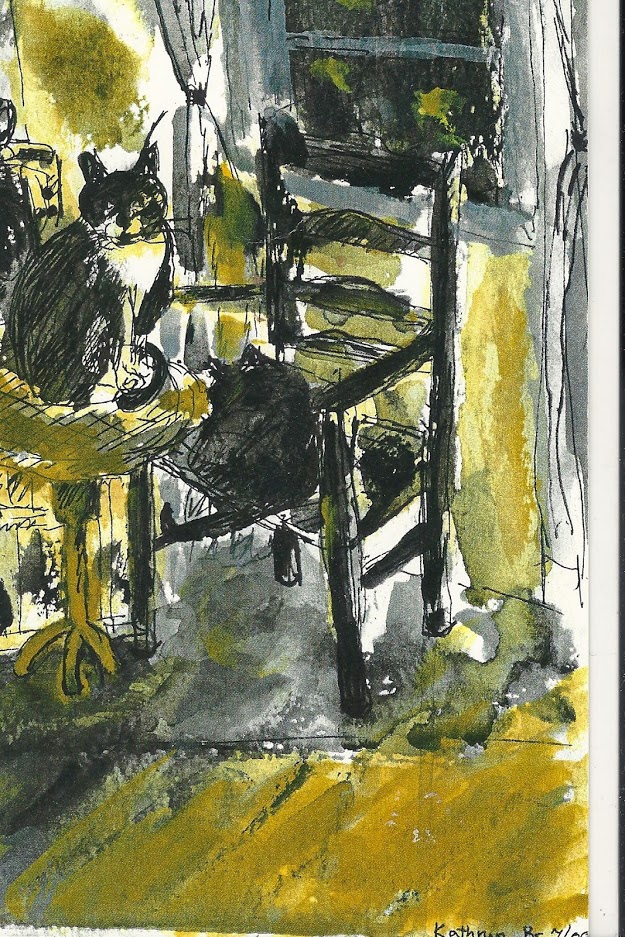
Against sadness:no-one here can weep Nor lounge about in111 melancholy deep. Was Van Gogh senseless to permit his muse. For his masterpieces ,was the price too steep? We see the yellow chair but not his views Nor his mind where technique made such leaps. Nor was his journey broadcast on the news. Against sadness.
Happiness or joy is hard to find When we rest, the News preys on our minds Yet some are cold towards the slaughtered priest His nose a beak of bone in old face lined Now Muslims go to Mass and join Christ’s feast Against sadness.
What rages in the mind make men kill thus? In Syrian wars the innocents fare worse. But these are our near neighbours so we weep And wonder how to end the frightening curse The sins we once committed hold us deep We hold our hands out wanting to be nursed Against sadness
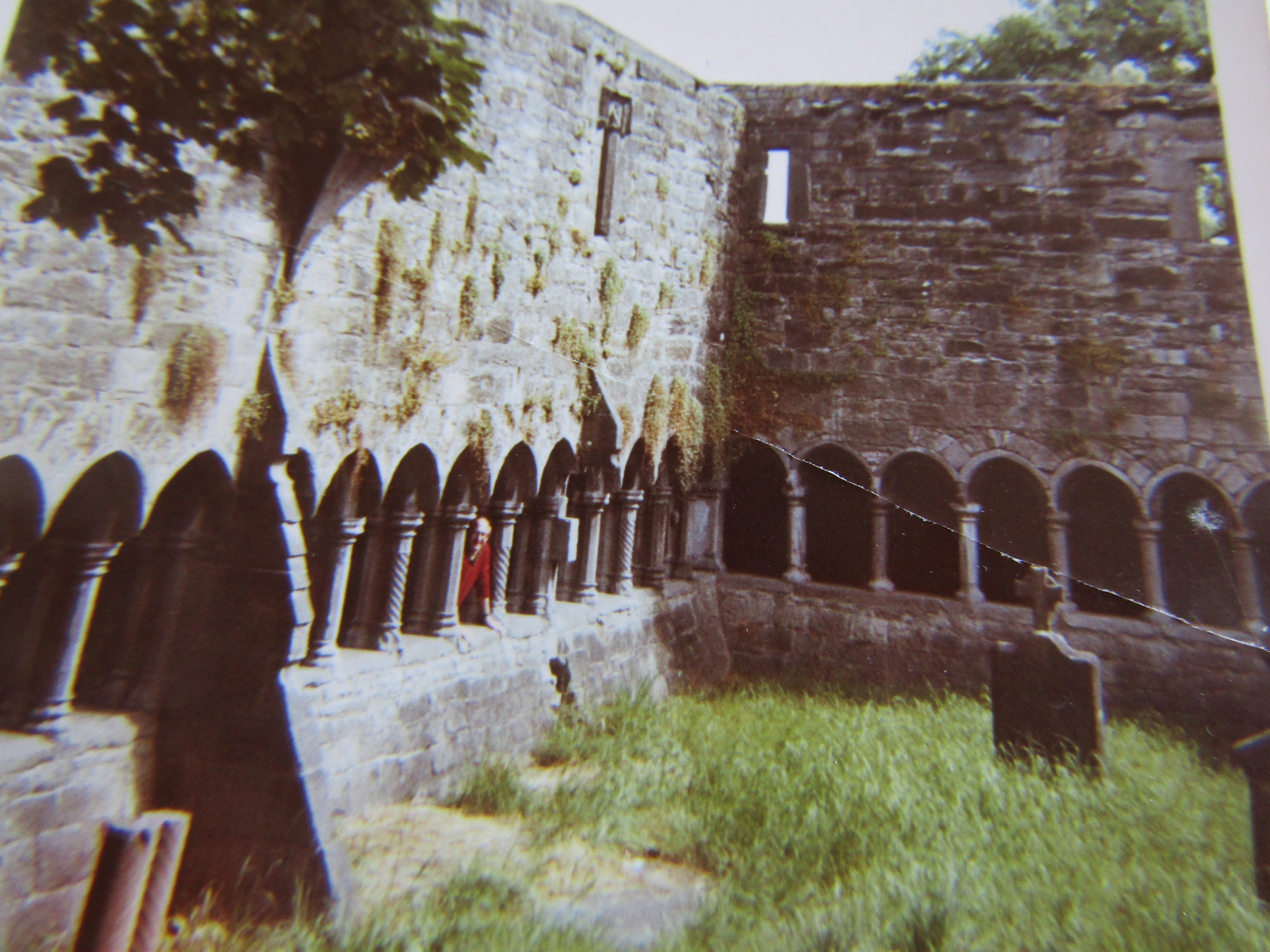
We sense the sacred in these peaceful walls
Yet men have died in places that appal
Women too and children then unborn
Fell into cold dark earth in lands forlorn
As our weapons grow, our hearts are hard
The people live in Gaza behind bars
The water all polluted as taps drip
Is this war or is it vengeance fit?
In Britain, it’s the poor who lose the war
As it was when Jesus Mary bore
Yet here are clerics blessing marching bands
A military show for all the land
The genocide in Europe of the Jews
The self destructive actions of the proud
The fields of France filled sick with blood and bone
Who are we to cast judgemental stones?
The War’s not over when the fighting stops
The soldiers and the tortured suffer shock
The widows and the parents all bereaved.
The unborn children hover in unease
We let the prisoners out from camps of death
But who would take them in or take their path?
The injuries will travel down the years
As still we fight and still we live in fear
It’s Europe’s grasp and greed which was the cause
Of death in Gaza, Syria, in long wars
Yet we judge we are more civilised
When we self defend with bitter lies
I’m glad that I can put a bra on now. It’s so useful to have somewhere to put my smartphone other than in my knickers.
In the past women wore knickers with long legs with elastic around the bottom and that was where they could keep their handkerchief or if they’d had a phone they could keep their phone there but now most women wear trousers.
So if you’ve got a large bust a bra is a useful storage place. You don’t want to look as if you’ve got a weapon in there so think about it very carefully especially if you own a gun.
Never carry a pair of scissors in your bra. You could carry a rolled up beanie hat or a pocket hanky.
Remember less is better the more. If you carry a ballpoint pen make sure it doesn’t leak.
But don’t keep your smartphone in your bra when you are feefing a baby because you don’t want the baby to start using the phone do you? Wait till the child is at least two years old before you let them have their own phone and wait till they are 15 before you buy them a bra.
It is better for them to leave their phone at home and let them run out to play in the street with any other children who are still allowed to go out of the house.
Because you can use a phone all your life but you can only play in the street until you are adolescent and it was one of the happiest times of my own life. Of course there wasn’t so much traffic then. People didn’t lock their front doors and the kettle was always on the fire for any unexpected visitor.
Once you reach adolescence I’m afraid life is completely different and I don’t think any adolescent wants to keep a phone in their bra to be absolutely truthful. A bird in the hand is worth two in a bra.
Between the world and how we represent The nameless by a name and even place There is a space or void in our intent.
What mother saw, what father really meant How love and hate might intertwine in space In our own world, what can we represent?
In writing, there is lack and letters bent For ancient writing often scholars traced There is a space or void in our intent.
Today the sun is golden, gods descend. With love, for moments, we are all embraced Of the felt, what can we represent?
Our willingness unblinds the heart so rent And then we see the face within his face The space or void is in our interest.
I cross my eyes with fingers interlaced: The crucifix, the love, the death of Christ Between the world and what we may attempt There is a space or void where he was sent
The wordless feelings of the soul catch light Like fire,like diamonds, like the dust of stars With their fire they penetrate the night
To expression, they the mind incite To where the words may open and be clear The wordless feelings of the soul catch light
Expression by its methods brings delight We see the molten universe desire With great fires , with wonder, what work’s wrought?
Like a flock of geese in happy flight The heart of unknown worlds is not a liar The sense of feeling souls will bring us light
Of the thunder and the lion we note The natural world with its own might conspires With its being it permeates the night
So our hearts and souls does love devour Never cornered never shall love cower The wordless feelings of the soul catch light With such brilliance, can we feel the night?
David’s latest post is of his poetry and this is well worth visiting this. He is very accomplished and full of feeling.
A President’s Death
Poor Professor Johnson, I pitied him–his deep feelings. A dignified man, a scholar, Teacher of eighteenth Century British poetry, Couldn’t speak but to Say go home, there would Be no class today. On the subway someone Had a portable radio. No passenger speaking, Everyone listening in shock, The tinny, crackling Radio voice telling us over And over as though we Wouldn’t believe him, that The President I felt I knew Though he was rich and I A student struggling with Illness and poverty, Had been shot. Professor Johnson went home and read Alexander Pope’s masterful Couplets through tears.
But metaphors are not merely things to be seen beyond. In fact, one can see beyond them only by using other metaphors. It is as though the ability to comprehend experience through metaphor were a sense, like seeing or touching or hearing, with metaphors providing the only ways to perceive and experience much of the world. Metaphor is as much a part of our functioning as our sense of touch, and as precious.
Two whole worlds. One small cut. One little chink. Hard to find. Very,very hard. One small place Where a very little cat Could slip right through The geometrician ‘s cut. Cat could slip right through. Just,slip straight through. Joining it’s own reflection On the opposite side. The mirror’s other side.
And if I caught that tail, If I caught her little tail, She could pull me through, She could pull me through, So she and I too We’d be on the other side, The wrong way round, On the opposite side.
So when you looked in, If you looked in, You would see me there, Looking out at you, From the opposite side. From the opposite side. And the cat beside Looking very small, Very,very small; But very,very real. How do you think you’d feel, If I was looking out, Staring at you From the opposite side?
I can’t get back. I can’t find Riemann’s cat and without that pussy cat I can’t find Riemann’s cut. I think I’m in a trap. I cannot find that cat. So she can’t find the cut To get me back, She can’t bring me back To where I was before.
Oh,how queer, To have two of me in here. I hope I’ll get on well With my other self, Behind the looking glass. No one looking in, But two are staring out. From that other world.
I am looking out, I’m looking out To see if you are there. One of you’s with me That makes the total three. Oh,dear me, I should not have grabbed Little pussy’s tail. I didn’t really know Where she meant to go.
“Where have you been? Where do you think you’ve been To get so filthy black, And where’s your pussy cat?” She never came back. Never came back From the opposite side. Mammy thought I’d lied. I don’t tell lies, But I can see my cat Staring out at me. Staring out at me From the other side. From the opposite side Of my looking glass. My lovely looking glass Has trapped my tiny cat On the opposite side. On the opposite side On the other side
Homer’s tales were laced with important lessons for his contemporaries on the “proper” ways to think and behave. He taught (or reminded) them how to properly treat a stranger or a relative, face danger and hardship, worship, and so on. Similarly, the fables of Aesop and Da Vinci ranged in subject matter from comments upon the quirks of human nature to considering the meaning of existence.
From … Therapeutic metaphors :
Helping others through the looking glass”‘ by David Gordon
I saw you on the pavement with your old brown dog You were shabby,poor,ragged, Sat on your tartan rug. You had water for the dog, You hugged him and you sang, But the people walked on by, And no-one looked at you. No-one looked at you.
But you still sang your song. And you sent me so much love It crossed from eye to eye. I felt it coming in.
I heard that you had died, Though you were only thirty three. Only thirty three. I wonder,where’s your dog? I felt our souls had touched, You gave to me so much As I wandered in my grief Through the roads and round the streets. In your glance, you touched my heart. I felt love swimming through, From you right into me.
Will you come again? I see all these dim, grey men Who cut your benefits To give more wealth to few; So that the needle’s eye, which is waiting when we die, is forgotten, for they want protection for their wealth.
I wish that beggar man would come back here again. I liked to hear his songs But I can’t recall the tunes; Maybe I’ll write songs myself, That’s the highest sort of wealth Our creativity Is a path to dignity. Come back.beggar man Wherever have you gone? Wherever have you gone?
“I will call the world a School instituted for the purpose of teaching little children to read—I will call the human heart the horn Book used in that School—and I will call the Child able to read, the Soul made from that school and its hornbook. Do you not see how necessary a World of Pains and troubles is to school an Intelligence and make it a soul? A Place where the heart must feel and suffer in a thousand diverse ways!” Keats
“When we look into Keats’s expressions of conflict between
imagination and reality we can see the roots of this conflict in the
problem of identity. Keats wrote about the sunset, the sparrow, the
mythological figure as if he had lost his identity in the object. He
experienced these identifications sometimes with a sense of discovery
and sometimes with fear or irritability. Eventually, Keats began to see
that his identity would not be maddened by his imagination and could
be strengthened by it. He realized, in other words, “that a not inconsiderable increase in psychical efficiency” can result “from a disposition
which in itself is perilous.” In-the four years we know Keats as a letter
writer and a poet, we can see the development of his capacity for
retaining a sense of identity even when seized by powerful or seductive
visions. This is the development–the turning of a weakness into a
strength, both as artist and as man-that accounts for many apparent
contradictions in Keats’s thought. The language of negative capability
has been difficult because it suggests a puzzling oxymoron- a negative
and a positive. The figure presents two aspects of a dual process, the
first part of which, in its partial renunciation of control, can be felt as a
negative, while the second, or alternating, state recreates and is felt as a
capability. The creative process in some of its operations posed
dangers for Keats’!; identity. But by the spring of 1819, the period of the
great odes, there appears a new strength in the second aspect of
negative capabilily imagination”
I’d love to write a sonnet but I daren’t For in this steamy heat it’s much too hard So please don’t send me messages that taunt Nor with disdain compare me to our bard.
.For not all people have poetic skill And what I have will sometimes fall to dust Like virtue writing’s not made by the will Await the grace ,as saints and mystics must
In the mind an empty bowl of space We keep to catch the offerings of the gods. It’s more like contemplation than a race; For freely, quietly we receive the good.
The lady’s not for turning words to gold But with a chosen few she loves to mould
When the fruit has rotted on the stalk Bruised and broken like the lost in need When leaders meet but rarely truly talk When children caught in gun fire lie and bleed
Don’t we see God’s Kingdom is a joke? One hundred million deaths in two world wars Not quick death but tortured bodies broke They lost their lives and love died in their gore
Utopia, evolution, grandiose plans Sacrifice yourself for those to come We saw the little children hand in hand Ground mines blew them up, they could not run
One thing’s clear, God’s here or not at all The future’s fiction, theatre forms the soul
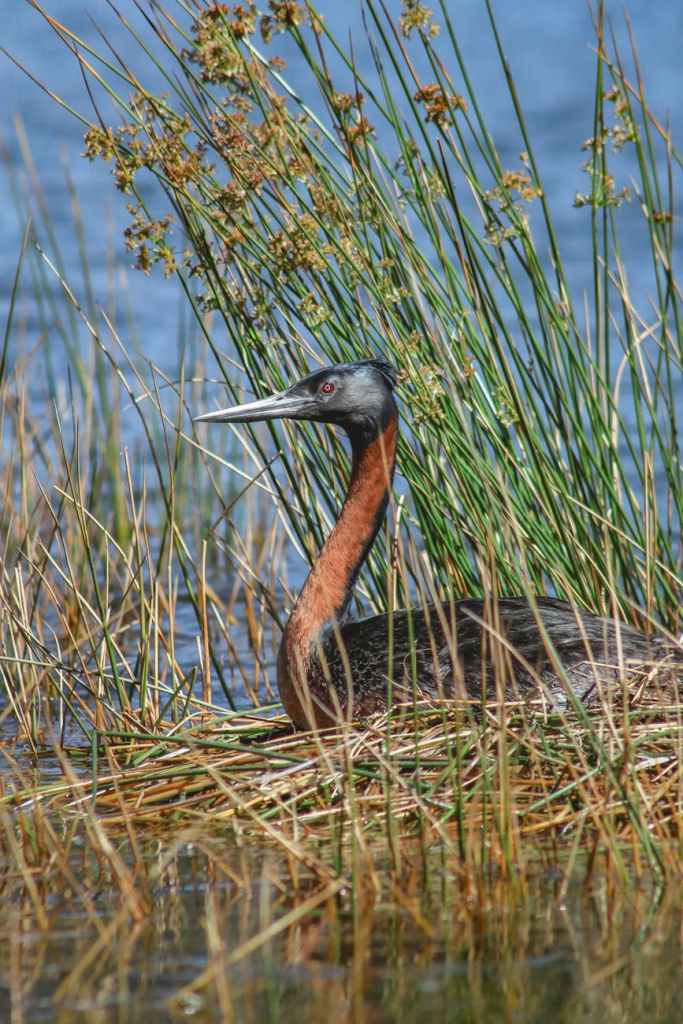
Freed from her trap Bird soared into air,and hovered And floated, resting; And flew higher, singing as she flew, And higher again, Till there was only her song, Left in the silence, Trembling.
Up on the wide,stump topped hill, I felt the lark inside my heart And heard her singing. And flying up with her, I saw gold sun and silver moon, Moors of heather ,and sheep grazing Green hills, And shimmering lakes, Clouds ,sun and sky in watery mirrors. And sang ,and dipped,and dropped, And curled Up the blue Bright heaven, and rested On the wind. All that day I was a lark singing.
I shall always have a vision of A bird That flew upwards, Rejoicing and free Into a deep blue sky, and high And higher Beyond high Into a place, beyond eye even, But music still sending.
I wish I were back on that heathery moor, With the nibbling sheep and the bees sweetly humming, Hearing again The poignant song Of the skylark, A prisoner,freed by a magician, From her trap, So happy to be free, So wonderful to see. Do it again, For me.





















 How my heart speaks