

“Those who can make you believe absurdities,
can make you commit atrocities.” (Voltaire)
“Those who can make you believe absurdities,
can make you commit atrocities.” (Voltaire)
 https://www.perrymarshall.com/articles/religion/godels-incompleteness-theorem/
Excerpt
Godel’s Incompleteness Theorem says:
“Anything you can draw a circle around cannot explain itself without referring to something outside the circle – something you have to assume but cannot prove.”
Stated in Formal Language:
Gödel’s theorem says: “Any effectively generated theory capable of expressing elementary arithmetic cannot be both consistent and complete. In particular, for any consistent, effectively generated formal theory that proves certain basic arithmetic truths, there is an arithmetical statement that is true, but not provable in the theory.”
The Church-Turing thesis says that a physical system can express elementary arithmetic just as a human can, and that the arithmetic of a Turing Machine (computer) is not provable within the system and is likewise subject to incompleteness.
Any physical system subjected to measurement is capable of expressing elementary arithmetic. (In other words, children can do math by counting their fingers, water flowing into a bucket does integration, and physical systems always give the right answer.)
Therefore the universe is capable of expressing elementary arithmetic and like both mathematics itself and a Turing machine, is incomplete.
Syllogism:
1. All non-trivial computational systems are incomplete
2. The universe is a non-trivial computational system
3. Therefore the universe is incomplete
You can draw a circle around all of the concepts in your high school geometry book. But they’re all built on Euclid’s 5 postulates which are clearly true but cannot be proven. Those 5 postulates are outside the book, outside the circle.
You can draw a circle around a bicycle but the existence of that bicycle relies on a factory that is outside that circle. The bicycle cannot explain itself.
Gödel proved that there are ALWAYS more things that are true than you can prove. Any system of logic or numbers that mathematicians ever came up with will always rest on at least a few unprovable assumptions.
Gödel’s Incompleteness Theorem applies not just to math, but to everything that is subject to the laws of logic. Incompleteness is true in math; it’s equally true in science or language or philosophy.
And: If the universe is mathematical and logical, Incompleteness also applies to the universe.

http://uk.businessinsider.com/stephen-king-on-how-to-write-2014-8?r=US&IR=T
1. Stop watching television. Instead, read as much as possible.
If you’re just starting out as a writer, your television should be the first thing to go. It’s “poisonous to creativity,” he says. Writers need to look into themselves and turn toward the life of the imagination.
To do so, they should read as much as they can. King takes a book with him everywhere he goes, and even reads during meals. “If you want to be a writer, you must do two things above all others: read a lot and write a lot,” he says. Read widely, and constantly work to refine and redefine your own work as you do so.
2. Prepare for more failure and criticism than you think you can deal with.
King compares writing fiction to crossing the Atlantic Ocean in a bathtub, because in both, “there’s plenty of opportunity for self-doubt.” Not only will you doubt yourself, but other people will doubt you, too. “If you write (or paint or dance or sculpt or sing, I suppose), someone will try to make you feel lousy about it, that’s all,” writes King.
Oftentimes, you have to continue writing even when you don’t feel like it. “Stopping a piece of work just because it’s hard, either emotionally or imaginatively, is a bad idea,” he writes. And when you fail, King suggests that you remain positive. “Optimism is a perfectly legitimate response to failure.”
3. Don’t waste time trying to please people.
According to King, rudeness should be the least of your concerns. “If you intend to write as truthfully as you can, your days as a member of polite society are numbered anyway,” he writes. King used to be ashamed of what he wrote, especially after receiving angry letters accusing him of being bigoted, homophobic, murderous, and even psychopathic.
By the age of 40, he realized that every decent writer has been accused of being a waste of talent. King has definitely come to terms with it. He writes, “If you disapprove, I can only shrug my shoulders. It’s what I have.” You can’t please all of your readers all the time, so King advises that you stop worrying.
4. Write primarily for yourself.
You should write because it brings you happiness and fulfillment. As King says, “I did it for the pure joy of the thing. And if you can do it for joy, you can do it forever.”
Writer Kurt Vonnegut provides a similar insight: “Find a subject you care about and which you in your heart feel others should care about,” he says. “It is this genuine caring, not your games with language, which will be the most compelling and seductive element in your style.”
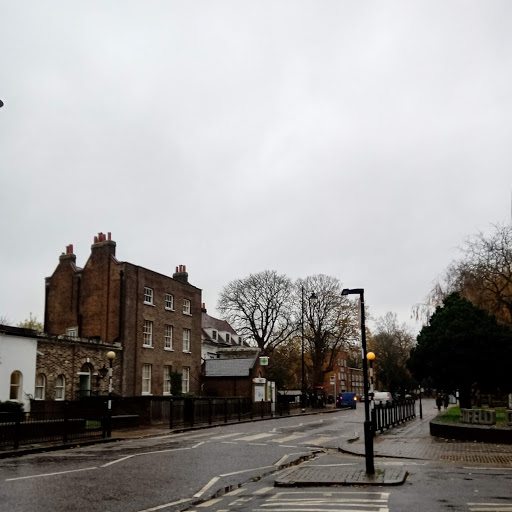
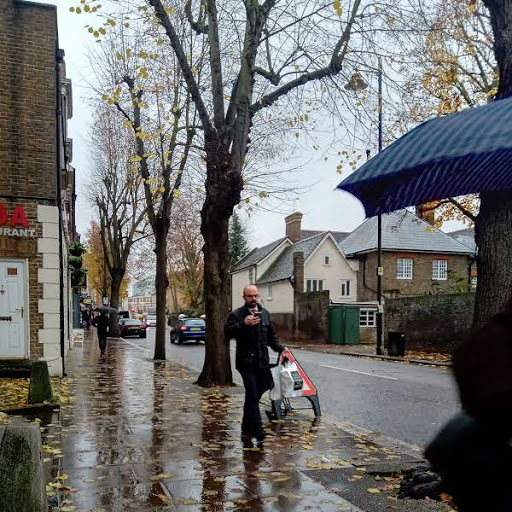
The pools of water on the pavement gleam
Reflect the colours of the shops and cars
Giving us a feeling all’s serene
As I walk I wander and daydream
I sit on an old wall, the moss like hair
The pools of water on the pavement gleam
I invent a sentence and a theme
Will I forget before I have gone far
Taking back the feeling all’s serene?
I notice how the old wall seems to lean
To risk perception is a fear we share
The pools of water on the pavement gleam
I feel the moss ,I love the colour scheme
I love the texture with my hand unbared
Giving me a feeling all’s serene
Each lovely brick is different yet is fair
Evoking in my mind the sacred word
The pools of water on the pavement gleam
A light rain falls and this world feels serene

 Cas
Cas


 How my heart speaks