Why are modern lights so  hard to please?

In my head were lists of  food annd drink
Written with a pen in bright green ink
I shut my eyes and visualised the look
I posted  it inside my own new book,

On my bicycle it was a risk
To shut my eyes and drink tea from a flask
I had to let my body  keep me sane
Otherwise there’s no-one we can blame

Crossing the A10  on that old bike~
A siren, the police were running late
I froze right in the middle of the road
There are no photographs I can upload

So now I have another life , you see.
As my self was  buried  by the tree
The flashing neon light ,the noise  that screamed
Why are modern lights so  hard to  please?

I like to be alone and read my books
But I shall ride a bike on Sunday week
I’ll meet my neighbour going round the bend
After I have pressed where it says SEND

We shall  take some tea  and cakes and rugs
Lying idly  as the people shrug
Wool is the  best medicine I find
In a little nook inside my mind

More subtle forms of evil have been tried

Now every form of evil has been tried
What is left for humans to enact
Murder,torture,sadism suicide?

The bridegroom snatched away from his new bride
The pearls, the  bags, the rings of gold ransacked
Now every form of evil has been tried

The New Creation puffed up with faux pride
The orchestra with no-one to  conduct
Murder,torture,sadism suicide?

God aghast, again his  son has died
What should he do with Jesus’s effects?
Yes, every form of evil has been tried

What are we that peace  we so deride?
The lust and greed , the skins  so fine unpacked
Murder,torture,sadism suicide

The lamps were lit, the trains ran on their tracks
The spines were broken on the books.,the backs
More subtle forms of evil have been tried
Than murder,torture,sadism suicide.


Who is singing?

I hum and sing all day
Once I was singing when I was asleep.I  remember the tune now
.I can read extremely quickly.But prefer slowly
I have lost my coordination and got clumsy
I like getting into bed when I am tired and  the bed is warm
My skin has gone all crinkly
I feel young at home
I feel  like a cripple when out.
I used to sing for our cat ; she  lay on a rug by the kitchen door
When I finished and sat down she would jump onto my lap and go to sleep
If I listen I hear the songs are connected to my concerns of the day like dreams are
Who is singing?

As if a gentle wind

Writing  down the words that are so dear

Villanelles are   my addiction now
I write them every day,I think that’s clear
I’d like to change, the only question’s how?

Here I sit with furrows in my brow
Writing  down the words that are so dear

Villanelles are  my addiction now

Smoking cigarettes   upsets the cow
She’s  just like a wife, in love not fear
She’d like to change, the only question’s how

Drinking vodka costs  much more than tea
My  kidneys  do not like  the feel of beer
Villanelles are  my addiction now

LSD   makes all  the world look free
It is a lie, attempting mystery
We’d  like to change, the only question’s how?

I spend my time  like old men used to leer
Watching lovely people walking near
Villanelles  ,such dear addiction now
I  shall never change  nor have a row.


The ministry of truth  where  lies are strong

The ministry of truth   is growing strong
Wanting to  persuade us of their lies
Now they’re selling flags  so we’ll belong


See   the right  MPs  in  cruel gangs
They  do it all before our broken eyes
The ministry of truth   is very strong

Life’s not black and white nor right  nor wrong
We’re  all entitled to surmise
Now they’re selling flags  but who belongs?

It seems  they’d like all rapists to be hanged
This spectator sport  is on the rise
The ministry of truth  where  lies are strong

I pretend  the cat has got my tongue
I  hope in vain for someone who is wise
The Union Jack’s  provided by Hong Kong       


Is this the UK’s sorrowful demise?
See the eagles challenge  and surprise
The ministry of truth   is growing strong
Now they’re selling flags  and   growing fangs

Don’t talk about it

36064355_1156369647836245_7488378942043193344_n-1


https://www.telegraph.co.uk/women/life/could-talking-anxiety-make-worse/
Extract

What’s more, several recent studies suggest that anxiety isn’t always rooted in a traumatic past, but may be a quirk of certain brain structures.  ‘We hear a lot about why talking is the best thing for mental health,’ says psychologist and anxiety specialist Dr Zoubida Guernina. ‘But with anxiety, there are so many powerful emotions, it’s very hard to process them through just talking.’

The ideal treatment, she adds, ‘helps the client to face the fear, to become much more proactive and find solutions for themselves.’


We  walk on

Come down  sun.
Come down rain
Come down sorrow.
Come down pain,
We don’t know
What we will find
Come down sweet.
Come down fine
We  walk on
When there’s no  hope
Come down caring
Come down   lost
We   believe.
There is the Good
We will never
Give life up
Come down pity
Come down,haunt
We will never
Uproot love

Narcissism and Original Sin

19029692_934673353339210_3990976413130029783_n-1

My effort

https://www.aljazeera.com/indepth/opinion/racism-narcissism-america-original-sin-190809135036012.html

EXTRACT

A racist’s narcissism need not be a personality disorder. As psychologists Jean Twenge and W Keith Campbell pointed out in The Narcissism Epidemic, many narcissists may appear to be “functioning well” by most social standards. At the societal level, racism and narcissism are really a flaw of the human condition, not a disorder.

Where American racism and narcissism come together is in the constant urge to maximise advantage over others and satiate the desire for greatness and wealth. This is mixed with a disdain for those who have been deemed lesser and the willful ignorance of the conditions in which they may suffer. In other words, racism and narcissism are two separate yet interdependent constructs, not a mental illness.

The American roots of these constructs are quite clear and reach back as far as the first colonies. Take the history of the Jamestown colony established in 1607. For four centuries, its story has been one of hard-working Englishman John Smith in the US and of the “good” Native American Pocahontas (her actual name was Amonute or Matoaka) saving his life when her “bad” Native American father Powhatan attempted to kill him.

This, however, never happened: Smith invented this story in 1624, years after Matoaka’s death. And the actual story of Jamestown provides many examples of the racism and narcissism of the US’s early colonialists.

Despite all the self-praise, the fact is that colonialists managed to survive only thanks to the help of Matoaka’s tribe, the Pamunkey, during the winters of 1607, 1608, and 1609. The gold- and silver-seeking Englishmen, having no experience in farming or fishing, would have all died of starvation and disease before a resupply reached their colony.

They do not know they’ve  sacrificed their minds

The rich may not be cruel, but they are blind
They don’t  know how poor most workers are
They do not mean to be   at all unkind

We all have our defences, undefined
Unconscious of our malice,  their despair
The rich may not be cruel, but they are blind

The unemployed,  disabled, are maligned
Without a proper voice , this is unfair
Who does not mean to be   at all unkind?

Men have toiled  for years in  dark coal mines
Glad to be at work but often scared
The rich may not be cruel, but they are blind

The  poor are growing reckless, unresigned
Jerusalem, what has your Lord to say?
Which human  does not mean to be  unkind?


Ignorance is not  the worthy way
Give money to the outcasts  as they sigh
The rich may not be cruel, but they are blind
They do not know they’ve  sacrificed their minds


My doctor

6688756_f260


My doctor is Indian
Is he red?
Well  read.

My doctor takes my BP
That is theft

My doctor is kind
That’s fortunate.

My doctor is also a surgeon
Don’t let him cut you off

My doctor likes crosswords
When said to a patient, that’s terrible

He thinks I am very brave
What, for putting  up with him?

My doctor takes a shower
From the Cloud?

My doctor loves my writing
Do you do italic or copperplate?

My doctor can’t understand my poetry
Tell him it’s  post modern

My doctor likes me
They have to fake it.

My doctor travels all over the wold
Thanks for the warning

Salvation

Could it be despair  that held me tight

in the wintry evening and the night

I could not see a way to  carry on

Everything  was wrong and I was done


I saw great blackness all around myself

I could not be restored, I had no health

I   had reached the end of seeking aid

G-d alone  knew all the coins were paid


Inexplicable, the  golden light

That made a sweet shawl round me on that night

Impressing me with kindness and goodwill

Holding me until I ‘d had my fill


Most sensuous, most tangled with love’s  grace

Surrounding me,  protecting my lost face

As if the arms of love were something real

That anyone  who knew this  must reveal


Only when we reach the very end

May the force of love on  us descend

Deporting love again

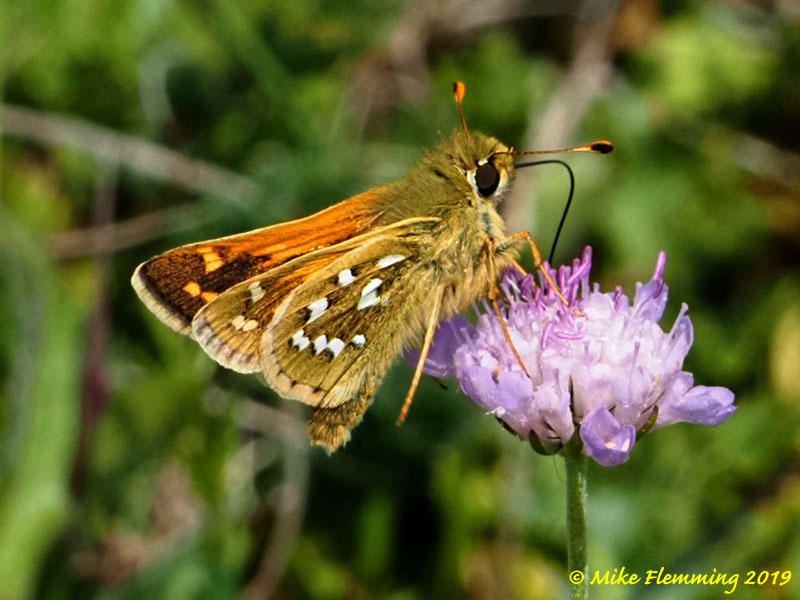
Silver-spotted-Skipper-2019

They took my blood and ethnic group, they did.
My soul was skulking, knowing of the strains
If I have no visa,they’ll get mad

Reading my thick newspaper was sad
Seeing them deporting  love again
They took my blood ,my heart and I feel bad

Water has no salt whereas blood has
And losing it will cause a lot of pain
If we have no visas, oh dear God.

The water circulates; we’re almost dead
So when we’re shot  there’s no red blood to stain
They looked for  human souls and  then they bragged

The Jews,  the gays the helpless .felt cold dread
And who resists now Fascism rides again?
We  scream when we’re asleep,oh helpless God.

We invented torture,prison, shame
Were God here he’d hear the frightened groans
They took my ethnic group  and stole my blood
Now they call me ” other”,  ain’t life sad?

In my dream, I gave birth to a child

In my dream, I gave birth to a child
The doctor said that   he would die quite soon
My feelings overwhelming made me wild

The Nazi doctor threw him on a pile
I lay  there unmoving as I keened
In my dream,I gave birth to a child

A week passed  by,I knew that death beguiled
Frozen  lips    made no sound, song or tune
My feelings overwhelming made me wild

I had to rise and say my  black goodbye.
My baby  with the others;horror loomed
In my dream I gave birth to a child

I picked him up , when suddenly he smiled
I held him to my breast, my songs I crooned
My feelings overwhelming  drove me wild

I had to   carry him, the landscape  gloom
A desert  grey aand rocky like  some moon
In my dream I gave birth to a child
In terror I  had walked  yet  love consoled

Fake it easy

My doctor is God
Garden wall ivy (1)
My doctor is God
Why can’t he heal you then?

God is my doctor
Where did he train?

The doctor wants a urine sample
I hope it’s a random one

The doctor wants to take my temperature
Where to?

The doctor says it’s a systemic infection
Can’t he install a new system in you ?

He wants me to take it easy
Fake it.

He talks in paragraphs
No, you idiot, parables!

My doctor is very odd
Get even with him somehow

Are numbers very odd?
Yes, the odd ones are even odder than the even ones

Are doctors real?
Yes, if you think they are.

You must not covet asses, even in jeans


I am the Lord,I  am God,sort of
You must have no paid gods
Humour yout father and your others
You must not  deal or wheel
You must not covet,you ass.
Love your neighbur, but with stealth
Love is the sweetest thing
Do not kill.
Do you need God to tell you?

Oh,my people.

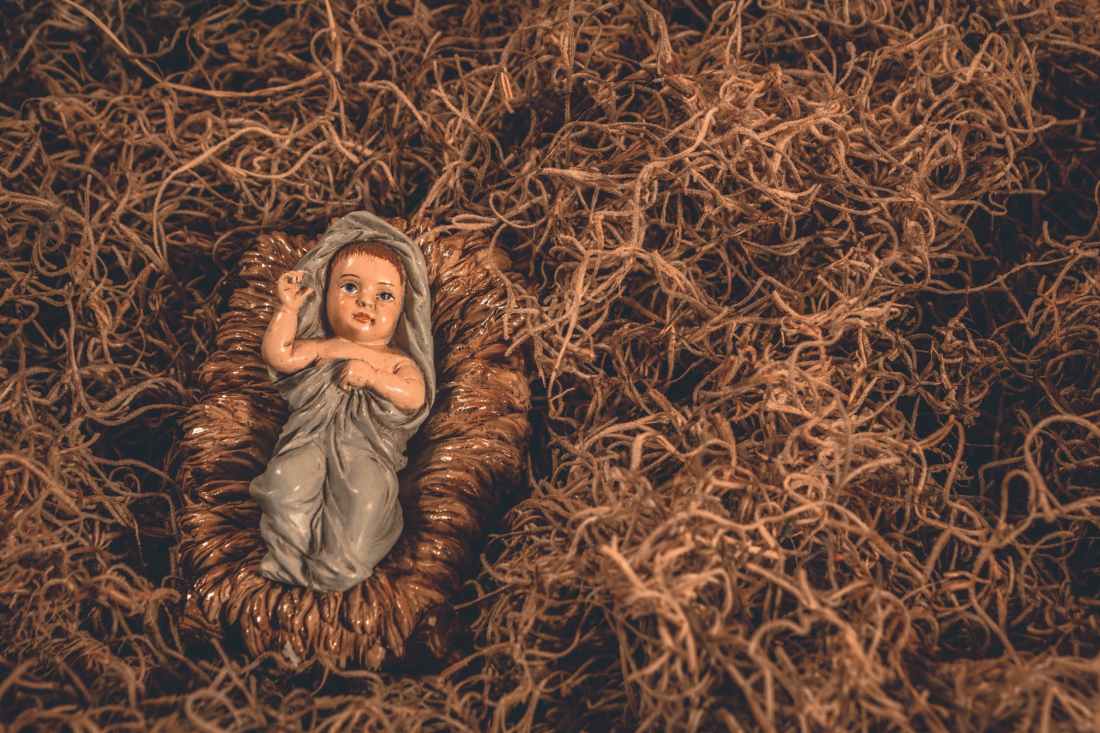
  • jesus christ figurine
    Photo by Jeswin Thomas on Pexels.com

    https://en.wikiquote.org/wiki/Yeshayahu_Leibowitz

  • Not every “return to Zion” is a religiously significant achievement: one sort of return which may be described in the words of the prophet: “When you returned you defiled my land and made my heritage an abomination” (Jeremiah 2:7).

[I read Gideon Levy and weep]


The words of Matthew Arnold in Dover Beach come to mind:

And we are here as on a darkling plain
Swept with confused alarms of struggle and flight,
Where ignorant armies clash by night.

I feel now we have no-one fit to rule

I  admit we ‘ve no-one fit to rule
They do not understand  the   dreads   of those who’re  poor
The offices of state are filled by fools

By whom  is Boris Johnson  considered cool?
They must build a House for the Impure.
I feel sad, we’ve no-one fit to rule

Satan  flaps his wings ,he heats his fuel
We have always sinned, but now it’s clear
In offices of state,  pride incites fools


In the Poor House, rationed is their gruel
The TV’s dead,  the people, lost. endure.
They must know we ‘ve no-one fit to rule.


Experts  out, then WhatsApp makes the rules.
Full stops   mean I hate you, ridicule.
The offices of state, why praise  the fools?


Fast dark demons enter ,still allured
By  thinnesses of  soul  in men of powet
I feel ashamed we’ve no-one fit to rule
Boris   with his tantrums ridicules

We  draw a map of love inside our mind

pteroceras-semiteretifolium


We  draw a map of love inside our minds
Before we learn to speak and separate
And hatred too is structured by these lines

But owning such a map can make us blind
If we use just that to navigate
We  draw a map of love inside our minds

Some have mothers  tuned in and most kind
The map’s a good description of estate
Hatred too is structured on these lines

But some experiences we cannot bind
When love and hate can enter no debate
We  draw a map of love inside our minds

We need to let both love and hate combine
The pain and anguish may be very great
Our  mind is  better structured on such lines

Some may  think our life is made by fate
Others learn by how they correlate
We  draw a map of love inside our mind
And hatred too, is structured by those lines

Are you nurturing an old wound?

He was a back slapper so crazy, his hand went through me and hit my heart.I had a heart attacker… him!
He truly did have baited breath and once a salmon leaped down his throat.I told him it was dangerous but the salmon killed him so we really didn’t enjoyed eating it even when it smoked a cigar by the table.
Will the Royal Family choose baptism by fire for Archie?
Beauty is in the buys of the beholder
Beauty is only thin it’s not deep
I have a big head and a small part
Do we cry over cow’s sulks?
Do you feel me press your organ in my sleep; Or am I dreaming?
Does my heart do you good when you kick it?
I am driving my self crazy so I shall get insecurity benefits or is it impurity deficits?First I have to hear a voice offering me advice.. or swearing at me.Hang on,I’ll phone an old blogger who might shout,Bugger!
Life is endless words with no punctuation except when we get stoned…those
may be full stops when we over blow ourselves and the balloonish egoes burst.
Every dog has his stray cat.
Everything’s coming up our noses so block them up.
A faint art never an oil painting shows
I fall head over wheels into a police van; why am I low sunk?
We fall through the cracks that God left in the world…give him credit for uncommon sense
Ban the old blames now! Burn them all or go to hell… it’s your choice.
Are you nurturing an old wound? Seal it off with “super soul and heart glue!”

Why should we use google, we have you?

Oh,Katherine I feel you’re very bad
I saw  you were in Starbucks with a cad
Why, you should be home to wash the floors
Not discussing Dirac, Joyce,  or More.

Katherine,  your readers  you’ll annoy
All  your poetry is just a ploy
You really want to teach them how to prove
Pi is not a number  one can use.

Katherine, is this a clerihew?
Why should we use google, we have you
Yet you do look somewhat pale
As if you have been left out in a gale

Poets and society


26166567_1051146425025235_5745933140779249866_n (1)https://poets.org/text/conversing-world-poet-society


EXTRACT

The politician wants men to know how to die courageously;
the poet wants men to live courageously.
—Italian poet Salvatore Quasimodo, Nobel lecture, 1959


Since the invasion of Iraq in 2003, the relationship between politics and poetic protest has taken on fresh urgency for American readers and writers. “I suspect the writers know in their hearts how ineffectual poetry is in greater American society,” W. S. Di Piero wrote in Poetry magazine in October 2003. He was commenting on the Poets Against the War movement and updating Dana Gioia’s plaint made in the controversial 1991 essay, “Can Poetry Matter?” In it, Gioia asserts that it is a “difficult task to marry the Muse happily to politics,” given that poets lack a role in the broader culture and therefore do not have the confidence to create public speech.

Why is it that in this country poetry is viewed as separate from the business of the nation? Certainly this is an Anglophone peculiarity. In Latin America, José Martí, one of the region’s most beloved poets, led the movement to liberate Cuba from colonial domination. The Nicaraguan poet and priest Ernesto Cardenal was engaged in the Sandinista revolution and later served as his country’s Minister of Culture. The Nobel Prize-winning Chilean poet Pablo Neruda was a diplomat, and a senator, and joined the ranks of Spanish poets such as Federico García Lorca and Miguel de Unamuno, who spoke out against General Franco during the Spanish Civil War. Both Lorca and Unamuno lost their lives as a consequence of their Republican sympathies.

In France, Paul Éluard, René Char, and Robert Desnos wrote dissenting poetry while fighting for the Résistance. In Italy, Quasimodo and Cesare Pavese were repressed for denouncing the regime under which they lived, as were Russian and Polish poets such as Ossip MandelstamAnna AkhmatovaWislawa Szymborska, and Czeslaw Milosz.

Contemporary Middle Eastern poets such as Badr Shakir al-Sayyab, Nizar al-Qabbani, Adonis, Ghazi al-Gosaibi, and Mahmoud Darwish have embraced the idea of committed literature, or a literature engagée, as Sartre termed it.

And yet, in the Anglophone West, poets ranging from W. H. Auden to W. B. Yeats are invoked for their epithets that warn against involving politics in poetry. Both poets were cited repeatedly in the wake of the White House poetry debacle of February 2003, when Laura Bush canceled her symposium on “Poetry and the American Voice” after she learned that some of the poets on her guest list refused to attend in protest against the impending war. Sam Hamill, poet and founding editor of Copper Canyon Press, intended to present her with a petition and a compilation of protest poetry. Laura Bush’s spokeswoman said that it would be “inappropriate to turn a literary event into a political forum.” The conflict helped spark Hamill’s creation of the Poets Against the War movement.

Media accounts of the movement often quote Auden’s line “Poetry makes nothing happen,” or three lines from Yeats: “I think it better that in times like these / A poet keep his mouth shut, for in truth / We have no gift to set a statesman right.” It is not accurate to invoke these poets or their words as emblems of the apolitical poetry camp without recognizing that each in his own way led a profoundly political existence. Yeats aided the national cause in the uprising against British colonial power and later served as Senator for the newly freed Republic of Ireland. He rejected the aestheticism of “art for art’s sake,” declaring, “Literature must be the expression of conviction, and be the garment of noble emotion, and not an end in itself.”

And in fact, Auden’s poem—an elegy for Yeats—concludes by exhorting the poet to “follow right”:

With the farming of a verse
Make a vineyard of the curse,
Sing of human unsuccess
In a rapture of distress;

In the deserts of the heart
Let the healing fountain start,
In the prison of his days
Teach the free man how to praise.

Auden, who traveled to Spain to support the Republican cause during the Spanish Civil War, argued in 1939 that “In so far as poetry, or any other of the arts, can be said to have an ulterior purpose, it is, by telling the truth, to disenchant and disintoxicate.”

Acting on their beliefs often led Auden and Yeats to the dynamic center of public life. Each remained wary of the traps of dogma and expressed that caution in his work, particularly later in life. But a political belief mixed with ambivalence and pessimism is nonetheless a political belief. The fact that it is tempered with an awareness of human failings, foibles, and hypocrisies is the mark of a responsible conscience—and when they appear in poetry, such complexities are the signature of great art.

Why is it that poets today are not considered by the nation as legitimate actors in the public sphere? What transpired in the Anglophone literary imagination since Percy Bysshe Shelley claimed nearly two hundred years ago that poets were the “unacknowledged legislators of the world”?

READ MORE ON THE LINK

Live again

Turn back, live again, he  said to me
Do not  wander in the darkness anymore
One more move might give death victory

We are each connected to that tree
The sunlit top, the roots hid in earth’s floor
Come back, live again, he asked of me

While we live, we’ll live with dignity
Not scrabbling for the gold in blood and gore
One more lie will give  sin victory

The kindness of the golden light was  clear
And left an image in my mind’s deep core
Come back, live your life, he then soothed  me

Do not wonder  now why you are here
We’re here to live and living shall restore
What  our suffering self  has found so dear

I had never seen the light before
Only Christ the tyger with his roar
Come back,  live  through pain, he  asked of me
One right step will give love  victory

Boris is the Menace of the Hour

Boris is the Menace of the Hour
He’s like a nightmare  figure  in the dark
The Menace  to our status and our power

He has charisma, he is never dour
But would you like to meet him in the park?
Boris is the Menace of the Hour

I suspect  he’s after money,   gold  allures
Like   viagra it may make him spark
He’s a Menace  to our  worthiness and power

He’d   have watched Herr Hitler  painting flowers
Saying  killing Jews  was just  a lark
Boris is the Menace of the Hour

I wish I could have hit him with  my flour
I guess I feel frustrated   with the jerk
He’s a Menace  to our  our country and its power

Can’t the poorer people see    how Boris  fucks
Not   just women,  folk in low paid work
Boris is the Menace of the Hour
The Menace  to  this Kingdom  uninsured


That Satan’s Den

How did Britain  breed such brilliant men
From Eton, Oxford, now they live still   fools
They  create big recessions with a pen

The new PM is of mixed  origin
He acts the clown, dictates  how  he will rule
How did Britain  breed such  cunning men?

Oh,Franco,Himmler,Hitler  gentlemen
They  soon drew in adherents,mean and cruel
They  created new illusions, who helped them?

We’re going down,   we’re Jews, we   know   that doom
Sure enough  men sell  the poor  tinned gruel
How did Britain  breed  these  family men?

Hear the cheers, it’s Camelot again
Johnsons,  Ben and Boris, aint’  it cool.
Boris   lifts  the Host, adore or ban

He is not  a King,  he lies with Pen
Viagra  should be banned  for such damn fools
How did we ever   breed  impotent men?

In the doorways homeless men may call
In  Christian churches,   boys are groomed and mauled
How did Britain  breed such   evil men
They’re nurtured in the House , that Satan’s Den


Andrew Marvell

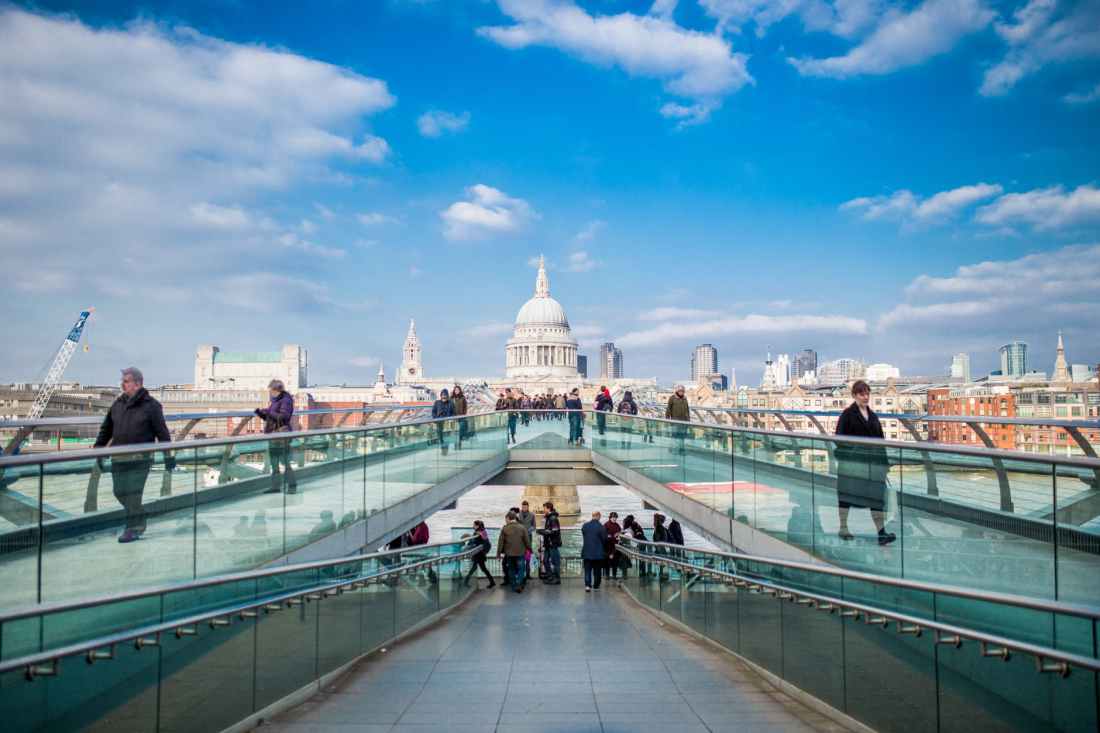
city sky people bridge
Photo by Negative Space on Pexels.com


https://www.poetryfoundation.org/poets/andrew-marvell

EXTRACT

Andrew Marvell is surely the single most compelling embodiment of the change that came over English society and letters in the course of the 17th century. In an era that makes a better claim than most upon the familiar term transitional, Marvell wrote a varied array of exquisite lyrics that blend Cavalier grace with Metaphysical wit and complexity. He first turned into a panegyrist for the Lord Protector and his regime and then into an increasingly bitter satirist and polemicist, attacking the royal court and the established church in both prose and verse. It is as if the most delicate and elusive of butterflies somehow metamorphosed into a caterpillar.

To be sure, the judgment of Marvell’s contemporaries and the next few generations would not have been such. The style of the lyrics that have been so prized in the 20th century was already out of fashion by the time of his death, but he was a pioneer in the kind of political verse satire that would be perfected by his younger contemporary John Dryden and in the next generation by Alexander Pope (both writing for the other side)—even as his satirical prose anticipated the achievement of Jonathan Swift in that vein. Marvell’s satires won him a reputation in his own day and preserved his memory beyond the 18th century as a patriotic political writer—a clever and courageous enemy of court corruption and a defender of religious and political liberty and the rights of Parliament. It was only in the 19th century that his lyrical poems began to attract serious attention, and it was not until T.S. Eliot’s classic essay (first published in March 1921), marking the tercentenary of Marvell’s birth, that Marvell attained recognition as one of the major lyric poets of his age.

Poetry and sociality in a global frame

https://arcade.stanford.edu/content/poetry-and-sociality-global-frame

Extract


Dowdy, Michael. 2013. Broken Souths: Latina/o Poetic Responses to Neoliberalism and Globalization. Tucson: University of Arizona Press. $30.00 sc. 296 pp.

Furani, Khaled. 2012. Silencing the Sea: Secular Rhythms in Palestinian Poetry. Stanford: Stanford University Press. $55.00 hc. 312 pp.


A formidable hermeticism has long held sway over Anglophone poetry criticism. While criticism of other literary genres expands its grasp, most notably into new sociological approaches to literature, knowledge of the tropes and schemes of poetry serves as a border check for those interested in poetic criticism, slowing contemporary poetry’s reception, inhibiting pedagogy, and operating in general like a canon of revealed truths. Generally speaking, to read poetry means to learn the history of poetic devices and to recognize the various appearances (or absences) of this history in an individual poem: why a line break works the way it does, why a metaphor appears where it does. But these claims about poetic design do not only represent a neutral language specific to literary study or a convenient mechanism for distinguishing between traditional and avant-garde strands of poetry. By attributing a private and individual, rather than global and material, foundation to the aesthetics of poetry, such claims also prevent poetry from being recognized as a social form. As a result, canonical notions of line, verse, and enjambment are theorized as though poetry developed and continues to develop in monastic seclusion from the political economies and emergent precarities of modern global capitalism.

No sustained analysis exists in which the history of poetry and poetics is reread in the light of the history of globalization. Books on Anglophone poetry in particular have been cautious in adopting a postcolonial, global, or transnational critical perspective and, in general, complacent in upholding the immutable value of a small set of formal devices and traditions. Within this tradition, however, there are critics who are moving toward a global and socially attuned poetics. Jahan Ramazani’s The Hybrid Muse (2001) and A Transnational Poetics (2009) link poetic tropes of metaphor and figures of irony with theories and themes of hybridity, migration, and exile in postcolonial Anglophone poetry. After Ramazani, the Jamaican poets Claude McKay and Louise Bennett can no longer be treated as marginal, neither to postcolonial studies nor to poetry, while the Irish poet W. B. Yeats and the Trinidadian poet Derek Walcott, who are already the subjects of a voluminous critical corpus, appear newly relevant.

Another extract


Furani and Dowdy are not troubled or anxious to establish their credentials through the Anglophone poetic tradition. Instead, their work provides ways outside the existing tradition and methodologies from which Anglophone critics might learn. In Silencing the Sea: Secular Rhythms of Palestinian Poetry, Furani, an anthropologist, argues that aesthetic innovations in post-1948 Palestinian poetry must be understood in relation to ethical and political “craftings of the self” (2012, 2): “I have been able to see the poetic tradition as caught in the formation and contestation of truth and subject formations in a particular society, rather than as an insular unraveling of beauty and imagination” (3). In Furani’s account, poetic meter and religion are the two critical axes for understanding Palestinian poetry in the second half of the twentieth century. The history of Palestinian verse, Furani argues, is one that links traditional meter with religion and the break from traditional meter with the rise of secularism as “a dominant fragmentary formation in ways of knowing and being in the modern era” (19). While Furani’s work introduces many poets who will be virtually unknown to those well versed in other poetic traditions, it also culminates in a powerful critique of secularism for its elevation of self-sovereignty and its claims that truth can only be found in the visible (246). Furani concludes by stressing the need “to think fully through the secular demands sensing the frailty buried under its claims of sovereignty” (248).

The most striking aspects of Silencing the Sea are the structure of argument Furani creates and the methodology he employs. The first section of the book, “Initiations,” introduces readers to the theoretical, formal, and institutional frameworks of the study by giving overviews of secularism, forms of Arabic poetry, and poetry festivals in post-1948 Palestine

Snails

In my little garden dwell the snails
I love their patterned shells upon  the wall
Walking round I see their tiny trails

They  do not go to work nor ever fail
Unless I step unseeing as they crawl
In my little garden dwell the snails

Human beings hurt us by betrayal
Natural life gives comfort as we fall
Walking round I see their tiny trails

Petted cats can caterwaul or wail
But  men  may hit a woman and then maul
In my  shady garden dwell the snails


I wonder if they read the earth like braille
If they  are attacked,  they lose their all
Walking round I see their tiny trails

Build no  barbed wire fence nor a brick wall
Between  the human and the natural world
In our little gardens dwell the snails
Walking round  we see their  silver trails


A comparison of prose and poetry

Fairy Steps (Large)

https://www.diffen.com/difference/Poetry_vs_Prose


I

Read more by clicking the link

Poetry Prose
Introduction (from Wikipedia) Poetry (from the Latin poeta, a poet) is a form of literary art in which language is used for its aesthetic and evocative qualities in addition to, or in lieu of, its apparent meaning. Prose is the most typical form of language. The English word ‘prose’ is derived from the Latin prōsa, which literally translates as ‘straight-forward.’
Line breaks? Yes No
Use Typically reserved for expressing something in an artistic way. Most everyday writing is in prose form