The difference between poetry and prose

19029692_934673353339210_3990976413130029783_nhttps://www.poetryfoundation.org/harriet/2012/04/the-difference-between-poetry-and-prose


Extract

The Difference Between Poetry and Prose

Prose is all about accumulation (a morality of work), while poetry as it is practiced today is about the isolation of feelings (an aesthetics of omission). Among other things, prose is principally an ethical project, while poetry is amoral, a tampering with truths which the world of prose (and its naturalistic approach to mimesis) takes for granted. Poetry creates its own truth, which at times is the same truth as the world’s, and sometimes not. Whatever the case, its mimesis is always a rearrangement, at a molecular level, of that axis between the “seen” and the “felt” (that coal chute which connects the childish eye to the Socratic heart), which, were it not for poetry, with its misguided elenchus, would remain obscured. In both classical and modern languages it is poetry that evolves first and is only much later followed by prose, as though in a language’s childhood, as in our own, poetry were the more efficient communicator of ideas. Whether this has to do with the nature of ideation or some characteristic intrinsic to the material evolution of tongues has never been adequately decided. Probably this evolution, from poetry to prose, depends on synergy—between the passion for thought and enthusiasm for new means. Technology also played a roll. With the spread of the printing press after 1440, texts no longer had to be memorized. Poetry’s inbuilt mnemonics (rhyme, meter, refrain, line breaks) were no longer essential for processing and holding on to knowledge. Little hard drives were suddenly everywhere available. But even a century later, in Elizabethan England, English prose had not yet come close to achieving the flexibility of poetry. One need only compare Shakespeare’s blank verse soliloquies to the abashed prose of one of the Elizabethans’ greatest disputants, Richard Hooker, or to the Martin Marprelate tracts. These are differences not only in talent but ones inherent to the medium. Even the King James Bible, “the noblest monument of English prose,” cannot compare to the blank verse of Shakespeare.

How to grow on holiday

How to pack a suitcase when  you never wear a suit
However did we pack ,when we had no kindle books?
How to go on holiday on the perfect route

I sometimes wore a sandal,  my  sister liked a boot
We were not so worried  by  perfection and our looks
Nor how to pack a suitcase when  we never wore a suit

If you play a cello then never take a flute
Don’t take any sandwiches unless you have a cook
How to go on  field trips  when the  your  anger  is acute

If you feel  the stress of life,  why not become mute?
If you have a caravan, is it overlooked?
How to pack a  suitcase when  you never sawed a suit

If you only take one bag,, you  seem to me astute
Don’t take any rifles it’s illegal  to shoot rooks
How to go on holiday on the perfect route.

Make  sure you wear your wellingtons if you walk through a brook
Take some stolen credit cards  if you are a crook
How to  wear a suitcase when  you never wear a suit
How to   grow on holiday on the perfect route


The politics of poetry

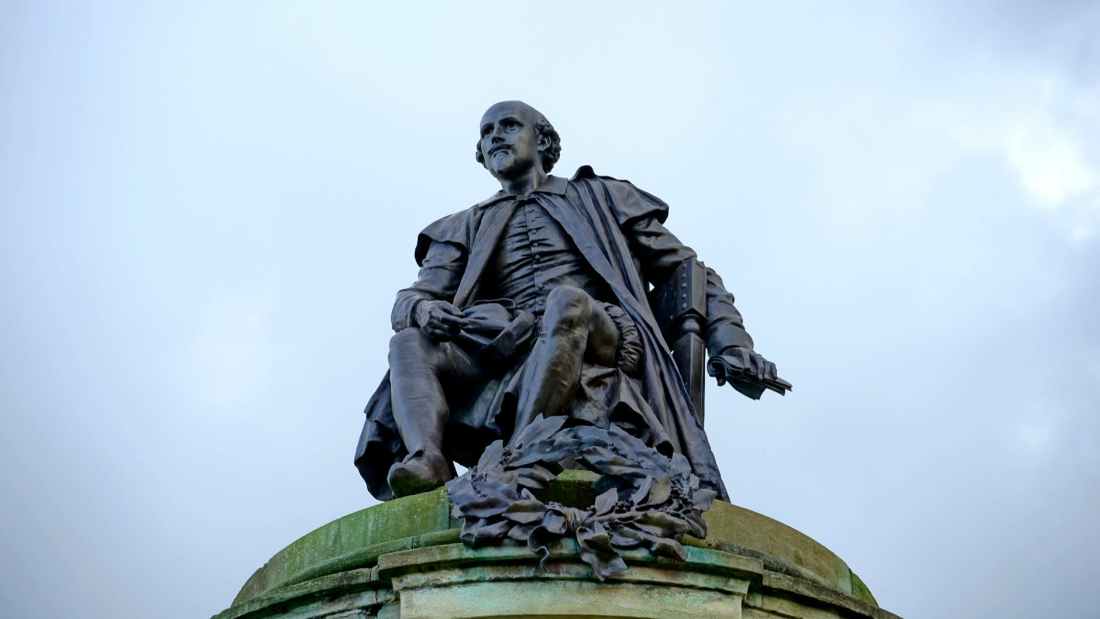
photo of black ceramic male profile statue under grey sky during daytime
Photo by Mike Bird on Pexels.com

This is well worth reading

https://www.poetryfoundation.org/poetrymagazine/articles/69080/the-politics-of-poetry

Extract

It’s also how democratic politics is sometimes thought to work, at least when we’re thinking of “politics” in its more abstract incarnations. Here, for instance, is how Franklin D. Roosevelt viewed the job to which he devoted much of his life:

The Presidency is not merely an administrative office. That’s the least of it. It is more than an engineering job, efficient or inefficient. It is pre-eminently a place of moral leadership. All our great presidents were leaders of thought at times when certain historic ideas in the life of the nation had to be clarified.

To say that you’re personally necessary in order for “certain historic ideas in the life of the nation . . . to be clarified” is only a few hyperventilating breaths short of calling yourself “a mirror of the gigantic shadow which futurity casts upon the present.” The link again is the concept of totalizing vision. And this concept—dramatic, romantic, wildly generalizing—is one that politics and poetry don’t share to the same degree with activities like neuroscience (which focuses on particulars) or television writing (which tends to emphasize craft). Indeed, the only other areas of American life that have similar inclinations are probably religion and philosophy. Religion is no longer attractive for many poets for reasons that are historical and beyond the scope of this essay. Philosophizing remains a popular endeavor in the poetry world, but only so long as it’s a poetic sort of philosophizing (Nietszche, Heidegger) and not complicated, logic-y stuff that involves formulations like ◊∃xφ→∃x◊φ. Since Anglo-American philosophy has been dominated by the latter sort of thinking for decades, it’s no surprise most poets don’t go in for it.