
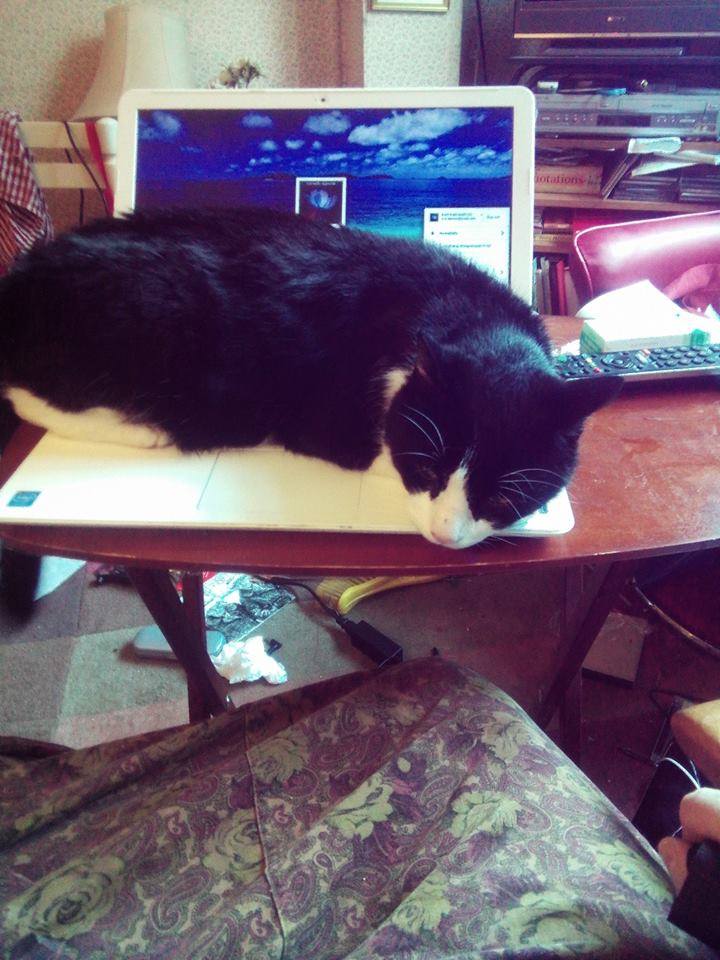
Alfred,my lost cat

Voices verging on the shrill, too sharp
Sing the works of Handel and of Bach
Reminding us of Christmas, love and death
The holy lamb of God born without wrath.
Gregorian chant and Hebrew music share
Simplicity, enchantment, music bare
If our minds were locked into that sphere
Could we end the wars and relieve fear?
Opposing the desire for grace and peace
Savage men fire guns and never cease
Sinai, Salisbury Plain now closed to man
Weapons tested when they should be banned
Yet Jewish people never fought before
Except when called up in the first world war
Assimilated ,workers, self effaced
Hitler employed human sacrifice
Torture, murder, terror don’t improve
The minds of the survivors as they brood
Cannibals ,slave masters, who are we
To reinterpret human history?
The end is near, prepare your soul and heart
The message of the Christ from us departs
Sometimes sunshine makes us feel bereft
Rain and shadowed clouds would suit our mood
When we are the warp without the weft
As if we are the pen and no ink’s left
As if we hunger yet there is no food
Sometimes sunshine makes us feel bereft
Our mind slows down and all we do is drift
Evil thoughts into the soul intrude
Like we are the warp without the weft
Let the eye and all its muscles rest
With wider focus we may cease to brood
Sometimes sunshine makes us feel bereft
Do not try with will power nor it test
Relaxation brings back knowledge of the good
We take it in like babies at the breast
We must not test the will but let it go
Trust the ocean and eternal flow
Sometimes sunshine makes us feel bereft
Sometimes sunshine brings its golden gifts

http://www.pij.org/details.php?id=996
Extract:
The importance of communication through poetry to the Israeli and Palestinian peoples.
The horror of war inextricably entwined with the craving of peace — this theme has driven the poetry of Israel since the inception of the state.
— Israeli poet Moshe Dor
The color of poetry is coal-black…
— Palestinian poet Mahmoud Darwish
As Palestinian and Israeli negotiators continue to engage in a long, difficult dialogue about the final status between Israel and a new Palestinian state, I would like to discuss a very different form of dialogue between the two peoples — the dialogue of poetry. Because behind all the signing of agreements and hand-shaking and posturing and red lines and green lines, there is the bottom line: the emotions and experiences of the people.
I believe that poetry, by its nature, is a form of dialogue, and that poems are attempts to communicate. And in the Palestinian-Israeli arena, the poet’s need to communicate across political and cultural boundaries is particularly intense. Yehuda Amichai has acknowledged: “I have no illusions. It’s quite difficult for poets to communicate with one another in a society that is politically torn apart the way ours is.” Nevertheless, because of the geographical, linguistic, and political barriers inhibiting communication between Palestinians and Israelis, many poets, including Amichai, have used poetry as a means to convey messages to “the other side,” or to explore their feelings about the conflict.


 How my heart speaks