
 https://www.bl.uk/romantics-and-victorians/articles/john-keats-and-negative-capability
Extract
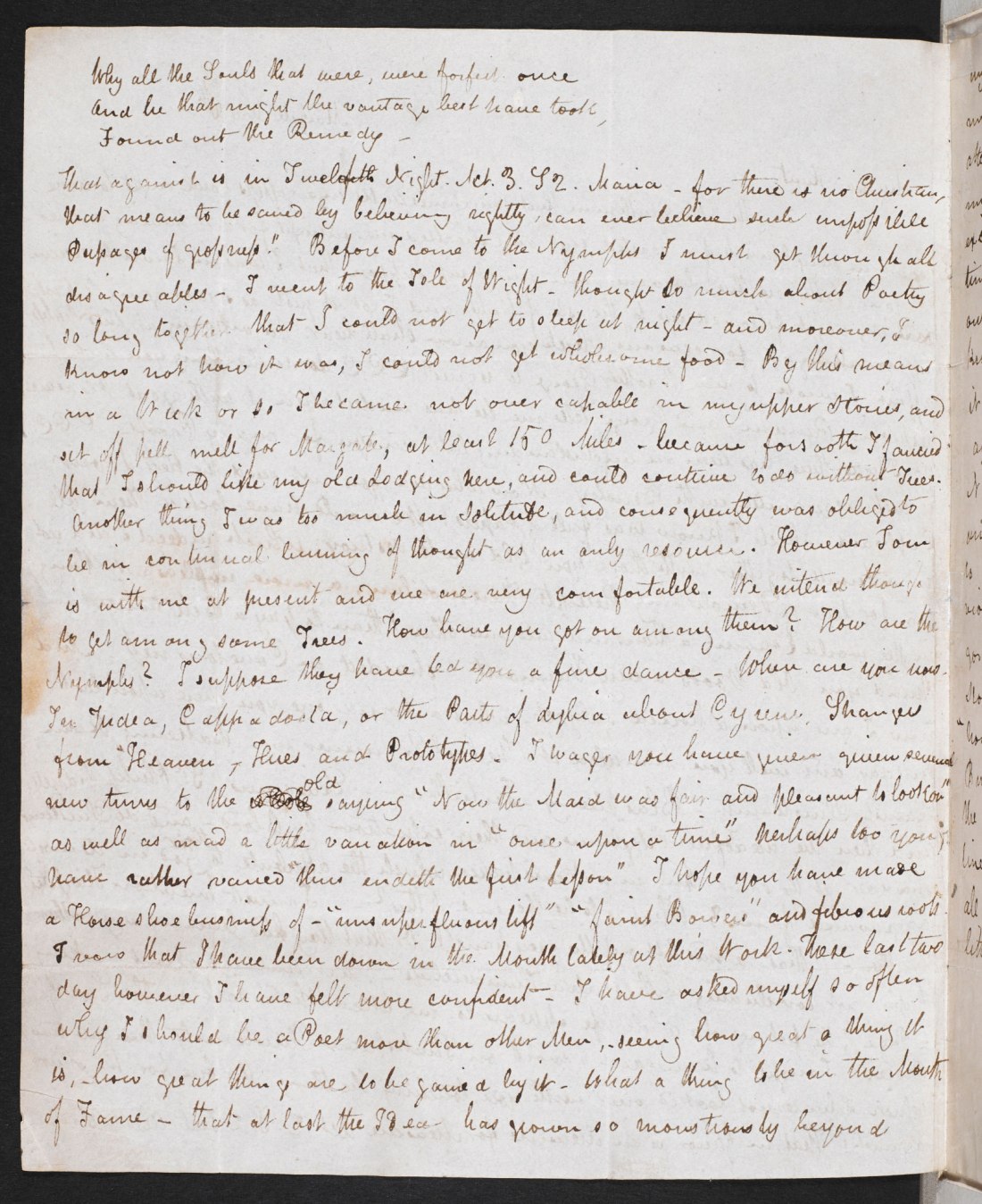
“And Keats touched again on the idea of the passivity, humility even, of a great writer, in a letter he wrote to his friend Richard Woodhouse on 27 October following year. The ‘poetical Character’, he maintained,
is not itself – it has no self – it is everything and nothing – It has no character – it enjoys light and shade; it lives in gusto, be it foul or fair, high or low, rich or poor, mean or elevated – It has as much delight in an Iago [the villain of Shakespeare’s Othello] as an Imogen [Shakespeare’s heroine in Cymbeline]. What shocks the virtuous philosopher delights the camelion Poet.[3]
The word ‘gusto’ was used by Keats’s contemporary, the essayist and critic William Hazlitt, to describe the power and passion with which an artist creates another form. ‘The infinite quantity of dramatic invention in Shakespeare takes from his gusto’, Hazlitt wrote in the Examiner on 26 May 1816; ‘The power he delights to show is not intense, but discursive. He never insists on any thing as much as he might, except a quibble.’”

 How my heart speaks