Natural behaviour

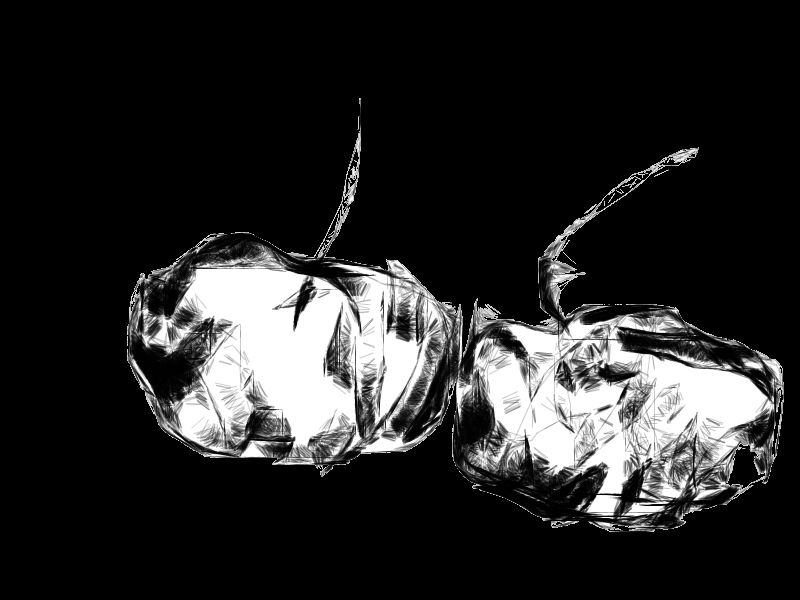
two-apples-charcoal-on-blackI do what comes naturally  now
Love my husband and neighbour  somehow
They may complain
With them I’ve not lain
It’s all in my head, that is true

For my mind has taken charge of my soul
My body  must obey to be whole
I  lay in their arms
But it’s all in my dreams
So they ‘re as  unhappy as a pack of known trolls

What a pity they don’t do gender fluid
As they do not have to be nude
Then they could bed each other
While I dreamed with no bother
Without being told I am rude

To me, love’s an ethical  demand
The Good must give me its commands
I will be receptive
But perhaps not deceptive
Or I may be put on remand.

I don’t know that  lovers need  kiss
To obtain eternally bliss
Just smiling  brightly
Is not so unsightly
But touching is  something I’d miss


T

What is natural law?

Northmoor_effigyhttps://en.wikipedia.org/wiki/Natural_law


“Although Plato did not have an explicit theory of natural law (he rarely used the phrase ‘natural law’ except in Gorgias 484 and Timaeus 83e), his concept of nature, according to John Wild, contains some of the elements found in many natural law theories.[8] According to Plato, we live in an orderly universe.[9] The basis of this orderly universe or nature are the forms, most fundamentally the Form of the Good, which Plato describes as “the brightest region of Being”.[10] The Form of the Good is the cause of all things, and when it is seen it leads a person to act wisely.[11] In the Symposium, the Good is closely identified with the Beautiful.[12] In the Symposium, Plato describes how the experience of the Beautiful by Socrates enabled him to resist the temptations of wealth and sex.[13] In the Republic, the ideal community is, “…a city which would be established in accordance with nature.”[14]

Aristotle[edit]

Plato (left) and Aristotle (right), a detail of The School of Athens, a fresco by Raphael.

Greek philosophy emphasized the distinction between “nature” (physisφúσις) on the one hand and “law”, “custom”, or “convention” (nomosνóμος) on the other. What the law commanded would be expected to vary from place to place, but what was “by nature” should be the same everywhere. A “law of nature” would therefore have the flavor more of a paradox than something that obviously existed.[1] Against the conventionalism that the distinction between nature and custom could engender, Socrates and his philosophic heirs, Plato and Aristotle, posited the existence of natural justice or natural right (dikaion physikonδικαιον φυσικονLatin ius naturale). Of these, Aristotle is often said to be the father of natural law.[3]

Aristotle’s association with natural law may be due to the interpretation given to his works by Thomas Aquinas.[15] But whether Aquinas correctly read Aristotle is in dispute. According to some, Aquinas conflates natural law and natural right, the latter of which Aristotle posits in Book V of the Nicomachean Ethics (Book IV of the Eudemian Ethics). According to this interpretation, Aquinas’s influence was such as to affect a number of early translations of these passages in an unfortunate manner, though more recent translations render those more literally.[16]Aristotle notes that natural justice is a species of political justice, specifically the scheme of distributive and corrective justice that would be established under the best political community; were this to take the form of law, this could be called a natural law, though Aristotle does not discuss this and suggests in the Politics that the best regime may not rule by law at all.[17]

The best evidence of Aristotle’s having thought there was a natural law comes from the Rhetoric, where Aristotle notes that, aside from the “particular” laws that each people has set up for itself, there is a “common” law that is according to nature.[18] Specifically, he quotes Sophocles and Empedocles:

Universal law is the law of Nature. For there really is, as every one to some extent divines, a natural justice and injustice that is binding on all men, even on those who have no association or covenant with each other. It is this that Sophocles’ Antigone clearly means when she says that the burial of Polyneices was a just act in spite of the prohibition: she means that it was just by nature:

“Not of to-day or yesterday it is,
But lives eternal: none can date its birth.”

And so Empedocles, when he bids us kill no living creature, he is saying that to do this is not just for some people, while unjust for others:

“Nay, but, an all-embracing law, through the realms of the sky
Unbroken it stretcheth, and over the earth’s immensity.”[19]”

The little hands touch me so deeply , so well

Nobody knocked and I opened the door
But that room’s not the one I was looking for.
The light didn’t work and I fell  on a book
Then I saw you and your smile and your look.

We don’t know what we want until it comes by
I’m too past it now so soon  I may die.
But while I am here, I’m enjoying the peace
Of being alone, smiling, and writing re geese.

I seem them fly by when the sun starts to sink.
How like a wild god; they ‘re gone when I blink.
Then they descend ;they all move as one.
No training in music could teach us that song.

Evoking the beauty of  stars far away,
I like to watch geese at the end of the day.
Patterns and poems disclose other worlds.
The  hand of a baby; the fingers uncurled

The trust and the smile ; mother is home
She creates entire worlds for the one she has borne.
For chaos and panic  are onot far away;
Even in adults who don’t care to say.

The little hands touch me so deeply, so well;
How come the world holy is rolling to hell?
How can we kill little wains  by the score?
Was it for this that I opened your door?

Was it for this that love electrified  us?
We were lost in each other, as moved the white dove.
Was it for war that we lent love our wombs
Making more soldiers and building more tombs?

The bombs, they are loading; they’re having parades.
It’s not North Korea, it’s Washington, dude.
Let the tanks roll  on Corrie and the Bedouin tribes.
Let the allies laugh blindly as the Lord Jesus dies.

O take me, dear mother.Please take me away
I can’t see no point in saying my prayers.
The leaders’ religions are making God frown.
The desert is empty, the tents all dragged down.

The centuries of living , so free,  so mobile
The Holy Land blessing; they pause for while.
The little black  tents,  the  wombs of the night,
Are all gone to shredders; they’re out of our sight.

The land we once called Holy

The land we once called Holy dies like Christ
The iron walls, the guns, the sacrifice.
Evil comes,religions onward fight

Angels and archangels put to flight
Bedouin tents are darker than black ice
The land we once called Holy bleeds like Christ

In the deserts of the soulless nights
Mothers clutch their  babies, tanks roll by.
Evil comes,religion God denies

After Holy death, will man survive?
The tortured ones  will torture others thrice
The land we once called Holy dies like Christ

Dazed by resurrection in dark night,
Where and when the beast that slouches twice?
Evil comes,religion God denied

Where can we lose our hatred and embrace
Those that killed our spirit and our eyes
The land we once called Holy dies like Christ
Evil comes, the grave is gaping wide,


With peaceful hearts

How good to savour fully with our sense
Whichever one we favour in our minds
All life is better when our love’s intense

Yet more important is to be content
With peaceful hearts we let our self unwind
How good to savour fully with our sense

With inner voices which too much dissent
The day gets darker and we fall behind
But life is better when love it invents

In the desert,will there be a tent
Where we may sleep and find life undefined
Can we savour fully without sins?

We find our hate which love will complement
Reparation guides us unresigned
So life is better, hate is not cement

As our faces alter with our lines
So the play is acted in its time
How good to see the truth of what we sense
Life is full when love is not lament