On the Pennine Way

On the Pennine Way, they kept a bull
The farmer didna like the walkers there
On the Pennine Way it wasna dull
On the Pennine Way ,ain’t no seagulls

On the Pennine Way, there were a stile
The  farmer coulda  maybe got a bear
On the Pennine Way we walked 6 miles
On the Pennine Way  and  disused rail

On the Pennine Way  there was  green grass
The farmer heard it singing with no care
On the Pennine Way there was a lass
On the Pennine Way,she had to pass

On the Pennine Way the bull was large
The farmer   claimed he’d  done it for a dare
On the Pennine Way the walk was hard
On the Pennine Way,the House of Cards

On the Pennine Way we walked right by
The farmer said he  liked  my golden  pear
On the Pennine Way we coulda died
On the Pennine Way,  Lord we’d abide

On the  Pennine Way  our courage held
The farmer said he’d cross the bull and hare
On the Pennine Way there was a field
On the Pennine Way, a mirror shield

On the Pennine the bull turned round
The farmer he was  muttering as he stared
On the Pennine Way in cap and gown
On the Pennine Way in study brown

On the Pennine Way we won our spurs
The farmer was enraged, the bull don’t care
On the Pennine Way the ghosts are fair
On the Pennine Way,my love and I

O bird surprised,  how you glared!

O bird surprised,  how you glared
Cruelly eye to eye
Over a dry stone wall
The force, the killing gaze
How could a human defy
This fascist force and power?
You judged like a god
By no human commandments
We stock still on the lane,frozen
A clock ticked
A hand moved
You rose like a  demon chimney sweep, straight and up
We could not  lift  our feet
From the earth
A strange kind of birth

The Wild Swans at Coole 

The trees are in their autumn beauty,
The woodland paths are dry,
Under the October twilight the water
Mirrors a still sky;
Upon the brimming water among the stones
Are nine-and-fifty swans.
The nineteenth autumn has come upon me
Since I first made my count;
I saw, before I had well finished,
All suddenly mount
And scatter wheeling in great broken rings
Upon their clamorous wings.
I have looked upon those brilliant creatures,
And now my heart is sore.
All’s changed since I, hearing at twilight,
The first time on this shore,
The bell-beat of their wings above my head,
Trod with a lighter tread.
Unwearied still, lover by lover,
They paddle in the cold
Companionable streams or climb the air;
Their hearts have not grown old;
Passion or conquest, wander where they will,
Attend upon them still.
But now they drift on the still water,
Mysterious, beautiful;
Among what rushes will they build,
By what lake’s edge or pool
Delight men’s eyes when I awake some day
To find they have flown away?
Source: The Collected Poems of W. B. Yeats (1989)
  • Related

A life of one’s own?

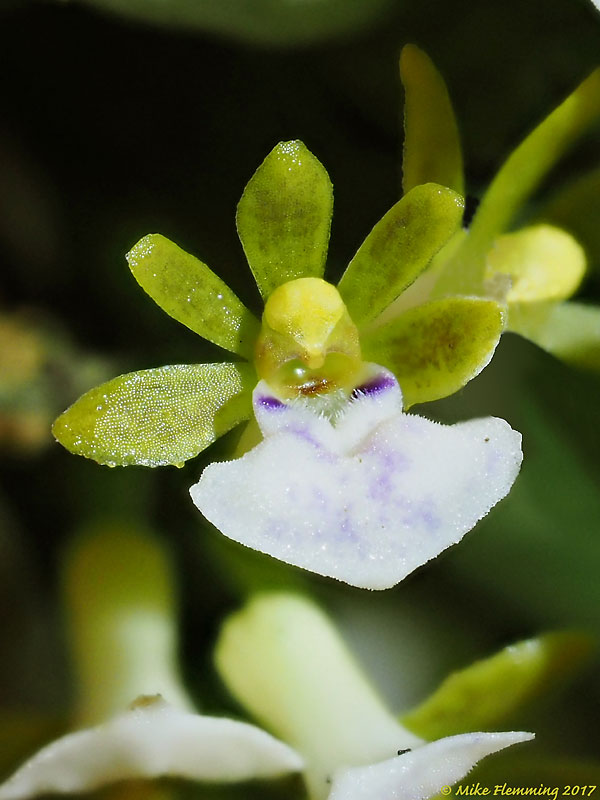
Orchid_2017-1

https://www.brainpickings.org/2017/10/11/a-life-of-ones-own-joanna-field-marion-milner/


“In 1926, more than a decade before a team of Harvard psychologists commenced history’s longest and most revelatory study of human happiness and half a century before the humanistic philosopher Erich Fromm penned his classic on the art of living, the British psychoanalyst and writer Marion Milner (February 1, 1900–May 29, 1998) undertook a seven-year experiment in living, aimed at unpeeling the existential rind of all we chronically mistake for fulfillment — prestige, pleasure, popularity — to reveal the succulent, pulsating core of what makes for genuine happiness. Along her journey of “doubts, delays, and expeditions on false trails,” which she chronicled in a diary with a field scientist’s rigor of observation, Milner ultimately discovered that we are beings profoundly different from what we imagine ourselves to be — that the things we pursue most frantically are the least likely to give us lasting joy and contentment, but there are other, truer things that we can train ourselves to attend to in the elusive pursuit of happiness.

Art by Jean-Pierre Weill from The Well of Being

In 1934, under the pen name Joanna Field, Milner released the results of her inquiry in A Life of One’s Own (public library) — a small, enormously insightful book, beloved by W.H. Auden and titled in homage to Virginia Woolf’s A Room of One’s Own, published three years after Milner began her existential experiment. Milner would go on to fill her ninety-eight years with life of uncommon contentment, informed by her learnings from this intensive seven-year self-examination.

In the preface to the original edition, Milner admonishes:

Let no one think it is an easy way because it is concerned with moments of happiness rather than with stern duty or high moral endeavour. For what is really easy, as I found, is to blind one’s eyes to what one really likes, to drift into accepting one’s wants ready-made from other people, and to evade the continual day to day sifting of values. And finally, let no one undertake such an experiment who is not prepared to find himself more of a fool than he thought.

This disorienting yet illuminating task of turning the mind’s eye inward requires a practice of recalibrating our conditioned perception. Drawing on Descartes’s tenets of critical thinking, she set out to doubt her most fundamental assumptions about what made her happy, trying to learn not from reason alone but from the life of the senses. Half a century before Annie Dillard offered her beautiful lens on the two ways of seeing, Milner writes:

As soon as I began to study my perception, to look at my own experience, I found that there were different ways of perceiving and that the different ways provided me with different facts. There was a narrow focus which meant seeing life as if from blinkers and with the centre of awareness in my head; and there was a wide focus which meant knowing with the whole of my body, a way of looking which quite altered my perception of whatever I saw. And I found that the narrow focus way was the way of reason. If one was in the habit of arguing about life it was very difficult not to approach sensation with the same concentrated attention and so shut out its width and depth and height. But it was the wide focus way that made me happy.

She reflects on the sense of extreme alienation and the terror of missing out she felt at the outset of the experiment, at twenty-six:”

A living spark

When those we loved are gone into the dark,
From where we come and so will also end;
Then mournful we await a living spark
To light  the fire within and sorrow mend.
Reality is not absorbed  whole;
Though we have seen, we cannot yet believe.
And pain torments our  jagged heart and soul
Until in time the grace  comes to receive.
We must believe that we can bear  this load,
Even when we fall and lie forlorn.
Help may come  or pain may be a goad.
Love may come from those we used to scorn.
To willingly accept  may seem too hard,too grim.
Yet when we do ,the spirit grows within

The paper blew away

As I wrote the paper blew away
Despite the season I was on the  grass
I need a weighty topic for  today

I believe our words and writing  pray,
Passwords should be  sacred words embraced
As I wrote ,the paper blew away

Prayer,  like walking, can maintain each day
A moment is enough  to give heart ease
I need a weighty topic for  today

Salvation will be ours  though deep the fray
When we take   within a human  face
While I wrote, the paper blew away

Look into the eyes of  one who’s pained
So both souls are gently  interlaced
I need a  holy topic for  today

My fingers on the pillow   tranquil trace
The dent his head made in our last embrace
As I wrote the paper blew away
I  saw the light and  lost my dark despair