All trace was gone

I saw, while half asleep,  her face was gone
She faded, like the mist does at the dawn,
From the gallery of my loved ones

Ungrounded by the loss, fearful, forlorn,
Skinless like a worm  picked off a lawn,
I saw, while half asleep,  her face was gone

Do not leave me, do not my love scorn
Lost and gone are my beloved ones
I  am human in both ghost and form

Heart constricted, lungs  pant out my pain
Haunted and bereft of human warmth
I saw, while half asleep,  her face was gone

I shall have no mother but that one
Now I have become a dried out corm
Lost and gone are all my beloved ones

Like a little leaf from its plant torn
Gnawed by slugs,  fragmented  till unborn
I saw, while half asleep,  all trace was gone
Of the gallery of my lost, loved ones


There is no swift repeat

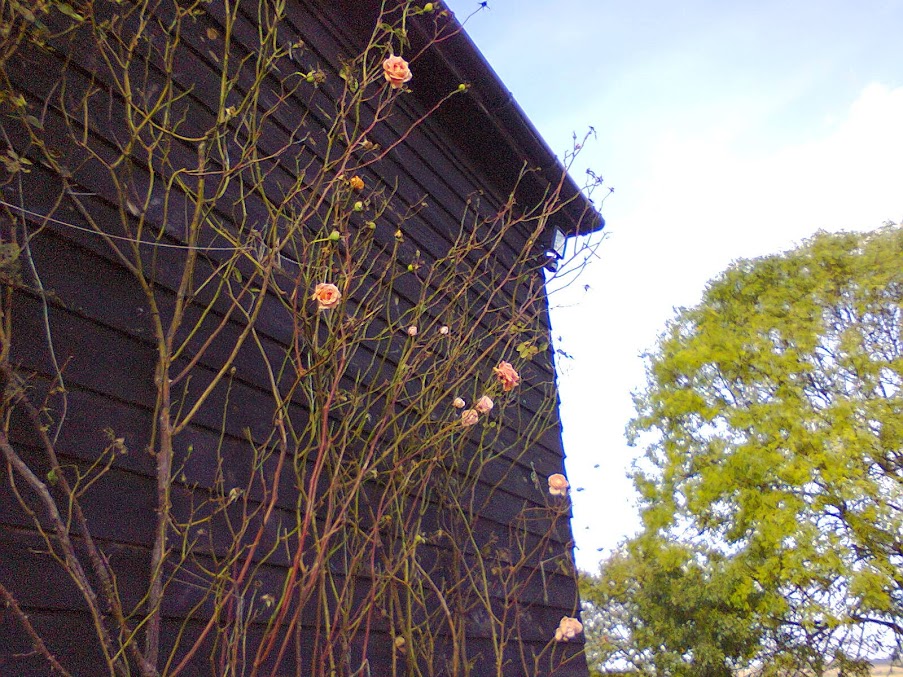
I saw the faded roses on the door
The brave reminders of the summer heat
I thought we’d  come again, but you’re no more

Nothing, no one can that love restore
For love like that, there is no swift repeat
I saw the faded roses on the door

Never ask a lover what love’s for
For love itself is inclined to swift retreats
I thought we’d  love again, but you’re no more

 And who is it that chooses this dark hour,
That offers sadness if not full defeat?
I saw the faded roses on the door.

My man,my love,my ease, my own sweet flower
For my illusions I am now contrite
I thought we’d  love again, but you’re no more


Within the deepest dark,I saw the light
And all this suffering was seen aright
I saw the faded roses on the door
I thought we’d  see and love another hour


Ambiguity

Photo0040.jpg

Photo by Katherine 2012

https://plato.stanford.edu/entries/ambiguity/


“Ambiguity has excited philosophers for a very, very long time. It was studied in the context of the study of fallacies in Aristotle’s Sophistical Refutations. Aristotle identifies various fallacies associated with ambiguity and amphiboly[1] writing:

There are three varieties of these ambiguities and amphibolies: (1) When either the expression or the name has strictly more than one meaning… (2) when by custom we use them so; (3) when words that have a simple sense taken alone have more than one meaning in combination; e.g. ‘knowing letters’. For each word, both ‘knowing’ and ‘letters’, possibly has a single meaning: but both together have more than one-either that the letters themselves have knowledge or that someone else has it of them. (Sophistical Refutations bk. 4)

The stoics were also intrigued by ambiguity (see Atherton 1993). Chrysippus claimed at one point that every word is ambiguous—though by this he meant that the same person may understand a word spoken to him in many distinct ways. Philosophers concerned with the relation between language and thought, particularly those who thought there was a language in which we think, concerned themselves with whether the language in which we think could contain ambiguous phrases. Ockham, for example, was willing to countenance ambiguities in mental sentences of a language of thought but not mental terms in that language (see Spade p. 101). Frege contemplated non-overlap of sense in natural language in a famous footnote, writing:

…So long as the reference remains the same, such variations of sense may be tolerated, although they are to be avoided in the theoretical structure of a demonstrative science and ought not to occur in a perfect language. (Frege 1948 [1892], p. 210 fn. 2)

Frege’s hostility to ambiguity in formal languages remains with us today. Frequently we use formal languages precisely so that we can disambiguate otherwise ambiguous sentences (brackets being a paradigm example of a disambiguating device).”

Paris Review – The Art of Criticism No. 2, George Steiner

Paris Review – The Art of Criticism No. 2, George Steiner.

A fascinating interview

.Quote :For me the personal turning point was Pol Pot. Very few knew at the time about Auschwitz. Yes, there were bastards who knew, there were sons of bitches who knew and who didn’t believe it, but they were a tiny number. Nazi secrecy on this was fantastically efficient. The killing fields were on radio and television while they were going on, and we were told that Pol Pot was burying alive one hundred thousand men, women and children. Now I cannot attach honest meaning to the phrase “to bury alive one man, woman or child.” One hundred thousand! I almost went out of my mind in those days with bitter impotence. I was obsessed with the hope that Russia and America would say, “We don’t know what the rights and wrongs of this incredible geopolitical mess are but forty-five years after the Holocaust or after the gulag, we can’t shave in the morning, we can’t look at ourselves, knowing a hundred thousand people are being buried alive; the razor doesn’t work on the skin. No woman can put on her makeup and think of herself as human. If you don’t stop this, we’ll come in.” I’d hoped ………….

Meanings

When knowledge  and our rituals are thin
The usual symbols’ meanings  seem all gone
Who will show us how to live again?

The emphasis was overtly on sin
The mighty were exempted every one
Now knowledge  and our rituals are thin

As the song says, don’t know where  or,  Oh Lord, when
The breath of angels’  staggers the rich man.
Who will show us how to live and when?


Uneasy murmurs through our conscience run.
Anaesthetics now our medium
Knowledge  and our rituals are thin

Like  swarm of bees, archangels pass the sun
Unseeing, we deceive with tedium
Who will show us how to live again?

Power replaces insight with  a gun
Shoot as if the end’s already come
When knowledge  and our rituals are thin
Who might show us how to live again?


Their infants’ eyes

Both blinded  and enchanted by the light,
Sidelong like the glances of a spy.
I saw a flock of geese high on their flight

The Hebrew slaves from Egypt in their plight
Left with little but their infants wise,
Wandering in the desert’s heat and light


Oh, easy is it for the birds to reach the heights
While refugees can suffer, drown and die
I saw a  dozen swans pass on their flight

For the poor,  there are few equal rights
And mothers with their little children cry
Both blinded  and diminished in the light

Will the Lord enchant us with delight,
Or punish our false greed till hearts ignite?
I saw a cloud of  angels show His might

As we live on the earth like parasites
Forgot not that revenge may come by night.
Both wounded and entreated by the light,.
I saw  that we conformed without a fight