Free

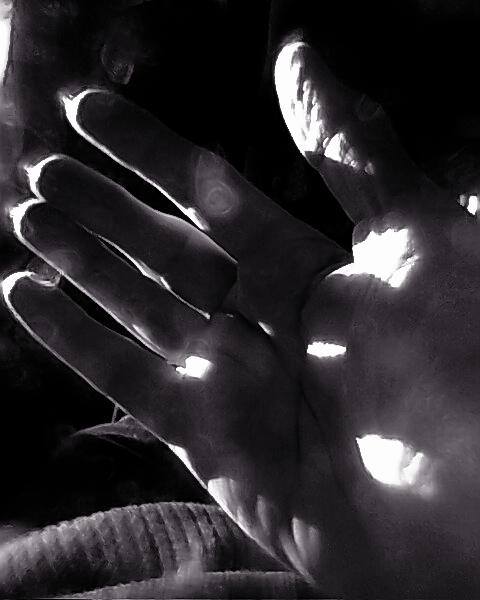
lit-up-hands.jpgI thought of writing in free verse today
As it has a different feel than form
Yet I have almost forgotten how to do that
We hear the News and then
We hear it again

When will peace come   like in 1989
South Africa?
When will people stop going to church
BECAUSE going to church  is not enough
It is not  so important.
What we do is.
Knowing what is possible is
It may be hard.
But cruelty is hard too,

Ethics and mysticism

“Mysticism has often been misunderstood as the attempt to escape this simple, phenomenal world to a more pure existence in heaven beyond. This is not mysticism, but Gnosticism. Biblical mysticism is the attempt to exit ‘this world’ to an alternative reality that pervades the old order. Its goal is to jettison the mind-set that says ‘greed is good,’ selfishness is normal,’ and ‘killing is necessary.’ Mysticism in biblical terms is not escapism, as so many have caricatured it, but a fight for ethics and social change.”
— Walter WinkWha

Big nerves

I have been mending “jewellery”  today.I find one can buy all sorts of fasteners and little chains.I find doing this is very soothing.I didn’t know the name of the clasp  which is lobster.Where you pull back a little rod and then the ring opens.I got some chains with a clasp at each end, Also used as safety chains.I  don’t like bracelets much but necklaces are nice.Mine are not real jewelry but things my husband bought in various odd places. or were given me by my sister.
I hope he’s not in hell because I am hot enough already!
I managed to pour some boiling water onto my hand but I react so quickly that it has not damaged the skin.I knew that when the dentist said my nerves are twice as big as the average that there must be a reason.I had never thought about whether the actual size of our nerves can vary so much. Some folk must have very small ones and sometimes I wish mine were.But on the whole, I  like myself.Whoever I am!

I can’t love  real numbers anymore

I can’t love  real numbers anymore
Their beauty has less meaning than  a flower
I can’t love them for they have more power
I can’t love real numbers anymore

I can’t love my husband anymore
I have the casket just behind the door
If I fall, I’ll hit the hi fi tower
I can’t love my sweetheart anymore.

I won’t love the angels anymore
I am in a rage and  I’ve gone sour
Give me my computer and will power
I won’t love the angels anymore.

I am cross because it’s dark and dour
I hate the rich who want to tax the poor
While they’re on a cruise or luscious tour
I am mad because it’s half an hour

Jesus died and no-one seemed to care
Some of  us were washing our long hair
None of us had any love to  spare
Jesus came and no-one ever saw.

What is life if we cannot be here?
What is worthwhile and is also near?
What is God about and what is fear?
What is love if we cannot be here?

Nobody will tell the truth in hell
Satan boils potatoes  till they gell
And he makes good chips with oil from wells
Nobody can tell the truth in hell.

Did Jesus really die for our sins?

https://www.huffingtonpost.com/christian-piatt/did-jesus-realy-die-for-the-sins-of-humanity_b_1007345.html


“Contemporary theologian Walter Wink goes a step further than Abelard, claiming that atonement theology is a corruption of the Gospel, focusing on an act of violence rather than the values of peaceful humility and compassion lived and taught by Christ.

Resolving the debate about the causes of, and purpose behind, Jesus’ death is an impossible task. More important, though is to make clear that such a debate is going on. For too long, Christians and non-Christians have assumed that all who yearn to follow the way of Christ universally believe Christ died for our sins. For millions, this not only defines their faith, but their understanding of the very nature of Good as well. For others, it is the basis for rejecting Christianity, understanding it as an inherently violent religion, centered on a bloodthirsty God that requires death in exchange for mercy.

This is not the God in which I put my faith, and I am not alone.”

Tea

Photo0404The doctor said I was too fragile to go to the hospital
She’d never even seen me
So I went anyway.

In A and E it was safer than being at home
I just realised they  never gave me a cup of tea.

Afterwords, they said they liked my voice
I had no choice.

Where are the chaplains nowadays?
We have DIY instead
My unconscious did it all
Then I went home and ate some food
But only because my sister was with me.

Sometimes I make  the tea very strong
Is it wrong?


A few words

My radio won’t play  music
Just the words of dead men
On cracked tea cups
And the lane where they led.
Sounds ominous?

The Television is always standing in the corner
Like we did at school when we misbehaved
Punishment, and how we were made.
I liked the singing and skipping most.

Mr Mulligan was young with dark eyes
He taught me for a year
Let me read novels in the afternoon
Fridays we polished our desks and cleaned the room
Mr Mulligan went to
Watch the football match on Saturday
Then he died.

Miss Molloy was elegant.She had red hair
She was beautiful with rimless glasses
When I’d been  off school
She showed me how to do long division
I found it irritating.
But I liked being at her big desk looking at the other children.
She was older and always severe.
She had  a lovely house with a  front garden
Not far from the bus stop.
I don’t know what her flowers were.

Father McGrath was very rich
His voice boomed
When we  went to Benediction I used to wonder
What was it he showed when we all had to  bend our heads down
So I looked.
It was big and gold like a clock.
Were we idolising it?


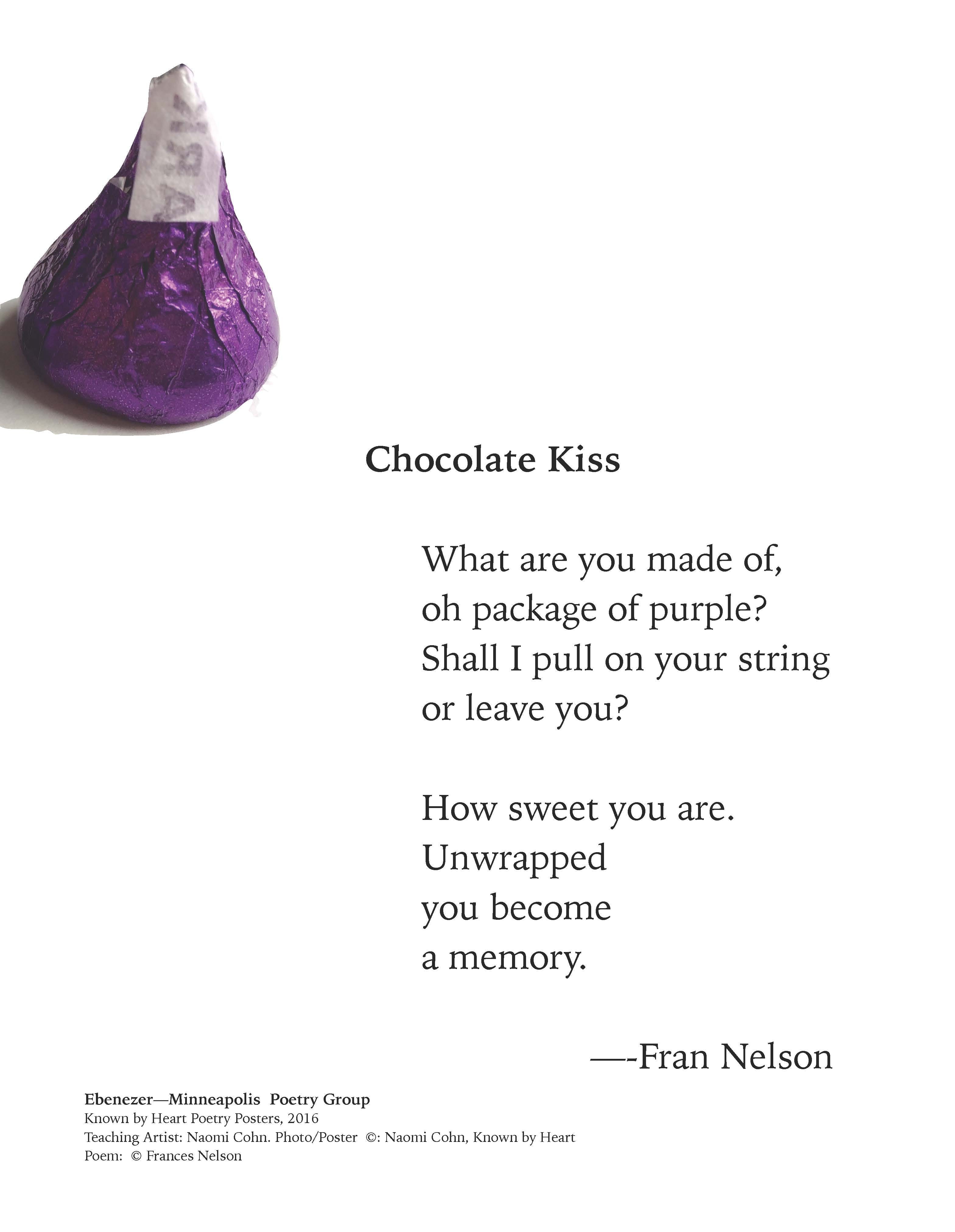
Poetry, surprise and older adults

Photo0092.jpg

Poetry helps older writers surprise themselves

“One of the great lessons of Cohn’s teaching experience is that everyone does have a poetic voice. “Right now I have a class with several students who, due to blindness, stroke or other health issues, can’t read or write,” she said. “They are still brilliant and they have a long history of loving learning, writing and language. So they come and find ways to participate. One woman, when I asked if she would like help scribing her words, said ‘I enjoy writing the poems in my head.’”

With Writing Home, Cohn aims to connect with students in a more personal and personalized way. “Rather than coming in with a cookie-cutter set of workshops, the Writing Home sessions are growing out of conversations I’ve been having as an artist-organizer, talking to experts in aging in and around the Creative Enterprise Zone, visiting existing programming for older adults – exercise classes, craft and arts groups, riding shotgun with someone delivering meals to homebound elderly.”

In a field where just getting to class counts as a victory for many students, it would be tempting to set the bar low, but Cohn measures her success by an array of metrics both challenging and inspiring. “I know sessions are succeeding when people come back for more,” she said. “We’ve succeeded if people have written something in class or between sessions. We’ve succeeded when people are bursting with eagerness to read what they wrote. We’ve succeeded when people share writing about a difficult experience and I get to witness that writer being supported by the community of writers gathered around the table. We’ve really succeeded when a student is willing to take the risk of revising work. We’ve succeeded if I share a poem an elder wrote and younger people are surprised by the quality or voice of a poem.”

And sometimes students even surprise themselves. “As a poet, one of my favorite moments is when a timid student, usually one who was given a whole lot of DOs and DON’Ts by a school teacher 70 or 80 years ago, takes a risk and tries something new in a poem. I remember a rush of pleasure when we were writing about art and I’d brought in a variety of images for writers to look at, and a student who usually wrote in very competent but tight rhyming couplets wrote an amazing, wild, gorgeous prose poem, and then looked up and asked innocently ‘Is this a poem?’””

Known by Heart’s Writing Home project launched in September in St. Paul’s Creative Enterprise Zone. Visit knownbyheartpoetry.com for more information.

Blood is always red

What is truth, the ruthless Pilate said
Postmodern thought already on  display
Our eyes are blind  yet blood is always red

On the stairs at night, I heard the tread
Was it Satan marching on his way?
What is truth, the  tiresome Pilate said

I lay in anguish in my chilly bed
In the darkness deeper than the clay
Our eyes are blind  yet sometimes we see red

The images of terror in my head
What to do and more, what must I say
What is truth, the  tortured Pilate said

Why are spirits broken and love shed
Children tortured where they used to play
Our eyes are blind  and good is almost dead

Deconstructed, demonized, displaced
In the shadows who can see the way?
What is truth, the  stupid Pilate’s dead
Our eyes are blind, what is the good, we said

Pavements

The  roots of trees don’t know what  pavements are
They heave them up as if by spite inspired
So older people to fall  down  by the cars

Underneath the   cobbles and the tar
Burns the earth with its creative fire
The  roots of trees don’t know what  cobbles are

To the boiling centre falls a star
And there it floats, a tadpole in a mire
Where older people  run  from falling cars

Above the water stands the Judge desired
See reflected, crooked Christian spires
The roots of trees don’t know what worships for.

With creative heat, I now perspire
My language shatters, breaks the  nerves of liars
When older people catch  a falling car.

I see a blade of grass with sun conspire;
Then comes again the soft yet poisoned tyre.
The  roots of trees have cracked the  pavement here
The older  people  pitied Hamlet and King Lear