

I asked my boyfriend to stop smoking so he went outside and threw himself into my old bath full of rainwater.
When the flames died down he got out and asked me what I thought
I said, I meant the cigarette, not you.
Day: Nov 14, 2017

Joan of Arc
Share this:

A-atheism

http://www.journal-psychoanalysis.eu/a-atheism/
“It ensues that monotheism, such as it would become with the Hellenization of the Jews and later with the rise of Christianity, carries a very relevant and most remarkable ambivalence: a new divine order actually conjoins itself to the assumption of atheism itself. The God of monotheism is no longer a god of presence, but one of absence. He retreats into another world or a world-beyond. But this other/world-beyond[1] is also what requires a thought henceforth in search of a principle or a foundation for the world of given effectiveness [effectivité].
Thus the God of Judeo-Christianity could become – at least in part (we’ll discuss the other part further) – the bearer of this principle or foundational value. It is by starting from here that we may understand the modern becoming of atheism or at least what gives atheism the mark that makes it appear as truly modern.
2
Modern atheism is no longer that of the departure or the disappearance of the gods, but of the refusal of God. That is to say that it consists in the negation of a position – a thesis or hypothesis – where “God” is denoted. This position is that of a subject of the world or of the totality of beings. Not Being [l’être] as a quality of beings [de l’étant], distributed and spread across all that is, not a being that takes all the inflexions of the verb to be (to be heavy, true, potential, active, situated, and so on), but the substrate of every modality of being, its foundation or principle. The subject of Being [être], therefore, the utmost of beings , or the being [étant] more being [étant] than all others, and consequently the self too, the auto-position of this substrate that should be supported by nothing else.
This thesis or hypothesis (we can take the latter term in the sense of a thesis that implies all other thesis [toute autre these]…) is capable of taking on two forms: either the subject in question is simply equivalent, no more, no less, to the totality of beings or else it forms a distinct being in itself.
The first form is illustrated by Spinoza in the clearest of ways (Deus sive natura, God or nature). The second posits a (“supernatural”) “supreme being”. The first won Spinoza the accusation of atheism. The second, in contrast, would seem to correspond to all the other great systems of classical and then romantic philosophy.
However, despite appearances, no metaphysics strictly follows this thesis. The “otherworldly” distinction of a metaphysical god is always accompanied by determinations that tend to reduce this distinction (for example, the necessary link that ties god to his creation, or the presence in the latter of his “image” or “providence”, and so on.). The fact is that the position of a subject of the world is impossible without us being condemned to a regression in infinitum (what is the subject of the subject?) or without returning to the Spinozan equivalence between “god” and “nature”. It is the absolute alternative between the pure “auto-” and the pure “given”… Their alternative, or even, insidiously, an identity of theirs…
This is something metaphysics has always known, even when it sought to dissimulate this knowledge to itself. This is why, in the very middle of its history, it produced with Kant the collapse of the so-called “ontological” argument. The idea of a supreme being cannot entail the necessity of its existence because existence is only given, not deduced, and the only necessary existence is the one which is given: indeed, it is the given of beings [de l’étant], with its ensuing contingency, or in its contingency.
3
There has never seriously been, therefore, a metaphysical God, and “God is dead” states the truth, matured and declared belatedly, of the entire history of philosophy. Philosophy is atheist in its very principle, and with it onto-theology as a whole, in which “god” is the putative name or convenient cipher for a necessity of the given, the name postulated by desire to make sense of the contingency of the world.
The thesis or hypo-thesis of God has no philosophical consistency. Theism is nothing but the nominal multicolored reverse of atheism, which is at once real, logical and material truth; a cold and grey logic, in fact, like the solitude of the world in the middle of nothing.
Thus we realize the uselessness of the notion of atheism. “God” is not a question for thought – and, on the contrary, thought essentially consists in moving in the element where this question does not take place. Reciprocally, to fix oneself in the element where one Subject or the other binds the world to its foundation is to cease thinking – whether this Subject is called God, Man, Nature or History. This is why no philosopher has ever “believed in God” even when defining his qualities (Descartes or Spinoza, but even Thomas Aquinas, Occam as much as Leibniz, and so on).
Nevertheless, this does not mean that philosophers, and anyone else besides, have nothing to do with this: when it comes to the element in which no Subject, no Substance, no Foundation can present itself in any way – when, in other words, it comes to the element in which no Thing sustains or holds the indefinite multiplicity of things, in which no instance of unity other than a distributive and disseminative one (unity itself is disseminated a priori) can sustain itself, then in this space of “nothing”, in the sense of no Thing (all things = no Thing, no-thing[2]), thought discovers that it thinks beyond all possible thought. It thinks beyond any Object and consequently beyond any possible Subject for an object in general.
4
And yet it thinks. And yet it opens up precisely to what is outside thought itself or it reveals to itself that it has reached the point of exceeding itself, not eliminating itself but not elevating itself either: doing nothing except opening itself. But this opening turns out to belong to a different logic and a different dynamic than that of the thought of the object, of the necessity and of the concept in general (unless we considerably modify the very concept of the “concept”, as Hegel does, and as Deleuze also does, differently).
What is outlined here is then a relation to something other than a thing. To something other than the world-thing. To a sign, in a certain sense, but not to the sign of a signification that would itself have a referent in the order of things. A sign as a signal of opening itself and towards opening. A sign as a call, as an address, and at the same time as the reception of a call or an address; neither to do nor to seize whatever it may be, but to undo and relinquish every thing and every signification of a thing. A call by the opening to the opening, a call not closed in on itself but infinitely opening the sameness of the same.
The name “God” may also have been the bearer of this sign, or even the sign itself. God as a sign of nothing, as the address of nothing but the opening of the world to a meaning that is outside itself (as Wittgenstein says), but that is not a “sense” in this outside, because this outside “is” not. The difference between the inside and the outside, between the world and what the world opens onto is not a difference of terms, since one of the terms is absent. It is the very difference of the same: the identity of an opening, not of a completion.
Is it then possible to “invoke” the name of “God”? There is no certainty of it and perhaps it has become forever impossible. The fact remains, however, that in secular usage this name has also had this function – if one may call it a function – and it had it because it towered by far over any other kind of supreme being [être] or subject. Never has a great mystic, a great “spiritual”, never has a true “worshipper” believed in the existence of God: we can be sure of that. Instead, they have invoked, implored or celebrated, they have adored – which is to say addressed – an unnamable name, which in fact remains unnamed, as a sign of the opening through which meaning escapes and truth announces itself.
Perhaps this is what the prayer of the a-atheists consisted of: repudiating god and non-god alike, and stammering, open-mouthed.”
”
Translated by Gianmaria Senia
Share this:

In the total stillness is his grace
The vanishing point’s not something we can snare,
For as we move towards it, it’s nowhere.
The two sides of a road will never meet
Despite you run with your eternal feet.
Yet we seem to see it as we stare,
Its existence is remote yet clear.
In the geometry of dimension three,
Infinitely dear, this point ‘s not me
And so I ask myself if God compares.
We need his “presence” whether he is ” here.”
Without that “point of view.” we have no “selves”
To see the holy earth in all its wealth.
Fast retreating from the ones who chase
In the mystic stillness, he is grace.
Share this:
Like curtains closed his eyes
A happy death is joy and sorrow twined
My man was going and it was not wrong
Yet sheets of tears fell from my little eyes.
A sheet so dense I could not see the line
Of nurses,doctors,listening to my songs
A happy death is joy and sorrow twined
I never saw my nervous father die
And so his death in life did not belong
No sheet of tears fell down from my child’s eyes.
My mother too escaped her daughter’s sight.
So I had no pasts to dwell among
A happy death is joy and sorrow twined
Darkness fell on London, and moonlight
I know I was quite silent having sung
Still sheets of tears fell down from widowed eyes.
I saw the hands of gold from Heaven descend
I was embraced too , death had no sting
A happy death is peaceful and divine
The sheets of tears, like curtains, clothed his eyes
Share this:
What to write a poem about


The love of strangers brings to us its balm
Exchanging glances,humorous and warm
You were getting off the bus near me
The love of strangers brings to us its balm
I remembered men who proffered arms
Helping me to climb,though not up trees!
Exchanging glances,humorous and warm
I prefer the normal,not the charm
Just a little makes folk like to please
The love of others gives both sides its balm
Reach out with your eyes but do not harm
Do not use sharp looks nor try to freeze
Send a message,make it somewhat warm
As some welcomed Jesus with their palms
The Romans wished to kill and not to pray
The faces of the powerful cause alarm
The message of the adverts we must flee,
Love embraces first the refugee
Exchanging glances,humorous and warm
Kindness gives us strength when we’re forlorn
Share this:
Want to start writing poetry?
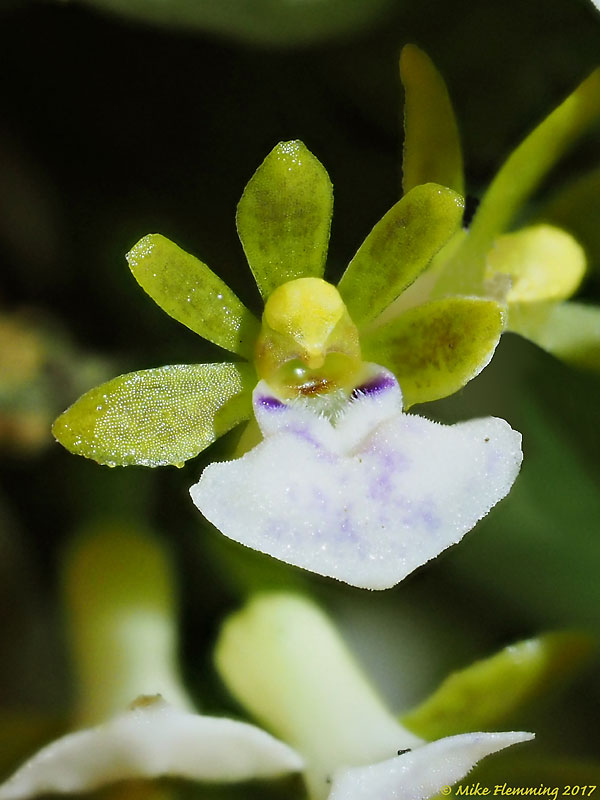
https://www.huffingtonpost.com/diana-m-raab/start-writing-poetry_b_7005194.html
”
Reading and writing poetry also has healing and transformative powers. As a matter of fact, many therapists augment their treatments by encouraging their clients to write poetry to express their feelings. This is one way to foster hidden creativity and a chance to allow the client to express themselves using another form. This may be done by writing about a moment or experience in the past, the present or even the future. The idea is to write including as many details as possible so the reader feels as if they are with you on the page, living the experience side by side. Writing poetry also forces you to go deeper into your heart and to write with your heart and not your head as a way to access your inner voice.
Like all types of writing, if you want to be a poet, it is imperative that you read lots of poetry. If you have never written a poem or have not written in a long time, a good place to begin is by writing a prose poem. This type of poem uses the rhythm of a sentence. It could be just a few sentences about a moment that changed your life, a vignette or a short story. The prose in a prose poem extends to the right hand margin, where verse breaks each line at a place not determined by the margin. The prose poem can be a story, description, or a captured mood. In a prose poem, all unnecessary words, phrases and clauses are eliminated. The French poet Charles Baudelaire was largely responsible for popularizing the prose poem.”

 How my heart speaks