

I’m not writing a poem today
 Wear some narrow black trousers under a black and blue robe under which put the T-shirt of your choice to peep out at the throat and a giant scarf tossed over your shoulder
Wear white trainers and a long denim jacket with a hood
Now you can go into any public convenience if there are some left in Britain.Otherwise, it seems phone boxes are used by the desperate.Wear a mask!:
Get a disabled badge or carry a card saying:
I just can’t wait.
Get them from Bladder UK//


As someone who walks about humming or even singing without knowing, this looks fascinating.Most of my poems have music but I don’t write it down.
https://www.bl.uk/romantics-and-victorians/articles/the-music-of-william-blakes-poetry
The first song in the Songs of Innocence sets a number of themes that recur during the collection: the child, nature, and song. It is the child that tells the poet to pipe, but then to sing; and then leaves the singer alone to write the poems.
What happens in the poem is that the poet pipes, then is asked to sing, and then sing again, and then to transcribe what has been sung. Thus there is a clear indication that these are songs for both reading and singing. At the end of ‘Introduction’ this is reiterated, as the songs are to be heard:
And I wrote my happy songs
Every child may joy to hear
The last line of the introductory poem to Songs of Innocence makes it clear that the songs were to be written down ‘so that every child may hear’.

http://www.thecrimson.com/article/2013/12/13/economics-science-wang/
Economists have faced a deluge of negative press in the past few years, ranging from criticisms over the failure to forecast the financial crisis, to the more recent disbelief over the granting of the Nobel Prize in Economics to three economists, two of whom hold views that can be said to be polar opposites. Indeed, the reputation of mainstream economics—specifically macroeconomics—is arguably at its worst since the formation of the field in the 1930s, with the advent of the Great Depression. This state of affairs prompted Raj Chetty, a professor of economics at Harvard, to author a defense of the field in ‘The New York Times,’ titled “Yes, Economics Is a Science.”
It seems as though economics is fighting for its right to stay in the exclusive group of fields deemed worthy enough to be called “science,” where subjects such as physics, chemistry, and molecular biology reside comfortably. Some instead opt to call economics, along with psychology and sociology, a “social science”—a vague term, often blurred with humanities, which is neither here nor there. Nevertheless, the underlying implication behind this battle is that to be a “science” is to be credible.
I don’t agree.
First and foremost, I don’t agree at all that economics is a science. Let me preface this by saying that I am concentrating in economics, and have the utmost respect for the field. Let me also clarify that when I say “economics” throughout this article, I primarily mean macroeconomics—microeconomics is an entirely different beast. While the two are intrinsically related, the methods of experimentation are so drastically different that the two can hardly be subject to the same criticisms.
Merriam-Webster’s definition of science is “a study of the natural world based on facts learned through experiments and observation.” What physics and chemistry and molecular biology have in common is that the building blocks of what they observe and experiment with don’t change. Such is the natural world. But what is the building block of economics? People. Economics does not study any unit smaller than a collection of people. And human behavior can never be absolutely predicted or explained—not if we wish to believe in free will, at any rate.
Read more by clicking the link
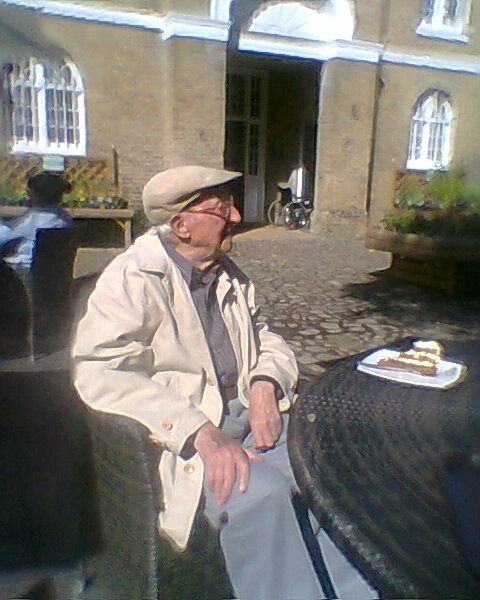
Not Thomas Kuhn having coffee
https://en.oxforddictionaries.com/definition/paradigm
1A typical example or pattern of something; a pattern or model.
2Linguistics
A set of linguistic items that form mutually exclusive choices in particular syntactic roles.
3(in the traditional grammar of Latin, Greek, and other inflected languages) a table of all the inflected forms of a particular verb, noun, or adjective, serving as a model for other words of the same conjugation or declension.
Late 15th century: via late Latin from Greek paradeigma, from paradeiknunai ‘show side by side’, from para- ‘beside’ + deiknunai ‘to show’.
/ˈparədʌɪm/


 How my heart speaks