
Bands of rhyme will be crossing the UK tomorrow.. streams of poetry will bring rain in the eyes.
Season’s Tweetings to Sinners
Shadow of the whole silence is folding over like an envelope.Post it now
The spice is rife..pepper.
Hop around the roses
It’s best to saunter nowadays.~
When inside out, a cat can still scratch.. with its reversible cat-claws.Try one tonight.Just unzip the cat and it will spring into the heir…to the throne or is it the air all round
Until the end of all rhymes I’ll be loving you
Time feels all wounds…and holes
Maps of the iceberg have melted..
Two hearts that beat as none ever did.
I wait for the lime to be ripe then it will be a lemon.
If you have a man,wash him weekly in a tin bath…don’t blame me if you get drawn in…..mate in the bath … it saves washing the sheets.
Day: Dec 16, 2016

Warning: the lights are going out all over Europe.And in the Middle East
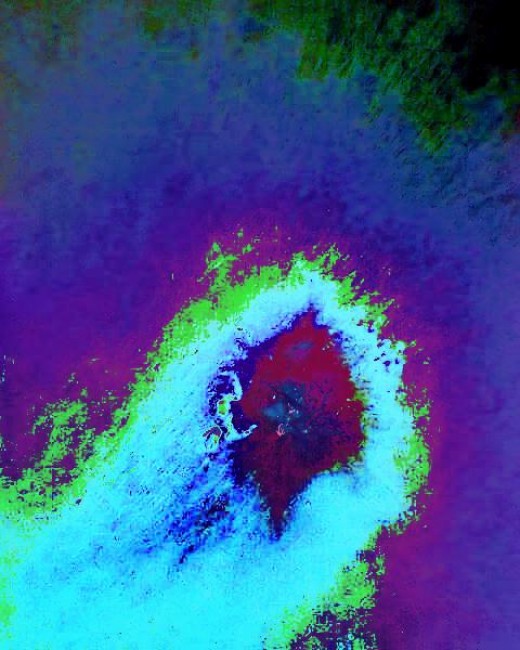
A bleeding wound on my leg ; image created using Artweaver software
Beware:invisible black holes ahead.
Beware of men with no heads.
Beware:fat,drunken men are cross and crossing.
Sign:Respect fat women.I live here.
Beware:termagents will be persecuted.
Beware:minds crossing
Beware:secret deadly weapon of crass destruction in this building.
Warning:Frozen police ahead.Warm carefully
Warning: the lights are going out all over Europe.
Notice:Sadiq Khan is not a foreigner.
Notice:Boris was not born in Britain.
Notice:Jesus has 10 Nobel prizes to give out when we die.Make sure you get there first.
Beware:God is not dead .And he is looking at you.
Request:Do not aske me what to do.
Share this:

Dark age ahead, Jane Jacobs
http://www.bewilderingstories.com/issue104/darkage.html
Jane Jacobs, Dark Age Ahead
by Don Webb
This review article was written for Bewildering Stories’ second anniversary, in 2004. Jane Jacobs passed away on April 25, 2006.
I. Why this review, and why here?
 |
|
Dark Age Ahead
Author: Jane Jacobs |
Most readers of Bewildering Stories are science fiction fans, who are by nature interested in views of the future. This latest work of Jane Jacobs’ gives us that; at the same time it offers as much to readers who may be more interested in the past and present. In any event, Dark Age Ahead, like Jane Jacobs herself, commands respect and attention.
I’ve read newspaper reviews; they have all been unsatisfactory. You can try the readers’ comments on, say, Amazon.com, if you’re a glutton for punishment. There are hundreds of them, and you’ll have to wade through a mass of ignorance, stupidity and outright falsehoods before finding any useful information.
And yet how can any review do this book justice? Any discussion that ventures beyond the superficial practically begs for a summary. But the book is, like all Jane Jacobs’ works, so concisely and clearly written — even though it summarizes major points in her earlier works — that the easiest and most practical advice is just to say “read it.” I’ll do what I can to give an idea of Jane Jacobs’ general thesis and manner of thinking, but I can only touch on a few of the book’s many vital points and examples.
II. A Prophet Not Without Honor
For more than forty years, Jane Jacobs has analyzed American cities and their economies. Her work has resonated powerfully in both academic circles and among the general public. The Nobel prize for literature has been awarded for lesser achievements. But what would be her category? Urban studies? Sociology? Even if there were prizes in those categories, they would somehow fall short of the mark. Economics? That would be an embarrassing admission that all economic doctrines have been shortsighted in theory and practice. Since we don’t have a formal classification, I’ll invent one: Jane Jacobs is a social philosopher.
Born in Scranton, Pennsylvania in 1916, Jane Jacobs has — for all practical purposes — lived through the entire “short 20th century” (1914-1989), as historians will call it. Jane Jacobs has drawn upon her experience and knowledge of it to show how societies and economies, like nature itself, function integrally.
Jane Jacobs has no academic degrees, and yet three books of hers alone would have crowned the careers of as many professors: The Death and Life of Great American Cities (1961), The Economy of Cities (1969), Cities and the Wealth of Nations (1984), none of which has gone out of print. In recent years she has described her philosophy in Systems of Survival (1993) and The Nature of Economies (2000). A lesser-known work, The Question of Separation (1980), would seem to be of interest mainly to Canadians, but its content is of a piece with all the rest.
III. What is a “dark age”?
A dark age is a culture’s dead end. It occurs not when a people loses something vital, but when a people no longer remembers that it has been lost. Sometimes a dark age comes from without, as when invasion and conquest all but obliterated the cultures of the Western Hemisphere. Sometimes it occurs from within, as with the Roman empire’s spectacular, centuries-long disintegration.
What causes a dark age?
Jared Diamond, in Guns, Germs and Steel, basically asks what makes cultures successful. He concludes that the basic factors are size and density of population, technology, and specialized institutions. While giving Diamond ample credit, Jane Jacobs turns his question around: Why do even successful cultures fail? She sums it up at the beginning: “Losers are confronted with such radical jolts in circumstances that their institutions cannot adapt adequately, become irrelevant, and are dropped” (p. 20).
It seemed like a good idea at the time…
A “radical jolt” may not be perceived as one when it happens. A striking example of that is borrowed from Jared Diamond. In the early 15th century, China was foremost in the world in oceangoing trade and exploration. In 1433, the outcome of a political power struggle — the causes of which now seem utterly trivial and only historians know of — caused China’s great fleets to be recalled and its shipyards dismantled. The country turned inward, away from the world. The retreat led to a cascading economic, intellectual and technological stagnation from which China began top recover in the late 20th century. China’s many achievements thus became a historical footnote, and the world was left open to the Europeans.
Share this:

From “Bewildering stories”
Randomly selected classic rejection notice: Agnes: The movie dragged me through a muddy pit of bad dialogue. The action scenes were long and boring. I fell asleep twenty minutes in and didn’t wake up until the guy who sweeps up bashed my knee with a broom.
Trout: And you gave it five stars?
Agnes: It was the most relaxed I’d been in months. — Tony Cochran, Agnes, Oct. 6, 2011
Share this:

Fundamentalism
A definition proposed by the eminent scholars Martin Marty and R. Scott Appleby
: “[Fundamentalisms] are embattled forms of spirituality, which have emerged as a response to a perceived crisis. They are engaged in a conflict with enemies whose secularist policies and beliefs seem inimical to religion itself”
Share this:
Universal soldier
Share this:
Don’t meditate just yet nor for too long
http://thoughtbrick.com/meditation/dangers-meditation-10-things-look/
Very few books or articles on meditation mention that it has risks… and now it’s being pushed as the answer to all our health problems.
In the past meditation was within a religious tradition so that you had a priest or a rabbi to turn to.Now the religious aspect is stripped away and it is taught as a method of relaxation without any connection to a community of knowledge and experience.The Church has many flaws but it does have many advantages too.. and ..similarly for religions other than Christian.
If you meditate for too long in one session it can bring up material from your Unconscious.This may be dangerous for depressives and other folk with afflictions more dangerous
Patricia Carrington’s Freedom in Meditation has a chapter on this.
And it is not meant to be a retreat from life…
For some people any form of relaxation is a problem…
Sometimes taking walks is a better idea.I know one person who found having massage emotionally distressing… yes,she was anxious but she didn’t feel able to deal with it.
Listening to music is good.Sitting by a tree is good
Some men have gathered followers to their meditation readings and methods and then I read about how awful these men were to
Share this:

Windows and Screens
The TV screen is a window into another world.Unlike the window in the front room here,it does not show real people going about their affairs.No.it shows a world which has been carefully constructed.Some programs are beautiful.Some nowadays are live shows where people meet various challenges.Sometimes these can be very damaging,as can live interviews.It;s strange to see one’s PM wearing makeup.And that’s the least of it!
You can watch violence,murder or pornography if you wish or hear orchestras playing your favorite music.Extend your choice with DVD’s.Spend all your life glued to the screen….which glue is best?I’ll let you know soon.
Then there are the political aspects..I did not watch much of the grand funeral of our ex PM Maggie Thatcher but I saw enough to show it’s been used by the current government to raise their own esteem in the public eye.A politician should never have a funeral with military honors with the coffin on a gun carriage pulled by horses and the same week poor families had their welfare cut back.Ten million pounds on this event which also was very provocative to the worst off members of society.
St Francis SOS
They can construct this kind of event and by means of it manipulate our feelings.State and ceremonial funerals are for the Royal Family who are above party politics or for someone like Churchill who led us through the fight against Nazi Germany.
Windows…. like dreams…. think about whether someone is presenting you with a view for their own ulterior motives and not to enlarge your view of the world… ask yourself who you are alowing into your inner sanctum
Humour
.April 2013 – Margaret Thatcher dies.
May 2013 – Hell privatised.
The universal soldier sung by Donovan
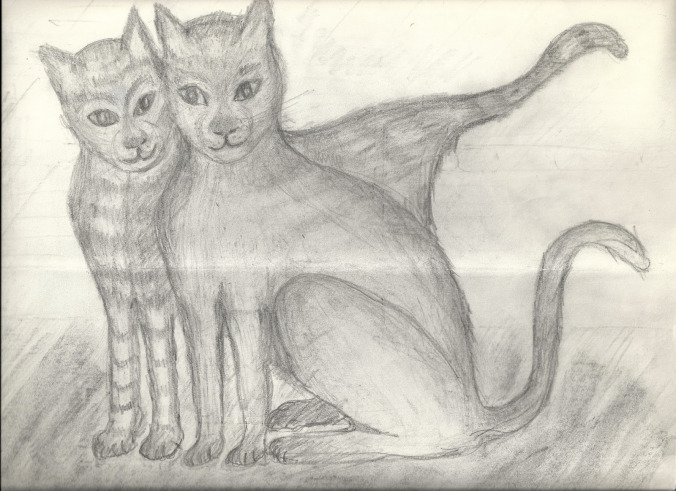
I remembered this and it seems we have not changed.. we are getting worse
Human self deception

I sit on a man’s back, choking him and making him carry me, and yet assure myself and others that I am very sorry for him and wish to ease his lot by all possible means – except by getting off his back.
Leo Tolstoy [not checked]
Share this:

Cook snow,dine on equator
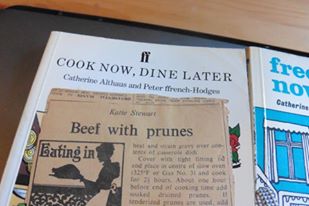
Cook now,whine later.
Look now-divine pater.
Cook cow,combine later
Cook bow bow,dine Asiator
Cook,how ? Swine vacator.
Freeze now,fine potato.
Ease now.dine tomato.
Freeze now,cubes with water
Breeze now,fine later
Cook now.knees up later.
Book vows to be read later.

Share this:

CAN A REALLY GREAT WRITER MAKE IT ON WORDPRESS?
This is a fascinating idea and a great story

[Last fall I registered for an adult education course that failed to attract a sufficient number of registrants and was therefore withdrawn. It was about “The Long Short Story.” I had already bought the books containing the six stories to be discussed, and don’t easily give in while there’s still hope. So I put up a post in which I offered to host a reading program with the professor’s curriculum if I had three takers — a foolhardy idea, as hardly anyone in Princeton knows I blog. But there was one brave soul, in a town just to the north, who raised her virtual hand. We’ll call her G.
And so G. and I, in an extremely leisurely way, began. We decided to meet every other Thursday at 2 p.m. (except for December, because G. has a large extended family for whom holiday preparations are time-consuming). We eliminated Faulkner and Conrad from the professor’s list and added a few authors of our…
View original post 2,817 more words
Share this:
The caterpillar cried
Is there a nutmeg in the house,the caterpillar cried.
I’ve been upstairs and locked the door,what else might I try?
I used mace for many years the beetle told us all.
If you budget carefully,the expense will not appall
I have no time to go to town,the moth indignant cried.
And anyone who says I have will very truly lie.
A Penguin cookery book fell down and hit the sleeping cat;
I’ll ask the Vicar what she thinks of coincidence like that.
We looked for maces everywhere but nothing did we find
Except an old lace petticoat beginning to unwind.
Is there an alternative? the mouse asked timidly.
Personally I don’t put dried mace into my tea.
A housefly and a bluebottle refused to speak at all
Because they’d just got married and were saving for a ball.
I find it hard to live like this and I shall go to bed
But all the creatures loudly cried, Oh,when will we be fed?
Share this:
You can find the entire book in that first line.”

According to E.L. Doctorow in a 2009 interview: “The first lines of a book are very crucial. They give you the voice. They imply the kind of texture the text will have. And, in effect, they are the acorn from which the oak grows. They Predict. You can find the entire book in that first line.”
Share this:

As on my bed, I dream indignantly
What to wear in bed’s a mystery.
The cat has died and will not keep me warm
Where is my love who wrote my history?
Where the comforts which like bees did swarm?
When with a lover, skin is quite enough
But now alone I feel the need for gowns
My little skin is tender and less tough
And on my face I wear ambiguous frowns
Still this small problem should not worry me
As on my bed I dream indignantly
For who will be and who is not to be?
I answer God with polite yet piercing plea
Still clothing helps to comfort my dark pain
But no-one knows, as all they see is vain
Share this:
No,despair, you are a deadly sin
No,despair,I shall not let you win
I’l fight you with my being and disdain
No,despair, you are a deadly sin
I’ll write you out on paper with my pen
Oh,despair, be not my constant friend.
I look for others brighter and more gay
To you no card or present will I send
You must not seek my company today.
Oh,despair,I cannot hide from you
I fly into your blackness like a bird
Yet now it is a golden light I see,
Consoling and so warm it clothes my words
Despair,my friend I’ll fear no more your deeps.
You open up a door while I still weep
Share this:
And in the evening play a double bass?
Happiness is compulsory at this time
Xmas parties,alcohol and drugs
Inebriated,I can never rhyme
I sit and watch the mating of the slugs
But surely nothing mates in winter cold
For slugs don’t have a coat like humans do
Perhaps ,despite appearance, they are bold
Need no injections to prevent the deadly flu.
On balance would you rather be a slug
That lives a life of freedom in the grass
Or do you live because you write and blog
And in the evening play a double bass.?
A slug can’t sing a song nor speak kind words
This comparison is foolish and absurd
Share this:
In my patient state
Deferential, I
Eternity await
Submit to your grace
In my patient state.
None but God can judge;
None have his pure gaze.
Write me not your wish.
Tempt me not with praise.
Timeless as the heavens
Eternity is now
Mindful of this lesson
Grace will show me how
Share this:
Poetic devices

FormForAll – Poetic Devices: Image, Symbol, Metaphor, Allegory
“The tenor is the idea being expressed or the subject of the comparison; the vehicle is the image by which the idea is conveyed or the subject communicated. When Shakespeare writes in Sonnet LXXIII –
That time of year thou mayst in me behold
When yellow leaves, or none, or few, do hang
Upon those boughs which shake against the cold,
Bare ruined choirs, where late the sweet birds sang.
the tenor is old age, the vehicle is the season of late fall or early winter, understood through a group of images unusually complex in their implications.”
Share this:

Dante

http://www.dwildepress.net/critica/mystic5.html
“Life is not simple. Dante depicts himself realizing, in the year 1300 at the age of 35, that his life has become so complicated he is lost. The Divine Comedy begins with these famous words:
Nel mezzo del cammin di nostra vita
Mi ritrovai per una selva oscura
Che la diritta via era smarrita.
In H.R. Huse’s translation:
In the middle of the journey of our life
I came to my senses in a dark forest
For I had lost the straight path.
The metaphors in this sentence are easy for us here on the confusing Earth to grasp. Life is like a journey, path or way that we travel, and it can become so uncertain that at times we may actually feel lost – the “dark forest” clearly represents that feeling of lostness, the sense that you don’t know where you are, and you’re not sure how to get back to familiar or appropriate places. In Dante’s image, the path itself is uncertain. Who am I, where am I, and what am I doing?”

 How my heart speaks