I’ll have to write a villanelle,oh hell.
My conscience gives me trouble in the night
I don’t know if tonight I’ll do it well.
At least I don’t need work that I must sell
My conscience is a devil, well,not quite.
I’ll have to write a villanelle;it’s hell.
But people won’t read rubbish on their cell
My conscience will unravel , what a sight
I don’t know if tonight I can write well.
I’d rather laze about and with you loll
Do we need instruction in delight?
I’ll have to write a villanelle on hell.
Down ye demons; in my rage I’ll yell
Do we need perception to do right?
I don’t know if I ever will see well.
I wish an angel would descend tonight
I hate to argue hotly or to fight
I’ll have to write a villanelle, pell mell.
I don’t know if I’ll know I have done well.
Posted Nov 24, 2013
In October, Jonathan Martin, a football player on the Miami Dolphins, left the team due to mistreatment from teammates, which included receiving threatening phone messages from another player. The incident has raised concerns about hazing within the NFL, but it has also prompted some to suggest that Martin himself bears at least partial responsibility for his fate. For example, another NFL player stated in an interview that Martin is “just as much to blame because he allowed it to happen” and should have behaved like a man. Others have argued that Martin was oversensitive and made himself an easy target.
This sort of victim blaming is not unique to bullying cases. It can be seen when rape victims’ sexual histories are dissected, when people living in poverty are viewed as lazy and unmotivated, when those suffering from mental or physical illness are presumed to have invited disease through poor lifestyle choices. There are cases where victims may indeed hold some responsibility for their misfortunate, but all too often this responsibility is overblown and other factors are discounted. Why are we so eager to blame victims, even when we have seemingly nothing to gain?
Victim blaming is not just about avoiding culpability—it’s also about avoiding vulnerability. The more innocent a victim, the more threatening they are. Victims threaten our sense that the world is a safe and moral place, where good things happen to good people and bad things happen to bad people. When bad things happen to good people, it implies that no one is safe, that no matter how good we are, we too could be vulnerable. The idea that misfortune can be random, striking anyone at any time, is a terrifying thought, and yet we are faced every day with evidence that it may be true.
“For a long time now, it has been clear to many of us that we are coming to a turning point, if we have not already arrived. We do not yet know whether this election presents a crisis, is the result of one, or is its harbinger. No one does. A destabilized future yawns before us, as a great, worrisome vacuum, into which all our most terrifying visions can easily rush. We might have thought we had some idea about the shape of the future, its challenges and structures, but it seems we do not. Maybe we did not all along.
We only know that the immediate signs are bad. Deep, potentially irresolvable fissures in our democracy have revealed themselves, along with an epidemic of rage, as well as hopelessness. The results of this election were, for at least half the country and much of the rest of the world, a massive shock. Yet even had the results been different, we would still have been in a time of crisis. All the local and global problems were already there, and remain.”
Stan had eaten too much pizza because he was extremely ravenous from doing the washing. and hanging it up on the mulberry trees in his long garden Now he felt lazy and other worldly and liable to have visions..Now and then he saw an angel whom he called Yael in his home.But having looked up Yael on a website he realised she was not a very nice woman unlike his dear wife Mary.So he was planning a new name for the angel with her permissiom
Do you mind if I change your name,he enquired gently when Yael came in through the French window.
Well,what to? Yael asked him familiarly
How about Ysabel? Stan offered.It’s got just an extra b and s.
Or how about,Sybael?
You seem fond of b and s, the angel answered in confusion.
It was just mere chance,said Stan somewhat defensively.
Ok I’ll take Sybael,the angel said loudly .
I want to change my name too, said Emile the cat of Stan.
How about Mebiles or Melibes or Eimbles….
I don’t know, pouted the cat haughtily.
How about Semile,said Stan.Though it has no letter b in it, he brooded
They all pondered quietly as the sun shone in through the window and made a lovely lacy pattern on the wall.
In came Mary,Stan’s sweetly aged wife and his computer aided extension too.
You are very quiet,she murmured.What’s going on here ?
We are tring to find a new name for Emile,Stan told her as Sybael waved her wings about.
It seems very draughty in here,Mary said.And Emile can’t change his name because it will change his personality.
I didn’t know I had a personality,the little cat purred noisily.
It is what is most characteristic of you.For example, if you always hurt those you love then you have a cruel personality or you have got diabetes.Some people want love but they are too harsh and demanding.
So true,Stan added pensively as he thought back over his life.
Anyway,I have some awfully weird news,Mary went on.
You just won’t believe this but Dorothy Grey who lives at the bottom of the hill has just had a heart attack.
How come,Stan asked?
She had an online love relationship with a rather peculiar but intriguing and clever elderly man who turned out to be a sadist in disguise.So when she ended it he flew over and attacked her with an air gun and some cat’s claws which he had bought from a cat market
Is he a wizard,asked Emile.
No, he flew on a stolen magic carpet from Persia.
Persian carpets,I’d love one here said the cat greedily as he imagined sticking his claws into it
Actually it’s a kind of plane,said Stan. knowledgeably
How boring ,said Mary angrily.
Anyway Dorothy was so shocked her arteries spasmed and she is in A and E now on morphine,she added.
What a shame that she got that instead of a spasm elsewhere….Stan muttered thinking of Freud and fountain pens.
But who’d have sex with such a horrible old man? Mary asked in puzzlement. An equally horrible old woman,maybe? Stan riposted laughing.
Any way it all goes to show the dangers of online love, he informed the room.
It’s not real love,is it, because in real love the other person is as important to you as yourself.Mary said theologically.
Well. now Eros is a kind of love,too.But many old men just want their washing done and a companion.Eros has departed from their world.
Sybael smiled and then flew out of the window.
What was that noise, said Mary anxiously.
Just an angel’s wings,said Stan quietly
If only Dorothy had seen an angel instead of that harsh old man she might be much better now.Mary mused.
But not everyone can see them.Their world seems full of horrible old men and beautiful young women
Emile winked at Stan and then ran out to chase a butterfly amongst the scented tulips.. there were lots of angels there every day but only he knew that.
Angels don’t like big modern cities but they like old abbeys and cathedrals,moorlands and mountains; places where such things used to be before post modernist architecture took over.
And cat’s claws are not meant for scratching your loved ones either.And online dating should be avoided except with atheists and agnostics.They are less judgemental about women’s place and roles.It’s strange how harsh many religious people are.Harsh and unforgiving.Very strange it is,thought Stan as he boiled the teapot on the stove.
Let’s all have a nice cup of tea,he murmured.Angels too.
And we’ll pray for all of us whether Christian,Muslim or anything else
Mary woke up on Tuesday feeling dazed.She had been dreaming of Arnold,her student boyfriend.so sweet and shy.
I wonder where he is now, she thought.Then she recalled he was in fact a world famous cancer researcher.She hoped he had found a shy sweet partner>
Emile was yowling on the landing despite the large bowl of Superior Cat Food he was standing next to by the bookshelf
I believe that people and animals like not just to eat,but to be fed,Mary thought.Stan used to make the dinner but he always wanted her to serve.Emile would eat his food after she stroked him.But who would stroke, Mary?This was a hard and topical question because Mary had stopped eating.However, as she was quite large, she could live for a few weeks on water only.So she mused
Mary put on a pair of purple trousers and a lomg lavender coloured top.She gazed into the mirror wondering why 3 hairdressers had failed to help her style her fair hair.
Now,she recalled Arnold was a Russian Jew by inheritance though he had lived in the USA all his life until taking up research into cancer at the ancient university Mary attended.If she had married Arnold she could have pretended to be religious,converted and then worn a wig.
Annie came running upstairs.
Whatever are you doing,she yelled.It’s 11 oclock! Her make up was melting despite being Max Doctor’s All Day Creme Mousse
I was wondering if I could find a Jewish man who would marry me, purely legally, just so I could wear a wig.
What a load of tripe,Annie retorted.No wonder you’ve had no breakfast.If the man was religious he could not marry a lapsed Christian. Or an agnostic.
If you want a wig just go online.
You have no imagination,Mary answered,I spend half my time wondering what would happen if I did A,B or C.And what I might wear
And then you do D,Annie joked merrily.Or X.
Where are you going in purple trousers,she continued.You should not wear them at your age.
Do purple trousers have a meaning,asked Mary.I got them in Windsmoor’s sale for £12.
I refrained from buying a jersey jumpsuit as it looked like a burkini and I am a bit nervous now of racists coming into the open.
Very sensible ,Annie told her.I bet the French are jealous because Muslim women and certain Jewish women don’t get skin cancer nearly as often as Christian or agnostic English women.Should we convert?
I don’t think they would like it if it were only to save ourselves from cancer,Mary mused.
True,said Annie,dully
Mary felt hot so they went into the kitchen and made some tea.Annie was wearing snakeskin pyjamas and black patent shoes.
Do you sleep in those pyjamas,Mary asked?
Oh,no.These are day pyjamas or leisure suits ,Annie smiled.They are comfy.You can get them in the market for £2.
Mary heard a strange noise.Stan ,her late spouse ,appeared in the kitchen carrying a big leather bag,
Hello,he grinned.I’ve just come to say I have bought a detached house in Ealing.
But you are dead,Mary whispered thoughtlessly
Yes,I am a ghost but I have bought the house via Dave.I paid cash.
Why Ealing,Mary asked suspiciously
I like that song,Neasden and it’s quite near on the North Circular.And Ealing is healing!
So that’s where you’ve been while I have been grieving,Mary said.On the North Circular Road enjoying Willie Rushton’s songs as you drive
And besides, I want to re-marry and get a wig.
Well,you can get the wig,Stan told her handing her £4,000 in cash from his pocket.But don’t get married until I am in heaven
When will that be,the ladies asked.
Dunno,he cried.It’s such fun in Purgatory where the ladies are naughty but not actually evil.
And so say all the men.Ah,men
An atheist,an agnostic and a Christian were looking for Coffee Shop with some vacant seats so they could discuss politics.The Christian offered to say a prayer.When she did there was a clap of thunder and a voice called,
With all the horror in the Middle East, there’s no-one here to answer your prayer at the moment.Please try again when Palestine is sorted.
So she replied,How about Syria?
Immediately she was struck by lightning and burned to a cinder
The atheist said to the agnostic, she’d better have a Catholic funeral
No,said the agnostic, better have a Jewish one!For He is a jealous G-d.If he exists.
What would convince you?
If she came back to life
Lo, the Christian reappeared and said
I don’t believe that!
The French poet Paul Valéry claimed that a poem is never finished, only abandoned.
“In 1892, while visiting relatives in Genoa, Valéry underwent a stark personal transformation. During a violent thunderstorm, he determined that he must free himself “at no matter what cost, from those falsehoods: literature and sentiment.” He devoted the next twenty years to studying mathematics, philosophy, and language. From 1892 until 1912, he wrote no poetry. He did begin, however, to keep his ideas and notes in a series of journals, which were published in twenty-nine volumes in 1945. He also wrote essays and the book La Soirée avec M. Teste(The Evening with Monsieur Teste, 1896).”
Let me put it another way. The same sensibility that kicks poems around until they stand up like man and mean also flattens butterflies under glass and mounts animal heads on den walls. I am not sentimentalizing. I am not being the dreamy, wishy-washy thinker that poets are expected to be. When wildness is once and for all nailed, it becomes an ornament with trophy status. When all the mystery is crushed out of a poem, when its wings are pinned forever, when it no longer makes weird noises in the night, when it has grown harmless in the collection book of the school text, the poem will have attained the state of perfect meaning which is death. It becomes another prize in a landscape of stuffed birds. The saddest part of this education, for students and teachers alike, is that it’s much easier to trap a stuffed bird than to skin your knees chasing a live one. We train ourselves by this method of “analysis” to seek out examples of poetry that, because of their museum-piece status, are safe stuffed owls. This accounts for the preponderance of so much bad poetry even in anthologies that seem to be searching for something so much better, collections like Reflections on a Gift of Watermelon Pickle and Some Haystacks Don’t Even Have Any Needle. Most books of this kind display the same old trophies, leaking sawdust, gussied up with a veneer of contemporary typefaces and flashy layout.
Other poets seem to exist completely in their own spiritual interiors. The world “out there” pales in comparison to their inner lives, their thoughts and feelings. Trees and people seem to exist only as comments on what is taking place inside them. We can call the first group “extroverts,” the second “introverts,” if we wish. Whatever the poet’s attitude toward himself and the world may be, there is a continual struggle within him to be true to his own vision. Teachers and students should be aware of it. To seize her vision in language as accurately as she can, the poet takes chances, stabs in the dark of the world and the self, both of which are finally unknowable. Teachers and students should likewise be aware of this chance-taking so essential to the making of any art. The French poet Paul Valéry claimed that a poem is never finished, only abandoned. The poet, then, can never be positive he has got it down “right” for all time. In this light, how much more careful should those who study poetry be in fixing “final” interpretations to poems. In fact, the virtue of a great poem is that it can be interpreted inexhaustibly, from generation to generation, century to century, and even from culture to culture. No one has stopped writing about the Odyssey; the last word on Hamlet has yet to be said. The poem reads us as much as we read the poem.


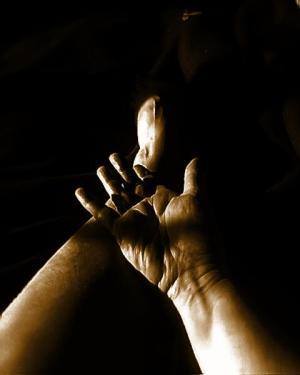


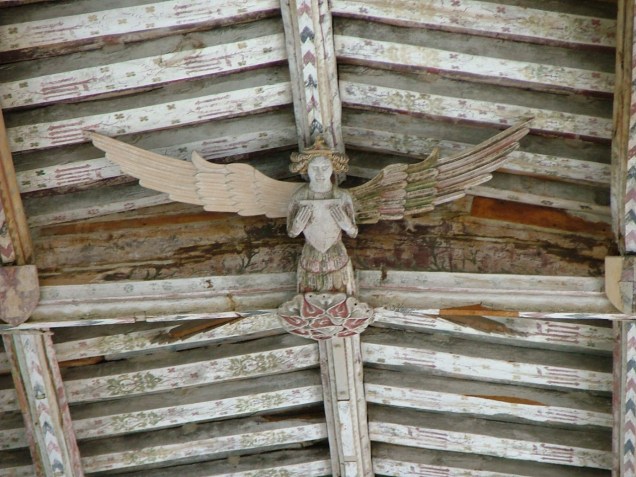




 How my heart speaks
This sort of victim blaming is not unique to bullying cases. It can be seen when rape victims’ sexual histories are dissected, when people living in poverty are viewed as lazy and unmotivated, when those suffering from mental or physical illness are presumed to have invited disease through poor lifestyle choices. There are cases where victims may indeed hold some responsibility for their misfortunate, but all too often this responsibility is overblown and other factors are discounted. Why are we so eager to blame victims, even when we have seemingly nothing to gain?
Victim blaming is not just about avoiding culpability—it’s also about avoiding vulnerability. The more innocent a victim, the more threatening they are. Victims threaten our sense that the world is a safe and moral place, where good things happen to good people and bad things happen to bad people. When bad things happen to good people, it implies that no one is safe, that no matter how good we are, we too could be vulnerable. The idea that misfortune can be random, striking anyone at any time, is a terrifying thought, and yet we are faced every day with evidence that it may be true.