My face is pale,my hair is white as snow
In my eyes is an unearthly glow
I ate some salt beef and some bread today
I tried to write a poem very gay
The Government attracted scorn and blows
The wind is in the willows with Jon Snow
Israel is getting on my mind
The deaf can’t see. and all rest are blind
Come to Gaza, on the beach we play
Some children just got shot, ought we to pray?
On mountains where the prophets heard the Lord
The vultures now await the battle scarred.
The United Nations cannot speak the Word
Apartheid makes me wonder who is scared.
Jesus was a man so we are told
God sent him here, the Vatican is gold
Would you like Guernica again?
Say the word, we’ll kill for pay.Amen
In the desert of the human heart
Are there wells where water can be bought?
From whom come our so called Human Rights?
And by the way, what of the children’s plight?
Would you take a break on the West Bank?
We have a Bedouin Tent,and many tanks
Jerusalem is holy, what a shock!
You can eat ice cream right on the Rock
Women cannot wail on that great Wall
They have no height, they need to grow more tall
Golden is the dome and bright the sun
Catch an “Arab” out and have some fun
If we did not believe there is a God
He’d go away and leave us just his rod
I hate her wooden coat hangers all cracked
Give me wire and let me be abstract
I found some shoes but they have dropped apart
Think of how that hurtt my Bakewell tarts
The Sacred Whore, the Holy Demon’s plight
The Holy Ghost is not inclined to fight
I have a table here on which I paint I look so pale, will I be forced to faint?
In the bitter depths of winter night
Boil the kettle, lose your human rights
If you feel depressed then eat our bread
It will remove the skull from off your head
Are you feeling lonesome in the crowd?
Buy our lipstick then men will be cowed
Did you think ceramic hobs were best?
Come to us and have your IQ blessed
I want a pan for halogen hot plates
I’d ask the cat but it’s out on a date
Does Confession really help the damned?
God have mercy as the Devil can’t
I learned grammar at school but when I began writing found I’d forgotten a lot of it
.Maybe full stops etc are best omitted!
Here are three sets of confusing words
1. Its and it’s
This is the one many of us get wrong.
“It’s” is usually short for” it is”. sometimes for “It has”
Otherwise there is no apostrophe separating the it and the s.
So if you say “The cat took its prey behind the dresser” there is no apostrophe.
But if you say “It’s cold today” there is.
Sometimes “It’s” can be short for “It has” eg “It’s been raining all day”
2. Their and there.
Their coats,their possessions. Usage is like that of my or your.
“They took off their clothes and fell into their cosy bed”
“There” refers to a place.”I thought I left my keys just there on the desk,but when I came in I found hem there on the table.
It’s related to “Here”
“Did you leave your coat here or was it out there by the porch?Isn’t it cold? It’s really freezing tonight.
The cat brought its kittens inside by the fire,.
I gave the dog a bone and it’s really happy now,out there.They have their own lives.”
3. Your and , you’re
As in 1. an apostrophe indicates a missing letter.So” you’re” means”you are”
“You’re crazy if you believe that Hitler was a good person
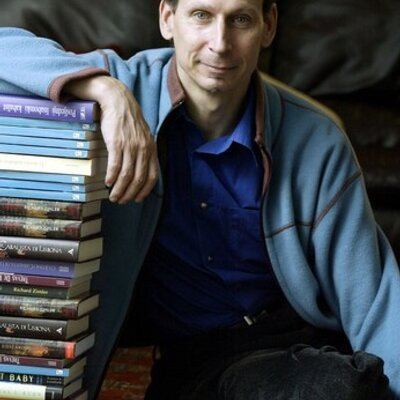
Richard Zimler received the 2009 Alberto Benveniste literary prize in France for his novel Guardian of the Dawn. The prize is given to novels that have to do with Sephardic Jewish culture or history. It was awarded to him at a ceremony at the Sorbonne in January 2009.
Five of Zimler’s novels – Hunting Midnight (2005), The Search for Sana (2007), The Seventh Gate (2009), The Warsaw Anagrams (2013) and The Night Watchman (2016) – have been nominated for the International IMPAC Dublin Literary Award, the richest prize in the English-Speaking world.
Zimler has also edited an anthology of short stories for which all the author’s royalties go to Save the Children, the largest children’s rights organization in the world. The anthology is entitled The Children’s Hours. Participating authors include Margaret Atwood, Nadine Gordimer, André Brink, Markus Zusak, David Almond, Katherine Vaz, Alberto Manguel, Eva Hoffman, Junot Díaz, Uri Orlev and Ali Smith.
. The Brexiteers incanted a mixture of the first and second world wars to generate a mythical Britain in which to be British was to be heroic, ethical, and enlightened. The reactivation of this ancient spirit, they suggested, could unify an increasingly incoherent land torn apart by the same European enemy that it had once defeated.
Just like the aged narrators of the poems contemplating their own fate, the Brexiteers positioned Britain as an ancient, declining force poised on the brink of a glorious eternity. In spite of Britain’s post-imperial belatedness, that sense of already being too late, they contended that this ancient spirit could make the jaded land young again. Placing themselves against the shattering experience that was the loss of Britain’s global sway, they promised a world in which a simpler, more glorious past was to be restored.
Against the already ambivalent content of a quest vision of this sort, even darker resonances emerge. It was precisely this sort of fantastical history, in which to renew was to return to a purer past, that provided the tenacious narrative underpinnings of fascism. Tennyson’s aged sovereign Ulysses is a nationalist strongman before such a term existed, who “mete[s] and dole[s] / Unequal laws unto a savage race”, while Yeats and Eliot’s flirtations with autocracy are infamous. The quest narrative of national renewal is dangerous precisely to the extent that it promises to redeem: Make America Great Againand all that.
Brexit is and always has been a political theology. By keying into this elemental narrative, leavers could lend weight and meaning to their campaign through an intuitive, if often unconscious, historical plot. For those progressives who wish to fight Brexit, the urgent issue becomes whether they too can find a similarly deep story to tell about the UK’s relationship with the world about it.
The tale begins with the ship departing on its journey. Despite initial good fortune, the ship is driven south by a storm and eventually reaches Antarctic waters. An albatross appears and leads them out of the ice jam where they are stuck, but even as the albatross is praised by the ship’s crew, the mariner shoots the bird:
With my cross-bow,
I shot the albatross.
They soon find that they made a grave mistake in supporting this crime, as it arouses the wrath of spirits who then pursue the ship “from the land of mist and snow”; the south wind that had initially led them from the land of ice now sends the ship into uncharted waters
Day after day, day after day,
We stuck, nor breath nor motion;
As idle as a painted ship
Upon a painted ocean.
Water, water, every where,
And all the boards did shrink;
Water, water, every where,
Nor any drop to drink.
The very deep did rot – Oh Christ!
That ever this should be.
Yea, slimy things did crawl with legs,
Upon the slimy sea.
The sailors change their minds again and blame the mariner for the torment of their thirst. In anger, the crew forces the mariner to wear the dead albatross about his neck, perhaps to illustrate the burden he must suffer from killing it, or perhaps as a sign of regret:
Ah! Well a-day! What evil looks
Had I from old and young!
Instead of the cross, the albatross
About my neck was hung.
One by one, all of the crew members die, but the mariner lives on, seeing for seven days and nights the curse in the eyes of the crew’s corpses, whose last expressions remain upon their faces.
The air is cut away before,
And closes from behind.
Finally the mariner comes in sight of his homeland, but is initially uncertain as to whether or not he is hallucinating.
The rotten remains of the ship sink in a whirlpool, leaving only the mariner behind.
Theresa May might wear chunky pearls around her neck, but they surely represent an albatross. In years to come, May will be stumbling around the Houses of Parliament, weighed down by her beads and rambling about the dead spirits adrift in a soulless ocean.
I want to meet with Jesus very soon
I cannot wait till I am dead and gone
I sing a psalm to draw him by the tune
I fear no judgement nor do I fear doom
Jesus never carries bombs or guns I want to meet with Jesus very soon
I’d better sweep the room up, make it clean
Jesus ,as a refugee, might come I sing a psalm while baking bread for him
I want to see his eyes as in my dreams
I wonder what he thinks; what have we done? I think he’s being deported in the gloom
Go back where you came from , what’d’ya mean?
Stress and tension aggravated loom I hum a psalm did David write the tune?
If he comes as whispers in my dreams
I shall attend I shall not fear my shame I want to talk to Jesus very soon I see the little wildflowers burst to bloom
The sun shines in the places that haunt me
Not the cave of darkness and despair
His empty chair ,his love,my memory
What I was and who I soon shall be
How my little time on earth will fare
The sun peers into places that haunt me
The beauty of the dark red maple tree
He wished to have his ashes buried there Oh, empty chair the kindest memory
Regardless , joyous , flowers will love the bee
I watch them start their silent love affair
The sun shines in the places that haunt me
I weep into my android phone, it beeps
Feeling shocked, I gasp ,I need more air Oh, startling phone , who fillled your memory
Oh, chance and fate,why blast my heart so bare?
Where is my skin, my boundary, my despair The sun shines in the places that haunt me His empty chair, the anguish, the repair.
Upon first examination, it seems that people with a tendency for guilt and self-punishment are not dangerous to those around them. They may be a danger to themselves, but it appears that there is no suspicion that they would hurt someone else. However, an additional aggadah about Baba ben Buta debunks that calming assumption.
This aggadah begins with a Babylonian Jew who comes west to the Land of Israel and marries a local woman. At that time, both Babylonian Jews and Jews in the Land of Israel spoke Aramaic, but they used different dialects. These linguistic differences caused difficulty in communication between the couple: He asked her to prepare a certain dish, and she, in her innocence, prepared a different dish. Thus, in a series of linguistic miscommunications, the couple’s relationship became more and more tense.
At the height of this crisis, the husband asks his wife to bring him a “tray butzini.” In his dialect of Aramaic that means two zucchini. In her dialect of Aramaic it means two lamps (made of clay). Furious with anger, the husband commands his wife, “Go and break these clay lamps ‘al rosh ha’baba.” In his Babylonian Aramaic, rosh ha’baba means “above the gate.” However, in his wife’s Aramaic dialect rosh means “head” and baba, as we have already seen, can be a person’s name. In her distress, and lacking her husband’s understanding of this word, the woman goes to the Sage Baba ben Buta and breaks the clay lamps on his head.
This is how Baba ben Buta, the man who has never been opposed to bearing the burden of guilt, responded to that woman: “He said to her, ‘What are you doing?’ She said to him, ‘Thusly my husband commanded me to do.’ He said, ‘You have done your husband’s bidding, God will bring forth from you two sons like Baba ben Buta’ ” (Babylonian Talmud, N’darim 66b).
He sends her back to the aggressor’s arms
At first glance, this seems like generous couples therapy. The Rabbi sees the woman’s distress, so he puts aside his own honor and lets her fulfill the violent and uncompromising demands of her husband (as at this point, he does not know about the couple’s language confusion). However, the Torah has already taught us: “Love thy neighbor as thyself” (Lev.19:18). The phrasing of this commandment reflects the psychological truth that only someone who loves him- or herself can properly love his neighbor.
If Baba ben Buta was not full of so many feelings of guilt he could find room in his heart to get angry and feel injured by the woman who hurt him. If Baba ben Buta would permit himself to get angry at the woman, he could subsequently become angry at her abusive husband. If Baba ben Buta could believe that he isn’t supposed to be beaten by a strange woman, he could understand that she too isn’t supposed to receive degrading commands from her husband. And, if Baba ben Buta could love himself, he could supply this woman with genuine protection.
It is easy to see that the breaking of clay lamps on Baba’s head was not just the result a linguistic mistake; it was a call for desperately needed help. Baba ben Buta should have gone to the aggressive husband and spoken to him harshly and sensitively to save his neighbor from her distress. But Baba ben Buta is in love with guilt, and people experiencing perpetual guilt offer to those around them the same world they experience — a world without love or mercy. From these combined traditions of Baba ben Buta, we can learn that whoever lacks compassion for himself or herself cannot be compassionate toward others.
Back to Korach
We have to remember that guilt feelings are sometimes used as governmental tools, that guilt feelings are very much overrated, and that often they don’t serve the public good but rather serve power positions. We have to be careful with feeling guilty.
(This article was translated with the help of Uzi Bar Pinchas.)
“I’m now even more convinced that if we don’t find a democratic way to close the fissures in our society, this country will be torn apart.
Of all the fissures, it is class that requires the most urgent attention. Remain tried to offer the status quo to millions of people for whom the status quo hasn’t been working for decades. The response to the result has served only to underline the problem. The barrage of hatred and intolerance unleashed by sections of the remain vote against the working class has been horrifying. I’ve seen this personally in the tweets and emails I’ve had to delete in the past few days.
What is particularly galling is that many of those who have vented their fury on the poor and marginalised profess sympathy for them in other circumstances. As the Guardian columnist Paul Mason told a remain audience at an event last week that if they were feeling angry and disaffected after the referendum, they now had an inkling of what it feels like to be working class.
Now, after the shock of the result, those who don’t want to live in a bitterly divided society need to think urgently about how it can be changed. Some people, of course, have been doing this for years.
In 2014 the Tory MP Rory Stewart made a startling claim in a Guardian interview: “We pretend we’re run by people. We’re not run by anybody. The secret of modern Britain is there is no power anywhere.” He went on to suggest that politicians, journalists and bankers know they don’t have any power but think that others do.
If he’s right, the referendum was less “a nation decides” and more a runaway train crashing into the buffers at high speed. Stewart’s solution was a radical localism. It’s more of that kind of thinking we need now.”
Embraced entire , your sacred smile held me
Until we both were one deep in our souls
As still as a white dove held tenderly
For a little time so warm and free
As if your smile contained me, made me whole Embraced and loved , your sacred smile touched me
As we cross together the dark sea
I wish this sacred love could always hold As gently as a dove ,as tenderly
And if I felt the brilliant light touch me
My eyes would weep,my tears would turn to gold Embraced and loved , oh sacramental tree
Would that humankind were truly free
That in the darkness, we could find our home As dies the fragile Word on Calvary
We fear the Tempest and we hear the Storm
The still small voice will whisper , not perform Embraced entire , your smile encompassed me As still as a white dove, as tenderly
When words no longer work

wonder

wish

want

When words won’t come

compensate

contrive

When my voice breaks

snaps

sunders

strains

When I want to talk

touch

tenderly

towards

But you are not able

about

abandoned

absent

You are no longer

listening

live

longing

When I need to find a meaning

In the shape

form

structure

But I ‘m stranded

Stuck

Sucked under

Swallowed

Then I reach out to you

I want your touch

tenderness

tranquillity

temerity

Sometimes words don’t seem enough

endless

empty

emotive

ejaculatory

Yet words can console

conjure

quilt

charm

captivate

cover.

Stretch out your hand

across the emptiness

and touch me with your fingers

friendship

faithfulness

forgiveness

frailty

fever

touch my heart with words

and I will hope

expect

await

be grateful

grave

garbed in joy

When words don’t feel enough

When all we want is touch

Or to see

sigh

sob

sing

Words can be shaped

changed

contorted

controlled

challenged

Words are all we have

To make us love

To make us live

To make us alive

To make us sing

To make us stand up

To console,words may be
The Last Kabbalist of Lisbon is a compelling murder mystery and historical novel that uses the catastrophic events that overtook Spanish and Portuguese Jewry in the fifteenth century. These events mark an important period in Jewish history that is often overlooked. The book is a “crash course” in the nuances and details of the persecution, forced conversion, clandestine worship, expulsion, flight and renewal that marked the Sephardi passage. The period is often referred to as the “Inquisition,” though this name is somewhat misleading. Many of us do not realize the magnitude of these events which, for its time, was as devastating and earth-shattering to the Jewish world as the Holocaust would be some five hundred years later.
A bestselling novelist says he has been dropped from two literary events in the UK in recent weeks because he is Jewish.
Richard Zimler, author of the celebrated 1996 novel The Last Kabbalist of Lisbon, said two cultural event coordinators had terminated negotiations on publicising his new novel because they feared a backlash from anti-Israel campaigners. Zimler has no connections with or family in Israel.
The author’s personal publicist, who asked not to be named, confirmed that two organisations had pulled out of initially enthusiastic discussions about events with Zimler, whose latest book The Gospel According to Lazarus was published in April. They feared his Jewishness would alienate Palestinian sympathisers among their clientele and could result in protests, the publicist said
To suffer used to mean to let, allow
As the mighty bull said to the cow
But we won’t suffer pain without despair
Like the poisoned nits feel in your hair
To ask for what you got is villains’ talk
To wear a mini dress is women’s right
Men can wear them too if they desire
Though hairy legs are bad for serious liars
What about the ants that live with me
Is it right to offer them some tea?
Spider’s webs are seen as cruel and wrong
You prefer the houseflies in a throng?
We each must decide what we dislike
Are we panic stricken by our plight?
Enjoyment is the happy side of life
Endurance is hard work , we hate the pain
In the night the ghastly ghosts arrive
In golden sun the bees buzz round the hive
Enduring needed darkness , we see plain Enjoyment is not attained by Western lives
In Bangladesh, our clothes are made by slaves
We choose deafness as they suffer,groan
In the night revenging ghosts arrive
Up the sea will rise in giant waves
It drowns the poor and weak ,does Darwin mourn? Endurance makes the poor die under strain
The Jews of Europe had no holy graves
Now they are accused of plots again In the night, will Nazi ghosts arrive?
When we die what will of us remain?
Grenfell Tower and Brexit leave their stain
By trauma disenfranchised ,unadorned The ghosts of the unborn will scream in scorn
Don’t you die with money in the bank
Get more hard back books or dig up roads
Give a beggar what you’ve left unspent
If your family’s full of knave sand cranks
Pay for them to live and learn abroad Do not die with money in the bank
Why not buy a waterproof small tent
Camp on Dunwich Heath with the wild birds With what you earned but you have never spent
Die in debt and don’t pay any rent
Leave your children free to find the Lord
You did not earn yet left a curious dent
Ask for books that you ain’t never lent
Buy new bedding, do not clutch or hoard Do not die with money in the bank
I write curious nonsense, does it bore?
Do not harm your sullen hidden core Don’t you die with money in the bank It’s money that you earned so get it spent
When, at the end of the poem, God enters (somewhat abruptly), is struck the sudden and splendid note which makes the thing as great as it is. All the human beings through the story, and Job especially, have been asking questions of God. A more trivial poet would have made God enter in some sense or other in order to answer the questions. By a touch truly to be called inspired, when God enters, it is to ask a number of questions on His own account. In this drama of scepticism God Himself takes up the role of sceptic. He does what all the great voices defending religion have always done. He does, for instance, what Socrates did. He turns rationalism against itself. He seems to say that if it comes to asking questions, He can ask some question which will fling down and flatten out all conceivable human questioners. The poet by an exquisite intuition has made God ironically accept a kind of controversial equality with His accusers. He is willing to regard it as if it were a fair intellectual duel: “Gird up now thy loins like man; for I will demand of thee, and answer thou me” (38:3). The everlasting adopts an enormous and sardonic humility. He is quite willing to be prosecuted. He only asks for the right which every prosecuted person possesses; he asks to be allowed to cross-examine the witness for the prosecution. And He carries yet further the corrections of the legal parallel. For the first question, essentially speaking, which He asks of Job is the question that any criminal accused by Job would be most entitled to ask. He asks Job who he is. And Job, being a man of candid intellect, takes a little time to consider, and comes to the conclusion that he does not know.
Trust the unknown force that grew you,
From the joining of two cells.
Act of love, of self giving,
Thus to grow a newer self.

Trust the dark,the unseen aspects
Of the life we all do live.
Trust that there is wisdom elsewhere,
To your emptiness to give.

Wait in patience for the time
When inspiration comes at last
Trust in darkness,silence,lowness.
Opposition forms the cross.

Pain is bearable in lowness,
Like the worm in earth I dwell.
When I look I see the sunrise
And I trust all shall be well.
See children’s hearts lie flattened on the floor
Like empty tins squashed down ,recycled, tossed
Raised up are the weapons of the State
Wish to strike down infants, what’s the cost?
This child was the third one, that’s been banned
The government and people hate to pay
For benefits, like food and drink and dress
Abortion the expected long delayed
A child is born like Stalin or the Christ
Like kittens in the kitchen in their bed
Infanticide will soon be on the rise
This is where our policies have led
Lost dimensions what do you prefer,
The vertical absurdity of words?
In the 17-century, an English judge ruled that British men could legally beat their wives with a stick, so long as the stick was less than the width of the husband’s thumb.
Come back to me, my sweetheart
Don’t leave me all alone.
Come back to me, my darling
I can’t believe you’ ve gone.
I’m crying ‘cos I’m feeling blue again.
I’m crying’cos I’m falling like a stone.

Oh, let me tempt you with my beauty
And my voice forever young.
Let me tempt you with my spirit
My laughter and my songs.
I’m crying ‘cos I never did you wrong.
I’m crying ‘cos with you I  still belong.

I thought maybe I’d follow,
To see where you have gone
But there’s a hand upon this tiller
That is not mine alone.
I’m crying ‘cos I wrote this old blue song.
I’m crying ‘cos I’ve been lonely for too long.

The hand upon my tiller
The mystery of the dark
The unknown one who lives in me
And sings like a skylark.
I’m singing ‘cos I wrote you a new song.
I’m singing ‘cos the cat ain’t got my tongue.
I have a very Lancashire accident most days
People in London ask where are you from , Denmark?
If I claim to be Englsh ,they don’t like it
So I wave my Viking sword and say,remember we conquered you !
Now and then, I’ve cut off someone’s head
Well, that’s what Elizabeth 1st did to her cousin.
And they say we have problem families now!
Her grandad Henry V111 killed most of his relatives, especially ones who had a good claim to the throne,
Well, it’s only natural.Every week a woman here is killed by her partner
You’d not be surprised if we all became lesbians.And borrowed sperm ,as it were.
Talk about accidents.I am an accident.How fortunate for the human race.
Where would you be without me?
That is one question nobody can answer
I sometimes get stuck in the Town.I realise if I cross the road 2 minutes later, the rest of my life will be completely different.I can’t decide whether to carry on.Then I am superglued to the ground until some religious sect try to talk to me.
Then I run across the road and wait for a bus
There are 6 bus routes so 6 buses might come and I feel an urge to get on the firste ven though it is going to Walthamstow and I live in Watford Heath or Peckam,;wry isn’t it?
Does anyone else share this strange urge?
So if I don’t post ,I’ll be walking for 12 hours trying to get home free.
Enough of me.How do you like my mac?~
It’s waterproof.So if I wet myself it won’t show.I think it’s plastic!
It will last forever.Unfortunately I won’t.Shall I leave it to you in my Will?
Plastic mac to my niece Evangeline
Crocs to her as well
Plastic cutlery… who might want that?
My money to the Samaritans and my house to the R.N I B if they can see it
My clothes to Oxfam and my 50 handbags to my sister.
My apron hand made by my sister,I leave to my brother.Let him wash up now!
The music at my funeral is Joan of Arc sung by Leonard Cohen and Jennifer Warne
I feel it is very apt
Then as they walk out I want LC singing The Future
It’s not Christian but neither was Jesus
The hymn will be “Jerusalem” as people know it,
Giving up desire makes glad our hearts The weather will not change for human wish Buy a raincoat , in the puddles splash
Get your feet wet, see the rainbow start
The world is not created for our whims
If we weep and scream who will respond?
Perhaps the geese who’re swimming in the pond
They may bite you,peck at lower limbs
Best avoid the arrogant and proud
Stupidly we pray for gold , for more
Our views are narrow, angry is our core God died on a Cross, where is our ground?
What kind of creatures are we human souls
We cannot see the greater world as whole