

Long pale sands,
the strand,the white topped rollers,
holier than the Eucharist,
sun kissed waves,
three coloured cliffs
Whiffs of scent of broom and gorse
winds make us hoarse
sea salt coarse
oh, to be walking there with you
And the sky so blue
Higher than any view
Category: Thinkings and poems

North Norfolk UK

Share this:

Writer’s block
 Now I know what it is.
Anthony Hecht.. a great poet
 https://www.poetryfoundation.org/poets/anthony-hecht
“George P. Elliott contended in the Times Literary Supplement that “Hecht’s voice is his own, but his language, more amply than that of any living poet writing in English, derives from, adds to, is part of the great tradition.” Though his early work was often slighted as ornate or Baroque, his collection The Hard Hours (1967) is generally seen as his break-through volume. In that book, Hecht begins to use his experiences as a soldier in Europe during World War II. The often unsettling and horrific insights into the darkness of human nature told in limpid, flowing verse that characterize the poems in the collection would become Hecht’s trademark. According to Dana Gioia: “Hecht exemplifies the paradox of great art. … He found a way to take his tragic sense of life and make it so beautiful that we have to pay attention to its painful truth.”
Share this:

Poetry and Truth
 https://www.newcriterion.com/issues/2015/4/poetry-truth
Extract
The poet Mark Strand, who died this past November, once told Wallace Shawn in a Paris Review interview that “You don’t read poetry for the kind of truth that passes for truth in the workaday world. You don’t read a poem to find out how you get to Twenty-fourth Street.” In other words, poetic truth does not inhere ultimately in the denotative language of the poem. For facts, we have much more effective means of communication: the instruction manual, the brochure, the travel guide, or the public lecture. When Goethe takes “Poetry and Truth” as the title of his autobiography, what he is suggesting in part, I think, is that experience, in a work of art, may be rendered most clearly, and in a sense most truthfully, by attending to something beyond the verifiable facts. Fine, you might say, but doesn’t art, then, become, as Jacques Maritain wrote, “a world apart, closed, limited, absolute”—not the apprehension of reality but a replacement for reality, an illusion? This was a mote to trouble the mind’s eye of Plato.
Adefinition of poetry put forward by the poet Yvor Winters in his book Primitivism and Decadence (1937) sheds light on the question. A poem, Winters wrote, is a statement in words about a human experience—so far, so good, no?—a statement, he was quick to add, that pays particular attention to the connotative or emotional charge of language. Now, we all know where to find the denotative meaning of a word: we go to the dictionary. The connotative shades of a word, however, are harder to locate precisely. Take, for example, the word prison. The OED reports: “Originally: the condition of being kept in captivity or confinement; forcible deprivation of personal liberty; imprisonment. Hence (now the usual sense): a place of incarceration.” Clear, certainly, but a little dry. One could not say that this definition contains the complete meaningof the word.
Share this:

The laundry

Share this:

The Shade of the Baobab
See this lovely post


The wandering soul rests,
under a Baobab tree that offers sanctuary,
as the South African sun,
burns copper red.
The wanderer gives thanks to the ancestors,
a moment of respite from the unending journey,
sifting through the dust,
divining the road ahead,
a time to reflect,
on the miles lost through the sieve of time,
on the paths that have yet to be tread.

Share this:
My right hand
Share this:

The hole
The rosemary had a gap and a large hole
A blackbird made a nest there where it sang
Startled people passing asked, who rang?
If I knew, I never would have told.
This gracious shrub was old and very wide
It made a home for snails against the wall
Near where blackbirds busily might call
Yet wrongly pruned,eventually it died
One must not prune a bush into the wood
This plant is tender like the inside wrist
Where wanton lovers avidly do kiss
Thinking they are flagrant in their good
Later we had placed a beech bonsai
Small and frail behind the red brick wall
Where the blackbird sang in Spring and Fall
Now the tree’s as tall as any lie
Small its leaves yet mighty is its heart
It pushes half the hedge off at a slant
Where the prickles fill with antic ants.
Hot the sun on leaves that know no chart
Here the metal gate is open wide
The path is level but with spirit none
My heart is in the case with him who’s gone
I carry all my shopping bags inside
On the shelf, a little wooden tray
A butter dish perhaps or a cheese board
Too small for any man who was a Lord
Here he left his gold at end of day
Share this:
How the picture changed
One sad day, the picture on the wall
Changed from The Three Bears to Waterfalls
A three arched bridge across a river blue
A cataract, a grave. a sailing crew.
For little children have a world their own
The symbols are constructed as are poems
Bears play a large part in infants’ lives
Their comforters, their babies, their right guides
Would it occur to me that Mam and Dad
Had no interest in a bear fur clad?
What was me must surely still be them-
United in our love till kingdom come.
I saw the picture shift and change its guise
With these blue coloured orbs that are my eyes
Share this:
Conspire
The meaning of conspire
kənˈspʌɪə/
verb
verb: conspire; 3rd person present: conspires; past tense: conspired; past participle: conspired; gerund or present participle: conspiring
-
make secret plans jointly to commit an unlawful or harmful act.“they conspired against him”
synonyms: plot, hatch a plot, form a conspiracy, scheme, plan, lay plans, intrigue, collude, connive, collaborate, consort, machinate, manoeuvre, be/work hand in glove; More -
(of events or circumstances) seem to be working together to bring about a particular negative result.“everything conspires to exacerbate the situation”
synonyms: act together, work together, combine, join, unite, ally, join forces, cooperate; More
-
Origin
late Middle English: from Old French conspirer, from Latin conspirare ‘agree, plot’, from con- ‘together with’ + spirare ‘breathe’.
Share this:

The little bulbs are flowering like a prayer
As winter sun expands the length of days
And afternoons grow longer with its light
The little bulbs are flowering like a prayer
Snowdrops small and fragile ever gave
Their beauty and their presence to our sight
As winter sun expands the length of days
But, discontented, we demand much more
As if controlling nature is our right
As little bulbs are flowering like a prayer,
If we heard them speak, what would we hear?
Complaints about the trees that rage incite
As winter sun expands the length of days
Do such tender plants live in great fear
That cats and mice may snatch a greedy bite
While the bulbs are flowering like a prayer?
All of nature eats with ripe delight
And then is eaten by a satellite
As winter sun expands the length of days
The little bulbs are flowering like a prayer
Share this:
The craft of poetry
 https://www.writermag.com/2016/02/29/14969/
The craft of poetry with Seamus Heaney
Poetry’s magic gone wild.
By Alicia Anstead, editor-in-chief | Published: February 29, 2016
 Shortly after I returned from Ireland a few years ago, I encountered Seamus Heaney’s poem “Postscript.” The landscape he describes – “out west” – in County Clare had captivated me with its craggy rocks and rolling hills. It was (and still is) resonant in my imagination. Heaney’s poem caused a major take-me-back moment (in spirit of Irish crooner Van Morrison).
Just as Heaney brings the location to life, he quickly and disconcertingly tosses forward this important line:
Useless to think you’ll park or capture it
More thoroughly.
Share this:

How do you clean your nails without a brush
Tell me,dear cat, how do you keep stripes clean
And furthermore those small bits in between?
How do you keep your whiskers all one length
And jump off walls with just the ideal strength?
I hear you have nine wives and so have I
If this is true,indeed it is a lie
Do you not think seven are quite enough
As some days serving two is rather tough?
How do you clean your nails without a brush?
Do lady cats when older ever flush?
Do you like to sleep in heaps like logs
Or wander in the night around our blogs?
Oh,cat, my darling, come and be my mate
For if we wait we may find we are late
Share this:
No-one can tell
I lost my gender and my sex as well
Flying back from Glasgow on a plane
How I fell in love,no-one shall tell
I saw his eyes were shining like fire balls
But much of him is hidden, yet remains
I lost the bull, the cow, my flocks as well
His collar was emblazoned with cats’ tails
His trousers were dark green and full of stains
How I fell in love,no-one can tell
I told him his two ears were like sea shells
To see him was enough to cure migraines
I wish to wander and my stick is well
I worship him with love perpetual
To hear him speak is gladness unrestrained
How I grew so happy, I done well
When we’re loved, we humans feel no shame
If we’re hated, who shall take the blame?
I grew so wise I was a doctor’s belle
How to pass in love, I wonder still.
Share this:
The good need not be lost
Do not destroy the joy of all we had
The good need not be lost when lovers part.
If you need space then take it and be glad.
Because I love you, I shall now be sad
But there’s no need to stab me in the heart
Do not destroy the joy of all we had.
With your loving words I once was clad
Now naked to the winds, I must depart
If you need space then take it and be glad.
The only constant love is that of God
No Eros is He with his arrowed darts
Do not destroy the joy of all we had.
On these forlorn, faint tracks I have once trod
In my mind I search for ragged charts
If you need space then take it and be glad.
I have my maps and now am fully clad.
With tenderness,farewell my dearest heart.
Do not destroy the joy of all we had.
If you need space then take it and be glad.
Share this:
So I would know the way to kingdom come
I learned the maps of all the counties here
The contour lines, the rivers and the meres
Then I learned the street maps and train lines
New golf courses built on old coal mines
I traced all of the A roads with my thumb
So I would know the way to kingdom come
I marvelled at cross -Pennine Motorways
And thought that our Lord God must be amazed
Then I followed coastline paths and cliffs
I gazed until my eyes became quite stiff.
Finally the weather maps and clouds
And restaurants where cats are not allowed
At last I knew enough to start to walk.
If only I had known I am a hawk.
Share this:
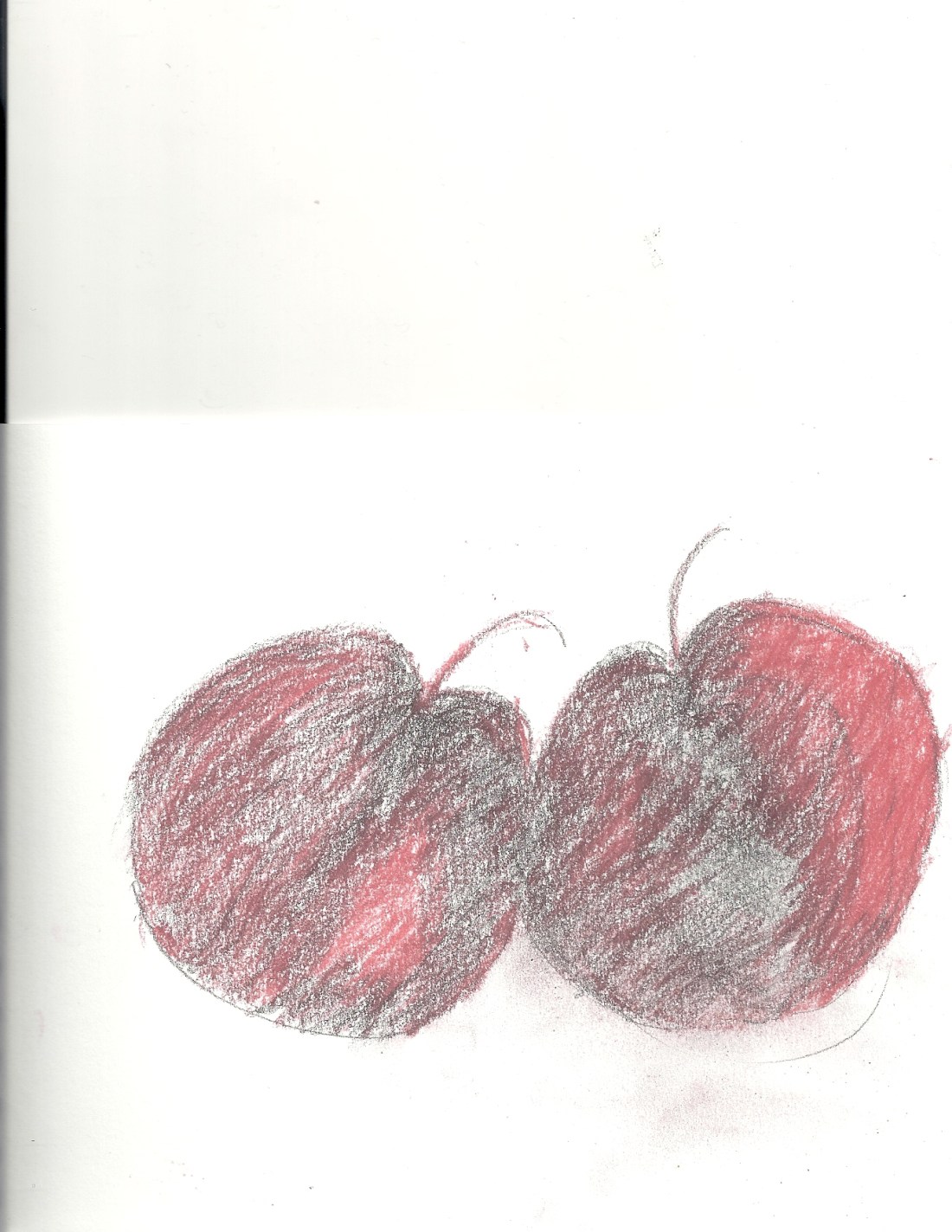
Apples
Share this:

The Crown series 1:Suez Crisis and the Negev Desert [ failed geography again]

Made by Katherine from her photos.
Sir Anthony Eden confused deserts and launched a phoney war on the Bedouins.As they lived in the Negev desert in Israel it was somewhat confusing because Israel had just invaded Egypt via Sinai in collusion with France and Britain
Did they want their just deserts?
The Bedouin took their tents and went awol. Now they live in no man’s land.
The USA refused to help and Britain had to get her troops out.
Score:Nasser 17 UK 1
Meanwhile Prince Philip is in Antarctica wondering where to go next.
Princess Margaret has disappeared [ maybe with the Bedouins?] and Princess Diana has not yet been born.
Everyone is dressed smartly as jeans have not been invented.
The Queen is lonesome but does not take a lover as she loves her husband and doesn’t want to cause a scandal.Still with Suez,Israel and France and a new PM she is quite busy.And she can watch TV all night.
Britain realises it is no longer the Superpower of the world.
If only people had known that before Brexit 60 years later what a help it might have been
God seems absent but he’s probably in the jungle with the wild animals.
Share this:

The broad sands of old Redcar
The broad sands of old Redcar were all bare
Dark ochre with a touch of lighter tones
Easter time we walked to Saltburn pier
Cold but happy with my love right there
Hand in hand, I felt his long thin bones
The broad sands of old Redcar town were bare
They say the perfect love casts out all fear
As if a person’s found their rightful home
Easter time we wandered to the pier
Loved and known who has not shed a tear?
Teesmouth is as wide as winter storm
The broad sands of old Redcar town were bare
As the river must submit to sea
So loving does much more than keep us warm
Joyous days we walked to Saltburn pier
The river rushing downhill like a hare
Made next a valley fertile with green charm
The broadening river mouth ate sand like air
How we laughed like children arm in arm
Smiling at the sky and tickling palms
From the sands of Redcar, rapt we stared
Saw North Sea and gazed at Saltburn pier
Share this:
If we are conversations
I heard your voice outside the glass front door
I felt no shock nor worry nor surprise.
But there a man, whose image is a blur,
Handed me a box with friendly cry.
What part of me still waits for your return?
Why don’t I know you’re gone and shan’t come home?
What knowledge must my puzzled heart still learn?
Why do I get an urge to search and roam?
If we are conversations ,as I read,
Then our exchange has ended with your death;
And so I am not she with whom you laid.
Nor she with whom you shared a common breath.
When deprived of hearing your response.
I am no longer she whom I was once.
Share this:
Nor cries when they fall into their hallway
We think about big issues and politics
Then are banjaxed by road works,pain in the foot
Or bad neighbours
I bet nobody in the government
sits on those plastic seats at the bus stop
Or on the stairs in Waterstone’s reading a book
Spoiling their red coat.
Nor cries when they fall into their hallway
After just managing to turn the key in the lock
I even have a chair there now
Specially made for a wailing woman.
That’s my life and how I feel about it
It bit.
Share this:

Stan meets another lady
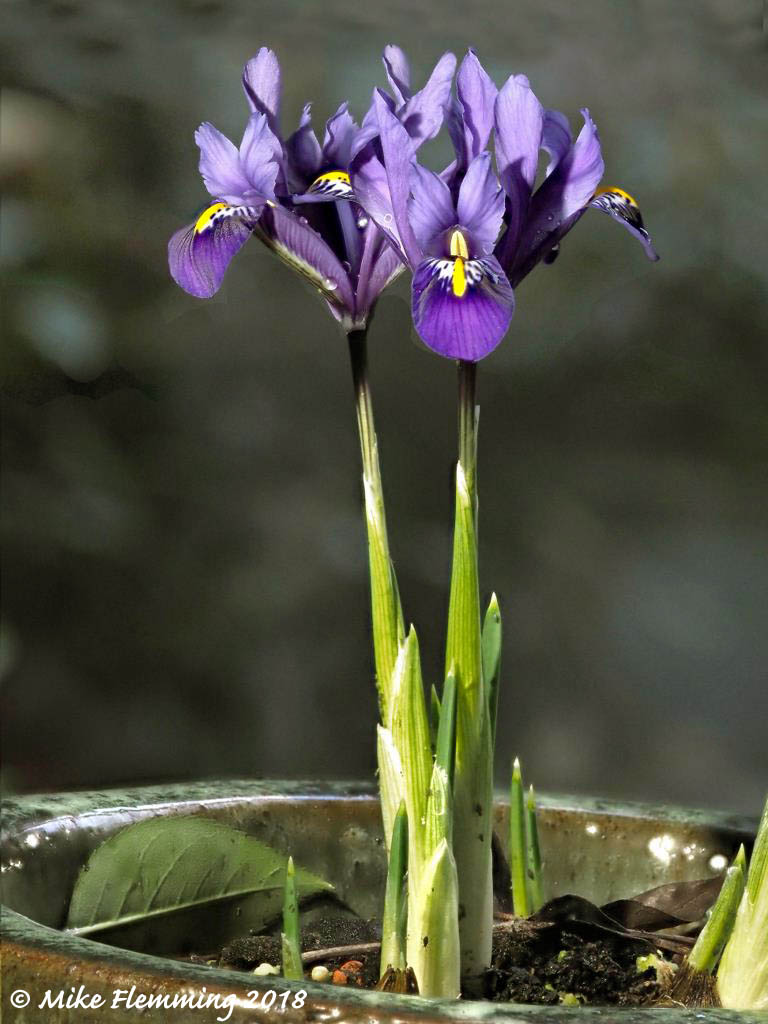
Mary had soon spotted her 98 year old frail yet virile husband Stan; he was across the road talking to a young blonde and buxom woman
Mary ran over the road in front of all the traffic as she was not pleased about Stan perhaps getting another mistress.
Hi,I am Mary, she said loudly
I am called Sabrina.I’m a mathematician too, over for a year from Babylon University USA
Why,hello,Sabrina.Stan loves clever women… and in your case,you also have great beauty,she said dishonestly
Hi Mary,Stan told me you were out buying some vaseline in the pharmacy down the other end of the town.He invited me to coffee.
Oh,damn,I must have had a senior moment.It was that Jazz Band that distracted me.I forgot about that Vaseline..
Come on,ladies,said Stan as he led them into a brand new coffee shop staffed by delightful, smiling Turkish people.He ordered three cappucinos plus some milk for Emile who was in his backpack.
They sat down by the windows and gazed at the folk passing by in some rather unusual clothing.Emile was sad there were no other cats around
Sabrina was was wearing a short pink velvet dress on her curvaceous body and green high heeled shoes.
Do you find wearing velvet is very warm in the summer?,asked Mary.She was wearing a long cotton dress and some open toed sandals from Hotters.
Well,it’s cotton velvet,Sabrina told her.Most is polyester now.I made this myself.I enjoy sewing.
I have never learned to sew,Mary told her nervously.I was afraid of the electric sewing machine at school and my mum was very impatient. Still,it’s probably cheaper nowadays to buy your clothes ready made.
Soon the women were engrossed in a discussion of their favourite fashion shops and styles; colours and shapes.occasions and casual clothing
I like a pure new wool coat in winter,said Mary..I find down filled coats seem to make me perspire too much or even feel faint
Anyway,it’s my face which sweats.I can’t put antiperspirant there…
No,it is likely to give you a rash and anyway the body needs to sweat to get rid of toxins,Sabrina informed her scientifically yet charmingly.
I don’t mind sweating on my legs,Mary said.
But it’s embarrassing giving a lecture on why e is not an algebraic number with rivulets of water running down my face washing off my foundation cream and powder..though do the students notice?
Yes,that is a real problem,Sabrina said wisely.I never knew anyone still wore powder.I like creme de mousse foundation myself.
Meanwhile Stan sat and gazed pensively at Emile……..he rolled his eyes and Emile smiled in his cat manner; that is,he grinned.
I came here to talk naughtily and sexily to sweet Sabrina,not to listen to both women discussing sweat and antiperspirants.,Stan continued.
Well,life is what happens when we are busy washing out our pans,Emile told him pointedly
I don’t think that is quite right,said Stan.
And I have already washed all the pans and hoovered the ceilings…
Well,you see, much of life is out of our control.That’s why people like to take the Bible literally.They prefer to think End Times are here, than to realise life is always changeable and unpredictable.Anything seems better than uncertainty or doubt.
How have you found teaching topology,Mary asked Sabrina.
I find it’s more fun than teaching logarithms,she continued,and exponentials… some people find that a tough topic,
Yes,I love teaching topology… and functional analysis.
Blimey, thought Stan, this is even worse than sweat and antiperspirants.I hate maths.
I use lily of the valley soap,he cried,interrupting the ladies.
Why,are you gay? asked Sabrina with interest.
No,I just use whatever Mary is using.I have no choice.
Why don’t you buy him some soap smelling of parsley,she asked Mary.Or can he not buy some h imself?
Why, can you get that? Mary responded.Coal tar is one we tried but he hates it…I think for men there’s not a lot of choice…
But,Sabrina cried,A man smelling of lilies of the valley might cause a disturbance,even a riot in a small town like this.
Why should women have all the lovely smells and men smell of coal tar and smoke?Stan asked.Men like flowers too,you know.
The ladies looked at him with wonder as they sipped their lovely cappucinos.
I never thought of that before,Mary said.
Neither did I,Sabrina added.. this is not related to my work but my fiance is a psychologist and he’d like to know about it.
Alright,ladies… time to go.Emile needs his dinner.So off they went all wrapped in their thoughts like feathers stuck inside a fluffy pillow on a big bed.
Not what anyone had expected…but change is good for us,surely? Now we can wonder what sort of soap Dave,the delightful paramedic wears.. and does he use a 48 hour deodorant..?
Please wait calmly as excitement wears people out.I am not responsible if you fall over your own feet.
Mary ran over the road in front of all the traffic as she was not pleased about Stan perhaps getting another mistress.
Hi,I am Mary, she said loudly
I am called Sabrina.I’m a mathematician too, over for a year from Babylon University USA
Why,hello,Sabrina.Stan loves clever women… and in your case,you also have great beauty,she said dishonestly
Hi Mary,Stan told me you were out buying some vaseline in the pharmacy down the other end of the town.He invited me to coffee.
Oh,damn,I must have had a senior moment.It was that Jazz Band that distracted me.I forgot about that Vaseline..
Come on,ladies,said Stan as he led them into a brand new coffee shop staffed by delightful, smiling Turkish people.He ordered three cappucinos plus some milk for Emile who was in his backpack.
They sat down by the windows and gazed at the folk passing by in some rather unusual clothing.Emile was sad there were no other cats around
Sabrina was was wearing a short pink velvet dress on her curvaceous body and green high heeled shoes.
Do you find wearing velvet is very warm in the summer?,asked Mary.She was wearing a long cotton dress and some open toed sandals from Hotters.
Well,it’s cotton velvet,Sabrina told her.Most is polyester now.I made this myself.I enjoy sewing.
I have never learned to sew,Mary told her nervously.I was afraid of the electric sewing machine at school and my mum was very impatient. Still,it’s probably cheaper nowadays to buy your clothes ready made.
Soon the women were engrossed in a discussion of their favourite fashion shops and styles; colours and shapes.occasions and casual clothing
I like a pure new wool coat in winter,said Mary..I find down filled coats seem to make me perspire too much or even feel faint
Anyway,it’s my face which sweats.I can’t put antiperspirant there…
No,it is likely to give you a rash and anyway the body needs to sweat to get rid of toxins,Sabrina informed her scientifically yet charmingly.
I don’t mind sweating on my legs,Mary said.
But it’s embarrassing giving a lecture on why e is not an algebraic number with rivulets of water running down my face washing off my foundation cream and powder..though do the students notice?
Yes,that is a real problem,Sabrina said wisely.I never knew anyone still wore powder.I like creme de mousse foundation myself.
Meanwhile Stan sat and gazed pensively at Emile……..he rolled his eyes and Emile smiled in his cat manner; that is,he grinned.
I came here to talk naughtily and sexily to sweet Sabrina,not to listen to both women discussing sweat and antiperspirants.,Stan continued.
Well,life is what happens when we are busy washing out our pans,Emile told him pointedly
I don’t think that is quite right,said Stan.
And I have already washed all the pans and hoovered the ceilings…
Well,you see, much of life is out of our control.That’s why people like to take the Bible literally.They prefer to think End Times are here, than to realise life is always changeable and unpredictable.Anything seems better than uncertainty or doubt.
How have you found teaching topology,Mary asked Sabrina.
I find it’s more fun than teaching logarithms,she continued,and exponentials… some people find that a tough topic,
Yes,I love teaching topology… and functional analysis.
Blimey, thought Stan, this is even worse than sweat and antiperspirants.I hate maths.
I use lily of the valley soap,he cried,interrupting the ladies.
Why,are you gay? asked Sabrina with interest.
No,I just use whatever Mary is using.I have no choice.
Why don’t you buy him some soap smelling of parsley,she asked Mary.Or can he not buy some h imself?
Why, can you get that? Mary responded.Coal tar is one we tried but he hates it…I think for men there’s not a lot of choice…
But,Sabrina cried,A man smelling of lilies of the valley might cause a disturbance,even a riot in a small town like this.
Why should women have all the lovely smells and men smell of coal tar and smoke?Stan asked.Men like flowers too,you know.
The ladies looked at him with wonder as they sipped their lovely cappucinos.
I never thought of that before,Mary said.
Neither did I,Sabrina added.. this is not related to my work but my fiance is a psychologist and he’d like to know about it.
Alright,ladies… time to go.Emile needs his dinner.So off they went all wrapped in their thoughts like feathers stuck inside a fluffy pillow on a big bed.
Not what anyone had expected…but change is good for us,surely? Now we can wonder what sort of soap Dave,the delightful paramedic wears.. and does he use a 48 hour deodorant..?
Please wait calmly as excitement wears people out.I am not responsible if you fall over your own feet.
Share this:

Are women better writers than men?
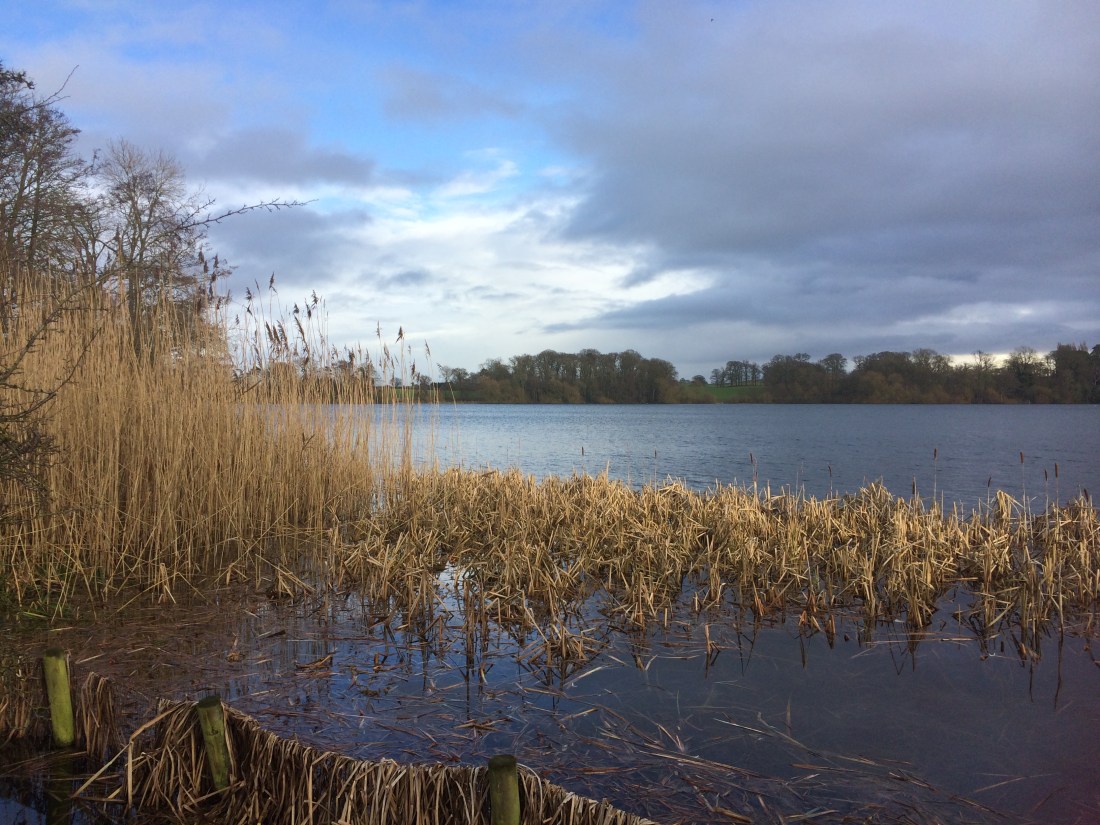
Photo EL 2018 copyright
phttp://www.huffingtonpost.co.uk/entry/women-writers-infographic_n_5675866
“Readers believed men were more likely to “get to the point,” whereas women were more likely to focus on “character development.” Women were believed more likely to write about people (as opposed to “things”) than men, and were also thought more likely to craft long sentences.
It’s unclear whether these beliefs are rooted in actual trends, or stereotypes about Hemingway-esque masculinity and Woolf-like meandering. But it certainly could explain why J.K. Rowling chose a male pen name, Robert Galbraith, for her plot-heavy mystery novels. Regardless, Grammarly concluded: “Women tend to be more descriptive in their writing, and spend more time developing a greater variety of characters than men. Perhaps as a result, women are generally regarded to be better writers than men.””
Share this:

The Abbey grounds
I did not think just then about the end
That we too would struck by time and place
As we stood in ruined Abbey’s ground
Underneath the cliff, the swishing sounds
The waves all riding,dying in the race
I did not think just then about the end
From the sky did love like rain descend
As I yielded to your piercing gaze?
Then we stood in ruined Abbey’s ground
Your heart was in the hills,my honey found.
Not even Africa itself would this erase
I did not think just then about the end
Now I see the shadow and the mound
Now I grieve for want of your dear face
Like when we loved in Whitby Abbey’s grounds
In the child’s loved landscapes, self is made
May nothing spoil such worship nor degrade
I did not think just then about the end
I stand in reverie on holy ground.
Share this:
The steepness,wildness ,blackness darkly sing
Like the water in a mountain stream
In flood it drowns the weak and very young
In drought we can explore its bed and dream
The limestone around Alston’s very clean
And in the little river stones are flung
It’s water in a new born mountain stream
Dry river beds in Teesdale are pristine
The dark hills threaten as they overhang
In drought, we can explore, find stones and dream
But much of Pennine land remains unseen
The steepness,wildness ,blackness darkly sing
Like the currents in a flung down stream
In rare heat, bare feet are river clean
The hot stones make a flat seat on the bank
In drought, we can explore or view the scene
In love the mind will savour and then thank
The world of nature into which it sank
Unlike the water in a mountain stream
If our mind runs slower it better dreams
Share this:
Five best living poets?
 http://www.telegraph.co.uk/books/what-to-read/national-poetry-day-five-best-living-poets/
Extract
Alice Oswald
A contemporary nature poet every inch an heir to the Romantics, Oswald’s poems are steeped in landscape and history and show just as careful an ear for light and warmth as for darkness and cold. Dart, her TS Eliot prize-winning book-length poem about the river Dart(2002), is full of visceral mud and water exploring British people’s relationship with our natural world and our past. Another long poem, Memorial, is hugely ambitious in scope. It’s an atmospheric and accomplished sweep of a poem retelling the Iliad through an extended elegy for its war dead, a response to the ancient tradition of oral poetry and another take on poetry for performance.
Read this: Wedding (1996)
“…and this, my love, when millions come and go
beyond the need of us, is like a trick;
and when the trick begins, it’s like a toe
tip-toeing on a rope, which is like luck;
and when the luck begins, it’s like a wedding,
which is like love, which is like everything.”
Alice Oswald on how to read Homer
Share this:

The need for change


The art of connecting….
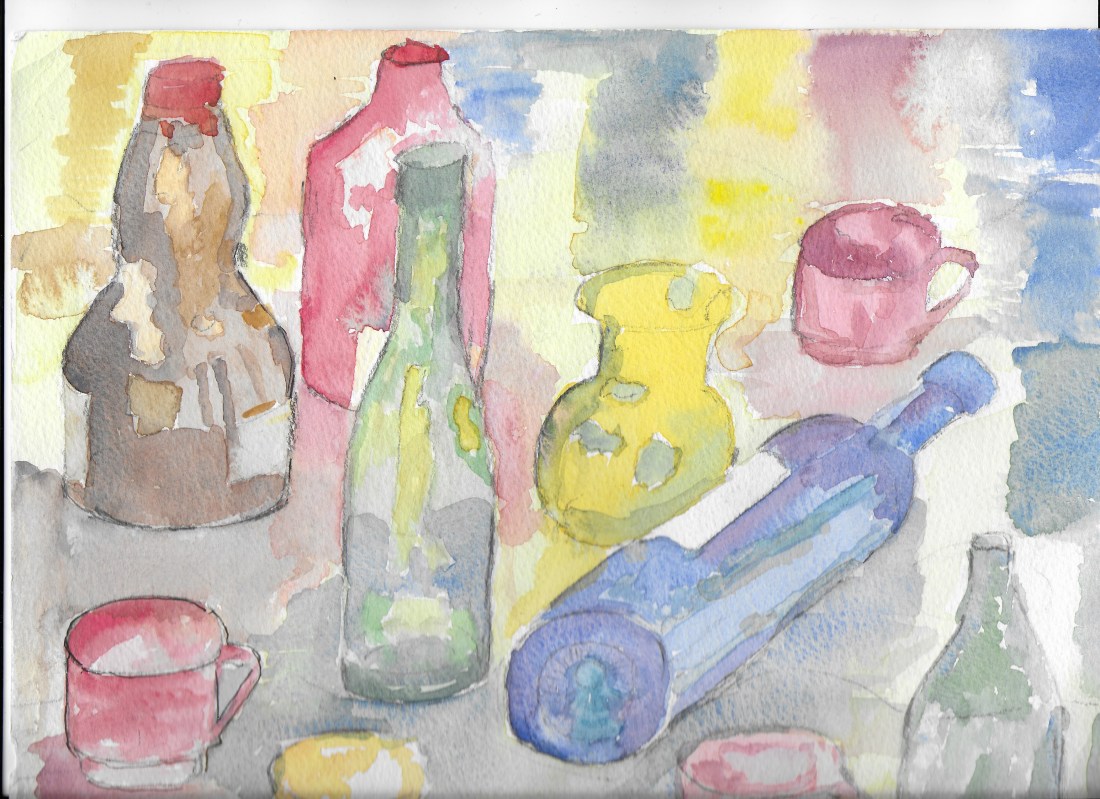 https://www.huffingtonpost.com/bill-chameides/the-art-of-connecting-to_b_4310221.html?ir=Green
Extract
Facing “the Other”
I find a real resonance between Ishmael’s diagnosis of our species’ ills and the work of noted French philosopher Emmanuel Levinas, specifically his notion of “the Other.” Tautologically, the Other is simply someone else, or, to use a term common to theology, “that which is not us.” Throughout history, otherness has triggered fear and violence and has been used as justification for slavery and imperialism.
But to Levinas, the Other provides a path to transcendence, a way to find meaning, indeed ecstasy. In Totality and Infinity Levinas writes, “Meaning is the face of the Other.” Face-to-face relations with the Other imparts knowledge, creates connection. As Levinas scholar Adriaan Peperzak writes:
“When Levinas meditates on the significance of the face, he does not describe the complex figure that could be portrayed by a picture or painting; rather, he tries to make us ‘experience’ or ‘realize’ what we see, feel, ‘know’ when another, by looking at me, ‘touches’ me: autrui me vise; the other’s visage looks at me, ‘regards’ me.”
From this notion flows a responsibility we all share for the Other.
Strictly speaking, Levinas viewed the face-to-face relationship as the purview of human-to-human interaction, which would leave Ishmael and his ilk in the Other category. But Ishmael is a special case — come on, the guy can communicate with a human, and there’s the whole parable thing. So, as other writers such as Barbara Jane Davy have done before, allow me to pull Levinas’s philosophy into the realm environmen
Share this:

The miracle
I broke my tooth on Christmas pudding sweet
A silver coin had steamed beside dried fruit
And after eating sausages and beet
The pudding tempted me from worried doubt
We had a goose and chicken in a pot
Roasted carrots round potatoes dwelled.
I made the claim I eat less than my cat
Yet truly has my super ego swelled
Then the pudding with its holly red
A jug of custard and a pot of cream
I wished that I had appetite inbred
And all the world was an erotic dream
The dentist looked with care at my clean teeth
Nothing broken,wonders never cease!
Share this:
So fame made her feel quite sublime.
My friend had cystitis 3 times
Which made her face grow many lines
She was so struck by the blues
She was on that night’s News
So fame made her feel quite sublime.
The most anxious woman in Britain
Was cured by the love of a kitten.
It ran up her leg
And laid a new egg
It had pinched from the hen its dad ‘d bitten
Schizophrenia is caused by great shame
Humiliation, to give it a name
Oh, folk be not proud
For we are often too loud
As they tremble on the cusp of our crimes
On the edge of the cliff of despair
Many of us just hang on there
Throw us a rope
Help us to cope
Life is not just, so be fair.
In the borders of sanity writhe
People with very tough lives
With no wealth or home
With no brush of comb
They are waiting for us to arrive.


No comments: