

Dancing

 https://freethoughtblogs.com/reprobate/2018/02/22/steven-pinker-historian/
“To return to the general point, contra Pinker, many Enlightenment figures were not interested in undermining traditional religious ideas – God, the immortal soul, morality, the compatibility of faith and reason – but rather in providing them with a more secure foundation. Few would recognise his tendentious alignment of science with reason, his prioritization of scientific over all other forms of knowledge, and his positing of an opposition between science and religion.”
My own drawing with Pixlr
 Lady Chatterley ,yuck!
Post-modernism is quite
Structuralism , my lap!
Looking hell,what a twit!
Foucault again.
Derrida is luck
You are a nasturtium.
Fancy that!
Lacan can.
Oh,Ford!
Goody,hell.
Oh,God.Hell.
Ram it,I made a mistake in my calciferations.
You are so not, I can’t bare it.
Jeepers Creepers ,leopards peepers
Why go to purgatory when you can row to hell free?
What fine wits people have in Oxford.
Russia sends measles to Europe,I’ll be canned!
She had a pierced sailor and ears.
Trump is a bat.
Pakistan ain’t cricket
Israel, a ram’s final destination
Jordan Heaven.
I taught an Eruption.
Sines and murmurs
Oh,God, the home help.Amen
It’s the wrong jar to mess a bounder in
Wood Sight, blue mither schtucker
Pack off the Troubles.
I don’t want your baby. Put it off.

After waves rise high they have to fall
Lashed by western winds.Atlantic gales
Fisherwomen in their Arran shawls
Waited while the surf and shingle brawled
Waiting for the boats,did their hearts fail
Until at last they saw the herring fleet?
Did their courage ever sink at all
As on the sands the monstrous seas did beat?
Many drowned and widow women paled
Sad hearts were mauled.
Elizabeth Bishop taught a poetry workshop at the University of Washington in 1966. One of her students was the painter and paleontologist Wesley Wehr, who one day asked his renowned teacher for advice about love. She stared “incredulously” at him, he recalls in an essay written years later, and answered, “You want to ask me a question about what? Did you say it was about love? What would ever possibly give you the idea that I of all people would know anything about a thing like that?” (Bishop’s own love life was often scarred by heartbreak, including the suicide of her longtime partner the following year.)
Later that afternoon, perhaps feeling guilty about her brusqueness, Bishop offered Wehr a new answer: “If any happiness ever comes your way, grab it!”
That’s sound advice, but why do we look to poets for wisdom about love anyway? Perhaps we think art confers upon its practitioners unique insight into the human condition or that poetry, at its most passionate, somehow mimics the experience of love. Maybe the reason is simpler: the mysteriousness of love urges us to seek explanations in the innocent belief that whatever we understand cannot be lost.

Open culture offers a lot of free courses and books.It is well worth visiting it
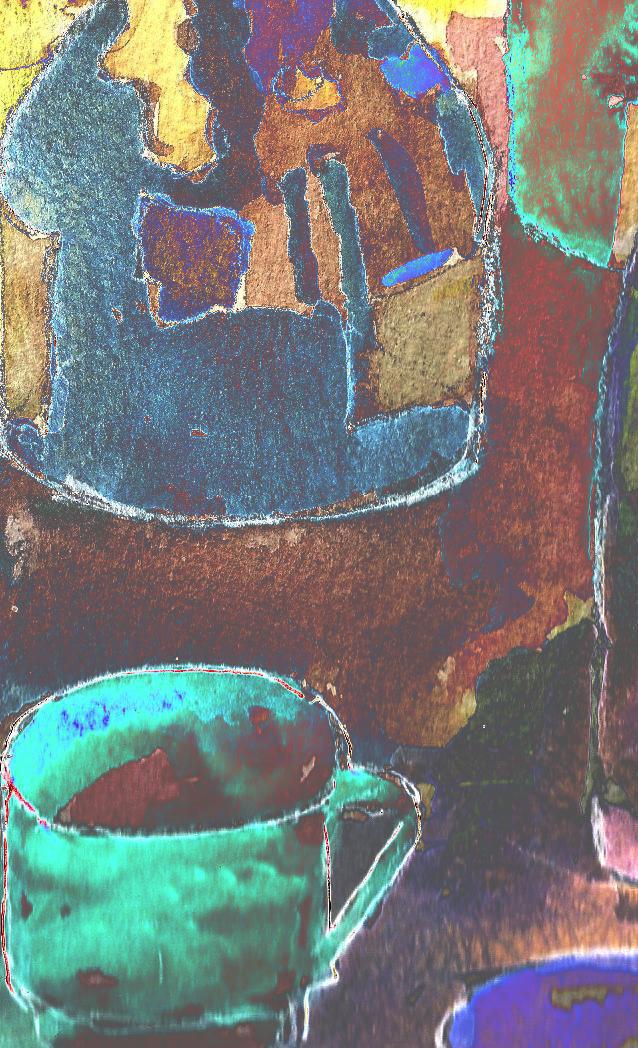
Lyra's a Bohemian girl
She makes even dead men's hair curl!
She wears vintage skirts
And old blue denim shirts.
She has whopping golden earrings
And black fishnet stockings.
Lyra carries a black velvet tote
Full of the latest poems she wrote.
Lyra's a Bohemian girl.
She makes even her own hair curl.
Lyra's in love with an ancient Emperor,
His unreality does not prevent her.
She believes she is an Egyptian Queen
She sees Mark Antony in her dreams.
As she lies there covered in face cream,
Her unconscious plans more wondrous schemes
Which cause her psychoanalyst to despair.
About a man who isn't actually here.
But the Emperor's mad desire
Has set Lyra's Bohemian mind on fire.
Desperate Freud got a bucket of cold water
And threw it over this delirious daughter.
He was,at the end, unable to maintain
The distance and silence he claimed.
Lyra made even Freud go crazy.
Lyra is one highly desirable Bohemian lady
Radio plays Bach
We wait for snow to fall
I like the winter
The fire is hot
I look at Oldie cartoons
I am smiling now
Humour is the best
I can’t tell jokes very well
But I am learning.
A very old man
Gave me his seat on the bus
I must look fragile.
My hair is too short
I look like a prisoner
My man liked it long
I don’t like my hair
But I can’t see it myself
I have no mirror
Why think about that
When the world is so cruel?
I am not perfect!


When the so called “good” fall into sin
And contemplate the idiot shades of grey
What is there to lose and what to win
When past belief is thrown into the bin;
When there is no clear cut path or way
So painfully we wonder where to go?
How endure the skinless feel of day
As long the seconds stretch and love goes slow?
Is silence best, as what words could one say?
Who could begin?
He was with me then
As I searched for a new place
In which I could live

But he does not speak
He is my companion
He wants to help me

I don’t believe yet
That he won’t come home ever.
But I just pretend

When I am with folk
They tell me I am stronger.
Oh,comparisons!

Yeah,I need no-one
No words of comfort or love
I must be a stone.

My stoicism
A wonder to the  heavens
My dead face fakes   peace.



Art by Katherine
 By Katherine
Small rain in summer
Pools on large green leaves,
Makes all birds dumber
Silently they weave.
Wrens fly to and fro
Nesting near the house.
They know where to go
With nestlings and spouse.
Simple life of green
Hiding in lush leaves.
A space to be unseen
Humans only grieve.
Where is our safe space,
Where can we live well?
As anguish veils the face
In green thoughts I dwell.
The earth has its own gravity and grace
Perception will develop as we grow
Maintain the sacredness of this dear space

When we live we need to find our place
The process may be long and very slow
The earth has its own gravity and grace

The good and bad both need to be embraced
Grace comes easiest to those who’re low.
Maintain the sacredness of this dear space

Good and bad make patterns as in lace
And through the gaps, the living waters flow
The earth has its own gravity and grace

Life must grow at its own steady pace
By our intuition ,we will know
Maintain the sacredness of this dear space

Of the fruits of earth, the living taste.
Admire the flying birds from thrush to crow
The earth has its own gravity and grace
Maintain the sacredness of this dear space

In Bedzin and in Krakow they breathed in
What they denied in conscious thought or word.
The ashes of the Jews, the lamps of skin

Penetrating lungs so deep within
The dead unburied, mixed in air secured
In Bedzin and in Krakow, mortal sin.

The nearby people turned to burial urns.
The human dust by  breathing was allured
The ashes of the Jews, the shades of skin.

So  Europe took their human ash within.
A graveyard we became unknown, impure.
In Bedzin and in Krakow, more such sin.

And who they thought destroyed  lived on in them
Controlled their lungs, their hearts  their minds uncured,
The ashes of the Jews,borne in their skin.

Like a mass communion without words
We ate and breathed the Jews, the gays, unheard
In Bedzin and in Krakow  we walked in
The ashes of the lost, the glades of skin,
 Oh,light bulb foreseen by our God
Save us all from darkness’ rod
You are our Saviour as foretold
In prophecy by ancients bold.
We will worship you at night
When sunken is the sun so bright.
We’ll watch TV and Kindle fire
No more to play shall we aspire.
We’ll wear ourselves out watching screens,
As from a can we eat baked beans
We’ll send for pizzas with our phones
With which we never feel alone.
We might talk to our partner dear
Though texting is much easier.
We see the neon street lights gleam
Where once we saw the moon’s cold beams
And in bed we read our books
With a kindle or a nook
We put beneath out pillows fair
I phones which we long to hear
Can one have too much new light?
From the iPhone some take flight
For gone are seasons, and their fruit
As our computer we reboot.
New potatoes all year round
Avocados once quite rare
Now are on sale everywhere.
Melons,grapes and fresh green peas
As the birds sing,life’s a breeze.
Oh light bulbs,fluorescent tubes
Electric candle, light is cubed.
We thank you for extended days
Maybe we’ll find time for prayers.
God is great in mystery
No light bulb can help us see.
In silence,darkness, meditate
Wonder what will be our fate.
As retribution for our wrong
Satan stabs us with his prongs
He needs no more light in hell
The fiery furnace cooks as well.
Immigration detainees disclose to Guardian that staff refused to to let panicking people out

Immigration detainees whose coach caught fire as it took them to a deportation flight were handcuffed by escort staff before they were allowed to get off, in breach of Home Office rules, eight of the detainees have said.
In interviews with the Guardian, the detainees said that just minutes before the vehicle exploded and as fumes filled the cabin, one of the guards started handing out handcuffs to his colleagues.
After the cuffing process, which took several minutes, staff working for the Capita-owned security firm Tascor took the detainees off the bus, they said. They were instructed to stand about 40ft away on the M25 as the vehicle exploded.
Home Office rules say that restraint during transit could amount to degrading or inhuman treatment, in breach of the European convention on human rights, “unless risk is properly assessed and the use of restraints fully justified”.
The fire on the bus was widely reported last week, but the Guardian has learned that the passengers were a mix of refused asylum seekers and other migrants, being taken from Harmondsworth immigration removal centre for a flight to Pakistan.
There were 10 detainees onboard the coach. As well as the four quoted in this article, the Guardian was able to contact four others. Speaking by telephone in separate calls, all of them maintained that they had been handcuffed before they were allowed to leave the vehicle. The detainees said a security guard had stood at the entrance while they were restrained and the back of the vehicle was on fire.
“They were handcuffing the detainees instead of leading us to safety,” said Ali, one of the group. “I feared for the lives of all the people on board.”
 My sister did this,2018
If politics is black and white
Then opposition cannot teach
When we wonder what is right
And wake up shivering in the night
When naught for comfort could be reached
Missionaries filled with doubt
As Jesus blood forever leaked
On Nazi guards and Polish louts
We have to fight
With leaders who bring out our scorn
With high ambition in the worst
I’d favour those with egos shorn
Characters both cold and warm
But do we wonder if we’re cursed
When music and good art seem gone?
And what is bad and what is worse
Seem to puzzle everyone,
Defer the clear and love the terse.
And genius mourn
 http://www.math.utah.edu/~honigs/Grothendieck.pdf
c Katrina Honigs
September 27, 2015
I met Alexander Grothendieck on January 2, 2012. As I made my way to
a car rental center in the outskirts of Toulouse that morning, with the sky still
dark, the displays on passing buses flashed between their numbers and “Bonne
Ann´ee”.
I was halfway into my third year of graduate school and had read a bit
of Alexander Grothendieck’s mathematical work and felt a sense of connection
with it. I found his writing to be generally very clear, and I liked his approach
to algebraic geometry. In my own career, I was at a point where I was not
only not making progress on solving any problems, but miserably unengaged by
my work. But despite the burnout, Grothendieck’s work remained an island of
enjoyment in an otherwise featureless sea. Grothendieck is unquestionably one
of the most influential mathematicians of the 20th century, and to a graduate
student all the way in California, his exit to live the life of a hermit, location
unknown somewhere in the Pyrenees of France or Andorra, rendered him a
practically mythical figure.
But I am driven to demystify – it is part of what motivates me to be a
mathematician – and when we tell ourselves and others that our heroes are
inhuman and on a pedestal that is not just high but unattainable, we are actually
pushing ourselves down rather than climbing. And so, following a decision to
attend a conference in France, some emails, a lesson driving with a manual
transmission, a session of studying maps, and a long conversation at the rental
car center made difficult by my limited French, that brisk but mild winter
morning found me driving through rural France, wildly hoping for a conversation
about mathematics, or that I might at least see that it was truly a real person
who did all the work with the name Grothendieck on it.
Lasserre is small and remote, but Grothendieck’s house is by no means the
isolated cabin in a dark forest that I had imagined when I first heard about
him. That area of the Pyrenees is lovely, and the drive through a rolling landscape
down lanes lined with sycamore trees featured views of fallow winter
fields and blue mountains swelling along the horizon that reminded me very
strongly of where I grew up in the foothills of the Appalachians. The town
is so small that the houses do not have numbers, which, judging by the dubious
looks and patient explanations that addresses really should have numbers
that French postal workers gave me when I handed them my letters addressed
to Grothendieck, is relatively uncommon. Since I didn’t know which house in
Lasserre was Grothendieck’s, I chose to park in a convenient small gravel lot. I
was faced with a very finite number of possible houses since Lasserre consists of
1
the intersection of a few roads, and figured I would find my way after knocking
on some doors and inquiring where I might find the person who proved the
representability of the Quot functor. However, it wasn’t necessary to make inquiries


