
Uncanny is a space which I avoid
I do not wish to meet with spirits  vile.
Though with some men,it is true that I have toyed.
I  dropped them all and sane was I the while.

Yet when I met your eyes so dark  and strange
A force more strong than my own pulled me in.
A   premonition that my life would surely change,
Before I knew your double,your dark twin.

In dreams and  in my nightmares he will come
To capture me and take me  to his land.
I do not know what choice to make of man
Nor how to count infinity by hand.

The double is an augury of death
Yet in this space, uncanny is a path
Category: reflections

God’s sacred smile

http://home.btconnect.com/mike.flemming/
We dwelled inside a sphere of holy love
Which we and angels shared for just a while
Where our below is linked to heaven above
To cradle us inside God’s sacred smile.
This state of grace in which I sang for you
Made all the Ward turn holy for an hour
As to my love I ever would be true
Even now he was become a withered flower.
Earth to earth and ash to ash we go
With dear hearts holding us in case we fall
And being flesh we all must undergo
An end or new beginning of our call.
Once he died, the sphere of grace was gone.
Yet in my mind, that smile will linger on
Share this:

Is it apt to search for Love without
Is it apt to search for Love without
When we need to connect with our own soul
For surely we will need to study doubt
Before we can become more real,more whole
The conflict which disturbs is filled with pain
And so we are reluctant to go there
But if in hope we try again again
We may find a way which we can bear
Willingness is potent as our tool
Sullenness will ruin all our hopes
And so it’s plain to all except a fool
There is no advantage in long mopes
With patience and acceptance we are real
And in our hearts, a new peace is revealed
Share this:

Reasons to read poems
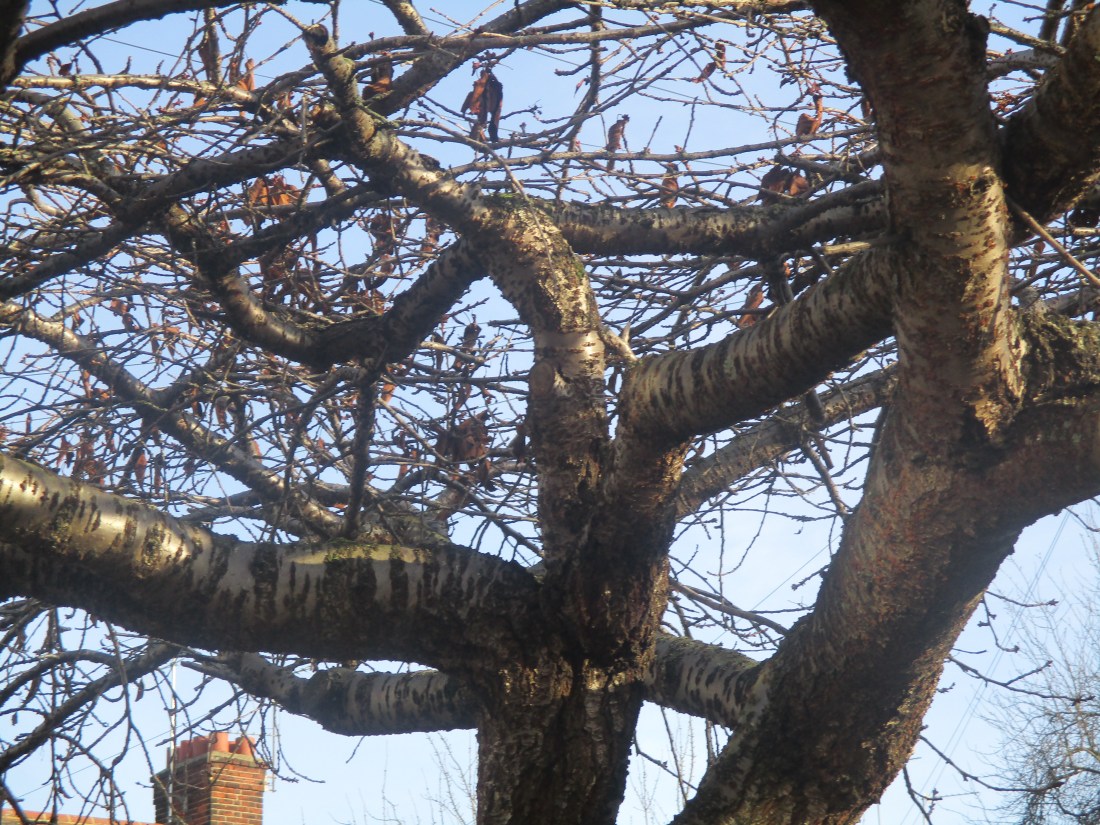
“2. Poetry can change how you see the world
A great poem, like a great novel or even a great movie, can expose you to parts of the world that you didn’t know existed and that you haven’t witnessed first hand. They can transport you to another reality and open your eyes, reminding you that the world is a big, interesting place full of opportunities and adventures.”
Share this:

Criticise with love
There are two types of people we classify as haters. One is a critic who comes from a place of love, another is legitimate hater — one coming from a place of fear or envy.

To be criticised with negative intention means that you have aroused something within someone else such as jealousy or a feeling of inadequacy. In order for the hater to feel better and elevated somehow, they need to put other people down. When someone condemns our work, comments unkindly on our appearance, judges our parenting style or disapproves of any of our actions, it is a pure and total reflection of them, not us. Take relief and comfort that a critic’s words often have nothing to do with you at all.

Share this:

The blind man and the silence

I had a very interesting experience a few years ago.I got off a bus in the town centre then crossed the road.On the main road, some men were digging up the road using very noisy drills.As I walked along the pavement adjoining I saw a blind man cowering against a shop window.I have had serious problems with my eyes so maybe it has made me more aware of others who were even worse off than I am.
I went up to him and asked what was wrong.He said the noise of the drills had completely disorientated him and he felt confused.If he could get to the bus stop which I had just used he would be able to work out his way home.
He got hold of my arm and we walked along very slowly and gently.
The men who were drilling turned off all the drills and stood in a row watching us.I felt a quietness like you get in certain cathedrals and churches.So we slowly went by and crossed the road on a pedestrian crossing.I then described where we were and he said he felt fine.
I never saw him again but I remember that stillness and quietness like something holy.
“The peace which passes human understanding”
Share this:

They kindly stole my voice, but it don’t show.
I lost my own voice sixty years ago
My knees are aching like the devil’s heart
Now the pain has come up from below
My hands are red and swollen, so it goes,
Around my body, hops from part to part
I lost my own voice sixty years ago
Oh, dear heart, it only goes to show
The existential piss of Jean-Paul Sartre
The ache, the pain, have risen from below.
The teacher said my social class was low
More, my Dobble accent was not smart
I lost my own voice then, yet it died slow.
Today I’m in the upper class, you know!
I taught pure maths in Oxford, a paid tart.
They kindly stole my voice, but it don’t show.
I’d like to hear my mam and daddy talk
I’d like to go with grandad for a walk
I’ve lost my own voice sixty years heart-sore
Now the rage is rising like bread dough.
Share this:

What does poetry do for us?
The novelist Richard Ford differed from the poets in his take: “The question ‘Why poetry?’ isn’t asking what makes poetry unique among art forms; poetry may indeed share its origins with other forms of privileged utterance. A somewhat more interesting question would be: “What is the nature of experience, and especially the experience of using language, that calls poetic utterance into existence? What is there about experience that’s unutterable?” You can’t generalize very usefully about poetry; you can’t reduce its nature down to a kernel that underlies all its various incarnations. I guess my internal conversation suggests that if you can’t successfully answer the question of “Why poetry?,” can’t reduce it in the way I think you can’t, then maybe that’s the strongest evidence that poetry’s doing its job; it’s creating an essential need and then satisfying it.”
Share this:

The expression of the sensed conveys delight.
There’s nothing on this page until I write
A word and then another word and more:
The sentences that bring me my delight
No sense is quite as needed as our sight
Moral blindness is by most deplored.
There’s infinity upon this page I write
I have pondered in the early winter nights,
Whether there are senses we ignore.
The expression of the sensed conveys delight.
Could there be, unseen, a different light
We might see by if we sought its door?
There’s blankness on this page until I write
The possible encounter, through a rite,
With God whom we and angels must adore.
My senses then might bring me grace and light
In the soul, oh, deep within that core,
Who shall, patient, find the unknown door?
There’s an opening upon this page l write.
Can other words, on other tongues, invite?
Share this:

Start writing poetry
http://www.huffingtonpost.com/diana-m-raab/start-writing-poetry_b_7005194.html
“Reading and writing poetry also has healing and transformative powers. As a matter of fact, many therapists augment their treatments by encouraging their clients to write poetry to express their feelings. This is one way to foster hidden creativity and a chance to allow the client to express themselves using another form. This may be done by writing about a moment or experience in the past, the present or even the future. The idea is to write including as many details as possible so the reader feels as if they are with you on the page, living the experience side by side. Writing poetry also forces you to go deeper into your heart and to write with your heart and not your head as a way to access your inner voice.”
Share this:

Symbolism in poetry and other literature

Example #1
We find symbolic value in Shakespeare’s famous monologue in his play As you Like It:
“All the world’s a stage,
And all the men and women merely players;
they have their exits and their entrances;
And one man in his time plays many parts,”
Share this:

When thinking hurts


My title has two meanings.One is that sometimes we have to think about a painful event or a person who has hurt us.Or even some past events…I recall pain when I was told about Hitler and Stalin
On the other hand some of us use thinking in words as a way of blocking painful emotions.whilst this may work for a time,it may give a lot of trouble when we need to deal with pain.Essentially we do not wish to “know” the truth in the full sense… we deceive ourselves and maybe others too
William Blake wrote this poem
Joy and woe are woven fine,
A clothing for the soul divine,
Under every grief and pine
Runs a joy with silken twine.
It is right it should be so;
Man was made for joy and woe;
And when this we rightly know,
Through the world we safely go.
I’ve been reading Sylvia Plath recently.I see that after her husband left her she went into a frenzy of activity.She had two very young children.was often ill with flu but she wrote all her most famous poems at this time;then she moved to London antd socialised a lot to prove she was not just a deserted wife.After this she became more, ill,there was a severe winter….then she crashed into the depths…I feel that her frenzied writing was a way of not admitting her grief… and she got worn out and decided death was better.
Some of us who are quite cerebral are not in touch with our bodies.We don’t feel that knife in the heart,the tears unshed,the anger that threatens… and eventually this cam lead to problems.,sometimes flu sometimes a breakdown,sometimes a broken marriage.and also the thinking can take on a life of its own so it keeps us awake at night… and the feelings can come out in nightmares.So thinking can be a curse.We all need defences at times but too much cuts us of from our own lives.And brooding and ruminating are very damaging to the mind and soul.Thinking is not wisdom
 .
.
A lovely poem that i am fond of
O sweet spontaneous
by: e.e. cummings (1894-1962)
sweet spontaneous
earth how often have
the
doting
fingers of
prurient philosophers pinched
and
poked
thee
, has the naughty thumb
of science prodded
thy
beauty, how
often have religions taken
thee upon their scraggy knees
squeezing and
buffeting thee that thou mightest conceive
gods
(but
true
to the incomparable
couch of death thy
rhythmic
lover
thou answerest
them only with
spring)
Share this:

Therapising people’s problems led to the current political situation
Quote:An example? Encounter groups . These meetings were an attempt to help individuals work together to tackle internalised oppression. However this kind of collective work soon became co-opted by ideas such as self-actualisation. The inner world was to be explored now not for the collective endeavour, but in the pursuit of individual happiness. Mass activism began to wane as the sale of self-help books mushroomed, carrying within their pages the message that responsibility for growth and happiness rested firmly in the individual. Why, after all, go to a feminist encounter group, when the tools for enlightenment lay in a self-help book one could peruse at home?
The side effect of the rise of therapy culture was a de-politicised understanding of embodied distress, and a certain navel gazing. The causes of anger and anxiety were located solely in individual’s childhoods or, as the 21st century beckoned, genes. Consideration of power relations and the structural causes of inequalities became a lefty side project, getting in the way of developing “brand me”, or a side note at the end of academic articles. Alternative ideas of the self received a special kind of ridicule – a phenomenon we see in the reaction to Corbynism today. Alternative ideas within psychology got sidelined.
Share this:

Religion and extended metaphors

Quote:
Reading poetry has since restored my faith in metaphor and how it can extend deeply and cleanly over individual poems, sequences and collections. While writing ‘The Recurrency of Peter Body’, I was interested in exploring the connection between the fallibility yet constancy of the human body and representations of Peter the Apostle. Fortunately for the poem, this connection struck me as obvious. And as I researched – returning to the King James Bible, reading the frescos of Masaccio and paintings of Caravaggio – the resonances revealed themselves, as if inevitably.
However metaphor is not an end in itself. I’m with Derrida in the belief that metaphor is “a basic way of knowing”. It’s active in pressing towards definition – through comparison – and hence towards understanding. So in the poem, for example, I’m also interested in where, in a secular society, we locate our ‘church’. If, as the poem suggests, we locate it with the individual – in the body – then what are the implications of this? It might suggest individualism, egotism maybe, hubris… which is kind-of
Share this:

FULL OF ONESELF? HOLIER THAN THOU? IS WILL POWER ENOUGH FOR THE GOOD LIFE?

“Holier than thou” is an interesting phrase.Holiness was a state we were taught we should aim for.But how should we aim for it? Can one become holy by will power?
I suspect not.Though one could be wicked by will power though I suspect most people don’t usually want to be wicked.And I don’t believe babies are born evil as I was taught.But we do wicked things.Pride is often involved.So what are some qualities that may help us to become ,not holy perhaps, but better.The first is one thing doctors have to agree to:
Do no harm.
How can we do no harm? Well paying attention is a possible beginning.If we are not attentive to ourself and the lives around us we don’t have the basis for choosing how to act.Then there is the quality of our perceptions.To a large extent these may have been formed by our experiences in infancy.If we are insecure and anxious we will perceive mainly danger,This leads me to think that we need to gain trust in either God,the Universe,our deeper selves….. something beyond us.If we have little trust we will live on guard and see things in relation to our own safety…..Somehow we will have to move to a wider perception/How many of us truly see others as people who are just as valuable,just as interesting,just as worthy of respect as we are.That when we kill a person physically or emotionally we are killing a whole world.Each person has their own world…..I believe.
If we trust we can perceive and as we perceive so we can act justly, caringly or in the best way possible towards that person.And we hope to receive it back.There is also grace which is a gift… if we live well and are open then grace may come from another source which may help us.But only if we are empty enough for it to come in.Being “full of oneself” is unlikely ro be good.Self forgetting, absorbtion in the other,the world,a task,a creation may be the best part of life.
S
I found it interesting to make a link between being able to be aware of other people as real people like ourselves and being secure in our inner being.That security or trust enables us to have an attitude called,”Submission to the will of God” in Christian teaching.I am sure it is common to many other religions especially Judaism.And for atheists it can be acceptance of reality,
Without trust in others, life is much harder as we are always concerned with keeping ourselves safe.I am not sure how much we can change our attitude from Fear to Trust.And I read today that paranoia is becoming more widespread probably because the government and other people can spy on us easily or find out where we are etc with modern technology
I recall a friend of mine dying when I was 15.We were taken to the Requiem Mass.I just recall the priest saying in the sermon something from the Bible
he Lord has given and the Lord has taken away
Blessed be the name of the Lord.
In other words,we can’t understand.Life and death are a mystery but we accept this is the will of God
At the time I’m not sure if I believed it.But i think acceptance of pain and grief helps us to cope with it even with the terrible suffering with losing a child.I was the last classmate to see her.It was late October.We left school and walked about 1/2 mile.I lived there but she had to then catch a bus fro a 4-mile journey
I still see her smiling face.Eight days later she died.
When you suffer a lot it’s hard to trust God,the Universe and all else.And depending on the circumstances it’s easy to be bitter or vengeful.But that will not help.
What I am wondering is:
How much can we change our attitudes by will power.Pr is there another way of changing?
Changing the way we see something may give us a different attitude.Talking to a good person may help.Sometimes we can only endure patiently.Sometimes God comes to us in the wilderness of tragedy,grief and pain.Because he can get in when we are still and silent.
I suppose going to the desert or on a Retreat may give us the same opportunity.Sometimes we can’t verbalise our suffering but that is not a problem.I found after seeking many ways out that as many people have said:~
The way out is through.
But we struggle like hell to avoid it!
Share this:

Immense and silent is my empty heart
Inside me is a gap where love once dwelt
Immense and silent ,swallowing all my hopes
A sorrow unacquainted aaks for help
To direct me how to live, not merely cope.
I feel that gripping hand upon my heart
A sorrow in the belly’s pit beside
As he died my anguish made its start
Its heavy desperation pierced my side
While he lived I dwelled inside his shade
Protected and much loved I did not know
That every tree must fall into its glade
Destroying those who live there with its blows
Unprotected from the intense sun
I’ll burn to ash and join my loved one
Share this:

Use politeness instead of fear.
This is based partly on something I read years ago and partly on my own experience

Relate to a painful emotion with curiosity,interest,acceptance or politeness instead of fear.
And do the same with people….
Because fear tightens us up and lessens our ability to perceive.And perception is crucial in decision and judgment.Change your perceptions and you change yourself without force.Will power is force which often cannot achieve our longed for wishes and hopes.Snow will melt and fires will go out.But Wisdom is always here for those who can see


.
Related articles
- How to change a bad perception (chrisjacksononline.net)
- Let time flow at a slower speed under your control(indiexistence.wordpress.com)
- Fears (thecollectivetruthcompany.wordpress.com)
- How Do You Perceive Me? (ktpopcheff.wordpress.com)
- #AskJack: How Can I Find Peace? (jacksaunsea.wordpress.com)
- You Can Do Anything You Decide To Do(paradisefoundretreats.wordpress.com)
- On Things of which I am Afraid of (msshakeyla.wordpress.com)
- Are You Afraid? (brittlauren.wordpress.com)
Share this:

A talk about why modern poetry is difficult
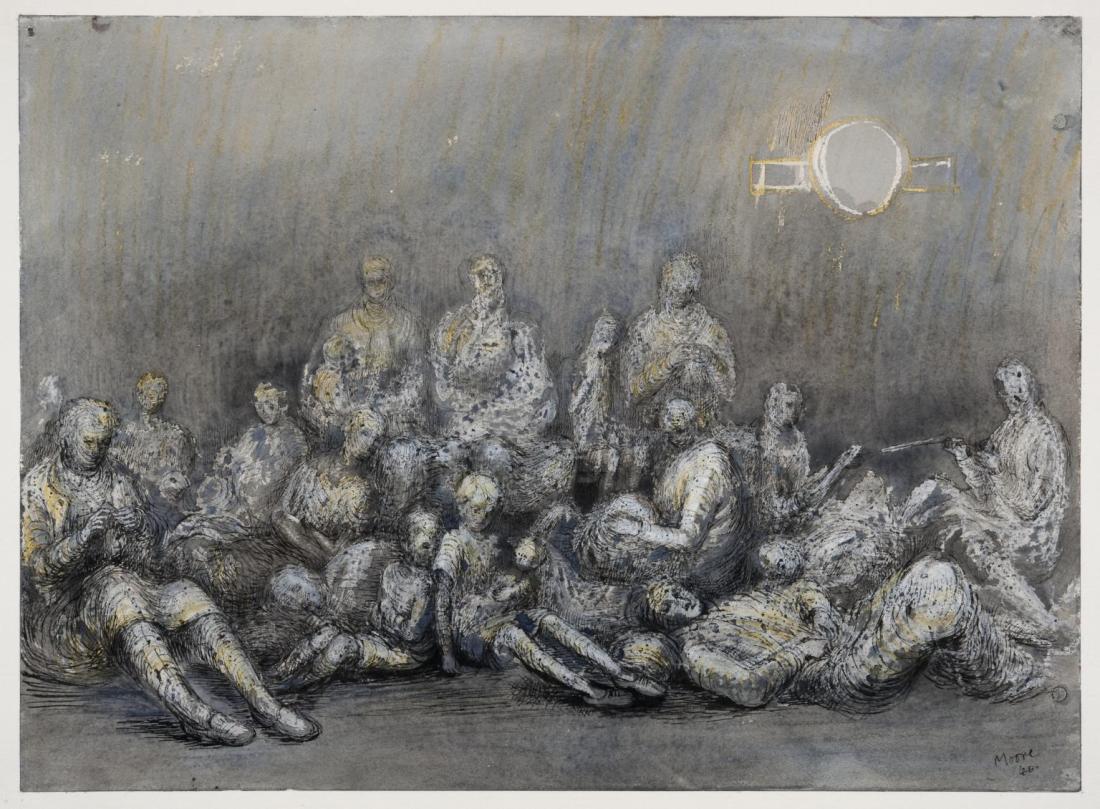
https://www.ice.cam.ac.uk/what-we-do/madingley-lectures/why-is-modern-poetry-difficult
Share this:

The fear of poetry


Paying attention to our inner feelings


Now the Devil’s comin’ out as grey.
There are no hours and minutes in a day
Whatever Nokia Lumias might display
Babylonian clocktowers hover;
Cracked a wall , now built in Dover,
There are sixty cuckoos to gainsay.
Day and night, or hey, what black and white
People range in hues of fruits delight
I like olive and Greenpeacers
Wearing hats from crowns off steeples
Day and night,oh shall we take a flight?
I see the Berlin Wall is coming back
Mexico has ordered ten sick plaques
Trump has promised work forever:
Dangerous walls from Hell to Dover
Even God has been electro-shocked
No ,these demons cannot get across
They’re stuck in an inferno; what is worse……….
God now can’t be omnipresent.
He has high walls around Grace Crescent.
Holy Moses,who can take this flak?
If you miss yer dinner,don’t it hurt?
Same as if yer finger gets a cut
Refugees with their feet bleeding–
Christ,we’re underwhelmed in feelings
Get a barbed wire fence, and kick them back.
The Lord’s THEIR shepherd, so we’re gonna pay.
He watches US like NEVER from today
We’re ex-colonial criminals
We’re Self-esteem Unlimited.
Now the Devil’s comin’ out as grey.
Oh,someone jumped the Central Line today
Could not take this life so full of play
Oxford Street was blocked by walls
Of vehicles sent to the Call.
What is my vocation,what my Play?
Share this:

The eyes are the windows of the soul

The first example is that another person whom we get to know can be a window to a different world.For this to function we have to realise that we are all different and we are all of Even within one culture big differences are there between one person and another.
And in London where I live we have people from hundreds of other countries and we British ourselves are multicultural.Some people find this frightening and our ancestors probably only met people from their own village.
But looked at another way,seeing how a friend from another culture views his/her world is enlightening even if only to give a new perspective on our own culture which we may be unaware of.We may see life from a new perspective.These metaphors from Art are very useful.The artist must see as well as possible and in different ways.So in that sense Art is important not just for pleasure but for living a reasonable life
We may in a metaphorical sense look through this friend’s eyes and see a new world.
Or we may scoff and say how silly and that our culture and our own self are the only ones of value.
Or we may wander on,not really looking so not seeing and so miss many chances of enlightenment
And enlightenment is the best that a new window can offer us.How full of metaphors our languages are.How poetic.
Share this:

A home for the Unknown
The “habit” of perfection makes no sense
We may achieve perfection perhaps once.
It hurts the doubtful minds of the intense.
Around our hearts we need to build a fence
To keep away such spiritual cons
The “habit” of perfection makes no sense
Even if we live as monks or nuns
We do not leave the world when robe we don
We hurt the painful minds of the intense
We may give away our gold and even pence
But find our narcissism’s still not gone
The “habit” of perfection makes no sense
Work and individual effort’s part defence
We can try to make a space for the Unknown
Otherwise we harm the stricken hearts of the intense
To claim that we live perfectlly offends
And with it our salvation’s all but gone
The” habit” of perfection makes no sense
It hurts the doubtful minds of the intense
Share this:

Poincare was a mathematician who got 35 on an intelligence test

https://en.wikipedia.org/wiki/Imbecile
This is how we used to refer to people who were thought low in intelligence
Share this:

Old cookery books and happy memories


When I became who I am now,I didn’t realise that all aspects of my life would be affected.When I got married in the 70s women might be working but they still were expected to cook and give dinner parties etc..I admit I loved cooking despite a few failures.Nowadays people meet in coffee shops.Women and men may have hard jobs and there are other ways to keep up with friends.
I realised I don’t intend to cook for lot of people now so I have to go through the pans and the pots and the cookery books
This has brought both sorrow and joyful memories.The titles of the books above show you how much effort we women put into producing good meals despite our work.Some people cooked a lot at the weekend and froze it.Others used quick methods.Not many ate ready meals.
I remember being amazed when a friend said she bought a quiche in Marks and Spencer and also people buying sandwiches.However I now do that quite often.
When a partner goes,you have to define or find yourself again.But I think I shall keep these books.Just holding one makes me remember how happy I was looking for new recipes and having a table where people could join us for a meal.


Share this:

Reading receptively
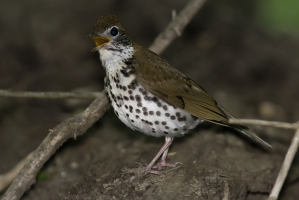
Thrush
They say that if you want to write you must read as much as you can.I found reading Seamus Heaney useful.But there is more than one kind of reading.The kind I find best is to read as if you are looking at a picture.To open your mind and let the sentences flow in like water.I don’t find reading in a critical way helpful.If I read in this open way them my mind will choose what to remember,what matters.When I ws young I read a novel every day.Almost.But reading some fiction one is always rushing ahead looking for the answer if it’s a thriller.
One might say that reading the way I describe is “feminine” that is it is receptive like a woman is to her man.Maybe you don’t like that way of describing it.After all men are receptive to ideas, in conversation etc.And mystics are receptive towards God
Share this:

Adam Phillips

Villanelles:what I think so far
Let’s start with one of the most well known poems by Dylan Thomas
Do not go gentle into that good night,
Old age should burn and rave at close of day;
Rage, rage against the dying of the light.
Though wise men at their end know dark is right,
Because their words had forked no lightning they
Do not go gentle into that good night.
Good men, the last wave by, crying how bright
Their frail deeds might have danced in a green bay,
Rage, rage against the dying of the light.
Wild men who caught and sang the sun in flight,
And learn, too late, they grieved it on its way,
Do not go gentle into that good night.
Grave men, near death, who see with blinding sight
Blind eyes could blaze like meteors and be gay,
Rage, rage against the dying of the light.
And you, my father, there on that sad height,
Curse, bless, me now with your fierce tears, I pray.
Do not go gentle into that good night.
Rage, rage against the dying of the light.
Form: Villanelle
I enjoyed writing some villanelles;I found it hard too.One reason is clear.
Look at the first three lines in the above poem.Lines 1 and 3 are going to be repeated several times.They also come together to end the poem.
This means they have to be good.These lines in Thomas’;s poem are often quoted.As it happens I disagree with them as advice but I think they are marvellous as poetry.And who takes advice from poets?
So thinking of two good lines before you start… or even one good line to begin with is something I have found more difficult than I do with sonnets.Of course I only began last week so I can’t be surprised by my lack.
However I found the repetition and the sounds were very enjoyable and memorable.More so after I had tried to write my own.And that is one good reason for writing poetry.You will enjoy other people’s poetry much more, if it is good.As we don’t see what Dylan Thomas threw away we don’t know how much effort and work was involved in writing his beautiful poem.Sometimes I have done nearly 30 revisions to a poem.Sometimes I put one on Facebook,not for my family to read,but just moving it and re-reading it often suggests an improvement.Sometimes someone reads it but not always.But it’s good for me.
If I can think up another first line,I shall continue my study.
Share this:

Wisdom
 A bird that you set free may be caught again, but a word that escapes your lips will not return.
- A mother understands what a child does not say.
- A pessimist, confronted with two bad choices, chooses both.
- As he thinks in his heart, so he is.
- As you teach, you learn.
- Do not be wise in words – be wise in deeds.
- Don’t be sweet, lest you be eaten up; don’t be bitter, lest you be spewed out.
- Don’t look for more honour than your learning merits.
- First mend yourself, and then mend others.
- He that can’t endure the bad, will not live to see the good.
- If charity cost nothing, the world would be full of philanthropists.
- If not for fear, sin would be sweet.
- Make sure to be in with your equals if you’re going to fall out with your superiors.
- Not to have felt pain is not to have been human.
- What you don’t see with your eyes, don’t invent with your mouth.
Read more at http://quotes.yourdictionary.com/articles/funny-jewish-sayings.html#VJ6PygiAu8ZJeKoL.99
Share this:

Why poetry matters by Mark Doty
http://www.poets.org/viewmedia.php/prmMID/21722
This is very beautifully written and worth reading if you have time and if you care about language and expression of our subjectivity
Share this:

Ghosts and a little thought
I once had an email from a ghost.
I was eating a piece of white toast.
The message was clear.
It said,”I ‘m not
So I replied, “No need to boast.”
I had an email last night from the Pope
He said will you help me to cope?
I’m an immigrant, you see.
And no-one wants me
Don’t cry for Argentina,just mope.
If you look at books on writing they tell you to read. as much as you canAnd clearly we need to observe people and their behaviour and the world beyond us.Why?
Well when I wrote that last line obviously it’s because I have heard the song
Don’t cry for me Argentina.
So if you want to give out you have to take in.That’s what I think
And if you read poetry you will see how different people living at the same time will write totally different types of poetry.And it may help you to find what style appeals to you
Technique is important but emotion and feeling matters too.What affects us?What distresses us?What do we feel about the current political climate

 How my heart sings
